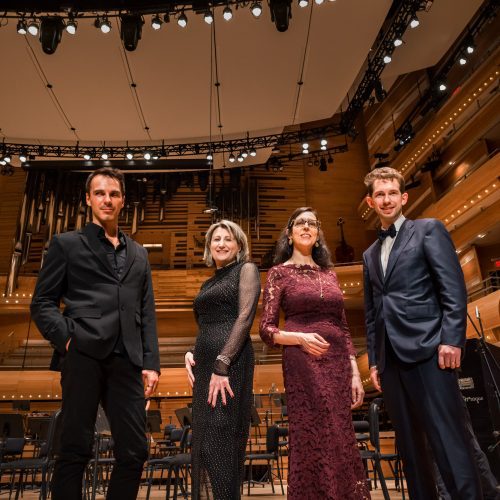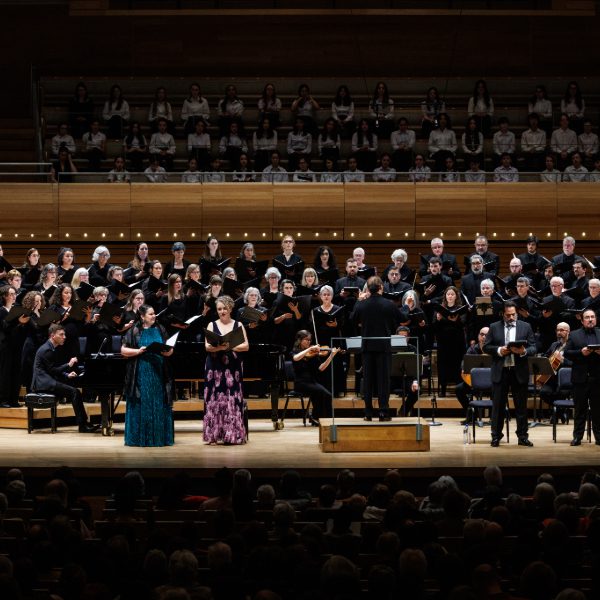
Sacred music sometimes tells us more than the catechism. It brings us together, it uplifts us, it reminds us that we are here, together. This Saturday evening, the Chœur Métropolitain invites us to a double mass at the crossroads of the Americas. A meeting of the Argentinian and Quebecois peoples, these Masses bring the rhythms of everyday life to life, blending European traditions with local folklore.
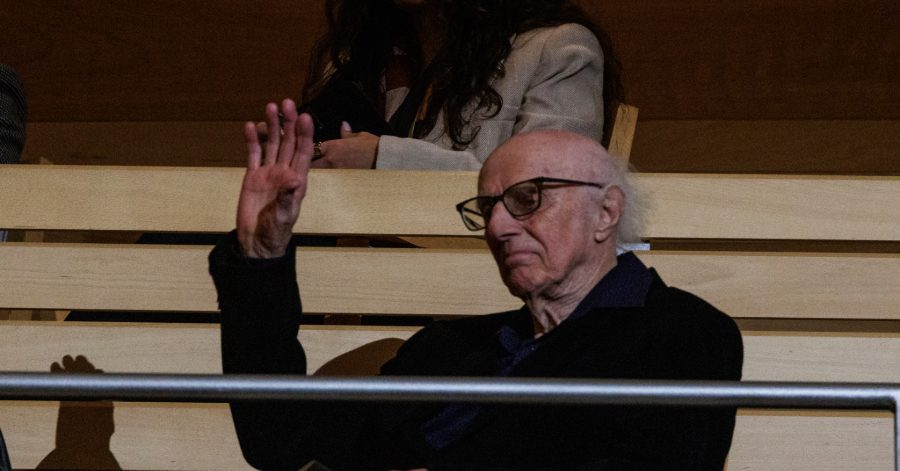
But the real star of the evening was Gilles Vigneault. A charming old lady sitting beside me whispered in my ear: “Monsieur Vigneault is here! People in the front, in the back, turn around and pull out their phones to capture the presence of this legend. Even before the first note rings out in the Maison symphonique, an ovation rises to salute this great man who forged the Quebec nation.
The first part of the concert was devoted to Argentina, through the music of four of its composers: Carlos Guastavino, Astor Piazzolla, Juan de Dios Filiberto and Ariel Ramírez.
The concert opens on a note of wonder and contemplation, with Carlos Guastavino’s Indianas. His charming melodies sing to us of the apple through love lyrics and nature metaphors. In Astor Piazzolla’s Oblivion, a work originally written for bandoneon, the arrangement for choir and solo voice with soprano Myriam Leblanc bewitched us from the very first note with its pure, colorful timbre. This melancholy version makes the work’s theme of forgetting resonate like sweet nostalgia. With Caminito de Juan de Dios Filiberto, the dynamic changes. This light-hearted song, rooted in the tango tradition, adds a lively, convivial touch to the concert.
Finally, before the Quebec mass, Ariel Ramírez’s Misa Criolla concludes the first part. Like Gilles Vigneault with his native land of Natashquan, Ramírez explores the mix of cultures, between Indigenous roots and European heritages. The work surprises with rhythmic dance sections alternating with lyrical passages. Soloists Antonio Figueroa (tenor) and Emanuel Lebel (baritone) complemented each other beautifully. This lively mass, rooted in local traditions, deserves to be heard again and again.
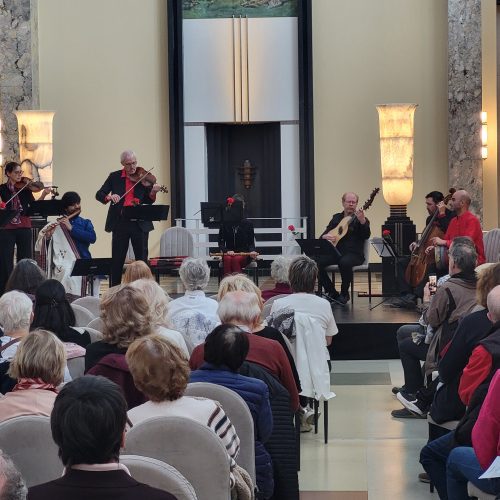
Like Ramirez, Vigneault weaves the threads of people who are both Indigenous and European in this mass that evokes our northern winds and the prayers of ordinary people. Presented in its world premiere, this new arrangement of the High Mass by Sebastian Verdugo takes on a light, colorful form, where the textures of the choir mingle with those of guitars, charango, piano, double bass, violin and percussion. While most of the mass retains a traditional structure and texts, some tunes are transformed into rigodon accompanied by spoons and folk guitar, which pleasantly surprises listeners.
Rooted in Vigneault’s memory of Natashquan, the first and last part includes lyrics in Innu: “Shash anameshikanù. Matshik! Ituték! Minuatukushùl etaiék.” (Now that the Mass is said, Go live in peace on earth).
Finally, after waiting patiently for their moment, the Vincent-d’Indy choristers joined the musicians for the final songs of the concert. Under the sensitive arrangements of François O. Ouimet, several emblematic Gilles Vigneault songs were performed, ending, of course, with Gens du pays. With their eyes riveted on Vigneault, the entire audience stood to sing him our anthem, which is celebrating its 50th anniversary this year, as is the Alliance chorale du Québec. It was a touching moment in which we felt the love of a people for our Quebec, but above all for the man who gave birth to the hymn we all know so well.