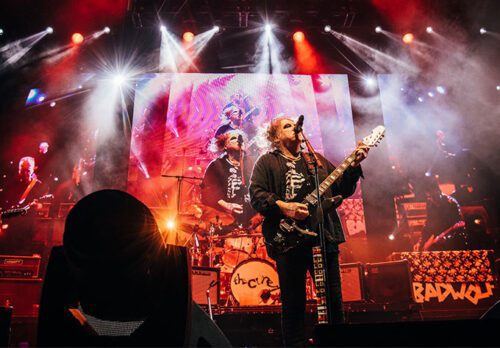
De tous les groupes qui ont émergé dans le sillage immédiat du punk rock à la fin des années 70, peu ont été aussi durables et populaires que The Cure. Dirigé par le guitariste/chanteur Robert Smith, le groupe s’est d’abord fait connaître par ses chansons lentes et lugubres et par le look exagérément gothique de Smith, une image publique qui a souvent caché la diversité de la musique de The Cure. Au début, ils jouaient des chansons pop déchiquetées et nerveuses, avant d’évoluer lentement vers un groupe plus texturé. C’est l’un des groupes qui a jeté les bases du rock gothique, mais au moment où le gothique s’est imposé au milieu des années 80, les Cure avaient évolué vers un son plus soigné et plus réfléchi (même s’il était encore souvent déprimant). À la fin des années 80, le groupe est entré dans le courant dominant, non seulement dans son pays natal, l’Angleterre, mais aussi aux États-Unis et dans diverses parties de l’Europe. Après avoir embrassé la mélodie et la pop synthétisée sur The Head on the Door (1985), le groupe atteint un sommet artistique avec l’épopée Disintegration (1989), d’une beauté et d’une douleur stupéfiantes, et se classe pour la première fois dans les charts britanniques avec Wish (1992). La production de nouveaux albums s’est quelque peu ralentie, mais The Cure est resté une attraction populaire dans les années 2000 et au-delà, et son influence s’est clairement fait sentir sur de nombreux nouveaux groupes au cours du nouveau millénaire, dont beaucoup n’avaient pas grand-chose à voir avec le gothique.
Out of all the bands that emerged in the immediate aftermath of punk rock in the late ’70s, few were as enduring and popular as the Cure. Led through numerous incarnations by guitarist/vocalist Robert Smith, the band initially became well-known for its slow, gloomy dirges and Smith’s exaggeratedly gothic look, a public image that often hid the diversity of the Cure’s music. At the outset, they played jagged, edgy pop songs before slowly evolving into a more textured outfit. They were one of the bands that built the foundations for goth rock, but by the time goth caught on in the mid-’80s, the Cure had moved toward a more polished and thoughtful (if still often depressing) sound. By the end of the ’80s, the band had crossed over into the mainstream not only in their native England, but also in the United States and in various parts of Europe. After embracing melody and synth pop on 1985’s The Head on the Door, the band hit an artistic high-water mark with their stunningly pained and beautiful 1989 epic Disintegration, and scored their first number one album on the U.K. charts with 1992’s Wish. New studio output slowed somewhat as the band soldiered on, but the Cure remained a popular concert draw into the 2000s and beyond, and their influence could be heard clearly on scores of new bands in the new millennium, including many that had little to do with goth.
POUR ACHETER VOTRE BILLET, C’EST ICI!
Ce contenu provient de Allmusic et est adapté par PAN M 360.