Additional Information
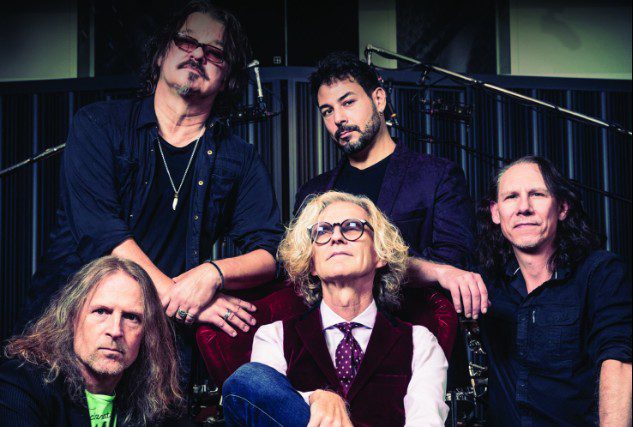
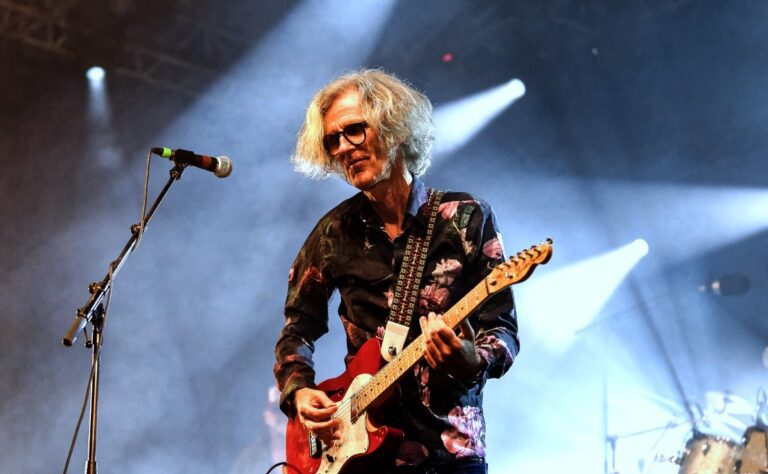
Among Quebec’s favorites in Scandinavian rock, The Flower Kings remain at the forefront. For Friday, March 13—the date of their stop—it’s easy to anticipate a well-filled Palais Montcalm to welcome the Swedish quintet, preceded by California’s multi-instrumentalist and singer Neil Morse, himself part of the prog movement that unites so many Quebec fans. For this occasion, which promises to be very special for fans in Quebec, PAN M 360 connected with the leader, guitarist, and singer of The Flower Kings. Roine Stolt was reached at his home in Uppsala, a town located 60 km from Stockholm, where the 69-year-old musician was born and still lives… and who couldn’t care less about the stylistic labels people try to attach to him. A must-read!
PAN M 360 : We’ve known The Flower Kings for a long time. You have 14 studio albums, 5 live recordings. That’s a huge contribution to the prog—or even jazz-rock—scene.
Roine Stolt : I don’t think “progressive rock” is necessarily the right label for us… It’s rock, but beyond that, I don’t always know how to describe it. In my mind, when people say “progressive rock,” you start thinking of King Crimson, Yes, bands like that—or even Frank Zappa. Anyway, I didn’t get into music to play progressive rock. I got into it to play the music I loved. I like King Crimson, but I also love ABBA, The Beatles, Elton John, pop music in general. Any good music works for me.
PAN M 360 : No worries, we’re not tripping over the flowers on the carpet. Let’s talk about Love, your most recent 12-track album. Is there a connection to the current moment, or does it reflect what’s happening in your life?
Roine Stolt : For many reasons, actually. I’d say it’s not exactly a romantic Love, if you know what I mean. It’s more the love we feel for the planet, for our children, for our pets. That’s the starting point. As Burt Bacharach and Hal David said, What the World Needs Now Is Love… sweet love. I felt it was the right time to name an album Love. And I already have a good idea for the next album—it will probably be the start of a trilogy.
PAN M 360 : Go on…
Roine Stolt : Usually, I’m not really into concept albums, but at my age, you think a lot. You wake up early, your mind starts racing, imagining the day ahead, studio work, family, the news, the state of the world. That’s why lyrics have become more important, much more than when I started this band 35 years ago. Back then, the music was the main focus. It’s a personal development. Of course, the music itself has changed, too.
PAN M 360 : In what way?
Roine Stolt : I think especially about guitar solos, which used to feel very “cool” to me. Now I ask myself whether a new song really needs a guitar solo.
PAN M 360 : You have a sort of space-rock approach with the guitar—your solos are never overstuffed, not overly complex, not extremely fast, no shredding. Musicality comes before technical display.
Roine Stolt : Yes, for me, the starting point was probably the blues. I was very influenced by B.B. King, Duane Allman, and especially Jimi Hendrix. I first saw myself as a blues player, but with orchestral ambitions.
PAN M 360 : Sometimes, the guitar in The Flower Kings approaches David Gilmour’s space-rock style (Pink Floyd).
Roine Stolt : He probably had the same starting point—melody and tone over complexity. That doesn’t mean I like only that style. I also love guitarists like Allan Holdsworth, who was a major influence. But I never tried to play like him; he was unique and beyond my technical capabilities.
PAN M 350 : Understandable—Holdsworth (1946–2017) was one of the greatest of his generation. Your path is different because you are also a composer and orchestral designer.
Roine Stolt : Yes, and I stay open. I still believe my type of guitar can adapt to progressive, space rock, or orchestral rock concepts. There’s always improvisation in the guitars and keyboards in The Flower Kings.
PAN M 360 : How have you managed to keep the core of The Flower Kings together for so long? You must have some kind of magnetic force with your friends to keep the family united, right?
Roine Stolt : Yes, probably. It’s easier to see from the outside, but it’s probably true. We still feel like we’re learning and evolving, even if we’re all old.
PAN M 360 : What have you learned recently? For you, aesthetics still take priority over technique.
Roine Stolt : Yes, indeed. I’ve spent more time thinking about arrangements and production. I approach songs like orchestral works, with strings, woodwinds, brass, percussion. On stage, we have guitar, keyboards, bass, vocals, trumpet. The orchestral arrangements are also in the keyboards. I like to think we are different from other bands in our orchestral approach.
PAN M 360 : You could call it “chamber rock.”
Roine Stolt : Yes, that’s true. It’s a good way to describe what we do.
PAN M 360 : Do you ever invite extra sections, like a string quartet?
Roine Stolt : No. But I can say it’s a dream I had once in my life. I still think it would be really nice to do something like that.
PAN M 360 : You’ve played many times in North America, in Canada, and in Quebec, which is ideal for your kind of music. We’re northerners, like you. One could even argue that prog rock, space rock, and related styles have always resonated well in northern regions, both in Scandinavia and Canada.
Roine Stolt : That’s true. Even bands like Genesis, Gentle Giant, King Crimson, Emerson, Lake & Palmer, or the Canadian band Rush generated a lot of interest there, just like here. The first time we toured North America, we played in Quebec, at a venue called D’Auteuil. I even played in Quebec with Kaipa and Agents of Mercy. As for The Flower Kings, they’ve come to Quebec several times. Not long ago, I also performed there as a bassist in Steve Hackett’s band.
PAN M 360 : Will you play a mix of your past hits in Quebec or focus on songs the audience loves?
Roine Stolt : We’ll play several tracks from Love because we like the songs and enjoy performing them. Learning new songs is always a challenge. Of course, we’ll include a few older songs, maybe going back to Stardust We Are. But we won’t stick strictly to the hits.
PAN M 360 : There’s always a tension between what artists want to express and what the audience expects.
Roine Stolt : Yes. Lately, I’ve been listening a lot to European folk, northern and Mediterranean, music for accordion, violin… For me, evolution continues. I’ve spent a lot of time developing these sounds, and I’m still taking time to express musically what I love today.