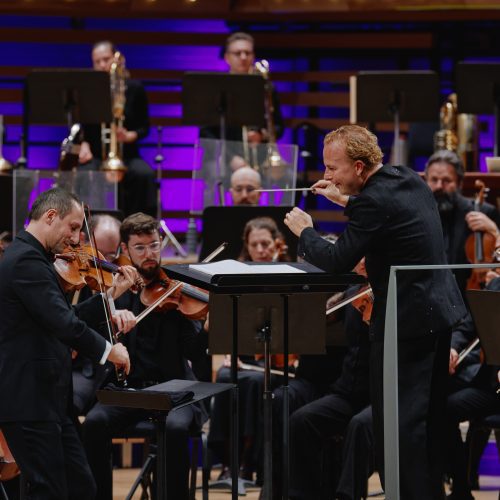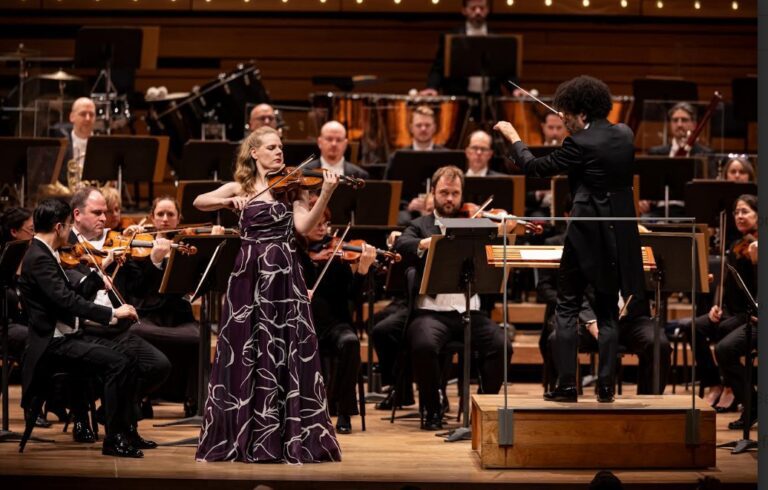
The OSM presents an evening with a folk and Hollywood flavour. Violinist Simone Lamsma takes the stage as soloist at Maison symphonique with the concert Éclatante nostalgie: De l’Europe à Hollywood, which the OSM presented two consecutive evenings, with a symphonic happy hour version on Tuesday, before presenting the program in a more traditional version on Wednesday.
The program, bearing the “poetic” label in the orchestra’s programming, highlights Béla Bartók and Erich Wolfgang Korngold, two composers from Eastern Europe who emigrated to the United States during their respective lifetimes. In a folkloric and sometimes even Hollywood-esque atmosphere (as the title suggests), this program marked Rafael Payare’s return to the helm of the OSM as the holidays approached.
A work by Claude Debussy opened the concert with an orchestration of L’isle joyeuse, originally composed for piano. With the orchestra playing bellows beautifully and a sound that filled the Maison symphonique, the audience was able to relax and be lulled during this first piece of the concert.
Korngold’s Violin Concerto, performed by Simone Lamsma, continued the concert in fine style. The piece draws on several film themes composed by Korngold, illustrating the more Hollywood-esque feel of the concert, particularly in the first two movements where the soloist played the concerto’s soaring, lyrical passages with great delicacy before concluding with a virtuosic third movement. In this third movement, we witnessed the rapport between Lamsma and Payare, who shared knowing smiles throughout. The orchestra allowed the soloist to shine while also providing ample space in the tutti passages.
The concert concluded with Bartók’s Concerto for Orchestra. While the concerto genre is traditionally for a solo instrument accompanied by an ensemble, it is clear upon listening that Bartók intended to give voice to the various sections of the orchestra, with tutti passages and solos throughout. Regarding the interpretation of the piece, Rafael Payare once again demonstrated his ability to make the orchestra resonate in the most intense passages, particularly with the brass section, which was prominently featured last night. This intensity allowed him to create a welcome contrast in the second and fourth movements, which, despite their gentleness and fluidity, were somewhat overshadowed by the other three movements, which possess a decidedly greater force of character.
Photo Antoine Saito