Additional Information
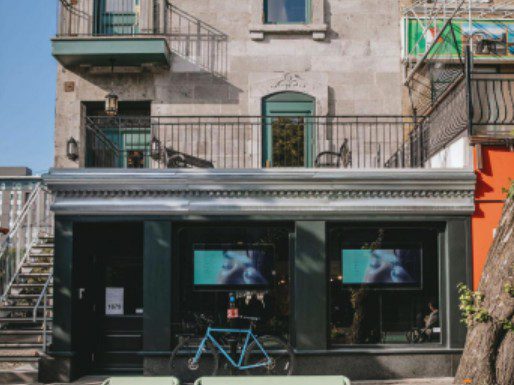
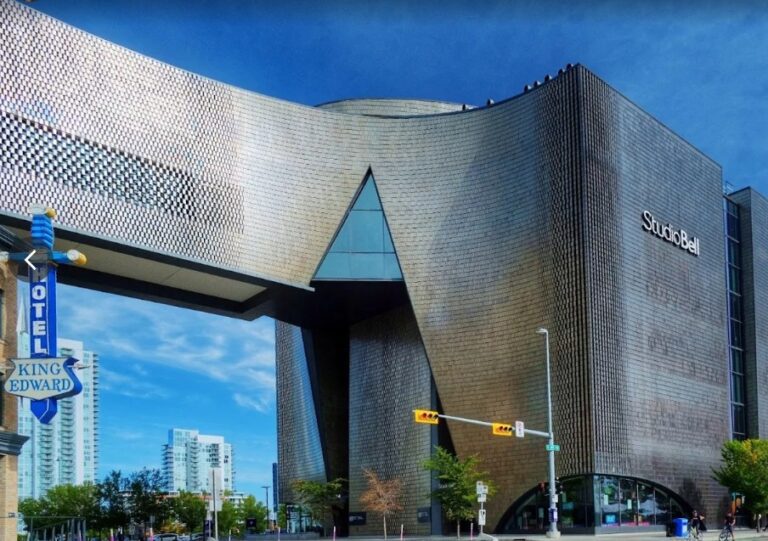
Based at Studio Bell in Calgary, a venue that deserves to be better known in Eastern Canada, the National Music Centre opened a satellite space in Montreal’s Quartier des Spectacles in mid-November, next to the new ADISQ headquarters. At the official opening of the location on Wednesday, November 19, a mural by artist Mathieu Potvin, entitled Merci Beau Dommage, was unveiled.
Andrew Mosker, founder, president, and CEO of the CNM, is a Montreal native who was committed to building a lasting extension of the institution in his hometown, with a particular focus on Francophone culture. He believes that the CNM’s arrival in the area could strengthen the Centre’s relationships with creators, artists, businesses, industry partners, and the public in Quebec and Eastern Canada.
This initiative is based on ties forged over the years between the CNM and the Quebec music scene, starting with ADISQ, its immediate neighbour. More specifically, the Montreal location will host numerous activities showcasing the CNM’s capacity to present musical events, thematic exhibitions and other activities befitting such an institution whose purpose is to “stimulate the love, sharing and understanding of music, as well as preserve and celebrate the history of Canadian music from its premises at Studio Bell, in the heart of Calgary’s East Village.”
Since Andrew Mosker was in Montreal, as he is again this Saturday, December 6, in the context of a multigenerational show presented at the chic 9e, featuring in particular Montreal veteran Andy Kim in order to raise funds for sick children, Andrew Mosker granted this interview to PAN M 360.
More information about the CNM space
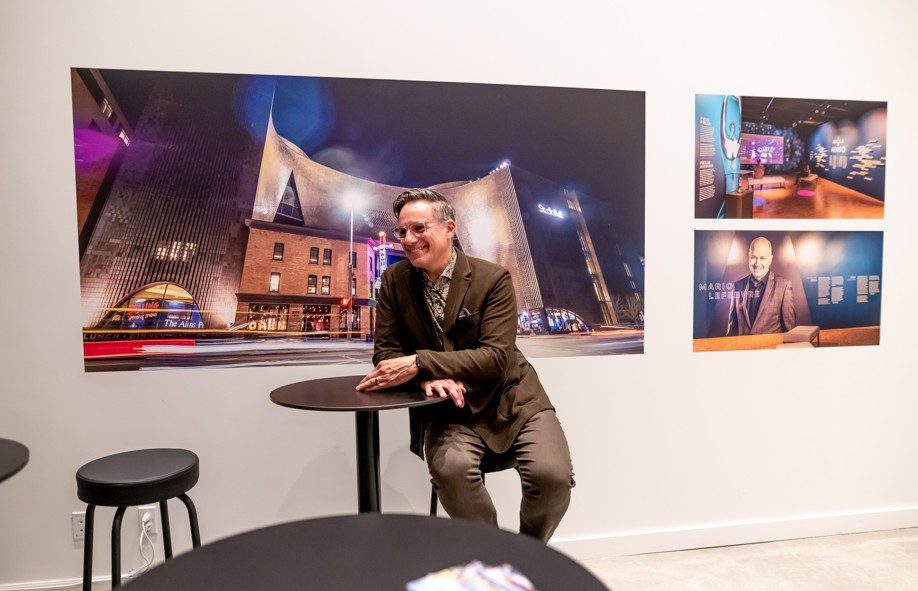
Andrew Mosker, Photo: Sylviane Robini
PAN M 360: First, let’s catch up a bit: how did it all start?
Andrew Mosker : In the early 2000s, I sold the idea to benefactors in Calgary. Patrons, therefore private funds. Today, about ten private foundations, mostly based in Western Canada, but also major groups like TD, RBC, and Power Corporation, are funding our project.
PAN M 360: What did you do before?
Andrew Mosker : I was, and still am, a pianist. I studied music at Grant MacEwan University because the music program had a pop, commercial, and jazz focus. It was a very good program. I followed that program to learn arranging, soloing, and improvisation.
Right after that, I started my career in Alberta; I wanted to be involved in performance. I tried that for a few years.
Then I realized I wanted to stay in the music industry, less as a performer and more by helping the ecosystem thrive. I met some benefactors, including the city of Calgary, which wanted to revitalize a run-down, abandoned neighborhood. There was also an old hotel there, the King Edward, whose bar was a home of the blues, a bit like Bistro à Jojo in Montreal. The city bought the building, and we participated in the beginning of the neighborhood’s revitalization plan. That was 25 years ago. At that time, I was traveling the world and noticed that Canada didn’t have a national music museum. So many Canadians couldn’t discover the works of Robert Charlebois, Leonard Cohen, Nickelback, Céline Dion—all these artists inducted into a space with exhibitions, collections, recording studios, and so on. The Junos had already considered it but hadn’t created the necessary conditions to make it happen.
PAN M 360: It’s still pretty special that it finally happened in Calgary. It was all because of you!
Andrew Mosker : Yes, because of me, but also because of the benefactors. We could also count on the support of Stephen Harper, who came from Alberta and who welcomed the creation of such a center in Calgary. In his inner circle, Stephen Harper counted several conservative music enthusiasts who wanted a center independent of the state. And the mayor at the time, David Bronconnier, wanted to revitalize the neglected East Village neighborhood, where the hotel was located. For us, the timing was perfect.
PAN M 360: The structure of such a cultural center is somewhat American-style, actually. More privately funded, independent of the state.
Andrew Mosker. Yes, exactly. But there are still government resources available—federal, municipal, and provincial. We renovated the King Eddy building, then built around it, expanding from 25,000 square feet to 160,000.
PAN M 360: And how did you bring together the Canadian music ecosystem to create the center?
Andrew Mosker : I convinced various organizations across the country, such as ADISQ and CARAS, to join us in creating this space dedicated to celebrating Canadian music. We reached agreements with these associations. Today, the CNM/NMC boasts five distinct spaces. We have a team of 37 full-time staff and numerous volunteers from across Canada.
PAN M 360: It is also a museum.
Andrew Mosker : Lively and interactive. Our permanent exhibitions account for 30% of our offerings, while our travelling exhibitions make up the remaining 70%, with 5 to 8 new exhibitions each year. The exhibitions vary in size, and we utilize 22 immersive galleries to accommodate them. We also have recording studios where you can even use instruments from our historical collection, such as a Keith Emerson Moog synthesizer or a Randy Bachman amplifier. Artists come here for residencies and to record. From Quebec, we have been visited by artists such as Diane Dufresne, Émile Bilodeau, Klô Pelgag, and Louis-Jean Cormier.
PAN M 360: The approach is multi-genre, then.
Andrew Mosker : Yes, it ranges from North American popular music to classical. The spirit of the center is inspired by American or European centers, such as the Cité de la Musique in Paris.
PAN M 360: And now you have an extension of the center in Montreal. It took an English-speaking Montrealer to fully grasp the issue!
Andrew Mosker :Exactly. I lived in Montreal for a good part of my life, and the French language greatly influenced my music career. I also know that Montreal’s music scene is still very creative and innovative. So, when I moved to Alberta and had the opportunity to build and improve the music ecosystem, I brought my Montreal experience with me.
Now, with this 3,000-square-foot space, I want to participate in the music ecosystem of Quebec and Eastern Canada. I want to build a bridge so that our Quebec counterparts understand what we do in Alberta and how we can bring everything we do, such as preserving our national musical history.
Even today, you know, there are many people in Canada who don’t realize that Oscar Peterson, Joni Mitchell, Robbie Robertson, Leonard Cohen, or Glenn Gould are Canadian artists. Music lovers should also be reminded of the contributions of Francophone artists like Beau Dommage, Charlebois, Dufresne, and others.
That too is a challenge.