Additional Information
Les Leçons de Bach may be a reminder of a fundamental inspiration for Les Violons du Roy, which Bernard Labadie founded in Quebec City in the mid-1980s. Originally planned by pianist and conductor Robert Levin, who had to withdraw due to health problems, the programs presented on Thursday at Palais Montcalm and Friday at Salle Bourgie are exceptionally conducted by Bernard Labadie and feature pianist Inon Barnatan. The performance of these programs is nonetheless thrilling. Let Bernard Labadie whet our appetite!
PAN M 360: Is it unusual for Les Violons du Roy to present a program devoted exclusively to Bach?
Bernard Labadie: If you look at all the programs, there aren’t tons of them, but it’s pretty rare that there isn’t at least one a year, I’d say. If only because I myself am a huge fan of the music of Johann Sebastian Bach.
PAN M 360: Impossible not to be! He’s the absolute master!
Bernard Labadie: Yes. In my case, I would even say that it was because of his music that I became a musician.
PAN M 360: How did this choice come about this year?
Bernard Labadie: One thing to keep in mind about this week’s program is that it is not my program. It is Robert Levin’s, the pianist who was supposed to be our guest this week. He was to be both soloist and conductor for this program. I am very saddened by his absence—he has had some health issues.
So, he had to be replaced. And replacing Robert with just one person is very difficult. Not only was he the pianist and conductor, but he was also a leading authority on the 18th-century repertoire. He is something of a legend, in fact. So, I was delighted. I am also a personal friend of this artist, whom I have known for a long time. But now I find myself taking on some of his responsibilities. Obviously, I am not a pianist. We invited a pianist to replace him.
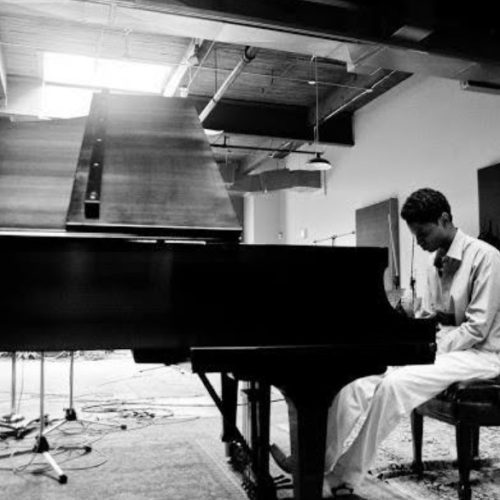
PAN M 360: Tell us about Inon Barnatan.
Bernard Labadie: He is an Israeli pianist who has been living in the United States for a long time. To be honest, he is not a musician I know well, but I have been hearing about him for a long time. I had a seven-year tenure in New York with the St. Luke’s Orchestra. During that tenure, which ended last April, I had a lot of contact with the music scene there. His name kept coming up. My colleagues told me that I really had to work with him. In the end, it didn’t work out, but as luck would have it, it’s happening not in New York but in Quebec City, and with only a few weeks’ notice.
PAN M 360 : Et quelle est la réputation d’Inon Barnatan concernant le répertoire de JSB?
He is not yet in the same league as Robert Levin, who had to cancel, or Andras Schiff or Sergei Babayan, who are great interpreters of Bach.
Bernard Labadie: I would say that… That is to say, I don’t think Inon is recognized as a Bach specialist. He is a pianist with a very broad repertoire, including Bach, whom he loves very much. He told me that he had just come back from a Brahms recital in Germany and that he had been playing vocal music with musicians in Boston a few weeks ago. He is someone who really embraces the entire repertoire, unlike Robert Levin, who is a leading authority on the repertoire of the 18th and early 19th centuries —although he is also one of the greatest living specialists in the music of Henri Dutilleux, a great French composer (1916-2013)—but this is quite common among people who make a lot of music inspired by ancient practices.Bernard Labadie: I would say that… That is to say, I don’t think Inon is recognized as a Bach specialist. He is a pianist with a very broad repertoire, including Bach, whom he loves very much. He told me that he had just come back from a Brahms recital in Germany and that he had been playing vocal music with musicians in Boston a few weeks ago. He is someone who really embraces the entire repertoire, unlike Robert Levin, who is a leading authority on the repertoire of the 18th and early 19th centuries —although he is also one of the greatest living specialists in the music of Henri Dutilleux, a great French composer (1916-2013)—but this is quite common among people who make a lot of music inspired by ancient practices.
PAN M 360: Let’s review the repertoire on the program for the Bach Lessons: first, the five contrapunctus from Die Kunst der Fuge / The Art of Fugue:
Bernard Labadie: Actually, it’s music that I’ve performed a lot with the orchestra. We even recorded the entire Art of Fugue in the early 2000s. And then we performed the entire Art of Fugue in concert. I think it was three years ago, in Quebec City. Performing the entire Art of Fugue in concert is rare. It’s a big undertaking. It’s quite complicated. Performing excerpts from it has happened quite often, including on tour.
But what may distinguish our approach this time is that we will perform excerpts from The Art of Fugue as Robert had intended them to be performed.
The Art of Fugue is a work that is sometimes described as theoretical, in that there is no instrumentation provided. It is written on separate staves, with four voices throughout. So it could be thought of as a string quartet, and has often been performed as such. Even though the work was written on four staves and Bach intended it to be a keyboard piece, it is perfectly playable on the keyboard. Yes, it was originally written for solo keyboard, but there have been additions since then. Yes, there have been several.
So when we perform The Art of Fugue, and when I say “we,” I mean myself and Les Violons du Roy, we always take a fairly orchestral approach, which means we use our 14 strings, including the double bass, which doubles the cello line, thus adding a fleeting octave to the structure. We also always add a harmonic instrument, the basso continuo. We simply take Bach’s four original lines and assign them to the different sections of the orchestra. In our case, this is the basic formation of Les Violons du Roy: four first violins, four second violins, three violas, two cellos, and a double bass. By using the double bass, we add an upper octave to the bass line, giving it a broader, more orchestral dimension than adding a keyboard instrument such as a harpsichord or organ. This is a hallmark of late Baroque orchestral music.
Robert Levin, on the other hand, chose a purer approach, without double bass or harmonic instruments. So most of the counterpoints, except for one that will be played by solid instruments, will be performed without double bass, harpsichord, or organ, which gives a much purer vision of the music. It’s like a kind of reading where the clarity of the polyphony is extremely evident. Here, the music is absolutely transparent because we have the four voices at roughly equal power, as written by the composer. So there is no keyboard and, above all, no double bass in the version played here. As this was Robert’s choice, we decided to stick with this approach. And then, as we have often performed this music for our audience, I felt it was less interesting to come back and do it again as we usually do, but rather to present it in a slightly different light.
PAN M 360: Yes, it’s always a good idea to bring variations to what we’ve already accomplished.
Bernard Labadie: It’s always better to do so.
PAN M 360: Let’s move on to the main course, the Keyboard Concerto No. 1 in D minor, BWV 1052:
Bernard Labadie: It is Bach’s greatest keyboard concerto. It is the longest, the most elaborate, and also the most famous. It is even a concerto that some Romantic pianists had in their repertoire, which was very rare at the time, because Bach’s music was not widely played by pianists in the 19th century. But it is so expansive that there is an immense breath running through this work. And it is a work for which we can suspect that Bach had a particular affection, because he subsequently reprised the first and last movements in three different cantatas.
PAN M 360: Why the Italian Concerto BWV 971?
Bernard Labadie: Originally, Robert had planned another work, which didn’t suit me because I had never performed it before. And since I agreed to replace him at the last minute, we decided to make a slight change to the original program. The Italian Concerto is inspired by the Vivaldi concerto model. The style of writing is decidedly Italian in its influence. Other works by Bach are much more influenced by the French style, while some lean more towards the North German style.
PAN M 360: How could he draw on all his influences?
Bernard Labadie: At the beginning of his career, Bach had a patron in Weimar who was a good musician and had money. When he traveled to Amsterdam, he would bring back the latest scores available so that Bach could familiarize himself with them. And since Bach and Vivaldi were contemporaries, the young Bach studied Vivaldi’s works and even transcribed them for solo keyboard. It was a way for him to immerse himself in the style.
PAN M 360: Let’s move on to the excerpt from The Musical Offering,BWV 1079.
Bernard Labadie: It is the famous “Ricercare”, an old term that refers to a primitive form of fugue that was practiced by harpsichordists in the 17th century. In Bach’s work, it is the equivalent of a fugue. His choice of the word Ricercare is a tribute to the past, but I also think it may be a reference to the origin of the piece.
The Musical Offering was actually the result of a visit by Bach to the court of Frederick II. Johann Sebastian Bach’s son, Carl Philipp Emanuel, was a harpsichordist at Frederick II’s court, which partly explains why his father was invited. The latter’s reputation as a keyboard improviser was well established, particularly within Frederick II’s orchestra, which had gathered around him a group of musicians who were among the most famous and skilled of the time.
So these people had heard of Bach, did not necessarily know his music very well, but knew that he was a formidable improviser on the keyboard, and that he was also a master of the fugue. When Johann Sebastian arrived, he was asked to improvise. The king gave him a very beautiful, long, and complex theme, and asked him to improvise a six-voice fugue on this theme—fugues are usually composed for four voices. Bach replied that it was impossible to improvise a six-voice fugue on this theme, but that he would improvise a six-voice fugue on one of his own themes. And that is apparently what he did.
When he returned to Leipzig, he composed this six-voice fugue, Ricercare, one of the most famous fugues in the history of music, analyzed in every detail by almost every musician in the world who has studied counterpoint.
PAN M 360: We are left with the Keyboard Concerto No. 5 in F minor, BWV 1056
Bernard Labadie: Yes, there are seven concertos for harpsichord by Bach. Three are for two harpsichords. Two are for three harpsichords. And then there is one for four harpsichords. The Concerto in F minor is a shorter concerto, much less elaborate than the first one on the program. No. 5 is best known for its beautiful slow movement—the second. You can hear it in every elevator in the world. Yes, it’s true, this slow movement is a rather extraordinary melodic creation.
PAN M 360: Finally, Mr. Labadie, let’s briefly return to your return to the helm of Les Violons du Roy when Jonathan Cohen’s term ends.
Bernard Labadie: Quite simply, I am returning to the position of music director, but I am not returning with the idea that I will do another 15 years. I am not returning to my position, I am not returning to my job as I did it in the first 30 years before I left.
My goal is to help the organization get through the next few years until we find a successor, and above all to create the right conditions for that successor to have the means to achieve their ambitions. For Les Violons du Roy, as for so many other cultural organizations, the financial situation has been difficult since the pandemic.
Things are not going well: declining attendance at theaters, much greater difficulty in finding private funding, and changing priorities for foundations and companies that distribute funds and supplement public funding. Private funding is more interested in community causes than purely artistic causes.
PAN M 360: Hence your return home for next season.
Barnard Labadie: The question, in fact, is this: if Les Violons du Roy were to seek a successor other than myself today, there is reason to fear that it would be difficult to attract a candidate of the highest caliber. It’s all well and good to offer them an orchestra in such great shape as Les Violons du Roy, but you still need the money to attract internationally renowned soloists and guest conductors, to carry out high-profile projects with or without a choir, to go on tour with the orchestra, and so on. But that takes money, and money is much harder to come by right now. So we are going through a period where the organization needs to regroup and work on all fronts.
Program Bach’s Lessons
Johann Sebastian Bach (1685-1750)
Extraits de L’Art de la fugue, BWV 1080
• Contrapunctus I
• Contrapunctus II
• Contrapunctus VIII
• Contrapunctus XI
• Contrapunctus IX
Keyboard Concerto No. 1 in D minor, BWV 1052 • Allegro • Adagio • Allegro Soloist: Inon Barnatan, piano
• PAUSE
Italian Concerto, BWV 971 • [No indication] • Andante • Presto• Italian Concerto, BWV 971 • [No indication] • Andante • Presto
Inon Barnatan, piano
“Ricercare à 6” from The Musical Offering, BWV 1079
Keyboard Concerto No. 5 in F minor, BWV 1056 • Allegro • Adagio • Presto Soloist: Inon Barnatan, piano