Additional Information
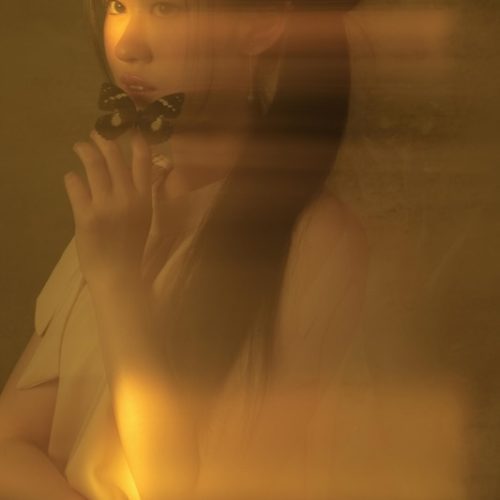
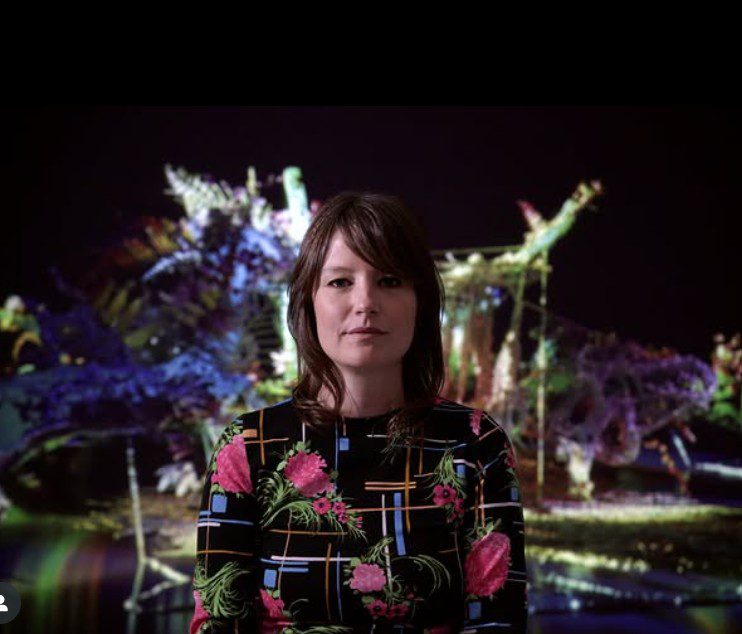
Sabrina Ratté returns to MUTEK after the success of her installation presented there last year. This time, the Montrealer offers us an immersive performance and intends to plunge us into a unique digital universe, where the boundaries of the medium are pushed back to question an essential question: what do we consider alive?
Internationally recognized for her work in video and 3D, Sabrina Ratté explores affiliations with animism, long perceived as opposed to technology. Her organic and colourful aesthetic, imbued with occult and magical elements, opens the way to more sensitive and spiritual relationships between humans and their tools.
Always driven by a thirst for exploration and new challenges, Sabrina Ratté has shaped a practice that evolves with technology, from the first video synthesizers and feedback experiments, to 3D software and, more recently, artificial intelligence. While continuing to use her earliest tools, her works trace a timeline that tells the story of the technologies that have shaped our modern world.
With her new piece Cyberdelia, presented at the S.A.T., she ventures for the first time into work fueled by AI, in collaboration with Roger Tellier-Craig, a regular at MUTEK. We spoke with her about the challenges of this process, this encounter between human and machine, and the thought process that led to Cyberdelia.
PAN M 360: First, I’d like to know more about the piece you’re presenting at MUTEK. Last year, you presented Inflorescence, an installation. So I was wondering: how do you approach performance versus installation?
Sabrina Ratté: That’s an interesting question because for me, live performances are often derived from an installation or a video. I consider myself more of a digital video artist, so I create images and I see it a bit like I do digital paintings, if you like. Then, it often translates into installations. It can be an interactive installation or one with sculptures, as you saw at Mutek last year. For me, the digital medium allows me to create several works from an idea, a concept, and therefore to adapt to many different environments, many different contexts.
In the case of Cyberdélia, which I’m presenting this year, it was originally an interactive installation project developed as part of a 10-week residency at Sporobole, on artificial intelligence. In the installation, I wanted to explore the idea that artificial intelligence was a form of collective unconscious that reflected our psychological projections back to us. Cyberdélia was born out of this residency, and then I created a live performance version of it.
PAN M 360: Artificial intelligence seems to be a big topic at Mutek this year, so it’s good to talk about it. I was wondering, since you already have a very strong 3D aesthetic, if there were times when AI generated things you didn’t want? What were the main challenges with artificial intelligence for you?
Sabrina Ratté: I created images as I normally do in 3D, using Blender, 3D scans, and so on. Then, I put these images into tools like ComfyUI, an open-source program, to see how the AI would interpret my images. Since I began my practice 15 years ago, I’ve worked with very different tools, but among other things, when I started, I worked a lot with video feedback. I mention this because my relationship with AI is somewhat similar, in that these are tools that have random or difficult-to-control parameters.
It’s really a dialogue between control and the goal we want to achieve visually, and also the letting go we need to allow ourselves to be surprised by the results. For each video, I made maybe 30 to select just one that was in line with what I wanted. So it’s a different process than creating montages or 3D images, because here, it’s really about having a dialogue and then intuitively directing the AI so that it goes in the direction we want to go.
But the difference, perhaps, with video feedback is that the AI is also trained on models. And there are still cultural biases in this, for example, when working with bodies. Either it distorts them, or we also feel that the AI has also been trained by porn. The bodies become very sexualized, and we sense the cultural biases behind it.
We also feel that there have been a lot of promotional videos, advertisements. So there is still a, let’s say, a visual register in AI that can quickly fall into something that would be less interesting. Hence the importance for me of being able to bring my images into the universe in order to create a more artistic space there.
PAN M 360: It reminds me of the concept of “working with your shadow.” When you talked about AI as a tool for understanding the collective unconscious, it also involves confronting all these facets of humanity on the internet. Ultimately, the darker ones.
Sabrina Ratté: Exactly.
PAN M 360: Hence the even greater importance of using your own images and integrating them into the AI system. It seems to me to be an almost historical gesture. Which brings me to another question: your works often speak of obsolescence. This struck me in Inflorescence and Objet Monde. You address technological memory while using cutting-edge tools like 3D to create complex environments. How do you manage to navigate between memory and innovation in your work?
Sabrina Ratté: The history of technology is intrinsic to my work. As I mentioned before, when I started making video art, I was really interested in visual feedback and analog synthesizers. I was extremely influenced and inspired by the pioneers of computer animation and the beginnings of video art.
I feel like my journey was a bit like discovering the medium of video, as if I were remaking it chronologically. I started with video synthesizers and analog video. Eventually, I incorporated 3D. And now I’m trying new tools. It’s a way to enrich my language and develop other universes. It also challenges my way of working. Video synthesizers actually remain in my work. I often use them as textures that I integrate into the 3D universe. For me, it’s a bit like the ghost of analog video that continues to haunt the digital world. It’s also like different types of paintings because the textures of analog video are obviously very different from those of 3D. So, it’s as if I’m ultimately trying to integrate all the facets of the story. Or at least to keep track of the history of technology through my work.
Afterwards, I really questioned obsolescence, both technically and pragmatically. For example, Inflorescence is a bit like a hotel, a shrine for these hyper-complex, hyper-sophisticated objects that we throw away because they no longer have a use for today.
PAN M 360: This sensitivity to objects reminds me of your work Plane of Incidence, which is a series of photogrammetry based on objects found in Marseille and Montreal. This work touches on themes such as the agency of objects and the occult. Will this also be part of Cyberdélia?
Sabrina Ratté: So, there are probably images that are part of the creative process for Plane of Incidence, images transformed by AI. But Plane of Incidence is a bit of a pivotal point between Inflorescence and my other work, Pharmacon, which inspired Cyberdelia. In the case of Inflorescence, I was talking about the idea of life forms that could emerge in symbiosis with these technologies in several million years. Then, with Plane of Incidence, it was really the question of the objects themselves. How do we perceive them? Is it a form of life? Do these objects have a weapon? In our modern anthropocentric vision, we have lost a little of this enchantment and this belief that objects have a soul. So, a form of animism that had been part of beliefs for a long time, since there are still many human beings on Earth who believe in it. I find it absolutely beautiful. I think that if we gave more soul to objects, we would throw them away less and give them a form of nobility that today, we are completely disenchanted with that. I think that it was a pivotal point in terms of spiritual reflection linked to the materialistic era in which we live.
PAN M 360: That’s very interesting. This path makes perfect sense: after Inflorescence, which imagined a new form of life, the question becomes one of observing and questioning what we consider to be alive. I wonder if this change of perspective also influences your practical practice. For example, in your relationship with your tools, does it change your way of working?
Sabrina Ratté: I think so. Already, when I delved deeper into the occult, then witchcraft, and spirituality, I think I integrate more rituals into my process. I think the question of ritual is very important. What I might focus on for my next project, I don’t know. I can’t tell you specifically how these learnings manifest themselves, but I think there is still an awareness of a form of gratitude. Often, people will say, “My phone isn’t working,” or “It’s always bugging out.” We often criticize technology, but in reality, it’s like, “Wow, thank you, you allow me to do things.” I think we just need to change the attitude around it, to realize how incredible the abundance is.
PAN M 360: I know you’ve been working with Roger Tellier-Craig for several years. I even saw one of your shows at WIP during the second edition of Sight + Sound, and it was quite impressive. I wonder how much influence music has on visuals, and vice versa?
Sabrina Ratté: I’ve been working with Roger for 15 years, since I started making videos, actually. At first, we had a duo, we called ourselves Le Révélateur, then it was more Roger’s musical project. Now, it’s more my projects. We worked a lot like that, he started his music project, then I made the videos. Then, when it was my video projects, he made the music. It was really an exchange, and it still is.
In the case of Cyberdélia, we did the residency together at Sporobole, so every day we worked together, he would play me what he was composing, I would show him my images. There was a real constant dialogue. I would say that image and sound are inseparable, this is the case with Cyberdélia and the case with all the works we worked on together. But here, in the case of Cyberdélia, all the music is composed with AI. That is to say, in music, he didn’t have the same technology as me. Literally everything was done with words. It wasn’t easy, and it was also a bit difficult for the quality and all that. Here, for the show, he added a few instruments and then changed the composition a little to make it richer in terms of sound.
Sunday 24 août à la SAT, Nocturne 6