Additional Information
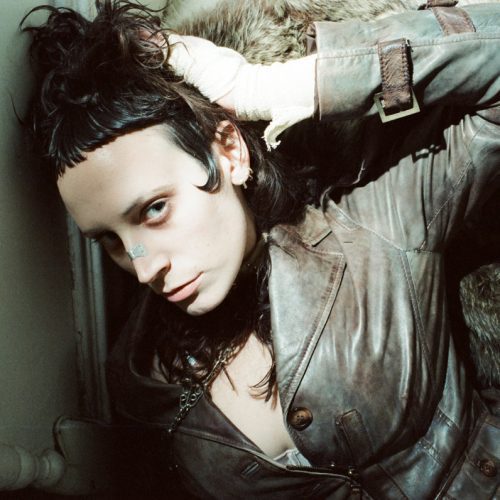
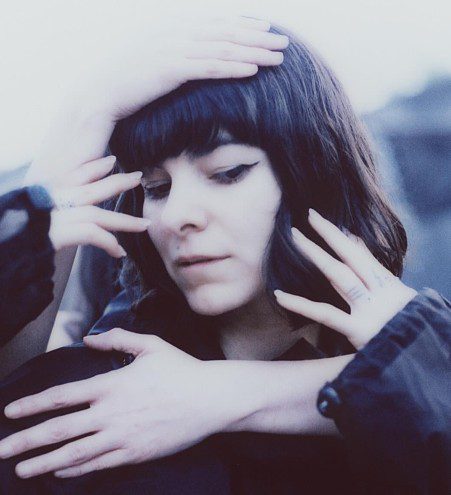
Above all a story-teller, Mexican artist Daniela Huerta tells us about the importance of mythologies in modern days as a way of conveying and preserving the collective memory and human essence. Weaving through multiple mediums, collaborations and practices like deep listening, what remains central in Daniela’s practice is connecting us humans to one another and to our primordial demons and dreams, reclaiming our forgotten stories through collective envisioning.
PAN M 360 : Hi! Thank you for making some time to talk a bit today. I’d like to start with your background. You come from fine arts, painting and sculpture more precisely. I always found myself making this analogy between matter and sound, where both are vibrations, but you can’t see you touching sound; so listening here becomes very special. I wonder if you could talk about this transition from working with matter and working with sound, how sound manifests as matter in your work.
Daniela Huerta: I did fine arts and I was mainly working with sculpture. So more about the three dimensional shapes… and sound really came as material. I started to include sound in my installations, and it just became another element that was part of the space. There were a few factors that led me to devote myself completely to sound and music. I was living in London and then moved to Berlin, and the music scene there is very strong, very vibrant, and very inspiring. I started to collect every type of vinyls, from musique concrete to jazz, experimental, world music… and that opened up a wide spectrum of possibilities and cultural contexts. And then I started to DJ, and after a while I thought to myself, well, maybe I should compose too.
PAN M 360 : Was there a moment you knew where you became a conscious listener, or started listening in awareness?
Daniela Huerta : Listening comes with experience, I think. It also has to do with my personal process of becoming conscious of life, and it sort of manifests itself in different ways – in the way you talk to yourself, the way you eat, the way you care about others – and it also has to do with my search in music, like Eliane Radigue, Pauline Oliveros… different people whose approach was very much about deep listening. I listen to those works and I’m like, what is this?
PAN M 360: Yeah, it changes your world, right? And you’re still studying in the Centre of Deep Listening, right?
Daniela Huerta: Yes, actually this year I will finish the second part of the course, where I will become a practitioner – it means I can teach all these methods. It’s super beautiful, I love it.
PAN M 360: Is it something you’re interested in, teaching?
Daniela Huerta: I don’t know if teaching per se, but I’m definitely super interested in understanding better these methodologies. I have this project with my partner, Natália Escobar, which is called KOAXULA, where we collaborate with dancers. I’m not a choreographer or a dancer, but having learned the deep listening foundations and exercises, I applied them with the dancers and did a lot of deep listening meditations while rehearsing, and it was so effective – we created a particular world where we were able to connect on a much deeper level. So it’s not necessarily about teaching but implementing in my own practice.
PAN M 360: Yeah, bringing it to your practice and sharing it with others. Do you consider yourself a musician or more like a multimedia artist?
Daniela Huerta: Definitely a multimedia artist. For example, I collaborate with Cornelia Piers, she’s a photographer from Vienna, and we have this ongoing project for like 4 years where she takes photos of my body and recreates videos with them. So I would call this multimedia.
PAN M 360: Yeah, your work is very inter-sensorial – you work with bodies, images, and even the music is very cinematic. How do you navigate this question of the medium?
Daniela Huerta: I think it has to do with putting my attention into the story-telling. I work with myths, with mythologies. I don’t come from a music background, I don’t think in that way. I think in images, how a story evolves. And from that point, I think, ok, we have sound, but what if we add a body, or something that exists in the space like a sculpture. It’s something that somehow naturally unfolds, you know. But the basis of that is for sure thinking of a story that will be narrated through different mediums.
PAN M 360 : So you’d say you’re more like a storyteller.
Daniela Huerta: Absolutely, yes, I’m a storyteller!
PAN M 360 : You work a lot in collaborations, and it’s clear that we’ve moved from this image of the lonely artist, very individualistic, and especially in recent years, where we’ve dealt with a pandemic, with genocide, mass deportation and so on. Can you talk a bit about the role of art in fostering community, and creating together as a more sustainable way of producing?
Daniela Huerta: I think it’s very important to collaborate with people, not just because of the reach of the work and having different minds and creative visions but I feel that, especially now, it’s super important to create communities where art acts like a catalyst, to transform visions and ambitions. If I can be more precise for example, with this collective piece we called “Deslenguadas”, I’m working with female archetypes that are seen as evil, poisonous, dark witches in the history of mythology. These archetypes have been repressed and suppressed in our psyche; I’ve been told in Mexico to not be like these women who want to be sexual and powerful and devouring; you have to lean towards being nice and calm. So in this piece we re-wrote a myth, it’s like we’re reclaiming this power that these female terrible archetypes have. I worked with my partner and six dancers, a choreographer and a singer, and this piece would have not been possible if it was just me. The synergy that was created between all of us 8 women trying to understand and to vocalise our femininity through this piece is a good example of how collective work is important. You need all of this. It’s super important to work collectively, especially now that we’re more isolated than ever.
PAN M 360 : And how is storytelling important, even sacred, to reclaiming and preserving the narratives of the oppressed?
Daniela Huerta: All of these stories and myths are sacred, as you say, because they’re part of the collective memory. If we don’t preserve it, they’re going to be erased. In museums you have reliques or antiques; if you don’t store it somewhere it might just disappear. It’s interesting because this myth that we worked with, a Mexican myth about the Aztec goddess Coatlicule – a lot of Mexican people didn’t know about it! And I ask myself, how? That’s why I’m very interested in myths. It’s not like I’m interested in reappropriating them, but the essence and the wisdom that is behind them and how I can embody them to who I am now, here, in 2025. And then, how do they resonate in the present moment? So I think yeah, history is such an important side in our collective memory and spirits.
PAN M 360 : Yeah, it’s a lot about resistance, to keep telling these stories and make people know of them. It’s the only way to keep them alive. And you also have this kind of storytelling practice in your DJing, right?
Daniela Huerta: Yeah, I was never interested in beat matching, I never even thought to be a DJ, to be honest. My way of DJing was about collaging fragments, to find a cohering thread that could make sense across all those different kinds of sounds that I was creating. It has been very intuitive, you know. No one ever told me how, or why, it’s more about how do I start, how do I build from that point, but never thinking about rhythms or tuning.
PAN M 360: It’s like weaving! Very graphical.
Daniela Huerta: Yeah! It’s maybe where the sculpture comes back.
PAN M 360: And what do you think is the role of the DJ in communities?
Daniela Huerta: I love DJing. We’re also story-tellers, right? It’s very different from playing live. There’s somehow less pressure… I feel that I have become someone else. I have the freedom to completely dissociate from who I am; in a live set, you’re completely naked. In DJ you can create so many worlds, with such an endless choice of music. As part of the culture, it’s super important – just before coming to Montréal I played in this festival in the UK, Houghton festival; and it’s like, not just just a cool festival to go, it’s actually a ritual. It’s a space to detach from what there is and just enjoy together, it’s a space for togetherness through music – that’s actually what ancient rituals would do! – so back to your question, the role of DJs is about being able to deliver something for people to connect. You want something to blow your mind and fly somewhere far, and good DJs do that.
PAN M 360: It’s very special. You’re performing your debut solo album Soplo in MUTEK next saturday. Do you want to talk a bit about it? I was also curious about the titles; there’s some poetry about them.
Daniela Huerta: Soplo means breath. It’s this one Soplo that someone does when they die. I really love this word. The album comes from two films by Ivan Agote, he’s a Colombian filmmaker; so basically I combined the two soundtracks and made the album, and kind of created a third story. It’s about water and the transformative properties of water, thinking that we are water and what is my relationship with water. It’s a story that is related to the act of breathing too, so I guess it’s about what keeps us alive.
PAN M 360: And Soplo and Hálito might translate both to breath in English, but they don’t mean the same.
Daniela Huerta: Yeah, hálito is more like “hálito divino” [“divine breath”] – when God created men out of clay, he blew a “hálito”, a gasp of air, and this shape of clay became a human. It’s something divine, that gives life.
PAN M 360: You told me earlier in our conversation about this residency you’re doing at UdeM. What is it about?
Daniela Huerta: Right now I’m at UdeM doing a residency with this collective called “Wilding AI”, I joined a bit later but they’ve been working together for 2 years. We’re working with AI and the creation of sound, how AI affects our creative processes, what are the possibilities, the errors and limitations of working with artificial intelligence. It’s been a 2 year of different stages. We did some workshops at Mutek Mexico last year, working with an interface at its earlier stage and now it’s being refined. We were also working in Monom in Berlin, another sort of residency but also an open lab for people to come and test the tools – it’s like a public experiment done collectively, where people are welcome to try. Here at UdeM we just finished a 45min piece which is going to be shown tomorrow at SAT. We’re now at this point of creation where there’s a lot of exchanging, talking about how we feel about the process, how we connect with it… I think AI can also isolate you a lot, but having this collective it’s been a beautiful experience – we’re such different people and it has been so nurturing.
Daniela Huerta performs Soplo at Mutek – Nocturne 4 at SAT, next Saturday the 23rd.
To breathe, immerse and feel together.