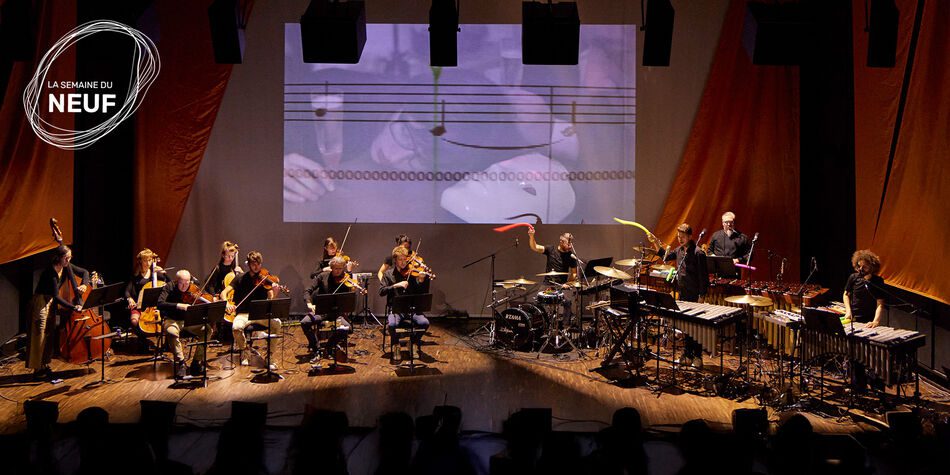
Créations croisées suisses et canadiennes, entre technologies détournées, avatars numériques et objets du quotidien, ce triptyque de concerts explore les multiples visages du son contemporain. De Suisse, Daniel Zea propose une performance pour reconnaissance faciale où l’avatar numérique révèle les tensions entre expression humaine et algorithme. De Montréal, Nicole Lizée fait revivre les machines du passé dans une création quadriphonique où le glitch devient matière poétique. Enfin, de Suisse, Alexandre Babel renverse les hiérarchies sonores en sculptant la beauté brute de sons “pauvres”, issus d’objets trouvés et de gestes simples.

À ce titre, PAN M 360 a recueilli les propos de son directeur artistique, Jeffrey Stonehouse, qui a été témoin d’un portion du travail helvète en septembre dernier »
» En fait, je suis allé en Suisse pour la création de l’œuvre du compositeur suisse Alexandre Babel. Ça, c’était une co-commande du Vivier et de l’ensemble Contrechamps, mais écrite pour Architek Percussion qui est est allé jouer à Genève en septembre dernier. Le programme comprend donc cette œuvre mais aussi une nouvelle œuvre de Nicole Lizée pouf ensemble instrumental, vidéo et électronique. L’autre œuvre au programme, soit du compositeur Daniel Zea, ‘est une commande de l’ensemble Contrechamp avec les Art Zoyd Studios. Daniel Zea a conçu une sorte de partition pour visage et reconnaissance faciale. Tout ça se passe en direct, donc les mouvements du visage de l’avatar déclenchent et contrôlent la partie.”
Plus précisément, le programme indique:
Trois œuvres qui, chacune à leur manière, interrogent notre rapport à la technologie, à la mémoire et à l’imperfection — et redéfinissent la frontière entre humain, machine et matière. Fascinée par les technologies obsolètes, Nicole Lizée explore le dysfonctionnement et l’esthétique de l’imperfection pour “aller sous la surface des choses”. Elle intègre dans ses œuvres des instruments atypiques — Atari 2600, omnichords, stylophones, jeux Simon™ ou bandes de karaoké — ainsi qu’un dispositif vidéo et une quadriphonie dans sa nouvelle création pour Contrechamps.
Daniel Zea met en scène le contraste entre un visage analysé par ordinateur et son avatar numérique. Grâce à une partition pour visage et reconnaissance faciale, ses mouvements animent l’avatar et déclenchent l’électronique, tandis que les instrumentistes réagissent en complément ou en contraste, soulignant la tension entre digital et acoustique. Commandée pour Architek Percussion, The brown gardener réunit quatre percussionnistes jouant sur des plaques-cloches en matériaux simples. Les motifs rythmiques superposés créent un contrepoint en évolution continue. Le titre évoque un oiseau indonésien qui compose des assemblages d’objets, rappelant le soin apporté au choix des instruments.
Programmation
-Daniel Zea: AUTORRETRATO EXTENDIDO , 2026 (40’ – Commande de l’Ensemble Contrechamps, en partenariat avec Art Zoyd Studios) pour ensemble instrumental, vidéo et tracking facial – création
-Nicole Lizée: Nouvelle oeuvre , 2026 (17′) pour ensemble instrumental, vidéo et électronique – création
-Alexandre Babel: The brown gardener , 2025 (15′ – Co-commande Contrechamps / Le Vivier pour Architek Percussion) pour quatuor de percussions – création
Program
-Daniel Zea: AUTORRETRATO EXTENDIDO , 2026 (40’ – Commande de l’Ensemble Contrechamps, en partenariat avec Art Zoyd Studios) for ensemble instrumental, vidéo et tracking facial – premiere
-Nicole Lizée: New work for ensemble, video and electronics , 2026 – premiere
-Alexandre Babel: The brown gardener , 2025 (15′ – Co-commande Contrechamps / Le Vivier pour Architek Percussion) for quatuor de percussions – premiere
POUR ACHETER VOTRE BILLET, C’EST ICI!
A collaboration between Switzerland and Canada, combining repurposed technologies, digital avatars, and everyday objects, this trio of concerts explores the many faces of contemporary sound. From Switzerland, Daniel Zea presents a performance for facial recognition in which a digital avatar reveals the tensions between human expression and algorithms. From Montreal, Nicole Lizée brings the machines of the past back to life in a quadraphonic creation where glitches become poetic material. Finally, from Switzerland, Alexandre Babel overturns sound hierarchies by sculpting the raw beauty of “poor” sounds, derived from found objects and simple gestures.
As such, PAN M 360 gathered comments from its artistic director, Jeffrey Stonehouse, who witnessed part of the Swiss work last September.
« In fact, I went to Switzerland for the premiere of Swiss composer Alexandre Babel’s work. It was a co-commission by Le Vivier and the Contrechamps ensemble, but written for Architek Percussion, who went to play in Geneva last September. The program includes this work as well as a new work by Nicole Lizée for instrumental ensemble, video, and electronics. The other work on the program, by composer Daniel Zea, was commissioned by the Contrechamp ensemble and Art Zoyd Studios. Daniel Zea designed a kind of score for the face and facial recognition. It all happens live, so the avatar’s facial movements trigger and control the part. »
More specifically, the program states:
Three works that, each in their own way, question our relationship to technology, memory, and imperfection—and redefine the boundary between human, machine, and matter. Fascinated by obsolete technologies, Nicole Lizée explores dysfunction and the aesthetics of imperfection to “go beneath the surface of things.” She incorporates atypical instruments into her works—Atari 2600, omnichords, stylophones, Simon™ games, and karaoke tapes—as well as a video device and quadraphonic sound in her new creation for Contrechamps.
Daniel Zea has designed a kind of score for faces and facial recognition. It all happens live, so the avatar’s facial movements trigger and control the piece.
More specifically, the program states:
Three works that, each in their own way, question our relationship with technology, memory, and imperfection—and redefine the boundary between human, machine, and matter. Fascinated by obsolete technologies, Nicole Lizée explores dysfunction and the aesthetics of imperfection to “go beneath the surface of things.” She incorporates atypical instruments into her works—Atari 2600, omnichords, stylophones, Simon™ games, and karaoke tapes—as well as a video device and quadraphonic sound in her new creation for Contrechamps.
Daniel Zea stages the contrast between a computer-analyzed face and its digital avatar. Thanks to a score for face and facial recognition, his movements animate the avatar and trigger the electronics, while the instrumentalists react in complement or contrast, highlighting the tension between digital and acoustic. Commissioned for Architek Percussion, The brown gardener brings together four percussionists playing on bell plates made of simple materials. The overlapping rhythmic patterns create a constantly evolving counterpoint. The title evokes an Indonesian bird that composes assemblages of objects, recalling the care taken in the choice of instruments.
Ce contenu provient de Le Vivier et est adapté par PAN M 360