Electro-Pop / musique de film / pop symphonique

Symphonic Tribute to Daft Punk: Effective Fusion, Mostly

by Frédéric Cardin

In the realm of symphonic electro, it was written that Daft Punk would have a prime place sooner or later. Since the remarkable music that the French duo wrote for the film Tron Legacy, which has since become a cult classic, we knew that the inventive glitch pop textures of all previous albums would one day be associated with a symphony orchestra.

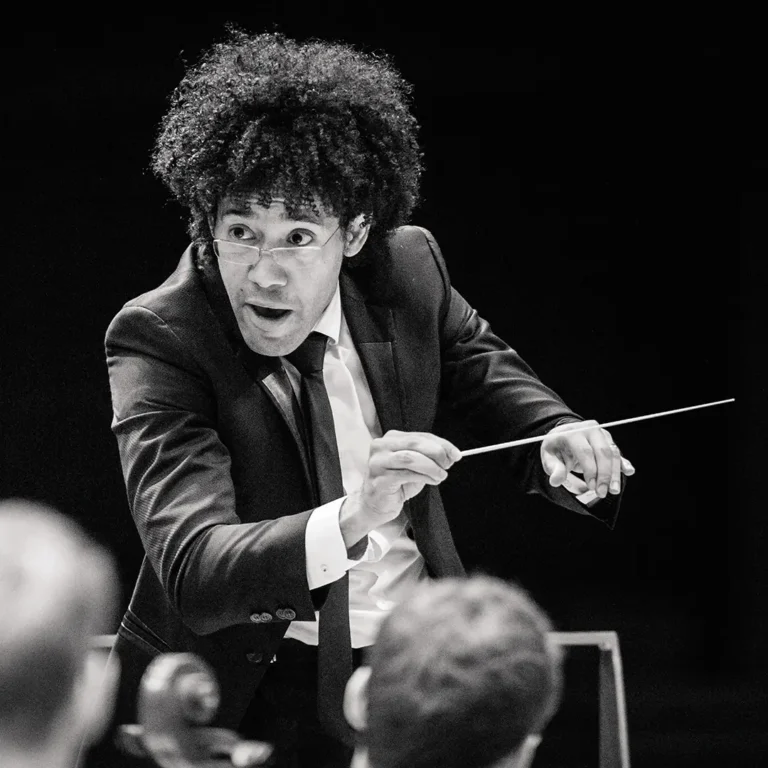
That’s the idea behind the concert One More Time, an electro-symphonic tribute to Daft Punk presented at the Wilfrid-Pelletier Hall of the Place des Arts in Montreal, last night and again tonight. On stage: the FILMharmonic Orchestra conducted by Francis Choinière, the singer Barnev, a guitarist, a bassist, a drummer, and a keyboardist/vocalist.

Starting slow but finishing witu panache

The program of arrangements of super famous songs is divided into an intro and five parts made up of mixes of the duo’s songs. The Intro, which blends The Prime Time of Your Life, Aerodynamic, and a bit of Tron Legacy, gives the impression of taking its time, just hinting shyly about what is to come. The energy gradually builds up, but it still feels like it’s lacking some oomph.

This is corrected with the second “movement.” The nature of symphonism reveals here with more conviction its contribution to the repetitive and mechanical impulses of Daft Punk’s music by offering some beautiful moments of harmonic depth in the strings and counterpoints that enhance the structure of the pieces (particularly Da Funk and Around the World).

The second and third parts continue in the same vein with sometimes thrilling performances of popular monuments such as Human After All, Lose Yourself to Dance, and Get Lucky. Although the presence of the guitar and bass adds a bit of an unsuspected “rock” touch to the tunes everyone could whistle, their use is not exaggerated to the point of overly distorting these catchy little gems.

Tron Legacy, less convincing

The mistake in the program is the arrival, after the intermission, of the thirty-minute suite of tunes from Tron Legacy soundtrack. And yet, it pains me to say it. I am a die-hard fan of this exceptional music, one of the best in cinema in the last 25 years, and one of the most accomplished albums in the entire Daft Punk catalogue. Tron Legacy already fused the symphonic and the electronic. There shouldn’t have been a problem. But I should have thought about it: it wasn’t a Cine-Concert, where the demand for accuracy of the music in relation to its sounds in the film is immense and unforgiving. It was a tribute with new arrangements.

And that’s where it relatively failed, in my opinion. The admirable textures, ultra-rich and complex, invented by the Dafts, were absolutely not reproduced. Simplified, even watered down, the pleasure was completely lost. Some themes were entrusted to a saxophone, others to a guitar. Nothing to do with the original music, and even bothering. In some pieces, the tempo was too restrained, ruining the creation of an exciting energy, as in the film. Moreover, an ostentatious rhythmic imbalance between orchestra and pop soloists almost ruined everything around the two-thirds mark. Embarrassing. Result: the build-up before the intermission was lost and the music from Tron Legacy felt boring, much too long. There were still some successful moments, like the Adagio for Tron, for example. But, overall, it was too little.

Feeling the vibe

I still asked myself the question: am I simply an old purist who loves his thing so much that he can’t imagine it any other way? I took the trouble to look around me, in the audience, to see if I was the only one finding it long. Unfortunately, I could indeed sense the same relative boredom from the other people present, except on a few occasions.

It’s such a shame, because many might have left this concert with a negative opinion of this thrilling soundtrack in its true version. In short, all the more reason to organise a true Tron Legacy Cine-Concert one day, with all the multiple and abundant details that make this composition memorable. Hey, with the real Daft Punk too?

Good catch-up

That said, and fortunately, the evening was salvaged by the final grand mix of the program and the return of the qualities that had made the first part a success. Aerodynamic, Harder, Better, Faster, Stronger, Face to Face, One More Time, and as an encore, Instant Crush allowed the audience to stand up and dance.

The singer Barnev performed well during his few appearances and interpretations, although he obviously omitted the characteristic Frenchie-Anglo accent of the Dafters.

If calibrations are in order, especially in the suite from Tron Legacy, we can rejoice in an effective and exciting offering, most of the time.

Another performance is taking place tonight.
DETAILS AND TICKETS

Baroque / Classical / Classical Singing

Arion Baroque Orchestra: Il pianto di Maria: Tears of Joy

by Alexandre Villemaire

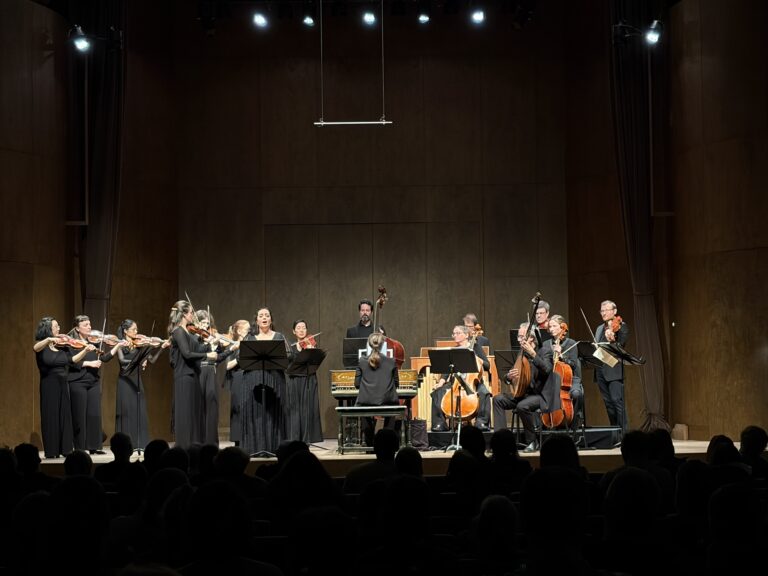
For the penultimate concert of its season, Arion Baroque Orchestra invited Montreal’s music-loving audience to immerse themselves in Baroque Italy—an Italy in all its “caricatured” glory, to borrow the artistic director’s words to the audience, where emotions are expressed in their raw, unfiltered form.

For it is indeed emotions—sorrow and pain, certainly, but also love, friendship, joy, and elation—that run through this program curated by harpsichordist and guest conductor Marie van Rhijn. A program that also celebrated women composers during this International Women’s Day weekend.

To convey the various emotions of these works, the spotlight was on the voice, featuring French contralto Anthea Pichanik. In the first part, which opened with Antonio Vivaldi’s cantata *Cessate, omai cessate*, the power of her voice captivated us, as did her embodied portrayal of this rejected lover lamenting his rejection by his Dorilla. Pichanik possesses a rich, brassy timbre in her mid-range, with full-bodied high and low notes, which were, however, sometimes lost in the orchestral mass and at certain phrase endings, yet she displayed a commanding stage presence and a grounded, committed performance. In the excerpt from Maria Margherita Grimani’s cantata *Pallade et Marte*, the aria of the god Mars—a triumphant march with a distinctly martial style, yet retaining a very light touch—was performed with verve. It is above all the dialogue between the cello and the bassoon that captures the listener’s attention in this work. Originally composed for cello and obbligato theorbo, Marie van Rhijn adapted it by replacing the theorbo with the bassoon, writing a specific part for it, much to the delight of Mathieu Lussier. The dialogue between the two instruments effectively illustrated the relationship between the two protagonists, Athena and Mars, with an almost humorous exchange that one would not have imagined possible in this way within the 18th-century repertoire. A short concerto for harpsichord, subtitled “Madrigalesco” by Vivaldi, served as a bridge between these two pieces in the first part, showcasing the harmonic richness of the composer’s language.

The second part was entirely devoted to the voice, featuring excerpts from Maria Teresa Agnesi’s Serenata Ulisse in Compania and Giovanni Battista Ferrandini’s cantata Il pianto di Maria, whose title inspired the name of this concert. Ferrandini’s cantata, much like a Stabat Mater, recounts the suffering of the Mother of Christ as she watches her son on the cross. Originally composed for soprano, the version performed in this concert was transposed down a third. Too high for a contralto in the original key and even too low for a soprano, this version—adapted for the occasion to suit the voice on stage—gave the work a very maternal quality. In the cavatina “Se d’un Dio fui fatta Madre”—the Virgin expresses her pain and even her indignation at seeing her son die. The musical and harmonic line is simple yet rich, carried with warmth by Pichanik’s voice and supported by the orchestra and Marie van Rhijn in phrasing and conducting of a thrilling and touching intensity.

With a program that this year features a thoughtful blend of well-known composers and new discoveries—including a third of its 2025–2026 season dedicated to female composers—Arion continues to bring a breath of fresh air and a welcome variety to the repertoire of 17th- and 18th-century music on the Montreal scene.

Photo Credit: Elliana Zimmerman

classique / post-romantique / violon

Mayumi Seiler & Kyoko Hashimoto à la salle Bourgie

by Rédaction PAN M 360

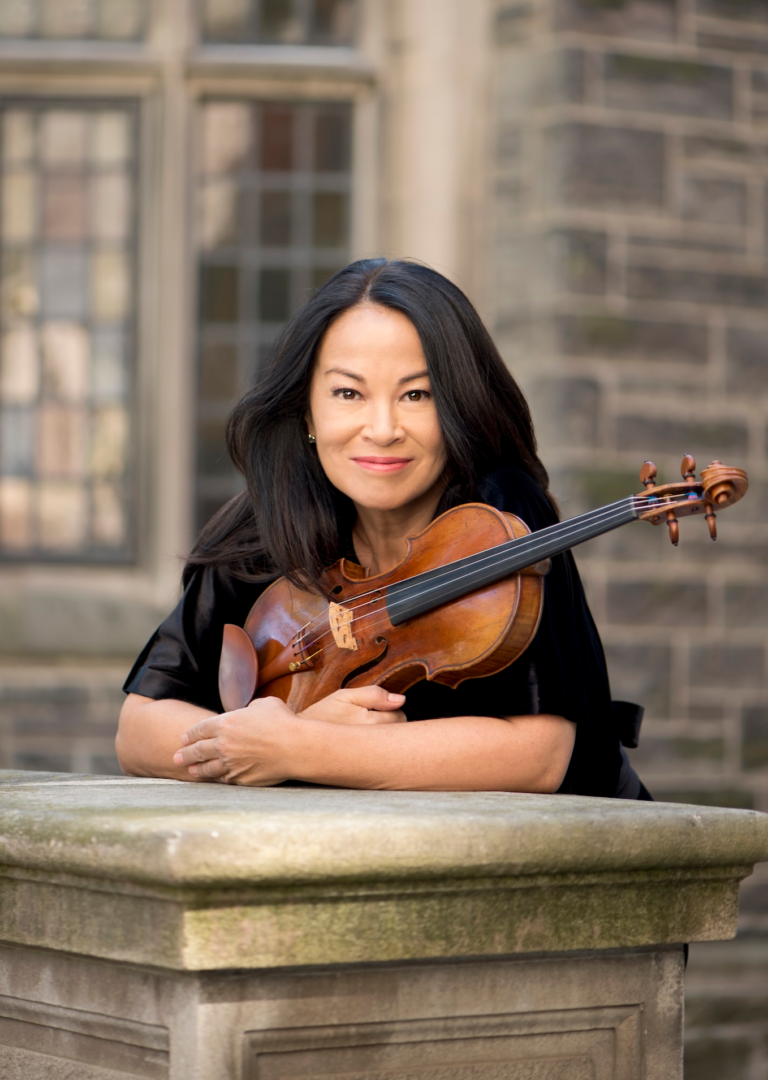
Ce concert se veut à l’image de ses interprètes, en faisant écho à leurs racines japonaises et européennes. De beaux liens qui se retrouvent aussi dans l’œuvre de l’éminent compositeur japonais Tōru Takemitsu qui fut lui-même inspiré de Debussy. Les sonates de Mozart et de Brahms, pleines de vitalité et de lyrisme, viennent compléter parfaitement ce programme.

This concert echoes the performers’ Japanese and European roots—a blend of influences also found in the music of Tōru Takemitsu, an illustrious Japanese composer who was profoundly influenced by Debussy. Spirited and lyrical sonatas by Mozart and Brahms perfectly round out this programme.

Programme

MOZART Sonate pour violon et piano no 35 en la majeur, K. 526
DEBUSSY Sonate pour violon et piano en sol mineur, L. 140
TAKEMITSU Hika [Élégie], pour violon et piano
BRAHMS Sonate pour violon et piano no 1 en sol majeur, op. 78

Program

MOZART Violin Sonata No. 35 in A major, K. 526
DEBUSSY Violin Sonata in G minor, L. 140
TAKEMITSU Hika [Elegy], for violin and piano
BRAHMS Violin Sonata No. 1 in G major, Op. 78

POUR ACHETER VOTRE BILLET, C’EST ICI!

Ce contenu provient de la salle Bourgie et est adapté par PAN M 360

Avant-Garde / Contemporary / saxophone

Le Vivier / Semaine du Neuf | Quatuor Quasar : Montréal-Monterrey, les mots de la direction artistique

by Rédaction PAN M 360

Après le succès du projet Montréal-Mexico en 2023, Quasar – quatuor de saxophones est fier d’annoncer le renouvellement de sa collaboration avec la Escuela Superior de Música y Danza de Monterrey (ESMDM).

Jeffrey Stonehouse, directeur artistique de la Semaine du Neuf, nous fait ici l’introduction:

“Ce projet a été en incubation à Monterrey,  ce projet inclut des commandes de compositeurs-compositrices mexicains et canadiens, impliquant aussi des chorégraphes mexicains et canadiens. L’entièreté  du programme, en fait, sera constitué des créations et des partenariats et des collaborations entre artistes canadiens et mexicains. Ce projet a été mené de concert avec l’École supérieure de musique et de danse à Monterrey.  C’est vraiment un bel échange. De toute façon, il y a de plus en plus de trucs au Mexique et en Colombie. Il y a beaucoup d’affaires en musique contemporaine aussi, en musique de création.  Quasar cultive cette relation depuis un bon moment, c’est leur deuxième grande collaboration mexicaine.  Je dirais que c’est dans la poursuite de leur démarche amorcée précédemment”.

Cette nouvelle initiative transculturelle fera dialoguer les univers de la musique et de la danse contemporaine du Québec et du Mexique à travers une production ambitieuse. Le projet réunira cinq compositeurs.trice.s et chorégraphes issus des deux communautés, qui créeront en tandem cinq œuvres originales interprétées par dix danseurs et danseuses de l’ESMDM et par les musiciens de Quasar. En conjuguant recherche chorégraphique et composition musicale contemporaine, cette collaboration explore de nouvelles formes de dialogue entre les corps et les sons, tout en favorisant un échange artistique et culturel profond.

POUR ACHETER VOTRE BILLET, C’EST ICI!

After the success of the Montréal-Mexico project in 2023, Quasar – saxophone quartet is proud to announce the renewal of its collaboration with the Escuela Superior de Música y Danza de Monterrey (ESMDM).

Jeffrey Stonehouse, artistic director of Semaine du Neuf, introduces the project:

“This project was incubated in Monterrey and includes commissions from Mexican and Canadian composers, as well as Mexican and Canadian choreographers. The entire program will consist of creations, partnerships, and collaborations between Canadian and Mexican artists. This project was carried out in collaboration with the Escuela Superior de Música y Danza in Monterrey. It’s a really wonderful exchange. In any case, there are more and more things happening in Mexico and Colombia. There’s a lot going on in contemporary music too, in creative music. Quasar has been cultivating this relationship for quite some time; this is their second major Mexican collaboration. I would say that it’s a continuation of the process they started previously.

This new transcultural initiative will bring together the worlds of contemporary music and dance from Quebec and Mexico through an ambitious production. The project will unite five composers and choreographers from both communities, who will work in tandem to create five original works performed by ten dancers from ESMDM and the musicians of Quasar. By combining choreographic research with contemporary musical composition, this collaboration explores new forms of dialogue between bodies and sounds while fostering a deep artistic and cultural exchange.

Ce contenu provient du Quatuor Quasar et est adapté par PAN M 360

classique rock / Symphonic Metal

The Rock Orchestra à la salle Wilfrid-Pelletier

by Rédaction PAN M 360

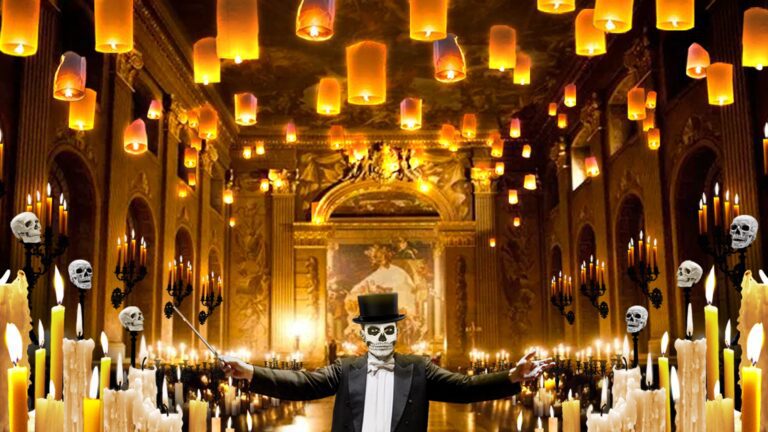
Après une tournée mondiale à guichets fermés, l’Orchestre de rock aux chandelles revient avec un tout nouveau concert épique, mêlant l’intensité du rock et du métal légendaires à une énergie sombre et envoûtante.
Dans un décor féérique illuminé par des centaines de bougies, 14 musiciens classiques livrent des mélodies enivrantes qui se fondent dans de puissants murs de distorsion. Vivez la rencontre inattendue entre la musique classique et du métal.
Au programme : Metallica, AC/DC, The Rolling Stones, Rage Against The Machine, My Chemical Romance, Linkin Park, System Of A Down, Guns N’ Roses, Evanescence, Papa Roach, The Cranberries… et bien plus encore!
Le Rock Orchestra est un collectif tournant de musiciens classiques, composé de certains des plus grands instrumentistes et chanteurs au monde.

After entertaining 700,000 guests across the UK, USA and Europe, The Rock Orchestra by Candlelight is kicking off the first expansive tour of Canada.
Prepare for a spellbinding spectacle that infuses iconic Rock & Metal anthems with a hauntingly beautiful energy.
In ethereal candlelit settings, this band of 14 classical musicians unleash effortlessly enchanting melodies alongside powerful walls of distortion. Witness the unexpected union of Classical music and Metal.
Performing the music of iconic bands including: Metallica, AC/DC, Rolling Stones, Rage Against The Machine, My Chemical Romance, Linkin’ Park, System Of A Down, Guns N Roses, Evanescence, Papa Roach, The Cranberries & MORE!
The Rock Orchestra is a rotating collective of classical musicians, featuring some of the world’s greatest instrumentalists and vocalists.

POUR ACHETER VOTRE BILLET, C’EST ICI!

Ce contenu provient de la Place des Arts et est adapté par PAN M 360

Africa / classique / Kora

Zal Sissokho & Laurent Perrault-Jolicoeur – Racines à la salle Bourgie

by Rédaction PAN M 360

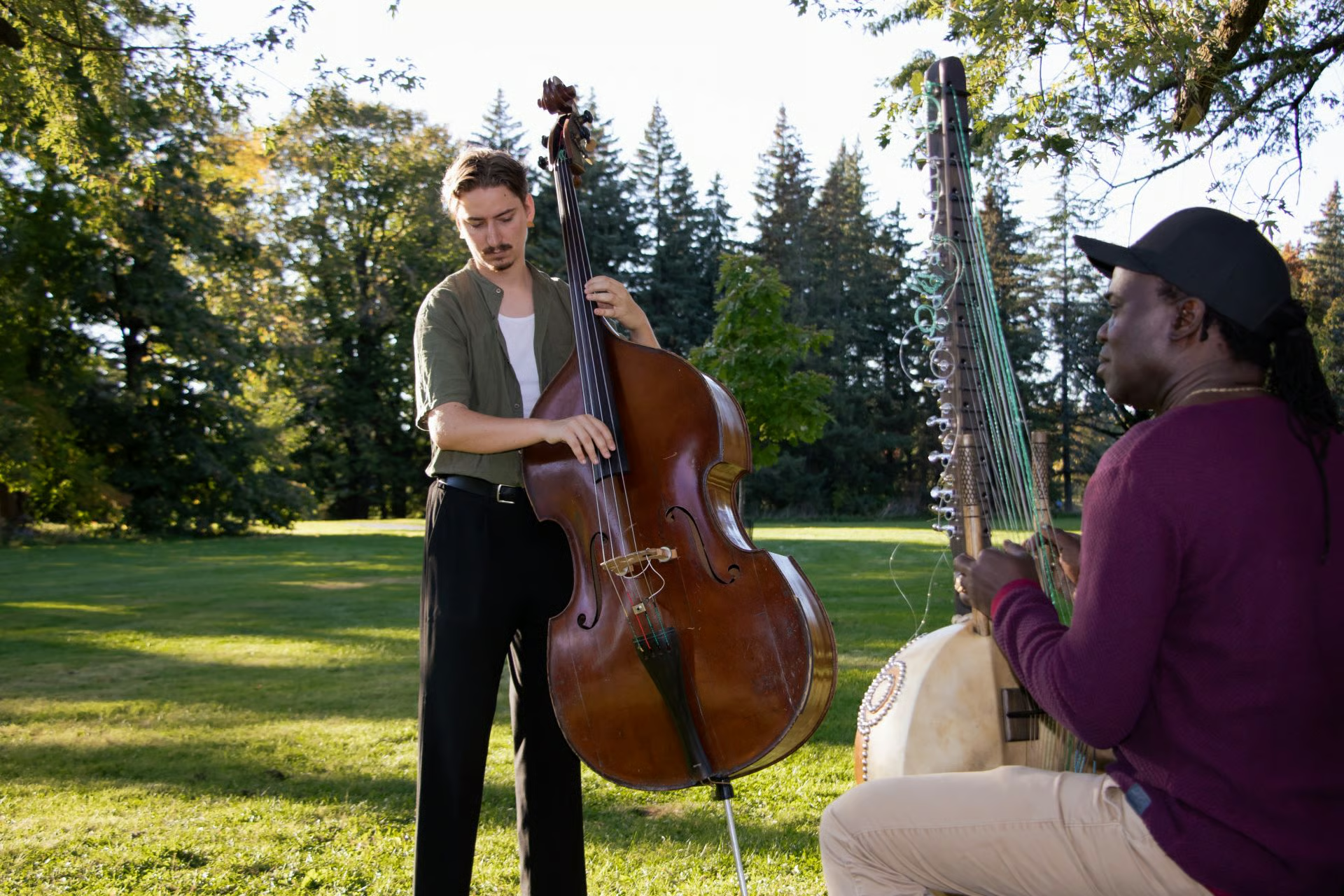
Racines, c’est le dialogue entre le jazz et la musique mandingue; la rencontre entre les quatre cordes de la contrebasse occidentale et les vingt-et-une que possède la kora africaine. Laurent Perrault-Jolicoeur et Zal Sissokho cherchent à retisser les liens entre ces deux traditions musicales grâce à leurs compositions qui mêlent rythme, harmonie et improvisation.

Roots is the dialogue between jazz and Mandinka music—the place where the Western double bass with its four strings meets the African kora with its twenty-one. Laurent Perrault-Jolicoeur and Zal Sissokho work to forge new ties between their musical traditions, using captivating rhythms, harmonies, and improvisation in each of their compositions.

Programme/program

Laurent PERRAULT-JOLICOEUR
Farka
À petit feu
Racines
Après la fin
Zal SISSOKHO
Miniamba
Sila
Nadiara
Traditional Mandinka
Bara
Kéléfa
Traditional
Jarabi

POUR ACHETER VOTRE BILLET, C’EST ICI!

Ce contenu provient de la salle Bourgie et est adapté par PAN M 360

expérimental / contemporain / Free Improvisation

Le Vivier / Semaine du Neuf | Du Vivant + Frying Pan & Nous perçons les oreilles, les mots de la direction artistique

by Rédaction PAN M 360

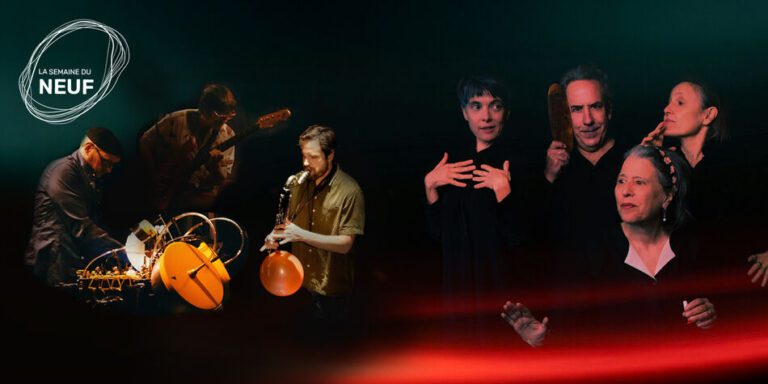
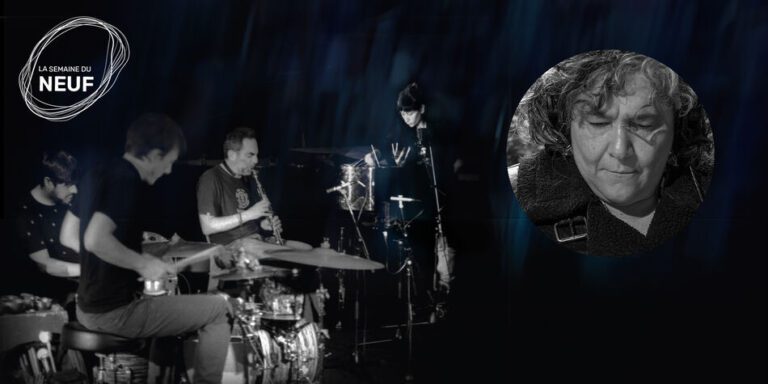
On présente ce concert comme un double plateau de musique improvisée des deux bords du fleuve.

Directeur artistique de la Semaine du Neuf, Jeffrey Stonehouse introduit le concept:

“Alors nous nous retrouvons avec Joane Hétu et son concept Nous perçons les oreilles  qui existe depuis très longtemps, mais qui revient sporadiquement. Cette fois, ii s’agit d’une  soirée dédiée aux improvisateurs. trices. Le groupe se fonde sur Jean-François Laporte et ses instruments inventés, Éric Normand, Philippe Lauzier, Annie Saint-Jean. Il y aura une trame évoquant un territoire mi-fantastique, mi-glauque, cette  performance propose une lecture poétique du tout. Donc avec Jean-François Laporte, bien sûr, on a la présence des instruments de Jean-François, donc de lutherie sauvage. La direction sera tantôt assumée par Joane Hétu, tantôt par Jean Derome. Ce sera aussi une rencontre entre SuperMusique , la communauté Tour de bras et Éric Normand (Rimousk)  et Totem contemporain de Jean-François Laporte.”

Plus précisément:


Du vivant – Tour de Bras & Totem Contemporain
Avec sa lutherie sauvage, son aspect méditatif et son intensité sonore, Du vivant est une performance cinétique et instrumentale qui recrée l’univers sombre du film créé par les artistes en 2020 sur un immense rouleau de papier géant tel un ruban de photo. Si le film évoquait un territoire mi-fantastique mi-glauque, la performance propose une autre lecture: une performance poétique, musicale, et cinétique (sans écran) qui balance entre photographie, film, performance, sténopé et musique improvisée.
Au confluent des âmes – Nous perçons les oreilles & Frying Pan
Ce concert réunit quatre artistes visionnaires qui partagent une même compréhension du geste, qu’il soit musical ou physique. Le duo Frying Pan, constitué des deux grandes danseuses Sarah Bild et Susanna Hood, se joint au duo Nous perçons les oreilles, formé des ébouriffants Jean Derome et Joane Hétu, connu pour sa musique improvisée et expérimentale.


POUR ACHETER VOTRE BILLET, C’EST ICI!

This concert is presented as a double bill of improvised music from both sides of the St.Lawrence river.

Artistic director of Semaine du Neuf, Jeffrey Stonehouse introduces the concept:

“So here we are with Joane Hétu and her concept Nous perçons les oreilles (We pierce ears), which has been around for a long time but comes back sporadically. This time, it’s an evening dedicated to improvisers. The group is based on Jean-François Laporte and his invented instruments, Éric Normand, Philippe Lauzier, and Annie Saint-Jean. There will be a storyline evoking a territory that is half-fantastic, half-gloomy, and this performance offers a poetic interpretation of the whole. So with Jean-François Laporte, of course, we have the presence of Jean-François’ instruments, and therefore wild lutherie. The direction will be taken on by Joane Hétu at times and Jean Derome at others. It will also be a meeting between SuperMusique, the Tour de bras community and Éric Normand (Rimousk), and Jean-François Laporte’s Totem contemporain.”

Ce contenu provient de Le Vivier et est adapté par PAN M 360

A double bill of improvised music from both sides of the river

Du vivant – Tour de Bras & Totem Contemporain
With its wild instrumentarium, meditative aspect, and sonic intensity, Du vivant is a kinetic and instrumental performance that recreates the dark universe of the film created by the artists in 2020 on an immense giant roll of paper like a photo ribbon. While the film evoked a half-fantastical, half-murky territory, the performance offers another reading: a poetic, musical, and kinetic performance (without a screen) that oscillates between photography, film, performance, pinhole camera, and improvised music.
Au confluent des âmes – Nous perçons les oreilles & Frying Pan
This concert brings together four visionary artists who share the same understanding of gesture, whether musical or physical. The duo Frying Pan, consisting of two great dancers Sarah Bild and Susanna Hood, joins the duo Nous perçons les oreilles, formed by the electrifying Jean Derome and Joane Hétu, known for their improvised and experimental music.

Contemporary / danse / Experimental

Le Vivier / Semaine du Neuf | Ictus & Ula sickle – Holding Present, les mots de la direction artistique

by Rédaction PAN M 360

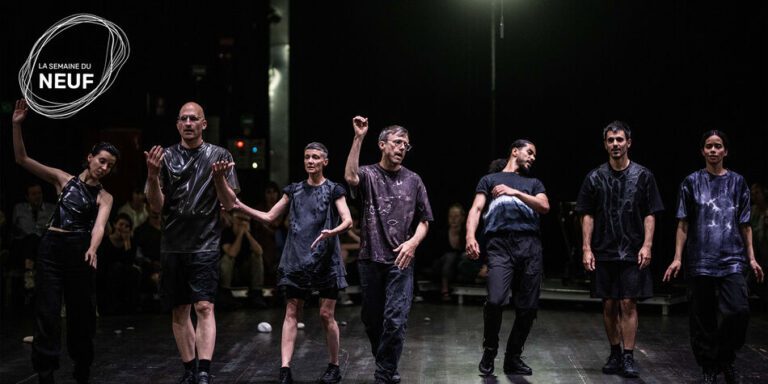
Holding Present, collaboration entre la chorégraphe Ula Sickle et l’ensemble de musique contemporaine bruxellois Ictus, est une performance où musique et danse se fondent en un geste collectif puissant. Sur scène, sept interprètes – trois musiciens et quatre danseurs – partagent le même espace, brouillant les frontières entre corps et instruments. La pièce explore comment un mouvement individuel peut devenir un acte commun. Inspiré par les mouvements de protestation passés et présents, Holding Present devient ainsi une réflexion scénique sur la communauté : un espace où la présence partagée, le rythme commun et l’écoute mutuelle dessinent une forme d’action collective. Entrelaçant des œuvres existantes et nouvellement commandées d’Alvin Lucier, Pauline Oliveros, Didem Coskunseven et Stellan Veloce, l’œuvre propose une autre manière d’habiter ensemble le présent, dans une intensité physique et symbolique rare.

Voici ce qu’en pense Jeffrey Stonehouse, directeur artistique de la Semaine du Neuf:

“Co-présentée par L’Agora de la danse et Le Vivier, Holding Present est une proposition où, sur scène, on a trois musiciens et quatre danseurs, mais les interprètes partagent le même espace et les frontières entre les disciplines disparaissent. Les danseurs deviennent musiciens, les musiciens deviennent danseurs et interprètent des œuvres d’artistes renommés comme Alvin Lucier ou  Pauline Oliveros. J’ai vu ce spectacle  pour la première fois à Paris, et ça m’a bouleversé. J’ai trouvé super poétique cette façon de travailler est très loin de ce qu’on fait présentement ici à Montréal. Ici, on va plutôt travailler avec une chorégraphe, mais il va y avoir quand même une distinction entre ce qui est fait musicalement  et ce qui est accompli par le ou la chorégraphe.  On sort de ce show, d’ailleurs, en se demandant si c’était de la musique ou de la danse. Je ne le sais toujours pas, et ce n’est pas grave parce que ce à quoi j’ai assisté était fantastique. Quand on n’a pas l’impression qu’un médium domine l’autre, on ne se pose pas la question, c’est tout.”

Programme

-Alvin Lucier: Silver Street Car for the Orchestra , 1988 pour pour triangle amplifié0
-Gert Aertsen: On to somewhere near , 2017 – 2019 pour pour 5 tubes d’aluminum
-Stellan Veloce: A giant blowing machine or a pocket tin sandwich , 2021 pour pour 5 musiciens avec harmonicas diatoniques et mégaphones
-Didem Coşkunseven: Music for Holding Present, Intervention 1 , 2023 pour improvisation pour synthétiseur modulaire, timbales amplifiées, flûte basse et électronique
-Didem Coşkunseven: Music for Holding Present, Intervention 2 , 2023 (commande de Ictus et Ircam-Centre Pompidou) pour pour synthétiseur modulaire et guitare électrique
-Pauline Oliveros: Rock piece , 1979
-Pauline Oliveros: Teen age piece , 1980
-Pauline Oliveros: Environmental dialogue , 1975 – 1996
-Gert Aertsen: On to somewhere near , 2017 – 2019 pour pour 1 tube d’aluminium
-Didem Coşkunseven: Music for Holding Present, Intervention 3 , 2023 pour Pour des sons fixes, flûte basse, timbales, guitare électrique et clavier, improvisation avec rhombe

Publicité panam

POUR ACHETER VOTRE BILLET, C’EST ICI!

Holding Present, a collaboration between choreographer Ula Sickle and the Brussels contemporary music ensemble Ictus, is a performance where music and dance merge into a powerful collective gesture. On stage, three musicians and four dancers share the same space, blurring the boundaries between bodies and instruments. The piece explores how an individual movement can become a common act. Inspired by past and present protest movements, Holding Present thus becomes a stage reflection on community: a space where shared presence, common rhythm, and mutual listening sketch out a form of collective action. Interweaving existing and newly commissioned works by Alvin Lucier, Pauline Oliveros, Didem Coskunseven, and Stellan Veloce, the work proposes another way of inhabiting the present together, in a rare physical and symbolic intensity.

Here is what Jeffrey Stonehouse, artistic director of Semaine du Neuf, has to say about it:

“Co-presented by L’Agora de la danse and Le Vivier, Holding Present is a production featuring three musicians and four dancers on stage, but the performers share the same space and the boundaries between disciplines disappear. The dancers become musicians, the musicians become dancers, and they perform works by renowned artists such as Alvin Lucier and Pauline Oliveros. I saw this show for the first time in Paris, and it moved me deeply. I found this way of working to be incredibly poetic, very different from what we currently do here in Montreal. Here, we tend to work with a choreographer, but there is still a distinction between what is done musically and what is accomplished by the choreographer. You leave the show wondering whether it was music or dance. I still don’t know, and that’s okay because what I saw was fantastic. When you don’t feel that one medium dominates the other, you don’t ask yourself the question, that’s all.”

Program

-Alvin Lucier: Silver Street Car for the Orchestra , 1988 for for amplified triangle
-Gert Aertsen: On to somewhere near , 2017 – 2019 for for 5 aluminum tubes
-Stellan Veloce: A giant blowing machine or a pocket tin sandwich , 2021 for for 5 players with diatonic harmonicas and megaphones
-Didem Coşkunseven: Music for Holding Present, Intervention 1 , 2023 for for modular synthesizer Improvisation for amplified timpani with bass flute and electronics
-Didem Coşkunseven: Music for Holding Present, Intervention 2 , 2023 (commission of Ictus and Ircam-Centre Pompidou) for for modular synthesizer and electric guitar
-Pauline Oliveros: Rock piece , 1979
-Pauline Oliveros: Teen age piece , 1980
-Pauline Oliveros: Environmental dialogue , 1975 – 1996
-Gert Aertsen: On to somewhere near , 2017 – 2019 for for 1 aluminum tube
-Didem Coşkunseven: Music for Holding Present, Intervention 3 , 2023 for for fixed sounds, bass flute, timpani, electric guitar and keyboard, improvisation with bullroarer

Ce contenu provient de Le Vivier et est adapté par PAN M 360

expérimental / contemporain / Free Improvisation

Le Vivier / Semaine du Neuf | Limules + No Hay Banda & Ana María Romano, les mots de la direction artistique

by Rédaction PAN M 360

Jeffrey Stonehouse, directeur artistique de la Semaine du Neuf, nous emmène au programme de l’ultime concert au programme:

“Le Festival se conclut  avec un programme double qui met en vedette le groupe d’improvisation Limul avec No Hay Banda qui invite Anna Maria Romano. Donc, c’est une rencontre des corps, des souvenirs, des rêves qui s’entrelacent à travers une écoute curieuse, on pourrait dire. Une œuvre qui  dialogue avec des univers sonores qui sont à la fois nourris d’histoires personnelles, mais aussi qui sont en lien avec les instruments. J’ai très hâte d’assister à cette rencontre entre No Hay  Banda et la compositrice colombienne  Anna-Maria Romano qui sera sur place.”

Un programme double mettant en vedette le groupe d’improvisation Limules aux côtés de No Hay Banda et Ana María Romano.
No Hay Banda: nadie nos quita lo bailado (personne ne peut enlever ce que nous avons dansé)
Une rencontre des corps, des souvenirs, des rêves et des sensibilités qui s’entrelacent à travers l’écoute et la curiosité. Cette œuvre fait dialoguer des univers sonores nourris d’histoires personnelles, de liens avec les instruments, d’affects, de confiance et d’échanges culturels. Elle est une invitation à respirer, imaginer, créer, transformer. Un espace où se croisent la conversation, la minutie, la subtilité, la vulnérabilité, le petit, le fragile. Un pari sur les présents, les passés et les futurs qui nous relient et nous parlent.
Limules
Réunissant des improvisateurs férus de langages contemporains, le groupe explore les formes de l’improvisation libre en travaillant sur la permanence et la transformation, le stable et l’imprévisible. Comme la musique, la limule présente un conservatisme morphologique exceptionnel. Cependant, les études biochimiques montrent qu’un grand nombre de caractères moléculaires distinguent les organismes actuels des espèces éteintes, même morphologiquement proches. Si l’animal remonte à plus de 50 millions d’années, l’ensemble est né en 2022, d’un simple désir d’improvisation outre-frontière.

+

Programme

  • Ana María RomanoNo Hay Banda: nadie nos quita lo bailado , 2025 – 2026  – création
  • Limules , 2026  – création

Artistes

Publicité panam

POUR ACHETER VOTRE BILLET, C’EST ICI!

Jeffrey Stonehouse, artistic director of Semaine du Neuf, takes us through the program for the final concert:

“The Festival concludes with a double bill featuring the improvisational group Limul with No Hay Banda, who invite Anna-Maria Romano. So, it’s an encounter of bodies, memories, and dreams that intertwine through what you might call curious listening. A work that engages in dialogue with soundscapes that are both nourished by personal stories and connected to the instruments. I am very much looking forward to attending this encounter between No Hay Banda and Colombian composer Anna-Maria Romano, who will be there.

A double bill featuring the improvisation group Limules alongside No Hay Banda and Ana María Romano.
No Hay Banda: nadie nos quita lo bailado (no one can take away what we have danced)
A meeting of bodies, memories, dreams, and sensibilities that intertwine through listening and curiosity. This work creates a dialogue between sonic universes nourished by personal stories, connections with instruments, affects, trust, and cultural exchanges. It is an invitation to breathe, imagine, create, transform. A space where conversation, meticulousness, subtlety, vulnerability, the small, the fragile intersect. A wager on the presents, pasts, and futures that connect us and speak to us.
Limules
Bringing together improvisers passionate about contemporary languages, the group explores forms of free improvisation by working on permanence and transformation, the stable and the unpredictable. Like music, the horseshoe crab (limule in french) exhibits exceptional morphological conservatism. However, biochemical studies show that a large number of molecular characteristics distinguish current organisms from extinct species, even those that are morphologically similar. While the animal dates back more than 50 million years, the ensemble was born in 2022, from a simple desire for cross-border improvisation..

+

Program

  • Ana María Romano: No Hay Banda: nadie nos quita lo bailado , 2025 – 2026  – premiere
  • Limules , 2026  – premiere

Artists

Ce contenu provient de Le Vivier et est adapté par PAN M 360

Afro Latin / Eastern European / Klezmer

Syli d’Or : Thaynara Peri & Red Hot Chili Schleppers au Balattou

by Rédaction PAN M 360

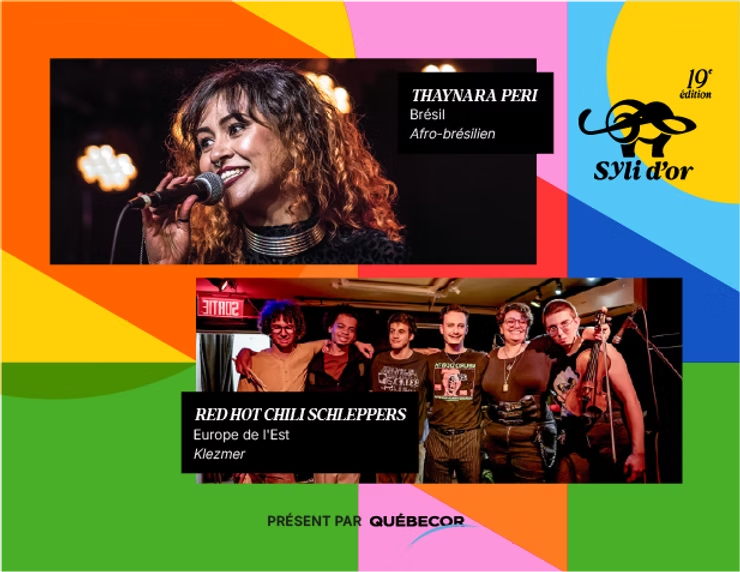
Thaynara Peri est une chanteuse, compositrice et percussionniste brésilienne basée à Montréal. Son parcours artistique se développe à la croisée des racines afro-brésiliennes et d’influences variées telles que le jazz, le rock et la bossa nova. Parallèlement à son travail personnel, Thaynara fait partie du groupe Tamboreal Samba Bloco, où elle se produit comme chanteuse et percussionniste. Avec le groupe, elle a participé au Festival International Nuits d’Afrique, une expérience marquante qui a nourri son rapport au groove, à l’énergie collective et à l’improvisation. Ses projets personnels reflètent cette richesse d’influences, mêlant ijexá, samba de coco et percussions traditionnelles à des harmonies contemporaines et une interprétation vocale à la fois puissante et sensible. Sur scène, Thaynara propose des performances immersives, ancrées dans le rythme, le mouvement et la présence.
Les Red Hot Chili Schleppers, c’est pas le klezmer de ta Bubbe ! Ce groupe montréalais revisite avec fougue et humour les airs traditionnels juifs dans un style qu’il décrit comme du « klezmer pour le club » : une fusion festive et débridée entre tradition et modernité. Leur musique fait tour à tour rire, pleurer et danser le public jusqu’au bout de la nuit. Depuis trois ans, les Red Hot Chili Schleppers enflamment les scènes à Montréal, au Québec et à travers le Canada, avec un sens du rythme contagieux et une joie de jouer irrésistible.

Thaynara Peri is a Brazilian singer, songwriter, and percussionist based in Montreal. Her artistic journey unfolds at the crossroads of Afro-Brazilian roots and diverse influences such as jazz, rock, and bossa nova. Alongside her solo work, Thaynara is a member of the group Tamboreal Samba Bloco, where she performs as both singer and percussionist. With the group, she took part in the Festival International Nuits d’Afrique, a defining experience that deepened her connection to groove, collective energy, and improvisation. Her personal projects reflect this wealth of influences, blending ijexá, samba de coco, and traditional percussion with contemporary harmonies and a vocal style that is both powerful and sensitive. On stage, Thaynara offers immersive performances rooted in rhythm, movement, and presence.
The Red Hot Chili Schleppers, this ain’t your Bubbe’s klezmer! This Montreal-based band brings new life to traditional Jewish tunes with infectious energy and humor, in a style they like to call “klezmer for the club.” A vibrant mix of old-world soul and modern groove. Their music will make you laugh, cry, and dance all night long. For the past three years, the Red Hot Chili Schleppers have been lighting up stages across Montreal, Quebec, and Canada, sharing their unmistakable energy and love of music wherever they go.

CE SPECTACLE EST GRATUIT!

Ce contenu provient du Club Balattou et est adapté par PAN M 360

Afrobeat / Kompa / Rara

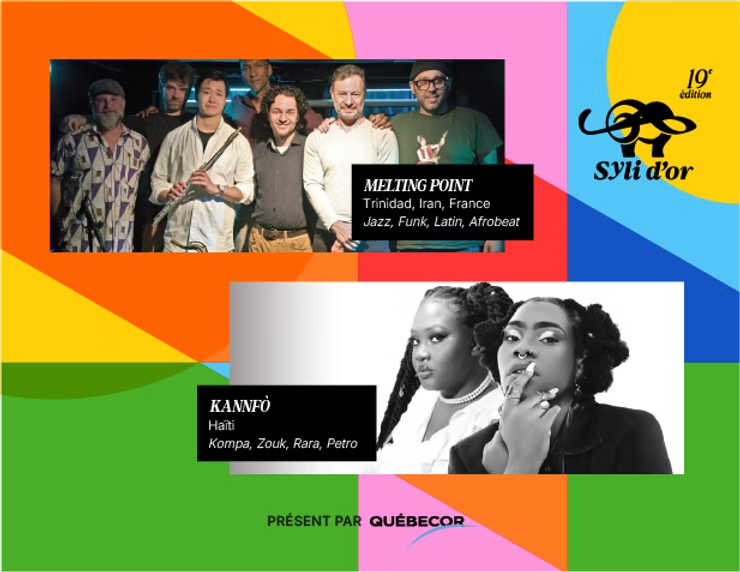
Syli d’Or : Melting Point & KANNFÒ au Balattou

by Rédaction PAN M 360

Melting Point réunit des musiciens venus d’horizons multiples, portés par des influences qui s’étendent des rythmes afro-antillais et du jazz modal aux différentes formes du funk, sans oublier les riches traditions musicales du Moyen-Orient. Cette diversité s’exprime dans une musique vivante et contrastée, nourrie de percussions polyrythmiques, de grooves puissants et de mélodies envoûtantes. Le groupe privilégie les compositions originales tout en revisitant avec créativité des standards de jazz et de funk. Leurs parcours et cultures variés forment un langage commun où se rencontrent expérience, liberté et expression collective. Chaque performance vise à créer un moment authentique, vibrant et profondément engageant, à l’image de leur métissage musical.
KANNFÒ est un collectif musical montréalais fondé par deux artistes d’origine haïtienne, RèN Darah et Ericka Julie. Tiré des mots créoles canne (racines) et fò (force), leur nom symbolise un ancrage caribéen à la fois profond et puissant. Leur musique fait dialoguer les rythmes traditionnels haïtiens – pétro, rara, konpa – avec les sonorités modernes, pour créer une expérience scénique vibrante où se rencontrent voix, percussions et mouvement. Ancienne danseuse et chanteuse formée en Haïti, Ericka Julie s’est illustrée sur les scènes internationales (Trinidad, Taïwan, Mali) avant de s’installer au Canada, où elle poursuit une démarche artistique engagée et plurielle. RèN Darah, quant à elle, est une chanteuse et autrice révélée par la scène québécoise, lauréate de plusieurs prix (dont le Kilimandjaro Award de la Voix féminine de l’année 2024), dont la musique mêle R&B, néo-soul et influences caribéennes. En unissant leurs univers, KANNFÒ célèbre la force des femmes et la richesse des identités afro-caribéennes à travers des performances puissantes, sensibles et profondément enracinées dans l’héritage haïtien.

Melting Point brings together musicians from diverse backgrounds, drawing inspiration from Afro-Caribbean rhythms, modal jazz, various forms of funk, and the rich musical traditions of the Middle East. This wide range of influences fuels a vibrant and dynamic sound, blending polyrhythmic percussion, infectious grooves, and captivating melodies. The group focuses on original compositions while bringing a fresh perspective to jazz and funk standards. Their varied cultural journeys shape a shared musical language rooted in experience, freedom, and collective expression. Each performance delivers an authentic, energetic, and deeply engaging experience that reflects their creative fusion of sounds and identities.
KANNFÒ is a Montreal-based musical collective founded by two Haitian artists, RèN Darah and Ericka Julie. The name, drawn from the Creole words canne (root) and fò (strength), symbolizes deep and vibrant Caribbean roots. Their music bridges traditional Haitian rhythms — pétro, rara, konpa — with contemporary sounds, creating a powerful stage experience where voice, percussion, and movement intertwine. A singer and dancer trained in Haiti, Ericka Julie has performed internationally (Trinidad, Taiwan, Mali) before settling in Canada, where she continues to expand her multidisciplinary artistic practice. RèN Darah, meanwhile, is a singer and songwriter emerging from the Quebec music scene — winner of several awards, including Female Voice of the Year at the 2024 Kilimandjaro Awards — whose sound blends R&B, neo-soul, and Caribbean influences. By combining their creative worlds, KANNFÒ celebrates the strength of women and the richness of Afro-Caribbean identities through performances that are powerful, heartfelt, and deeply rooted in Haitian heritage.

CE SPECTACLE EST GRATUIT!

Ce contenu provient du Club Balattou et est adapté par PAN M 360

classique

OSM : De Bartók à Mozart – flûte, improvisation et symphonie

by Rédaction PAN M 360

Le clarinettiste Kinan Azmeh séduit par son jeu fluide, nuancé et sa grande aisance à improviser. Aux côtés de l’OSM, il présente un programme où se croisent liberté créative, accents folkloriques de Bartók et sensibilité novatrice de Carl Philipp Emanuel Bach. La Symphonie no 39 de Mozart conclut ce programme avec fluidité et élégance.

Clarinetist Kinan Azmeh captivates audiences with his fluid, nuanced playing and remarkable improvisational talent. Joined by the OSM, he will showcase a program that blends creative freedom, Bartók’s folk-inspired motifs, and Carl Philipp Emanuel Bach’s innovative sensitivity. The evening concludes with Mozart’s graceful and elegant Symphony No. 39.

Programme

Béla Bartók, Six danses folkloriques roumaines (6min)
Carl Philipp Emanuel Bach, Concerto pour flûte, H.425, W.22 en re mineur (26min)
Kinan Azmeh, Suite for improvisor and orchestra (22min)
Wolfgang Amadeus Mozart, Symphonie no 39, K. 543 (29min)

Program

Béla Bartók, Six Romanian Folk Dances (6 min)
Carl Philipp Emanuel Bach, Concerto for Flute in D Minor, H. 425, W. 22 (26 min)
Kinan Azmeh, Suite for Improvisor and Orchestra (22 min)
Wolfgang Amadeus Mozart, Symphony No. 39, K. 543 (29 min)

POUR ACHETER VOTRE BILLET, C’EST ICI!

Ce contenu provient de l’Orchestre symphonique de Montréal et est adapté par PAN M 360

Subscribe to our newsletter