Festival du monde Arabe : Découverte de la musique arabe à l’Espace culturel Kawalees
by Rédaction PAN M 360
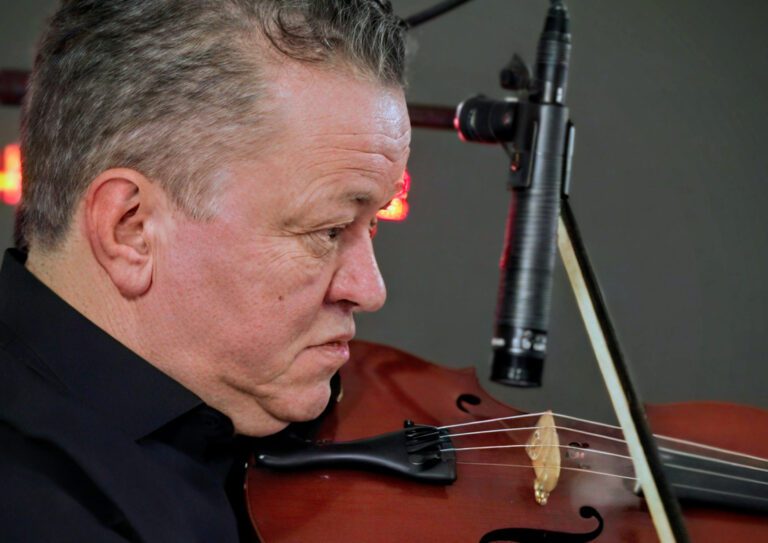
L’univers envoûtant des traditions musicales arabes s’offre à vous sous la guidance de Ridha Ben Mansour, violoniste, luthiste, compositeur et docteur en musicologie. Cette rencontre exclusive dévoile la fascinante diversité des écoles musicales arabes, des riches héritages du Maghreb aux expressions du Golfe, en passant par les traditions mésopotamiennes et les patrimoines égypto-syriens. Une sélection d’extraits audio-visuels et de démonstrations instrumentales vous initie à la complexité modale des maqams, la subtilité des cycles rythmiques et la profondeur historique de ces traditions millénaires. L’expiration de cette immersion collective s’achève sur une session collaborative où le public rejoint l’artiste pour une pratique rythmique et vocale partagée.
Violinist, oud player, composer, and doctor of musicology, Ridha Ben Mansour guides audiences through the dazzling diversity of Arabic musical traditions. From Maghrebi legacies to Gulf expressions, from Mesopotamian repertoires to Egyptian-Syrian heritage, this session explores modal maqams, rhythmic cycles, and the deep history of Arab music. The encounter concludes with a collaborative session where the audience joins the artist in shared rhythm and voice.
CE SPECTACLE EST GRATUIT!
Ce contenu provient du Festival du monde Arabe et est adapté par PAN M 360
You had to be in front of the Pub Molson stage last night at the Jazz Festival to hear a few tracks from the forthcoming album by Montreal saxophonist, composer and bandleader Beth McKenna. I love Beth’s music, I’ll admit. Not only her writing, but also her playing, present us with cinematic panoramas, within which images soar in sophisticated yet accessible lyrical flights. Beth creates modern jazz that communicates emotions directly to a wide audience, without ever abandoning the intellectual rigor required in the construction of her pieces. We can already anticipate that this album will be another solid opus. The title mentioned is Momentum, and Beth gave us a few excellent extracts to listen to, including “Raising Sam”(about taking care of her sick dog), “New Normal” (about all the negativity in the world)and the title track “Momentum”(about climbing up, against the odds and adversity).
After these ear-openers, which lasted for about half of the 6 p.m. set, the composer took us through excerpts from past albums, in a well-chosen program balanced between ballads and more assertive sonic outbursts. With her friends on stage, she confirmed her stature as one of the best musicians rising from the Montreal ecosystem.
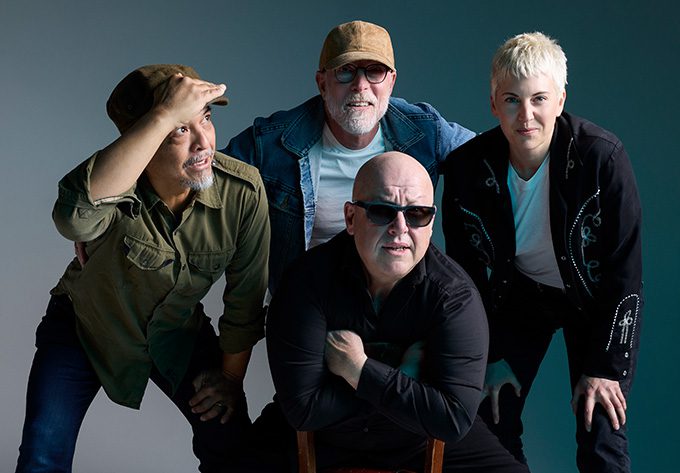
Suscitant une révolution avec leurs guitares tranchantes, leurs dynamiques en stop-start, leurs harmonies masculines et féminines entrelacées et leurs paroles évocatrices, Pixies est l’un des groupes les plus influents du rock alternatif. Sur des albums tels que Surfer Rosa (1988) et Doolittle (1989), ils ont renversé les conventions, mêlant punk et indie rock, pop classique, surf rock et riffs monumentaux avec les paroles fragmentées du chanteur/guitariste Black Francis, abordant des thèmes comme l’espace, la religion, le sexe, la mutilation et la culture pop. Ses mots pouvaient être cryptiques, mais la musique était puissante, jetant les bases de l’explosion du rock alternatif au début des années 90. Du grunge au britpop, l’ombre des Pixies était omniprésente ; il est difficile d’imaginer Nirvana sans la dynamique caractéristique des Pixies, avec ses alternances de fort et de doux et ses solos de guitare bruyants et déstabilisants. Cependant, le succès commercial du groupe n’a pas égalé son impact : MTV était réticente à diffuser leurs vidéos, et les radios rock modernes ne diffusaient pas régulièrement leurs singles. Lorsque Nirvana a ouvert la voie au rock alternatif en 1992, les Pixies étaient effectivement séparés. Pendant le reste des années 90 et dans les années 2000, ils ont continué à inspirer des groupes allant de Weezer, Radiohead et PJ Harvey aux Strokes et Arcade Fire. La réunion des Pixies en 2004 a été aussi surprenante que bienvenue, et leurs tournées fréquentes les ont conduits à enregistrer des albums, dont The Night the Zombies Came en 2024, qui a élargi leur son révolutionnaire en y incorporant des influences country et folk.
Sparking a revolution with their jagged guitars, stop-start dynamics, intertwining male-female harmonies and evocative lyrics, Pixies are one of alternative rock’s most influential bands. On albums such as 1988’s Surfer Rosa and 1989’s Doolittle, they upended conventions, melding punk and indie rock, classic pop, surf rock, and stadium-sized riffs with singer/guitarist Black Francis’ fragmented lyrics about space, religion, sex, mutilation, and pop culture. His words may have been cryptic, but the music was forceful, laying the groundwork for the alternative explosion of the early ’90s. From grunge to Brit-pop, Pixies’ shadow loomed large; it’s hard to imagine Nirvana without Pixies’ signature loud-quiet-loud dynamics and lurching, noisy guitar solos. However, the band’s commercial success didn’t match its impact — MTV was reluctant to play their videos, while modern rock radio didn’t put their singles into regular rotation. By the time Nirvana broke down the doors for alternative rock in 1992, Pixies were effectively disbanded. During the rest of the ’90s and into the 2000s, they continued to inspire acts ranging from Weezer, Radiohead, and PJ Harvey to the Strokes and Arcade Fire. Pixies’ 2004 reunion was as surprising as it was welcome, and the band’s frequent tours led them to record albums including 2024’s The Night the Zombies Came, which expanded their groundbreaking sound with country and folk influences.
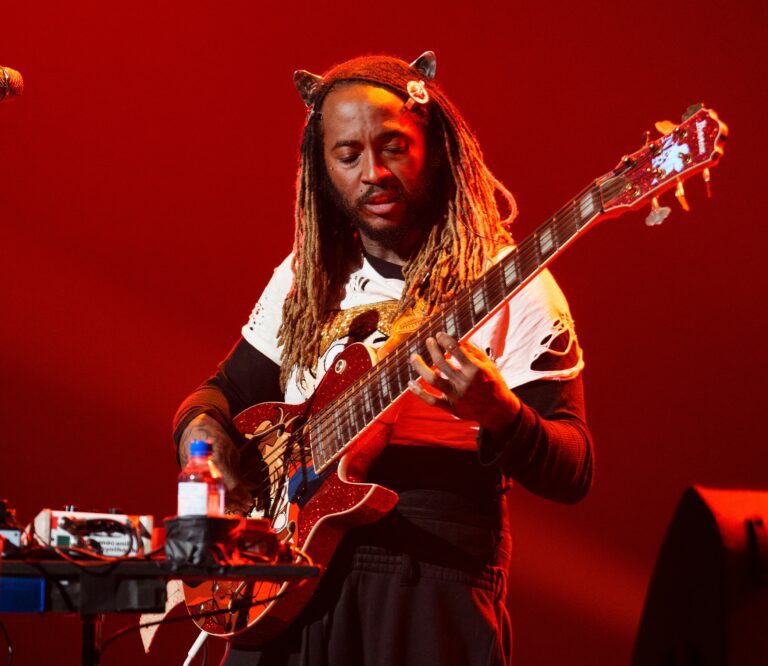
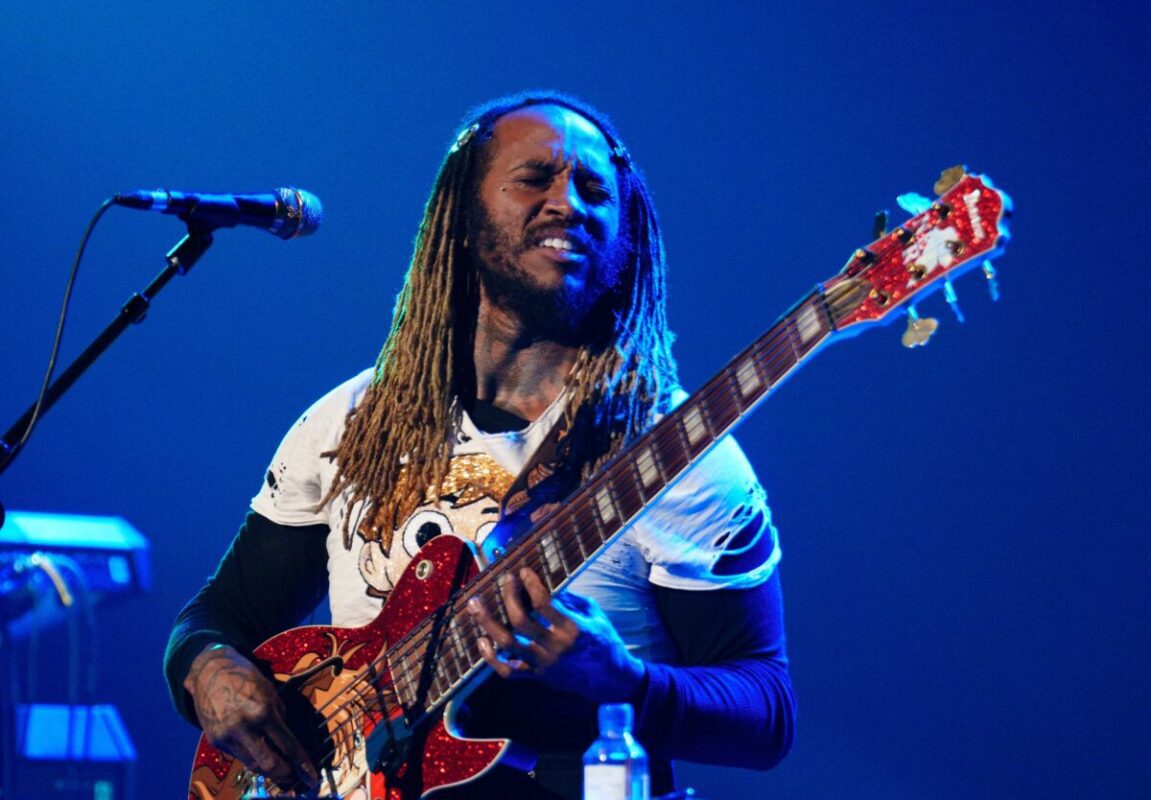
If there’s one thing to remember about Thundercat’s appearance at Salle Wilfrid-Pelletier on Tuesday, it’s that there are two very distinct sides to this internationally renowned virtuoso: the one we discover on the album, and the one he offers on stage. Fans in attendance were quick to recognize the latter.
For almost two hours, the American bassist transformed each of his tracks into a springboard for long, heartfelt and hypnotic improvisational outbursts. Iconic orange Ibanez six-string in hand, Thundercat – real name Stephen Lee Bruner – drew from the four corners of his discography, concentrating mainly on his most recent project, It Is What It Is.
At centre stage, the Californian was having the time of his life in the company of his long-time acolytes and excellent musicians: Justin Brown on drums and Dennis Hamm on keyboards. With a smile on his face, and more often than not with his eyelids closed, the 40-year-old artist let himself be carried away by his creative impulses, navigating between jazz fusion, R&B, funk and hip-hop.
As he abandoned himself to the task, the audience followed, carried along by sudden but always controlled changes of direction.
Opening with “Lost in Space” / “Great Scott” / “22-26,” “Interstellar Love” then “Overseas,” the trio set the tone for this almost videogame-esque jazz celebration. Looking like a modern George Duke or Marvin Gaye, Thundercat brilliantly superimposed his ethereal, dreamy voice on the trio’s enveloping foundations. At times buried by the instruments, the singer would have benefited from a more generous gain on his microphone.
With over twenty years’ experience on the music scene, everything seemed so easy for him. Thundercat was able to change moods and interact with the crowd with ease. The highlight of the evening came when he invited a young man on stage to dance during his two most popular songs,“Them Changes”and “Funny Thing.“
The evening ended on a high note when the Festival de Jazz presented him with the Miles Davis Award, a distinction bestowed each year to a jazz artist in recognition of his or her contribution to the renewal of the genre. Whether for his many visits to Montreal, his solo offerings or his landmark collaborations with Kendrick Lamar, Erykah Badu, Childish Gambino or even Kamasi Washington, this recognition is more than deserved.
Seeing Thundercat on stage is a very different experience from what you might expect. Despite the fact that a few spectators have left the room, once you’ve grasped the delirium, you’re fully on board.
It’s already been five years since his last album. Can’t wait for some new material, sooner rather than later.
Festival International de Jazz de Montréal : Dhafer Youssef au Théâtre Maisonneuve
by Rédaction PAN M 360
Dhafer Youssef est reconnu comme un artiste pionnier qui a contribué à faire entrer la musique du Moyen-Orient sur la scène internationale du jazz et de la musique du monde. Le jeu de oud de Dhafer Youssef est exceptionnellement expressif, techniquement brillant et défie les genres. Son profond respect de la tradition et son approche novatrice du son ont fait de lui l’un des oudistes les plus influents de la scène musicale contemporaine. Le jeu de Youssef n’est pas seulement impressionnant d’un point de vue technique, il est aussi fascinant d’un point de vue émotionnel. Sa capacité à exprimer des émotions complexes – qu’il s’agisse de mélancolie, de joie ou de mysticisme – à travers son instrument est l’une des caractéristiques de son jeu. L’oud lui-même, avec ses sonorités chaudes et résonnantes, devient un canal pour son expression personnelle, ce qui donne à chaque représentation un caractère intime et profondément personnel.
Dhafer Youssef is recognized as a pioneering artist who has helped bring the music of the Middle East into the global jazz and world music scene. Dhafer Youssef’s oud playing is uniquely expressive, technically brilliant, and genre-defying. His deep respect for tradition combined with his innovative approach to sound has made him one of the most influential oud players in the contemporary music scene. Youssef’s oud playing is not just technically impressive, but also emotionally compelling. His ability to express complex emotions — whether melancholy, joy, or mysticism — through his instrument is one of the hallmarks of his playing. The oud itself, with its warm, resonant tones, becomes a conduit for his personal expression, making each performance feel intimate and deeply personal.
FIJM | Queen of Afrobeats, Ayra confirms her status as a Global… Starr
by Sandra Gasana
Ayra Starr’s concert was certainly one of the highlights of this early summer. The crowd was stretched far as the eye could see, and getting around was a miracle—it was like being in a can of sardines, with everyone pressed up against each other. Record attendance?The rain had stopped a few minutes before the start of this memorable show, as Mother Nature guessed it was time to let festival-goers enjoy their long-awaited moment.
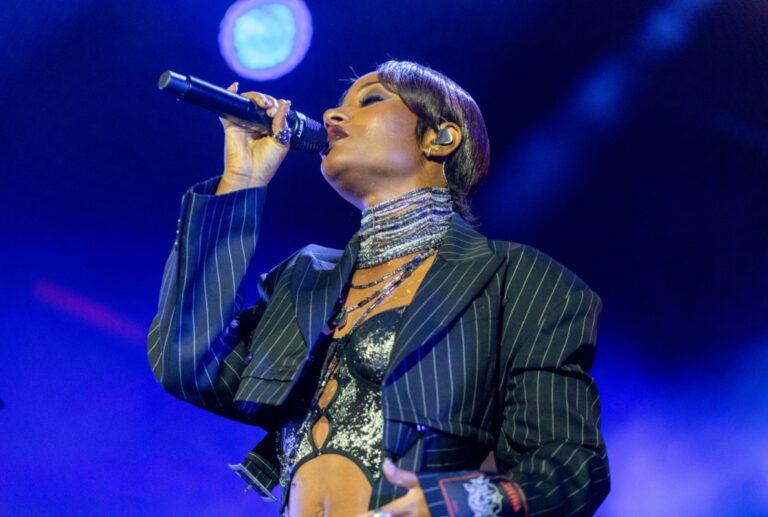
After a brief introduction by her DJ, who admittedly wasn’t very good, she took to the stage accompanied by her four dancers. Short hair, necklaces covering her neck, a costume with a sexy bodice inside, in short, the Nigerian diva was ready to blow her audience’s mind.
Given the scorching heat, she took off her jacket at the end of the second song, showing off her bodice. She was joined by a drummer, a guitarist and a keyboardist, all there to turn up the heat on an evening that will live long in the memory of festival-goers.
“Montreal, are you okay?” she asks, addressing the crowd, something she doesn’t do much during the show, except to get them to sing along.
The lighting changed according to the song, while a screen showed images of the singer from behind. All of her hits have been featured, including her most recent hit “Gimme Dat,” on which she featured Wizkid, and “Bloody Samaritan” and “Fashion Killer,” which appear on her album 19 & Dangerous.
The queen of Afrobeats (she shares the imperial throne with Burna Boy) also showed us her dancing talents with her lascivious choreography and her famous signature twerk.
After a few songs from his repertoire, the DJ returned to the stage to entertain the crowd with American pop songs, a major faux pas of the evening, as Ayra stood close behind him. Usually, these interludes are to allow the artist to take a break or have a costume change, but not here. We felt like we were in an open-air discotheque.
Fortunately, this break didn’t last too long, as the talented dancers, who also contributed to the show’s success, returned first on their own, closely followed by Ayra, back to finish off the crowd. In this portion of the evening, we were treated to tracks from her most recent album, The Year I Turned 21, such as “Woman Commando” on which she collaborated with Anitta and Coco Jones with passages in Spanish, before moving on to “Last Heartbreak Song” with Giveon, another highlight of the evening. She couldn’t have ended the evening without giving us the hit “Rush,” during which she asked the crowd to turn on their cell phone lights. The Place des Festivals was absolutely luminous on Tuesday July 1st, in the image of the Nigerian global… Starr.
Festival International Nuits d’Afrique : Sarāb au Ministère
by Rédaction PAN M 360
En langue arabe, leur nom signifie mirage. Point de tromperie ni d’illusion ici, rien que de la féérie. Sarāb entraîne l’auditoire dans un irrésistible monde en clair-obscur où se mêlent transe et moments suspendus, aux confins des musiques syriennes, égyptiennes, jazz et rock. “Une patte. Un son. De la classe” (FIP, 2024). Comme en témoigne leur troisième album, Qawalebese Tape (2023), l’univers musical de Sarāb est vaste. Tantôt il s’écoute ; tantôt il se danse. Il s’étend de la trap, au dub, au metal et au rock, porte des thématiques fortes et engagées, sans jamais perdre le fil d’une trame narrative enracinée dans la poésie des maqâmât arabes classiques, magnifiquement porté par la voix de la chanteuse Climène Zarkan et par les sonorités cuivrées.
“In Arabic, their name means ‘mirage.’ There is no deception or illusion here though, only enchantment. Sarāb brings their audience into an irresistible chiaroscuro world of trance and suspended moments, on the fringes of Syrian, Egyptian, jazz and rock music. ”A distinctive style. A sound. Pure class” (FIP, 2024). Their third album Qawalebese Tape is further proof that Sarāb inhabits a vast musical universe that invites listeners to sing and dance along to their music, which extends from trap to dub, metal and rock, while conveying strong, socially engaged messages without ever losing the thread of a narrative rooted in the poetry of classical Arab maqâmât, all of which is magnificently carried by the voice of singer Climène Zarkan and the dazzling sound of the trombone.
Brel & Barbara – Héros fragiles à la Cinquième Salle
by Rédaction PAN M 360
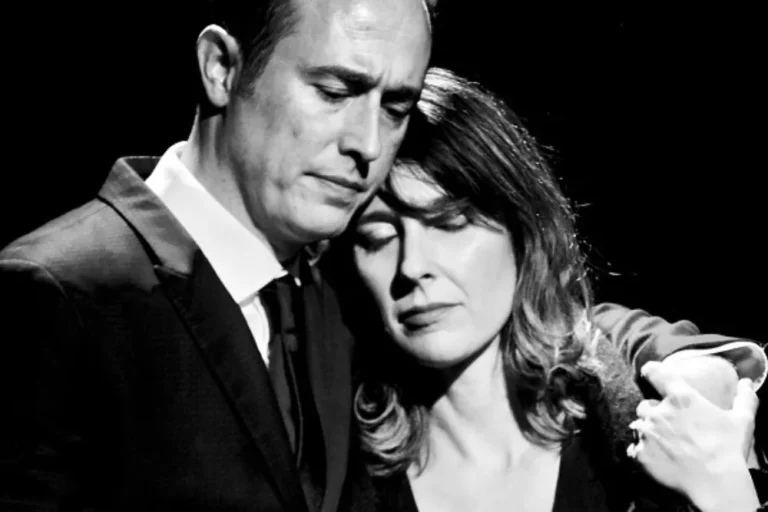
Une interprétation sensible et respectueuse de Brel et Barbara. Dans ce tour de chant unique où se mêlent souvenirs et scènes théâtrales, Julie Daoust et Renaud Paradis que le grand public a connu dans le téléroman « l’Auberge du chien Noir » nous font découvrir en chanson la relation particulière qui liait Brel et Barbara, par leur interprétation sensible et respectueuse. Une soirée émouvante, pleine d’humour et de tendresse. Au piano, le grand Philippe Noireaut. Une soirée unique où l’on jette un éclairage nouveau, en chansons et en souvenirs, sur l’amitié méconnue qui a lié Barbara et Brel, ces deux géants de la chanson.
A sensitive and respectful interpretation of Brel and Barbara. In this unique concert blending memories and theatrical scenes, Julie Daoust and Renaud Paradis, well known to the public from the TV series L’Auberge du chien noir—invite us to rediscover the special relationship that bound Brel and Barbara through their heartfelt and respectful performances. An emotional evening, filled with humor and tenderness. At the piano: the renowned Philippe Noireaut. A one-of-a-kind event that casts new light, through songs and recollections, on the little-known friendship that connected Barbara and Brel, two giants of French chanson.
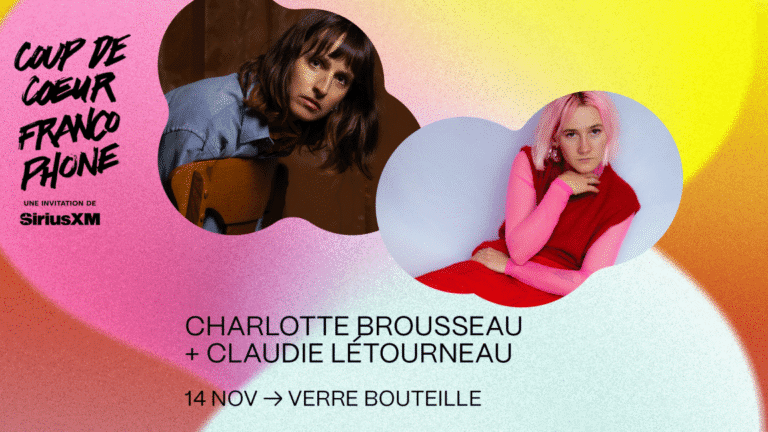
Coup de coeur francophone : Claudie Létourneau et Charlotte Brousseau au Verre Bouteille
by Rédaction PAN M 360
Claudie Létourneau
C’est vrai qu’il arrive que la musique de Claudie Létourneau mouille les yeux. C’est vrai aussi qu’elle parvient par moments à délier les hanches. C’est une musique qui fait pop, une bulle rose éclatée comme celle qui vit « sous ses cheveux tempête », sensible et pétillante. Si « La neige tombe » avant l’hiver pour l’autrice-compositrice-interprète, c’est qu’avec le printemps viendra la suite, un premier vrai album.
It’s true that Claudie Létourneau’s music sometimes brings tears to the eyes. It’s also true that at times it gets the hips moving. Her music is pop at heart, a pink bubble bursting like the one that lives “beneath her stormy hair,” sensitive and full of spark. If “La neige tombe” before winter for the singer-songwriter, it’s because spring will bring what’s next: a first full-length album.
Charlotte Brousseau
Charlotte Brousseau a un faible pour les moments suspendus, les contrastes de lumière, les floraisons d’instruments, les détours mélodiques qui débouchent sur des clairières d’une beauté inattendue. Comme du cinéma, les chansons de son Plus de fleurs que de fleuve, coréalisé avec Antoine Corriveau, sont des récits en mot-images et en cordes, des épopées de folk qui font des cercles d’onde dans les eaux plus ou moins troubles de la prog, la pop, le jazz ou la psychédélique.
Charlotte Brousseau has a weakness for suspended moments, for contrasts of light, for instrumental blooms, for melodic detours that open onto clearings of unexpected beauty. Like cinema, the songs of her Plus de fleurs que de fleuve, co-produced with Antoine Corriveau, are word-images and string-filled tales, folk epics sending ripples through the shifting waters of prog, pop, jazz, and psychedelia.
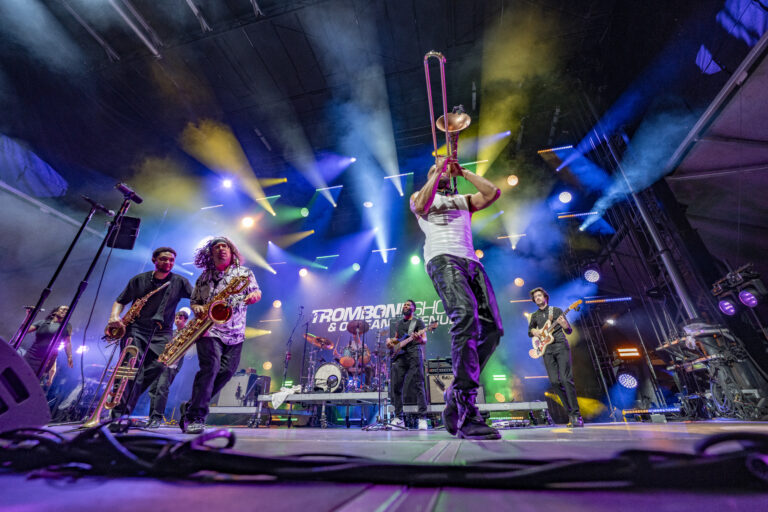
New Orleans trombonist (and trumpeter) Troy Andrews, aka Trombone Shorty, was the fiery guide to an incandescent evening. He and his long-time friends (New Orleans Avenue) blasted the TD Stage from 9:30 to 11pm non-stop with familiar tracks from Shorty’s most recent albums. Funk that grooves roundly, powerfully, with echoes of rock, hip-hop and salsa, in a staging that puts his friends as much at the forefront as the leader himself. This is evidenced by the exciting exchanges between trombone, tenor sax and baritone, where the sprays of notes hammered out in counterpoint verging on learned repetitive minimalism, before setting off again in an irresistible groovy cacophony with the rest of the band.
Trombone Shorty is also into trumpet, and impresses with a long sequence (a minute and a half or two minutes?) of uninterrupted breathing, which he achieves thanks to the continuous breathing technique. Not easy to do, and not easy to control. While you breathe out through your mouth to play the note, you breathe in through your nose to refill your lungs. Try it and see. A highlight that will live long in the memory: “When the Saints Go Marchin’ In,” with the band members lining up, descending and crossing the crowd. In what other city would star musicians feel so comfortable strolling like this through a human tide of tens of thousands of people? Not that many, I’m sure! Vive Montréal!
par Frederic Cardin
Subscribe to our newsletter
Gérez votre confidentialité
Nous utilisons des technologies telles que les cookies pour stocker et/ou accéder aux informations des appareils. Nous le faisons pour améliorer l’expérience de navigation et pour afficher des publicités (non-) personnalisées. Consentir à ces technologies nous permettra de traiter des données telles que le comportement de navigation ou les ID uniques sur ce site. Le fait de ne pas consentir ou de retirer son consentement peut avoir un effet négatif sur certaines fonctionnalités et fonctions.
Functional
Always active
The technical storage or access is strictly necessary for the legitimate purpose of enabling the use of a specific service explicitly requested by the subscriber or user, or for the sole purpose of carrying out the transmission of a communication over an electronic communications network.
Preferences
The technical storage or access is necessary for the legitimate purpose of storing preferences that are not requested by the subscriber or user.
Statistics
The technical storage or access that is used exclusively for statistical purposes.The technical storage or access that is used exclusively for anonymous statistical purposes. Without a subpoena, voluntary compliance on the part of your Internet Service Provider, or additional records from a third party, information stored or retrieved for this purpose alone cannot usually be used to identify you.
Marketing
The technical storage or access is required to create user profiles to send advertising, or to track the user on a website or across several websites for similar marketing purposes.