Chanteuse et autrice-compositrice à l’univers sombre mais déterminé, Gigi Perez — alias gigi — propose un folk-rock indie sincère, dans la lignée d’artistes comme Lucy Dacus ou Julien Baker. Elle connaît un succès fulgurant en 2021 avec son premier single acoustique auto-produit, Sometimes (Backwood), qui grimpe en tête des plateformes de streaming. Elle étoffe ensuite son style en mêlant guitare acoustique, synthés atmosphériques et arrangements indie rock sur son premier EP en maison de disques, How to Catch a Falling Knife (2023). En 2024, elle atteint le grand public avec Sailor Song, un succès international intégré à son premier album, At the Beach, In Every Life (2025), qu’elle réalise elle-même et qui explore avec intensité les thèmes du deuil.
A singer/songwriter with a brooding but strong-willed style, Gigi Perez — aka gigi — makes earnest indie folk-rock that recalls contemporaries like Lucy Dacus and Julien Baker. She went straight to the top of the streaming charts in 2021 with her self-released debut single, the acoustic “Sometimes (Backwood),” then strengthened her sound with a mix of acoustic guitar, atmospheric synths, and full-band indie rock arrangements on her major-label debut, the EP How to Catch a Falling Knife, in 2023. A year later, she vaulted to mainstream success with “Sailor Song,” an internationally charting hit that was included on her self-produced debut album, 2025’s grief-infused At the Beach, In Every Life.
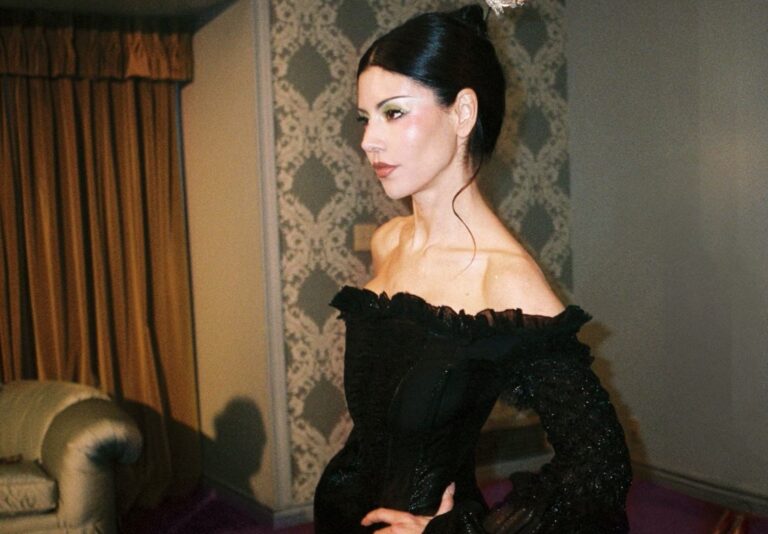
Avec son chant dramatique teinté de new wave et son sens aigu de la mélodie, Marina compose des morceaux pop aux claviers omniprésents, oscillant entre ballades mélancoliques, électro-pop scintillante et glam théâtral. Connue d’abord sous le nom Marina and the Diamonds, elle sort trois albums classés au Royaume-Uni et au Billboard 200 dans les années 2010, avant de se recentrer sur une esthétique plus épurée avec Love + Fear (2019), sous le simple nom de Marina. En 2021, elle renoue avec le son qui avait séduit ses premiers fans grâce à Ancient Dreams in a Modern Land, porté par le hit Man’s World, nommé aux Igor Novello Awards. Après la publication du recueil de poésie Eat the World en 2024, elle fait paraître en 2025 son sixième album studio, Princess of Power.
With a distinctively dramatic, new wave-influenced vocal delivery and melodic style, Marina’s keyboard-driven pop songs vary from melancholic ballads to shimmering electro-pop and theatrical glam. The singer and songwriter released three U.K.- and Billboard 200-charting albums as Marina and the Diamonds during the 2010s before rebranding as simply Marina with 2019’s stripped-back Love + Fear. In 2021, she returned to a sound familiar to fans of her early work on Ancient Dreams in a Modern Land, which featured the Igor Novello-nominated hit “Man’s World.” After publishing 2024’s Eat the World: A Collection of Poems, she issued her sixth full-length, 2025’s Princess of Power.
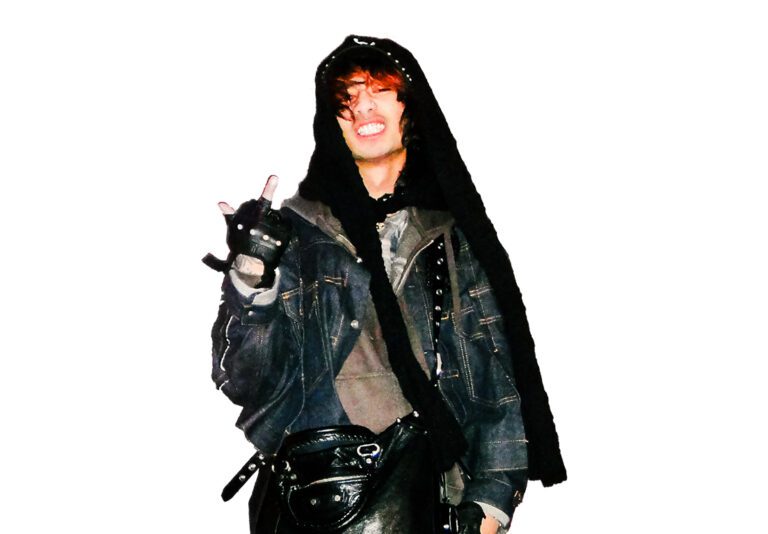
Originaire de San Diego, ISOxo propose un mélange survolté de plusieurs styles de musique bass, dont le trap, le dubstep, l’electro-house et la wave. Il commence à diffuser ses morceaux épiques et chargés d’adrénaline vers 2017, et se fait véritablement remarquer avec son premier EP, Nightrealm, sorti en 2021, qui reçoit le soutien d’artistes comme Skrillex et Alison Wonderland. En 2022, il publie Niteharts, un ensemble de remixes en collaboration avec son complice de longue date Knock2. Son premier album complet, kidsgonemad!, voit le jour en 2023, suivi en 2024 d’une version deluxe intitulée KGM(irl), ainsi que de 4EVR, un autre projet commun avec Knock2 sous le nom ISOKNOCK.
San Diego’s ISOxo produces an exhilarating blend of several forms of bass music, including trap, dubstep, electro-house, and wave. He began releasing his epic, thrill-packed songs around 2017, and issued his debut EP, Nightrealm, in 2021, gaining support from Skrillex and Alison Wonderland, among others. Niteharts, a remix set with longtime collaborator Knock2, appeared in 2022, and ISOxo’s debut full-length, kidsgonemad!, arrived in 2023. Deluxe version KGM(irl)* followed in 2024, as well as 4EVR, another Knock2 collaboration (as ISOKNOCK).
Festival de Lanaudière | Marc-André Hamelin and Dover Quartet : Music That Resonates
by Frédéric Cardin
After heroically saving the Orchestre Métropolitain concert last July 27th (READ MY REVIEW HERE), pianist Marc-André Hamelin last night offered the program for which he had been initially called. It was taking place at the Mascouche Church (north east of Montreal), which was very well attended for the occasion. We are delighted because the evening was beautiful.
Hamelin launched the program with a sonata by Nikolai Medtner, the one in A minor, Op. 38 No. 1, “Reminiscenza.” It’s a single-movement piece, about 15 minutes long, that skillfully blends, as is the case with Medtner, Rachmaninoff-esque romantic impulses with German contrapuntal density. This sonata is unusual in that it is part of a larger cycle of eight “forgotten melodies” (reminiscenza), hence the numerical cataloging. Op. 38 No. 1 is the most extensive of the eight, a true sonata in its own right that was strangely inserted into a thematic suite. It begins with a gentle melody with nostalgic echoes before developing into something increasingly dense and agitated, and then returning to the spirit of initial simplicity. Hamelin played it with force, although the church’s rather reverberant acoustics somewhat blurred the contours of the piece.
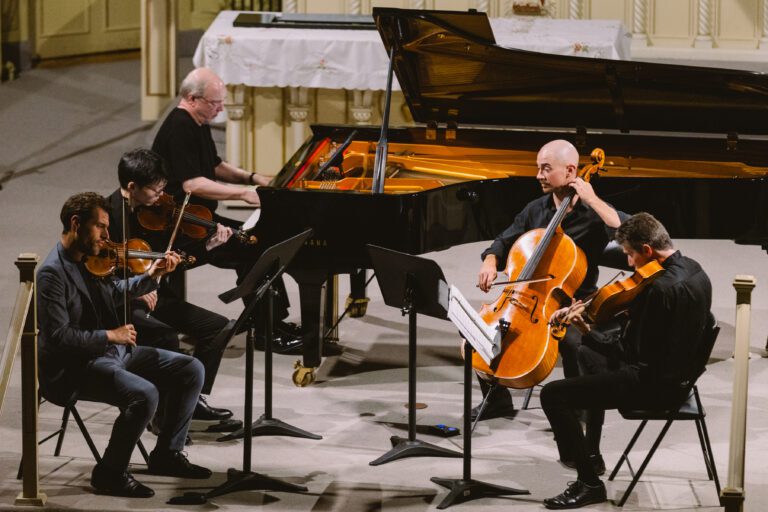
Next was the American Dover Quartet, formed at the Curtis Institute. The group is solid and has numerous acclaimed and award-winning recordings to their credit. The usual violist, Julianne Lee, was unable to attend, so she was replaced by Pierre Lapointe. No, of course not the one heard the day before with OM on Mount Royal, who is a popular singer in Quebec. Rather a Canadian violist born in Hull and based in Texas, who is unfortunately little known here. The poor man is almost impossible to find on the francophone web. Type in Pierre Lapointe, add “alto” or even “violin,” and the entire results page will still be taken up by the Quebec pop artist. Too bad, because he showed very good skills with the rest of the group. Technically solid, expressive, although a bit muted in terms of projection, with some exceptions.
Thus formed, the Dover Quartet launched Tchaikovsky’s captivating String Quartet No. 1 in D major, Op. 11, with a somewhat thin, almost acidic sound. For comparison, listen to the St. Lawrence playing the same entrance, this theme so powerfully linked to the Russian soul, and feel the roundness of the sound, with its wonderful dark and deep color like an abyss. I admit, I prefer this way. That said, the Dover Quartet quickly regained their composure and delivered a very lyrical performance, particularly in the superb (and extremely famous) Andante cantabile, and in the Finale, which was also imbued with convincing vital energy. The last two chords could have been a bit better held, less rushed, but the audience went for a bathroom break happily humming the unforgettable theme.
The main piece was César Franck’s Piano Quintet in F minor, FWV 7, which brought together Hamelin and the quartet. The quintet is a powerful construction, with passages that give you chills. I’m thinking especially of the second movement, with its sublime chords imbued with poignant spirituality, even transcendent mysticism. Not all string quartets manage to recreate that moment in its emotional intensity. Not all pianists join in with the necessary delicacy. That was the case yesterday, and therefore a very beautiful moment of music. The final movement was performed with effective feverishness, driven by precise articulations, although, once again, somewhat blurred by the resonant vastness of the space. It makes me want to recommend a comparison (if you were present and can make it) : go listen to the same Marc-André Hamelin, with a four-star quartet (Joshua Bell, Pamela Franck, Nobuko Imai, and Steven Isserlis) in a recording captured live at Verbier: the clarity of the voices is remarkable, as is the dramatic intent of the writing, in a sound recording that is much clearer than the in-situ projection at the Mascouche church. A noticeable difference.
Nevertheless, the expressive fire and quality of playing of the five musicians on stage gave the audience present an excellent concert of high-quality music. A heartfelt ovation was given, and rightly so.
Artiste aux multiples talents, Shaboozey est un musicien, cinéaste, auteur et producteur éclectique, dont le style puise son inspiration dans des univers aussi variés que la musique country, le rock classique, la pop des années 1980, l’afrobeat, le jazz et le hip-hop. Bien qu’il se fasse connaître dès 2014 avec le single Jeff Gordon, ce n’est qu’en 2018 qu’il sort son premier album officiel, Lady Wrangler. Il enchaîne en 2022 avec Cowboys Live Forever, Outlaws Never Die, un album mêlant country et trap. En 2024, il participe à l’album Cowboy Carter de Beyoncé, avant de connaître un véritable tournant dans sa carrière avec son troisième album, Where I’ve Been, Isn’t Where I’m Going. Porté par le tube A Bar Song (Tipsy) — numéro un du classement Hot Country Songs et nommé aux Grammy Awards —, cet album consacre Shaboozey comme l’un des visages majeurs d’une nouvelle génération d’artistes qui redéfinissent les frontières des genres musicaux.
The genre-blending multi-hyphenate known as Shaboozey is an eclectic musician, filmmaker, author, and producer whose sound draws varied inspiration from country music, classic rock, ’80s pop culture, Afrobeat, jazz, and hip-hop. Though his first output arrived in 2014 in the form of the “Jeff Gordon” single, he wouldn’t release his official debut full-length until 2018. That album, Lady Wrangler, was followed by the country- and trap-infused Cowboys Live Forever, Outlaws Never Die in 2022. Along with contributing to Beyoncé’s Cowboy Carter album, he topped the Hot Country Songs chart with the Grammy-nominated “A Bar Song (Tipsy)” off his breakout third album, 2024’s Where I’ve Been, Isn’t Where I’m Going.
La chanteuse et autrice-compositrice Gracie Abrams s’illustre dans une pop moderne stylisée et mélancolique, au son évolutif subtilement influencé par Lorde. Elle se fait d’abord connaître en ligne à la fin des années 2010 grâce à une série régulière de singles, avant de percer en 2020 avec les titres 21 et I Miss You, I’m Sorry, extraits de son EP Minor. Elle collabore ensuite avec Benny Blanco sur le titre très médiatisé Unlearn en 2021, avant de sortir un second EP, This Is What It Feels Like. Son premier album, Good Riddance, coécrit avec Aaron Dessner (du groupe The National), paraît début 2023 et lui vaut une nomination au Grammy Award de la Révélation de l’année. Bien que cet album ait rencontré un bon succès au Royaume-Uni et en Irlande, c’est avec son deuxième album, The Secret of Us, qu’Abrams atteint de nouveaux sommets deux ans plus tard : numéro deux aux États-Unis, numéro un au Royaume-Uni et en Australie. Également coécrit avec Dessner, l’album comprend une collaboration remarquée avec Taylor Swift sur le morceau us..
Singer/songwriter Gracie Abrams specializes in a stylized, moody modern pop with a subtly shifting sound partially indebted to Lorde. Abrams cultivated an online following through a steady series of single releases appearing at the end of the 2010s, experiencing a breakthrough in 2020 with the singles “21” and “I Miss You, I’m Sorry” from her EP Minor. She also worked with Benny Blanco on the high-profile 2021 track “Unlearn” before releasing her sophomore EP, This Is What It Feels Like. Abrams’ debut album, the Aaron Dessner co-penned Good Riddance, arrived in early 2023, and she was later nominated for a Best New Artist Grammy Award. While that album had charted well in the U.K. and Ireland, two years later she landed in the Top Two in the U.S. (number two), U.K. (number one), and Australia (number one) with her sophomore album, The Secret of Us. Again co-written with Dessner, it featured a collaboration with Taylor Swift (“us.”).
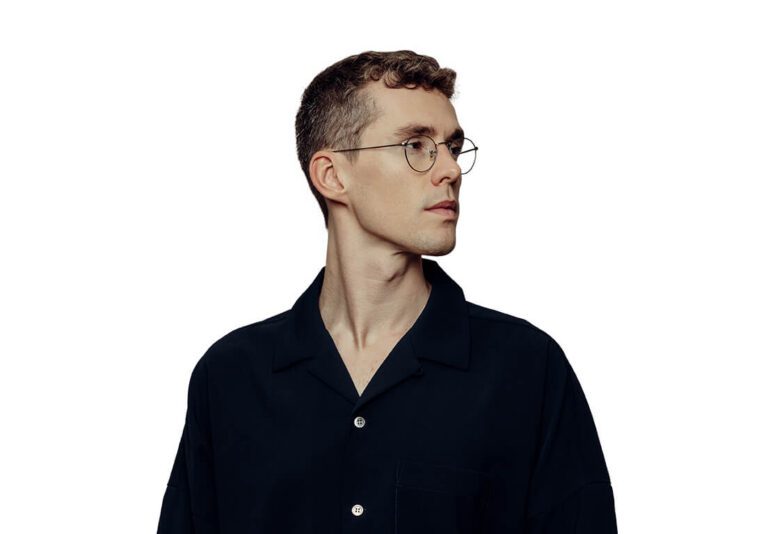
Le producteur belge Lost Frequencies a connu un immense succès international grâce à ses morceaux de dance ensoleillés et mélancoliques, ses remixes et ses collaborations. Il s’est fait remarquer en 2014 avec Are You with Me, un titre de tropical house basé sur une chanson country d’Easton Corbin, qui s’est hissé en tête des classements à cinq reprises en Belgique et a donné lieu à plus d’une douzaine de titres certifiés or, platine ou diamant. Ce morceau figure sur son premier album Less Is More (2016), aux côtés d’autres grands succès comme Reality (avec Janieck Devy) et une reprise de What Is Love de Haddaway. Son deuxième album, Alive and Feeling Fine (2019), inclut d’autres tubes comme Crazy (avec Zonderling) et Melody (avec James Blunt). Après la sortie de l’EP Cup of Beats en 2020, Lost Frequencies poursuit sur sa lancée avec des hits tels que Rise et Where Are You Now (avec Calum Scott) en 2021, Questions (avec James Arthur) en 2022, et The Feeling en 2023, un titre aux accents country.
Belgian producer Lost Frequencies has achieved massive international success with his sunny yet wistful dance tracks, remixes, and collaborations. Beginning with his 2014 breakout hit “Are You with Me,” a tropical house track based on a country song by Easton Corbin, he topped the charts in his home country five times, and released more than a dozen tracks that have been certified gold, platinum, or diamond. The song appeared on his 2016 full-length Less Is More, along with other major hits like “Reality” (featuring Janieck Devy) and a cover of Haddaway’s “What Is Love.” 2019’s Alive and Feeling Fine included further smashes like “Crazy” (with Zonderling) and “Melody” (featuring James Blunt). After releasing the EP Cup of Beats in 2020, Lost Frequencies scored further hits with 2021’s “Rise” and “Where Are You Now” (with Calum Scott), 2022’s “Questions” (with James Arthur), and 2023’s country-infused “The Feeling.”
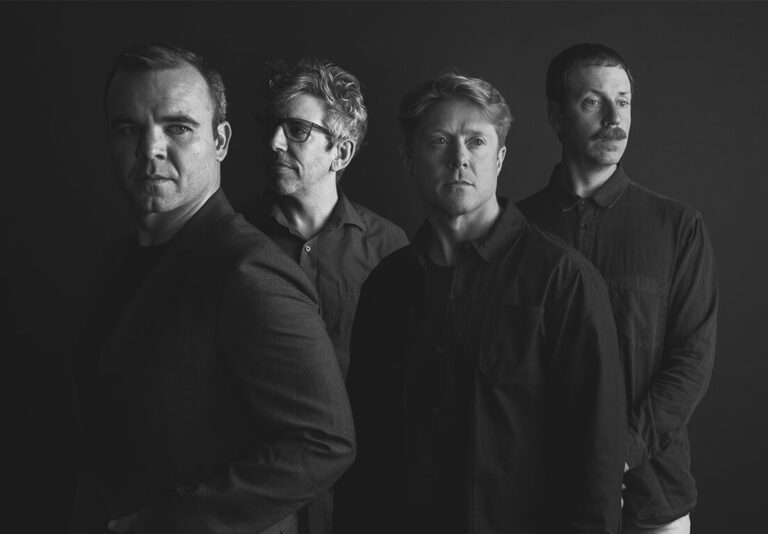
Le groupe Future Islands s’est forgé une identité sonore reconnaissable grâce à un synth-pop élégant, dépourvu de guitares, contrebalancé par les hurlements, gémissements et élans lyriques du charismatique chanteur Samuel T. Herring. Basé à Baltimore, le groupe affine son style au fil de plusieurs albums prometteurs, avant de percer en 2014 avec l’album quasi parfait Singles et une performance mémorable dans l’émission Late Night with David Letterman. Le sens du risque vocal de Herring et les mélodies amples du groupe atteignent un nouveau sommet avec The Far Field (2017), puis avec le plus mélancolique As Long as You Are (2020). Leur septième album, People Who Aren’t There Anymore (2024), mêle morceaux énergiques et ballades plus lentes.
Future Islands’ trademark sound is sleek, guitar-less synth pop balanced with the howls, yelps, and croons of dynamic vocalist Samuel T. Herring. The Baltimore-based group honed their sound on a series of promising albums before their near-perfect 2014 LP Singles and a stunning appearance on Late Night with David Letterman vaulted them to prominence. Herring’s daring as a vocalist and the band’s sweeping melodies were further honed to a point on the slick 2017 album The Far Field and 2020’s melancholy As Long as You Are. Their seventh full-length, People Who Aren’t There Anymore, a mixture of energetic numbers and slow jams, arrived in 2024.
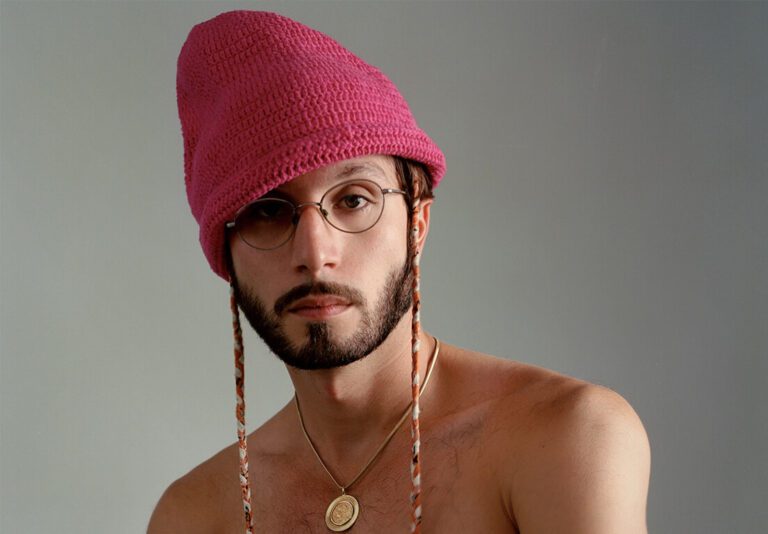
Chanteur et rappeur canadien irrévérencieux, bbno$ (prononcé “baby no money”) mélange hip-hop, R&B et musique électronique dans un style accrocheur et hypnotique. Il se fait connaître à la fin des années 2010 et connaît un succès viral en 2019 avec le single Lalala, produit par Y2K, certifié platine et classé dans les charts en Europe, en Australasie et aux États-Unis. Collaborateur régulier de l’excentrique Yung Gravy, notamment dans la série d’albums Baby Gravy, bbno$ poursuit sa carrière avec des disques inventifs comme Goodluck, Have Fun (2020) et Bag or Die (2022). En 2024, il revient avec plusieurs singles, dont It Boy.
Irreverent Canadian singer/songwriter bbno$ (“baby no money”) blends hip-hop, R&B, and electronic influences into a catchy and hypnotic mix. Emerging in the late 2010s, he scored a viral hit in 2019 with the Y2K-produced single “Lalala,” which was certified platinum and charted across Europe, Australasia, and the U.S. A frequent collaborator with kindred spirit Yung Gravy, as on the Baby Gravy series, bbno$ has continued to release inventive albums like 2020’s Goodluck, Have Fun and 2022’s Bag or Die. He released several singles in 2024, including “It Boy.”
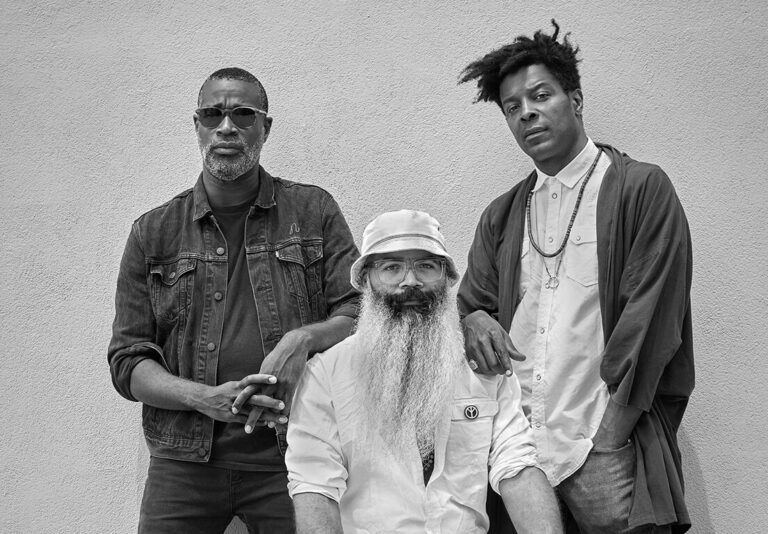
Passé du statut d’expérimentateurs brooklyniens à celui de groupe acclamé par la critique, TV on the Radio mêle post-punk, électronique, soul, funk et bien d’autres influences dans une approche résolument inventive. Ce mélange sonore éclectique — sublimé par les productions immersives de David Andrew Sitek et les voix passionnées de Tunde Adebimpe et Kyp Malone — distingue immédiatement le groupe de ses contemporains de la scène new-yorkaise du début des années 2000. Leur univers, à la fois intense et accessible, apparaît déjà pleinement formé sur l’EP Young Liars (2003), puis s’épanouit avec brio sur leur premier album complet, Desperate Youth, Blood Thirsty Babes (2004). Les éloges se multiplient avec Return to Cookie Mountain (2006), qui accueille un caméo de David Bowie, l’un des premiers et plus fervents admirateurs du groupe. TV on the Radio continue d’innover avec des albums comme Dear Science (2008), plus rythmé, Nine Types of Light (2011), aux grooves plus fluides, ou encore Seeds (2014), marqué par des réflexions lucides sur le deuil. Durant la fin des années 2010 et dans les années 2020, leurs prestations scéniques intenses consolident leur statut de formation phare de la musique alternative.
Growing from Brooklyn-based experimenters into a highly acclaimed outfit, TV on the Radio mix post-punk, electronics, soul, funk, and more in vibrantly creative ways. This eclectic sonic blend — heightened by David Andrew Sitek’s enveloping production and Tunde Adepimbe and Kyp Malone’s passionate vocals and songwriting — immediately distinguished the band from their contemporaries within the early 2000s New York scene. TV on the Radio’s intense yet inviting sound arrived more or less fully formed on 2003’s Young Liars EP; on the following year’s full-length Desperate Youth, Blood Thirsty Babes, they embellished on their intense yet inviting sound brilliantly. Praise for their music only grew with 2006’s Return to Cookie Mountain, which featured a cameo by David Bowie, one of the band’s earliest and biggest fans. They continued to innovate on their later albums by adding more momentum on 2008’s Dear Science, leaning into easy grooves on 2011’s Nine Types of Light, and confronting loss with the clear-eyed meditations of 2014’s Seeds. Later in the decade and into the 2020s, fiery live performances upheld TV on the Radio’s reputation as one of alternative music’s most dynamic acts.
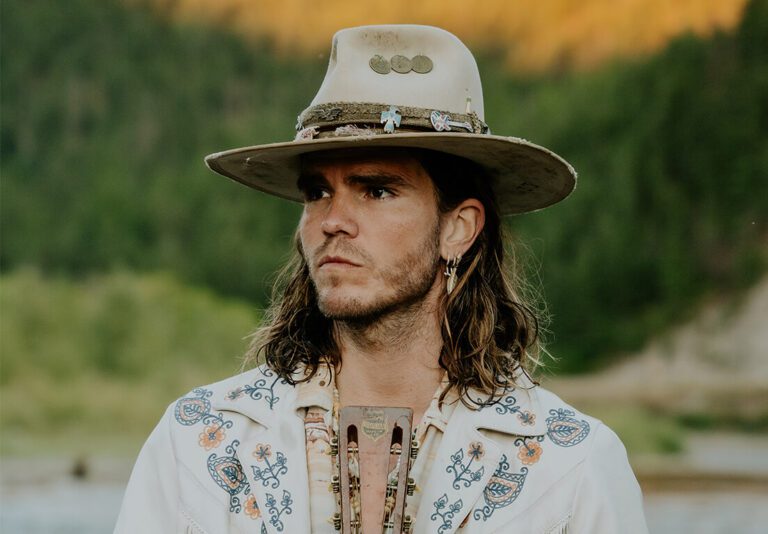
KALEO, groupe islandais, propose des hymnes mêlant blues et folk, portés par la voix rauque et envoûtante du chanteur Jökull Júlíusson. Révélé en 2012 grâce au succès viral de la chanson Vor í Vaglaskógi, le groupe s’est rapidement attiré un public international, recevant des comparaisons élogieuses avec des artistes comme Hozier et Ray LaMontagne. Leur premier album, KALEO (2013), rencontre un franc succès et donne naissance à plusieurs titres devenus disques d’or. En 2016, leur deuxième album, A/B, leur permet de percer davantage, en atteignant le classement Billboard 200. Avec Surface Sounds (2021), KALEO adopte un son plus rock et affirmé, consolidant sa présence sur la scène internationale. Après plusieurs tournées d’envergure, le groupe poursuit dans une veine blues-rock plus brute avec Mixed Emotions, leur quatrième album paru en 2025.
Iceland’s KALEO make soulful blues- and folk-infused anthems centered on lead singer Jökull Júlíusson’s smoky vocals. Since emerging to viral fame in 2012 with their song “Vor í Vaglaskógi,” they have earned a global audience, drawing favorable comparisons to artists like Hozier and Ray LaMontagne. The band’s debut, 2013’s KALEO, was a break-out success, spawning several more hits that went gold. They gained wider attention with their 2016 sophomore album, A/B, which cracked the Billboard 200. A bigger, more rock-driven sound characterized KALEO’s chart-topping 2021 release Surface Sounds. After several major tours, the band carried their increasingly gritty blues-rock sound onto their fourth album, 2025’s Mixed Emotions.
Orchestre métropolitain on Mount Royal: a big collective hug
by Frédéric Cardin
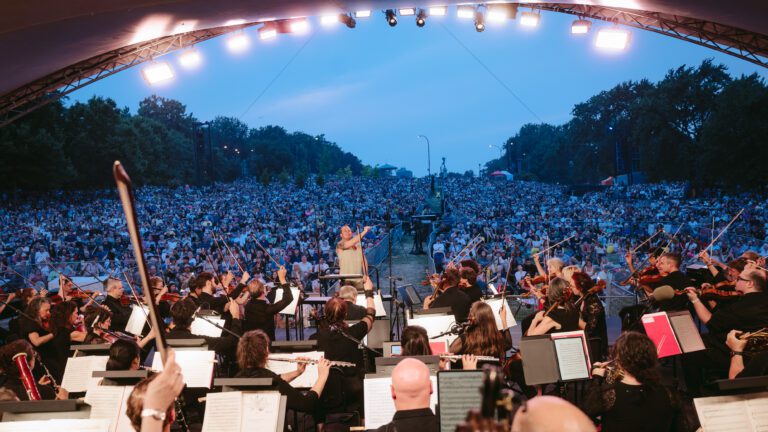
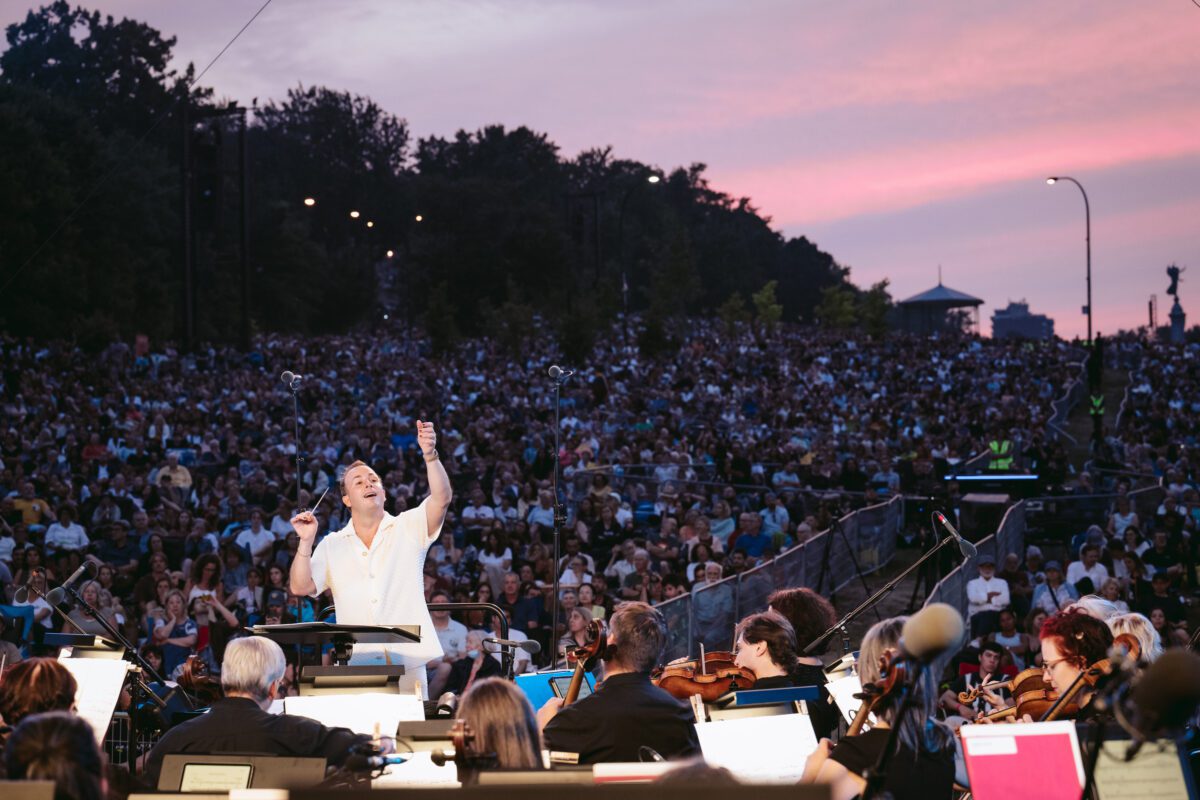
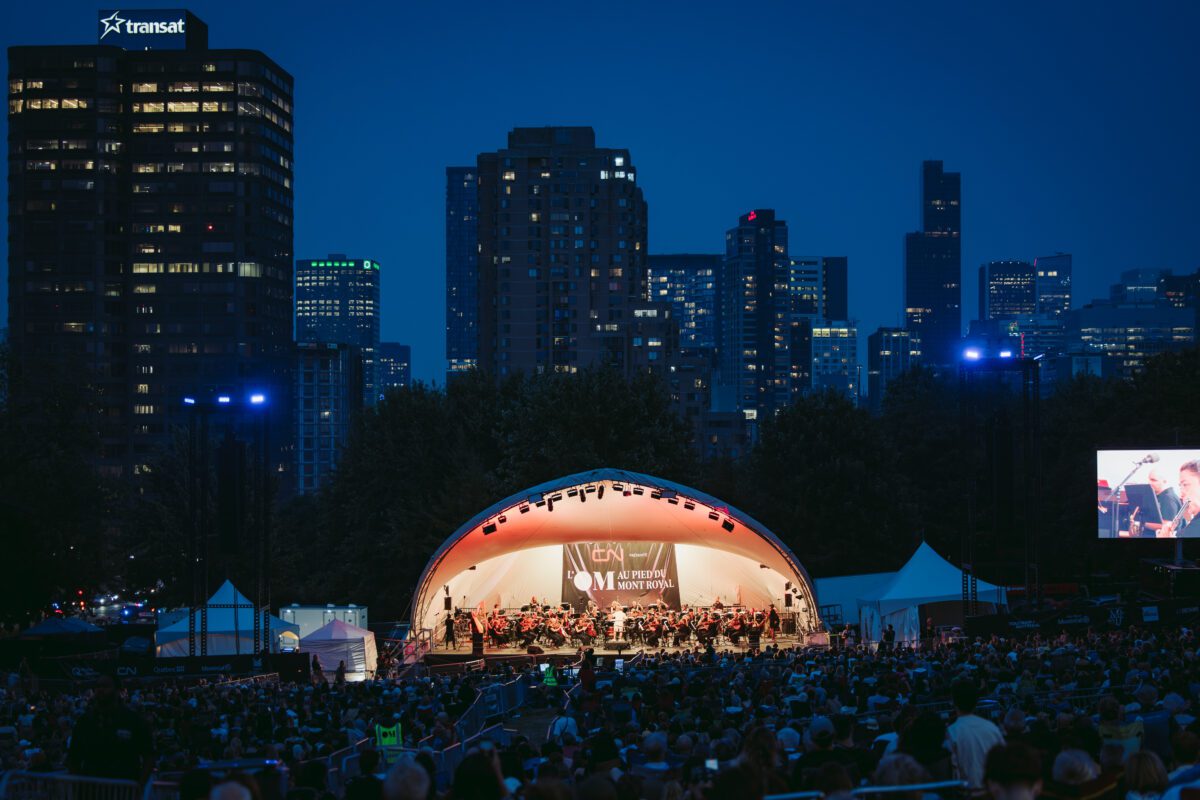
When we go to the annual OM concert at the foot of Mount Royal, we don’t go there to play the knowledgeable music lovers, who seek the sonic sublime and the magic of colors in its maximum fullness. For that, you have to go to the Maison symphonique. Or, if you want to do it outdoors, at the Lanaudière Amphitheatre, a model of its kind. Here, what we are looking for is more of a sense of collective communion. In this sense, the mandate is still well fulfilled and the objective achieved by the Montreal orchestra. A large crowd, reflective of the city, united in all colors, styles, ages, social classes, gender identities, politics, etc., gathered on the slopes of the mountain at sunset and as night fell, offering a dreamy panorama of the city’s skyscrapers behind the scene, and the splendid nature of the Mount, on the side.
In this kind of meeting, the sound quality is what it can be, that is to say, pushed by generous amplification so that we can hear the notes played by the orchestra as loudly as possible and over a vast distance, but without generating unpleasant distortion. A difficult equilibrium. Comments gleaned here and there after the evening indicate that some connoisseurs deplored the fact that what we had heard did not exactly correspond to what we heard at the Maison symphonique. That’s obvious, and as I just said, that’s not the goal.
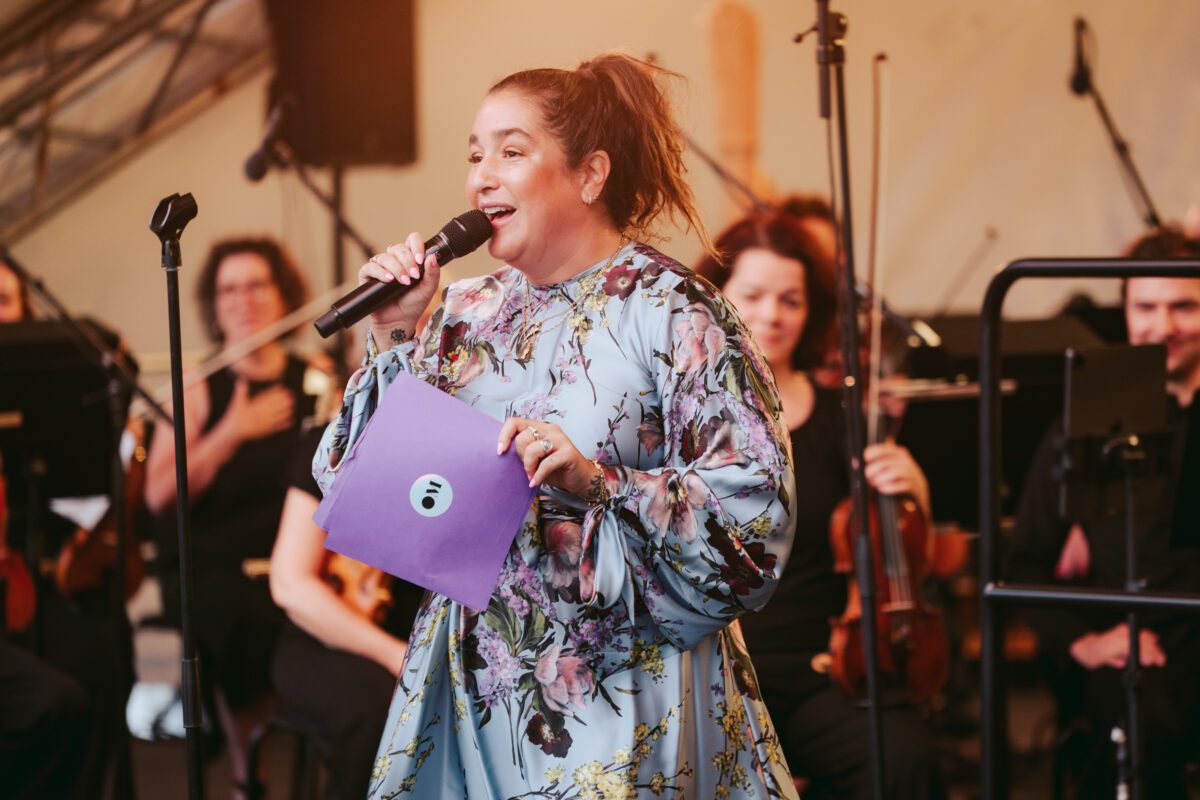
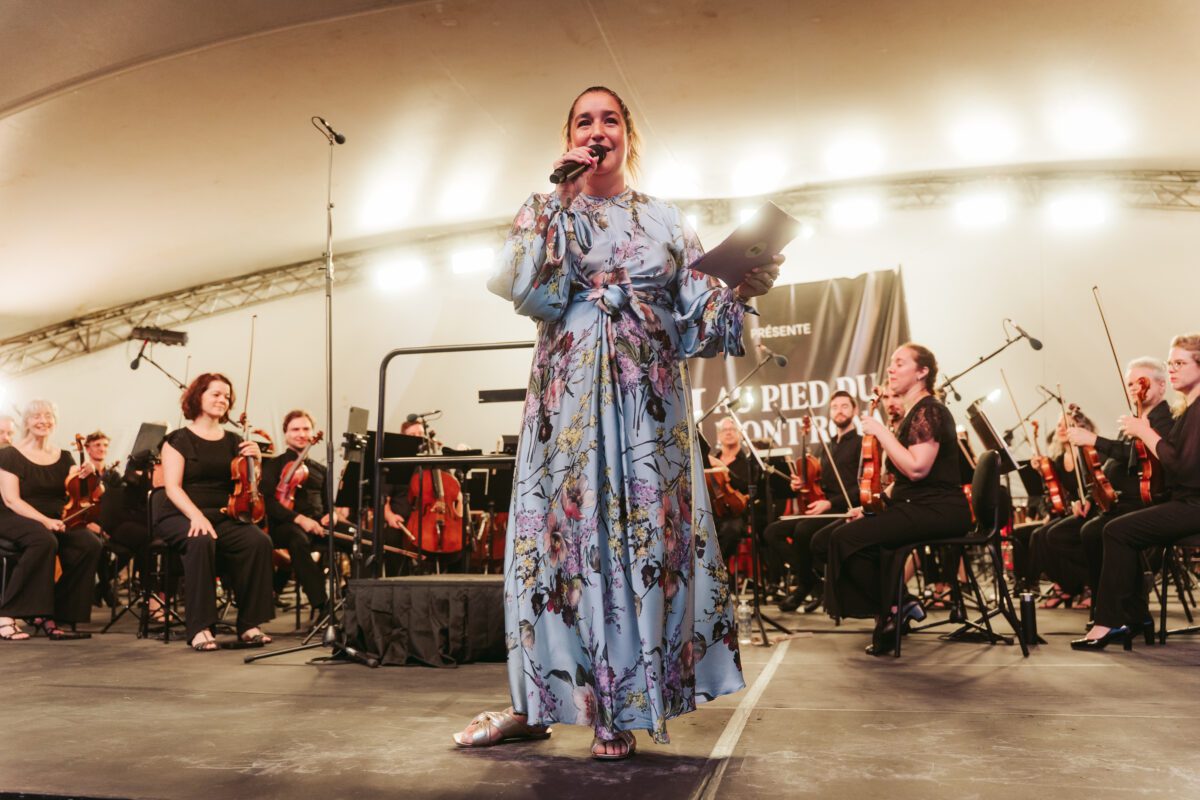
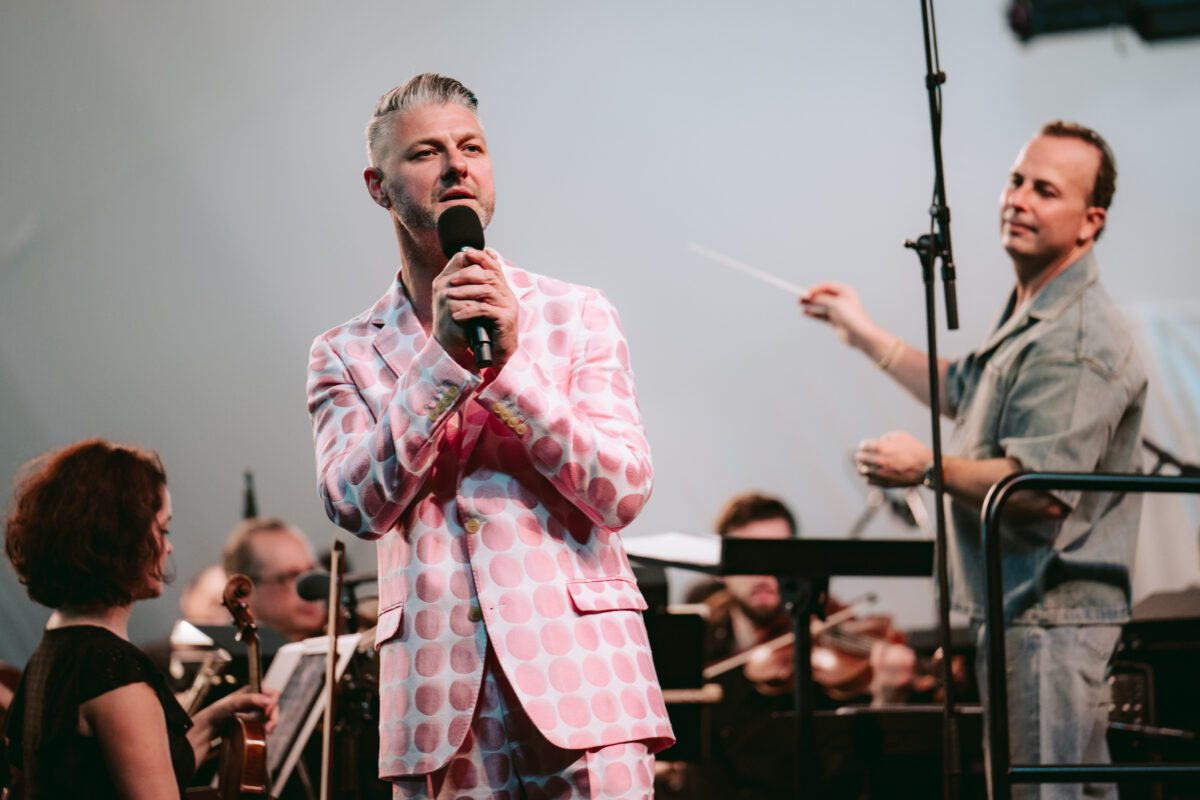
From the start (and after a pre-concert appetizer in the form of a tribute to Pierre Péladeau, the patron who allowed this orchestra to exist at the beginning, despite the presence of the more glorious OSM), the colors were announced with a greeting about Yannick as the “most beautiful human being put on earth by God” (nothing less), about Montreal as the most beautiful city in the Universe and the OM as the best orchestra in the world. We know that the host Mariana Mazza (replacing Kim Thuy, which necessarily disappointed many people, the two personalities being at opposite ends, Kim Thuy all elegance and delicacy, Mazza a go-getter, even vulgar) was laying it on thick and fully assumed the chauvinistic swelling of the announcements. But we smiled, and we especially appreciated it in the sense that, indeed, Montreal has something special, an energy, a personality, even a soul that instills in many of its inhabitants, and many non-natives, a rather strong devotion. We gave each other a big collective hug, a bit exaggerated, but benevolent.
As for the music, the program was very relevant in its eclecticism: the Italian Symphony by Mendelssohn that offers a very appropriate summer sparkle and memorable melodies, easily appreciated by anyone, even those who never listen to complete symphonies in normal times. A pretty piece by Augusta Holmès, L’amour et la nuit, in a romantic, almost cinematic style, was followed by a Quebec work by Hector Gratton (1900-1970), inspired by folk melodies, Dansons le carcaillou (which no one dared to do, fortunately). The classical portion concluded with the magnificent Firebird by Stravinsky, yet another score whose melodic features and colorful, grandiose style had all the makings of a film score for unfamiliar ears. A seductive factor, then, and fully appreciated by the crowd.
The Orchestra played well, to the extent that, once again, we are outdoors and the nuances and details tend to get lost. The specialist and regular concert-goer in me wants to salute the beautiful listening offered by this very large audience (50, 60 thousand?).
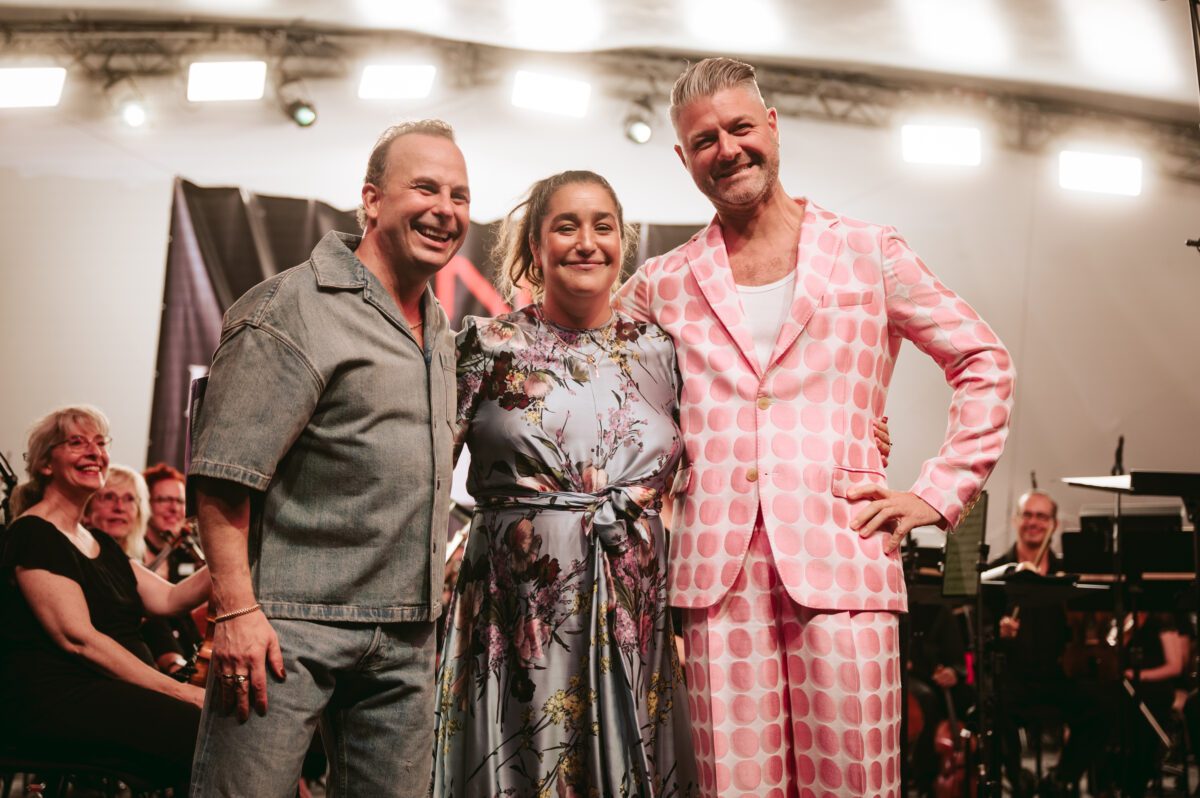
The finishing touch, the “cherry on the cupcake,” was provided by the immense Pierre Lapointe, probably the most refined and easily “classicizable” of Quebec singer-songwriters of the last 20 years. He sang three songs from his album Dix chansons démodées pour ceux qui ont le cœur abîmé. Three magnificent pieces with finely woven lyrics, melancholic tunes and rich and flavorful orchestrations (provided by the excellent Antoine Gratton). We were here in the great French song, at this level of musical excellence where words and notes fuse together.
The now well-established tradition of playing Beethoven’s 5th (the theme of the 1st movement) in disco style ensured a festive departure for the audience, who thus had the opportunity to sway and especially stretch their legs before returning home and saying to themselves (that was the goal) that, a classical concert, is fun.
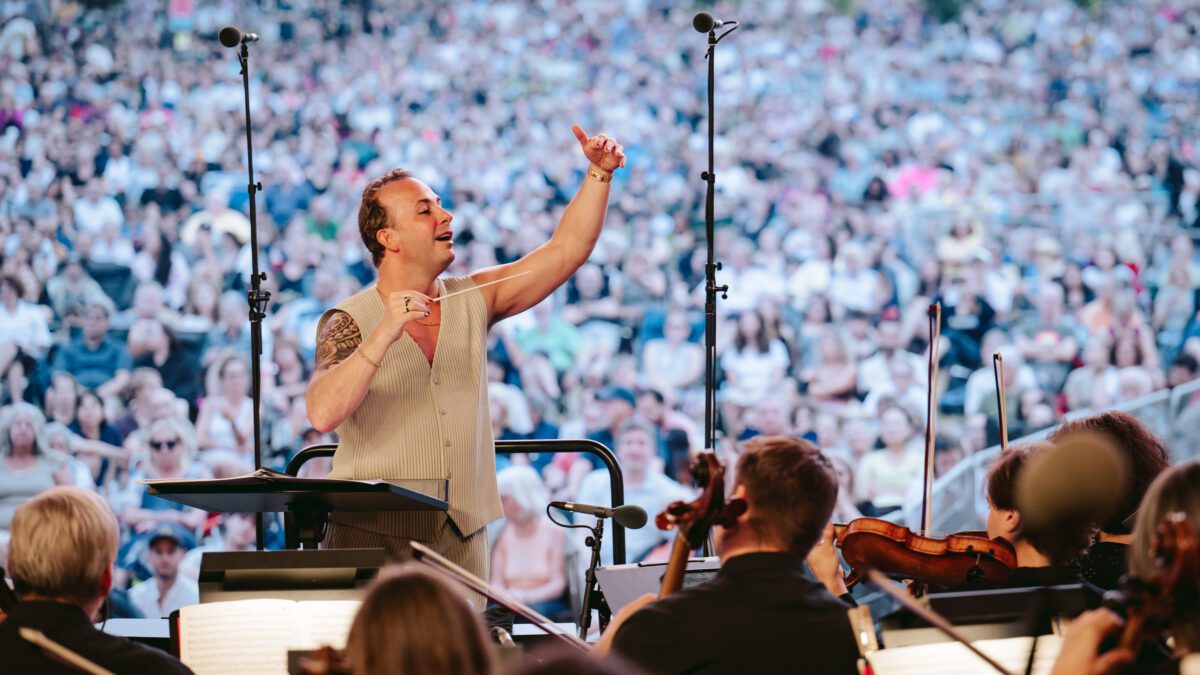
The nitpickers will surely grumble by criticizing the largely amplified sound recording, Yannick Nézet-Séguin’s frequent changes of attire (a bit too much), Mariana Mazza’s animation (somewhat out of sync with a typical classical concert, but still, and often, funny), or even the program itself, but none of them will probably have succeeded in democratizing the symphonic concert and classical music, even the most accessible, with such effectiveness. That is why we must recognize that the OM knows how to do it and is still succeeding in its gamble to unite an entire city and its inhabitants around its product.
The OM and Yannick Nézet-Séguin have placed classical music at the heart of Montreal’s life and spirit, eliminating multiple disparities and offering a unifying narrative, acquired and appreciated by everyone, and “anyone in between.”
Orchestre métropolitain au pied du Mont-Royal-Yannick Nézet-Séguin; crédit : Tam PhotographyOrchestre métropolitain au pied du Mont-Royal-Mariana Mazza; crédit : Tam PhotographyOrchestre métropolitain au pied du Mont-Royal-Mariana Mazza; crédit : Tam PhotographyOrchestre métropolitain au pied du Mont-Royal; crédit : Tam PhotographyOrchestre métropolitain au pied du Mont-Royal; crédit : Tam PhotographyOrchestre métropolitain au pied du Mont-Royal-Yannick Nézet-Séguin-Mariana Mazza-Pierre Lapointe; crédit : Tam PhotographyOrchestre métropolitain au pied du Mont-Royal-Pierre Lapointe; crédit : Tam Photography
Subscribe to our newsletter
Gérez votre confidentialité
Nous utilisons des technologies telles que les cookies pour stocker et/ou accéder aux informations des appareils. Nous le faisons pour améliorer l’expérience de navigation et pour afficher des publicités (non-) personnalisées. Consentir à ces technologies nous permettra de traiter des données telles que le comportement de navigation ou les ID uniques sur ce site. Le fait de ne pas consentir ou de retirer son consentement peut avoir un effet négatif sur certaines fonctionnalités et fonctions.
Functional
Always active
The technical storage or access is strictly necessary for the legitimate purpose of enabling the use of a specific service explicitly requested by the subscriber or user, or for the sole purpose of carrying out the transmission of a communication over an electronic communications network.
Preferences
The technical storage or access is necessary for the legitimate purpose of storing preferences that are not requested by the subscriber or user.
Statistics
The technical storage or access that is used exclusively for statistical purposes.The technical storage or access that is used exclusively for anonymous statistical purposes. Without a subpoena, voluntary compliance on the part of your Internet Service Provider, or additional records from a third party, information stored or retrieved for this purpose alone cannot usually be used to identify you.
Marketing
The technical storage or access is required to create user profiles to send advertising, or to track the user on a website or across several websites for similar marketing purposes.