classique / musique de film

OSM : La magie de Harry Potter

by Rédaction PAN M 360

Depuis la sortie du film Harry Potter à l’école des sorciers, il y a 25 ans, l’engouement pour la célèbre série fantastique et ses personnages de Poudlard n’a cessé de croître. Redécouvrez les mélodies légendaires de ces films emblématiques, composées par John Williams. Que vous soyez Serpentard, Gryffondor, Poufsouffle ou Serdaigle, revêtez les couleurs de votre maison et venez vivre cette aventure en famille!

Since the release of the film Harry Potter and the Sorcerer’s Stone 25 years ago, the beloved fantasy series and its Hogwarts characters have continued to captivate audiences. Relive the unforgettable melodies from these iconic films, composed by John Williams. Whether you belong to Slytherin, Gryffindor, Hufflepuff, or Ravenclaw, don your house colours and bring the entire family for this magical adventure!

POUR ACHETER VOTRE BILLET, C’EST ICI!

Ce contenu provient de l’Orchestre symphonique de Montréal et est adapté par PAN M 360
Afro-Cuban / Jazz / Zouglou

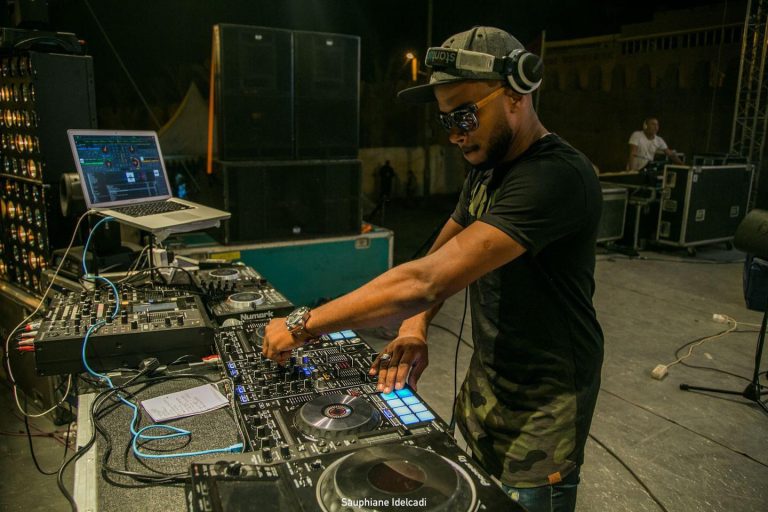
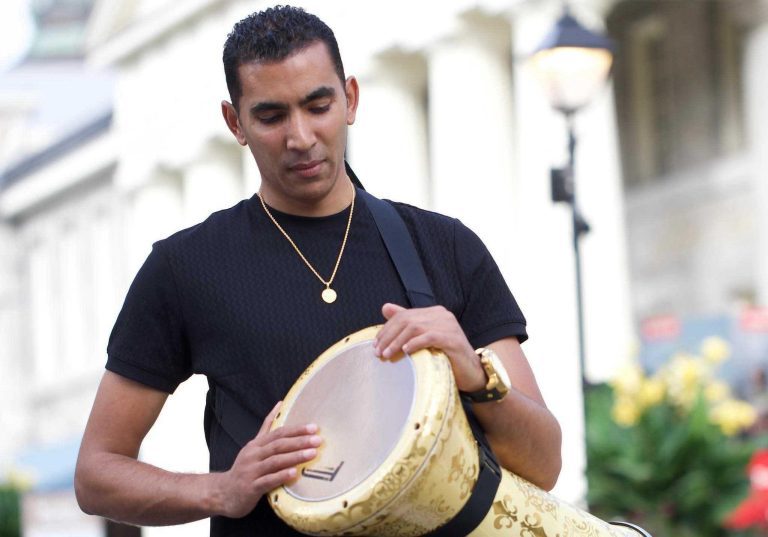
Syli d’Or : Rooty Naky And The Rootables & Sal de Calle au Balattou

by Rédaction PAN M 360

Formé en 2021 dans la région d’Ottawa-Gatineau, Rooty Naky and the Rootables est un groupe aux sonorités métissées, puisant dans le reggae, la neo soul, l’afrobeats et diverses influences africaines. Mené par Rooty Naky (chanteur et guitariste), le collectif réunit Queen Abi, Howie, Jerry, King David, Chris Leblanc, Blaise et Marco, unis par une même énergie et une vision musicale tournée vers la paix, l’amour et la justice. Depuis leurs débuts, ils se produisent sur de nombreuses scènes locales, notamment au festival de la rue Eddy et à l’Afrofest en 2024, puis au Kichesippi Festival et à l’Afrofest Ottawa en 2025. Leur premier single, SEÏKO, a marqué un tournant, remportant l’adhésion du public. Multilingues, ils chantent en français, anglais et dans plusieurs langues africaines, créant un pont entre cultures et générations. Leur devise, « Humanity First » (L’humanité d’abord), résume leur mission : célébrer la diversité et rappeler que, par-delà les différences, c’est l’humanité qui nous unit tous.
Sal de Calle est un collectif musical qui fusionne les rythmes afro-cubains (son, rumba, musique sacrée) avec l’énergie et la liberté du jazz. Réunissant des musiciens de Cuba, du Brésil, de France et du Canada, il crée une musique vibrante où se mêlent chants puissants, percussions envoûtantes et improvisations audacieuses. Chaque performance est une célébration vivante, alliant ferveur rythmique et richesse instrumentale, offrant une expérience à la fois festive et immersive. Au-delà de la danse et du partage, Sal de Calle rend hommage à une histoire profondément marquée par l’héritage afro-descendant, une mémoire de souffrance et de résilience qui a donné naissance à un foisonnement artistique libérateur. À travers cette fusion, le collectif tisse un pont entre tradition et modernité, incarnant la force et la beauté d’une culture en perpétuelle évolution.

Formed in 2021 in the Ottawa-Gatineau area, Rooty Naky and the Rootables blends reggae, neo soul, afrobeats, and a variety of African musical influences. Led by Rooty Naky (singer and guitarist), the band features Queen Abi, Howie, Jerry, King David, Chris Leblanc, Blaise, and Marco—a collective united by a vibrant energy and a shared message of peace, love, and justice. Since their debut, they have performed at numerous local events, including Festival de la rue Eddy and Afrofest in 2024, followed by Kichesippi Festival and Afrofest Ottawa in 2025. Their first single, SEÏKO, was warmly received and marked an important milestone in their musical journey. Multilingual in French, English, and several African languages, they create a universal connection that transcends cultural and linguistic barriers. Their guiding motto, “Humanity First,” encapsulates their vision: celebrating diversity and reminding everyone that, beyond our differences, it is our shared humanity that truly unites us.
Sal de Calle is a musical collective that blends Afro-Cuban rhythms (son, rumba, sacred music) with the energy and freedom of jazz. Bringing together musicians from Cuba, Brazil, France, and Canada, the group creates a vibrant sound where powerful vocals, mesmerizing percussion, and bold improvisations come together. Each performance is a dynamic celebration, combining rhythmic intensity with rich instrumentation for a festive and immersive experience. Beyond dance and celebration, Sal de Calle pays tribute to the Afro-descendant heritage, a history of struggle and resilience that has given rise to a powerful artistic expression. Through this fusion, the collective builds a bridge between tradition and modernity, embodying the strength and beauty of an ever-evolving culture.

CE SPECTACLE EST GRATUIT!

Ce contenu provient du Club Balattou et est adapté par PAN M 360
classique / musique contemporaine / Piano

OSM : L’ensorcelant Oiseau de feu de Stravinsky

by Rédaction PAN M 360

Lauréat du Concours OSM en 2022 et du Concours international de piano de Leeds, le Canadien Jaeden Izik-Dzurko amorce une brillante carrière pianistique. Venez l’écouter dans ce concert au format réduit animé par Philippe-Audrey Larrue-St-Jacques, dans le Concerto de Grieg : une œuvre qui séduit par son irrésistible mélange de lyrisme et de vigueur. Laissez-vous ensuite charmer par la féérie de L’Oiseau de feu, dont les somptueuses couleurs orchestrales créent un véritable enchantement sonore.

Canadian pianist Jaeden Izik-Dzurko, who launched a stellar career after winning the 2022 OSM Competition and the Leeds International Piano Competition, takes the stage in this intimate concert hosted by Philippe-Audrey Larrue-St-Jacques. Hear him perform Grieg’s Piano Concerto, a piece known for its captivating mix of lyricism and vigour. Then, allow yourself to be swept away by the enchanting beauty of The Firebird, where lush orchestral colours paint a mesmerizing sonic landscape.

Programme

Edvard Grieg, Concerto pour piano, op. 16 (30 min)
Igor Stravinsky, L’Oiseau de feu, Suite pour orchestre (1919) (23 min)

Program

Edvard Grieg, Concerto for Piano, Op. 16 (30 min)
Igor Stravinsky, The Firebird, Suite for Orchestra (1919) (23 min)

POUR ACHETER VOTRE BILLET, C’EST ICI!

Ce contenu provient de l’Orchestre symphonique de Montréal et est adapté par PAN M 360
classique / période romantique / Piano

Ronald Brautigam – Les impromptus de Schubert à la salle Bourgie

by Rédaction PAN M 360

L’un des meilleurs interprètes actuels du pianoforte propose un programme tout Schubert, à l’image de son plus récent disque paru chez BIS. Celui qui fut l’élève du grand Rudolf Serkin est réputé expert dans le répertoire du romantisme naissant et en fait ici la démonstration avec ces Impromptus attachants.

One of the world’s leading fortepianists presents an all-Schubert programme in the wake of his 2024 Schubert sonatas album for BIS Records. Brautigam, who studied under the great Rudolf Serkin, displays his mastery of the early Romantic repertoire by performing Schubert’s beloved Impromptus.

Programme/program

SCHUBERT Impromptus, D. 899 et/and D. 935

POUR ACHETER VOTRE BILLET, C’EST ICI!

Ce contenu provient de la salle Bourgie et est adapté par PAN M 360

classique / musique contemporaine / Poetry

Brett Polegato & Stephen Hargreaves à la salle Bourgie

by Rédaction PAN M 360

La poésie est au cœur de ce concert qui illustre la manière dont les compositeurs puisent leur inspiration dans les textes de grandes femmes de lettres, de la Torontoise Gil Adamson à l’Américaine Emily Dickinson. Leurs mots sont ici portés par le baryton Brett Polegato, renommé pour sa voix brillante et envoûtante.

This vocal recital has poetry at its core. With his brilliant baritone voice, the renowned Brett Polegato sings the words of great women authors from Emily Dickinson to Torontonian Gil Adamson, showing clearly why their poems have inspired composers past and present.

Programme

VAUGHAN WILLIAMS Four Poems by Fredegond Shove (extraits)
Julian PHILIPS Swift Partitions (extraits) sur des poèmes d’Emily Dickinson  
John ESTACIO Création inspirée sur des poèmes de Gil Adamson 
Matthew RICKETTS Songs for Judith sur des poèmes de Edna St. Vincent Millay

Program

VAUGHAN WILLIAMS Four Poems by Fredegond Shove (excerpts)
Julian PHILIPS Swift Partitions (excerpts) on poems by Emily Dickinson  
John ESTACIO New work inspired by poems by Gil Adamson (premiere)
Matthew RICKETTS Songs for Judith on poems by Edna St. Vincent Millay

POUR ACHETER VOTRE BILLET, C’EST ICI!

Ce contenu provient de la salle Bourgie et est adapté par PAN M 360

classique / Piano / post-romantique

Intégrale des sonates pour piano de Prokofiev – Concert 2 : Un nouveau classicisme à la salle Bourgie

by Rédaction PAN M 360

L’un des 15 meilleurs pianistes canadiens de tous les temps selon la CBC, David Jalbert nous mène sur le chemin passionnant des sonates pour piano de Prokofiev ! Dans une intégrale en trois concerts-événements, ce projet s’inscrit dans la foulée de ses enregistrements chez ATMA Classique. Entre introspection et virtuosité, romantisme et modernité, ces œuvres reflètent le parcours et la vie de ce compositeur visionnaire.

This concert echoes the performers’ Japanese and European roots—a blend of influences also found in the music of Tōru Takemitsu, an illustrious Japanese composer who was profoundly influenced by Debussy. Spirited and lyrical sonatas by Mozart and Brahms perfectly round out this programme.

Programme

PROKOFIEV
Sonate pour piano no 4 en do mineur, op. 29
Sonate pour piano  no 2 en ré mineur, op. 14
10 pièces pour piano, op. 12 (extraits)
Sonate pour piano no 6 en la majeur, op. 82

Program

PROKOFIEV
Piano Sonata No. 4 in C minor, Op. 29
Piano Sonata No. 2 in D minor, Op. 14
Ten Pieces for Piano, Op. 12 (excerpts)
Piano Sonata No. 6 in A major, Op. 82

POUR ACHETER VOTRE BILLET, C’EST ICI!

Ce contenu provient de la salle Bourgie et est adapté par PAN M 360

danse / Electronic / Minimalist / Post-Minimalist

Overwhelmed by LA(HORDE)

by Frédéric Cardin

In Age of Content, presented from February 27 to March 7, 2026, at the Maisonneuve Theatre of the Place des Arts in Montreal, the audience is hit head-on by a rolling fire of post-industrial transhumanist urban aesthetics. I can testify to the power of this hyper-contemporary creation that questions human nature, and this in a construction that goes against contemporary developments.

Machinist fetishism

The interior of an industrial warehouse. A car enters through the curtains at the back of the stage. A car carcass, rather, a simple remote-controlled skeleton, on which a first dancer will begin to curl up, leading to a kind of sexual fetishism reminiscent of David Cronenberg’s Crash. Isn’t there a kind of selfie masturbation in every person who seeks to appropriate a tool (mechanical/electronic) in order to climb to its peak and go viral? Why? Attracting attention? That’s exactly what happens. And when we invite others to admire what we are and what we possess, we also potentially invite them to want to take it away from us. There, you understand what’s coming.

Human beings are conflict.

Another dancer arrives, wants to take over the machine. Fight. Others join the brawl, which turns into a civil war. The car itself dances (an ingenious hydraulic system making it sway from left to right and back and forth), to music that oscillates between ambient electro, celestial choral, and pulsating techno. Bravo Pierre Aviat (excerpts from pieces like The Age of Dragons, Army of Love, Shishi Odoshi, etc.) for avoiding drowning everything in beats, while occasionally indulging in it. It makes the whole thing much more subtle, more refined, less literal. And absolutely not superficial. 

Finally, what is this? A humanity that bows before machinery? Who fades away in front of the synthetic technique/culture of the web? That’s what we can guess. But there might be more as well. Your humble chronicler missed the pre-show discussion. I therefore allow myself to jot down some impressions and intuitions here. Also aided by the indispensable “+1” that accompanied my evening. Thank you, Claudia, for your insights!

Impressions and intuition will indeed be the main recourse for most of those who go to see this stunning show.

Here is the first act (there will be four) dissected. We are already captivated. LA(HORDE) is a trio of choreographers/dance artists who lead the National Ballet of Marseille. Have you ever seen that elsewhere, a classical dance company led by a trio of artists raised on street/geek/platinum culture? Well, hats off for the audacity. It works great.

But let’s continue.

Androids and their fantasies

A second tableau features a first character that we quickly identify as a robot. Not the kind from the 80s, a bit too stiff in its movements. Rather the more recent models. Those that are about to enter our homes, our factories, our restaurants. And who will do work similar to ours. There is still something jerky about the movements, but with a more beautiful elegance, a kind of fluidity punctuated by vital pulses, like mechanical breaths. In short, the aforementioned roboto is joined by others, and more. They are everywhere. Have they replaced humans? Dunno. But something is happening: they begin to examine each other, to “physicalise” together in violent and clumsy simulations of a kind of sexual exchanges.

At the back of the stage, the curtains have given way to a dark and misty set. We’re in Blade Runner, or something like that. Do Androids Dream of Electric Sheep? That’s the original title Philip K. Dick gave to his novella that inspired the well-known film. Here, we wonder if they have sex using telescopic rods and motor oiled cavities. Always this music that mixes minimalism, choral transcendence, and a rumbling beat. Uncertainty, then, but beauty, seduction, despite the strangeness. And it moves, it bubbles with contained energy then released. You can’t look away.

Choreographing group intercourse

The third tableau leaves one a bit more perplexed, even though it is fascinating. One wonders if the humans have returned or if the androids have “mutated”? In short, continuing from the previous momentum, we see them become completely lascivious, in a sort of virtuoso orgy, both explicit and anti-vulgar. I have rarely seen such an ability to evoke different sexual acts, almost pornographic, with such perfect success in doing so with elegance and respect. You will have to see it to understand.

Final ecstasy

The final act is a kind of sensory ecstasy that summons the eyes (a true choreographic whirlwind) and the ears (music by Philip Glass: The Grid excerpt from Koyaanisqatsi). For about fifteen minutes, which turn into a collective buzz and an aesthetic-spiritual trance, the dancers seem to celebrate life in the most visceral and cathartic way possible, in an explosion of happiness.

Victory of the human? Humanism? Or a perfect symbiosis between machine and organic, what is called transhumanism? It doesn’t matter. It’s just masterful, captivating, enchanting, utterly gripping. We are out of breath. We can’t even imagine the artists themselves.

Age of Content continues until March 7, 2026. Don’t miss it.

DETAILS AND TICKETS

Similar content:

Dance and music symbiosis : breathtaking ”Sol Invictus” in Montreal

The Creation by Haydn at the Grand Ballets: And they found it was Good…

Baroque / classique

OSM : Le Requiem Allemand par Kent Nagano

by Rédaction PAN M 360

Le chef émérite de l’OSM, Kent Nagano, dirige le poignant Requiem allemand de Brahms, tel qu’il fut donné en 1868 à Brême en Allemagne. Cette version historique, présentée pour la toute première fois à l’OSM, intègre des extraits d’œuvres baroques, de la Passion selon St Mathieu de Bach et du Messie de Handel. Ces pièces musicales mettent en perspective l’héritage de Brahms et soulignent le lien du compositeur avec la grande tradition musicale germanique. Une œuvre qui invite à une réflexion profonde sur la vie et la mort. Un rendez-vous musical unique !

OSM Conductor Emeritus Kent Nagano leads a moving performance of Brahms’ A German Requiem, as it was presented in 1868 in Bremen, Germany. Making its debut at the OSM, this historic recreation includes excerpts from Baroque masterpieces such as Bach’s St. Matthew Passion and Handel’s Messiah. These musical selections offer insight into Brahms’ artistic heritage and underscore his profound connection to the rich German musical tradition. This masterpiece invites deep contemplation on life and death, promising a truly exceptional musical journey.

Programme

Johannes Brahms, Un Requiem allemand, sur des textes de l’Écriture sainte, op.45 (version Bremen 1868)
Johann Sebastian Bach, Passion selon Saint Mathieu, BWV 244 : « Erbarme dich, mein Gott »
Georg Friedrich Handel, Le Messie, HWV 56 (orch. W. A. Mozart) – extraits Œuvres pour violon et orgue de Bach, Tartini et Schumann

Program

Johannes Brahms, A German Requiem, from words of the Holy Scripture, Op. 45 (1868 Bremen version)
Johann Sebastian Bach, St. Matthew Passion, BWV 244: “Erbarme dich, mein Gott” (6 min)
George Frideric Handel, Messiah, HWV 56 (orch. W. A. Mozart) – excerpts

POUR ACHETER VOTRE BILLET, C’EST ICI!

Ce contenu provient de l’Orchestre symphonique de Montréal et est adapté par PAN M 360

chanson française / Chanson francophone

A Moment of Sweetness with LiKouri and Her Trio

by Sandra Gasana

Not only were we treated to an exceptional, intimate, and deeply moving performance, but we also had a lot of laughs last night at Le Ministère, as part of the second evening of Vision Diversité’s MOZAÏK series. It felt like we were stepping into LiKouri’s bedroom (her bedside lamp was part of the set design), accompanied by Charles Cantin on vocals and guitar and Isabelle Gaudreau on clarinet.

The rapport between Li and Charles was obvious, less so with Isabelle, who didn’t have a microphone to interact with the audience like the other two. That said, her clarinet solos, or simply her musical talent, were a feast to our ears.

Lighting was also central to this intimate show as it contributed to the desired atmosphere: to discover the artists in their deepest selves.

All the songs are featured on the album Dans mon quartier, released in the fall of 2025, and it was during a 10-day residency at the Maison de la culture de Ahuntsic that all the magic happened. First between Li and Charles, then Isabelle joined later.

The first part of the concert was without accordion for LiKouri, during which we could fully appreciate her unique voice, which at times bordered on opera. Effortlessly, she managed to give us goosebumps, particularly during the song “Verde Lima,” in which she sang in Spanish, accompanied by Charles on backing vocals. Isabelle switched between clarinets, depending on the song.

Between songs, she shared a few anecdotes, often very funny, especially when she talked about the song “Statue” or when she shared the story behind the song “O’dji Comeback.” In fact, I went and found it on YouTube when I got home, as requested by the artists.

Charles’ guitar playing was also very impressive. From one song to the next, he managed to create a completely different atmosphere, adding depth to the show.

In the middle of the evening, LiKouri settles in with her accordion and together, the trio takes us elsewhere, notably on the song “La valse” which recalls old French songs, with a Piaf-like feel.

But the highlight of the evening was undoubtedly during the song “Les ou Les” where the audience happily sang along.

Another highlight of the evening was the instrumental song section. No words, just the three instruments conversing with each other, without monotony, with moments both gentle and more rhythmic, all in a completely organic way.

That said, the song that stuck in my head after the concert was “Je recommencerai pour ne rien changer”, probably because it was the last song in the setlist, but I can’t find it on the album Dans mon quartier. I’ll have to do some digging to find it. One thing is for sure: if all of MOZAÏK’s evenings are as moving as the one with LiKouri and her trio, I’ll definitely be there, because in these troubled times, a little bit of sweetness does us all a world of good.

Photo Credit: Peter Graham

Classical Period / danse

The Creation by Haydn at the Grand Ballets: And they saw it was Good…

by Frédéric Cardin

Haydn’s The Creation is a remarkable oratorio written at the end of the composer’s life. The creation of The Creation (Die Schöpfung in German) took place in 1799. Last night, at the Place des Arts in Montreal, a very beautiful and inspiring choreographic vision, signed by Uwe Scholz (1958-2004) in 1991, was presented in an enriched version by the art of Quebec painter Jean-Paul Riopelle, a bold idea but, in the end, rewarding.

And then there was Light…

Very few stage props are required in this production. None, in fact, except for a structure supporting an armada of spotlights, used only for a few minutes at the beginning and end of the piece. Used ostentatiously, even, just a few minutes after the very beginning of the first movement, Introduction. The Representation of Chaos. Largo, the said spots were directed straight at the spectators, thus completely blinding us with the lighting. “And there was Light,” indeed, but perhaps stated a bit too strongly, let’s say. The spectators around me were laughing. That can’t be the goal, I imagine.

That said, it’s a detail that one ends up forgetting, because very beautiful moments are offered in this choreography, frequently performed all over the world because it “sounds” just right.

I will not pretend to be a dance specialist, just a humble lover of this art, particularly in relation to music. And since PanM360 aims to be a media outlet dedicated to music, I will write this review of the premiere of the ballet The Creation last night at the Wilfrid-Pelletier Hall through the relationship of the choreography to Joseph Haydn’s score.

Dance/Music symbiosis

In The Creation, Haydn constructs a narrative that is quite faithful to the mythical account of the creation of the world, in about thirty pieces that alternate between small formations and large ensembles, passages led by the soloists (a soprano, a tenor, and a bass) and impressive choral sections. Scholz respects these divisions while weaving his constructions into those of the music: solos, duets, and small ensembles adhere to the chamber passages of the music, while the choral parts, which aim to be monumental, are well supported by the entire body of the GBC.

The Creation presents the myth of Chaos giving way to Light, then to the World, to Nature, to Animals, and finally to Humans (Adam and Eve), under the impulse of God. Although the explicitness of Scholz’s conception leans more towards symbolism, one quickly understands the relationship between the gestures and the unfolding of the synopsis. At the beginning, the dancers are like “trapped” by the structure supporting the lighting equipment, and finally “freed” when it disappears.

Next, the performances follow one another, offering a sensory, impressionistic interpretation of the arrival of the various elements of divine creation. The dancers are all dressed in white, effectively bringing their movements back to the idea of original light and purity.

It is in the collective numbers that we are most touched by Scholz’s vision. The entire company moves with an almost aerial collective fluidity, in interweavings that intuitively evoke the counterpoint of Haydn’s choral fugues. Moments warmly applauded by the audience, rightly so. On the contrary, it is in the solo or duet episodes that some sluggishness is noticeable. The relationship between the visual and the musical is less apparent. An exception to note: the last pas de deux, on Holde Gattin… Der tauende Morgen (Dear wife… The morning dew), is of wonderful tenderness, and dressed in gentle sensuality.

Riopelle’s art looking over

The addition of Jean-Paul Riopelle’s paintings projected at the back of the stage is a great idea. Ivan Cavallari the Ballets’ Director), as one can guess, was inspired by the character of the various abstract works of the Quebec painter. Without obstructing or imposing on the spirit of the numbers performed by the musicians and dancers, the paintings rather subtly accompany the expressive essence of the different movements. More or less “bright” or “dark,” loaded or stripped down, the paintings from the palette of the brilliant artist offer a kind of commentary on the stage action, while subtly and diffusely guiding the emotions of those who watch. Never did we feel that the exercise was artificially imposed. This is in itself a good point.

Convincing soloists

On a purely musical level, I highlight the beautiful performance of the three soloists, Andréanne Brisson-Paquin, soprano, Philippe Gagné, tenor, and Clayton Kennedy, bass, whose projection is unfortunately diminished by the hall itself. Now accustomed (and spoilt) by the Maison symphonique just next door, one easily forgets how much Wilfrid-Pelletier is an imperfect vehicle for this kind of music. Well, we are still able to recognise the interpretative beauty of the artists in the orchestra pit. Bravo, then, even if it doesn’t  yet match (for me) a certain Gundula Janowitz, with Walter Berry and Fritz Wunderlich (with Karajan on DGG).

The orchestra of the Grands Ballets is very good, but suffers from sharpness in certain string passages, especially at the beginning of the evening. Once or twice, it was even out of tune. Elsewhere, some slight rhythmic discrepancies between the choir and the orchestra were heard. But the choir itself is very nice. In terms of sound texture, a bit of thinness is noticeable when compared to the best. It must be said that this music is not the usual bread and butter of the ensemble.

Despite these technical remarks, the overall performance is pleasant and will only refine over the course of future performances.

If only for the inspiring collective numbers, but also for the fine, almost ineffable relationship between Riopelle’s paintings and the spirit of this Haydn/Scholz Creation, I urge you to dive into the experience. The Creation continues until March 1st.

DETAILS AND TICKETS

musique contemporaine

Duo Étrange dispels all doubts (if there were any)

by Frédéric Cardin

On Tuesday evening, February 24, 2026, the launch concert for the album I Wish I Were Dead by Duo Étrange was held at Montreal’s Bourgie Hall. I will not revisit the individual pieces, which I have already discussed extensively in my album review, nor the circumstances surrounding the creation of this record, which are thoroughly covered in theinterview I conducted with the two artists, soprano Vanessa Croome and cellist Sahara von Hattenberger.

READ THE REVIEW OF THE ALBUM I WISH I WERE DEAD

WATCH THE INTERVIEW WITH THE STRANGE DUO

Striking performance by Vanessa Croome

I will focus my attention on the performance of the two young artists. The entire audience present noticed, I don’t think I’m mistaken in stating this, the very high quality of Vanessa Croome’s voice. A fluid, ethereal soprano but with vigour, agile and pleasantly brilliant in high notes, capable of convincing descents into mezzo areas.

But what probably impressed the music lovers present the most was the young artist’s excellent expressive performance. A remarkable ease in evoking states of mind, and an undeniable authenticity of the emotions accompanying the texts and musical lines, which are also very well mastered.

I immediately imagined her on stage, at the opera. Something she has done a few times, but not that much yet. Attention to the artistic directors of the country (and mainly of Quebec). Take notice! We’d like to keep her with us for as long as possible!!.

Sahara, a cellist to remember… and some duduk

On the cello side, Sahara von Hattenberger demonstrates a lot of character, impeccable technique, and strong emotional immersion, without any affected embellishment. A superb performer, whom we hope to keep in Montreal for a long time. Know that she now partially lives in New York due to her participation in the Chamber Orchestra of New York. I am calling out, again, to all artistic and general directors of instrumental ensembles in Montreal and beyond: recruit this dynamic voice of the cello before it’s too late!

Regarding the programming, we heard the same list as on the album, with the very beautiful pieces “Dans un sentier tout parfumé” and “Danger, peur, honte” by Fong Jeffrey. Inspired by texts from mediaeval France, they took on even more alluring forms in person, carried by the presence of Vanessa Croome.

I once again savoured the partially exotic Tree of Life by Maya Fridman, with its labyrinthine yet enchanting convolutions. And then, I indulged, just like when listening to the album, in the Quatrains of Wisdom by Airat Ichmouratov. The composer was on stage to accompany the artists with his clarinet and, above all, his fabulous duduk.

Another hit by Nicole Lizée

Nicole Lizée has once again hit the mark with her Urbexcelsis (a joint commission with Bourgie Hall), in which a partially live electronic track accompanies the two artists, who add to their “normal” task the manipulation of rudimentary percussion instruments, such as a piece of pipe, a chain in a metal bucket, and a power drill! I would recommend revising the drill’s score because it was hardly heard, often not at all. Nevertheless, the atmosphere of the abandoned and ruined cyberpunk city was fascinating and very well done.

The premise of Duo Étrange’s album concept is to say that contemporary music creations deserve to be heard more than once. Let’s hope their commissions will. But one thing is certain : we want to hear this duo very often again. And we will! Look down for upcoming concerts : 

Sahara von Hattenberger

April 22nd, 2026

RECITAL W/ DAVID BRONGO: A NIGHT OF CELLO AND PERCUSSION

At the museum of Architecture in Montreal, QC. Part of the series previously held at the beloved Chapelle Historique du Bon-Pasteur.

Featuring Works primarily for cello and timpani by Perruchon, and more.

Duo Étrange

April 30th, 2026

Duo Etrange presents Ligeti’s Mysteries of the Macabre arr. for cello and percussionist soprano at Espace bleu in Montreal, QC.

expérimental / contemporain / immersion

Le Vivier / Semaine du Neuf : Nadar – Hide to Show / Les mots de la direction artistique

by Rédaction PAN M 360

Serait-ce ZE must de cette Semaine du Neuf ? Chose sûre, Jeffrey Stonehouse, directeur artistique du Vivier, ne tarit pas d’éloges à l’endroit de Hide to Show, de Michael Beil qu’exécutera l’ensemble flamand Nadar

“C’est un bijou, c’est un must ! Je ne veux pas vendre tous les punchs parce qu’il faut… Mais c’est une expérience à ne pas manquer. On voit des musiciens qui se préparent pour une performance publique. Ils jouent quelques notes, ils changent de vêtements, parfois ils dansent. Ils se préparent en écoutant de la musique avec  des casques d’écoute. Et ces mouvements deviennent en fait un matériau musical pour la suite qui s’annonce très intéressante. Ce programme a été conçu par Michael Beil et qui confère à l’ensemble belge Nadar un rôle qui est à la fois musicien de très haut niveau et aussi acteur. Alors la théâtralité de cette proposition est très, très, très forte ! En tout cas, ce spectacle m’a marqué. Je l’ai vu à Strasbourg une première fois il y a deux ans, je m’étais dit que le public de Montréal devait absolument assister à ce show. “

Lisez les notes de programmes qui fournissent d’autres précisions:

Hide to show parle de la solitude, mais aussi de la synchronisation avec les autres sans les voir; d’être observé·e, de choisir de se rendre visible ou non, et de se remplacer soi-même de multiples façons. Les projecteurs se tournent vers les coulisses, tandis que les musicien·nes se préparent pour la performance devant le public, chacun·e seul·e dans sa petite pièce privée. Ils jouent quelques notes, changent de vêtements ou dansent sur la musique qu’ils écoutent au casque. Ce ne sont pas seulement les mouvements des musicien·nes sur scène qui sont considérés comme du matériau musical : la liste des ingrédients artistiques de Beil inclut désormais leurs actions dans l’intimité des coulisses. Mais tout ne nous est pas donné à voir. Les musicien·nes se dissimulent derrière leurs costumes, des rideaux qui montent et descendent, ou encore des enregistrements d’eux-mêmes, si bien que la véritable personne demeure finalement invisible. Le parallèle avec les réseaux sociaux s’impose rapidement. Hide to show explore l’hyperréalité, la manière dont nous superposons des couches virtuelles à nos vies, dont nous copions et collons dans ce que nous appelons notre réalité.

POUR ACHETER VOTRE BILLET, C’EST ICI!


Programme

Artistes

Publicité panam

Could this be THE must-see event of this Week of New Works? One thing is certain: Jeffrey Stonehouse, artistic director of Le Vivier, is full of praise:

“It’s a gem, it’s a must-see! I don’t want to give away all the surprises because you have to… But it’s an experience not to be missed. You see musicians preparing for a public performance. They play a few notes, they change clothes, sometimes they dance. They prepare themselves by listening to music with headphones. And these movements actually become musical material for what follows, which promises to be very interesting. This program was conceived by Michael Beil and gives the Belgian ensemble Nadar a role that is both highly skilled musicians and actors. So the theatricality of this proposal is very, very, very strong! In any case, this show made a big impression on me. I saw it for the first time in Strasbourg two years ago, and I thought to myself that the Montreal audience absolutely had to see this show. “

Read the program notes for further details:

Hide to show speaks about solitude, but also about synchronizing with others without seeing them; about being observed, choosing to make oneself visible or not, and replacing oneself in multiple ways. The spotlights turn towards the backstage, while the musicians prepare for the performance in front of the audience, each alone in their small private room. They play a few notes, change clothes, or dance to the music they’re listening to on headphones. It’s not only the musicians’ movements on stage that are considered musical material: Beil’s list of artistic ingredients now includes their actions in the privacy of backstage. But not everything is revealed to us. The musicians conceal themselves behind their costumes, curtains that rise and fall, or even recordings of themselves, so that the real person ultimately remains invisible. The parallel with social media quickly becomes apparent. Hide to show explores hyperreality, the way we superimpose virtual layers on our lives, the way we copy and paste into what we call our reality.
+

Program

  • Michael Beil: Hide To Show , 2020  – premiere

Artists

  • Nadar Ensemble
  • Stefan Prins (artistic director)
  • Michael Beil (composition, video, staging)
  • Veerle Vervoort (production)
  • Barbara Galli-Jescheck (choreographic advisor)
  • Charlotte Triebus (lyrics)
  • Warped Type (visuels en direct, scénographie)
  • Robin Goossens (business manager)
  • Katrien Gaelens (flute)
  • Yves Goemaere (percussion)
  • Wannes Gonnissen (sound)
  • Mar Berendsen (violin)
  • Pieter Matthynssens (cello, artistic director)
  • Elisa Medinilla (keyboard)
  • Thomas Moore (trombone)
  • Bertel Schollaert (saxophone)
  • Dries Dries (clarinet)

Subscribe to our newsletter

Inscription
Infolettre

"*" indicates required fields

Type of Suscribers