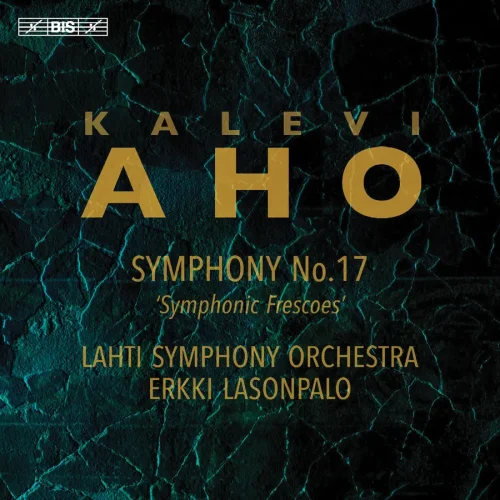
If you love grand, very grand and epic symphonies, the ultra-dramatic and expressive worlds of Shostakovich and the Swede Allan Pettersson, you will ab-so-lu-te-ly love this Symphony No. 17 Symphonic Frescoes by the Finn Kalevi Aho. It is simply monumental. Already, the titles of the three movements are evocative: From the Deep, Scherzo Macabre, and Distant Songs.
Attractive Depths
From the Deep fulfils all its promises by gradually rising from rumbling pedals on the contrabassoon and other delightfully abyssal instruments, to blossom into very broad sound waves that become increasingly full and grandiose. Through all this, wonderful moments of intimacy and introspection with singing solos of English horn or flute, for example. Through this lush and meaty tapestry of about 23 minutes, an organ shows signs of awakening, but it is only a preparation for its main role in the third movement.
Fragmented scherzo
The Scherzo begins with scattered, questioning colours in the woodwinds before the movement seems to truly activate itself with the trumpets, percussion, and strings. The momentum breaks on a few obstacles only to take off again further on, with a multiplied intensity. Thus, the unfolding of this atypical Scherzo, bursting with details, proceeds in a continuous pitch. The organ makes its presence felt again, more virilely this time, especially towards the end of the movement.
Surprising finale
The third movement is the longest of the three. It is also the most counterintuitive. Its progression seems disjointed and lacks a central theme. It is, however, of great subtlety in writing.
For a good five minutes, the atmosphere is dark and oppressive, then the oboes, English horn, and flutes come alive as if to sing a relatively festive rural song, before being once again overwhelmed by the symphonic mass that reprises the woodwind refrain, but in an overloaded manner. Further on, another respite inhabited by the woodwinds and their smiling pastoral colours, before being once again covered by dark clouds. It oscillates like that, with more sustained and numerous interventions from the organ than in the previous movements. The distant chants, indeed, are increasingly distilled by the narrative thread, as if they were diffusing until almost total fading in the final minutes. The writing becomes fragmented, whispered, but still very refined. It ends in almost silence.
Perhaps not the epic finale that the first movement led us to expect, but the whole work is nonetheless an exceptional achievement, to be savoured slowly, enjoying every minute.