Additional Information
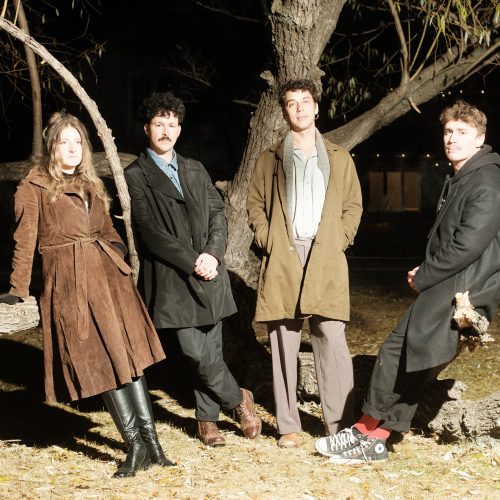
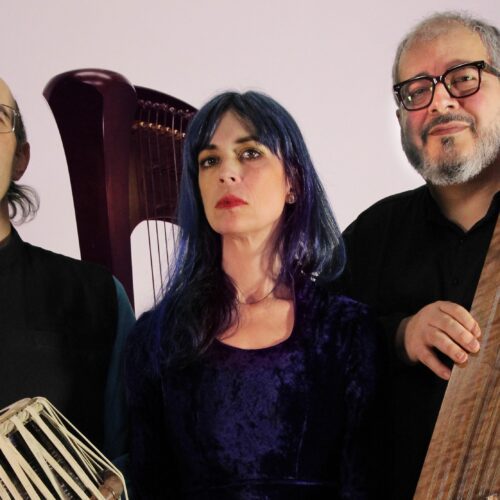
Before their show at Théâtre Fairmount to open the POP Montréal festival last Wednesday, Siggi invited me to talk with two of the core members of múm, Gunnar Örn Tynes and Sigurlaug Gísladóttir. They greeted me warmly and generously answered my questions about their creative practice. Their album History of Silence, released just a couple of days prior, gives a unique twist to their hybrid instrumentation of strings and electronics. In orchestral fashion, the two worlds meet in long swells reminiscent of the collaboration between Floating Points and the London Symphony Orchestra—a soothing wave that calms the mind.
In this interview, Gunnar and Sigurlaug discuss the album’s production, the role of live electronics, and their approach to performance.
PAN M 360: I think where we could start is the most obvious announcement from múm, which is that you released an album on September 19th, just a couple days ago. First of all, just talking about the title, History of Silence. It’s very evocative. How did you get to this title?
Gunnar: Well, we love having names of songs and albums that kind of invoke thoughts in the listener or people that perceive it. So we like not to have a strict definition of things. It’s more up to the listener. But I mean, there were a couple of titles floating around, but this somehow won. I mean, it is intriguing. The album also has moments of silence in it. And obviously, we haven’t released an album for 13 years or something. So maybe it’s referring to that silence as well.
Sigurlaug: There’s definitely a correlation between negative space in music, where you allow for silence to be a part of the composition, like the absence of something. So the title sort of hints at it, but nothing is literal in our way of doing stuff. There’s many ways to interpret the title. And the most fun is to hear what other people take from it. If someone listens and then puts it together, and they come up with a context that might be new to us, which is always part of the journey of releasing art. It’s never complete until there’s someone else involved also—an audience.
Gunnar: Our second album is called Finally We’re No One, which is a really hard thing to explain as well. But somehow people get it. It has a meaning, but the meaning is a little bit abstract and open to interpretation. And once it’s interpreted, I think that someone has their own emotional attachment to it.
PAN M 360: You mentioned negative spaces. I want to develop on that a bit, because I think one thing that’s very particular about your band is that there are a lot of you. So I guess in order for that to work, everybody has to be very aware of these negative spaces. You’d figure that with that many people, there’d always be a sound going on. But in your music, there’s actually this very quiet sensitivity. So how did this come about? Is it because of the people you choose? Is there an orchestration happening when you’re playing?
Gunnar: No, we’re very democratic and liberal.
Sigurlaug: I have to say, there’s a benefit in the two main composers. There are two people for whom it is your project, and people come and collaborate. There’s not so many cooks in the kitchen, so to speak. There’s not too many cooks. There are two cooks in the kitchen, and then a bunch of sous-chefs. So that also really helps the direction. It would be a lot if we had to be democratic about every decision in the minutia of it. And for us, the other people, it’s so fun to be in this project led by them. I would say there are two people that have the power to edit it down to where you do have space. So that’s super helpful in this specific process. But then when we do play live, it’s a different animal because then it feels more like a band, and we all contribute. It’s not like they are so much the boss when we’re playing live. Then we have a better democracy there. But in the recording process, it’s really helpful to have people there.
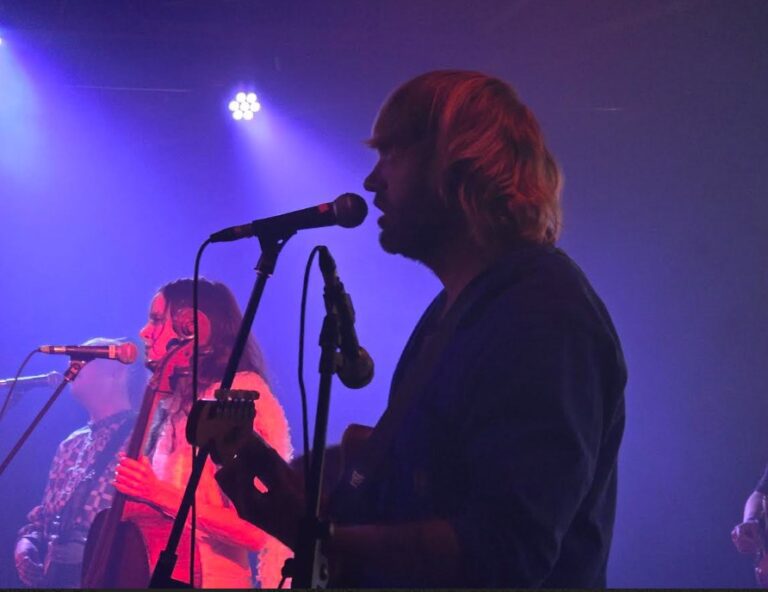
PAN M 360: Talking about the live aspect, we’re going to see your show tonight, so it’s a bit relevant. This is a question that regularly comes up: when you’ve released an album and you’ve put a lot of time into production—it can be precise, it can be very dynamically contrasted—when you’re approaching playing a live show, like you were saying, now everyone is contributing a bit more, are you looking to reproduce as close as possible to what is on the album? Or do you have more of an improvisational approach?
Gunnar: We usually let our songs get their own life. So they’re kind of reborn when we start to play them live. And very often they change a lot after playing them live; especially for years, some songs we radically change. So they get a second life when we play them live. It sounds weird, but… There are obviously some parts we want to adhere to, but now we’re more free with it, I think. We kind of let them sail the direction they want to sail.
Sigurlaug: And it also depends on the line-up of the band, because it’s changed so much over the years. Some people are more improvisational, like Róberta, who is our amazing guitarist now—she almost never plays the same thing, which is a delight for everyone on stage because she’s so incredible.
PAN M 360: I had a question about electronic music instruments. You’ve been playing with electronic instruments for over a decade. What is your relationship to progress in this field of technology? How do you handle “obsolete” technology?
Gunnar: There are a few gears that you have to give up because you just can’t use them anymore. But, yeah, mainly samplers. I mean, analog stuff is just as relevant. I think, like any other instrument, it’s always fun to get a toy that excites you and gives you inspiration. Sometimes it’s new technology. Sometimes it’s just old technology that I haven’t experienced before. Sadly, a lot of new electronic instruments are geared towards a very specific type of music. So a lot of electronic instruments are kind of made to make a certain type of music; a lot of it is kind of geared towards dance music or clubbing music. So we usually kind of go on the other side. Weirder. The reason why we’re the band we are today, live performing at least, is that we started with a lot of electronic stuff and had like live MIDI sequencers on stage and we’re doing that. But then we ended up just kind of finding it a little bit boring just to stand behind electronic instruments and just push buttons. That’s why we kind of started playing instruments with the electronics, because sequencing is something you do at home anyway. You’re living a lie if you’re pretending that you’re doing it live. I mean, you could, but it’s sequencing. It’s a pattern that you pre-define.
Sigurlaug: It’s also just a crazy passion to have these huge tables of synthesizers. If you’re touring like that, it’s a bit nuts. And it’s also just so much more alive when you have these string instruments mostly. And there’s dynamics. We are listening to each other in a very different way. It’s a different way of communicating through the instruments. And that’s appealing to us in this context. Because it’s not like the electronic elements are not being presented; the actual instrument just doesn’t have to be on stage.
PAN M 360: Talking about how technology can shape the process, this album was made a lot over long distances. Is that correct?
Gunnar: We started it all together in one room. And then we kind of refined it over long distances. We spent time editing it down and kind of shaping the songs a little bit and then recording vocals.
Sigurlaug: My favorite part was we were sort of in a time crunch at the very end, and then I was doing backing vocals in Athens and Gyða was in Reykjavik, and we were trying to do it at the same time and sending it within a couple of hours. I was sending it over, she was over there doing her part, sending it back, and then back and forth. It was really quick ping-pong. Normally you’d do your vocal recordings, send them on, hear back after a while. But that was kind of an exciting little evening of shooting vocals back and forth across the ocean.
PAN M 360: A question for the chef: Talking about this process of sending tracks back and forth and this long bubbling process of almost 13 years of coming up with these songs and ideas, how do you decide when to turn off the stove? When do you decide that a song is done?
Gunnar: Very often, it’s just setting and booking a mastering studio. That’s the day you have to be done. It’s the same with visual artists. They just book a show and then you just have to put it on the wall at some point. Otherwise, you can just let it simmer forever. Sometimes, you know. It’s different. Some songs, you’re just like, this is done. You don’t need anything more. But some songs, you kind of twist them around until the last minute. It’s hard. Especially with your own stuff. I’ve done a lot of production and recording for other bands. Then you can kind of have a clear vision and help them to do that. But with your own stuff, you get a little bit cuckoo in the head.
Sigurlaug: You’re lost in the sauce.
PAN M 360: Speaking about the evolution of your live sets, what’s the energy that you’re bringing? Is there a message that you’re trying to bring through the live sets?
Gunnar: I think by default, we’re not cool. We’re not one of these bands that’s trying to be cool. If we’re cool, it’s by luck. We’re playing, we’re having fun, we’re just doing our thing. We’re not trying to put on a show. I don’t know, it doesn’t make sense. We’re not trying to pretend to be anything else than we are. Sometimes we come off as… playfulness, maybe. I don’t know. It’s hard to say.
Sigurlaug: I feel very grateful to be in this band that you’re in. I’m pretty happy to be spending time together. It’s basically just fun.
PAN M 360: I think that’s a good note to end it on. Your music is playful, you’re having fun, you’re not pretending to be anything. It definitely just shows; just being here, the band feels super close, like you’ve been friends forever.