Additional Information
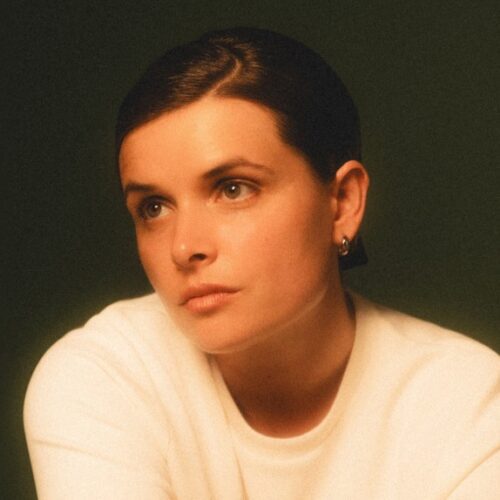
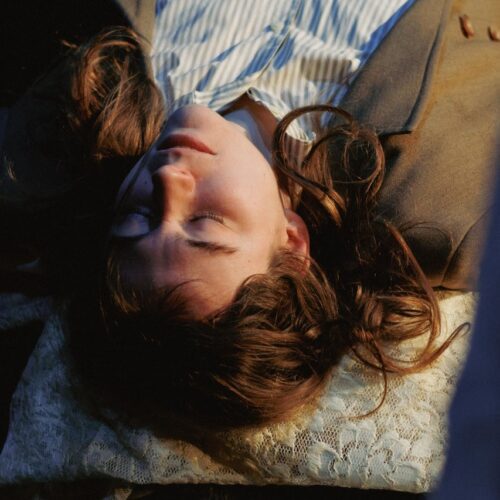
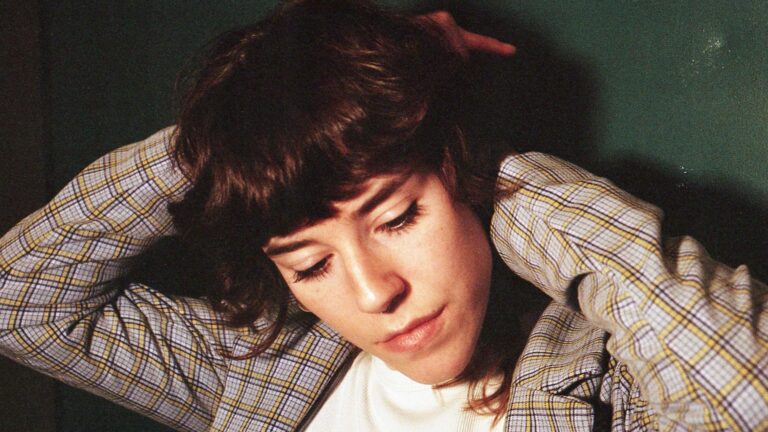
Rachel Bobbitt’s voice carries the mastery of a trained jazz vocalist, yet remains strikingly unique. She sings from a place of truth, weaving intimate stories and memories of home. Though her new album, Swimming Towards the Sand, has yet to be released in full, the promising singles are rich in depth. Her songwriting evokes powerful visual scenery, supported by production meticulously decorated with chopped vocal samples, expansive synths, and guitar tones reminiscent of Smashing Pumpkins, blending folk and jazz into a singular sound. She will be taking the stage for Pop Montréal, where she and her band will weave out the emotional core of this new material. As one of Canada’s most promising musicians amid the rising popularity of folk, this is a show not to miss. In this interview, Bobbitt talks to us about her influences, her memories of her grandfather, and the trust she shares with her band.
PAN M 360: After seven years in Toronto, how do you now remember growing up in Nova Scotia?
Rachel Bobbitt: I remember it very fondly. I think especially because all of my extended family is also in Nova Scotia, a lot of my memories of being young there are at my grandparents’ house, or at the lake, or swimming in the ocean. I would eat dulse, which is essentially seaweed that you dry on rocks. It doesn’t sound very good, but when I was eight it was the best thing ever.
PAN M 360: Speaking about family, you mentioned that your grandparents are an important influence in your music, and that your grandfather was also a musician. Are there any songs or melodies that you still carry from his memory?
Rachel Bobbitt: Yeah, there is. I mean, he was the kind of musician that never took a lesson in his life but could just pick up any instrument and play it. He would play “You Are My Sunshine” all the time, and he knew that one on accordion, on piano, and on guitar. He loved Hank Snow—who I believe is also from Nova Scotia—and other old country artists like Hank Williams and the Carter Family. So that type of music will always kind of take me back to his playing, his singing, and his musicality in general. It was very casual, very off the cuff. It’s funny because I’m not sure if he would even consider himself a musician. I think music for him was just a natural form of expression. He didn’t see it as, “I am a musician”; it was just like, “well, there’s people gathered and we might as well have music.” But yeah, a lot of those older country artists remind me of him.
PAN M 360: Did you ever have a chance, apart from singing along, to maybe play some of the instruments with him, even if you were very young?
Rachel Bobbitt: Yeah, totally. I remember… well, he was also the type of musician that would just bang on anything he was playing. He was a very loud musician. When my sister and I were both kind of learning how to play the guitar, we would play with him. He was so proud and supportive, but I just remember his advice was always like, “really giver ‘er.” So I think whenever we played with him, that was the wisdom he imparted onto us: to just really get in there and give it all of your energy and all of your attention. I have not learned the accordion, but I really want to. So that’s kind of on the docket for the next year or so.
PAN M 360: So let’s talk about production, because your album is right now being released. It’s a really beautiful album; I was listening to it all morning, and it was very pleasant, very touching. What I noticed is your songs carry this feeling of intimacy. It’s very personal, talking about your family, for example. How does it work out in the studio when you’re working with producers and bandmates? How do you manage the delegation and trust while still protecting that sensitive integrity?
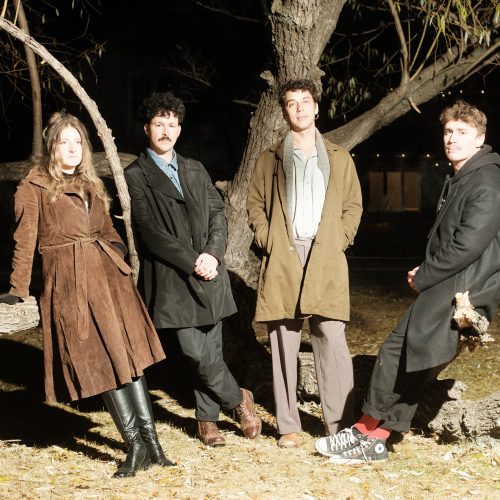
Rachel Bobbitt: Yeah, I think honestly, for me, it’s just being really particular about who I work with and who I record with. The core band that I’ve worked with, it’s been that band since I was in second year of university, so it’s been six years now. They’re the people that I trust so deeply, and I trust them as human beings. So it’s like a perfect mix. With them, I can give them a song and say, “make it your own and play how you would hear your own parts to be sounding,” and they will create something I love because I love them as musicians, and I trust their instincts. Also, anytime there’s a song, or maybe a part of a song that’s a little more personal or intimate, I just know them so deeply. We’ve toured together, we’ve spent weeks on end with each other, and I think we just know each other so well that they know how to navigate that really respectfully. They’re very adept at asking questions if needed, and kind of just stepping back if needed, as well. They’re all very humble and amazing. I’m lucky that I work with the people I do, that I don’t have to think about that too much. I also think, you know, Justice, who plays guitar, and Isaac, who plays bass and triggers certain samples—they are so much better at their instruments than I am. So to me, I’m like: “whatever you come up with for the live context will be better than what I could imagine.”
PAN M 360: So you’ll be working with your band when you’re preparing a live show, and when you’re writing your songs, it’s just by yourself?
Rachel Bobbitt: Yes.
PAN M 360: When you’re writing on your own, how do you decide if a song is finished?
Rachel Bobbitt: I’m the type of songwriter where I produce as I go in terms of demos. So I use Ableton, and I try to make it sound as much like the finalized version of what I envision it may sound like down the line, with proper mixing and proper recording and all that stuff. I try to get it as close to that as possible. So I’m adding a bunch of different parts: drum loops, recording all the layers, doing all the overdubs. I’m really spending a lot of time in the recording world because sometimes I feel like I can get a little bit free about just throwing stuff out if I don’t love it immediately. So I think it’s been important to me to see a song through as much as I can and really give it a chance, and take it to the natural end zone where I’ve created the world I want it to live in. If at that point it’s still not grabbing me, and it’s still not something that I feel drawn to, then maybe I either toss it out, or I keep poking at it and try to adapt it with different instrumentation. But at a certain point, just for my peace of mind, I have to see it as, this isn’t me saying it’s done and it’s perfect. This is just where I feel I have naturally ended my relationship with the song, and I’m releasing this version of it. Maybe in another world, there would be 10 different versions of it, but right now in this world, this is what I’m releasing.
PAN M 360: Well, that brings up a bunch of new questions, but going back to playing this music live. Because I didn’t know that you actually did the production beforehand and worked on the drums and everything—it’s impressive. I’m sure there was a lot of work done with Chris in LA, but the production of the latest album is grand, precise, dynamic, and rich. So how do you go about arranging the songs with your band when you’re going to play live? Are you aiming for the same preciseness as you do in the studio?
Rachel Bobbitt: I think about that question a lot, and I’ve definitely found that to be something I labor over. The way that I’m approaching it now with the band is trying to find the emotional core of every song and letting that spread outward. So, there are some songs where I feel like there are synth lines that really carry a lot of the emotion, and so that will be important to add to the live show. Or maybe there are samples that come in at a certain point that carry the emotional center of the song, so we’ll add those to be triggered. But then maybe there are certain elements that are less important or can be adapted differently; maybe synth parts can be played by the guitar or vice versa. I think just returning to the emotional message and using that as the guiding light is the only way I can maintain a sense of direction.
PAN M 360: So I’m curious to know about some of your influences. You mentioned in an interview that Leonard Cohen was a big influence for the airy backup vocals, and there’s a bit of that feeling in the album. But there are also hints of Americana, and vocals that remind me of Jessica Pratt, Lomelda, and Big Thief. So, were there any influences that you intentionally brought to the studio with you?
Rachel Bobbitt: You mentioned Jessica Pratt; she was definitely an influence. Actually, at the time we were recording the album, maybe a month or two prior, she had come out with Here in the Pitch. With Justice, who came with me to LA to record the instruments, we would just drive around and listen to that album constantly. So that was a huge influence; I love the way that album is mixed, and I love her voice—it’s so haunting and beautiful. That was definitely a big influence. Beach House is a big influence on the record, especially with Chris having worked on some of my favorite albums of theirs. That was a common touchstone for both of us. Yola Tango was a big influence for some of the percussion and dreamier aspects. I was also listening to a lot of Sharon Van Etten at the time; her vocals are very forward and powerful in a way I loved. Also, Imogen Heap—her harmonies are just really beautiful, and how expressive her voice is, is really beautiful. So yeah, kind of a bunch of different influences running the gamut.
PAN M 360: It’s great hearing all of this after listening to the album. Super inspiring. I hope that people will also be just as excited to listen. As a final question: if you could play on the same bill with an artist that’s alive today, who would it be?
Rachel Bobbitt: Oh, it’s so hard. It would probably be The National. I just love their music so much, and I feel like it’s kind of selfish because I want to see their live show so bad—I’ve never seen them live. It’s been on my bucket list for a long time; next time they come to Toronto, I’m going to be there. But yeah, I just feel like their music is so completely beautiful, in the same way that Bon Iver’s music really moves me. So honestly, either of those two would be on my bucket list of people to open for.
PAN M 360: Well, it’s great music and I have no doubt we’ll be hearing more from you. Thank you for taking the time to do this interview. I’m looking forward to seeing the show!
As Rachel Bobbitt prepares to share her complete musical vision, the anticipation for Swimming Towards the Sand continues to build. The album’s themes of home, memory, and trusted collaboration are sure to resonate deeply in a live setting. If you missed POP Montréal, Toronto fans can witness this convergence on October 17th at the Monarch Tavern.