Additional Information
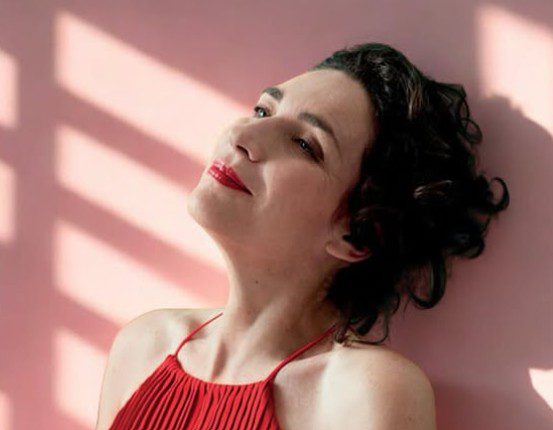
Soprano Véronique Gens is the central figure in a program presented by the Montreal Symphony Orchestra on French melody, this Wednesday, November 12, and Thursday, November 13. French melody is a concept linked to the classical repertoire, which appeared in France in the mid-19th century. For voice and piano, and sometimes for voice and orchestra as in this case, French melody evolved independently, only to see its popularity wane during the 20th century. Today, some wish to revive it and restore its prestige to this body of work created by the great French composers of the 19th century, in collaboration with the finest writers of their time.
Véronique Gens is one of those artists who are dedicated to this resurgence.
In short, the Nantes-based singer performed baroque music for over fifteen years before turning her attention to other repertoires, starting with French melodies, in collaboration with Palazzetto Bru Zane, co-presenter of this Montreal program. She also distinguished herself with her interpretation of La Voix humaine by Francis Poulenc and Jean Cocteau, which Canadian conductor and soprano Barbara Hannigan masterfully presented to Montreal audiences not so long ago.
Véronique Gens will perform with the OSM under the baton of young French conductor Lucie Leguay. Also invited to sit on the jury for this year’s OSM Competition finals, which are dedicated to voice, Véronique Gens explains her relationship with French melody.
PAN M 360: During this conversation, you will explain the choices made by Berlioz, Fauré, Holmès, Massenet, Dukas—in short, all the French composers of the 19th century. Explain to us how this program was put together, your role as a singer, because there will also be conductor Lucie Leguay leading the orchestra, performing melodies once written by composers for orchestra.
Véronique Gens: Most of the time, the melodies are written for piano, and it’s true that we always do more or less the same ones, but thanks to the intervention of the Palazzetto Bru Zane, these are melodies that are rarely or almost never performed, apart from a few by Fauré, Les Roses d’Ispahan for example, which is a melody I sing very regularly in recitals with piano. But here we are lucky enough to have found, again thanks to Bru Zane, the transcriptions for orchestra, and that’s something no one else ever does.
So we very rarely perform cycles of melodies with an orchestra. Berlioz’s Nuits d’été comes to mind, for example. It’s pretty much the only cycle I know of that is performed on a regular basis, and even then only in large concerts with major symphony orchestras. So this is a completely new program! I was lucky enough to record all these melodies with an orchestra, but in France, no one gave me the opportunity to sing them with an orchestra. So, thank you, Montreal, and thank you, symphony orchestra.
PAN M 360: It’s not done at all in France, which is surprising.
Véronique Gens: No, it doesn’t surprise me anymore, actually. The French don’t like French melody… In short, let’s put it that way.
PAN M 360: But what do you think of French melody? Opinions are divided, of course. For some who are unfamiliar with the repertoire, it can seem a little outdated because there is a type of pronunciation in Old French, words that may have become obsolete…
Véronique Gens: No, no, no! All my life, I’ve tried to dust off all that, so to speak, and I think people are afraid of French melody because of what you say, with a bit of a tight-lipped attitude, that it’s very intellectual music, very complicated and all that… I think the way it’s presented is a bit like that, actually, but in any case, that’s changing.
Well… it’s difficult to move all that, but there are lots of melodies that are very accessible, all of Reynaldo Hahn, all of Gabriel Fauré, so actually, if you do a complete recording of Debussy’s melodies, it’s really unbearable and too complicated and too intellectual… Well, I really like Debussy, he’s a great composer, but Debussy’s melodies are still quite hard to digest. So there you have it, I think we need to vary the pleasures a little, and this program gives us a kind of overview of everything that French melody can be.
It can be much lighter things, it can be funny things, very serious things, sad things, of course, but what’s also very special is that we’re doing it with an orchestra, and I think that will reassure people and make them want to come. It’s less austere, perhaps, than a singer and a pianist, where it’s very serious. With an orchestra, people are perhaps more used to seeing an orchestra… We try to vary things, in any case.
There will be excerpts from Nuits d’été, but there is also Théodore Dubois. To be honest, before singing it with Bru Zane, I had never heard of him. So, Fauré, yes, once again, Les Roses d’Ispahan, La Chanson du Pêcheur, but all of this with a very different perspective because it’s done with an orchestra. It’s really something else.
PAN M 360: Adaptations, then. They were written, well, initially, most of them were written for piano and voice, and then the composers wrote them. They did this systematically throughout the entire program we are entitled to.
Véronique Gens :Yes, but you would need to ask Bru Zane’s artistic director to find out more.
PAN M 360: Since we won’t be able to do it this week, tell us about Palazetto Bru Zane.
Véronique Gens : So, it’s been about 15 years since we met, and I’ve discovered a whole new artistic world. Romantic French music has been completely neglected in France, and Bru Zane’s work is to bring all this music to light, with composers I’d never heard of before, most of whom are fascinating. I’ve made several recordings with Bru Zane, maybe a good twenty or so, with completely unpublished works. Benjamin Godard, for example, I had never heard of him, and his music is wonderful, very romantic, very Hollywood movie-like.
So, all these works need to be brought back to life, and it’s an enormous task to relearn all this music. But with Bru Zane, we do one or two concerts at most, one recording, and that’s it, we move on to something else. So it’s really a huge task, it’s quite frustrating because it takes a lot of time. But that’s how it works with Bru Zane, and I’ve discovered some absolutely new and exciting things.
PAN M 360: Great. Tell us about Lucie Leguay now, tell us about this conductor, we don’t know her.
Véronique Gens : She is very young and very promising, whom I had the opportunity to meet when I recorded La Voix Humaine with the Lille Orchestra.
She was the assistant to conductor Alexandre Bloch, and she could hear my voice so clearly, she could hear everything that needed to be heard, things that the conductor didn’t have time to hear because he was so busy with his orchestra. And it was really exciting to work with her. She is very musical and very passionate, and she loves voices—and that’s not the case with all conductors!
So, she was there mainly to help me, to take care of me. And it was a collaboration. I learned a lot from working with her.
PAN M 360: So you have developed a professional and artistic relationship with her and you are giving her the opportunity to shine in Montreal.
Véronique Gens :Exactly! And now, a few days ago, she was appointed artistic director of the Lausanne Orchestra and the Lausanne Chamber Orchestra. I think she has a bright future ahead of her. She’s a very interesting and exciting young woman, in my opinion.
PAN M 360: OK! Let’s try to briefly go over the catalog, as there are several works on the program.
Véronique Gens : Yes, but as you know, the melodies are quite short, with a few exceptions—Berlioz, for example. It’s like when you go to a vocal recital with piano accompaniment: the programs are long because the melodies are very short, quite simply. I don’t know all the pieces written for voice and orchestra. Honestly, I haven’t heard them all, but they are pieces that have been rediscovered by Bru Zane and are part of their recordings. In fact, most of the melodies I sing in this program were recorded with Bru Zane in a program called Paysage. And we made a complete recording of Massenet’s melodies with orchestra in another recording.
PAN M 360: How do you approach the lyrics in this repertoire?
Véronique Gens : I think the first and most important thing when singing this kind of melody is to make yourself understood. If people don’t understand what you’re saying, they immediately lose interest. And that’s completely natural and normal.
For me, you know, there’s this big debate about French melody: what’s more important? The music or the lyrics? All of it was written by great French poets, like Théophile Gauthier, Guillaume Apollinaire, and others. Personally, I think that here, poetry feeds the music and the music feeds the poetry. And that makes it something absolutely exceptional compared to an opera aria, which wasn’t necessarily written by a great French author.
PAN M 360: Opera librettos are full of pompous texts that have not aged well…
Véronique Gens : Yes. And then, we repeat the same thing over and over again. These are magnificent poems. And if you don’t understand what they’re saying, you miss the whole point. And I think that’s one of the reasons why people lose interest in this kind of repertoire. So if you’re convinced by what you’re saying, you can take everyone with you and convince everyone. If you come across as a little stiff, it doesn’t work. You just have to be honest and sincere. And that’s how I try to approach it all.
PAN M 360: But… French music seems to be unpopular in the very place where it originated.
Véronique Gens: In France, no one wants to program this kind of music, which is a real shame. I sing French melodies everywhere, in Tokyo, in England. The English love it. In France, there’s no way to program only French melodies. That’s just how it is…
PAN M 360: How do you explain that? The French are afraid of French melody, but they still like impressionist music, don’t they?
Véronique Gens: Yes, but there’s another factor to consider, and that’s the economic factor. It’s difficult to fill a hall these days with a recital of French melodies. It’s still a bit of a niche market, if I may say so. And it’s something that, once again, we don’t do often enough. And people aren’t used to it enough. It’s an educational task that needs to be done over and over again. It’s a job, it’s a constant concern.
PAN M 360: Finally, let’s talk about your other planned activities in Montreal.
Véronique Gens: Since I’m here right now, I’m going to give master classes at the Montreal Conservatory. And then I was asked to be on the jury at the end. I won’t be there for the first two days. I’ll be very busy! I’m delighted to have been asked; I’m doing more and more jury work. I’m teaching more and more classes. It’s exciting to see the level of all these young singers who are rising and rising. They’re all ready. And it’s all the more difficult because you have to make a choice when they’re all so good and so strong. And… it’s very, very difficult to start a young career now. It’s a global phenomenon. Whether you’re in Asia, North America, or Europe, you see people of a very high standard, but… there’s not room for everyone.