Additional Information
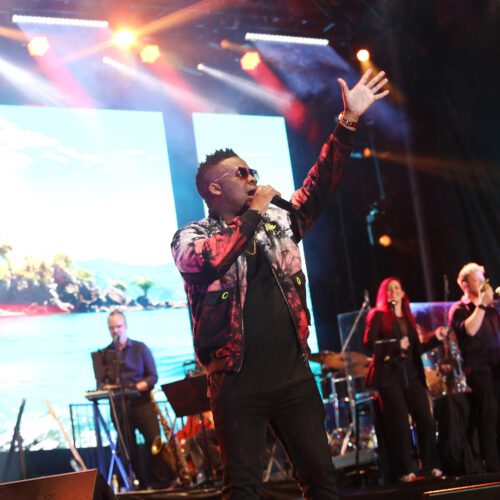
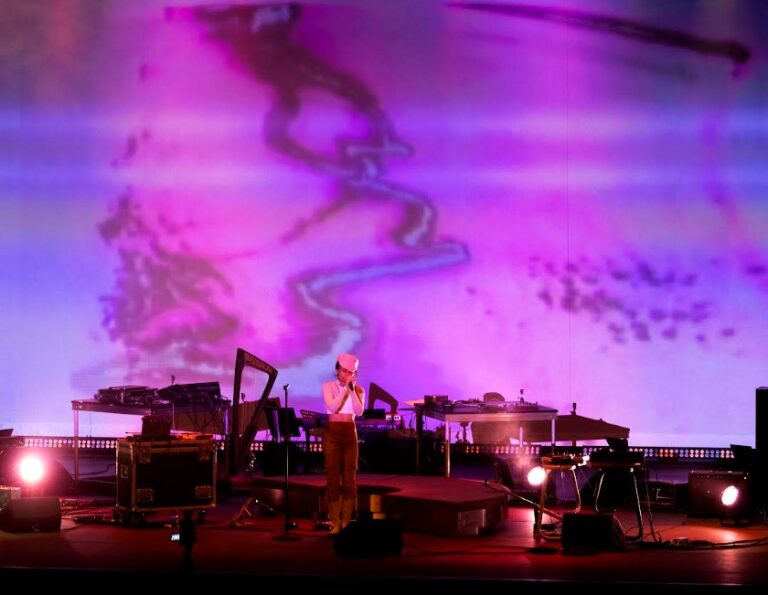
On August 20, at the Théâtre de Verdure, MUTEK brought together musician Ouri and visual artist Charline Dally for a performance that was both delicate and hypnotic. In this dialogue between sound and image, Ouri’s voice and energy intertwined with Dally’s analog visual textures, revealing an artistic encounter filled with softness and healing. The day after this suspended moment, PAN M 360 spoke with Charline Dally to explore her creative process and the richness of this collaboration.
Panm 360: Congratulations on yesterday’s performance, it was truly amazing! How do you feel now that it’s over?
Charline Dally: Thank you so much. It was such a special moment; I feel very lucky to have been part of this event—both for performing on that beautiful stage by the water and for having had the chance to collaborate with Ouri, an artist I deeply admire. Even though many great elements came together for this concert, I have to admit that the creative conditions weren’t easy because of the technical constraints of this outdoor venue. A lot of things came together at the very last minute. Given the circumstances, I’m very happy with the result. I actually discovered the final outcome during the performance itself, at the same time as the audience. Talking with the person in charge of the lights is essential when there’s video projection, but it’s not always easy to have our requests understood and respected (which can be particularly challenging for women).
I had wanted to collaborate with Ouri for a long time. The world she envisioned was inspired by hypnosis, surveillance, and color therapy. Different healing practices, slowness, and softness as forms of engagement—these are also elements at the heart of my own work. The world is thirsty for softness and welcomes this kind of suggestion.
Panm 360: Both of you have such distinctive artistic worlds—Ouri with music and you with visual art. How did that influence the artistic direction of the show? And how free did you feel in your own practice?
Charline Dally: In this case, I was invited to create visuals for Ouri’s musical project. But she reached out to me because she already liked my visual universe, so I’d say there was a nice balance when it came to creative freedom. I couldn’t start completely from scratch with the time and budget we had. It was more a context where I could work with existing material and transform it a bit. I reprocessed this material through my analog machines—video synthesizers, mixers, circuit-bending modules—using different kinds of feedback. I’d say the meeting of our two worlds happened right there. I love the result: the images become more sensitive, especially when we play with abstraction, synesthesia, and blur. Images that are too sharp, too realistic, don’t carry that ambiguity I love. There’s a certain charm in analog images created with old technologies—a kind of poetry that’s quite hard to achieve with digital processes and high resolutions, in my opinion.
Ultimately, for this performance with Ouri, the goal was to craft a dreamy, soft, and hypnotic universe. With pink and hearts throughout, we embraced something cute, girly, and playful—even teetering on cheesy—but entirely intentional. In my practice, I also advocate for radical softness and for breaking down gender stereotypes.
Panm 360: To what extent was there room for improvisation despite the use of your respective equipment and time constraints?
Charline Dally: It was a balance between a pre-written score, a clear visual identity for each piece, and real-time improvisation with the different effects during the concert (blur, alterations, feedback, strobe, overlays, etc.). For each piece, I roughly knew which visuals I would use, but the timing, the way the images were mixed, the intensity, and the choice of effects were all decided intuitively in the moment.
Panm 360: Was this your first time creating visuals for an existing project?
Charline Dally: I know I look very young (laughs), but I’ve been supporting multiple music projects with visuals for over a decade now. There have been so many inspiring encounters—both in the world of electronic music and raves where I started, and in the world of experimental music, which opened up a whole other creative potential for me.
Panm 360: Are there particular styles or artists who inspire your practice?
Charline Dally: There are so many artists and writers who inspire me. If I had to name a few, I’d mention the pioneering painting practices of Hilma Af Klint and the video work of the Vasulkas and Mary Lucier. The installations of James Turrell and Hito Steyerl, the paintings of Tauba Auerbach, the magical realism of Apichatpong Weerasethakul’s films, Astrida Neimanis’s hydrofeminist theory, and the science fiction writings of Ursula K. Le Guin.
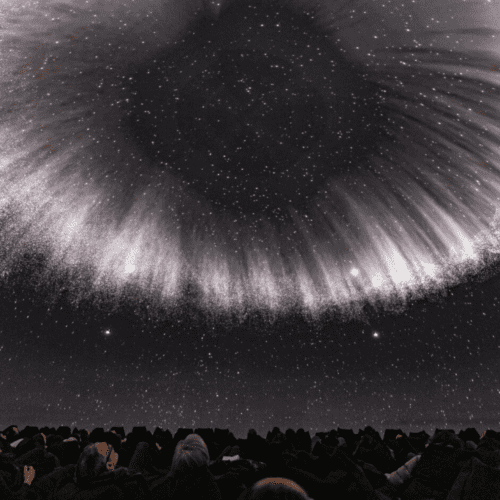
I’m fascinated by analog visual synthesis and the phenomena of feedback. By modulating an electrical current, I can generate a video signal instantly—a process that could be described as visual music. It creates organic, often hypnotic and abstract images that pair beautifully with music. What’s amazing is that I’ve been using this technique for years and never grow tired of it. My analog setup has evolved over time, yet I remain just as captivated by this method of video creation, which remains relatively unknown today, partly because the technology is considered obsolete.
Panm 360: It’s so interesting to better understand your creative process in detail, thank you so much. Do you have any upcoming projects we should know about?
Charline Dally: My next solo exhibition will be presented as part of the artch festival at Place Ville-Marie from October 14 to 19. I consider video projections for music to run in parallel with my artistic practice, where I create films, installations, prints, and sculptures. These projects are an opportunity for me to offer sensitive experiences and invite reflection on memory, healing, the relationship between art and science, and the poetry that can emerge from it. I’ll be present throughout the event, so it will be a great opportunity to meet and talk with people. I look forward to seeing you there!

Photo: Frédérique Ménard-Aubin