Additional Information
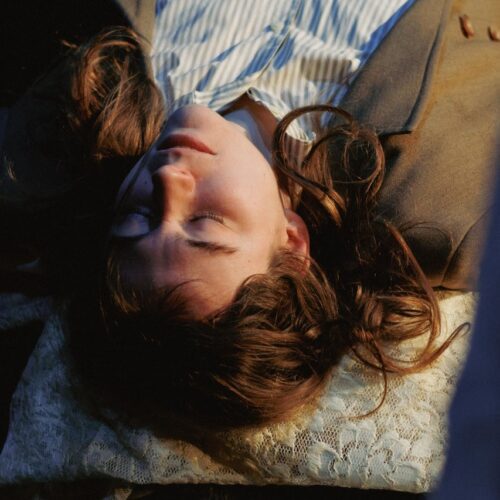
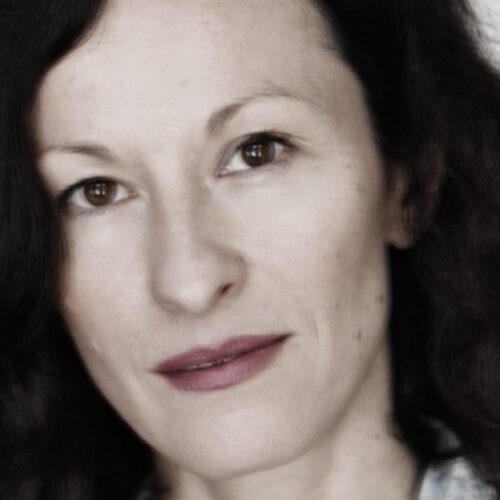
Yvern is inspired by the dramatic decline of winter in southern Quebec. Gabo Champagne, its creator, is an artist working in the fields of contemporary music and the performing arts. A trained composer, she has also studied theater, dance, and performance art. Her multidisciplinary background has led her to design various productions, and now we find ourselves at the heart of Yvern.
Gabo’s recent works are close to opera and/or experimental musical theater. She aims to “dissipate the divisions between the visual and the audible,” that is, to make the distinctions between the two increasingly imperceptible in transdisciplinary works.
This time, however, Gabo is working primarily with instrumentalists who are involved in this work, which premiered on Thursday, October 2, at Théâtre La Chapelle, as part of the Flux festival in partnership with Le Vivier and Québec Musiques Parallèles.
PAN M 360: Tell us about the genesis of this work:
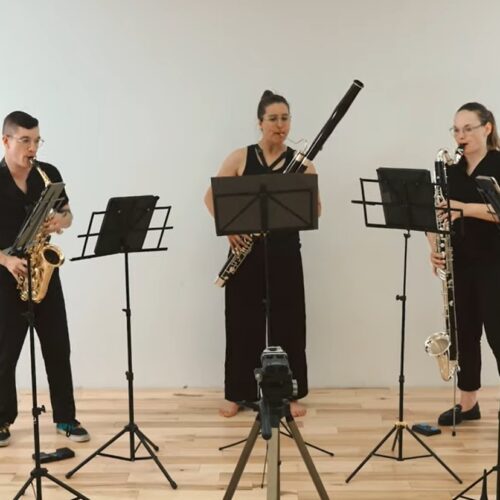
Gabo Champagne: We first did a residency at the Pointe-aux-Trembles Maison de la culture in 2024, then we filmed our residency exit for our records. It was never made public.
PAN M 360: This work evokes your perception of the unfortunate changes in Quebec’s winter climate in the context of climate change.
Gabo Champagne: Yes, exactly. I see winter changing, with less and less snow and more and more rain. We now have exceptionally high temperatures in January and February. I find this prospect truly alarming. So I tried a different or alternative way of talking about these environmental disasters. In the case of winter, it’s closer to the heart and to culture. For me, Quebec culture revolves first and foremost around winter, around our relationship with our northern identity, with the cold, with our resilience to the cold. I was born on November 15, which is when the first snow falls. It’s always a very powerful moment for me. I realized that it affects me in a unique way.
PAN M 360: We have reached a climate that prevailed several hundred kilometers south of where we live.
Gabo Champagne: Exactly. Climate forecasts tell us that there won’t really be any snow in southern Quebec by the end of my lifetime. That’s extremely alarming to me. It pains me greatly. I wanted to express that because I also think winter is an unloved season.
People often say that we’re fake northerners in Quebec and all that. I wanted to create a work that would allow us to reconnect, or at least connect more deeply, with that season, and to realize that even if it’s not always easy, and even if we don’t always have a lighthearted love for that season, it’s something to be cherished because it’s not permanent and will eventually disappear. And so this work focuses on that observation and that disappointment, or rather that inner turmoil.
PAN M 360: Let’s see how it all fits together. You will be working with theater, audiovisual media, music, sound, etc. Several practices are presented in superimposition. So explain to us how you built Yvern.
Gabo Champagne: I have a master’s degree in music composition, so I really have that background in describing scores and so on. Then I became interested in musical theater in the style of Kagel, in particular.
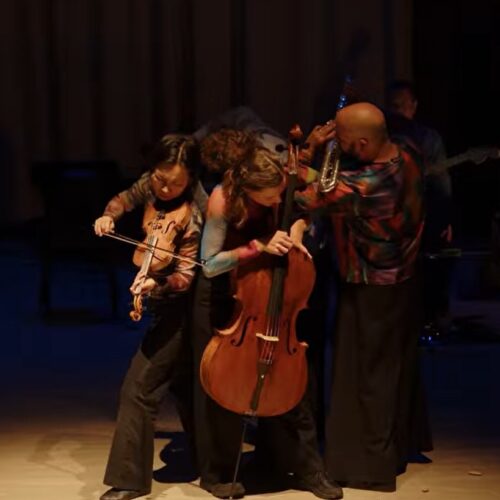
In this project, I am working with a team of instrumentalists. My musical theater goes a little further with this proposal. In fact, there are moments that are composed with scores, but there are also many moments where we worked together in the studio. We spent nearly 80 hours together developing the material for the work. All the instrumentalists are invited to move around, to act, and thus to become part of the theater through their performance, which intertwines and blends with the theatrical plot.
PAN M 360: And what is your role in this program? How are you involved on stage?
Gabo Champagne: I act more as a performance artist. I speak, I can also generate a little sound, I am the theatrical heart. The instrumental ensemble accompanies me, and you could say that our style of playing is similar to contemporary music: directed improvisations, “comprovisation,” but also respect for a structure that we established together in the studio beforehand.
PAN M 360: Before the stage production, Yvern wasn’t recorded on film?
Gabo Champagne: No, it will be the first time on stage. There are no audiovisual elements of the finished work at this time.
PAN M 360: You have, right? That’s the result of the residency you completed at Le Vivier (St. Hilda’s Church) a week before the premiere?
Gabo Champagne: Last year, we had a week-long residency at the Maison de la culture Pointe-aux-Trembles and we filmed the whole thing. After that, I continued to rework it, develop ideas, see what wasn’t working in the recording, and then rewrite it. Then we spent nearly 80 hours at Le Vivier, building on what we had developed during the previous residency.
PAN M 360: You had your final rehearsals on Friday, September 26.
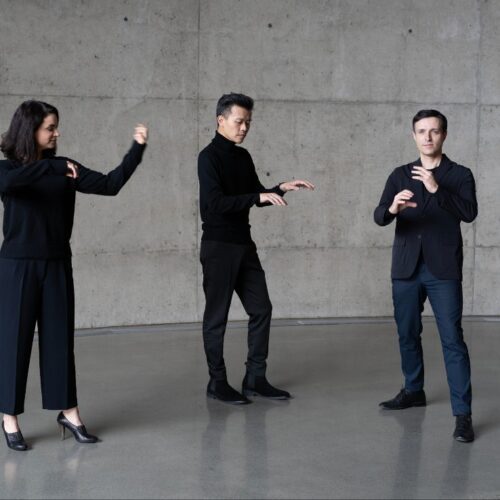
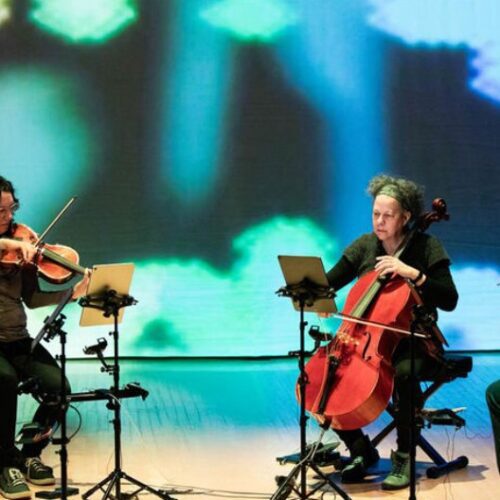
Gabo Champagne: After that, we go straight into the theater. So, there’s Jenn Mong on piano, Yan Cheng on percussion, An Laurence Higgins on guitar, Thomas Gauthier Lang on saxophone, Émilie Fortin on trumpet, and Audrey-Anne Fillion on cello. In addition, there’s a stage manager, JJ Houle, and Darah Miah on lighting.
PAN M 360: And you, you move around on stage, you are part of the work, you intervene as Gabo Champagne, who arrives in the work which, as I understand it, is much more musical and sonic than audiovisual, isn’t it?
Gabo Champagne: Yes, exactly. This time, it’s really built around musical instruments.
PAN M 360: No pre-recorded music?
Gabo Champagne: None, no.
PAN M 360: It’s completely live, the music is performed according to your instructions or improvised, is that right?
Gabo Champagne: Yes. The work is structured in three parts, which is not always obvious to perceive. There is a part, let’s say, that is not transparent to the audience, but for us, it focuses on childhood around winter, then a part about adulthood that may evoke adversity in the face of winter, and a final part that illustrates my death coinciding with the disappearance of winter.
PAN M 360: Yes… The climate in southern Quebec will then be similar to what Delaware or Maryland currently experience.
Gabo Champagne: Part of the text is actually a conversation between winter and me, a sort of epistolary relationship.
PAN M 360: OK! A continuous conversation with winter, from childhood to death.
Gabo Champagne: Exactly. Through this framework, I can also manipulate objects, move around the space, get close to the musicians, and play with them. I navigate these waters.
PAN M 360: In short, you are the visual!
Gabo Champagne: Yes, that’s right, I see myself as the heart, the visual, theatrical, performative element of the work. But there are also moments when the focus is on certain instrumentalists who can also move around the space, producing sounds with their voices and other means. Everyone participates in this environment, but you could say that the theatrical heart is me acting, me speaking the text, me performing the actions.
PAN M 360: How long is the work?
Gabo Champagne : 40 minutes.
PAN M 360: How did you work to indicate who should play what?
Gabo Champagne: Some parts are actually written down, solo moments, etc. For my part, I work out the main sections, what will happen in general terms. After that, we get more and more specific.
During my residency, I will describe the actions that will take place and the desired sound environment. There is a moment of discovery, then of immersion and sharing, of collaboration with the whole group.
PAN M 360: Do instrumentalists contribute to the design process?
Gabo Champagne: I don’t have a clear idea of what I want to hear. I really like asking my musicians for suggestions, I like to be surprised by what they come up with. Then we try this or that. Once a scene is apparently finished, people continue to play music, which inspires me to create something else on my own. New scenes emerge one after another. So a large part of the work is the result of collaboration, of a community that comes together around a central project.
PAN M 360: To what extent is each person free to add their own creative input? We imagine that it starts with improvisation in the workshop, then ends up being finalized to a certain extent as the work progresses. Is that right?
Gabo Champagne: Yes, that’s right. Then there are times, you know, when I listen to them play, and then I do some sound painting, on the volume or the instrumentation, I raise my hand to say what I want. We try things like that together.
PAN M 360: And after a few dozen hours, it finally starts to take shape.
Gabo Champagne: Yes. We’re now working on sequences, and after that, we have three days of rehearsals. So we’re really going to keep rehearsing, fine-tuning, and working on sequences.
PAN M 360: Will you be making an audiovisual document with the creation at La Chapelle theater?
Gabo Champagne: Yes, we hope the recording will be incredible. Normally, everything is set up for us to achieve that.
Programme
- Elijah Daniel Smith: Perihelion , 2025 (12′)
- Gemma Peacocke: Dwalm , 2018
- Roshanne Etezady: Keen , 2004
- Antonin Bourgault: Quand je ne dis mot je parle encore , 2025 (7′) pour quatuor de saxophones – création
- Gabo Champagne: Yvern , 2025 (40′) – création
Artistes
- Gabo Champagne (performance, composition, co-mise en scène)
- Yang Chen (percussions)
- Jenn Mong (piano)
- An Laurence 安媛 (guitare)
- Émilie Fortin (trompette)
- Audréanne Filion (violoncelle)
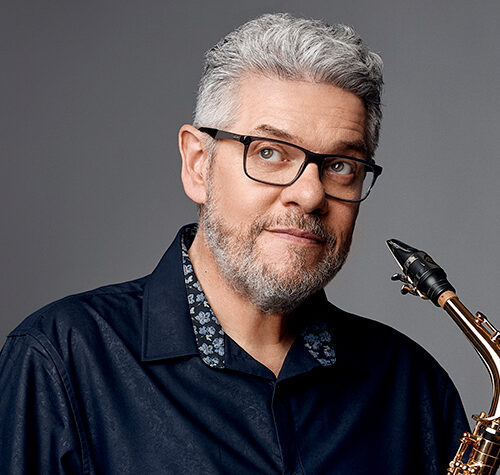
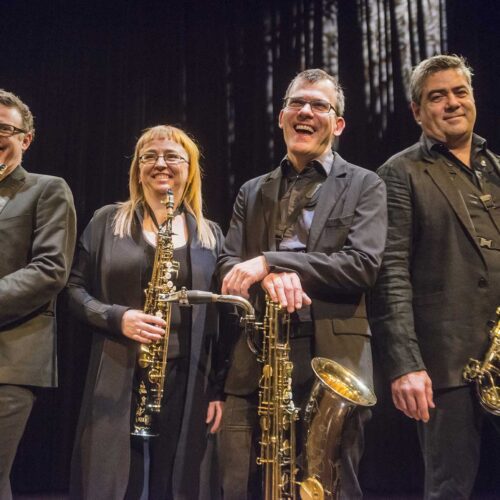
- Treffpunkt Saxophone QuartetGuy Lavoie (saxophone soprano)Thomas Gauthier-Lang (saxophone alto)Antonin Bourgault (saxophone tenor)Edmond Forest (saxophone baryton)