Additional Information
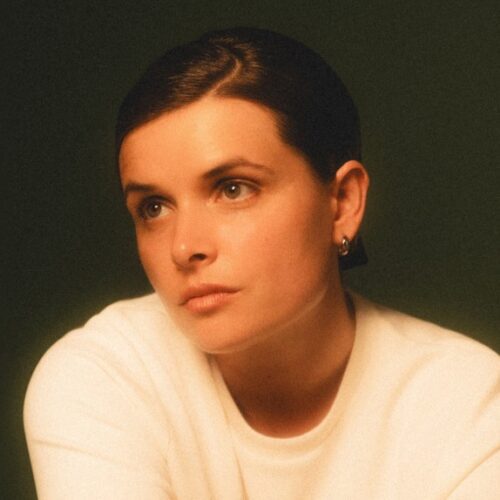
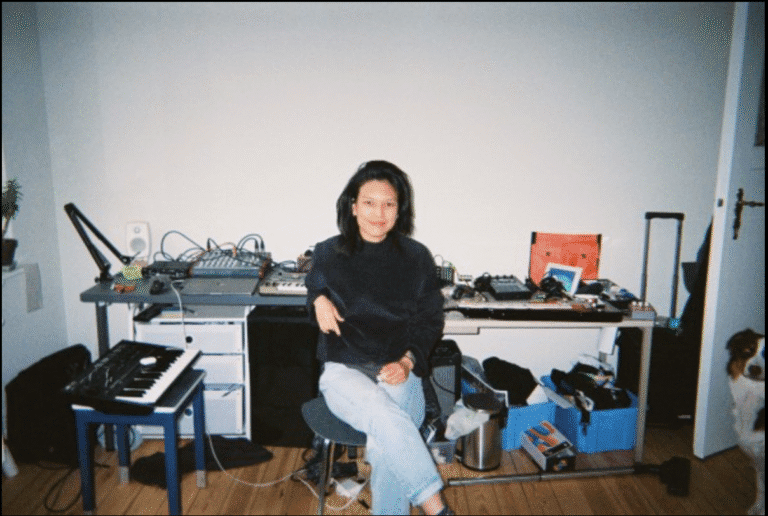
ABehind Liew Niyomkarn’s meticulously calculated concepts lies a profound, poetic sensitivity to the stories and relationships that shape sound. This affective approach has fueled collaborations with artists across the globe, weaving dispersed imaginaries into expansive human narratives that play on the borders of reality and fantasy. An established voice in the arts, her upcoming performance in Montreal is not to be missed. While preparing for her Flux collaboration with Anne F. Jacques, Liew Niyomkarn took a moment to reflect on her journey and share the elements that make her practice so unique.
PAN M 360 : You are part of the A.Hop collective with Anne F. Jacques, with whom you will be collaborating this Monday. Can you tell us how this collaboration came about, and how you have been preparing for the show?
Liew Niyomkarn : Anne-F is one of my favorite sound artists, and I always wanted to play a gig together, plus I was so thrilled that we’re in a collective! I knew early that I’m going to be in Montreal this time so I researched out to her. The preparation is quite organic and straightforward, we sent each others ideas and sound to get acquainted and we’ll be using some of Anne-F’s sound as time keepers like we do in some of A.Hop’s scores too.
PAN M 360 : You have released music with Chinabot, a collective that presents left-field music from Asia. We hear a lot about Brussels being a creative hub for this type of art form, with schools like Ars, but I’d like to better understand the ecosystem of experimental artists and collectives in Thailand, as it’s not something we often hear about. Who are some artists and collectives in Thailand, or in Asia, that have shaped you as an artist today?
Liew Niyomkarn : Back then, there weren’t too many experimental artists in Thailand, but most of the art scene was clustered around Bangkok and Chiang Mai. I looked up to the pop duo Stylish Nonsense, the record label Small Room, and the gallery WTF (Wonderful Thai Friendship)—they were my go-to spots when I lived there. After I left Bangkok more than a decade ago, the scene has really blossomed into a cornucopia of artist-run spaces. There are so many talented artists and musicians in Thailand. These days you can check out places like Speedy Grandma, N22, Storage Gallery, the music venue Noise House, and Jam Café. There’s also a thriving queer underground community, NonNonNon—just to name a few. The city has never stopped offering fun/exciting stuff!
PAN M 360 : Yuri Landman creates instruments which focus on creating unheard timbres, but his instruments also expand the possibilities of interaction. Why did you choose to use his instruments for this record, and what do they bring to your practice?
Liew Niyomkarn : I had a series of intensive meetings with Yuri a few years back. We mostly dug into fundamental physics (his background), tunings, and the harmonic series. He’s really well-versed in all of it. For him, math works almost like an autopilot—he speaks in mathematics, which I still can’t fully wrap my head around. But I’ve come to terms with the division of harmony over string instruments, and we even started building a few of them so I could grasp it more directly.
We drew on Glenn Branca’s harmonic system as a foundation, and Yuri worked out his own adaptation. What I love about this approach is that the more options you lay out, the more you’re pushed to lean on your ears and intuition to decide what you want—or what sound truly speaks to you. For me, it’s always exciting to pick up the theory, but at the end of the day, I fall back on my ears and my feelings.
PAN M 360 : Your musical practice clearly has a strong connection to physical space, with collaborations extending across the globe and combinations of field recordings that imagine boundless new worlds. Conversely, what we see in the media is that where boundaries are undemarcated, for example on the border between Thailand and Cambodia, there is potential for conflict. Do you think it is possible for humanity to exist without borders, in a state of peace?
Optional: How do you, in this boundless music, consolidate different actors; different states?
Liew Niyomkarn : Yes—if those in power stopped using borders as weapons, humanity could already be living without them.
[ answer A ] for music — I’m not sure I intentionally bring them together. I just let the music bring out different states, so they end up colliding, overlapping, and unraveling on their own or at least I hope it comes across that way.
PAN M 360 : As someone based in Brussels, Bangkok, and L.A., you have a unique perspective on these three distinct cultures. Can you give us your insights on the collective notion of a division between Eastern and Western cultures?
Optional: How would you interpret these differences musically speaking?
Liew Niyomkarn : I’m not sure if there’s really a division like that. I think culture tends to adapt for human survival — we inevitably find ways to move forward. These are big cities with a wide array of multicultural environments. I can’t quite put my finger on it, but I’m pretty sure the vibe of these cities finds its way into my music
PAN M 360 : The above-mentioned cities are very dense urban areas and megapolises, but your music on the other hand feels completely detached from these urban landscapes. It is not only minimally composed, but also incorporates elements of field recordings from what sounds like a jungle on “feels like liquidity”, and talks about the stars in “comet of curiosity”. Can you talk to me about this dichotomy; of the outside-inside spaces which you occupy between life and music?
Liew Niyomkarn : One cool thing about using sound and music as a medium is that it bypasses rational thought and elicits a kind of fantasy. Science and fundamental physics are a good place for me to go psychologically. Using field recordings is, for me, not only a way to preserve memory but also to construct simple narratives—ones that I hope we could live in as alternatives to the real world.
PAN M 360 : Glenn Branca and Sonic Youth are noted amongst the influences on your most recent album “In All Possible Places at Once”. The No Wave movement which broadly connects these two artists was partly inspired by early American Avant-Garde, which I can hear in your music. But beyond this, the sonic textures of these albums are almost in contradiction to your soft plucked combination of string instruments and gently introspective environments. You mentioned tunings and compositional forms, but what inspires you conceptually about artists like Glenn Branca and Sonic Youth?
Liew Niyomkarn : I like that they treat sound as a spatial, material force. They explore texture, dissonance, and resonance to shape immersive environments rather than just melodies, and embrace the overlaps and chaos that arise when sonic layers interact.
PAN M 360 : You have worked on films, soundwalks, theatre pieces and even some installations of your own. In what ways does your live performance practice differ from your other sound practices, and in what ways are they similar?
Liew Niyomkarn : I love live performance because it really wakes up your inner clock in a way no other form can. What overlaps for me is the sense of space, the environment, and the collaborations that grow out of them.PAN M 360 : A final question: What are you most excited about artistically right now? Is there a specific project which is inspiring you the most?
Liew Niyomkarn : I’m writing a score for Savant Flanuer, where we’ll be performing at Send+Receive in a few weeks, and a live performance collaboration with three Thai artists for a Ghost 2568 Festival in Bangkok. Mostly, I’m researching music notation and want to write more scores, create an exhibition, and expand my work into a sound installation.
MONDAY OCTOBER 6, SALA ROSSA, 7:30 PM. INFOS + TICKETS HERE