Additional Information
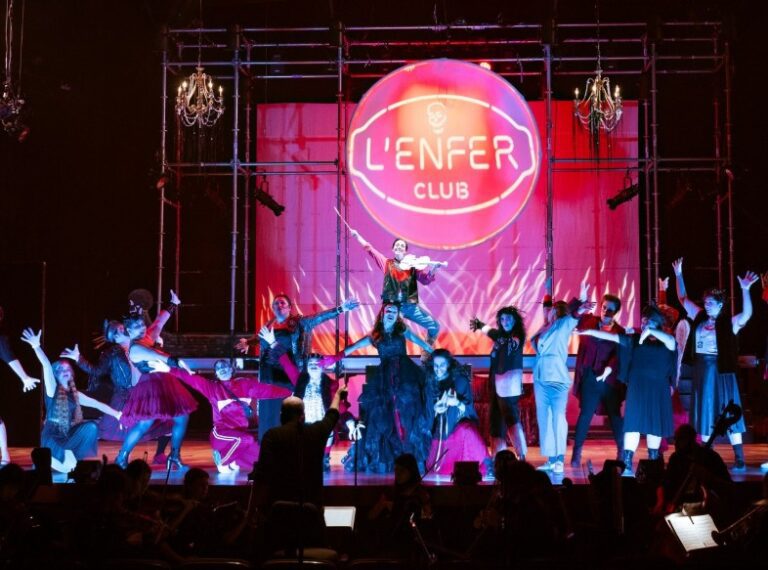
To coincide with the production of Orpheus in the Underworld, the opera workshop at the Faculty of Music of the University of Montreal invites us to delve into the satirical world of Jacques Offenbach. Robin Wheeler, co-director of the opera workshop, explores with us the reasons that led him to choose operetta, its pedagogical role, and the artistic decisions that resulted in the final product. Robin discusses the groundwork and challenges encountered during the season. This interview sheds light on the faculty’s mission with its students, highlighting the importance of the process and the crucial balance between voice and orchestra.
PAN M 360: Can you explain your role within the opera workshop?
Robin Wheeler: I am an associate professor at the Faculty of Music and co-director of the opera workshop, which I run with Richard Margeson, an internationally renowned tenor with a long career in opera. Each year, our role is to choose a work, assemble the artistic team—including the stage director—and provide musical guidance for the singers. My main focus is on musical preparation, this year in collaboration with accompanist Esther Gonthier, with whom I also share instrumental work.
PAN M 360: Why did you choose Orpheus in the Underworld this year?
Robin Wheeler: After a darker production last year with Hänsel and Gretel, we wanted to bring something lighter. In the current climate, it seemed important to offer the public a comedy. Offenbach was the obvious choice: there is no better composer when it comes to French operetta. Moreover, choosing a work with dialogue presents a valuable training challenge for the singers, who must learn to transition from speaking to singing, an essential aspect of their training.
PAN M 360: Did the choice of French also play a role?
Robin Wheeler: Absolutely. For most of our singers, French is their native language. Singing in their own language allows for immediate comprehension of the lyrics and more natural expression. It’s a real luxury for the performers, but also an asset for the audience.
PAN M 360: Do you think the work remains relevant today?
Robin Wheeler: Yes, without a doubt. Offenbach playfully subverts the myth of Orpheus and Eurydice: the characters don’t conform to traditional expectations, and the moral is embodied by the figure of Public Opinion. This satirical reinterpretation remains extremely relevant. The music, for its part, engages with tradition, notably through references to Gluck, while maintaining a great freshness.
PAN M 360: How was the artistic vision developed with the director?
Robin Wheeler: François Racine is a highly experienced opera director. He knows singers very well and treats them like true professionals. The staging remains relatively traditional in its aesthetic, but with subtle adjustments to the text to enhance its contemporary relevance and humor. His sense of comedy and his respect for the music make him an ideal collaborator for this project.
PAN M 360: What are the main musical challenges of this production?
Robin Wheeler: One of the major challenges is balancing the orchestra and the voices, especially since our hall doesn’t have a pit: the orchestra plays in front of the stage. Finding the right balance requires constant work. Furthermore, even though the music seems light, it demands great rhythmic precision. Offenbach gives the illusion of simplicity, but everything rests on extreme rigor.
PAN M 360: What learning opportunities does this production offer students?
Robin Wheeler: Beyond the performance itself, the entire process is what matters: the work since October, the very intensive technical week, the management of vocal stamina and energy. The students, from undergraduate to doctoral level, share the stage and form a true company. All the soloists also sing in the choirs, which strengthens the collective spirit and professional experience.
PAN M 360: What message do you wish to convey to the public?
Robin Wheeler: I would like the audience to remember above all the lightness of the work and the pleasure it provides. For two hours, opera allows us to forget the worries of everyday life. Seeing the youth, energy, and commitment of these young artists is something truly precious, both for the audience and for us, the teachers.
PAN M 360: More broadly, what do you think are the current challenges facing opera?
Robin Wheeler: Opera is a demanding and expensive art form, and funding issues are very real. Yet, I deeply believe in its importance, especially in difficult times. Art offers a space for escape, reflection, and beauty. If opera continues to exist, it is because there are still passionate artists and an audience ready to be moved.