Additional Information
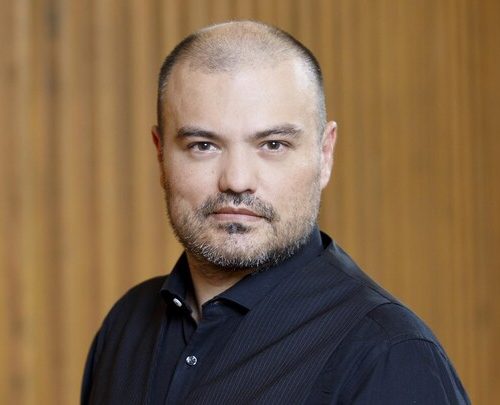
The lutenist Esteban la Rotta has just released a fascinating album on the history and birth of the modern lute playing style, published by ATMA. It was in Germany that he rediscovered these roots, particularly with a composer named Conrad Paumann (nicknamed “Orbus Ille Germanus,” the blind German). Ironically, the man left no manuscript of music for the instrument, even though he was recognised as an exceptional performer, capable of playing polyphonically, while no one else did so at that time. It was rather through several detours that Esteban la Rotta managed to reconstruct what this style of playing might have sounded like. I spoke with the musician about this music and the album dedicated to it.
READ THE REVIEW OF ESTEBAN LA ROTTA’S ALBUM
PanM360: Hello Esteban. Why did you decide to dedicate an album to the music of the origins of modern lute playing?
Esteban la Rotta: There is very little knowledge about this music, and I wanted to dive into it and understand how it came about.
PanM360: Just how did you go about it? Exactly, how did you proceed?
Esteban la Rotta: Since no scores have come down to us, I had to use all sorts of alternative methods. I started with what we know: a certain Ottaviano Petrucci published several books of musical scores. He was the equivalent of Gutenberg in Italy, and focused on music. He invented mobile caracters for musical notes and other musical symbols, just like Gutenberg did for letters. He thus brought music into the modern era of printed dissemination. He printed the first books for playing the lute, there weren’t any before. There weren’t many more manuscripts, in truth.
PanM360: Why?
Esteban la Rotta: This is another reality of the lute of the time: there were very few composers who wrote for the instrument as a soloist. In fact, originally, the lute was exclusively an accompanying instrument, playing bass or melodic lines, but unique and simple ones. No one wrote handwritten scores for the musicians who knew how to accompany in a very free and spontaneous manner.
PanM360: What did this Conrad Paumann do to change that?
Esteban la Rotta: That’s what’s interesting. Paumann began to play polyphonically on the lute, that is, playing multiple voices at the same time, like on a piano or organ. Nowadays, we are used to hearing the lute this way, as we often hear Bach, Weiss, etc. But at that time, it was completely unique. It is said in Italy how the audience was amazed by Paumann’s playing technique. Nobody had ever heard anything like it!
PanM360: So, have you delved into Mr. Paumann’s scores?
Esteban la Rotta: Well, no, it’s impossible, because he left no written document of the music he played on the lute. However, he left behind collections of scores of pieces written for the keyboard (probably the organ), with all sorts of details on how to combine the voices, one over the other, etc. I first studied these scores and immersed myself, if you will, in the spirit of his music. These books are called the Buxheimer Orgelbuch and the Lochamer Liederbuch.
PanM360: But that wasn’t enough…
Esteban la Rotta: No, I also consulted a specialist in German music from that era, who himself studied documents, including one called the Wolfenbüttel Lute Tablature Fragments. These are what are believed to be the first written scores for the lute, but not in polyphony. That said, it features the technique of “strumming” the strings, as done in modern times, but with a plectrum, which was used at the time.
PanM360: What is the connection with Italy, more specifically?
Esteban la Rotta: Paumann travelled there and, as mentioned, he impressed the audience. They even asked him to stay, they offered him a position. He refused because he was afraid they would assassinate him!
PanM360: Really?
Esteban la Rotta: Yes! He even had his own German cook with him, to avoid being poisoned. Was he right to be suspicious? We don’t know. But, back then, professional jealousy could lead to certain extremes, and people were poisoned for less than that…
PanM360: Ouch.. But he still left a strong mark
Esteban la Rotta: Yes, he stimulated polyphonic playing on the lute, which then developed widely in Italy, and later spread again to the rest of Europe, including Germany itself. The rest of the story is a straight line to us, today.
PanM360: It’s fascinating. We probably can’t imagine, in a biased way, Germany influencing Italian music…
Esteban la Rotta: No, indeed.
PanM360: So you basically fused all that information together and came up with what sounds like what this music might have been like. And you event composed a few pieces in the same style.
Esteban la Rotta: Yes and I had a lot of fun doing it.
PanM360: What is the essential reason that led to the autonomy of the lute and the development of its more complex polyphonic playing?
Esteban la Rotta: The only way to hear music at that time without Spotify, CDs, etc., was to go to church or play it yourself at home! However, having a lute was simpler and more accessible than having a keyboard. In turn, this development ensures that the demand for lute pieces increases significantly. And the more one wants to play it, the more some want complex, demanding works. If we played the lute before, we accompanied a mass written by Machaut, or Binchois, or Dufay. Quite limited interventions. Before that, one was a troubadour or trouvère, a profession in itself. For simple pleasure, the possibilities were few. Let’s add to that, as I said, the arrival of printing technology, and we have the ingredients for a spectacular flourishing.
PanM360: All of this is frankly enlightening. Thank you immensely for this research work and of course for a very beautiful album that showcases the results.
Esteban la Rotta: Thank you.