Additional Information
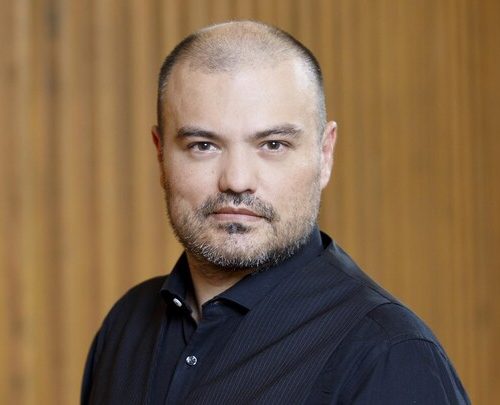
James O’Callaghan is undoubtedly one of the most prominent composers in his thirties in the Canadian music scene. His works are highly diverse, both in terms of the instruments used and their references, which range from electroacoustics to contemporary instrumental music, IDM, and post-punk! A creature of his time, James O’Callaghan is invited to Akousma this Friday to broadcast the work “Fear of the Dark”, which has little to do with the Iron Maiden song of the same title. Although… there may be a few slightly harsh sounds scattered throughout this electronic work on Halloween night! For the first time, PAN M 360 meets this prolific and highly talented Canadian composer, originally from British Columbia, who now divides his time between Berlin and Montreal.
James O’Callaghan is undoubtedly one of the most prominent composers in his thirties in the Canadian music scene. His works are highly diverse, both in terms of the instruments used and their references, which range from electroacoustics to contemporary instrumental music, IDM, and post-punk! A creature of his time, James O’Callaghan is invited to Akousma this Friday to broadcast the work Fear of the Dark, which has little to do with the Iron Maiden song of the same title. Although… there may be a few slightly harsh sounds scattered throughout this electronic work on Halloween night! For the first time, PAN M 360 meets this prolific and highly talented Canadian composer, originally from British Columbia, who now divides his time between Berlin and Montreal.
PAN M 360: You are involved in various forms of composition: electronic, instrumental, vocal, mixed, even forms close to rock. Quite a program!
James O’Callaghan: I am a curious person and have always wanted to try new things. I am motivated by exploration, like water that flows under a rock to find its way. I would not expect, for example, to be interested in writing for classical instruments. Yes, a little bit of everything.
PAN M 360: You received your musical education in British Columbia, studying electroacoustics at Simon Fraser University, after which you came to McGill for your master’s degree, which you completed in 2014. How did you diversify your approach?
James O’Callaghan : It was really thanks to the Simon Fraser program. I started out in electroacoustics, but the program also required us to write for instruments. If I could have specialized in electroacoustics, I would have, but the program wasn’t segmented. At first, I wasn’t really interested, but one of my first teachers at the time, Rodney Sharman, really encouraged me to learn the instrumental language, and I became very enthusiastic. And then this program involved a professional contemporary music ensemble reading and performing student works each semester.
It was really cool for a young composition student to work with professionals who were really open to my work. I really loved the collaborative process of writing instrumental music, which is very different from electroacoustics, where you’re alone in the studio and can change the sound directly without consulting anyone. Two very different ways of working. Then I even got to work with symphony orchestras in British Columbia. So I was really lucky to be in the right place at the right time, because I didn’t have any background in instrumental music before.
PAN M 360: We’ve been told that you commute between Berlin and Montreal.
James O’Callaghan: Yes, my girlfriend, the artist Sarah Albu, and I live here part-time, which is convenient because we have a lot of work here, but we both also have quite a few projects in Europe, so it makes sense to keep both homes for the time being.
PAN M 360: In this case, it is an electroacoustic work presented at Usine C this Friday.
James O’Callaghan: I am grateful to Akousma and its artistic director Louis Dufort for asking me to do something new in electronic music, not really dancefloor, not EDM or IDM, not the kind of thing you would play at Mutek late at night, for example (laughs).
PAN M 360: So you’ll be presenting “Fear of the Dark”, which is also the title of an Iron Maiden song, haha!
James O’Callaghan: Yes, I imagine I’m not the first to use that title.
PAN M 360: That said, it makes sense because you sometimes have a rock attitude. You’ve just released Purple Heck, an EP of post-punk songs where your rock crooner voice drips with desire!
James O’Callaghan: Yes, I released it in August, and I’ve already played a show in Berlin with this material. I hope to play a few shows in Canada. I played everything myself—baritone guitar, bass, keyboards, synths, electronics, vocals. A band would be the next step, this music lends itself well to that! If I can find the time, it’s something I’d like to do more often.
PAN M 360: But “Fear of the Dark” promises to be an electroacoustic work.
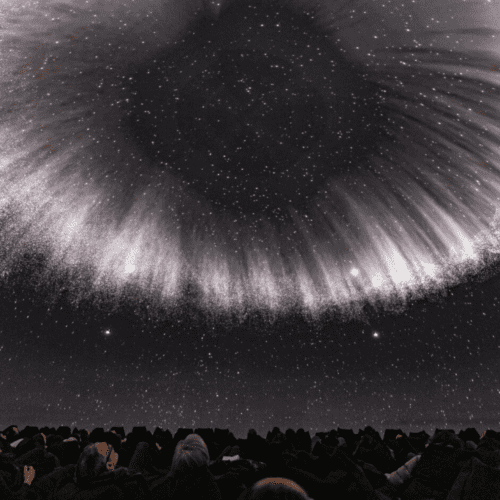
James O’Callaghan: Exactly. And I think that title is a good choice for my music presented at Akousma. Because Fear of the Dark can also come from Pierre Schaeffer (one of the fathers of electroacoustics), meaning the distancing of an environmental object from its source. There is a kind of anxiety surrounding this. It attracted me when I started studying this music at university. I wondered why it seemed so difficult to think about the source of sound. That’s really what prompted me to think about this piece, to think about the idea of the sound object, something that carries the anxiety of separating sounds from their source.
PAN M 360: Can we learn a little more about the structure of this piece? “Fear of the Dark”?
James O’Callaghan: What I knew when I found out I would be doing this play was that it would be performed on Halloween night. That certainly influenced the choice of title. My starting point was to try to think of all those clichéd sounds you hear in horror movies or haunted houses—screaming birds, whistling wind, threatening voices, creaking doors, suspicious footsteps echoing, etc. There are also sounds that I explored in my previous works that could lend themselves to the exercise. I also thought about the anxiety-inducing passages in Michael Jackson’s song “Thriller”.
PAN M 360: Yes, in which Vincent Price lends us his voice from beyond the grave!
James O’Callaghan: I love that song! There are little references to “Thriller” in the piece. In fact, there are two tributes in the piece. The other is to the electroacoustic piece Cricket Voice by composer Hildegard Westerkamp, who went into the desert and recorded the sounds of crickets, then transposed them to other octaves before revealing their source.
One of the theoretical motivations for this piece was an article by the late Andra McCartney, a sound artist and acoustic ecologist from Montreal, entitled “Alien Intimacies”. In this text, she recounted how she had taken Hildegard Westerkamp’s piece, “Cricket Voice”, and played it to a group of students, then asked them to describe what they had heard and how they felt while listening to it.
This piece, which is meditative in nature, with an environmental sound linked to acoustic ecology, elicited different perceptions than expected: most students drew comparisons with science fiction, horrible monsters, etc. She observed that electronic manipulation of sounds and listening to them in the dark could often cause anxiety. That is why I wanted to refer to this piece in particular by using the sounds of crickets.
PAN M 360: Will you be broadcasting this piece yourself on Akousma?
James O’Callaghan: Yes, I just finished an octophonic mix of the piece, which means it’s spread across eight main channels distributed across some fifty speakers installed at Usine C.
PAN M 360: OK! Now let’s talk about other aspects of your vast musical world, especially since your works are often performed on contemporary stages. “Limit”, one of your most recent works, was premiered by Paramirabo last September. So what are your main projects?
James O’Callaghan: Well, right after Akousma, I’ll be working on a new piece for Jean-François Laporte – Totem Contemporain. I’m going to write a piece for his invented instrument, the Table de Babel.
PAN M 360: According to its official description, the Table of Babel consists of two bowls, a pipe, eight insects, several vibrating membranes and divas, as well as a free latex electron. Each element has its own compressed air supply and is therefore controlled independently. So what do you do with this Table of Babel ?
James O’Callaghan: I staged it my way, emphasizing the fusion of genres. When Jean-François approached me, he was also interested in my interest in techno, so there will be a techno aspect to it all.
In two weeks, I will be traveling to Toronto to finalize the piece “Amor Fati”, which I have been working on for about six years with pianist Cheryl Duvall, who is also co-artistic director of the Thin Edge New Music Collective. She commissioned several composers to write long pieces, lasting an hour or more. My piece will premiere at the Canadian Music Centre on November 13 and will also be performed in semi-darkness with powerful speakers set up in another room. The pianist will have to play from an oral score that she will hear in her ears, so she will be performing without reading.
PAN M 360: Did you say blown up?!!
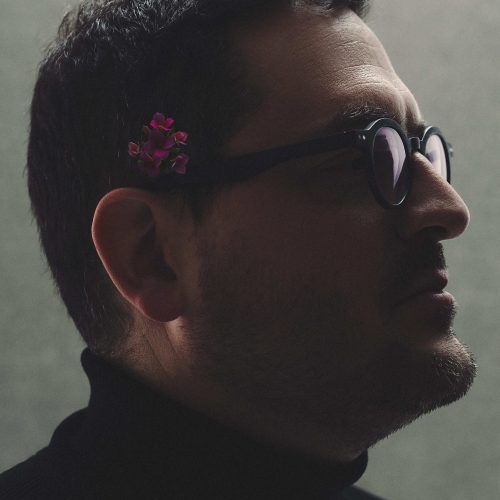
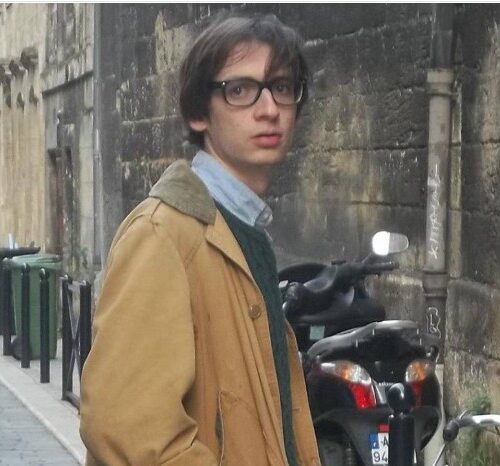
Photo tirée du compte Instagram de James O’Callaghan