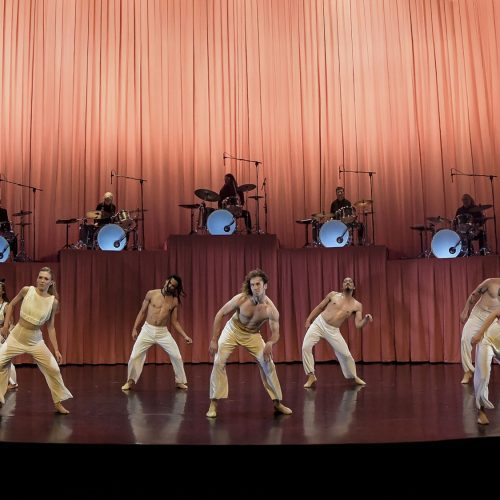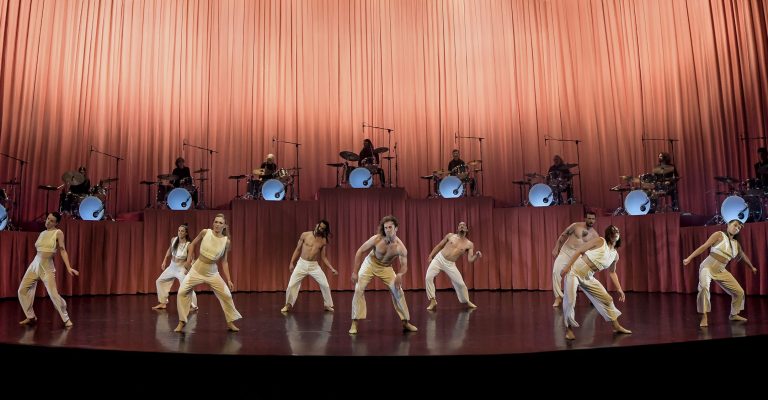
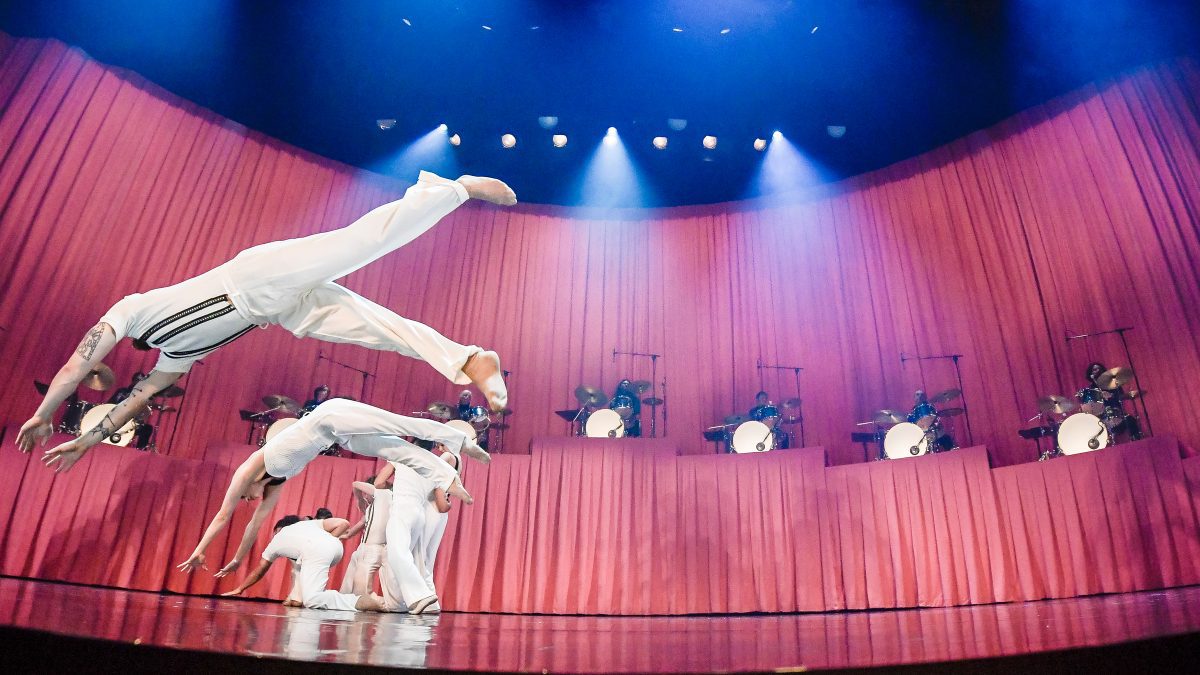
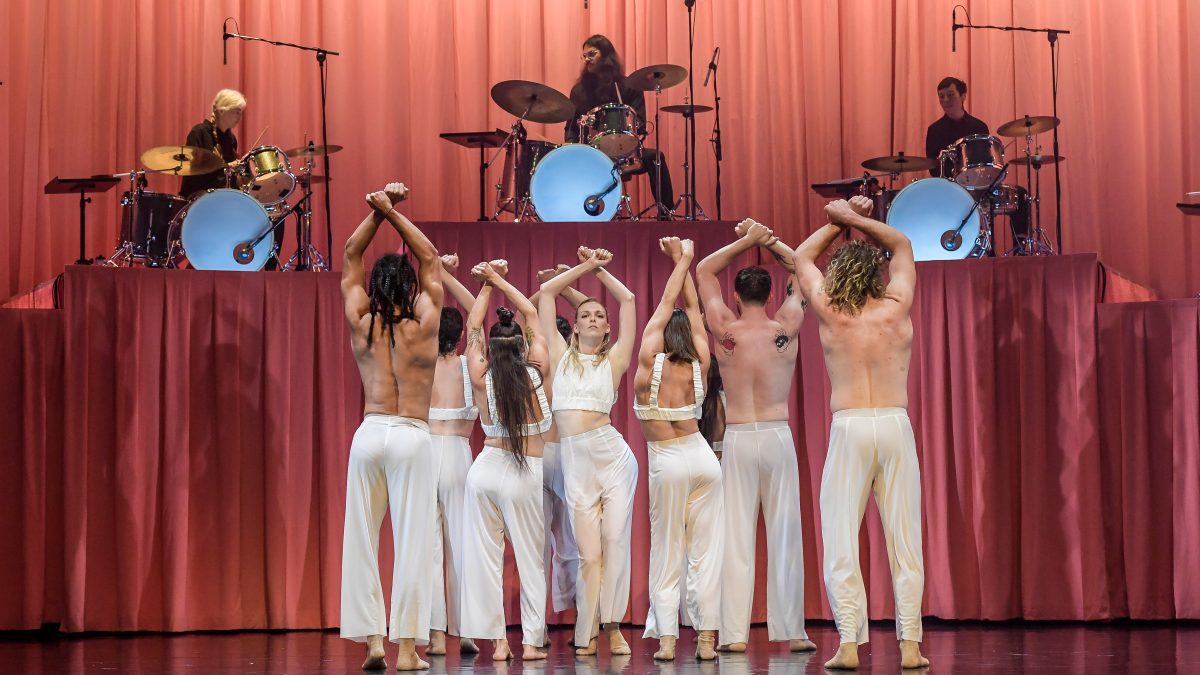
Struck right in the solar plexus, that’s what awaited the spectators who came to see and hear Stephanie Lake’s choreography Manifesto at the Maisonneuve Theatre on Wednesday evening. And this from the very first second, with a thunderous first blow perfectly coordinated between the nine drums arranged in podium like scaling, at the back of the stage. We all jumped. The dancers too, by the way. But in their case, it was planned.
Just one blow, then, but of rare power. Silence. Another blow (but this one, we saw it coming). Silence again. And it continues like that for one or two minutes. The dancers react in a nanosecond, writhing for a brief moment to each sound slap, then freezing into all sorts of postures. The music (an exciting and visceral score by the noise artist and avant-gardist Robin Fox) builds up as it progresses, of course. It swells with textures and rhythms, which become powerful, very rock-like pulsations, or ethereal, evanescent, pointillist, abstract episodes. There is not just pounding in this writing, but also all sorts of extended and contemporary playing techniques, according to the needs.
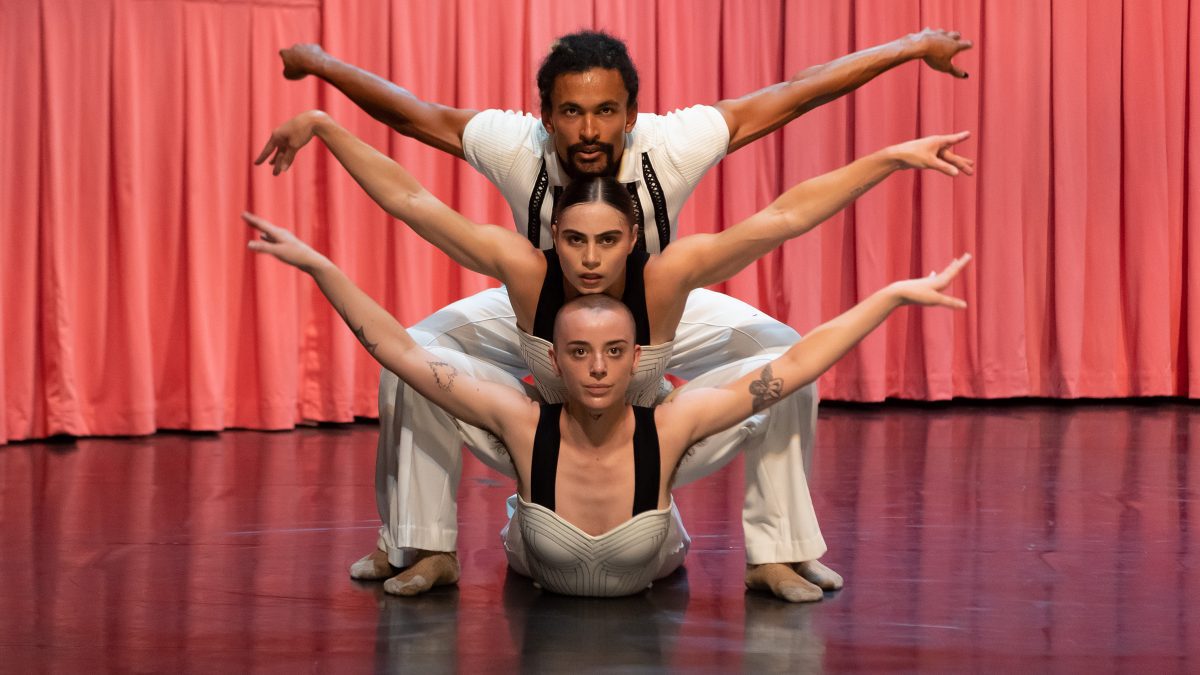
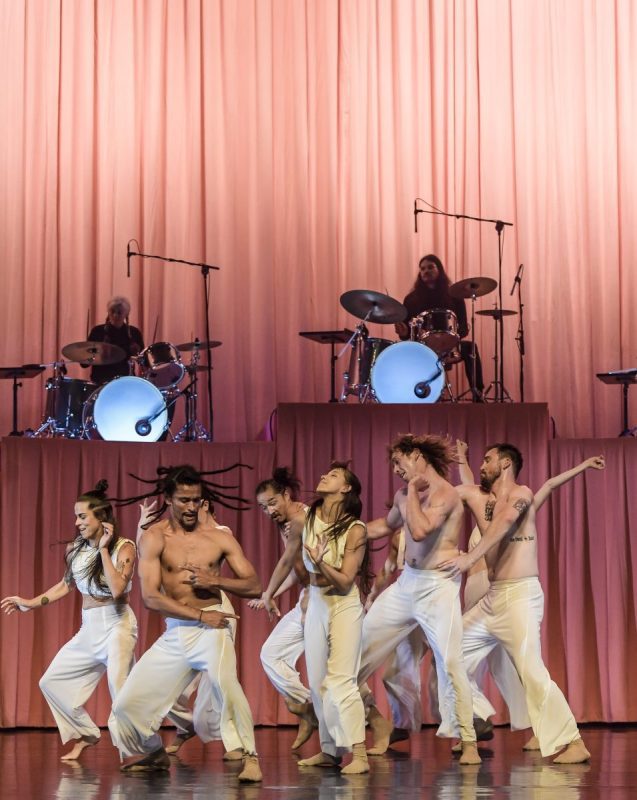
And on that, the dancers react like a symbiotic organism, like a plethora of ultra-flexible and agile muscles, directly connected to the musical and expressive nerve, transmitted instantly through the sound impulse of the nine musicians. The coherence of the ensemble, the perfect coordination among all these people is remarkable. The effect is memorable. We are captivated, excited, and an hour passes like ten minutes.
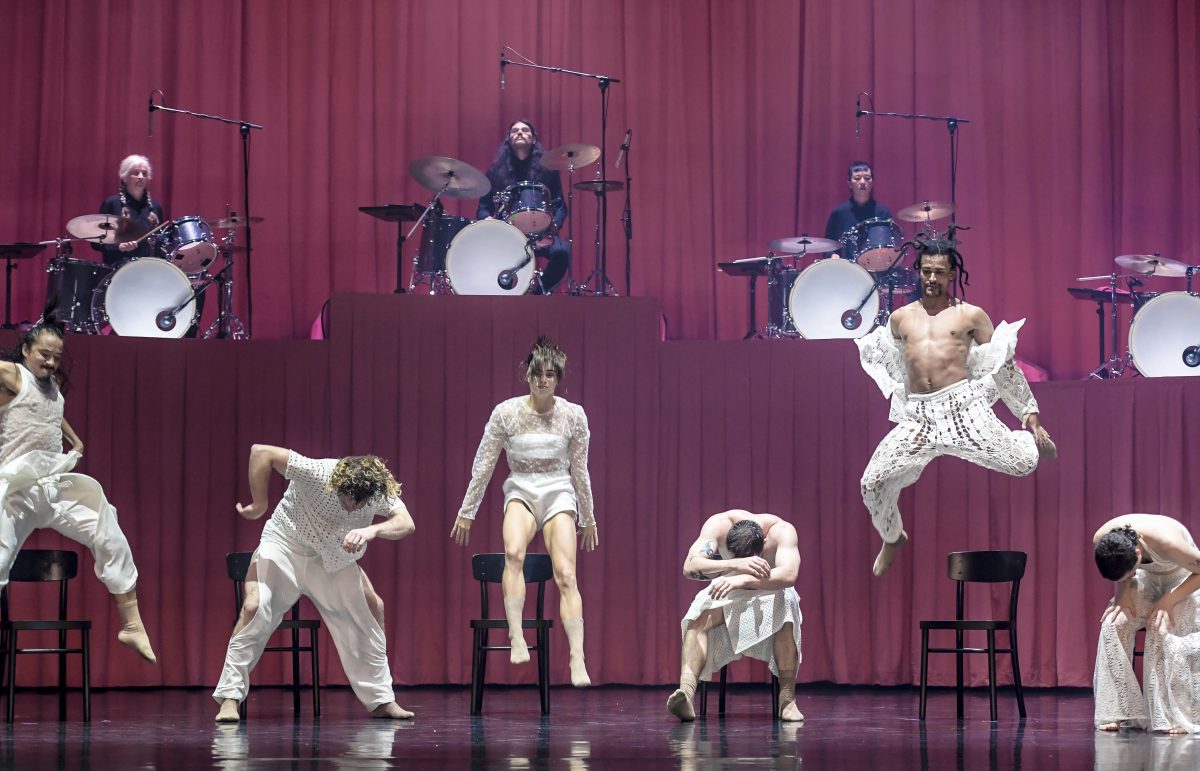
The brilliant intuition of choreographer Stephanie Lake is that she did not limit the gestural action to a mere mimicry of the sonic action. Yes, the dancers closely follow the rhythms and sound dynamics of the nine drums, but it is in the “undulating” quality of the gestures, both individual and collective, that one perceives a construction in complementarity of the two expressive entities, music and dance. The percussive nature of the music is therefore compensated by the incessant fluidity of the movements. Each gesture of each dancer is connected to the next like in a natural organic sequence. Each movement metamorphoses into the next and so on. This is true both on an individual and collective level. The mechanical nature of the score, although sometimes fragmented, flourishes in a contrapuntal balance with the fluid, wave-like nature of the choreography. A very well-balanced architecture between what our ears hear and what our eyes see.
Noteworthy, as a visual treat, is the understated staging concerning the decor (large fuchsia curtains at the back of the stage, the arrangement of the nine drums in a podium format) and the very dynamic lighting design. Very impressive, for example, was the episode where the drummers exchanged blows one by one, instantly followed by each being spotlighted solo, and this for several minutes. It stays etched in our memory.
Stephanie Lake had given us a colossal… Colossus a few years ago. This Manifesto is another great artistic and expressive success of the Canadian-Australian artist who, by the way, is building a reputation as a favourite of the Montreal audience. You won’t hear me complain about it.
Related content:
The Breath of Bodies, a performance review and interview
Review of Sol Invictus at Danse Danse
Review of Haydn’s The Creation at the Grand Ballets
Airat Ichmouratov will compose Alice in Wonderland for Les Grands Ballets
Manifesto
1er avril 2026 – Montréal
Cr.: Wendell Teodoro
Manifesto
1er avril 2026 – Montréal
Cr.: Roy VanderVegt
Manifesto
1er avril 2026 – Montréal
Cr.: Roy VanderVegt
Manifesto
1er avril 2026 – Montréal
Cr.: Roy VanderVegt
Manifesto
1er avril 2026 – Montréal
Cr.: Roy VanderVegt