Electronic

SAT | Nuit blanche 24H DJ set X Kent Monkman at MMFA

by Laurent Pellerin

A wide array of venues and events lay before us on this night bridging February and March 2026. Usually quite sensitive to the effects of choice overload, I had decided to focus on just two specific destinations: Montreal Museum of Fine Arts, to see the Kent Monkman exhibition, and then the SAT.

My arrival at the SAT was marked by the sharp smell of dry ice; the crowd was still relatively sparse. I had stopped by to get my stamp before the line grew too long, then took the opportunity to gauge the atmosphere. It wasn’t yet midnight, and I was well aware that most people planning a Nuit blanche outing tend to schedule more than one stop.

Two large screens allowed us to follow the DJ sets in real time and to take in the very distinctive look of the mixing console: a metal casing, large rotary knobs, two VU meters suggesting an analog circuit (one would expect a vinyl DJ set to go hand in hand with an analog mixer).

The pared-down design reminded me of the rudimentary equipment used in the first electronic music studios of the early 1950s in Cologne, where Stockhausen composed his Studie I and Studie II. I noticed a few individuals—perhaps simply fascinated by the gestures, or perhaps professionals with a keen interest in the gear—completely absorbed by these projections.

At that point in the evening, the music was not yet particularly danceable, and the transitions felt ambitious—sometimes overly so, and occasionally unsuccessful. A handful of people at the front swayed their hips, while most remained in observation mode. There was still a certain hesitation in surrendering to the rhythms; the mood simply wasn’t there yet. The cluster of DJs and collaborators behind the turntables, exchanging glances, comments, and movements with the records, drew more attention than the music stirred bodily response.

I stepped out after less than an hour to head toward Montreal Museum of Fine Arts, where I had read that the Kent Monkman exhibition was free for those 25 and under. The street and metro station were buzzing with an unusual liveliness for such a late hour. One sensed that the night was only just beginning for most of us.

Upon arriving at the museum, the line initially seemed endless. Almost reluctantly, we took our place at the very back, the biting night air urging us forward. To my surprise, in less than fifteen minutes we were climbing the steps toward the Monkman exhibition. We were told there were only thirty minutes left before closing.

This time constraint, coupled with the broader context of Nuit blanche, made for a museum visit unlike any other. The density of visitors recalled major European museums; everyone moved briskly from room to room, eager to see everything, with little time to linger intellectually over each work.

The late hour also lent the experience a distinctly unusual tone. All these factors led me to rely on immediate, visceral impressions in my encounter with the exhibition. My eyes scanned the walls until an image caught my attention; I stood before it and let a shiver run down my spine.

At first glance, the imposing scale of the canvases greatly enhanced their impact. I noted with satisfaction that very few phones were raised to capture images already immortalized; instead, a current of movement animated the crowd, which continued flowing steadily toward the next gallery.

Somewhere in an adjoining space, music played by a DJ drifted along the tall marble columns, further contributing to the unusual character of the visit. Though I appreciated this somewhat fanciful musical addition, I found myself wondering about the rationale for including such a performance in a museum setting. Was it to draw people in, to encourage ticket sales? To maintain the momentum of an evening just getting underway? After all, it was Nuit blanche. They could place DJs wherever they pleased. Before long, the closing of the galleries was announced, and we made our way out.

Back at the SAT, the energy inside had shifted dramatically. The room was packed; the air dense and humid. The music had moved decisively toward a more dance-oriented style, and it felt easier now to merge with the moving crowd. The atmosphere was loud, almost boisterous. One could sense the fleeting, carefree nature of the gathering. I couldn’t help comparing this experience to one I had had three weeks earlier, in the dome at the same venue, where Wata Igarashi and Marie Davidson had allowed me—probably for the first time—to feel completely spellbound by a DJ set. Here, many people seemed merely to be passing through; the contrast with an event sustained by focused attention was palpable.

I left as the energy peaked, boarding a crowded bus that carried with it the frenetic charge of this February Nuit blanche.

Semaine du Neuf | Megumi Masaki Hears the Ice

by Jeremy Fortin

As part of Neuf Week, Megumi Masaki presented her multidisciplinary project Hearing Ice on Monday evening at the Wilder, a program infused with climate activism, yet carrying hope and the possibility of change.

The concert opens with Melt, composed by Keith Hamel. This piece sets the tone of the evening with precision: emphasizing the importance of ice in our lives. Throughout the piece, we follow a massive glacier slowly liquefying before our eyes.

Projected on the screen are the words of the renowned activist Greta Thunberg, reminding us of the crucial importance of our environment, while also underlining the protest-driven aspect of the concert, just beginning. In a gentle, yet compelling way, Megumi Masaki transports us through her pianistic universe, where ice is rendered in all its grandeur.

The program continues with Ian Cusson’s Frozen Roads, an ode to the icy routes that connect isolated communities to the mainland in Ontario’s Georgian Bay on Lake Huron. A video illustrating these realities is projected as Masaki enriches Brendan Briceland’s footage with Cusson’s music. These two pieces establish the thematic and emotional landscape for the rest of the evening, presenting Hearing Ice in its multifaceted form.

Next comes Keith Hamel’s Piano Games, a piece that is certainly intriguing. Here, the pianist must perform while simultaneously engaging in a video game that evolves according to the piano sounds and the performer’s gestures. That said, the piece feels somewhat jarring within the program, lacking an obvious connection to Masaki’s overarching musical vision.

Ollie Hawker’s And bleak blew the easterly wind offers an almost meditative moment, where piano and video achieve perfect symbiosis. With visuals more minimalist than other pieces in the program, the audience is invited to focus on the piano performance itself, providing a necessary pause to digest the information and imagery presented so far.

The concert concludes with See the Freeze, Hear the Thaw, a film by Caroline Cox and Benjamin McGregor, accompanied by music from Carmen Braden. We are transported to the community of Yellowknife, meeting people for whom winter and ice are not just a part of daily life, but also a foundation of cultural identity. Through music and dialogue, these individuals express their fears about climate change, while reminding us that every small action matters in the effort to protect our planet.

Publicité panam
Experimental

Semaine du Neuf | Architek Percussion & Contrechamps, among the more captivating yet

by Vitta Morales

It is still early days in this third edition of La Semaine du Neuf, but it would be easy to imagine the Architek Percussion and Contrechamps performances being counted among the more captivating. The programming ranged from groove based interlocking percussive textures and hypnotic metallic ringing to overstimulating 3D avatars projected on a screen interacting with a mixed ensemble who reacted to its every facial cue and whimsical thought. This is a downright bizarre sentence to see written out, I’m sure, but it is more or what happened on the night.

Publicité panam

Architek Percussion kicked things off with the piece The brown gardener by Alexandre Babel. The four percussionists, sitting in a circle, would cycle through various objects that explored “poor” sounds courtesy of materials that could feasibly make up a bird nest. This took the form of planks of wood, sheets of metal, and cardboard squares that would get tapped on with thin sticks and mallets. The players would play and quickly swap out different materials which hung from a metal frame as the piece unfolded. It ended with the four of them ringing out notes on thick-ish metal squares producing sounds reminiscent of Tibetan singing bowls. Musically, it was my favourite piece of the night.

Next, the Contrechamps ensemble who had traveled from Switzerland, performed Crxssfaaz by Nicole Lizée. (Funnily enough, during the preamble the artistic director of the ensemble, Serge Vuille, admitted that he did not know how this title was actually pronounced). The piece was written for mixed ensemble, video, and electronics with the video itself being a rather involved affair with a lot of editing in the way of quick cuts, and collage effects and mostly centering around a turntable with two characters lying face up on the floor with mouths agape. The instrumentation itself consisted of cello, viola, electric guitar, flute, clarinet, a vacuum cleaner, and cereal bowls with metal spoons with the guitar playing more than a few mean licks.

They followed this up with the last piece of the evening: Autorretrato Extendido, by Daniel Zea.  Zea, sitting in the middle of the ensemble, would project a 3D avatar of his face and control the image with his own facial movements that were being captured in real time. These facial movements then influenced the scores of the musicians with real time instruction being influenced by Zea’s choices; but so too did other 3D renderings that would orbit the computer generated head of Zea and pop in seemingly at random.

For example, when an image of Mario appeared, the ensemble began to play the New York plumber’s iconic theme song. The image of Mario would give way to Spider-Man and then a gimp mask, a handgun, a wad of cash, different kinds of whisky, and a slew of other 3D images before feathers grew from the avatar’s face and exploded, transforming itself into a housefly. All the while, the ensemble matched the images in intensity. A wild, and very loud affair at times, but attention grabbing in every way. I was particularly drawn in by the use of the deep grumbly bass clarinet.

There is much more Semaine du Neuf to discover but I would say the festival is already living up to its promise. Putting aside the fact that all three pieces were premieres, I definitely got the impression I was sitting through pieces that were original and new. Indeed, we’re off to an excellent start.

danse / Electronic / Minimalist / Post-Minimalist

Overwhelmed by LA(HORDE)

by Frédéric Cardin

In Age of Content, presented from February 27 to March 7, 2026, at the Maisonneuve Theatre of the Place des Arts in Montreal, the audience is hit head-on by a rolling fire of post-industrial transhumanist urban aesthetics. I can testify to the power of this hyper-contemporary creation that questions human nature, and this in a construction that goes against contemporary developments.

Machinist fetishism

The interior of an industrial warehouse. A car enters through the curtains at the back of the stage. A car carcass, rather, a simple remote-controlled skeleton, on which a first dancer will begin to curl up, leading to a kind of sexual fetishism reminiscent of David Cronenberg’s Crash. Isn’t there a kind of selfie masturbation in every person who seeks to appropriate a tool (mechanical/electronic) in order to climb to its peak and go viral? Why? Attracting attention? That’s exactly what happens. And when we invite others to admire what we are and what we possess, we also potentially invite them to want to take it away from us. There, you understand what’s coming.

Human beings are conflict.

Another dancer arrives, wants to take over the machine. Fight. Others join the brawl, which turns into a civil war. The car itself dances (an ingenious hydraulic system making it sway from left to right and back and forth), to music that oscillates between ambient electro, celestial choral, and pulsating techno. Bravo Pierre Aviat (excerpts from pieces like The Age of Dragons, Army of Love, Shishi Odoshi, etc.) for avoiding drowning everything in beats, while occasionally indulging in it. It makes the whole thing much more subtle, more refined, less literal. And absolutely not superficial. 

Finally, what is this? A humanity that bows before machinery? Who fades away in front of the synthetic technique/culture of the web? That’s what we can guess. But there might be more as well. Your humble chronicler missed the pre-show discussion. I therefore allow myself to jot down some impressions and intuitions here. Also aided by the indispensable “+1” that accompanied my evening. Thank you, Claudia, for your insights!

Impressions and intuition will indeed be the main recourse for most of those who go to see this stunning show.

Here is the first act (there will be four) dissected. We are already captivated. LA(HORDE) is a trio of choreographers/dance artists who lead the National Ballet of Marseille. Have you ever seen that elsewhere, a classical dance company led by a trio of artists raised on street/geek/platinum culture? Well, hats off for the audacity. It works great.

But let’s continue.

Androids and their fantasies

A second tableau features a first character that we quickly identify as a robot. Not the kind from the 80s, a bit too stiff in its movements. Rather the more recent models. Those that are about to enter our homes, our factories, our restaurants. And who will do work similar to ours. There is still something jerky about the movements, but with a more beautiful elegance, a kind of fluidity punctuated by vital pulses, like mechanical breaths. In short, the aforementioned roboto is joined by others, and more. They are everywhere. Have they replaced humans? Dunno. But something is happening: they begin to examine each other, to “physicalise” together in violent and clumsy simulations of a kind of sexual exchanges.

At the back of the stage, the curtains have given way to a dark and misty set. We’re in Blade Runner, or something like that. Do Androids Dream of Electric Sheep? That’s the original title Philip K. Dick gave to his novella that inspired the well-known film. Here, we wonder if they have sex using telescopic rods and motor oiled cavities. Always this music that mixes minimalism, choral transcendence, and a rumbling beat. Uncertainty, then, but beauty, seduction, despite the strangeness. And it moves, it bubbles with contained energy then released. You can’t look away.

Choreographing group intercourse

The third tableau leaves one a bit more perplexed, even though it is fascinating. One wonders if the humans have returned or if the androids have “mutated”? In short, continuing from the previous momentum, we see them become completely lascivious, in a sort of virtuoso orgy, both explicit and anti-vulgar. I have rarely seen such an ability to evoke different sexual acts, almost pornographic, with such perfect success in doing so with elegance and respect. You will have to see it to understand.

Final ecstasy

The final act is a kind of sensory ecstasy that summons the eyes (a true choreographic whirlwind) and the ears (music by Philip Glass: The Grid excerpt from Koyaanisqatsi). For about fifteen minutes, which turn into a collective buzz and an aesthetic-spiritual trance, the dancers seem to celebrate life in the most visceral and cathartic way possible, in an explosion of happiness.

Victory of the human? Humanism? Or a perfect symbiosis between machine and organic, what is called transhumanism? It doesn’t matter. It’s just masterful, captivating, enchanting, utterly gripping. We are out of breath. We can’t even imagine the artists themselves.

Age of Content continues until March 7, 2026. Don’t miss it.

DETAILS AND TICKETS

Similar content:

Dance and music symbiosis : breathtaking ”Sol Invictus” in Montreal

The Creation by Haydn at the Grand Ballets: And they found it was Good…

chanson française / Chanson francophone

A Moment of Sweetness with LiKouri and Her Trio

by Sandra Gasana

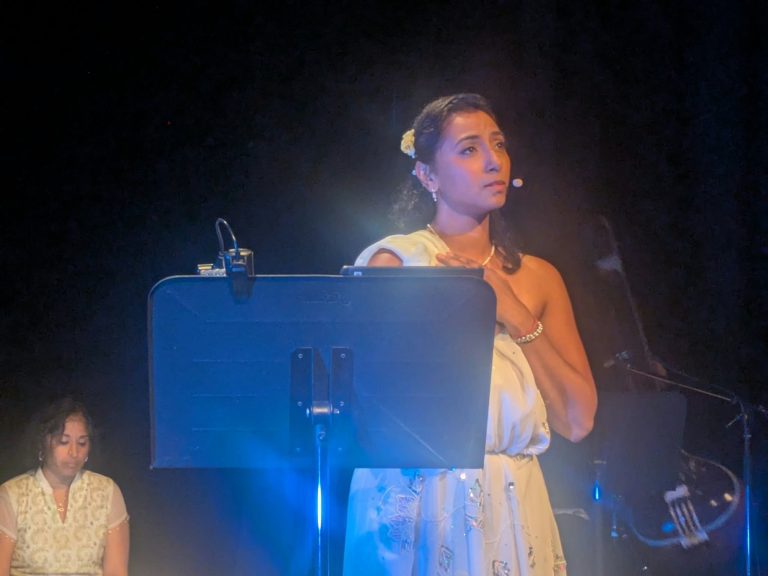
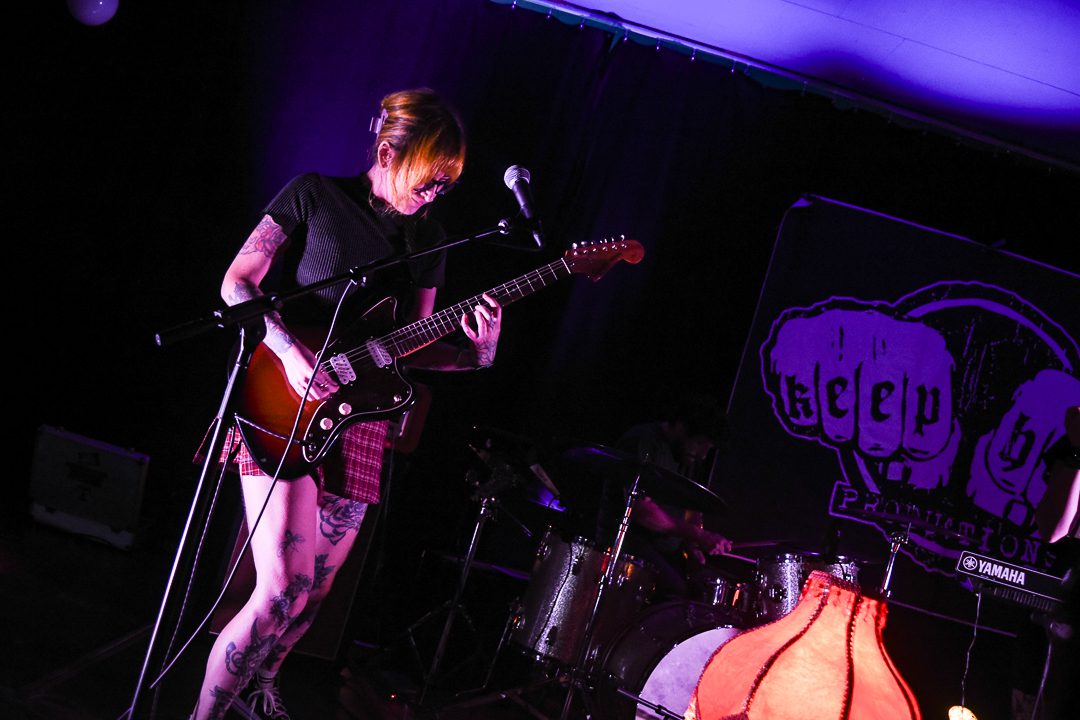
Not only were we treated to an exceptional, intimate, and deeply moving performance, but we also had a lot of laughs last night at Le Ministère, as part of the second evening of Vision Diversité’s MOZAÏK series. It felt like we were stepping into LiKouri’s bedroom (her bedside lamp was part of the set design), accompanied by Charles Cantin on vocals and guitar and Isabelle Gaudreau on clarinet.

The rapport between Li and Charles was obvious, less so with Isabelle, who didn’t have a microphone to interact with the audience like the other two. That said, her clarinet solos, or simply her musical talent, were a feast to our ears.

Lighting was also central to this intimate show as it contributed to the desired atmosphere: to discover the artists in their deepest selves.

All the songs are featured on the album Dans mon quartier, released in the fall of 2025, and it was during a 10-day residency at the Maison de la culture de Ahuntsic that all the magic happened. First between Li and Charles, then Isabelle joined later.

The first part of the concert was without accordion for LiKouri, during which we could fully appreciate her unique voice, which at times bordered on opera. Effortlessly, she managed to give us goosebumps, particularly during the song “Verde Lima,” in which she sang in Spanish, accompanied by Charles on backing vocals. Isabelle switched between clarinets, depending on the song.

Between songs, she shared a few anecdotes, often very funny, especially when she talked about the song “Statue” or when she shared the story behind the song “O’dji Comeback.” In fact, I went and found it on YouTube when I got home, as requested by the artists.

Charles’ guitar playing was also very impressive. From one song to the next, he managed to create a completely different atmosphere, adding depth to the show.

In the middle of the evening, LiKouri settles in with her accordion and together, the trio takes us elsewhere, notably on the song “La valse” which recalls old French songs, with a Piaf-like feel.

But the highlight of the evening was undoubtedly during the song “Les ou Les” where the audience happily sang along.

Another highlight of the evening was the instrumental song section. No words, just the three instruments conversing with each other, without monotony, with moments both gentle and more rhythmic, all in a completely organic way.

That said, the song that stuck in my head after the concert was “Je recommencerai pour ne rien changer”, probably because it was the last song in the setlist, but I can’t find it on the album Dans mon quartier. I’ll have to do some digging to find it. One thing is for sure: if all of MOZAÏK’s evenings are as moving as the one with LiKouri and her trio, I’ll definitely be there, because in these troubled times, a little bit of sweetness does us all a world of good.

Photo Credit: Peter Graham

Classical Period / danse

The Creation by Haydn at the Grand Ballets: And they saw it was Good…

by Frédéric Cardin

Haydn’s The Creation is a remarkable oratorio written at the end of the composer’s life. The creation of The Creation (Die Schöpfung in German) took place in 1799. Last night, at the Place des Arts in Montreal, a very beautiful and inspiring choreographic vision, signed by Uwe Scholz (1958-2004) in 1991, was presented in an enriched version by the art of Quebec painter Jean-Paul Riopelle, a bold idea but, in the end, rewarding.

And then there was Light…

Very few stage props are required in this production. None, in fact, except for a structure supporting an armada of spotlights, used only for a few minutes at the beginning and end of the piece. Used ostentatiously, even, just a few minutes after the very beginning of the first movement, Introduction. The Representation of Chaos. Largo, the said spots were directed straight at the spectators, thus completely blinding us with the lighting. “And there was Light,” indeed, but perhaps stated a bit too strongly, let’s say. The spectators around me were laughing. That can’t be the goal, I imagine.

That said, it’s a detail that one ends up forgetting, because very beautiful moments are offered in this choreography, frequently performed all over the world because it “sounds” just right.

I will not pretend to be a dance specialist, just a humble lover of this art, particularly in relation to music. And since PanM360 aims to be a media outlet dedicated to music, I will write this review of the premiere of the ballet The Creation last night at the Wilfrid-Pelletier Hall through the relationship of the choreography to Joseph Haydn’s score.

Dance/Music symbiosis

In The Creation, Haydn constructs a narrative that is quite faithful to the mythical account of the creation of the world, in about thirty pieces that alternate between small formations and large ensembles, passages led by the soloists (a soprano, a tenor, and a bass) and impressive choral sections. Scholz respects these divisions while weaving his constructions into those of the music: solos, duets, and small ensembles adhere to the chamber passages of the music, while the choral parts, which aim to be monumental, are well supported by the entire body of the GBC.

The Creation presents the myth of Chaos giving way to Light, then to the World, to Nature, to Animals, and finally to Humans (Adam and Eve), under the impulse of God. Although the explicitness of Scholz’s conception leans more towards symbolism, one quickly understands the relationship between the gestures and the unfolding of the synopsis. At the beginning, the dancers are like “trapped” by the structure supporting the lighting equipment, and finally “freed” when it disappears.

Next, the performances follow one another, offering a sensory, impressionistic interpretation of the arrival of the various elements of divine creation. The dancers are all dressed in white, effectively bringing their movements back to the idea of original light and purity.

It is in the collective numbers that we are most touched by Scholz’s vision. The entire company moves with an almost aerial collective fluidity, in interweavings that intuitively evoke the counterpoint of Haydn’s choral fugues. Moments warmly applauded by the audience, rightly so. On the contrary, it is in the solo or duet episodes that some sluggishness is noticeable. The relationship between the visual and the musical is less apparent. An exception to note: the last pas de deux, on Holde Gattin… Der tauende Morgen (Dear wife… The morning dew), is of wonderful tenderness, and dressed in gentle sensuality.

Riopelle’s art looking over

The addition of Jean-Paul Riopelle’s paintings projected at the back of the stage is a great idea. Ivan Cavallari the Ballets’ Director), as one can guess, was inspired by the character of the various abstract works of the Quebec painter. Without obstructing or imposing on the spirit of the numbers performed by the musicians and dancers, the paintings rather subtly accompany the expressive essence of the different movements. More or less “bright” or “dark,” loaded or stripped down, the paintings from the palette of the brilliant artist offer a kind of commentary on the stage action, while subtly and diffusely guiding the emotions of those who watch. Never did we feel that the exercise was artificially imposed. This is in itself a good point.

Convincing soloists

On a purely musical level, I highlight the beautiful performance of the three soloists, Andréanne Brisson-Paquin, soprano, Philippe Gagné, tenor, and Clayton Kennedy, bass, whose projection is unfortunately diminished by the hall itself. Now accustomed (and spoilt) by the Maison symphonique just next door, one easily forgets how much Wilfrid-Pelletier is an imperfect vehicle for this kind of music. Well, we are still able to recognise the interpretative beauty of the artists in the orchestra pit. Bravo, then, even if it doesn’t  yet match (for me) a certain Gundula Janowitz, with Walter Berry and Fritz Wunderlich (with Karajan on DGG).

The orchestra of the Grands Ballets is very good, but suffers from sharpness in certain string passages, especially at the beginning of the evening. Once or twice, it was even out of tune. Elsewhere, some slight rhythmic discrepancies between the choir and the orchestra were heard. But the choir itself is very nice. In terms of sound texture, a bit of thinness is noticeable when compared to the best. It must be said that this music is not the usual bread and butter of the ensemble.

Despite these technical remarks, the overall performance is pleasant and will only refine over the course of future performances.

If only for the inspiring collective numbers, but also for the fine, almost ineffable relationship between Riopelle’s paintings and the spirit of this Haydn/Scholz Creation, I urge you to dive into the experience. The Creation continues until March 1st.

DETAILS AND TICKETS

musique contemporaine

Duo Étrange dispels all doubts (if there were any)

by Frédéric Cardin

On Tuesday evening, February 24, 2026, the launch concert for the album I Wish I Were Dead by Duo Étrange was held at Montreal’s Bourgie Hall. I will not revisit the individual pieces, which I have already discussed extensively in my album review, nor the circumstances surrounding the creation of this record, which are thoroughly covered in theinterview I conducted with the two artists, soprano Vanessa Croome and cellist Sahara von Hattenberger.

READ THE REVIEW OF THE ALBUM I WISH I WERE DEAD

WATCH THE INTERVIEW WITH THE STRANGE DUO

Striking performance by Vanessa Croome

I will focus my attention on the performance of the two young artists. The entire audience present noticed, I don’t think I’m mistaken in stating this, the very high quality of Vanessa Croome’s voice. A fluid, ethereal soprano but with vigour, agile and pleasantly brilliant in high notes, capable of convincing descents into mezzo areas.

But what probably impressed the music lovers present the most was the young artist’s excellent expressive performance. A remarkable ease in evoking states of mind, and an undeniable authenticity of the emotions accompanying the texts and musical lines, which are also very well mastered.

I immediately imagined her on stage, at the opera. Something she has done a few times, but not that much yet. Attention to the artistic directors of the country (and mainly of Quebec). Take notice! We’d like to keep her with us for as long as possible!!.

Sahara, a cellist to remember… and some duduk

On the cello side, Sahara von Hattenberger demonstrates a lot of character, impeccable technique, and strong emotional immersion, without any affected embellishment. A superb performer, whom we hope to keep in Montreal for a long time. Know that she now partially lives in New York due to her participation in the Chamber Orchestra of New York. I am calling out, again, to all artistic and general directors of instrumental ensembles in Montreal and beyond: recruit this dynamic voice of the cello before it’s too late!

Regarding the programming, we heard the same list as on the album, with the very beautiful pieces “Dans un sentier tout parfumé” and “Danger, peur, honte” by Fong Jeffrey. Inspired by texts from mediaeval France, they took on even more alluring forms in person, carried by the presence of Vanessa Croome.

I once again savoured the partially exotic Tree of Life by Maya Fridman, with its labyrinthine yet enchanting convolutions. And then, I indulged, just like when listening to the album, in the Quatrains of Wisdom by Airat Ichmouratov. The composer was on stage to accompany the artists with his clarinet and, above all, his fabulous duduk.

Another hit by Nicole Lizée

Nicole Lizée has once again hit the mark with her Urbexcelsis (a joint commission with Bourgie Hall), in which a partially live electronic track accompanies the two artists, who add to their “normal” task the manipulation of rudimentary percussion instruments, such as a piece of pipe, a chain in a metal bucket, and a power drill! I would recommend revising the drill’s score because it was hardly heard, often not at all. Nevertheless, the atmosphere of the abandoned and ruined cyberpunk city was fascinating and very well done.

The premise of Duo Étrange’s album concept is to say that contemporary music creations deserve to be heard more than once. Let’s hope their commissions will. But one thing is certain : we want to hear this duo very often again. And we will! Look down for upcoming concerts : 

Sahara von Hattenberger

April 22nd, 2026

RECITAL W/ DAVID BRONGO: A NIGHT OF CELLO AND PERCUSSION

At the museum of Architecture in Montreal, QC. Part of the series previously held at the beloved Chapelle Historique du Bon-Pasteur.

Featuring Works primarily for cello and timpani by Perruchon, and more.

Duo Étrange

April 30th, 2026

Duo Etrange presents Ligeti’s Mysteries of the Macabre arr. for cello and percussionist soprano at Espace bleu in Montreal, QC.

Africa / Kora

MHN | Senny and Zal, A Bond That Only Art Can Create

by Sandra Gasana

They had never met before this first trip to Montreal. Yet, during Friday night’s musical dialogue in the kora language, Senny Camara and Zal Sissokho seemed to have known each other for years. This rapport, tinged with respect—Senny used the term “Master” when addressing Zal—demonstrated the mutual admiration between the two artists. They exchanged smiles from time to time, whispering words in Wolof between songs, like a father advising his daughter.

Despite the snowstorm outside, time seemed to stand still inside Club Balattou, creating a feeling of floating. This contrast made us savor the present moment even more, knowing what awaited us outside.

Let’s start with their outfits: Zal, all in white, with his signature black hat; Senny, also all in white, wearing an outfit from her mother’s home region, with touches of green. Even her chair matched her outfit. Absolutely stunning!

The two musicians interacted with their audience, sometimes playing the role of journalist when they asked each other questions. Senny took the opportunity to share her connection with the calabash even before she took up the kora. It was therefore predestined!

“The first part will be more traditional, we will go to the Mandinka Empire,” Zal informs us, while several of his students were in the room.

And then, in the following song, we discover Senny’s piercing and powerful voice, her smile lighting up the room. She sings mainly in Wolof, with occasional passages in English, and places humanity at the heart of the themes she explores in her songs. Sometimes Zal accompanies her on vocals, sometimes he simply plays his kora, plucking the strings in a unique way that only he knows how.

Between songs, they tune their instrument. “My kora is cold,” Senny jokes. Indeed, this is the kora virtuoso’s first time in Montreal, and she will take the opportunity to play several other dates across the country with Zal.

They alternate, sometimes Zal plays a piece from his repertoire and then it’s Senny’s turn to pick from her own, notably playing several pieces from her most recent album Yéné, released in 2024.

“Everything that is happening in the world right now, we had warnings before but we didn’t pay attention,” she said, introducing Missal, also in Yéné album.

Zal, in turn, shared with us a song in which he pays tribute to his father who has passed away, telling us anecdotes from his many stays in Senegal and the precious time he spent with him.

Together, they managed to get the room singing along to the song Yéné, before finishing with Niit, which means Human in Wolof.

And the cherry on top of the Sundae was the participation of the musician Lasso Sanou who came to close the evening with his flute, in the middle of the two koras.

That’s how we returned home in the storm, but with our hearts full of warmth.

Broadway / Classical Singing / Jazz / Musical Theatre

Opera M3F | Sharon, a work of art in herself

by Alain Brunet

While chatting with Sharon Azrieli ahead of her performance last Tuesday presented by OpéraM3F, I learned that the Montreal soprano had also lived in New York. That her classical training is complemented by a deep knowledge of the Great American Songbook and American musicals. That her mind is sharp and incisive, but also affable, warm, and friendly.

I quickly realized that this lady was a more special person than I had initially thought, a colorful character who perfectly represented the Jewish culture of the North American East Coast as it exists in Montreal. Seeing her perform on stage that late afternoon at the 9th floor of the Eaton Center, these impressions were amplified tenfold, and a smile spread across my face.

Thus, the repertoire chosen was predominantly Jewish American and began with “Tonight “by maestro and composer Leonard Bernstein, the very embodiment of modern classicism made in the USA and its incursions into popular culture in the 1950s and 1960s.

Sharon Azrieli fits perfectly into this aesthetic: she fully embraces her classical singing, as evidenced by her heartfelt rendition of “O Mio Babbino Caro”, she also embraces her love of American musicals and films, from “West Side Story” to “Yentl” or “The Nine-Fifteen Revue”, not to mention vocal jazz, whose inflections she knows well and adapts to her operatic technique.  

Sharon was clearly raised on the repertoires of Leonard Bernstein, Stephen Sondheim, Michel Legrand (partly of Armenian origin but close to Jewish culture, as we know) Harold Arlen and others, but also to the great American stars of the generation that also preceded her, starting with Judy Garland, whose “Get Happy” she covers in a charming version choreographed with dancers/singers, no less.

In an interview, Sharon said that she had never presented such a blend of pop and classical music before, so she couldn’t be entirely sure of the outcome even she was optimistic. In my opinion, it was worth the risk, because her real personality fits perfectly with this composite culture from New York, combined with a Canadian-Montrealer culture of which she is clearly proud.

In fact, the artist makes an effort to sing in French, notably with a lovely jazzy piano-voice version of “C’est si bon”. We also note the inclusion of French Québécois quotes in a mashup tribute to Canada. . In this regard, however, it should be noted that the excerpt from Gilles Vigneault’s anthem ” Il me reste un pays” is poorly chosen here, as this quote is purely separatist (!), clearly at odds with the Canadian federalism that the main protagonist defends. We can forgive Ms. Azrieli for this oversight, as her performance is entertaining overall and exceeds expectations.

In a musical theater setting, she sings, jokes, and dances while summarizing her own life as a singer, mother, grandmother, and even female cantor, which is (increasingly less) atypical for a woman whose self-deprecating humor (about the shrillness of her own voice when she needs to be heard), absurdity, and mockery are appreciated (about the shrillness of her own voice), absurd, mocking… typically Jewish for anyone who has ever been fueled by Seinfeld and Joan Rivers.

Sharon Azrieli has clearly carefully crafted this hour-and-a-quarter show with the excellent jazz pianist John Roney, accompanied by dancers and singers Ronnie S Bowman, Daniel Z Miller, Bruce Landry, and Matthew Mucha, who are obvioulsy trained in musical theater.

Clearly, Sharon Azrieli worked hard on her show without taking herself too seriously. Seeing such a cheerful, playful, and at times downright cheeky grandmother strutting her stuff on stage, with her friendly demeanor and undeniably professional performance, can only relax and entertain us, as well as teach us about her very important hybrid culture.

It must also be noted that Sharon Azrieli has an ego firmly grounded in her existence. Confident in her abilities, she still showed a great appetite for the love of the audience that filled this legendary downtown venue.

As I conclude this review, I must admit that I am not very familiar with the classical music career of Sharon Azrieli, who is also known as one of the most important patrons of the music scene in Montreal, Quebec, and Canada. I know little or nothing about her professional past, but I now know about her present and perhaps even her future, if life is kind to her.

Although rigorously integrated, all the references in her show are certainly familiar and predictable… except for the human being to whom we owe this more than honest theatrical effort. Sharon is a creation on legs, a work of art in herself, and that is what makes her show unique.

A Cappella / Choral Music / Modern Classical / Sacred Music

In the Heart of Choral Estonia

by Alain Brunet

On Sunday, February 15th, at Maison symphonique, the Estonian Philharmonic Chamber Choir was highly anticipated, as this world-renowned ensemble had never before presented a recital of this scale in Montreal. Music lovers were not disappointed!

Under the direction of Tõnu Kaljuste, the Choir came to present what it does best: performing contemporary Estonian music with a program featuring composers Arvo Pärt, Veljo Tormis and Evelin Seppar, complemented by choral works by Luciano Berio and Philip Glass.

The first part was devoted to the most famous living composer of sacred music on this small planet, Arvo Pärt, who was discovered in the 80s, notably thanks to the flair of the famous producer and owner of the German label ECM, Manfred Eicher.

We were treated to Pärt’s Magnificat (1989), whose modern characteristics are not immediately apparent, yet which impresses with its restraint. From this perspective, we observe these 24 equally distributed female and male voices, pure lines, with little or no vibrato, serving works that are both rooted in a distant Christian past and in a contemporary world that led Arvo Pärt to a profound mystical introspection, culminating in fervent faith. And since faith can move mountains, it can certainly move musical scores as well, whatever one may think of that faith.

Women’s voices rise, men’s voices reply with bass notes, then the sexes merge in a celestial atmosphere.

Which Was the Son of…, the following piece, was composed in 2005, commissioned by the city of Reykjavik for the Voices of Europe program. This work seems to me the most predictable on the program, an ode to Christ performed in English, with very old-fashioned musical characteristics, based on the call and response mode between female and male sections.

Created in 2007, The Deer’s Cry is inspired by a text by Saint Patrick written in the 5th century. The 5-minute piece is based on the leitmotif “Christ with me,” around which the composer has conceived a mixed choral discourse overlaid by female voices. The restraint of the voices is striking; all that remains is to let oneself be carried away by this musical beauty, devoid of any apparent singularity, which culminates in a superb male-female dialogue.

Dopo la Vittoria, created in 2006, is a 12-minute work clearly more substantial than its predecessors. It’s no coincidence that the choir chose to place it before excerpts from Kanon pokajanen: Kondakion, Ikos, Prayor After the Kanon, a masterful work by Pärt released in 1997. The conceptual depth of these last two works is greater, the worlds explored are more diverse, and one senses a more pronounced touch of modernity—those dissonant lines that deviate from the rules of classical harmony without, however, distorting the traditional character of Arvo Pärt’s style. As my seatmate summarized, it was “perfect simplicity with a little crunch of modernity.”

The second part will be more contemporary. Also of mystical inspiration, The Bishop and the Pagan (1992) by Estonian composer Velijo Tormis (1930-2017) incorporates many more contemporary characteristics, superbly integrated into this ancient-inspired vocal polyphony. The bass parts, for example, employ modern 20th-century techniques.

In my opinion, the surprise work of this program was by Luciano Berio (1925-2003), full of surprises. Like a demonstration, it begins with a soprano singing through a megaphone, opens with textural, atonal, or noise-based interludes, all while following a consonant approach where soloists of all vocal ranges—soprano, alto, tenor, and bass—shine in turn. Powerful! This tells us even more about the vastness of this great Italian composer’s universe.

We will then move on to a work by the Estonian Evelyn Seppar, who will be 40 this year. Iris (2024) is a splendid polyphonic continuum; the orchestral discourse unfolds without interruption or break, undulating elegantly to achieve its goal: to uplift and nourish.

We will conclude with Father Death Blues (1985), an excerpt from Philip Glass’s chamber opera Hydrogen Jukebox. Constructed on the repetition of motifs and phrases akin to a prayer or mantra, this piece is certainly not a landmark in Glass’s oeuvre, but it fits well into this program, not unlike the praise heaped upon The Deer’s Cry and Which was the Son of… in the first half.

Coherence, cohesion, delight, in short, with the added bonus of two generous encores: The Rose of Love, a folk song from Denmark, as well as Innarta Anaanaga by Frederik Elsner.

alt-rock

Taverne Tour | Valentine’s Day Theme

by Simon Gervais

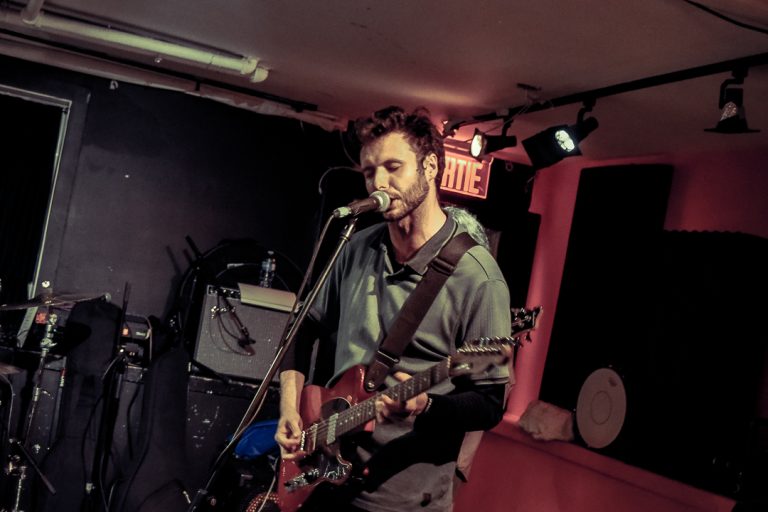
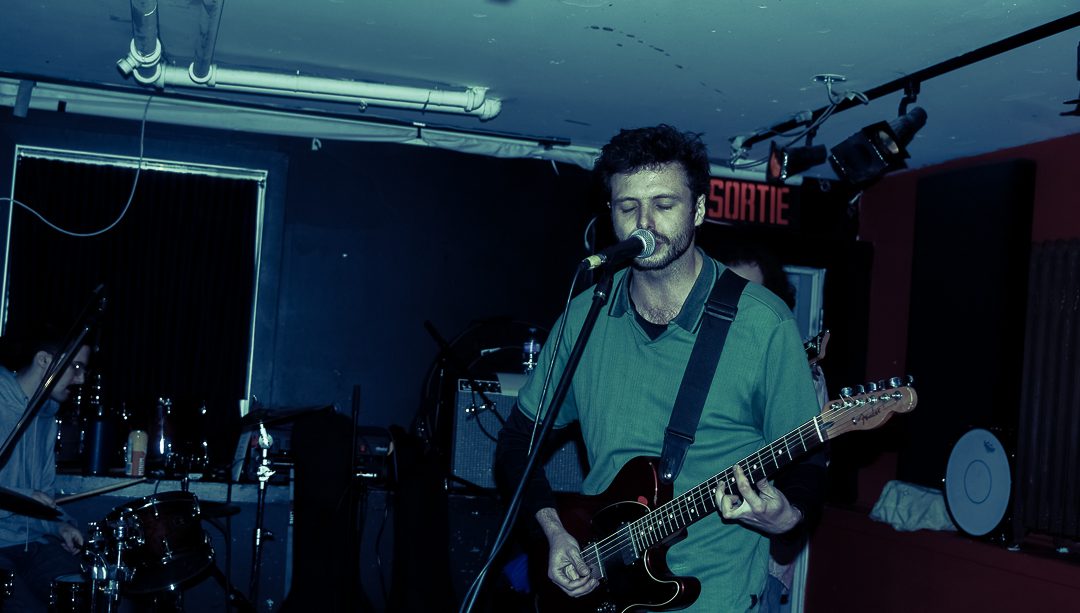
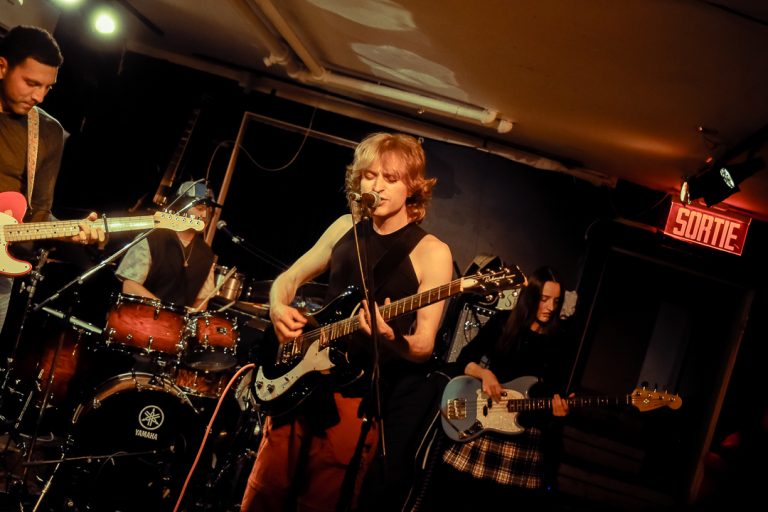
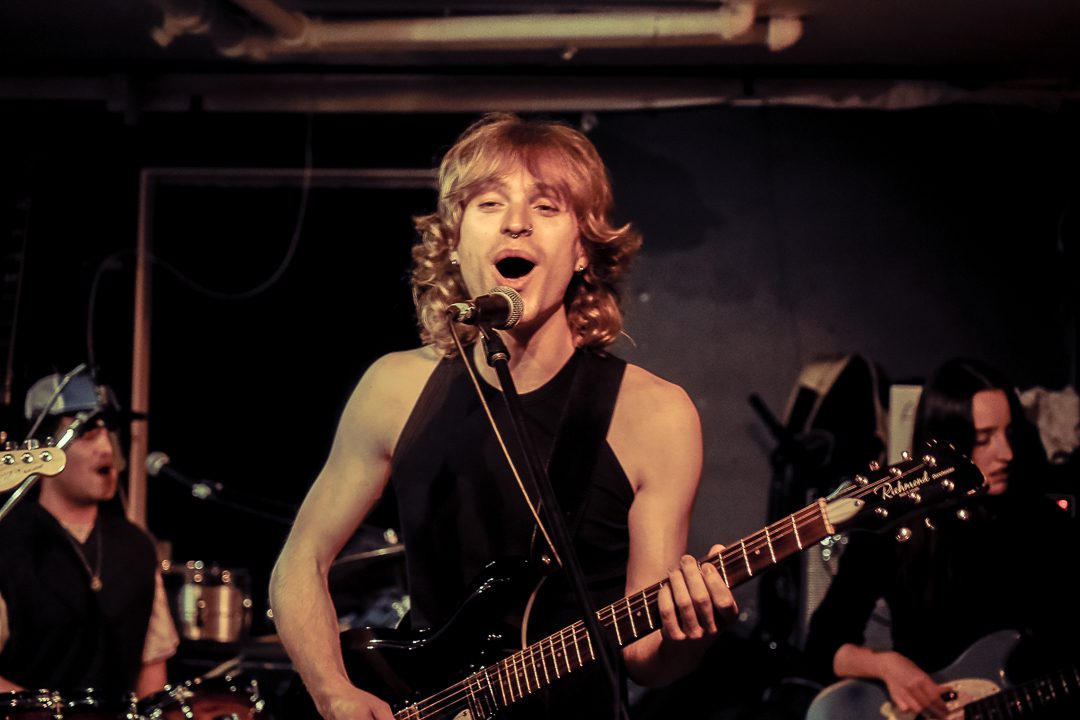
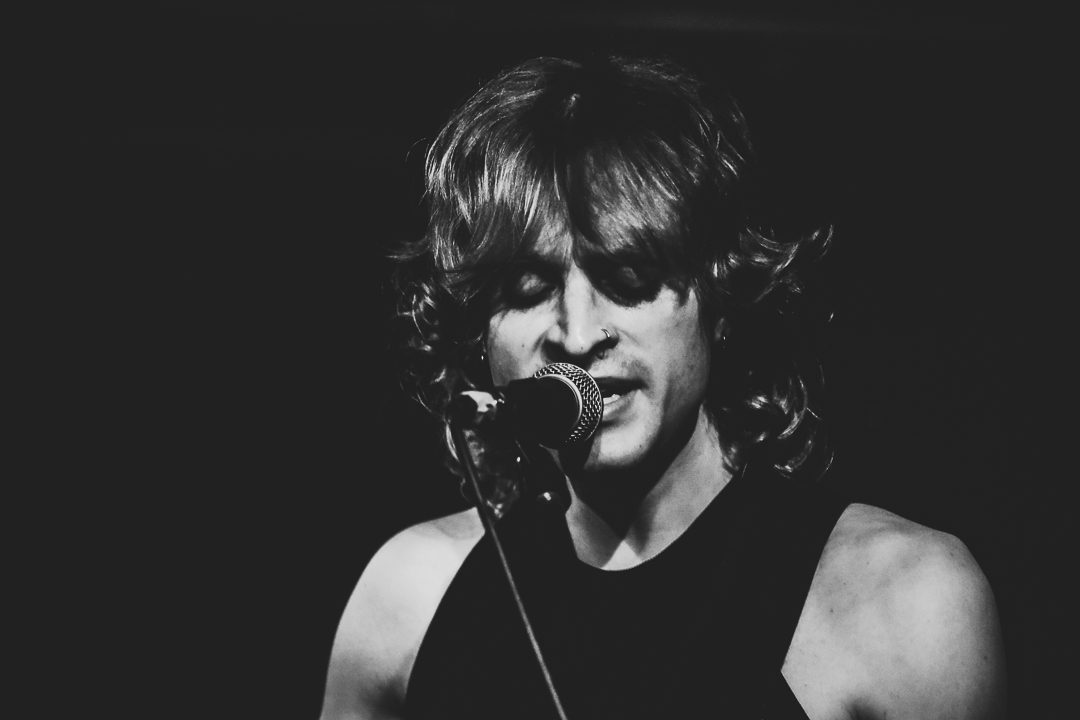
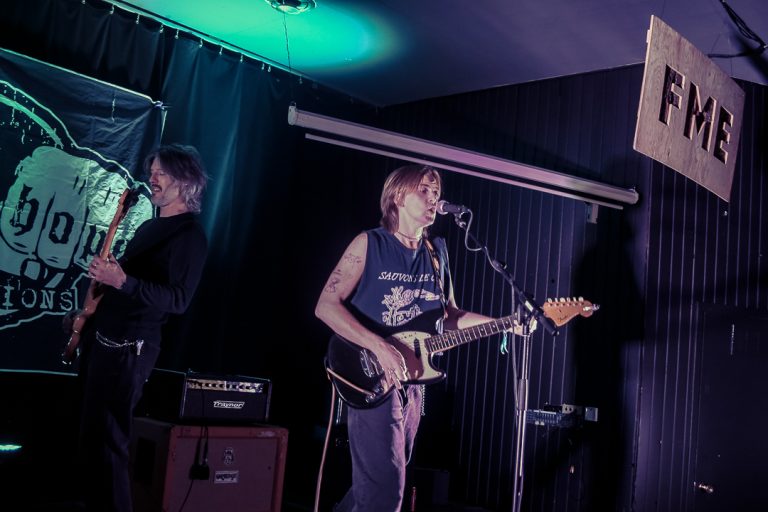
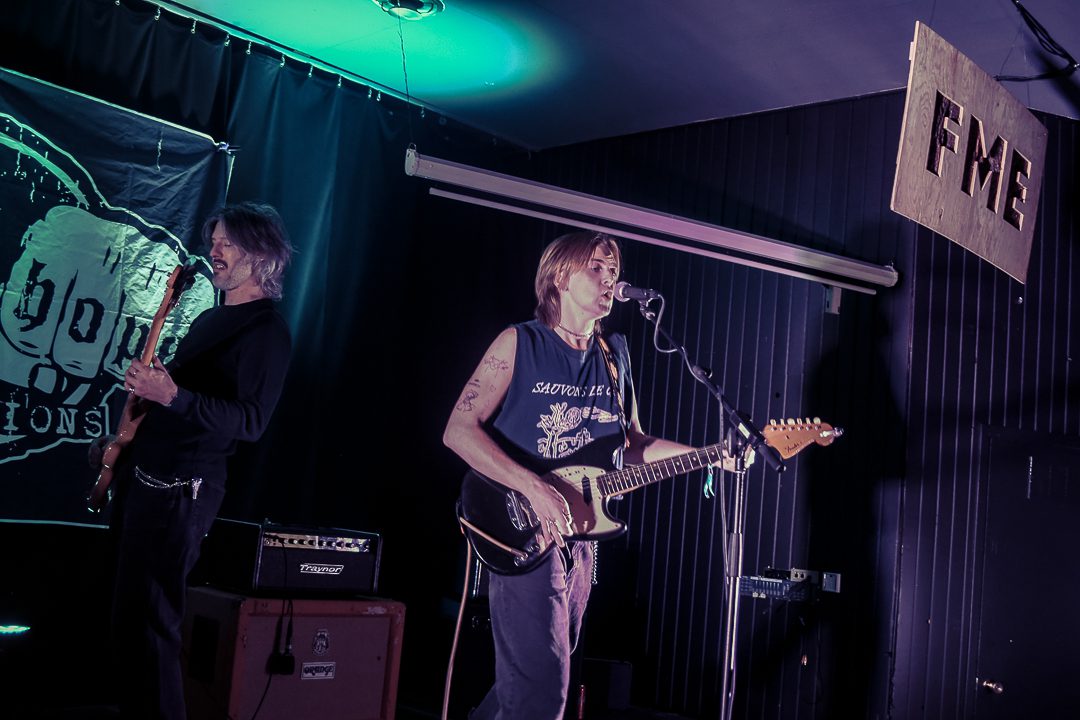
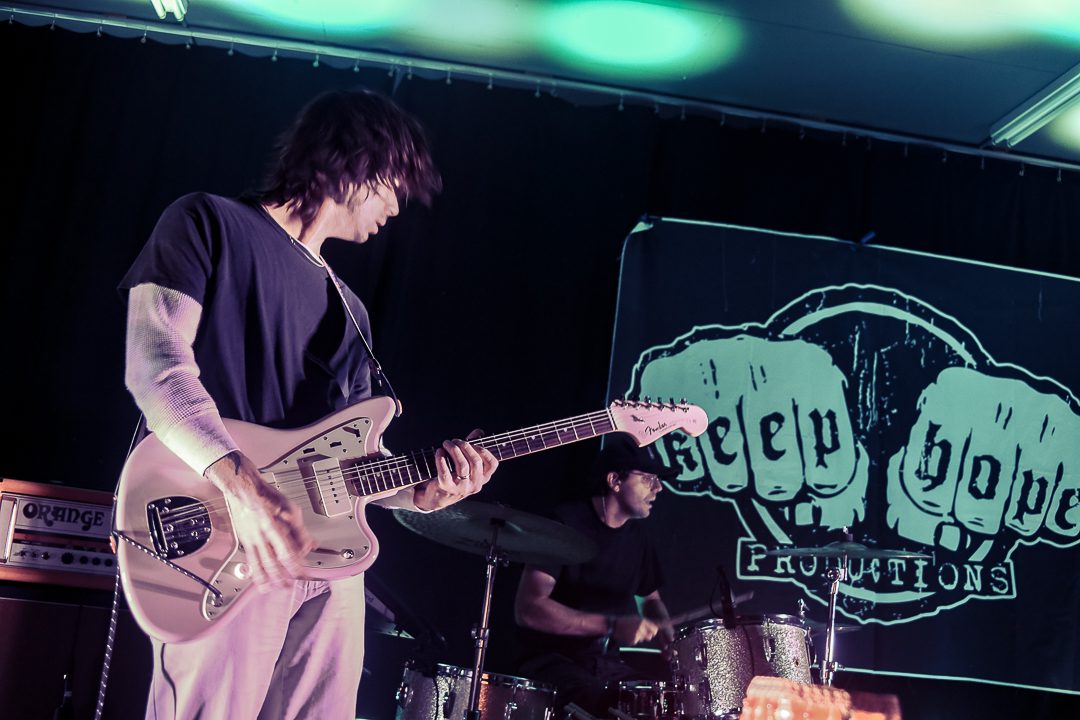
On February 14th, Casa del Popolo hosted a large and enthusiastic crowd for the final night of the Taverne Tour, celebrating Valentine’s Day. The hall, packed to the rafters with a wonderful audience, retained the heat so effectively that the air conditioning struggled to keep up; between performances, the door was thrown wide open to let the temperature drop and allow everyone to catch their breath before the next burst of energy.

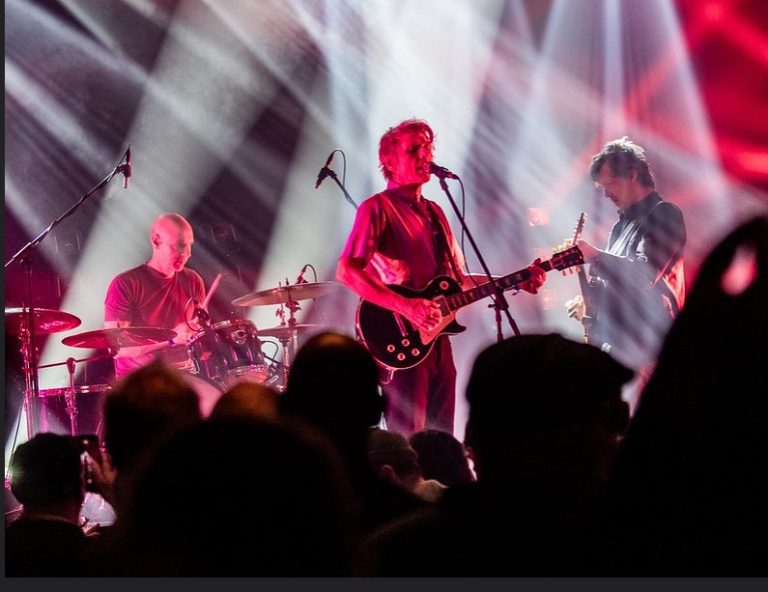
The evening kicked off with a joyful set from Pastel Blank, a Victoria-based band fronted by Angus Watt, blending a funk and neo-disco groove with the hallmarks of art rock. The first thing that catches the eye is the bassist and guitarist, both dressed in baggy sand-colored jackets reminiscent of 60s boy bands. These two big guys radiate infectious enthusiasm as they belt out backing vocals on the catchy tunes. The keyboardist evokes the flower power era with her baggy harem pants. Watt, on the other hand, brings to mind the 90s, with his sunglasses and tight T-shirt emblazoned with ‘Love always wins’.

The band’s sound evokes the Jackson Five, Talking Heads, and B-52s alike. Vocally, certain moments remind me of 1950s rock and roll with the use of the famous “hiccuping,” a vocal technique characteristic of the likes of Elvis and Gene Vincent. We’re treated to several decades distilled into a single project that forms a truly compelling whole. The band unleashes energetic grooves, somewhere between angular new wave and offbeat funk. The bass propels the music, the guitars intertwine with precision, and the highly synthetic keyboards punctuate everything. The solos are short but effective, delivering just the right amount of energy before a break that catches us off guard, much to our delight. The band seems to genuinely enjoy playing together, and that enjoyment is effortlessly contagious.

Publicité panam

With Hélène Barbier, the tone becomes more relaxed, almost homespun. A laid-back stage presence, a casual look, a red bass, a flute, slightly off-kilter rhythms with hypnotic, jazzy accents. It’s dissonant in small touches, but sincere, with an engaging Americana feel. It was a pleasant, unpretentious moment.

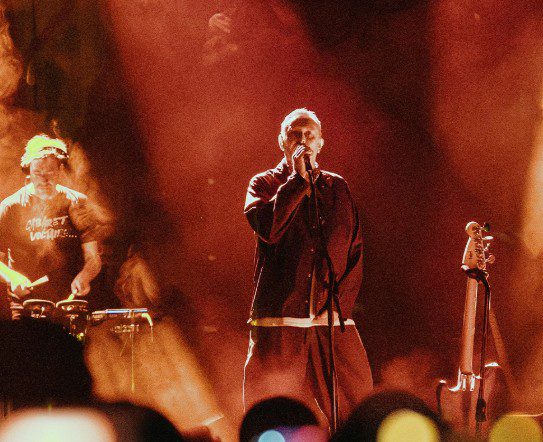
Beneath the harmonious and incongruous sounds of N NAO, the venue transforms into a veritable dream theater. A significant effort in stage design is evident: additional spotlights, a smoke machine, a fan—all contributing to the most immersive experience possible. Harp, bells, melodica, electronic sounds, and vaporous lighting compose a magical universe where nature and the synthetic coexist in an organically chaotic harmony, an experience that is both disorienting and profoundly immersive. Between pastoral gentleness and sudden rhythmic bursts, the music acts like a spell. Moments of grace follow one another as Naomie bravely advances into the uniquely illuminated crowd. There is also a surprise when Helena Deland takes the stage to participate in an acoustic performance. N NAO’s intention is clear: to explore the diverse facets of this New Language (the title of their recent album) that is music. The finale, inspired by Hubert Aquin, brings everything back to a suspended delicacy.

An evening filled with human warmth and love; perfect for Valentine’s Day.

Publicité panam
Rock

Taverne Tour | An Explosive Finale to The Sound of The Lake with Les Dales Hawerchuck

by Marilyn Bouchard

Energized and ready to go, brothers Sébastien and Sylvain Séguin, accompanied by their bandmates Charles Perron on bass and Pierre Fortin on drums, took to the stage at the Taverne Saint-Sacrement to close out the Taverne Tour. The unique Roberval-based alternative rock band returned to Montreal to deliver a healthy dose of their signature “sound of the lake,” electrifying the audience.

They presented a musical collage composed of songs from their new album, Attaque à cinq, including the excellent Megastar, as well as some must-hear tracks from previous albums, all performed with energy and good humor. The audience was enthusiastic, dancing and chanting along, especially during Commando, J’monte au Lac, and Carnior, before becoming electrifying for the final song, the famous Dale Hawerchuk, which cemented their arrival on the Quebec music scene. The guys generously offered two encores, extending everyone’s enjoyment.

An evening just the way we like them, filled with excellent music and smiles. The guys delivered a performance of rare energy, a show worthy of the best rock stages. None other than our very own Quebecois Offspring for an explosive finale to this Taverne Tour.

Publicité panam
Subscribe to our newsletter

Inscription
Infolettre

"*" indicates required fields

Type of Suscribers