Electro-Pop / musique de film / pop symphonique

Symphonic Tribute to Daft Punk: Effective Fusion, Mostly

by Frédéric Cardin

In the realm of symphonic electro, it was written that Daft Punk would have a prime place sooner or later. Since the remarkable music that the French duo wrote for the film Tron Legacy, which has since become a cult classic, we knew that the inventive glitch pop textures of all previous albums would one day be associated with a symphony orchestra.

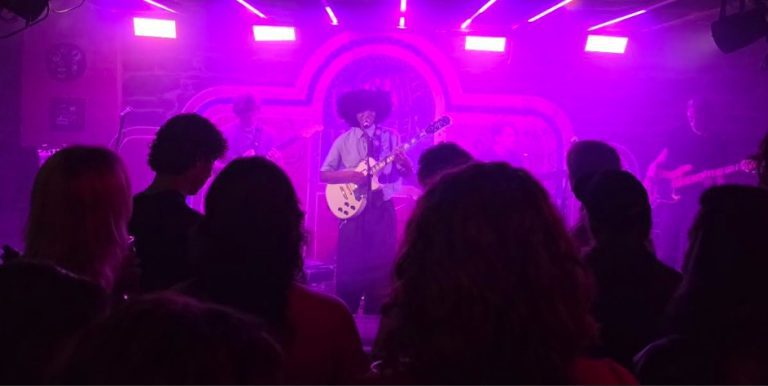
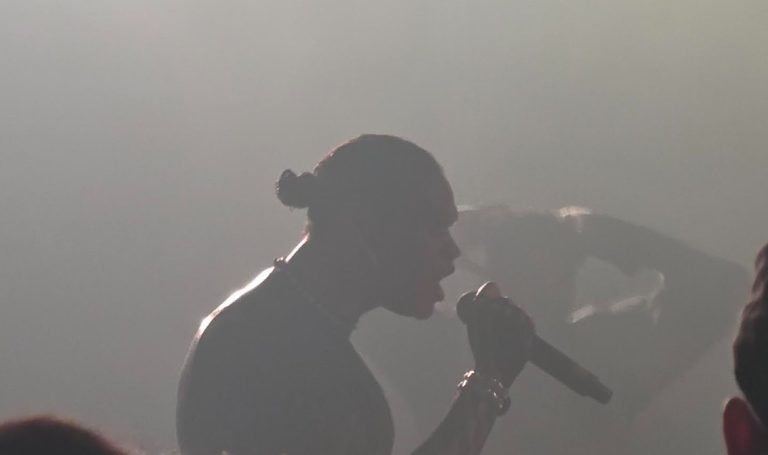
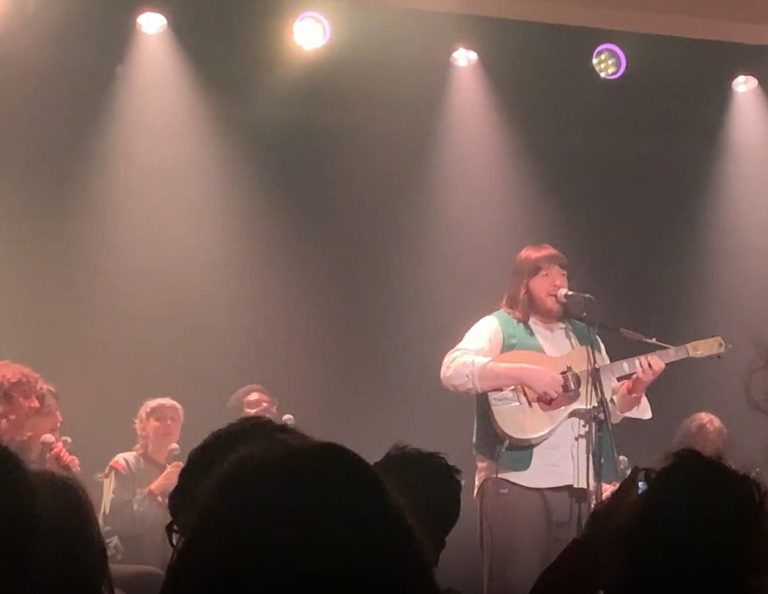
That’s the idea behind the concert One More Time, an electro-symphonic tribute to Daft Punk presented at the Wilfrid-Pelletier Hall of the Place des Arts in Montreal, last night and again tonight. On stage: the FILMharmonic Orchestra conducted by Francis Choinière, the singer Barnev, a guitarist, a bassist, a drummer, and a keyboardist/vocalist.

Starting slow but finishing witu panache

The program of arrangements of super famous songs is divided into an intro and five parts made up of mixes of the duo’s songs. The Intro, which blends The Prime Time of Your Life, Aerodynamic, and a bit of Tron Legacy, gives the impression of taking its time, just hinting shyly about what is to come. The energy gradually builds up, but it still feels like it’s lacking some oomph.

This is corrected with the second “movement.” The nature of symphonism reveals here with more conviction its contribution to the repetitive and mechanical impulses of Daft Punk’s music by offering some beautiful moments of harmonic depth in the strings and counterpoints that enhance the structure of the pieces (particularly Da Funk and Around the World).

The second and third parts continue in the same vein with sometimes thrilling performances of popular monuments such as Human After All, Lose Yourself to Dance, and Get Lucky. Although the presence of the guitar and bass adds a bit of an unsuspected “rock” touch to the tunes everyone could whistle, their use is not exaggerated to the point of overly distorting these catchy little gems.

Tron Legacy, less convincing

The mistake in the program is the arrival, after the intermission, of the thirty-minute suite of tunes from Tron Legacy soundtrack. And yet, it pains me to say it. I am a die-hard fan of this exceptional music, one of the best in cinema in the last 25 years, and one of the most accomplished albums in the entire Daft Punk catalogue. Tron Legacy already fused the symphonic and the electronic. There shouldn’t have been a problem. But I should have thought about it: it wasn’t a Cine-Concert, where the demand for accuracy of the music in relation to its sounds in the film is immense and unforgiving. It was a tribute with new arrangements.

And that’s where it relatively failed, in my opinion. The admirable textures, ultra-rich and complex, invented by the Dafts, were absolutely not reproduced. Simplified, even watered down, the pleasure was completely lost. Some themes were entrusted to a saxophone, others to a guitar. Nothing to do with the original music, and even bothering. In some pieces, the tempo was too restrained, ruining the creation of an exciting energy, as in the film. Moreover, an ostentatious rhythmic imbalance between orchestra and pop soloists almost ruined everything around the two-thirds mark. Embarrassing. Result: the build-up before the intermission was lost and the music from Tron Legacy felt boring, much too long. There were still some successful moments, like the Adagio for Tron, for example. But, overall, it was too little.

Feeling the vibe

I still asked myself the question: am I simply an old purist who loves his thing so much that he can’t imagine it any other way? I took the trouble to look around me, in the audience, to see if I was the only one finding it long. Unfortunately, I could indeed sense the same relative boredom from the other people present, except on a few occasions.

It’s such a shame, because many might have left this concert with a negative opinion of this thrilling soundtrack in its true version. In short, all the more reason to organise a true Tron Legacy Cine-Concert one day, with all the multiple and abundant details that make this composition memorable. Hey, with the real Daft Punk too?

Good catch-up

That said, and fortunately, the evening was salvaged by the final grand mix of the program and the return of the qualities that had made the first part a success. Aerodynamic, Harder, Better, Faster, Stronger, Face to Face, One More Time, and as an encore, Instant Crush allowed the audience to stand up and dance.

The singer Barnev performed well during his few appearances and interpretations, although he obviously omitted the characteristic Frenchie-Anglo accent of the Dafters.

If calibrations are in order, especially in the suite from Tron Legacy, we can rejoice in an effective and exciting offering, most of the time.

Another performance is taking place tonight.

DETAILS AND TICKETS

Baroque / Classical / Classical Singing

Arion Baroque Orchestra: Il pianto di Maria: Tears of Joy

by Alexandre Villemaire

For the penultimate concert of its season, Arion Baroque Orchestra invited Montreal’s music-loving audience to immerse themselves in Baroque Italy—an Italy in all its “caricatured” glory, to borrow the artistic director’s words to the audience, where emotions are expressed in their raw, unfiltered form.

For it is indeed emotions—sorrow and pain, certainly, but also love, friendship, joy, and elation—that run through this program curated by harpsichordist and guest conductor Marie van Rhijn. A program that also celebrated women composers during this International Women’s Day weekend.

To convey the various emotions of these works, the spotlight was on the voice, featuring French contralto Anthea Pichanik. In the first part, which opened with Antonio Vivaldi’s cantata *Cessate, omai cessate*, the power of her voice captivated us, as did her embodied portrayal of this rejected lover lamenting his rejection by his Dorilla. Pichanik possesses a rich, brassy timbre in her mid-range, with full-bodied high and low notes, which were, however, sometimes lost in the orchestral mass and at certain phrase endings, yet she displayed a commanding stage presence and a grounded, committed performance. In the excerpt from Maria Margherita Grimani’s cantata *Pallade et Marte*, the aria of the god Mars—a triumphant march with a distinctly martial style, yet retaining a very light touch—was performed with verve. It is above all the dialogue between the cello and the bassoon that captures the listener’s attention in this work. Originally composed for cello and obbligato theorbo, Marie van Rhijn adapted it by replacing the theorbo with the bassoon, writing a specific part for it, much to the delight of Mathieu Lussier. The dialogue between the two instruments effectively illustrated the relationship between the two protagonists, Athena and Mars, with an almost humorous exchange that one would not have imagined possible in this way within the 18th-century repertoire. A short concerto for harpsichord, subtitled “Madrigalesco” by Vivaldi, served as a bridge between these two pieces in the first part, showcasing the harmonic richness of the composer’s language.

The second part was entirely devoted to the voice, featuring excerpts from Maria Teresa Agnesi’s Serenata Ulisse in Compania and Giovanni Battista Ferrandini’s cantata Il pianto di Maria, whose title inspired the name of this concert. Ferrandini’s cantata, much like a Stabat Mater, recounts the suffering of the Mother of Christ as she watches her son on the cross. Originally composed for soprano, the version performed in this concert was transposed down a third. Too high for a contralto in the original key and even too low for a soprano, this version—adapted for the occasion to suit the voice on stage—gave the work a very maternal quality. In the cavatina “Se d’un Dio fui fatta Madre”—the Virgin expresses her pain and even her indignation at seeing her son die. The musical and harmonic line is simple yet rich, carried with warmth by Pichanik’s voice and supported by the orchestra and Marie van Rhijn in phrasing and conducting of a thrilling and touching intensity.

With a program that this year features a thoughtful blend of well-known composers and new discoveries—including a third of its 2025–2026 season dedicated to female composers—Arion continues to bring a breath of fresh air and a welcome variety to the repertoire of 17th- and 18th-century music on the Montreal scene.

Photo Credit: Elliana Zimmerman

Experimental / jeunesse

Semaine du Neuf | Sound understanding for children under 3 years… and us

by Vitta Morales

When covering a contemporary music festival, one must expect to be thrown a couple of curve balls before the end of the festivities. Composers and performers alike are, after all, tasked with increasingly pushing and reinventing performance practice and compositional techniques; not to mention the advances in technology that contemporary composers often feel pressured to incorporate in their ongoing conceptions.

Having said all this, I was caught completely unprepared to review Ptitécouti, a piece by the Hanatsumiroir Ensemble who prepared a spectacle conceived specifically for children aged 0 to 3. You can imagine my feeling out of place as a moustachioed childless adult lurking about the Édifice Wilder scratching down notes while the babies, toddlers and their parents attempted to enjoy an afternoon of contemporary music. 

Don’t say I don’t do anything for you, dear reader.

As concerns the music and spectacle itself: our principal performer Ayako Okulo made use of modular wooden shelving that housed in its centre, a transparent tank of water which she splashed, let drip from her hands, blew into, and on which she placed what seemed like sea shells that floated about and clinked together. 

There were microphones placed strategically so that all the minute sounds and textures could be appreciated over the sound system. There were temporal delay effects employed as well and light up cushions for the children to repose themselves and take in the sights and sounds. 

Okulo, then opened little compartments on the wooden shelves and pulled from them windchimes, she then made use of various ocarinas and her skills as a flutist became apparent as she employed fluttering tonguing techniques among others. 

The whole thing was whimsical and put the term “play” into perspective where “playing music” is concerned. I could well imagine a preambulatory child being able to see themselves depicted, (if we assume for a second that self consciousness can precede walking), as the unfolding of the performance resembled that of a child exploring the contents of their toy chest.

The show notes tell us, in fact, that we were to expect music, scenography, and lighting that was “adapted to the psychology and understanding of the world of children under 3 years old. At the heart of the show: a luminous box full of surprises, made of various compartments and drawers.” It seemed that some children missed the memo, however.

 Many goo-goos and ga-gas from the audience seemed to have been uttered out of boredom or otherwise reaching their limit with the display on offer. It is admittedly hard to compete with Cocomelon and iPads. Their parents shuffled them out of the room preemptively once they got the feeling the situation was untenable where attention spans were concerned. 

This is not an indictment on the show itself, which I myself found charming, short, and sweet for the duration of its thirty minutes. Kudos from the aforementioned out of place mustachioed note-taking lurker.

expérimental / contemporain / Indigenous peoples

Semaine du Neuf | Sxelxéles te tl’etla’axel – Design for Inviting, the Power of Words… and of Sounds?

by Michel Labrecque

Dylan Robinson is a member of the Skwah First Nation and an associate professor at the University of British Columbia School of Music. His creative work and research focus on Indigenous activism and the arts. He is part of a movement that advocates for Indigenous people to break free from tradition by embracing contemporary music and the arts.

“Sxelxéles te tl’etla’axel” is a performance that combines visuals, choreography, and music to “define a new performance space inspired by Indigenous (xwélmexw) values of relationship and gathering protocols,” according to the program for La Semaine du Neuf.

I’ll be honest with you: as a music journalist, I’m completely out of my element in the world of contemporary music, and this performance isn’t going to help me feel any more at home there. I would have much preferred to cover the Bozzini Quartet or the Quasar Saxophone Quartet, which are more explicitly focused on music.

For here, the music is minimalist in every sense of the word: a piano, a harpsichord, and a viola, played only sporadically. The pieces were composed by Anna Höstman and Linda Catlin Smith, including the very minimalist yet lovely “Brocade” for piano and harpsichord.

On stage, there are also two screens displaying text or images, as well as three chairs on which the three performers take turns sitting; they also play instruments and read us stories, all of which begin with “once upon a time.”

In these narratives and on-screen texts, the idea of a transition between two worlds seems to emerge—of corridors to traverse, of taking the other with you. Of wounds, of resistance, of complicated paths. Water is also frequently mentioned. We hear a very beautiful text about a color that seems to possess emotions. There are also two parallel stories that offer different perspectives on life.

Here’s my take on it. Yours might have been different. What should we take away from this very slow performance, where the choreography basically consists of having the performers walk around? I’m not sure. At the end of the performance, the applause was polite. The woman sitting next to me, who is well-known in the contemporary music scene, seemed very ambivalent in her assessment.

But we left wondering. Maybe that was the point…

Photo Credit: Philippe Latour

Publicité panam
Classical / Experimental / Contemporary / Neoclassical

Semaine du Neuf | Quatuor Bozzini: A Journey into the Extremes of Sound

by Pietro Freiburger

On March 9th, a concert of new experimental music by the Quatuor Bozzini was held at the Chapelle Scène Contemporaine as part of the Semaine du Neuf. The program included music by living composers and highlighted the sound that made this ensemble recognizable in the international experimental music scene.

The concert opened with Companioning (2026) by Fulya Uçanok, a 2026 piece written for the ensemble that focuses on the ability to listen and interact during the performance between the members. A suspended, to a certain extent non-terrestrial atmosphere accompanied the audience throughout the performance of the piece, which exploits the sound of the instruments in a delicate balance between individual possibility and collective cohesion. The program then included two pieces written between 2014 and 2016 by Cenk Ergün, with whom the quartet has recently collaborated.

The first one, Celare, begins sul tasto for all four musicians, creating an almost hidden preparation (celare in Italian means precisely “to hide”) to what follows. Which was in the name of virtuosity of sound and dialogue, the main feature of the Bozzini Quartet. The second and last work, Sonare, was the one that differed most from the previous ones. There was something wild and brutal in this work: as much as the previous ones were expressed by subtraction, of sound and individuality, as much as this one manifested itself by the addition of sound material by each member of the quartet. A fascinating journey into the unexplored possibilities of sound for strings, warmly applauded by the audience.

expérimental / contemporain / Multidisciplinaire

Semaine du Neuf | Loneliness, hyperreality, connection, a harsh wake-up call

by Alain Brunet

Among the highlights (if not the highlight) of this “Semaine du Neuf,” Hide to Show is a mind-blowing work that demands extreme virtuosity to convey a metaphor for the virtual universe in which we are now immersed. The interview with its artistic director, cellist Pieter Matthynssens, had already piqued our interest, and Saturday afternoon’s performance in a studio-theater at the Wilder—unfortunately sparsely attended—definitely won over the majority of those who came to see this truly memorable show.

The work by Cologne-based composer Michael Biel challenged the eight musicians of the Flemish Belgian ensemble Nadar (cello, violin, clarinet, saxophone, flute, trombone, keyboard, percussion) to acquire a new skill: performing an extremely complex score in harmony with an electronic soundtrack, singing, dancing, moving through the space, operating the Venetian blinds in one of the six cubicles set up in the center of the stage, and playing in a group, as a duo, or individually.

For 70 minutes, this relentless barrage is unlike anything heard before, although the work is clearly descended from multi-style integrated collages—one thinks in particular of the works of John Zorn, Hermeto Pascoal, Frank Zappa, or Sun Ra. A generation or two later, the current era has led composer Michael Biel—who is not an orchestra leader like those mentioned above—to evolve his concert language/collage with the Nadar ensemble, blending multiple musical references drawn from electro, Japanese anime, pop, modern film music, and also contemporary music with classical roots. But… in a way, let’s agree that Nadar is somewhat Michael Biel’s band, at least in terms of the body of work presented over time.

Inspiration in music is a snapshot of the present moment, and we could witness its diversity in *Hide to Show*. This fragmentation of listening on the web inevitably leads to a multi-genre culture, as the composer demonstrates to further his point: what is real before your eyes and what is not, whether performed live or projected on a screen. Michael Biel does not explore deepfakes here (we imagine that will come later!), but rather real or virtual performance within a work where the performers evoke the loneliness of the web and the way each person expresses themselves there without always revealing their true identity—or revealing it only partially.

Thus, the lines are brilliantly blurred, and the game inevitably involves trying to distinguish between what is being performed in real time and what was previously recorded by the production cameras. The re-inserted recordings are therefore integral to Hide to Show, to such an extent that we gradually lose interest in distinguishing what is being performed in real time from what is not. As Pieter Matthynssens pointed out in an interview. This mind-bending whirlwind can also be seen as a legitimate extension of musical theater or chamber opera—a sort of hybridization of multimedia performance with the forms that preceded it, as we observed the day before with Quigital Corporate Retreat, another excellent work presented by soprano Sarah Albu and Architek Percussion. This is where we stand, and Hide to Show lifts us up.

expérimental / contemporain / Musique de création

Semaine du Neuf | Five Visions of Movement Between Instruments and Electronics

by Jeremy Fortin

From Bordeaux, the ensemble Proxima Centauri was in Montreal this week to present its concert Mouvements. It was a flawless performance by the ensemble, in which the dialogue between electronics and instrumental performers stood at the center of the presentation.

The concert opens with DEATH TALES, spurred, by Quebec composer Corie Rose Soumah, part of the emerging artists program of Le Vivier. The piece begins in near darkness, with a spotlight primarily focused on the snare drum player seated at the center of the stage. The roll initiated by the percussionist serves as a guiding line throughout the piece, developing in tandem with the electronic component, which in turn gradually enriches itself through the sounds being played. The other instrumentalists present (saxophone, piano, and flute) develop their own textures in dialogue with the snare drum, blending sustained and multiphonic sounds with the snare’s rolling rhythm. These layers of superimposed sounds gradually create a kind of irregular rhythmic pattern that evolves throughout the piece, establishing a certain stability within instability.

The concert continues with Away by French composer Brendan Champeaux, a duo for timpani and piano accompanied by live electronics. The piece unfolds as a dialogue between the piano and the timpani, facilitated by the electronics, which capture the sounds of both instruments and bring out a third mediating voice—the electronics themselves. It is a restrained yet effective work that sets the stage for what is certainly the most daring piece of the concert.

That piece is Nemorensis by Argentine composer Demian Rudel Rey, written for tenor saxophone, electronics, and video. The saxophonist enters the stage wearing a futuristic outfit equipped with a helmet featuring a tinted visor. The saxophone itself is modified with an extension containing three additional mouthpieces as well as an extension at the neck. From what could be perceived, this device serves to filter the sound of the instrument and invites us to rediscover the saxophone through unfamiliar sonic textures.

The fourth piece on the program, Ombres by French composer Raphaèle Biston, marks a complete break from what preceded it with Nemorensis. Here, the four instrumentalists share the stage with pre-recorded electroacoustic sounds that evolve alongside the instruments with the aim of reproducing their timbre and creating a unified texture across the ensemble and the electronics.

The concert concludes with La cité du son by Mexican composer Arturo Fuentes, a piece just as compelling as the rest of the program. In it, the composer layers sound recordings from the cities of Bordeaux and Mexico City. It is therefore up to Christophe Havel, responsible for the electronics during the concert, to interact with the instrumentalists in order to create a dialogue between these two cities, so different from one another.

Publicité panam

Semaine du neuf | Quigital Corporate Retreat, a satirical immersion in corporate culture

by Olivier Martin-Fréchette

As soon as we climb the stairs leading to the Espace Orange at the Wilder Building, we are immediately plunged into the immersive satirical performance Quigital Corporate Retreat, performed by Architek Percussion and soprano Sarah Albu.

Employees of the fictitious company Quigital welcome us by offering a badge bearing a QR code that allows us to register on Quigital’s online platform. Once there, we are asked to complete various tasks: scanning a colleague’s badge, buying virtual objects or privileges with points accumulated in the app, or even chatting with Quincy, Quigital’s conversational robot.

The role-playing game is therefore quickly set in motion, and we find ourselves participating in the performance even before entering the auditorium. The immersive effect is already effective. I can already feel that slight existential disgust that only a mandatory, unpaid corporate networking event can provoke in me.

Then comes the moment to enter the hall, where the “conference” portion of the show begins. We are introduced to the characters who will occupy the stage: Karen, the “She.E.O.” (Sarah Albu), as well as the employees who will serve as examples during the training session (Architek Percussion: Noam Bierstone, Ben Duinker, Alessandro Valiante, Parker Bert). Each of them is introduced and makes their entrance onto the stage in a perfectly ridiculous choreography accompanied by a soundtrack worthy of the smooth jazz fusion of The Rippingtons.

The tone is clear: we are about to witness a particularly sharp and unapologetic satire of late-stage capitalism, its performative discourse of inclusion, and its predictable tactics of manipulation. Throughout the concert, the speech of the lecturer and She.E.O. oscillates between ready-made phrases worthy of the worst TED Talks given by out-of-touch businesspeople, combined with indoctrination mantras reminiscent of those found in American megachurches. All of this unfolds in front of a giant screen on which PowerPoints, training videos, impossible questions, forwarded emails, and occasionally the company’s conversational robot are projected. The latter eventually replaces the vast majority of the employees (the audience), who, by the end of the piece, are all fired except for the three people who collected the most points on the app during the pre-concert and the intermission. Through the role-playing experience, the entire presentation makes us feel the alienation of employees at the bottom of the corporate ladder in the face of large corporations and their performance-optimization tools that will eventually cost them their jobs.

The parody is very skillful. It is obvious, but the constant use of the linguistic codes and aesthetics of the corporate world allows us to maintain a certain suspension of disbelief, enabling us to experience an immersion rather than simply watching a performance.

The soprano’s voice is constantly amplified by a headset microphone, and moments guided by traditional pop instruments alternate with moments where the instrumentation consists of office objects transformed into percussion instruments, all interspersed with sampling and pre-recorded tracks. The way very contrasting musical styles combine stands out for its fluidity. The only moment when I thought I noticed a technical issue, I ended up wondering whether the glitch was actually part of the show.

Stylistically, the piece navigates between several worlds. We move from the typical music of training videos—such as the jazz fusion mentioned earlier—to duos of voice and pitched percussion evolving in unison over atonal melodies. These passages are punctuated by moments of complex percussion performed on computer keyboards, pens, a stapler, or even mugs. Each of these musical languages brings its own connotation to the narrative thread of the work.

It is also worth highlighting the remarkable versatility of Sarah Albu, who moves effortlessly from a classical lyrical voice to a modernized form of sprechgesang, and then to interpretations that sometimes evoke cabaret singing or even outright pop.

In the end, the piece constitutes a true demonstration of virtuosity on the part of all the artists involved. This virtuosity lies not only in the musical demands, which require extraordinary instrumental mastery, but also in the quality of the acting, the development of the technologies used, and the attention paid to every detail of the staging by Marie-Josée Chartier. In the hall, one could feel a certain euphoria among the audience—not only thanks to the show’s particularly effective humor, but also because it offered a truly refreshing immersion, something new compared with what we are used to seeing in contemporary music.

Publicité panam
Classical Period / classique

Caprice / ArtChroral | Beethoven et la Révolution française

by Alexis Desrosiers-Michaud

By way of introduction, a bit of history. It is well known that Ludwig van Beethoven had a certain sympathy for the French Revolution. The most convincing example is his Third Symphony, the Eroica, originally dedicated to Napoleon Bonaparte—a dedication he famously scratched out when he learned that Napoleon had crowned himself emperor.

What Matthias Maute explained to us on Friday at the Maison symphonique de Montréal was that Beethoven incorporated patriotic popular songs into his Fifth Symphony—songs that were heard during the capture of Maximilien Robespierre, the jurist who played a central role in the Reign of Terror and whose criminal tribunal sent thousands of opponents to the guillotine, among them the famous victim Marie Antoinette. At the time, we did not yet realize that this information would open up a completely unexpected listening perspective.

After an incisive first movement (and a somewhat hastily delivered Ave Verum Corpus by Wolfgang Amadeus Mozart as an introduction), Ensemble Caprice offered us a lyrical second movement. One can debate Beethoven’s tempo markings endlessly, but the pace here was less Andante con moto than an emphasis on the phrasing of the winds, while keeping the cellos comfortable in their rapid passages. The placement of the woodwinds at the back of the stage on raised platforms proved particularly effective, leaving the brass on the floor level. The balance was perfect, with the lower strings positioned just to the left.

Remembering the historical context introduced earlier, the horn call at the beginning of the third movement took on an entirely different meaning. Instead of merely recalling the famous motif of the first movement—often described as “fate knocking at the door”—it sounded more like a call to celebration. The third movement then becomes a preparation for the jubilant finale, carried by excited strings.

After the intermission came the Mass in C minor, the “Great Mass” by Wolfgang Amadeus Mozart, performed in its original—and therefore incomplete—version. The jewel of the evening? The two soprano soloists, Janelle Lucyk and Myriam Leblanc, who truly gave back to Mozart what belongs to Mozart. This Mass contains some of the most beautiful solo lines in his sacred repertoire, and what they sang on Friday evening was not merely a succession of notes but real musical phrases and dialogues—between themselves and the orchestra—culminating in the four-part cadence (soprano, clarinet, oboe, and bassoon) of the Et incarnatus est, a masterpiece of musical intimacy.

Tenor Emmanuel Hassler performed admirably as a replacement for Philippe Gagné, who was ill, while bass William Kraushaar was solid in his single intervention. One hopes to hear him again in a concert where he will have more opportunities to shine. As for the choir, it was excellent; the division into two choirs created a fine balance among the voices and with the orchestra. At no point was it overshadowed by the ensemble.

expérimental / contemporain / Musique de création

Semaine du Neuf | Fragmentations and encounters of the Body in “Speak no words – Le silence des mots”

by Laurent Pellerin

The concert begins with the usual acknowledgment of the unceded territories of Tiohtià:ke (Montréal), which Krystina Marcoux performs this time in sign language, while her voice-over resonates from speakers positioned behind her. Perhaps without realizing it, the audience has already entered the work. Speak no words – Le silence des mots is intended as an exploration of gesture turned into language, and its evocation is communicated from the very beginning.

A ticking clock echoes through the speakers, which I identify as being placed backstage and at the rear of the stage. This seemingly incidental sound is one of the main leitmotifs of the work, a protean element appearing sometimes under various sound treatments, sometimes fully exposed, sometimes dry. This sense of time moves inexorably forward, reminding us that nothing is fixed. The bodies stretch and contract on stage; their movements progress both in time and space.

On one hand, the tool developed by Christophe Lebreton, called IMSS (Interactive Motion Sound System), allows musicians to interact with a real-time sound processing system using only the movement of their bodies in space. As a composer and avid enthusiast of sound technologies, I was very eager to observe this tool in action.

On the other hand, Krystina Marcoux is responsible for the artistic direction and conception of this performance. In her interview with Frédéric Cardin from PAN M 360, the multidisciplinary artist mentions, among other things, a key focus of her current artistic path: how is it possible, as a performer, to create from human material?

The first integration of IMSS is detectable in the very first scene: the musicians, arranged in a row facing the audience, reveal their hands one by one in a shaft of light. Initially, this simple gesture of appearance triggers a synthesizer note that animates as long as the hand remains in the light. Some notes slightly deviate from the tempered tonal system, but the effect of atonality remains rather marginal, and consonance predominates.

The one-to-one relationship between gesture and sound (one hand equals one note) quickly becomes blurred: eventually, the hands start to move more actively, and the note appearances seem to gain independence from them. The performance then moves into filter openings and closings, and shimmer reverbs when the hands are raised in the air. From this first scene, the dynamism of the system stands out, where parameter assignments evolve fluidly over time under the rhythm of the omnipotent clock.

A square of light defines a confined space in the middle of the stage. This light isolates and frames, emanating a sense of solitude. After struggling with a folding chair, music stand, and sheet music in this confined area, Juan Sebastian Delgado reappears with his cello. He is standing, his cello supported by a strap. He bows to the front, then to his right, then to his left, toward what I estimate are the locations of the backstage speakers.

He plays a low pitch, a single note to begin with, and a pattern emerges, performing Bach’s first cello suite in G major. It quickly becomes apparent that this rendition differs from the original: the tempo is drastically stretched, contracting at times when the cellist’s body moves with greater amplitude. His cello playing oscillates between resonant fundamentals and light ornaments and harmonics, giving this interpretation of Bach’s suite remarkable flexibility and dynamism.

Later, it is Gwenaëlle Ratouit’s clarinet playing that undergoes sound treatments, which here seem rather fixed or more subtle in their variations. Her playing initially consists of accumulations of very short staccati multiplied in a granular delay, filling the hall with a cloud of percussive, noisy, and tonal elements. Her expressive playing following this segment demonstrates great virtuosity.

At this point in the performance, the musicians are all placed sparsely on stage, isolated within their squares of light. Gwenaëlle sets the tone for this section, and the instrumentalists respond to one another in turn. Some interactions seem to formulate a coherent musical response to the clarinet, while others, like Pamela Reimer’s first melodica interventions, take us into an entirely different musical universe for a moment.

These discontinuous interventions are at times reinforced by the underlying pattern, which provides a framework for melodic play before returning to the virtuosic clarinet and granular treatments. These interventions eventually unify, and the music achieves strong cohesion by the end of the segment.

Throughout the work, however, one notices the distance separating each musician and their vain attempts to connect. Confronted with this reality, the protagonist Krystina Marcoux appears increasingly frantic in her search for an escape from her alienation. Speak no words – Le silence des mots seems, in a way, to reveal these walls erected between communicative beings, to name the masks we hold up between each other and even within ourselves.

At one point in the performance, there is a flute solo by Jeffrey Stonehouse, conversing alone with his stereophonic echoes in a kind of desperate call. Here, the musician gives the impression that it is with himself that he is trying to break down walls and regain his unity.

A single moment of communion occurs at the very end of the work, where the musicians come together to play in an interwoven melodic structure reminiscent of minimalist writing techniques. Initially in dialogue, the vibraphone in its atonal melodic flights recalls Varèse more than the minimalists. Still, they eventually align and conclude the work in a true moment of musical culmination.

crédit photo : Kevin Calixte

Publicité panam
Baroque / Celtic / Early Music / Western European

Ménestrel | Au 9e, a journey into a distant past

by Alain Brunet

Kerry Bursey and Janelle Lucyk marked the release of their self-titled debut album (Leaf Music label) with a concert at the nearly full Art Deco hall Le 9e on this first Tuesday of March—a perfect way to wrap up the workday and beautifully usher in an evening in the middle of the week.

Accompanied on lute and violin, the duo Ménestrel explores early and Baroque repertoire, weaving songs together in a program full of creativity. It makes for a soothing hour, certainly conducive to a burst of energy much needed in these troubled times.

À la claire fontaine (traditional), Ma bergère tendre et fidèle (Michel Lambert, 1610–1696), and En montant la rivière (traditional) were linked with a Cape Breton melody and the Scottish air Fhear a’Bhàta (The Boatman).

The soloists’ voices are pure and luminous—naturally lacking the projection of fully trained operatic technique from the Baroque period. What is lost in volume is more than compensated by purity. This repertoire does not demand operatic power; these voices are natural, unforced, and without vibrato.

Lute accompaniment is rare in today’s music scene, yet Kerry Bursey has chosen to cultivate this fertile ground. The lute truly transports the listener back to ancient times and the musical atmospheres of the past. This choice led the artists to perform works by English lutenist, singer, and songwriter John Dowland (1563–1626), the most famous composer of the Elizabethan era, whom Bursey humorously calls the ultimate “emo” composer—he passed away exactly 400 years ago. Bursey, as lutenist and tenor, first performed Now, O Now, I Needs Must Part, harmonized by Janelle Lucyk’s singing, paired with an obscure Francophone song, Le doux silence des bois (Honoré d’Ambruys, 1660–1702).

Dowland’s repertoire was also featured in the program’s conclusion with Can She Excuse My Wrongs? and Come Again, Sweet Love. In between, the program included a mix of traditional and classical songs: Se l’aura spira tutta vezzoza (Girolamo Frescobaldi, 1583–1643), the humanist courtly standard Mille regretz (Josquin des Prez, 1450–1521), and Si dolce è ‘l tormento (Claudio Monteverdi, 1567–1643).

Other traditional songs enriched the concert, including Once I Loved with Fond Affection, featuring Janelle Lucyk as the principal soloist—an angelic rendition—preceded by two famous blackbird-themed songs performed by Kerry Bursey: the traditional If I Were a Blackbird and, as you might guess, The Beatles’ Blackbird.

This program served as a reminder that lovers of Baroque and early music are very much alive today, fully embracing modernity while drawing inspiration from our distant past.

expérimental / contemporain / Musique de création

Semaine du Neuf | In the half-light, Ensemble Éclat makes l’Espace Orange shine

by Jeremy Fortin

On Wednesday, Ensemble Éclat presented its program Broken Space at the Wilder, as part of Semaine du neuf. The concert, which was both continuous and immersive, blended mixed and electronic music, accompanied by digital visuals created specifically for the performance.

Although the concert included several highlights, the first piece, Gone by composer Jérôme Combier, while well performed by the five musicians on stage, stretched on for more than 20 minutes, leaving room for some lengthy passages. The strength of the piece lies—much like the rest of the concert—in the electronics, which at times add an extra dimension to the dialogue between the musicians.

The concert then moved directly into Interpolation by Audréanne Fillion, one of the two purely acousmatic works presented that evening. For me, these two pieces were undoubtedly the highlight of the concert. Intended as transitions between the instrumental sections, they managed—through their visuals and sound effects—to create a clear break from the three instrumental works presented at Espace Orange on Wednesday.

Ephphata by composer Quentin Lauvray was performed as a solo by the ensemble’s violinist, Jeanne-Sophie Baron. With great confidence, she carried the piece, which includes effects produced both with the violin and with her own breath.

The second acousmatic piece of the concert—and my personal favorite of the evening—came from composer Philippe Macnab-Séguin, who presented excerpts from his work Gone For Eggs. The visuals created for the occasion by Myriam Bleau allowed the audience to immediately immerse themselves in the composer’s universe and greatly enriched the listening experience.
The concert concluded with Plier l’horizon sur son milieu by Omer Barash, a powerful proposal that allowed the ensemble to shine one last time in what was overall a successful concert for Ensemble Éclat.

Crédit photo: Philippe Latour

Publicité panam
Subscribe to our newsletter

Inscription
Infolettre

"*" indicates required fields

Type of Suscribers