Électro / euro-disco

Art of the Line: Klangkarussell’s Euro Vision at SAT

by Loic Minty

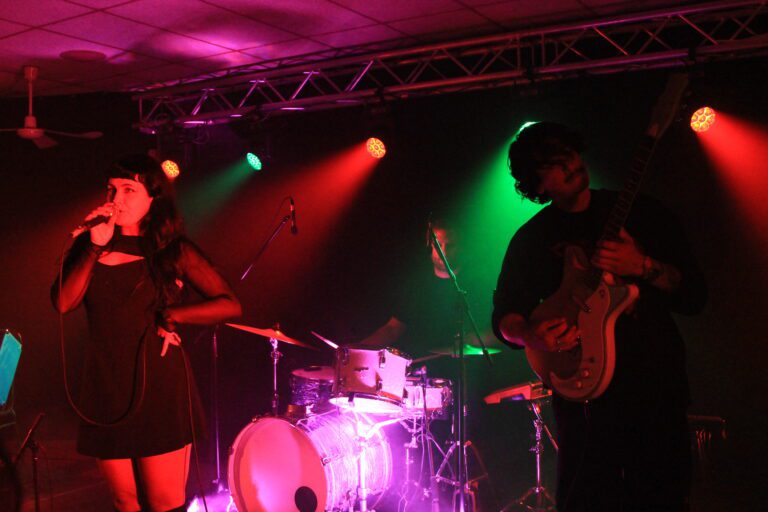
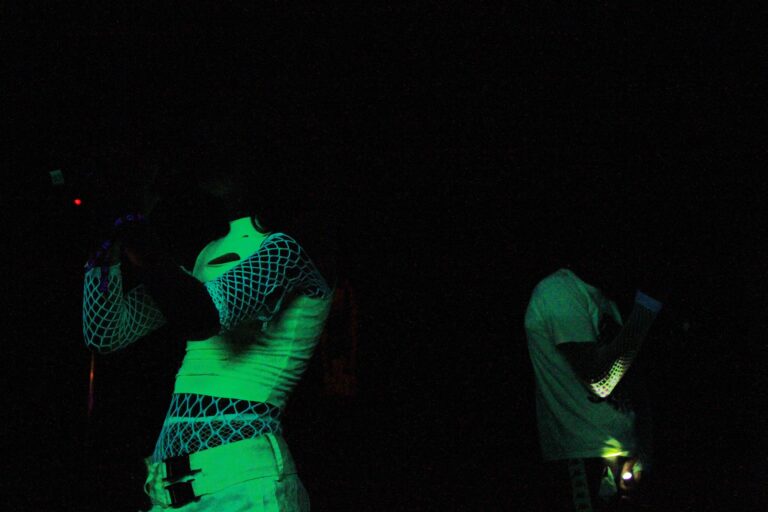
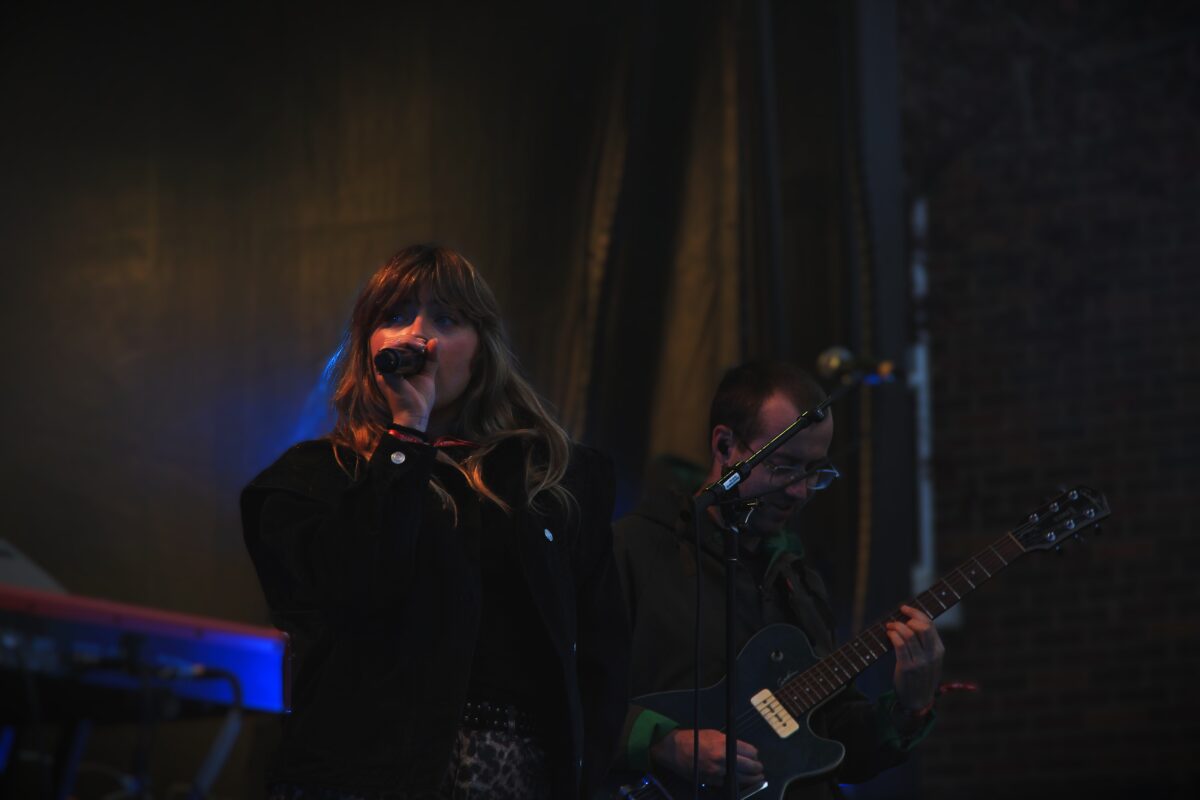
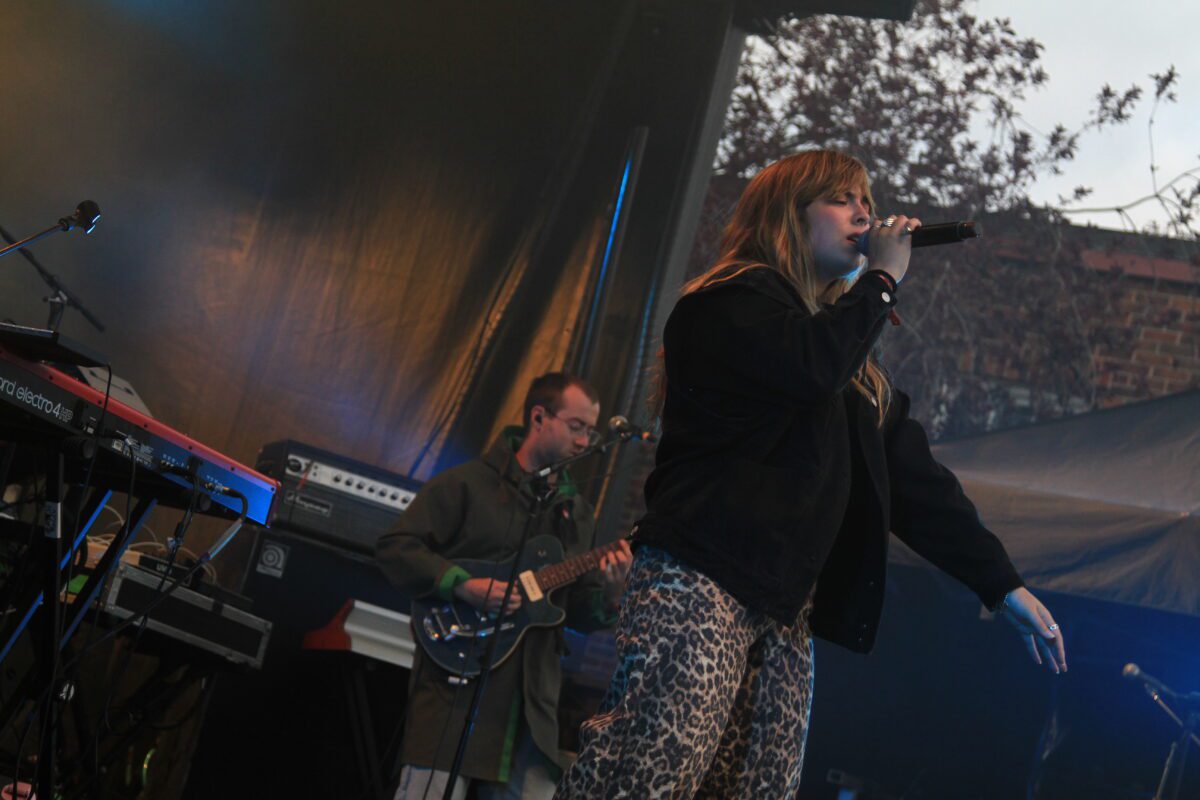
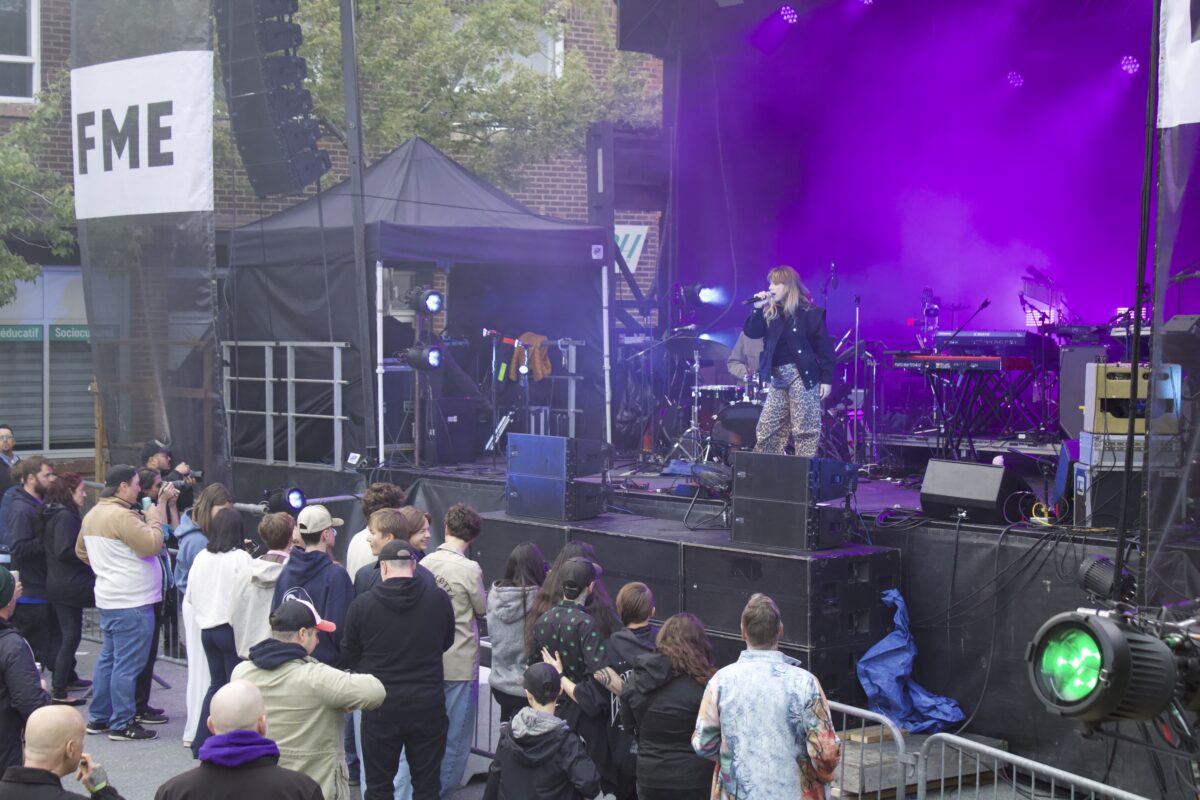
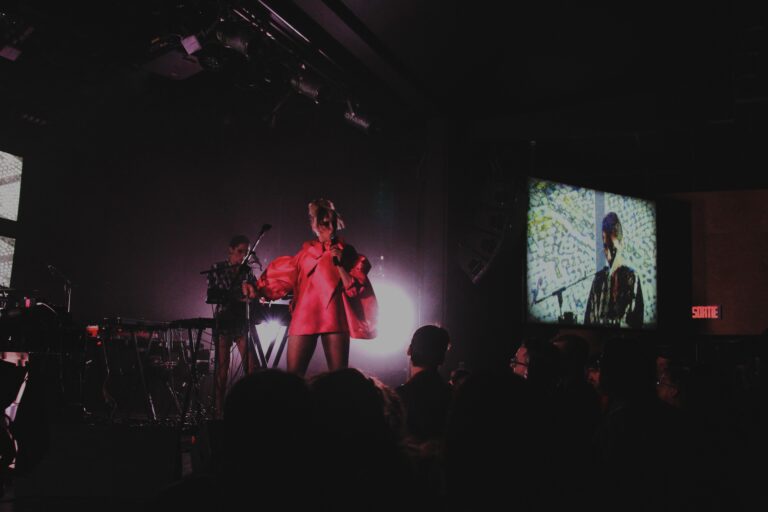
Late at night, Saint-Laurent is filled with comic book characters. They circle around their desires religiously, taking it all in by blocking it out with a cigarette and some chatter, only to dive right back into the abyss with fresh ears. Something bouncy and soft to catch your fall, but with just enough substance to entangle your attention. Trance. The Austrian electronic duo Klangkarussell has mastered the art of the line.

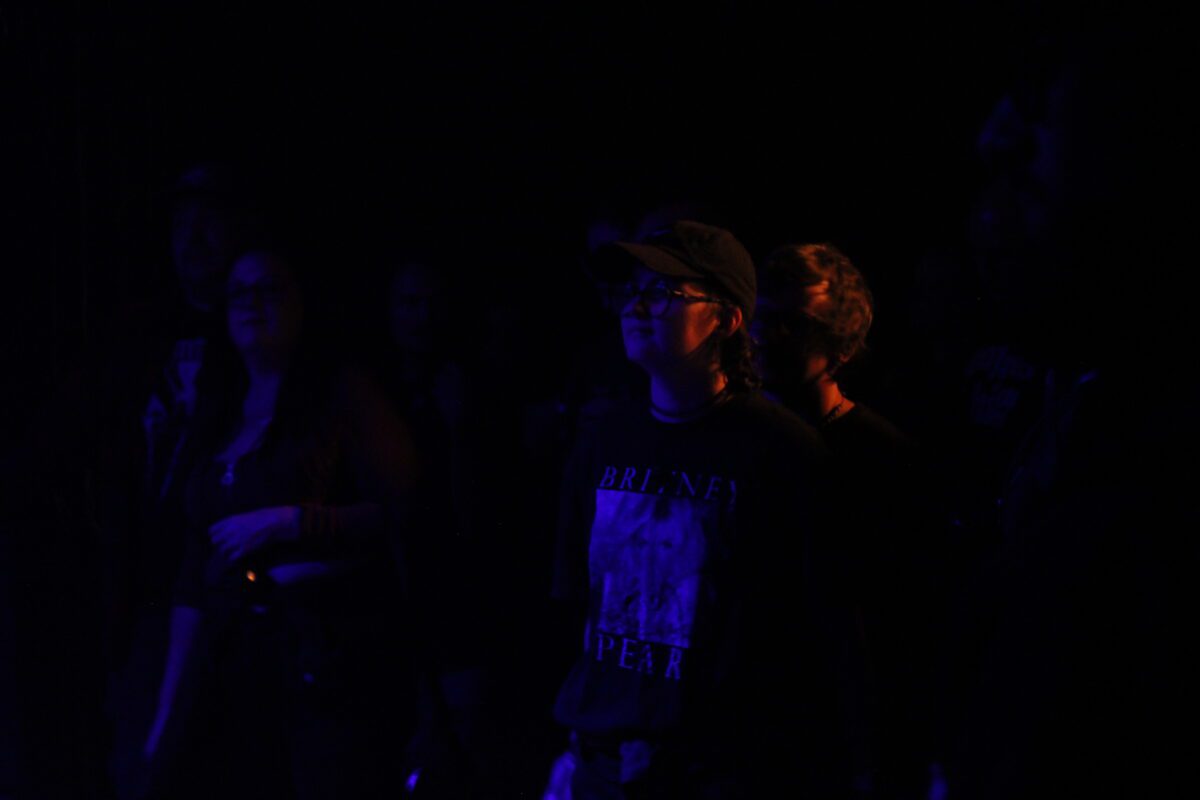
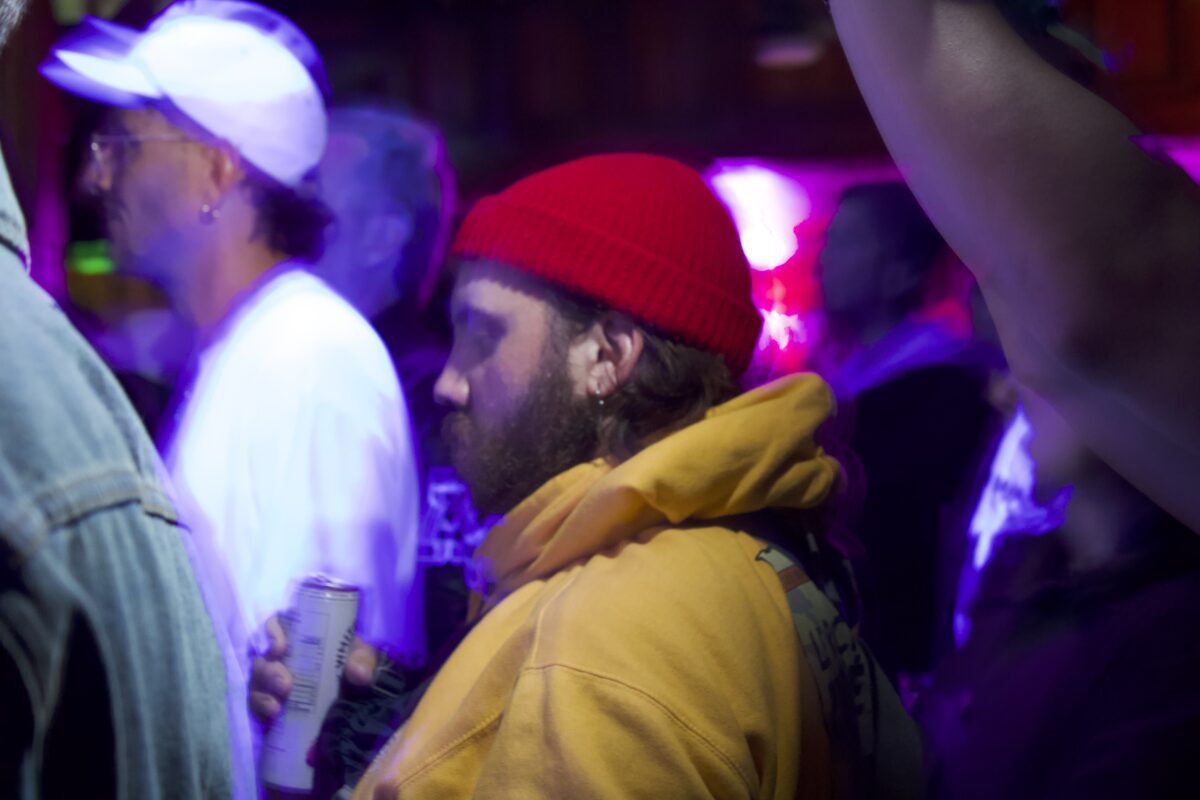
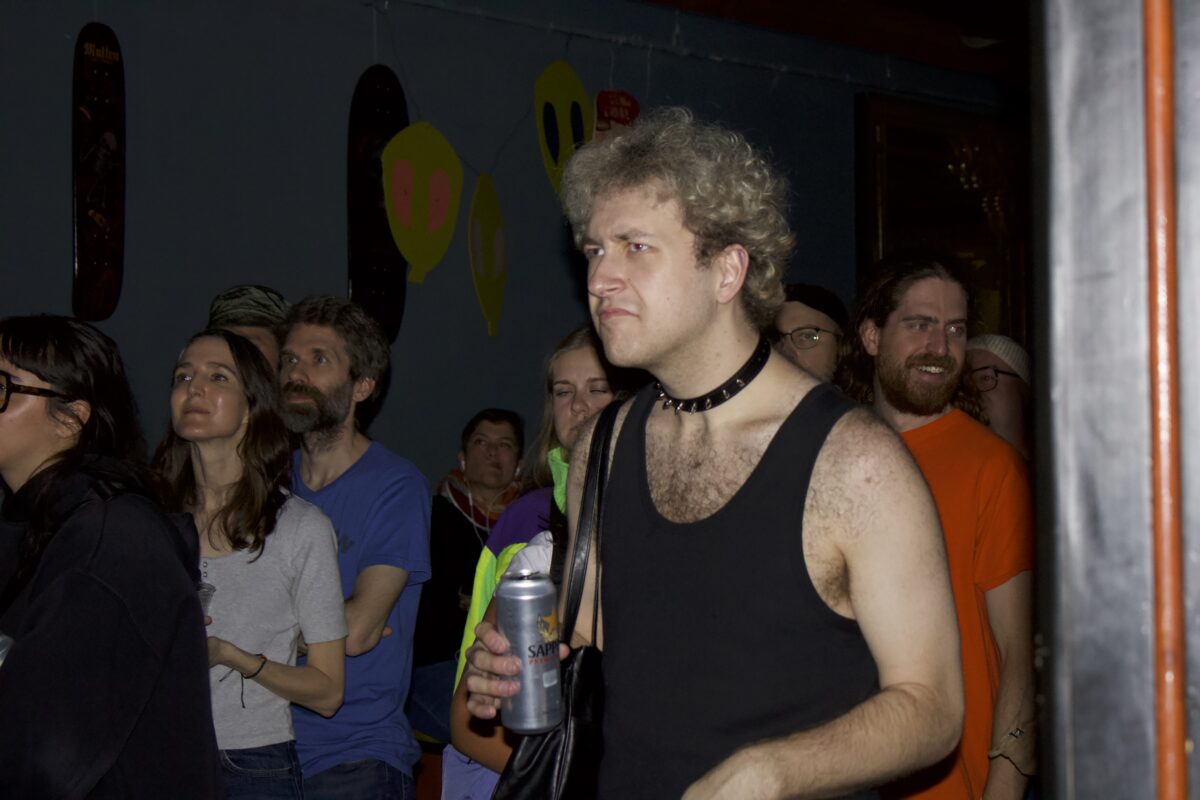
Before you know it, it’s under your feet, a rhythmic chord stabs as a bed for soulful vocals to stay in your head until you fall asleep. It’s textbook eurodance and vocal trance that blend in elements of disco, music meant to be shared that you fall in and out of. It’s the ambiance for the greater setting of social nightlife, where the chatter—gated by the heavy kicks—is part of the music. People cling together like bunches of grass announcing spring. I talk to a couple who tells me they came all the way from across the river to see Klangkarussell and begin to wonder where exactly these guys came from.

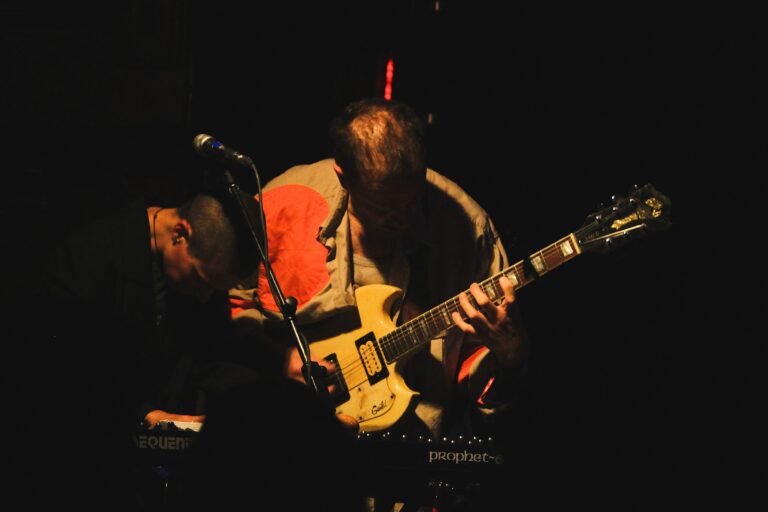
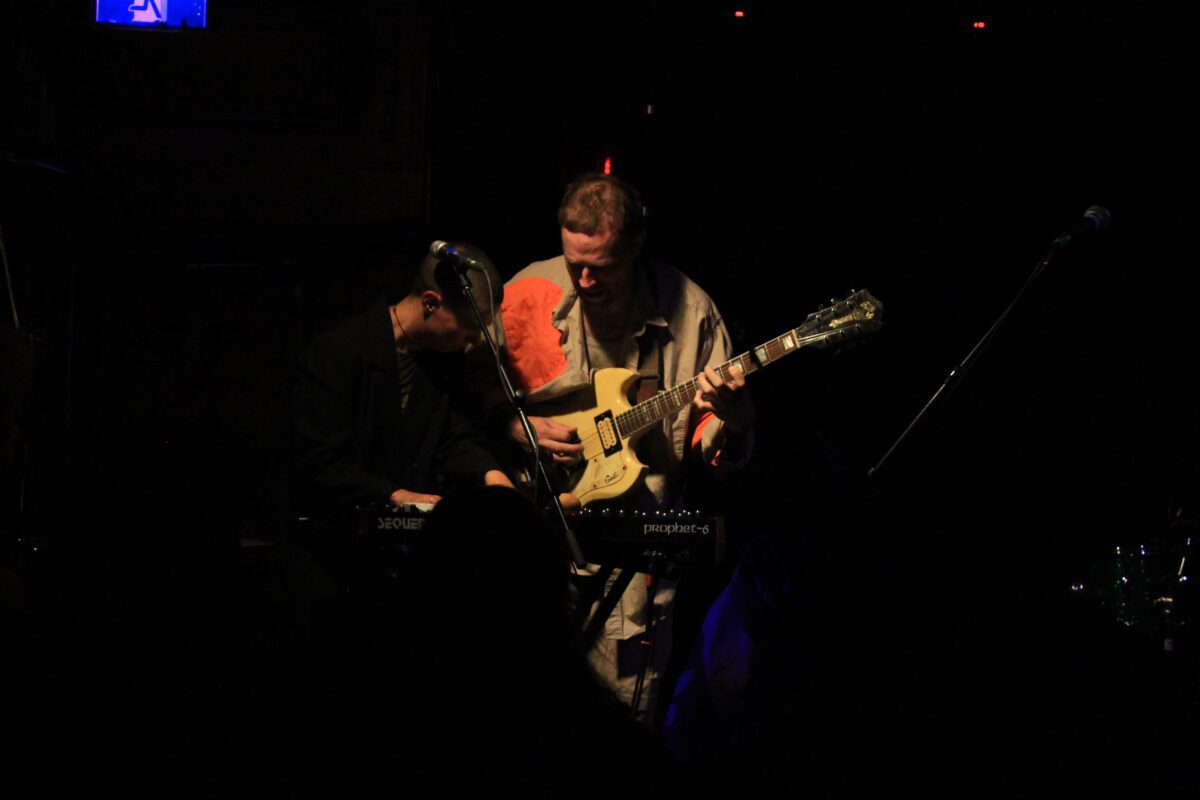
Gaining popularity around the same time as Avicii and Martin Garrix, Klangkarussell are part of the European exports that successfully blended pop hits with swelling build-ups and conventional chord progressions and rhythms. This late arrival of European electronic pop in North America was met with enthusiasm, as its simple formula had a trailing optimism that made you want to let go and be foolish. I remember it as the soundtrack to many early birthday parties, but judging by the older crowd, I can imagine it was just as popular in festivals during a recession era. Impressed by Klangkarussell’s ability to drive a crowd, I walked closer and closer to see what was happening. All smiles, their excitement was contagious as it announced the next rise and fall. Hands in the air pointing to the sky—when the anthem comes on, there are no limits to the mind.

As the night deepens, the dance floor becomes a kind of communion, and Klangkarussell and its quiet high priests. Their music doesn’t demand attention—it earns it, gently pulling people inward even as it lifts them up. In a world that feels increasingly fragmented, their sound offers a strange cohesion, a shared pulse. Watching the crowd sway under Saint-Laurent’s flickering lights, I realize this isn’t just nostalgia or escapism—it’s a reminder that sometimes, all we need is a rhythm to hold on to, and a place to lose ourselves in it.

musique contemporaine / Post-Minimalist

The best ‘’Candlelight concert‘’ ever.

by Frédéric Cardin

No, I’m not talking about a real Candlelight concert. It’s the final concert of the 24-25 season of the Société de musique contemporaine du Québec (SMCQ), In Memorian Jocelyn Morlock for which I’m about to write this. One of the finest concerts of the season, in my humble opinion. Musically enchanting, spiritually poignant. So why the reference to the hyper-popular concerts played by candlelight? Simply because, yesterday too, the sober but effective staging also used lots of candles to light the stage, and it was reminiscent of that kind of atmosphere. That said, aesthetically, artistically and emotionally speaking, this SMCQ concert surpassed by a factor of 1000 anything that has ever been performed in the (real) Candlelight series (I’ve seen a few). 

As the title suggests, In Memoriam Jocelyn Morlock was a tribute to the Vancouver composer who died suddenly, and far too young, in 2023. This woman’s musical aesthetic has conquered a large part of the contemporary musical world and will undoubtedly continue to influence many other artists in the years to come. Regularly consonant without shying away from salient colours that skilfully titillate the ears, her music is extraordinarily pleasant to listen to for both newcomers and those more seasoned in the modern idiom. In other words, Morlock’s music is as much a pleasure to listen to as it is intellectually rewarding. 

Memoriam Jocelyn Morlock par Frederic Cardin

The quality and intelligence of yesterday’s programme are to be commended: around an hour and a half of music paying tribute to Morlock, whether written by her or by other composers. What’s more, a crescendo/decrescendo of intensity and sound volume that took us from a very touching soliloquy for solo oboe newly written by Samy Moussa (Jocelyn Morlock in memoriam – it’s always a pleasure to see Samy back home now that he’s settled in Berlin), to pieces for flute, viola and harp by Toronto’s Luis Ramirez (Volador) and Morlock (The uses of solitude), an arrangement for string quartet of Tanya Tagag’s Sivunittinni (the peak of the evening’s sonic intensity, a piece remarkable for the accuracy of its evocations of Inuit throat singing), Rita Ueda’s transcendent You Are a Vessel for Joy, a new work for English horn, string quartet and choir, then Morlock’s very poignant Exaudi, for cello and choir (a masterly performance by Chloé Dominguez!), ending with a reprise of Moussa’s oboe soliloquy in the darkness, like a symbol of the celebrated artist’s final departure (Mélanie Harel on oboe, who imbued her playing with immense tenderness). 

READ MY COLLEAGUE ALAIN BRUNET’S INTERVIEW WITH SIMON BERTRAND, OF THE SMCQ, ABOUT THIS CONCERT

What came out of the concert was a very strong sense of spiritual and humanist communion, which is beneficial in these times of social and political stress. 

All the musicians are to be congratulated and commended on this unforgettable artistic performance: Voces boreales conducted by Andrew Gray, the Trio Kalysta (Lara Deutsch on flute, Emily Belvedere on harp Marina Thibeault on viola, a trio combination whose sound velvet and infinite capacity for colour I adore), string players Robert Margaryan and Daphnée Sincennes Richard on violins, Marie-Louise Ouellet on viola and Chloé Dominguez on cello, Mélanie Harel on oboe and English horn (excellent). 

In a much more ideal world, a small organisation like the SMCQ would have had the means to film and record this exceptional performance in high definition, and then broadcast it as widely as possible. Unfortunately, that’s not our world, and we’ll have to resign ourselves to the fact that only a few hundred people (who were present and very attentive in the Notre-Dame-de-Bon-Secours chapel) will be left with a memorable impression of the event. Unless we manage to take this concept elsewhere too. That would be great. If it happens near you, don’t miss your chance. 

Yes, one of the best concerts of the year. 

Classical / Modern Classical / South African Traditional

The OSM and Abel Selaocoe: Evenings When You’d Like to Stop Time

by Judith Hamel

The OSM sometimes gives us gifts. Moments of unexpected communion, as was the case on May 22. The concert program featured the closing piece Romeo and Juliet, but it was the journey to get there that was most meaningful.

The concert opened with Maurice Ravel’s Ma mère l’Oye, under the expressive and precise direction of conductor Xian Zhang. This suite of musical tales featured several musicians as soloists. In Les entretiens de la Belle et de la Bête, the famous contrabassoon solo, embodying the clumsy Beast, was brilliantly performed by Michael Sundell, before the disenchanting harp glissando transformed him into a prince.

Then Abel Selaocoe took to the stage to perform Four Spirits, a song about the Sebokeng community where he grew up, accompanied by the orchestra and multi-percussionist Bernhard Schimpelsberger. Selaocoe is a cellist and singer of South African origin, bringing with him an impressive musical baggage.

Through inventive use of extended playing techniques, he explores in depth the rhythmic, melodic and above all timbral potential of the instrument, placing it at the service of expressivity. With his cello, Selaocoe manages to conjure up a plurality of timbres and functions: the instrument becomes in turn the rhythmic echo of his voice, a vocal double, or comes close to a lute or guitar. It is sometimes an accompanist, sometimes the bearer of lyrical flights of fancy, and provides a sensitive extension of his body.

As for his voice, what can I say… First of all, the well-dosed amplification in the Maison Symphonique showcases the breadth of his vocal range and ensures the grandeur of his creativity and dynamic expressions. Here again, he blends several traditions, inserting sweet Southern Sotho and Zulu songs and guttural chants that acoustically fill the hall into a solid vocal control. Together, cello and voice express inspired lyrics with a doubled range of emotions.

From the fourth movement, celebrating the spirit of community, came a timid murmur and then a chorus from the audience. After a long ovation, Selaocoe returned to the stage to offer a final aria dedicated to the present moment. He reminds us that if we failed to do the right thing yesterday, there’s still time to do it today. And a final chorus formed…

In the second half, we return to the classics with excerpts from the first two suites of Prokofiev’s Romeo and Juliet. A work which, as you can imagine, has been played hundreds of times by the musicians, but which is not without its pleasures. The performance may not have been the most striking of the evening, but it was no less effective. Between Pierre Beaudry’s solid outbursts on bass trombone and Zhang’s dramatic flights of fancy, there was plenty for the audience to enjoy.

An evening where the new and the already familiar alternate, allowing the audience to feel genuine emotions. Here’s hoping Selaocoe comes back soon!

There are evenings like this one that we’d like to relive soon.

Photo Credit : Antoine Saito

période romantique

Reaching for the sky: Francis Choinière’s challenge to end his OPCM’s 10th season

by Frédéric Cardin

Last night’s finale and premiere at the Maison symphonique de Montréal were one and the same: the Orchestre Philharmonique et Choeur des Mélomanes (OPCM) ended its season (the tenth of its existence) with a first-ever performance of a Mahler symphony, in this case the Second, “Resurrection”. Conductor Francis Choinière had chosen it for its beauty and magnificence, allowing him to showcase his orchestra’s capabilities. Soprano Sarah Dufresne and mezzo Allyson McHardy joined the ensemble for the short but beautiful lyrical lines of the work’s fourth and fifth movements.

WATCH THE INTERVIEW WITH FRANCIS CHOINIÈRE ABOUT MAHLER’S RESURRECTION SYMPHONY.

Francis Choinière conducts in a poised manner, without the effluvia of his Montreal colleagues Rafael Payare and Yannick Nézet-Séguin, or the historic Bernstein, a model in his own right. This induces an attention to the almost crystalline clarity of the score’s numerous lines and contrasts. Where Bernstein creates a gripping viscerality, Francis draws precise, more thoughtful portraits. This does not prevent the achievement of impressive and effective tutti when necessary.

I particularly appreciated the characterization he gave to the strings, very beautiful and rich in temperament. Hats off to the orchestra’s first chair, violinist Mary-Elizabeth Brown, who played some vibrant, very lilting solos.

The second movement, andante moderato, was beautifully pastoral and debonair. The same was true of the Scherzo (third movement), with its dance-like “allant”.

Urlicht, that moment of grace (fourth movement), gave us the opportunity to appreciate mezzo McHardy’s sound projection, a tad dark for the needs of the score, but given in a very pleasant tonal and aesthetic refinement.

The final movement, with its many dynamic pauses, is a formidable piece to tie down, for it must be ensured that the fluidity of the “ascent” to the final light, which begins here and ends in the next movement, is not diminished and rendered less penetrating by these frequent pauses. These must appear as mere breaths in a spiritually continuous ascent, despite the changes in texture and affect. I must report that, listening furtively to a few comments from the audience after the concert, this aspect of the work was perhaps not fully understood by all. If I myself did not feel the irremediability of this ascent during the unfolding of the movement, the choral finale ended up reconciling the purpose with the objective. Indeed, Francis Choinière led his 200-odd musicians to an apotheosis that (again, comments gleaned from the audience) sent shivers down the spines of many present, yours truly included. It was well worth the trip, for this grand tutti had panache! Heaven was reached, even if it almost had to wait.

As a good critic who has to quibble over technical details, I would like to note the lack of technical and aesthetic finish of the trumpets and horns in several delicate passages. If you want to play Mahler again, you absolutely must polish up this aspect.

All in all, a fine incursion into Mahler’s repertoire by a very young orchestra showing its aptitude for this demanding repertoire. There will be plenty of time to fine-tune the details and offer more in the near future to audiences who are often new to this repertoire, a specialty of this orchestra. This audience, considering its reaction, appreciated the experience and will be back in the future.

Thank you Francis and the OCPM for building tomorrow’s classical public in such a wonderful way.

Electronic

Mystical Ceilings & Sonic Architects: Night Two at Exposé Noir with Helena Hauff, Wata Igarashi & Polygonia

by Félicité Couëlle-Brunet

Sunday night revealed a new facet of Exposé Noir. Just when we thought we understood the landscape, the Hangar appeared. A skeletal structure built for weather and rave alike, it offered no walls, just a roof suspended over bodies, smoke, and sound. It felt like a passageway. Somewhere between earth and sky, where light didn’t just illuminate the space but became part of the horizon.

Helena Hauff took that horizon and cracked it open.

The Hamburg based legend led a masterclass in sonic revolution. Kicking off with industrial heat and percussive insistence, she wove in echoes of Detroit techno—the soul and struggle behind the machine. Her set was a ride through BPM and emotional terrain, a roller coaster of tempos and tectonic shifts. Raw, urgent, ecstatic; she gave the kind of set that feels physically historic. As she once told Glamcult, “Rave is revolutionary.” And this night, it truly was.

What made it hit even harder was the setting. Fog curled through the open air; the lights – bold, intelligent, and unfiltered felt like part of the sky. They expanded the architecture beyond its scaffolding, framing the crowd as silhouettes in an electric storm. The smoke didn’t obscure; it revealed. Hauff’s set wasn’t just the highlight of the night; it was its spine.

Back inside the Belvedere, Wata Igarashi was crafting a very different kind of enchantment. The Japanese producer played to a steadily growing crowd between two enormous cone speakers facing each other, almost sculptural in their placement. The result was an immersive, echoic chamber where every sound felt suspended in air. It was playful and hypnotic, like being in a terrarium of green light and dancing amphibians. Rhythmic, precise, but full of joy – his set had a jazzy undertone, a kind of ludic elegance. It was easy to dance to, but even easier to get lost in.

Then came Polygonia and the Belvedere transformed. With Helena’s set wrapped, the room swelled to capacity. A multidisciplinary artist trained in visual art, sound design, and ecological thought, Polygonia doesn’t simply perform, she builds intricate ecosystems of sound. Her live set felt like entering a biodiverse sound garden: rich in textures, polymorphic in rhythm, and vividly spatial. There was no need to move wildly; the sound itself moved through and around us. Tactile, immersive, and intellectually sculpted, her set was both meditative and kinetic, a sonic architecture you could inhabit.

Together, these three artists carved out the final arc of Exposé Noir—not just with beats, but with vision. Night two confirmed what night one had already hinted at: this was more than curation. It was composition. A study in contrasts—grit and grace, speed and stillness, body and space.

Electronic

Velvet Fog & Hard Techno: A Night at Exposé Noir with Yazzus, Tiga & DJ Tool

by Félicité Couëlle-Brunet

We arrived just after dark, greeted by a wash of fog and the soft glow of strobe lights already in motion. Exposé Noir was alive. Phone cameras were sealed, voluntarily forgotten, and replaced by a strange sense of intimacy and trust. This was more than a party. It felt like entering a curated microcosm, a world built on rhythm, breath, and sweat, where mutual respect made space for joy.

Up on the Terrasse, Tiga was already in flow. A Montreal legend with a long legacy in global electronic music, he moved effortlessly through eras. Disco basslines bubbled under Björk-like vocal textures. It was elegant, surprising, almost cinematic. The view from the Belvedere heightened the surrealism, Habitat 67 and the Biosphere loomed across the dark water like props in a dream. There was a moment, just after a beat dropped into silence, when we looked around and realized: people weren’t documenting this. They were living it. You could feel the intention in the design of the space: immersive, generous, protective.

But it was next door, inside the Belvedere, that the real spell took hold. The lighting work was stunning: soft, sharp, atmospheric. Fog wrapped the room in velvet. Lights refracted through it, sculpting bodies in motion. It felt ceremonial, like entering a collective trance.

Yazzus, the Ghanaian-British DJ rising out of Berlin’s queer underground, took the helm and catapulted the night into another dimension. Her set was radiant: fast, sexy, explosive. She pulled from Ghettotech, Jungle, and early 2000s rave nostalgia, but the result was unmistakably her own. With every drop and build, she was carving out a space that was both ecstatic and vulnerable. High-octane but joyful, she gave us permission to fully let go. The room responded in kind. As we were told earlier that night, “It’s about intensity, but it’s also about care.”

Then came DJ Tool, steering us deeper into the dark. A core member of Berlin’s Mala Junta collective, he’s known for pushing high-speed, emotionally charged techno with surgical precision. His set was relentless, industrial, physical, and unflinching. If Yazzus gave us wings, Tool locked us into the tunnel and hit accelerate. But even here, in the harshest moments, there was a sense of control and trust of being taken somewhere on purpose.

That night at Exposé Noir didn’t just showcase three DJs. It honored the emotional architecture of nightlife: how the right energy, sound, and setting can move a room beyond escapism into something deeper. It reminded us how good it feels to be completely, fully there.

Electronic

Piknic 1: A magic formula

by Loic Minty

Year after year, the Piknic formula proves that it works.

Itʼs a tall order to meet the expectations that come with such a reputation, but once you cross those gates and step into the crowd, it quickly becomes clear why this festival continues to draw people in. The fluorescent backdrop, paired with an even more vibrant crowd swaying to infectious grooves and skipping from stage to stage, gives the event a sense of playful debauchery. It’s the crème de la crème of summer parties, where artists show up with their A game.

A tribute to Montrealʼs diversity, Piknic offers a full spectrum of nightlife condensed into the microcosms of its two stages. At the National Bank Stage, set up like an intimate boiler room session, we were treated to a pulsing evening of hyperpop. Meanwhile, just across the gulley at the Fizz Stage, the mood was a global homage to club classics. Chloe Lallouz captivated the crowd with her delightfully unpredictable genre-blending. Opening with a bachata track, the

open-air venue momentarily transformed into a casual tropical party. From there, she offered glimpses of sounds from across the globe—India, Morocco, Brazil, and early 2000s U.S.A.—all layered over a steady afrohouse groove that built into baile funk and amapiano. Dancing circles formed, limbo sticks made their way through the crowd, and most importantly, her set illuminated the multicultural essence of Montreal, bringing everyone together in a shared rhythm.

As the night deepened, Stryv picked up where Lallouz left off, carrying the collective energy and elevating it to euphoric heights. An experienced producer, Stryv has mastered the art of anticipation, keeping dancers on the edge with a finely tuned balance of chord stabs and ghostly vocal textures. His rhythms were hypnotic, evolving seamlessly without ever overwhelming. It was like watching a storm roll in and out—subtle yet powerful. And as the final hour approached, the sky metaphorically cleared, releasing a wave of positive energy. Even soaking wet, the crowd refused to accept that the night was ending, chanting for “just one more song.”

In a parallel universe only a five-minute walk away, ZORZA was redefining techno with a cool and collected presence. Navigating the fringes of hyperpop and underground rave, her quiet continuously renewed the element of surprise. With an ear for obscure internet finds and sped up pop samples, Zorzaʼs inventiveness was a breath of fresh air. With distorted samples that sounded like the system was about to crash, people were losing their minds. All around the stage and amongst the muddy grass, people were jumping, yelling and punching the air. Everywhere you felt the release and excitement of what it means to be here at Piknic. Its the official arrival of summer, and the fact that whether it rains or shines, Montrealʼs nightlife is always alive.

Piknic isnʼt just a music festival—itʼs a cultural barometer of Montrealʼs evolving nightlife. Whether you’re drawn in by nostalgia, global rhythms, or emerging djʼs, there’s space for you at Piknic. And maybe thatʼs the magic of it: in a city as eclectic as Montreal, this festival finds a way to make it all dance together.

Balkan music / Klezmer / psychédélique

Let’s Yiddish’n’roll with Kallisto!

by Frédéric Cardin

I’ve already spoken to you about Kallisto, a klezmer yiddish-folk Anatolian-psychedelic-rock meets balkanic-swing quintet that tickled my ears at the Sylis d’or 2023 at the Balattou club (READ THE INTERVIEW I DID HERE – in French), here in Montreal. I had the chance to see them live again on Sunday evening, 18 May 2025 at Balattou, and the initial impression remains the same: this is a very solid band, aesthetically and musically, built on the foundations of Jewish music but blending multiple influences that blend organically and very festively. The sub-genres mentioned above can all be found, to a greater or lesser extent, in one of the band’s pieces, whether standard or original composition. 

That said, the group is not the same as it was in 2023, except for leader Jossée McInnis (clearly the creative soul of the ensemble), who is also a clarinettist. The Montrealer (formerly from London, ON) is an instrumentalist with a rock-solid musical science, classic technique and tonal precision, to be sure. But she swings well and handles the colours and inflections of klezmer music with perfect ease. The lady has surrounded herself with other top names, perhaps even better than in the Sylis 2023 version: Antoine Bensoussan on guitar (a skilful surf-styler, among others), Jefferson Perez on cello (brilliant in both his tonal beauty and his improvisational skills), Patrick Lebrun on bass and Edward Scrimger on drums. 

Kallisto play regular gigs in good small venues, from Montreal to Sherbrooke to Toronto, so keep an eye on the agenda of your favourite live music bars. If they happen to be in your area, be sure to give them a listen. It’s a great way to spend the evening. 

Next official gig dates: 

9 July 2025 – Quai des brumes, Montreal

July 19, 2025 – Duluth en Arts, Duluth Street, Montreal

KALLISTO WEBSITE

Orchestral Pop

OSM | Half Moon Run’s Masterful Return to The Symphonic… Home

by Marilyn Bouchard

On May 15 at the Maison symphonique was the last of 3 performances of the return of Half Moon Run with the Orchestre symphonique de Montréal conducted by Adam Johnson.

The evening began with Everyone’s Moving Out East, richly accompanied by the full orchestra. The soaring 9beat followed to the rhythm of brilliantly enriched percussion, delicately complemented by female backing vocals and violins, amplifying the light of the musical epic, which ended sharply at the climax, to the cheers of the crowd.

We came back down for Goodbye Cali, with the guys strolling across the stage in long strides to the rhythm of the promenade, which ended with the piano scores intertwining, veering into jazz. Crawl Back In then opened, softly, with only acoustic guitar and vocals backed by violins, quickly evolving into more complexity.

We found ourselves suspended for a moment in time, and I don’t know if it’s because of a little similarity with Hallelujah, but this one brought a tear to my eye. Immediately afterwards, the highlight of the evening, How Come My Body, one of my favourites, went completely wild, with the percussion and double bass weighing down the atmosphere and the female singers adding density to the choruses.

Razorblade and Loose Ends were presented in a rousing, rhythmic fashion, with the brass instruments, and solo trumpeter Paul Merkelo in particular, taking full advantage of their space. You won’t (look me in the eyes) was really well accompanied by violins, surprising us with a magnificent solo from Marianne Dugal in particular, and enveloped by female vocal harmonies, while the atmospheric Another Woman came close to Muse’s progressive/alternative rock with the orchestra and an abundance of staccatos. We were treated to a deep, rich version of It’s true, on which the double basses heightened the song’s dramatic potential tenfold, as well as Grow Into Love and Then Again adorned with overlapping violins, between pizzicatos and legatos that filled the airs.

The awaited Full Circle kicked off with Serge Desgagnés’ expertly executed percussion, and was the perfect song to highlight this angle of the orchestral arrangement, quickly progressing to one of the evening’s most masterful orchestrations. Call me in the afternoon, warmly welcomed by the audience, stood out for its electrifying guitar duet at the front of the stage. This was followed by I can’t figure out what’s going on and She wants to know you can let go, opening with a Tchaikovsky-like introduction of flutes and oboes, quickly accompanied by the other winds. The encore, Sun leads me on , ended the evening magnificently, starting with Devon, Conner and Dylan going up to find the leader on the central platform to deliver the last song in chorus, around the same microphone. They were gradually joined by the singers, flutes, oboes and clarinets for a final crescendo that left us with heads full of music.Tout au long du spectacle, les arrangements sensibles de Blair Thompson se sont illustrés en sachant délicatement faire briller les points forts des compositions d’Half Moon Run. Un spectacle senti, bien calculé et extraordinairement bien exécuté, conduit de main de maître par Adam Johnson. Si vous n’y étiez pas, vous avez manqué un MOMENT.

Photo Credit : Antoine Saito

Balkan music / Choral Music

Enchanting choral Croatia at the Centre des musiciens du monde

by Frédéric Cardin

I’ve been a regular at the Centre des musiciens du monde’s (CMM) Intimate Concerts series since the very first one last January. They’ve all been excellent, each time featuring top-quality artists who’ve settled in Montreal for its cultural vitality and, in the process, enriched it in an exceptional way, thanks to the traditional and refined sounds from Rwanda, Syria, Mongolia, Iran, Peru and so on. While I’m fairly familiar with all the artists featured (and to be featured) in the series so far, one exception was on stage last night: the vocal ensemble Sava, whose existence I didn’t even know about until quite recently. I was so taken with them that I had to tell you about it.

Sava is an all-female vocal quartet devoted to traditional Balkan polyphonic songs. For this concert, Sava covered some of the repertoire specifically from Croatia, with secular and religious songs. This performance, behind the altar of the Church of Saint-Enfant Jésus (in a very intimate setting), totally bowled me over. This was due not only to the surprise effect, but also to the exceptional vocal quality of the four performers, Antonia Branković, Dina Cindrić, Sara Rousseau and Sarah Albu (the latter also one of the most exciting recent voices in contemporary and avant-garde music in the city). In the perfect acoustics of the venue, the seductive rubbing of thirds, fourths and fifths of the four voices produced a soothing vibratory effect on the audience gathered, and on your humble reviewer, who was transported back in time and space, to an ancient and perfectly authentic Dalmatia.

I don’t know how often the ladies perform in concert, but they’d better go at it! And if you’re ever interested, you should know that the ensemble is a product of all kinds of music courses available at the CMM!

MUSIC SCHOOL OF THE CENTRE DES MUSICIENS DU MONDE

Alternative / Post-Punk / Shoegaze

Hitting a Fever Pitch at the Ribbon Skirt LP Launch 

by Lyle Hendriks

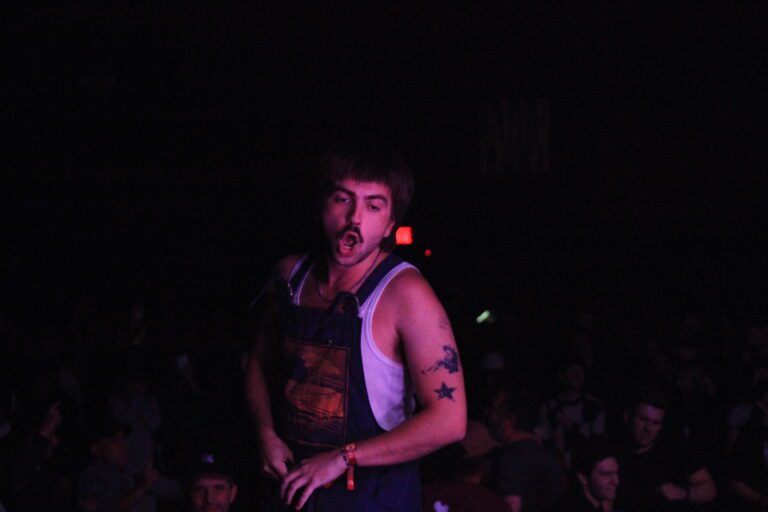
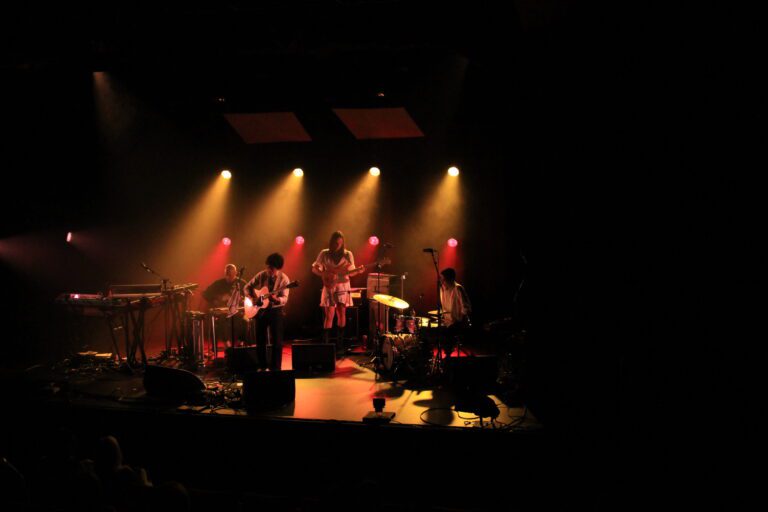
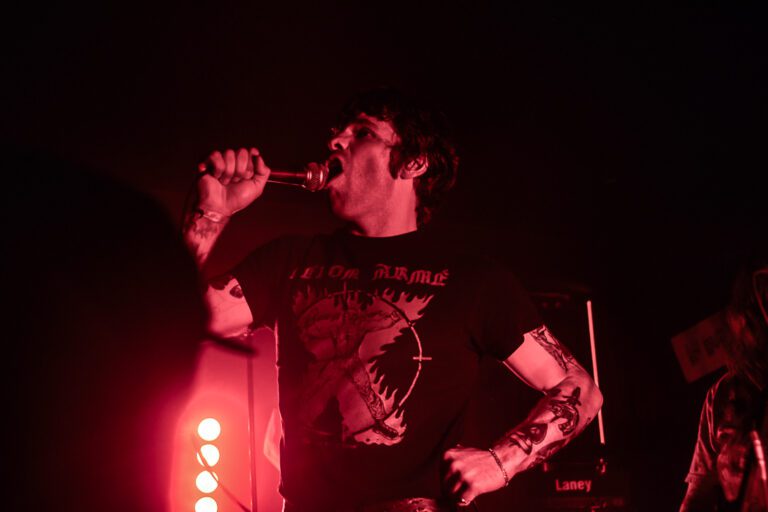
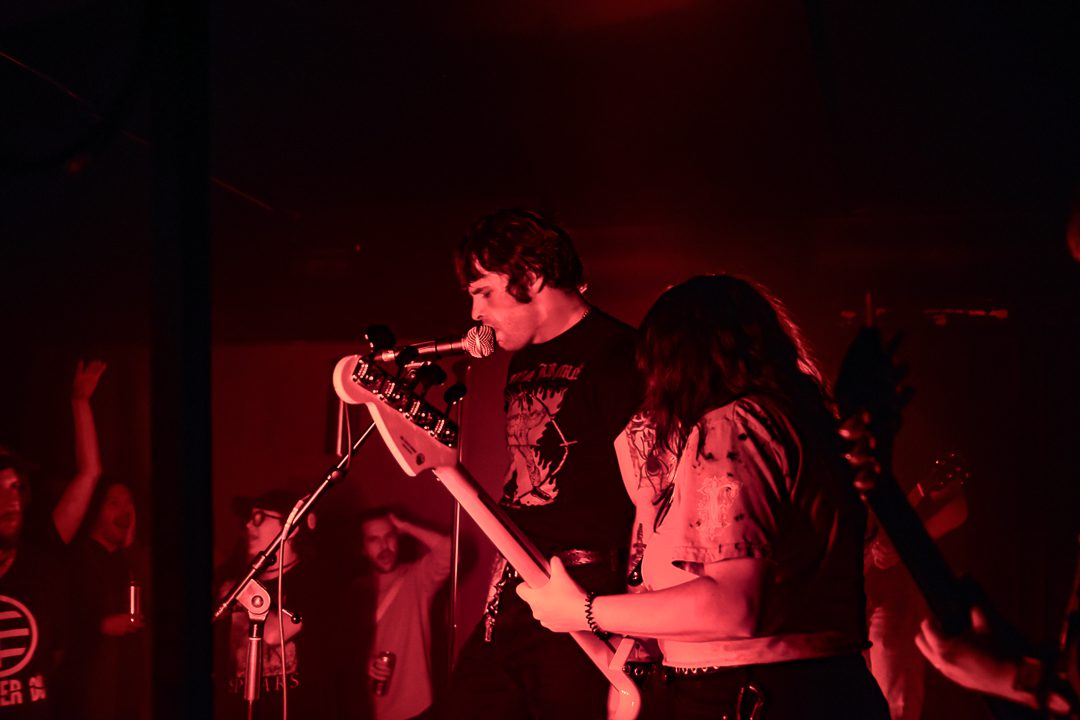
Fog haze, red lights, and glitchy protections bathe the lunchroom-esque atmosphere of La Toscadura in the moments before Ribbon Skirt’s launch of their new album, Bite Down (2025, Mint Records).

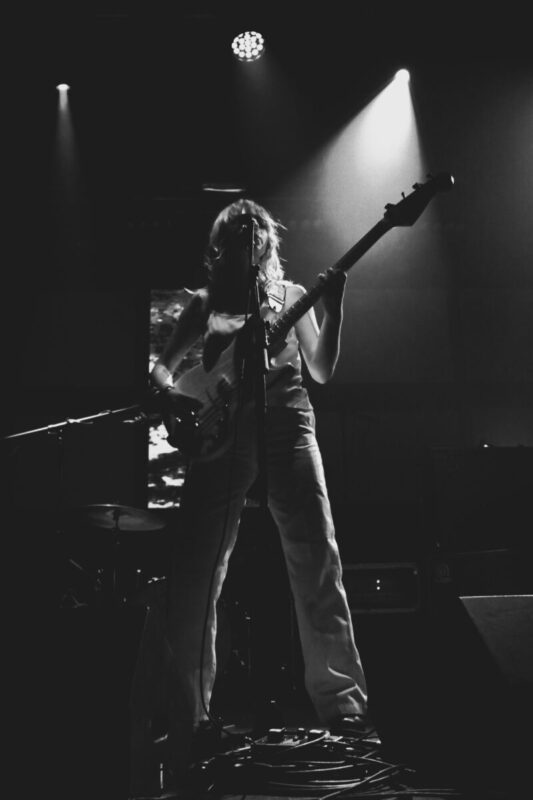
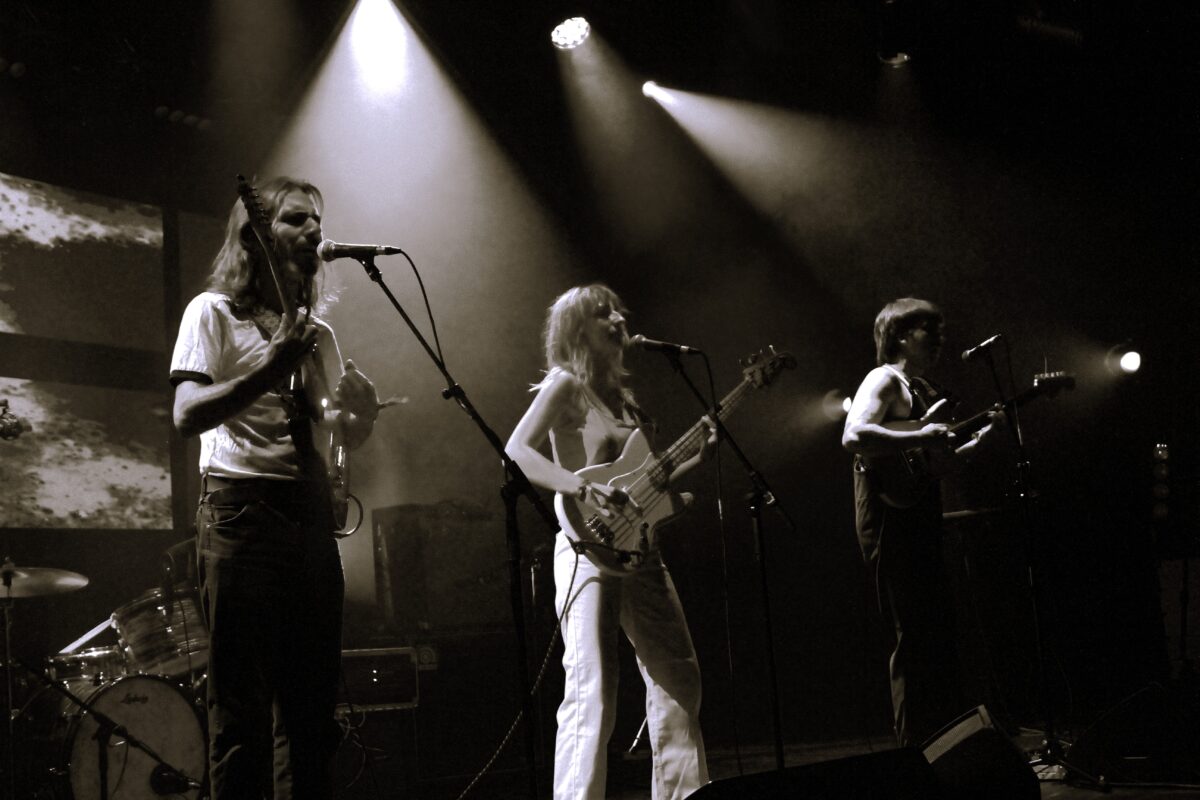
Up first is Taupe, a dreamy math-gaze group that feels like a spring day in sonic form. Andrew Miller’s guitar lines quietly, diligently meander through each arrangement. Soft vocal harmonies from Heather Ogilvie and Jess Barry cushion our fall from each unpredictable change, a cool blue tapestry of stunning resonance driven along by the deep connection between Barry’s bass and Evan Magoni’s drums. It’s a relaxed, inviting, yet melancholic set, drawing us into an immersive bath of orbiting melodies and gentle resolutions.

What comes after is an extreme tone shift as Heaven for Real takes the stage. This Halifax/Toronto amphetamine rock outfit is all knees and elbows, each disparate bit jutting out at odd (and sometimes distressing) angles, a relentlessly rattling train car that threatens to fall apart altogether at any moment. Horseshoe theory applies here—each member has evidently become so skilled at this abstract form of psych-post-prog-punk that it almost sounds like they don’t know what they’re doing. Guttural guitar and larger-than-life bass from twin songwriters Mark and J. Scott Grundy rush at each other in a game of chicken, flying alongside incredible breakneck beats from guest drummer Eli Kaufman. When these three hit a chord or a moment together, it’s like a beautiful, impossible accident—never going where you expect, but always landing with momentum and perfect clarity.

Finally, it’s time for the main event. Montreal veterans Ribbon Skirt (formerly known as Love Language) pull up to the stage as an ominous track drones overhead. The band appears first, including guitarist Billy Riley in a wizard cloak. Only when the moment is right does lead singer and songwriter Tashiina Buswa take the stage, a dramatic entrance worthy of this pivotal moment in Ribbon Skirt’s sudden ascension. What follows is an intense, no-holds-barred performance of just about every song from the LP (plus some new music). Like a volcano finally blowing its top clean off, Ribbon Skirt blacks out the sky and rains futuristic hellfire through jagged chords, haunting melodies, and an alluring, dangerous edge to every single moment. Buswa is a natural in this pop-star lead role, strutting across the stage with bulletproof confidence and a commanding presence.

Despite her ironclad performance, Buswa hasn’t let the incredible hype (including reviews from Pitchfork and Nardwuar) get to her head. She somehow exudes gratitude and humility while also delivering her songs with fearsome conviction, welcoming friends to the stage, pressing her head against her bandmates in a visceral embrace mid-track, looking across the packed, hot room with a smile of disbelief on her face. She addresses us about halfway through, shocked at how many have come out for this moment—a moment that, I believe, she’ll look back on as the instant that everything changed. Despite the incredible entropy behind Bite Down, its architect doesn’t seem to see herself as Ribbon Skirt’s central force. The spirit of this group remains deeply collaborative and connected, a true four-piece rather than Buswa and her band, even as they rapidly ascend to a new level of eminence and success.

My only complaint of this entire evening was with the sound. All three sets, from the quiet tones of Taupe to the most raucous moments of Ribbon Skirt, were plagued by incessant bursts of painful, screeching feedback, which only seemed to get worse as the night went on. It reached a literal fever pitch as Ribbon Skirt took their encore, with Buswa jumping in front of the stage’s apron for what ultimately became about a minute of uninterrupted, agonizing feedback from every speaker in the house. And despite this, the crowd reached a frenzy, dancing and writhing with purpose and passion—even military-grade sonic warfare wasn’t enough to deter the incredible appeal of Ribbon Skirt’s new form.

Modern Classical

OCM: Bernstein and his “Side stories” in the spotlight

by Frédéric Cardin

The Orchestre classique de Montréal (OCM) gave a benefit concert under the auspices of the music of Leonard Bernstein, on Saturday, May 3, 2025. The concert featured soprano Sharon Azrieli, mezzo Julie Nesrallah, baritone James Westman and the orchestra’s concertmaster, Mark Djokic. The money raised will be used to provide access to classical concerts for newcomers, seniors in care and other groups who do not enjoy the same opportunities as the general population. 

Audacity? Artistic integrity? Austere works, in the Bernstein pantheon, dominated the evening (Arias and Barcarolles, and the Serenade (after Plato’s Symposium)). Barely two excerpts from West Side Story (the Mambo and Somewhere, placed at either end of the concert) and an aria from Candide, not even the one we’re used to (Glitter and be gay) but rather I am so easily assimilated, which also fully deserves to be heard. There was finally A Simple Song, from Mass

If Candide was successful, with soprano Sharon Azrieli in teasing form, the Mambo suffered from rhythmic imbalances (a mortal sin in this kind of music), and Somewhere was no more than okay, with the three vocal soloists and the orchestra. Having said that, I’m happy to say that the central corpus of the concert was extremely successful, even splendid. 

Arias and Barcarolles is Bernstein’s last major work (1988, a year before his death). It is a cycle of nine songs that form a narratively coherent whole, like a mini-opera, for mezzo-soprano, baritone and orchestra. In less than thirty minutes, it evokes the ups and downs of a couple’s life, from beginnings to old age, with reflections on love, life and more. The tightly-packed songwriting still allows a wide range of musical styles to shine through, including jazz, blues and modern atonalism. Unlike Mass, however, there are no head-on collisions, or even disgracious juxtapositions, between these genres. Rather, a great maturity in the organization of oppositions and eclecticism. A work that deserves to be heard much more widely. 

The soloists, Nesrallah and Westman, were in very good form, especially the mezzo, whose authenticity and accuracy on stage (and within the limits of what the situation would allow) were striking. I’d never seen this lady, also a famous CBC host, on stage before. I’d like to see her again in a truly operatic setting. The orchestral score is, it must be said, formidable. The ensemble cover is stripped bare, each and everyone must fend for him-herself and cannot ‘’hide’’, rhythms intertwine, notes spurt out with skin-tight precision, and everything must be conducted with impeccable dexterity and technical firmness. Discreet but reliable conductor Mélanie Léonard and her musicians rose to the challenge.

The other big piece was the Serenade, a violin concerto that doesn’t say its name. Although better known than its predecessor, this work remains relatively demanding for a general public who know the American maestro for his musicals and his memorable conducting of great symphonic masterpieces. 

The orchestra’s concertmaster, Mark Djokic, gave a remarkable performance, with a luminous, sparkling timbre and a very convincing emotional embodiment. For a “small” orchestra like the OCM, the presence of a soloist of Djokic’s calibre is a real treat. Once again, the orchestra, which Bernstein doesn’t often let rest, rose to the occasion, under the convincing baton of Ms. Léonard. 

Your humble servant didn’t have access to the cocktails and small sandwiches that probably came with the more expensive (and more mission-critical) tickets, but we can rest assured that ladies and gentlemen Nesrallah, Westman, Djokic and Léonard (and all the other musicians) must have received well-deserved accolades when they arrived among the guests after the concert (notwithstanding the few downsides mentioned at the start of this article). 

Subscribe to our newsletter

Inscription
Infolettre

"*" indicates required fields

Type of Suscribers