Classical / post-romantique

Virée classique | Symphony (participatory) of La Virée, for and by our community

by Alexandre Villemaire

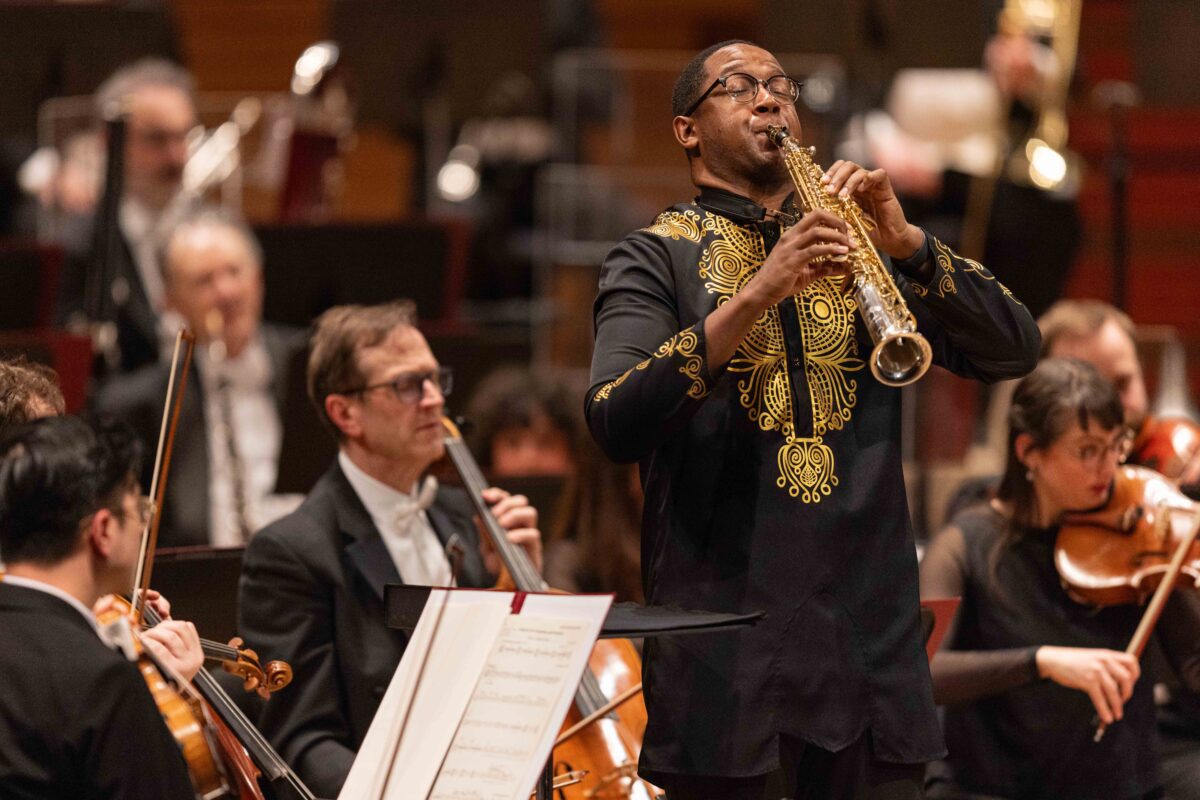
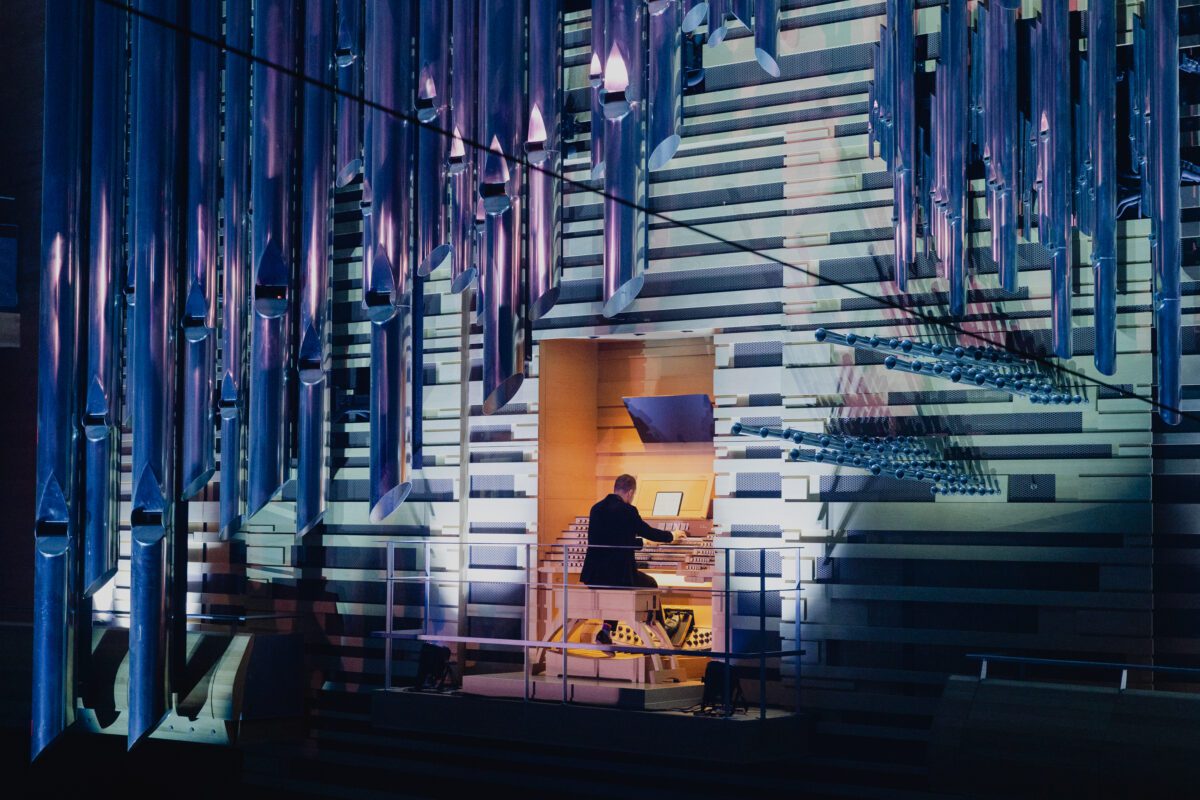
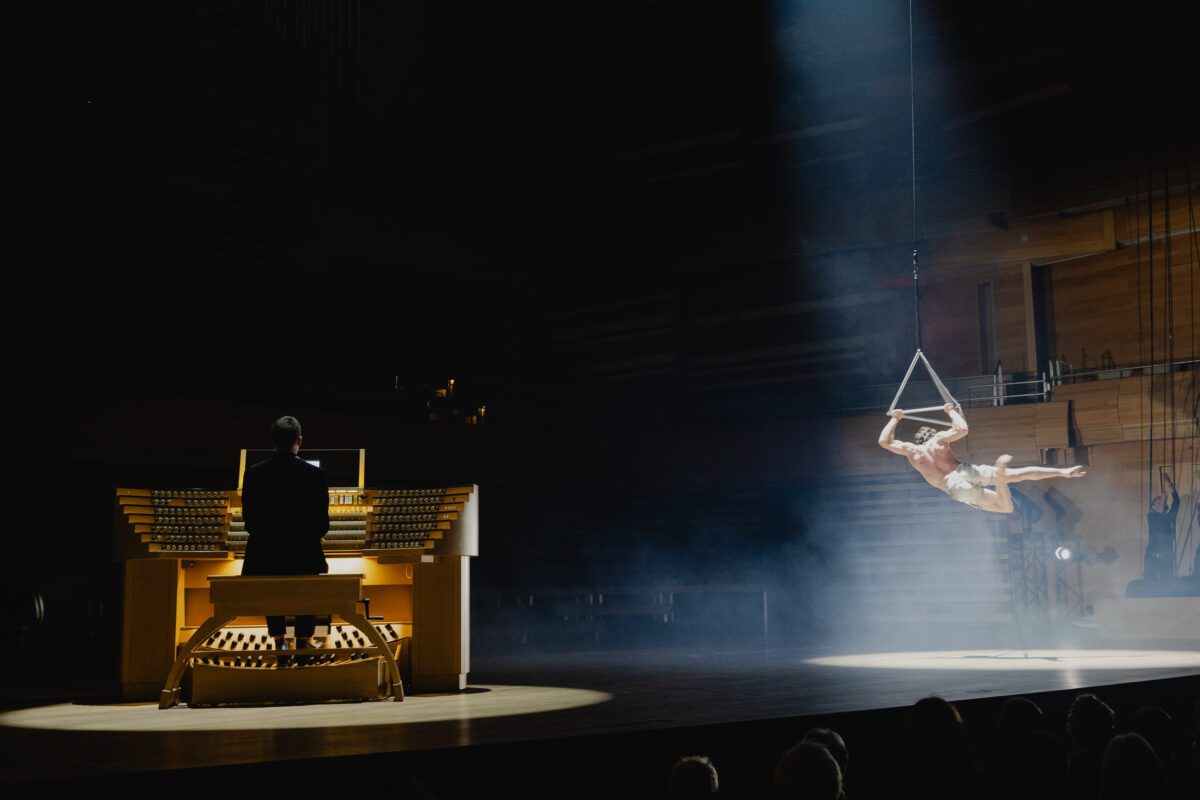
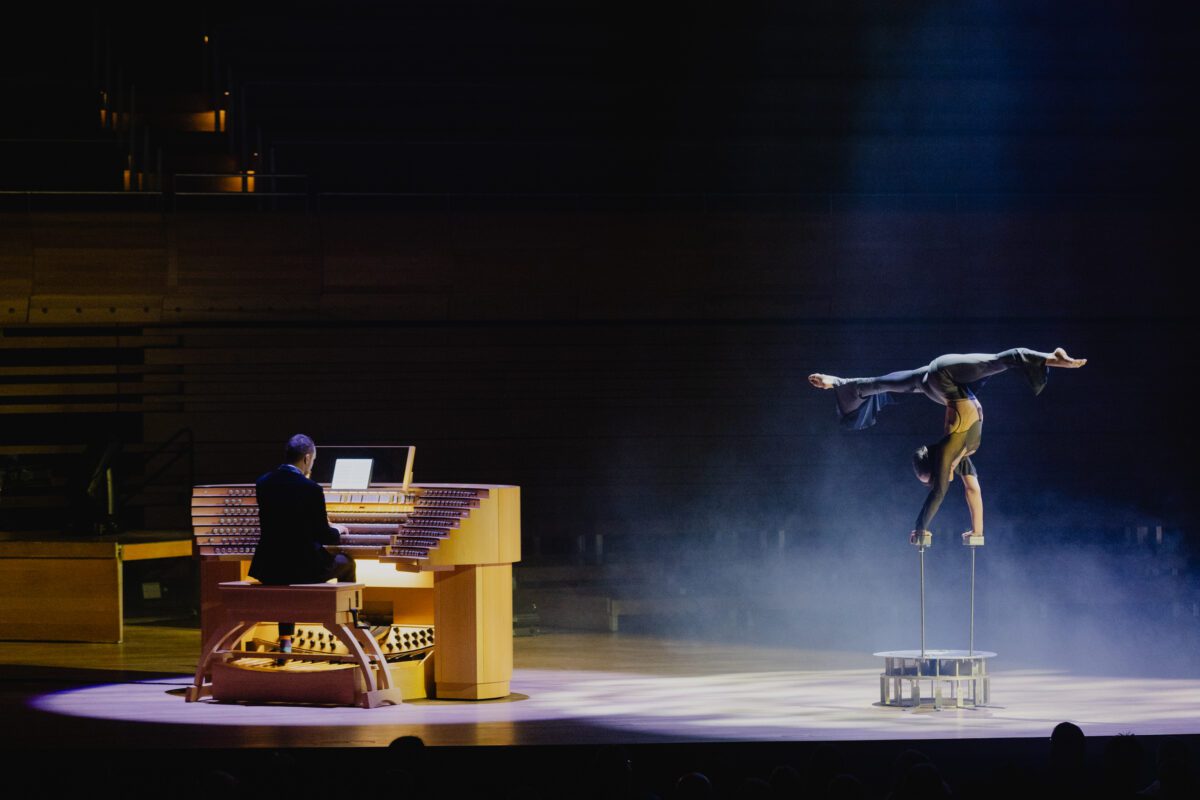
It is a tradition that has continued since the beginning of the Virée classique: at each edition, amateur musicians come together to form an ad hoc orchestra and perform pieces from the symphonic repertoire to the audience gathered at the Complexe Desjardins. This Symphonie de la Virée, which has established itself as one of the most eagerly awaited and popular events of this mini festival organized by the OSM, attracts the attention and ears of many attentive and curious passers-by.

Conducting the various instrumentalists is Adam Johnson, newly appointed music and artistic director of the Laval Symphony Orchestra, who has been commissioned this year with a program that flirts with both familiar repertoire and new discoveries, including several local composers.

The orchestra began with Felix Mendelssohn’s Overture to The Hebrides, an energetic and dynamic piece with lyrical lines and percussive string passages. This was followed by a suite of three dances by Florence Price, one of the most important American composers of the 20th century and the first African American woman to have one of her symphonies performed by a major US orchestra. Dances in the Canebreaks, one of her last pieces, is steeped in African-American folk inflections with energetic, lyrical, and lively movements, marked by exchanges and interactions between the strings and brass and passages accompanied by pizzicato.

From Russian-born Canadian composer Airat Ichmouratov, the orchestra played his overture The Myth of the Falcon, a programmatic work based on the mythical bird of the Hungarian people, of whom they are said to be the descendants. It is an extremely colorful work in which Ichmouratov’s talent as an orchestrator is evident, particularly in the passage leading up to the final climax of the piece, which surprised many with its sudden change in dynamics.

The concert concluded with an excerpt from Maxime Goulet’s Symphonie de la tempête du verglas (Symphony of the Ice Storm). The movement, entitled Chaleur, represents, with luminous energy, the mutual aid that took place during the extreme weather event of 1998. Jig and rigadoon rhythms run through this work, which was conducted by Rafael Payare. A frenzied conclusion that celebrated the love of music for these musicians from all walks of life.

Photo : Gabriel Fournier

Publicité panam

période romantique

Classical Spree 2025 | Dances with animals

by Frédéric Cardin

The Obiora ensemble, a classical orchestra made up of musicians from diversity, was on the stage of the Maison symphonique yesterday afternoon, for an attractive program, marked “for the whole family.” And the whole family was there, especially the little ones who squirm and whisper. It makes me happy to witness these kind of events, and I recommend parents not to scold their kids too much when they move a little in their seats. That’s what those concerts are for! Don’t make them feel too much that the concert is a constraint. In short, there was some chirping (a little), but it was quite alright.

WATCH THE INTERVIEW WITH ALLISON MIGEON FROM OBIORA ABOUT THIS CONCERT (in French)

The program, conducted by Rafael Payare, began with a very pretty four-movement string piece by African-American Quinn Mason, Irish Dance Suite, illustrated by Kanyen’kehà:ka (Mohawk) artist Kaiatanoron Dumoulin Bush. Each of the four movements was accompanied by an illustration constructed live on the big screen by the young lady. We wondered a bit where it was going, because the abstract lines drawn all looked alike, but in slightly different configurations. It looked like braids of hair intertwined with leaves. It was only at the very end that the complete design, bringing all the parts together, allowed one to perceive a sort of Celtic symbol (it seems to me), constructed with plant motifs. Very pretty, but a little difficult to follow for very young children. Mason’s music is of the very popular pleasure type, with frank melodies, graceful rhythms, fortunately not too heavy on the cliché side. A piece that is certainly very successful with youth string orchestras.

The Carnival of the Animals, which everyone was eagerly anticipating, also received unprecedented support. And it was the latter that completely stole the show and won over the fairly large audience. The choreographer Charles Brécard, that I would qualify as Fluid Man, so smooth are his movements, almost liquid, illustrated each movement of Camille Saint-Saëns’ masterpiece with as much humour as originality. He mostly avoided “mimicking” the creatures of the score. Oh, there was an elephant’s trunk suggested with a handkerchief and swan wings, but Brécard mostly characterised other aspects of the music. The rhythms, for example, on which (Fossils et Finale) he crossed contemporary dance, hip hop and street dance.

Some of the pieces could easily be seen at the JOAT street dance festival, which takes place in Montreal at the end of August. He also got the whole crowd involved, without a word, in the famous Aquarium (fish) with undulating hand movements that you might see at pop concerts. Elsewhere the artist would collapse like a rag, fall gracefully off the stage and try to get back on, or roll around on the floor. The children loved it, the parents did too, and even people who don’t usually like dance very much (I know some) thought it was very successful.

Charles Brécard should tour with this concept. I can easily see any orchestra in the world attracting a family audience with this, and give an interesting alternative to the usual narrated version.

Modern Classical / période romantique

Classic Spree 2025 | Music of a lifetime, marked by youth

by Frédéric Cardin

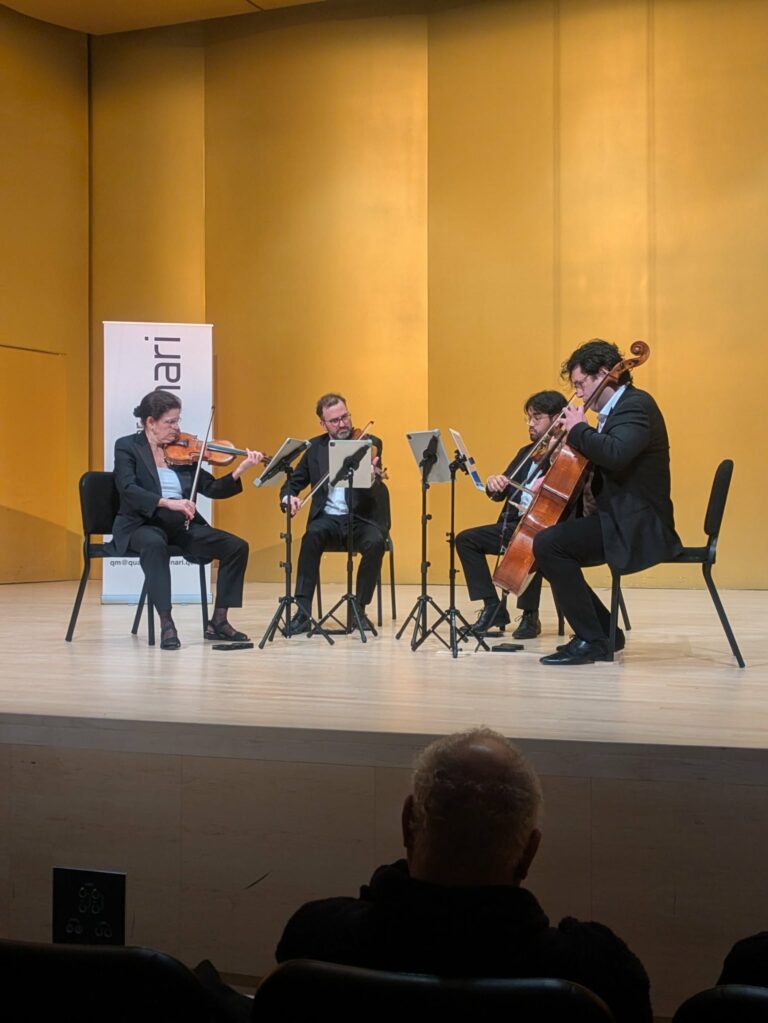
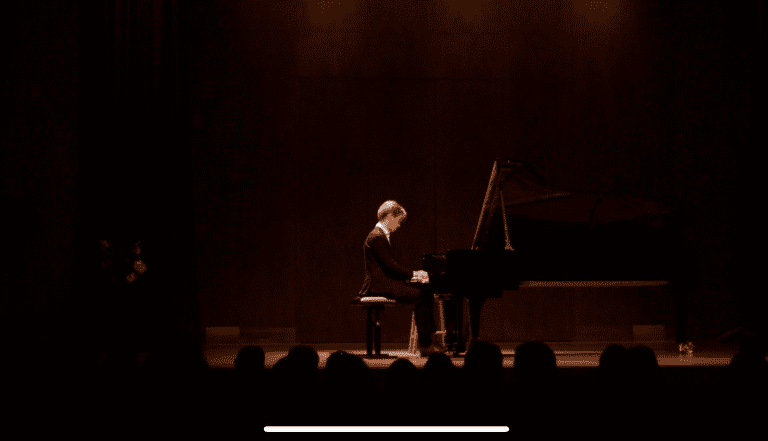
The pianist Godwin Friesen is a holistic talent. The winner of the 2022 OSM Competition excels in both concertante and chamber ensembles, as well as solo performances. In addition, he composes, and very well! Yesterday afternoon, at the Cinquième Salle of the Place des Arts complex, the young man from the Prairies, now living in Montreal, impressed everyone in a concert focused, ironically, on a string quartet! That is, the Quartet No. 1 in E minor “From My Life” by Bedřich Smetana, the focus of the title and promotion of this concert, was preceded by the juvenile Trio No. 1, for piano, violin and cello by Dmitri Shostakovich (he composed it at the age of 16) and, another manifestation of early writing talent, two pieces by Friesen himself, one of which was a world premiere. The Shostakovich still betrays Rachmaninov influences, but it also lets through some of the rough edges that would become the composer’s trademark.

The music was brought to life by the three artists, and particularly Friesen on the piano, creator of sparkling colours and impeccable fluttering sound clusters. The young man’s two pieces, The Heavens Declare and A Tent for the Sun, are as much inspired by the text of Psalm 19 as by nature, and are expressed in a seductive, neo-romantic language. Friesen knows how to handle complexity and surprise while remaining accessible and interesting, even seductive. Frankly, I am very much looking forward to hearing more from him!

The Smetana Quartet, which finally arrived, allowed three very young recruits of the OSM to showcase their talents, including the exceptional Sebastian Gonzalez Mora on the viola. What a sound (and physical) presence he exudes. The Orchestra would do well to give him as much space as possible in the future. I also greatly appreciated the playing of the first violin, Sydney Adedamola. On the other hand, it seemed to me that the sound of the second violin, Justin Saulnier, was often too harsh in the more vigorous moments. 

That said, it was a beautiful concert, generally very flattering for the local musical up-and-comers.

Modern Classical / période romantique

Classical Spree 2025 | Helmchen/Hecker: A Bold Journey from Light to Darkness

by Frédéric Cardin

A packed Cinquième Salle at 11 a.m. on Saturday, August 16, welcomed the duo on stage and in life, consisting of pianist Martin Helmchen and cellist Marie-Elizabeth Hecker. The Classical Spree seems to work well, and that’s all the better. Especially since the two artists had put together a fairly solid and substantial program, even for a little forty minutes of music.

LISTEN TO THE INTERVIEW WITH MARTIN HELMCHEN ABOUT THE PROGRAM OF THIS CONCERT

They launched into a very beautiful Waldesruhe [Forest Calm], Op. 68, No. 5 by Dvořák, in beautiful melodic lace, supported by very delicate playing. This was followed by Fauré’s Papillon, Op. 77, a formidable piece for cello, which Hecker mastered well, though without all the desired ease in the agility of the swirling lines. A bright start to the programme gave way to the sublime greyness of Schubert’s Winterreise, of which three excerpts were played, Gute Nacht [Good Night], Der Lindenbaum [The Linden Tree] and Der Leiermann [The Hurdy-Gurdy Man]. Here we felt the intimate complicity between the two artists, and above all the deep understanding of Schubert’s universe. It was very beautiful. The highlight of the morning was yet to come: the tortuous, even gloomy Sonata for Cello and Piano No. 1 by Alfred Schnittke, a 20th-century Russian composer of Germanic origin.

A bold but rewarding choice, as this work with Shostakovichian energy and dramatic intensity is incredibly impressive. Despite the demands it makes on the ears of the listeners, the audience hailed an impeccable and exciting interpretation, solidified by the fact that the two artists have it “in their fingers,” as they play it often these days. They have indeed just released a recording of it on the Alpha Classics label, along with other Eastern European sonatas. The morning could have been marked by near-perfection had it not been for three or four professional and ostentatious coughers, as well as, horror of horrors, a phone ringing in the very last, barely-whispered chords of the Schnittke. Embarrassing.

Folk Pop / latino

Sara Curruchich in concert : great songstress of mayan roots and feminist intensity

by Frédéric Cardin

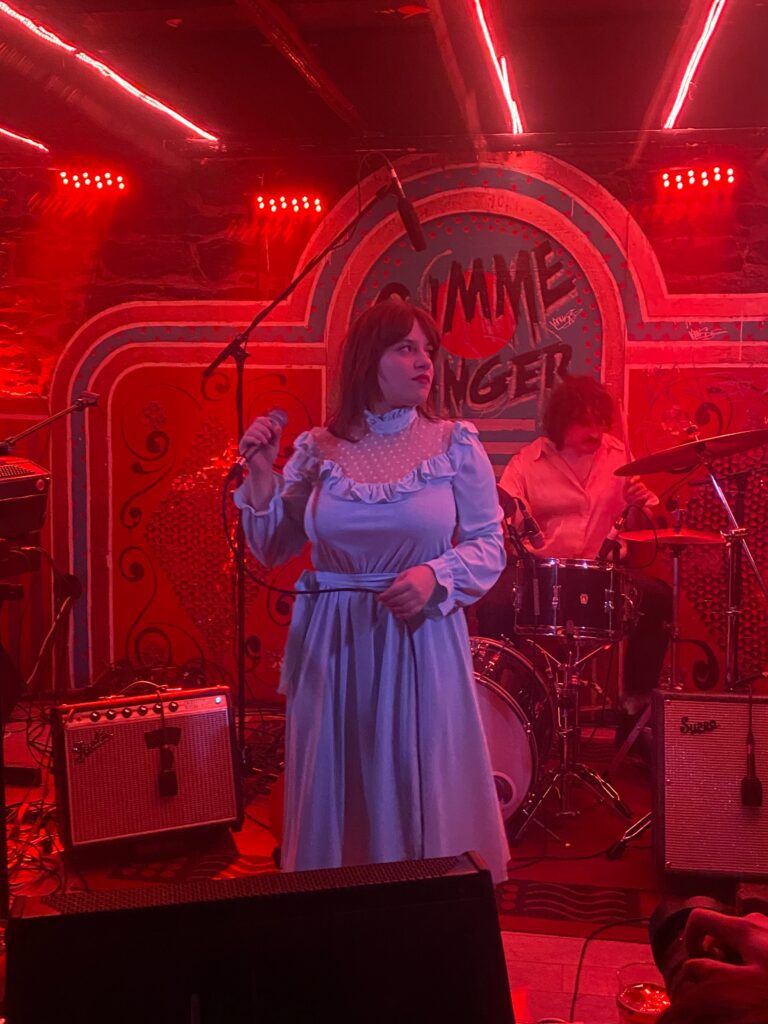
A Maya descendant, specifically from the Kaqchikel group, and located in Guatemala, Curruchich not only defends the rights of her people, but as a contemporary intersectional activist, she also speaks out for the women of her country. An indigenous and feminist activist, then, who expresses herself through folk-pop music tinged with rock, but above all with commitment and intensity.

The lady was at the Balattou club last night. The same strong stage presence we noticed at the Mundial Montreal showcase last year is there, immanent and communicative. There’s something of Llasa de Sela in Sara, but more extravagant, affirmative. The melodies sound just right, authentic (and sometimes they are, drawn from local or more broadly Latin American folklore), but most of them come from the artist’s nimble pen. She is accompanied by a drum kit, a bass, and, most importantly, a marimba, which brings all the specific colour to this music. Curruchich sings and plays the guitar, but sometimes joins his colleague on the aforementioned marimba in invigorating four-hand bursts.

The voice, sometimes fragile but generally very accurate, has a slightly raspy quality steeped in nature and the local terroir. However, it is not without lyrical power, and when those moments arrive, the roundness is beautiful, balanced.

Here’s an artist who tickles both the emotions and the conscience in an original and personal way. Let’s hope she comes back often.

Indigenous peoples / Maori Traditional Music / musique contemporaine

Presence autochtone 2025 | Whales Without Borders

by Frédéric Cardin

The world premiere of “Song of the Whales,” an Australian-Canadian project featuring the Montreal ensemble Oktoecho and Indigenous artists from Canada, Australia and New Zealand, took place last night at Place des Festivals. In the interview she gave to my colleague Alain Brunet, the co-composer of the work, Australian Corrina Bonshek, reveals that she didn’t write any notes for the solo musicians, but rather proposed landscapes to inhabit. That’s exactly the effect the nearly 90-minute music offered the audience: a vast panorama with a generally contemplative and spiritual atmosphere. As the traditional instruments and voices (Inuit throat singing, Australian didgeridoo, Persian kemancheh, traditional flute and Aboriginal ocean conch, etc.) are slowly deployed, the landscape unfolds in a succession of calm (predominant) and lively (occasional) passages. The Inuit singing duo informed us, with examples, about the playful and competitive nature of throat singing, which was a very enjoyable moment.

READ THE INTERVIEW WITH SONG OF THE WHALES CREATORS

As mentioned, the few accelerated moments added some pep to the show, whose artistic and aesthetic value I find is probably more enjoyable to experience indoors than outdoors, unless there’s a more holistic visual staging. There were a few slow parts in the performance. This is a first, so there’s still time to refine details and speed up the pacing between pieces, which sometimes seemed hesitant.

You’ll also notice that the narrative structure of the entire concert might be lost on many, as the connection to the whales sometimes becomes indescribable. That said, the work is also a grand fresco tinged with symbolism, and not a musical theatre piece that tells a specific story.

Despite these well-intentioned criticisms, I remain captivated by the immersive and enchanting atmospheres created by co-composers Katia Makdissi-Warren and Corrina Bonshek, as well as all the artists on stage, in this elaborate crossover imbued with the best spiritual-environmental insights.

A second performance will occur tonight, same time, same place, if you missed it, or want to dive again in this musical ocean.

Co-directed and composed by Corrina Bonshek (Australia) and Katia Makdissi-Warren (Canada), in close collaboration with renowned artists: 

Whaia Sonic Weaver – Māori singer 

Uncle Bunna Lawrie – Aboriginal singer, storyteller, and activist 

Nina Segalowitz & Lydia Etok – Inuit throat singers and co-artistic directors of Oktoecho 

And the musicians: Greta Kelly, Étienne Lafrance, Bertil Schulrabe, Michael Askill, and Jason Lee Scott

Bass Music / Disco / House / mutant-disco / Pop

Osheaga 2025 | Inji? A Bombshell!

by Alain Brunet

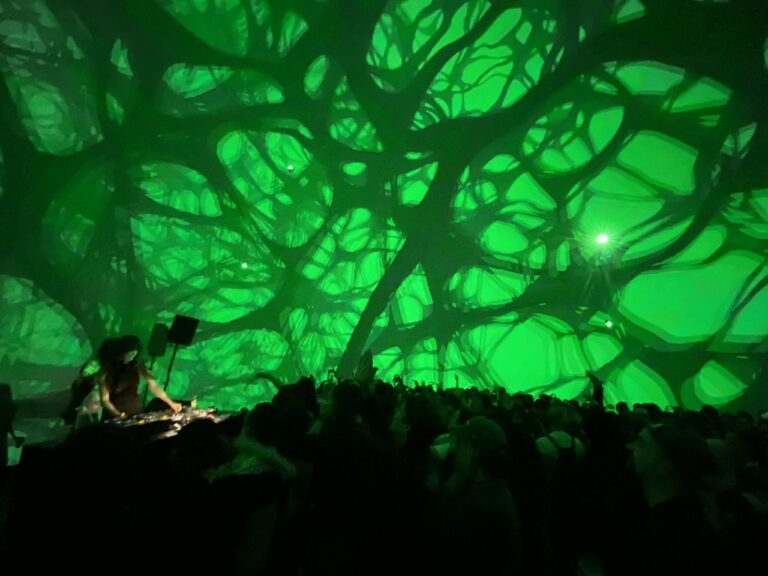
Inji came to the US from Istanbul a few years ago “to become a banker.” Fate had other plans… Instead, Inji became an electro singer and producer, and interest rates have been climbing ever since.

Tall and slender, this young woman is, for me, one of the pleasant surprises of Osheaga 2025, a massive dose of vitamins and other substances that aren’t exactly vitamins.

She’s like an Energizer bunny that’s just been fitted with brand new batteries. Hopping, jumping, stretching, prancing, striking cheeky poses, swaying her hips, haranguing the crowd, and more… She’s unstoppable! Only the timed end of this hellish performance could stop this singer, songwriter, composer, and electronic music producer.

Dance-worthy synthetic bass lines à la Disclosure, house/bass music/disco keyboard motifs galore, drums and beatboxing on point.

You’d have to be extremely uptight to remain motionless in front of such a fuel injection. Very high octane rating!

Inji’s concept is great: the tempos are fast or very fast, the keyboard riffs and digital gadgets are rigorously designed, a flesh-and-blood drummer has been recruited to beef up each beat in the program, while his employer hovers over the stage and keeps throwing hooks at us.

She sings, she recites, she raps, and her phrasing is invariably flawless. Usually at the mic without instruments, Inji sings and dances around to our great delight. She sometimes returns to her machines without demobilizing anyone. Long hair, almost perfect height, white seven-league boots, minimalist clothing, ideal for the 400-meter hurdles.

In short? Firecracker? Nay. Bombshell!

Photo : Emmanuel Novak-Bélanger

Classical Period / Romantic

Festival de Lanaudière | Tristan and Isolde as the finale… transcendental!

by Alexis Desrosiers-Michaud

Something transcendental happened on the closing day of the Lanaudière Festival. Wagner’s Tristan und Isolde was performed, and this veritable musical epic left no one indifferent, and for very good reasons.

First, there was Tristan’s chord, which opens the work and guides most of the four hours of music that follow. A dissonant and highly unstable chord that heralds an opera dominated by torment, conflict, impulse, and fusion. A chord to rule them all, and in darkness, to bind them.

As soon as the famous prelude ends, the action takes place on the ship carrying the characters to Cornwall.

Soprano Tamara Wilson shows her true colors and stands out as Isolde. Her deep voice and theatricality fit well with the text and music. At her side, Karen Cargill seems a little subdued, despite her beautiful voice. In the first act, her role as Bragäne is sometimes mischievous, sometimes haughty, but her voice is steady and accurate, as we heard at the OSM’s season opening in Les Gurre-Lieder. In both cases, the words are sometimes delivered in a honeyed manner, but this is only a minor detail in this magnificent performance.

From the moment he enters the stage, tenor Stuart Skelton as Tristan is vocally superior, but stoic in his characterization. Accompanied by Christopher Maltman as Kurwenal, he appears very good.

Tristan and Isolde complement each other well at the end of the first act, especially when drinking the love potion instead of the death potion.

This inversion leads to a spectacularly triumphant finale, accompanied by brass fanfare, as the boat arrives at its destination. At this precise moment, despite the appearance of joy, the music is unusually tonal for Wagner. In fact, it is a complete reversal of the musical hierarchy; if instability prevails and becomes the norm, the stability of C major stands out and implies that it is not synonymous with happiness. Indeed, our two protagonists have just realized that they are bound together for life and death by love, while Isolde is Tristan’s prisoner, let us not forget.

The second act contains the longest love duet in the history of opera. For more than 30 minutes, Wilson and Skelton do not just sing about their passion, they live it.

Isolde draws Tristan into her game, and we don’t realize how quickly time is passing when King Menke appears on a terrifying dissonance that breaks the musical flight. Bass Franz-Joseph Selig has a very dark, cavernous voice, but with clear and flawless diction. The interludes with the bass clarinet were perfect in tone.

While Skelton was less engaged in the first act, it was a different story in the third. He was completely absorbed in his role as Tristan, dying and mad. Absorbed and absorbing, staggering from one end of the stage to the other, leaning on the music stands and podium as he passed, before dying as he saw Isolde for the last time.

Finally, when Isolde reappears at the very end, upon Tristan’s death, we find her passionate and in love once more, for a sublime Liebestod that will long remain in the memories of those present.

The whole thing culminated in that B major chord, which resolved not only the musical flight taken up again in the second act, but also the four hours of tension we had just experienced, confirming the only way to free ourselves from this saving impulse.

A word about the Orchestre Métropolitain, which was sublime. In Wagner, there are no arias as such, but the story is told by the orchestra, which guides the singers through a range of leitmotifs. Honorable mentions go to the first oboe and English horn players for their intriguing solos, but also to the OM’s male voice choir, which sings very little but is also very precise and punchy.

Before closing the Festival de Lanaudière, the chairman of the board of directors, Simon Brault, came to thank “an audience that travels, that detaches itself from screens and that does not subscribe to algorithms, for a few hours.” These were fitting words that went far beyond the usual thanks and were very well received.

However, these compliments were quickly forgotten during the first intermission. With a very short intermission, the audience barely had time to sit down before the fanfare announcing the return to the stage could be heard. The problem was that eating indoors was not allowed, so the only solution was to eat on the lawn, behind those who were already seated. The second problem was that it was impossible to return to one’s seat once Act 2 had begun. On top of that, there was no time to go to the restroom.

When he came on stage, YNS politely sat down on his podium to wait, then spoke to lighten the mood with a comical parallel with tennis, one of his passions: “I understand that the breaks are short, but there are still 2 hours and 25 minutes of music left, and we’d like to be finished before tomorrow morning. So, as they say at the National Bank Open these days, the players are ready!”

Photo: Noah Boucher for Festival de Lanaudière

Publicité panam
Americana / Country Folk / Folk Pop

Osheaga 2025 | Ears Tuned in to Mark Ambor

by Marilyn Bouchard

I didn’t know Mark Ambor, and it was with eager ears that I was led to discover him on the Rivière stage: he wasn’t on my schedule for the day, as I’m not particularly well versed in country-folk music. And yet, something in his catchy melodies, as well as in the vulnerability of his voice, immediately captivated me.

It happened right from the first chords of “Good To Be,” a masterful start to a short set of around ten songs. The good vibes continued with “I Hope It All Works Out,” which went very well with the sunshine, then with “Curls In The Wind,” which was somewhat reminiscent of Justin Timberlake’s early days. On “Hair Toss, Arms Crossed,” hands inevitably began tapping out the beat, and it wasn’t long before legs followed suit.

“Sky is the Limit” calmed the crowd for a moment, then “Don’t You Worry” got them going again. “Someone That’s Better” came like a ton of glowing bricks to pave the way for the catchy “Who Knows,” one of his best-known songs, for which all hands were raised in the air. They stayed there for a while because, right after that, came “Our Way.” Mark Ambor ended his visit to the metropolis with his hit “Belong Together,” played to perfection.
A remarkable and luminous performance by the Armenian-American in Montreal, who we hope will return soon!

Pop-Rock

Osheaga 2025 | Royel and Otis, Australia’s new darlings

by Marilyn Bouchard

At 6:35 p.m. on the Rivière stage, Australia’s new darlings, Royel Maddell and Otis Pavlovic, took the stage. Hence the name of the rock band Royal Otis, a guitar-vocals duo accompanied by a drummer. To the cheers of a modest but very enthusiastic crowd, they were immersed in colourful projections, handwritten lyrics, and cool, youthful inserts. Royal Otis delivered an energetic and lively performance.

They opened the set with an energetic rendition of “Going Kokomo” and also treated us to “I Wanna Dance With You.” “Kool Aid,” a fan favourite, immediately got the crowd moving. The same was true for the title track from the album Sofa Kings.
PRATTS & PAIN treated us to “Adored” and the unmissable “Heading for the Door,” which won over the skeptics, not to mention “Fried Rice” and “Til the Morning.”

“Moody” was warmly welcomed, with several people singing along to the lyrics. “Car” mesmerized the audience for a moment. The covers of “Murder on the Dancefloor” (Sophie Ellis-Bextor) and “Linger” (The Cranberries) were pleasant surprises, while many had hoped to hear the single “Say Something.”

The hit that made them famous was saved for last, with “Oysters in My Pocket” providing the final fireworks.

This band was refreshing on this hot afternoon and well worth discovering in such a busy lineup. The guys from Royel Otis were one of my favorites of the day with their instinctive melodies and effortless charisma.

Photo Tim Snow for Osheaga

dream pop / Rock

Osheaga 2025 | The Beaches, The Beaches, everyone on the beach at the foot of the… Mountain

by Marilyn Bouchard

At 5:45 p.m., Toronto’s highly anticipated female rock sensation The Beaches took Jean-Drapeau Park by storm, momentarily transforming the Montagne stage into a celebration of unapologetic femininity.

In front of thousands of fans, the band’s leader, Jordan Miller, appeared radiant alongside her sister and two bandmates to perform a dozen songs from their captivating repertoire.

Starting off gently with “Cigarette,” they continued with “Takes One To Know One,” setting the tone for a journey that was sometimes dream pop and sometimes more punk rock.
The band’s frontwoman, Jordan Miller, was in fine form. She commanded the stage with energy, occasionally letting go of her bass, particularly during a heartfelt performance of “Touch Myself,” and “Me & Me” then raised the energy level, with many fans chanting the lyrics to the choruses and dancing to the beat.

It was a great warm-up for “Last Girls At The Party,” one of the band’s best-known songs, which set the gravel, or rather sand, floor alight—this is The Beaches, after all! A highly anticipated moment of each of the band’s performances, the song “Jocelyn” is always an opportunity to invite a fan to come up and share the stage, which I was able to catch a glimpse of.
They ended their electrifying performance in the metropolis by saving the best for last and delivering a thrilling rendition of their most popular song, “Blame Brett.”

The girls were wonderful on their instruments, and Jordan was dynamite with a voice that was even freer and heartfelt live: a rousing performance that we wished could have lasted longer! A favourite.

Photo : Tim Snow

Folk Rock / Indie Rock / Pop-Rock

Osheaga 2025 | Cage the Elephant Unleashed

by Marilyn Bouchard

At 7:35 p.m., Cage the Elephant appeared on a stripped-down stage at La Montagne, in front of an enthusiastic audience that had been patiently waiting for their arrival, camping out in front of the stage for a good hour to secure a spot. Matt Schultz was visibly happy and bursting with energy.

He had missed the Montreal stage and took the time to share several anecdotes and jokes with the audience, in addition to dancing and commanding the stage as usual, using all the props at his disposal to give his fans a show to remember.
They treated us to two songs from the new album, the title track “Neon Pill” and “Good Time,” which gave the performers free rein to let their musical talents shine.
We were treated to several of their classics: “Ain’t No Rest For The Wicked,” where the three guitars brought all their weight to bare, “Back Against The Wall,” “Shake Me Down,” which shook Jean-Drapeau Park, “Trouble,” which the audience sang along to throughout, “Cold Cold Cold,” “Cigarette Daydream,” for which the crowd waved their cell phone lights, and a wild version of “Come A Little Closer” during which the band smashed a guitar, to end this heartfelt performance of almost 90 minutes.
A show where the joy of playing music freely was palpable and where the band’s strong affection for their audience and each other was contagious. A memorable concert, beautifully executed during an equally memorable sunset at Osheaga 2025.

Photo: Tim Snow

Subscribe to our newsletter

Inscription
Infolettre

"*" indicates required fields

Type of Suscribers