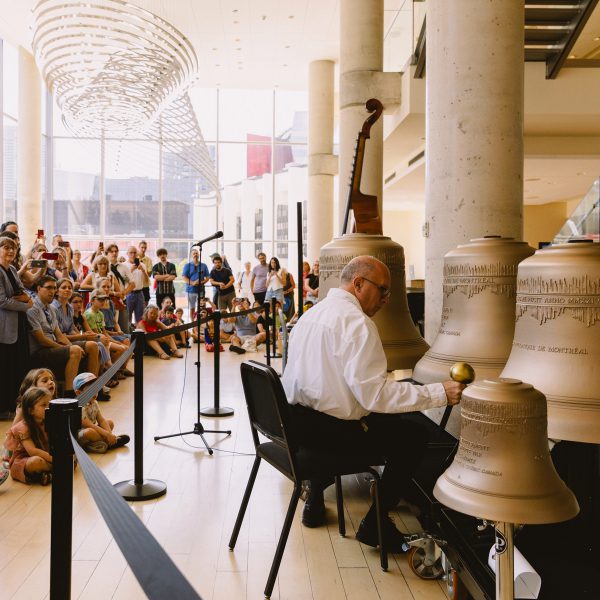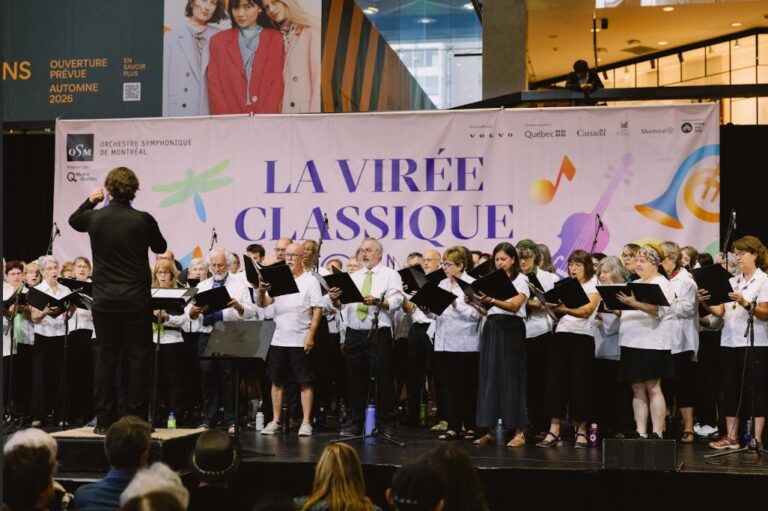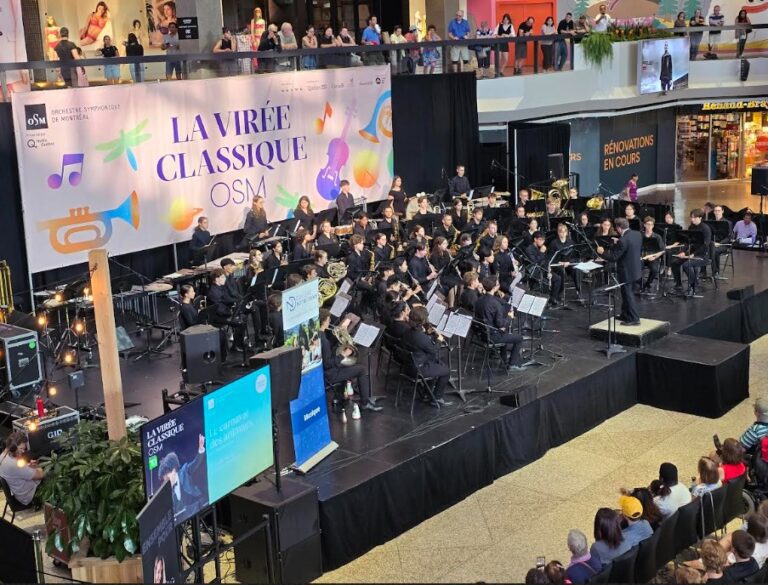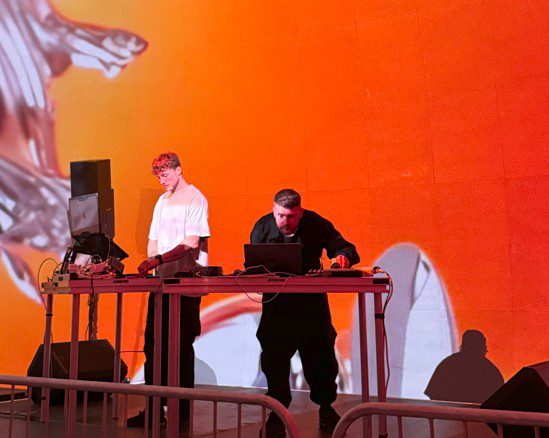
The Four Seasons of Buenos Aires, or Las Cuatro Estaciones Porteñas, four works of modern tango by Astor Piazzolla, brought together in homage to Vivaldi’s Four Seasons, have been featured in countless classical programs over the past three decades.
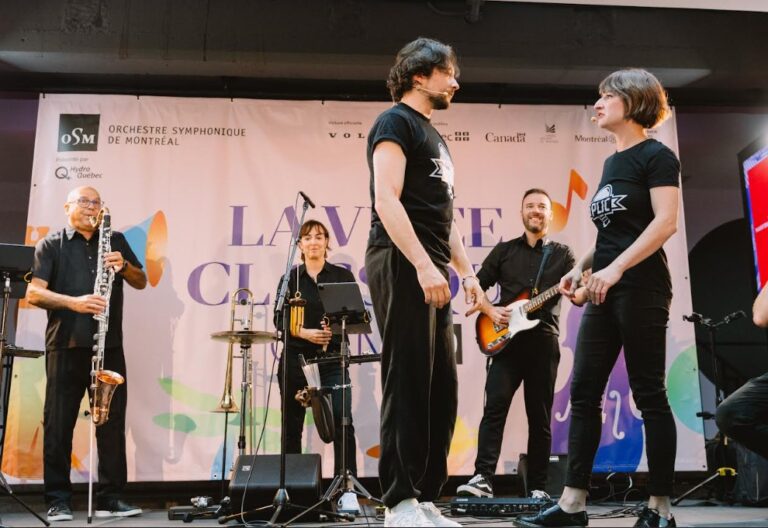
As Andrew Wan, who was entrusted with the task of conducting the transcription of the work for 12 strings, pointed out, this work is now part of the language that must be mastered. And that is why the best students recruited to carry out this mission had to master this tango nuevo before taking to the stage, and no one was disappointed in the quiet Esplanade audience on that beautifully sunny Saturday.
So, the arrangement by violinist Leonid Desyatnikov, popularized in the past by the great Gidon Kremer, was chosen. Except for the lead violinist, 12 instrumentalists were recruited, producing an ensemble effect very different from the original instrumentation: bandoneon, violin, double bass, piano, and electric guitar.
To stay true to the spirit of the piece, the soloists must use typical tango effects, notably bow strokes in the high register at the end of certain phrases.
Each of the four guest soloists: Eva Lesage’s fluid playing in Verano Porteño (Summer) was marked by lyricism and firmness, a magnificent season accompanied by direct references to a season imagined by Antonio Vivaldi in the Baroque era. Otoño Porteño (Autumn) highlights the talent of Anaïs Saucier-Lafond, whose playing has a powerful gravity and even a very beautiful sound, combined with very solid articulation, despite a few tiny details that need to be corrected in this case. The soliloquy at the end was particularly promising.
The most delicate piece, in my opinion, was Olena Kapersky’s Invierno Porteño (Winter), which begins in icy tranquility and reveals an angular discourse from the soloist, who expresses himself before receiving a vigorous response from his dozen colleagues, concluding with an obvious reinterpretation of Vivaldi.
Finally, Charlotte van Barr brought the program to a beautiful close with the very dynamic Primavera Porteña (Spring) and distinguished herself with her impeccable articulation in the virtuoso phrases required by the score.
Connoisseurs and laymen alike were delighted!
The only other member of the OSM present at this program, violinist and violist Victor Fournelle-Blain conducted the first student performance on the program, on the romantic side: Edvard Grieg’s Holberg Suite, an instrumental suite in five movements, composed in 1884 in the style of baroque and ancient works – prelude, sarabande, gavotte, air, and rigaudon. This Baroque style allowed the Norwegian composer to make direct references to JS Bach, to which he added elements of Norwegian folklore in certain movements. Very beautiful, very lyrical, very close to Nordic nature, as suggested by the general theme of Virée 2025.
As Victor Fournelle-Blain explained at the outset, the work was originally written for piano before he adapted it himself for string orchestra. We cannot conclude that this was an academic performance by these model students, but rather one of emerging virtuosity already imbued with the spirit of music.
Artists
Andrew Wan, violin and conductor
Soloists:
Eva Lesage, violin soloist, 1st season, from Quebec, graduated from the Montreal Conservatory, currently studying in Vienna
Anaïs Saucier-Lafond, violin soloist, second season, from Quebec, currently studying at the Conservatory
Olena Kaspersky, violin soloist, third season, American from Los Angeles, currently studying at McGill
Charlotte van Barr, violin soloist, fourth season, from Ottawa, Ontario, currently studying at McGill
Julien Haynes, viola
Victor Fournelle-Blain, viola
Sophia Tseng, viola
Sophia Battel, cello
Ellamay Mantie, cello
Evelyne Méthot, cello
Étienne Beaulieu-Gaule, double bass
William Deslauries-Allain, double bass
Pieces
Edvard Grieg, Suite Holberg
I. Praeludium. Allegro vivace (4 min)
II. Sarabande. Andante espressivo (4 min)
III. Gavotte. Allegretto – Musette. Un poco più mosso (4 min)
IV. Air. Andante religioso (5 min)
V. Rigaudon. Allegro con brio (4 min)
Astor Piazzolla, Les quatre saisons de Buenos Aires
- Otoño Porteño (6 min)
- Invierno Porteño (7 min)
- Primavera Porteña (5 min)
- Verano Porteño (7 min)