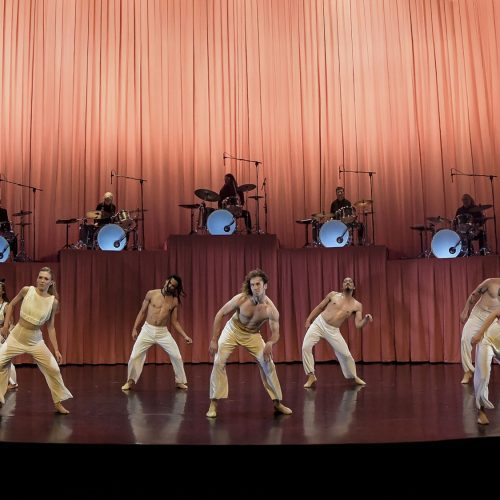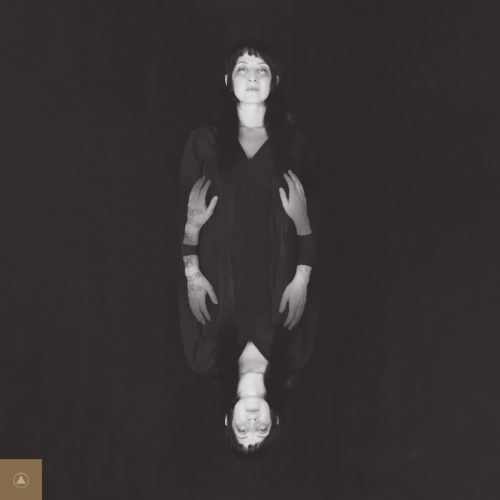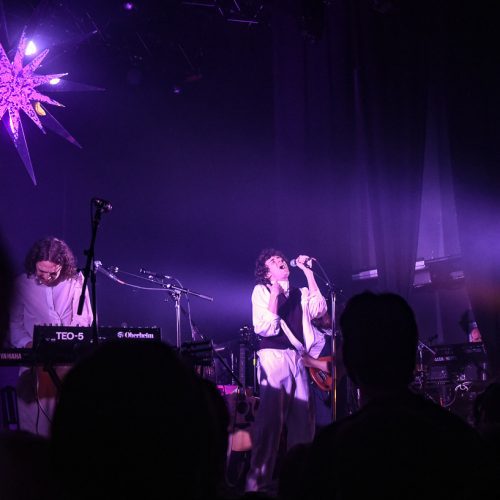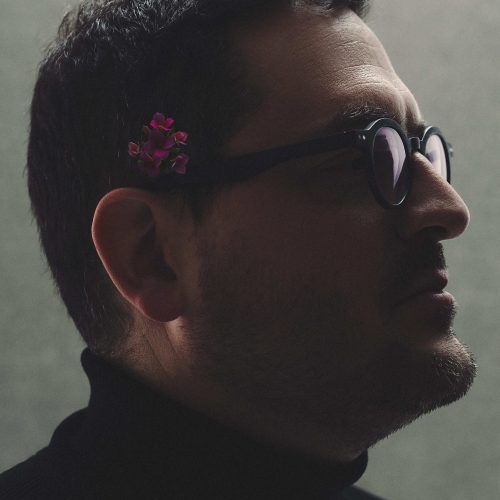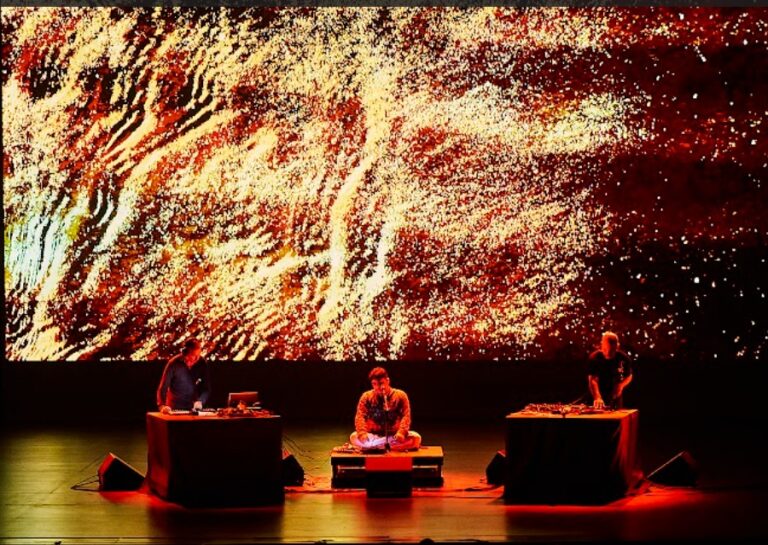
A/Visions generally focuses on interdisciplinary immersions where music, video, scenography, and lighting blend into a single whole. This time, the last of the six performances at Théâtre Maisonneuve at the 26th MUTEK, was largely dominated by exceptional music led by the British Sam Shackleton, the Indian Siddhartha Belmannu, and the Polish Waclaw Zimpel. Pure delight!
One would dare to believe that an absolute majority of the Mutekians present had never experienced Indian classical music live, let alone its fusion with cutting-edge electronics and contemporary jazz. Three worlds in one, in the service of elevation, we observed upon listening to the delightful album recorded in 2023 by these same three musicians, In The Cell of Dreams.
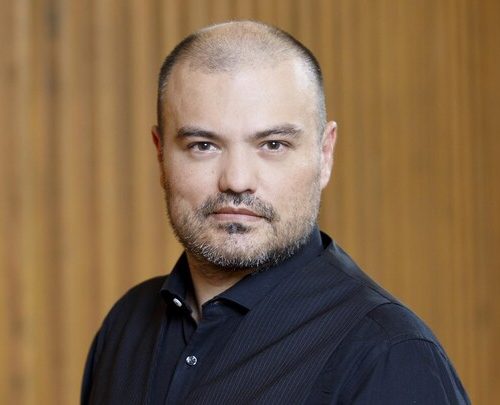
The melodic framework of this high-quality hour and a quarter is based on the extraordinary voice of this singer based in Bangalore, a city of science, high technology, and Carnatic culture (southern India). Belmannu’s melodic discourse is inspired by Hindustani ragas (northern India) taught to him by his Hindustani guru.
The ragas discussed here are melodic phrases built on a rhythmic framework and a drone normally produced by the tempura, a kind of small harmonium used in Indian classical music. The power, timbre, melodic scales, range of register, improvisational creativity—in short, a great virtuosity—animate Siddhartha Belmannu, around whom his Western counterparts honor the aesthetic. For this is truly Indian classical music modified, extrapolated, and transgressed by its Western contours; it plays not only ragas but also original compositions including texts expressed in English. Known for a wide variety of references and a compositional concern well above the international average, Shackleton demonstrates humility here by magnifying the classical drone of Hindustani music, for its polyphonic ornaments are discreet and rarely deviate from the intrinsic linearity of the drone. The thickness and consistency of this unprecedented drone, it must be concluded, are those of a master.
For his part, Waclaw Zimpel adds synthesized sounds to the magnificent drone and also fleshes out this music with a melodic counterpoint from a jazz-inspired clarinet. This is an exemplary balance between classicism, tradition, and a contemporary vision of instrumental and electronic music. Frankly, great!