SQMC/Chapelle Historique du Bon Pasteur: Discovering Quebec’s contemporary music
by Pietro Freiburger
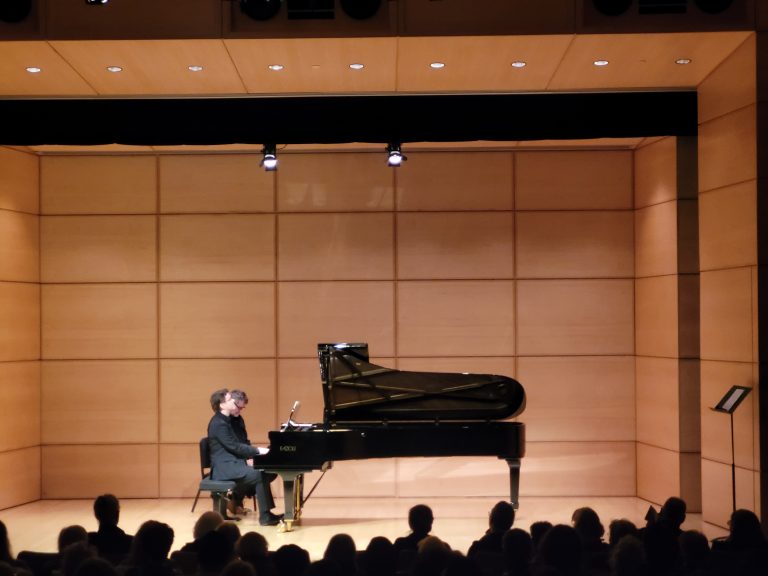
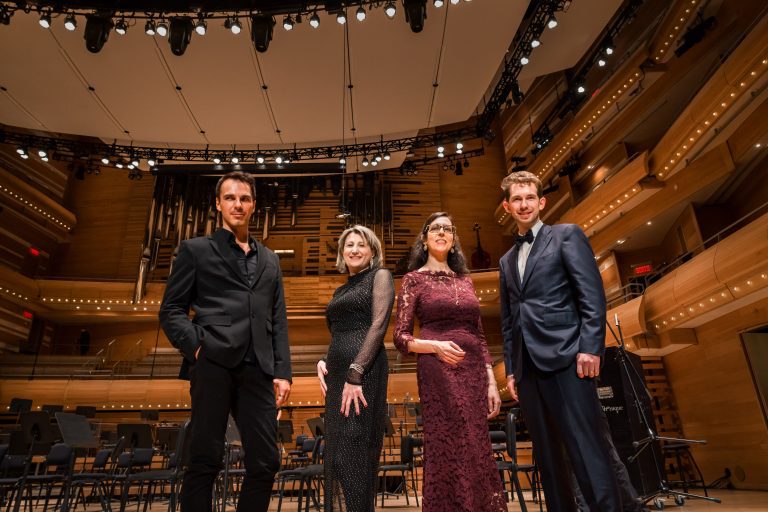
On October 21st, at the Canadian Center of Architecture, the Chapelle Historique’s programming proposed a concert by the SQMC with a wide variety of contemporary music by Quebec’s composers, performed by the two aces Philippe Prud’homme and Louise Bessette.
The first positive note of the concert is the introduction to each piece, enriched by the presence of some of the composers in the audience. The concert begins with the Suite pour piano by Jean Papineau-Couture, a great name of Quebec’s music. The piece, with clear neoclassical features, and with sounds à la Hindemith, passes easily from serene to tense, in a beautiful range of emotions and atmospheres that follow one another in a pleasant way. This piece highlights the virtuosity of Prud’homme and his ability to create refined sounds. It continues with Six Preludes by Francis Battah, a young composer already established on the Canadian scene. These pieces demonstrate an original aesthetic, sometimes jazzy sometimes restless. There is something Debussian in Battah’s work, which treats the piano with great attention to sound and timbre, in short, to the expressive possibilities of the instrument, and Prud’homme interprets all this with class. The creation of the evening is Latence by Alexandre David: a piece that is a seamless musical exploration and that embodies the idea of the title very well. This is followed by Intérieur, jour by Nicolas Gilbert, who describes his piece as intimité retrouvée. The piece, written in 2020 during COVID-19, transports the audience into a lunar, suspended atmosphere, sometimes interrupted by ornamental moments of baroque reminiscence. All performed with great lucidity by Louise Bessette, an icon of contemporary Quebec pianism. In Fragments by Serge Arcuri, the resonance of the harmonics of the bells runs through the whole piece, also masterfully performed by the artist. The evening closes with Les planètes by Walter Boudreau, containing various pieces rich in register contrasts and lively in rhythm, which return the image of a constellation of planets. A special mention to the two performers, who have been able to take the audience on a long journey through the music of our time with intellectual honesty and artistic dedication.
Mois du Créole 2026 | Richy Jay: Keeping Konpa and Zouk Alive in Montreal
by Juliana Cortes
On October 9th, as part of the 25th edition of Creole Month in Montreal, Richy Jay, a young singer of Haitian origin, and his band gave a heartwarming performance at the auditorium of the Grande Bibliothèque. The concert took a while to start; I imagine the organizers, and those of us in the audience, were hoping more people would show up.
We could see the musicians peeking out from backstage until the master of ceremonies, who is also the founder of the event, welcomed us and proudly shared the festival’s many activities, including performances, storytelling and book fairs. He introduced Richy Jay as a unique artist and told the audience to feel privileged to be experiencing such an intimate concert. The room was quiet as the musicians stepped onto the stage, serious and a little tense. Once the performance started, under Richy Jay’s leadership, each of the musicians came out of their shell. Richy Jay in particular kept a warm, familiar energy, sharing konpa and zouk songs that ranged from traditional to romantic to festive.
As the energy built, a few people started to dance. I especially appreciated the veteran community members who couldn’t stay seated; their elegance and the way they lived the music transported us back to the beginnings of konpa in the 1950s. All I could think was how wonderful it is that this music is timeless, living on across generations and geographies. Each band member had a solo, a moment to express their passion and their deep connection with their instrument and the music. Finally, Richy Jay closed the night with “Zouk la se sel medikaman nou ni” (“Zouk is the only medicine we have”), which immediately moved the crowd of 20-some people to dance up front, and a few brave ones even joined the musicians on stage. “On n’est pas beaucoup, mais on est plusieurs” (“We may not be many, but we are several”), Richy Jay repeated throughout the performance. To me, it was a reminder that no matter how many of us there were, Richy Jay and his band performed with devotion and made sure the crowd had a great night.
Caprice at the 9th Floor: a pleasant meeting between Baroque and Carnatic music
by Frédéric Cardin
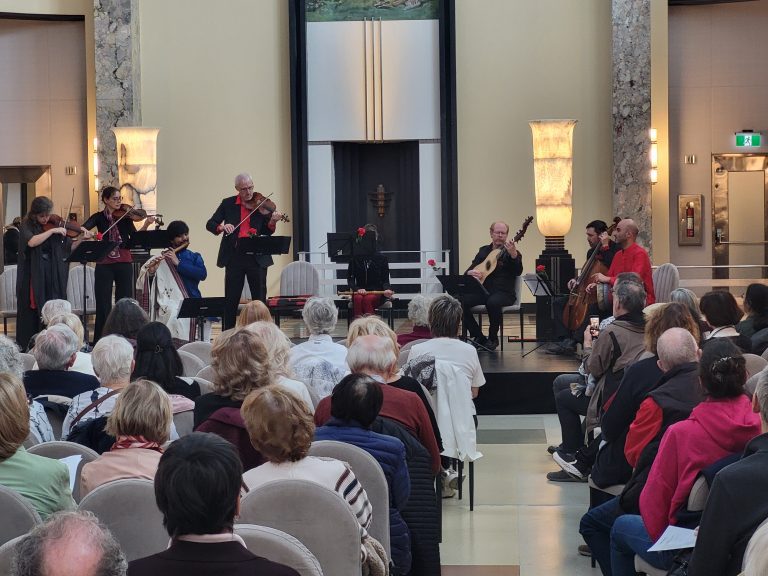
The Caprice ensemble offered an unusual meeting between Carnatic music (from South India, represented by the excellent flautist J.A. Jayant) and Baroque (European) during a rather pleasant concert on the 9th floor of the Eaton Centre in Montreal. If the concerts are usually scheduled at 5 p.m., it was at noon that it was held, exceptionally. I don’t know if it was the time itself, but the attendance result was positive, for a proposal that was quite niche after all. Successful initiative, therefore, in terms of attendance, and, I am happy to say, also in purely artistic terms. It was not a total fusion between the two aesthetics, far from it. Let’s rather call it a meeting and a dialogue, in which each protagonist often expressed themselves in their own musical language.
It is the transitions between the pieces, Indian and Baroque, as well as the judicious choice of the program, that managed to create a beautiful impression of symbiosis for the entirety of the hour and a few of the concert.
The concert was launched with an improvisation on the bansuri flute, carried by the subtle arabesques of Jayant, a flautist renowned for his timbral quality and technical ease. An exoticism (from a Western point of view), which led to a striking contrast, when the Caprice ensemble began a kind of variation in prelude to the launch of the hit of baroque hits: the famous Pachelbel’s Canon. Fortunately, there was no routine in Caprice’s performance. A colourful reading of ornamental details and a lively rhythmic dynamic made it quite refreshing. Jayant returned with a classical Indian piece (Jagadodharana by Purandara Dasa, a composer who worked during the European Renaissance), supported by the traditional drone associated with this music, but here provided by the Montreal orchestra. Caprice continued with Bach’s Air on the G String, and the rest of the hour unfolded somewhat like that, but with transitions between the two traditions making quite a bit of sense all the time, whether on a rhythmic, harmonic, or simply atmospheric level.
I also highlight the very beautiful contribution of the bass William Kraushaar, who gave us some very beautiful moments of vocal grace in Purcell (Wondrous Machine and The Cold Song), Handel (O ruddier than the cherry), and especially Monteverdi (Si dolce è’l tormento), one of the most beautiful song melodies, across all styles and eras. His deep timbre, with a dark and captivating purple hue, gave me some chills. Only in The Cold Song did I perceive moments where the artist omitted certain repetitions (symbolising the shivering cold) or phrase endings. It is indeed a piece that is difficult to sustain mechanically. But it’s really not much to complain about, in the end. In any case, he recovered very well in the next piece, and finale, signed by Handel. A whirlwind piece of intense love, executed with precise and captivating technique for the listening ears.
The director of Caprice, Matthias Maute, said that this concert served as a territory to explore and build a music of the future, where the world’s traditions would speak to each other on equal terms, while inspiring stimulating innovations.
In this sense, the essay proposed by Caprice and his guest is quite successful, and makes one want to have more in the future.
Piknic Électronik x Igloofest: A Chilly Last Hurrah
by Julius Cesaratto
Piknic Electronik wrapped up its season with an Igloofest branded send-off. A duo of yeti mascots wandered the grounds posing for photos and dishing out high-fives to festivalgoers, while artificial snow cannons dusted the front of the crowd & bars dished out hot drinks.
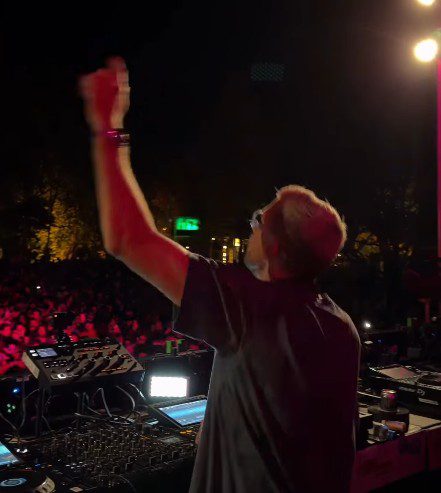
With no secondary stage this time, all the action went down at the FIZZ (main) stage, where British producer and DJ Eli Brown (the house alias of Gavin Harris) was headlining. Some lucky partygoers were even allowed on stage behind him. Despite the cool, crisp autumn air, the crowd showed up to squeeze one last outdoor party out of the summer season.
Eli opened with tech house and a few acid blurbs, then immediately started dropping the flips: a take on Depeche Mode’s “Enjoy the Silence” and a remix of TikTok’s favorite gabber track, “The First Rebirth” by Jones & Stephenson. That set the tone for a night that leaned more commercial than what I’m used to, with plenty of tracks I’ve mostly seen on social media rather than heard in real life.
My main issue was the pacing. The set was a constant onslaught of buildups that ended in disappointing drops, as if he were trying to cram as many clip-worthy moments as possible into two hours. That’s a broader issue in dance music right now. The quick-shifting nature of it left none of the songs or transitions room to breathe. Between Da Hool’s “Meet Her at the Love Parade” and a lot of generic EDM filler with the occasional hit sprinkled in, the rapid-fire flips of familiar songs made the whole thing feel a bit scattered.
The energy climbed noticeably around the one-hour mark. A DnB interlude, a nod to his past as Xample, one half of the drum and bass duo Loadstar, drew applause from the crowd, but he killed the momentum by dropping the BPM right after.
The remixes kept coming. Zombie Nation’s “Kernkraft 400” had the crowd singing along, while A$AP Ferg’s “Work” got jazzed up with gabber kicks, and “Revolution” by BK got a distasteful vocal blend. Throughout, he struggled to capitalize on the dancefloor energy he had built.
He did land the finale, closing on trance with Faithless’s “Insomnia.”
All in all, it was a good night, but I left feeling a tiny bit cheated by the programming for the last Sunday party of the year. In my humble opinion, it was an underwhelming close compared to previous seasons.
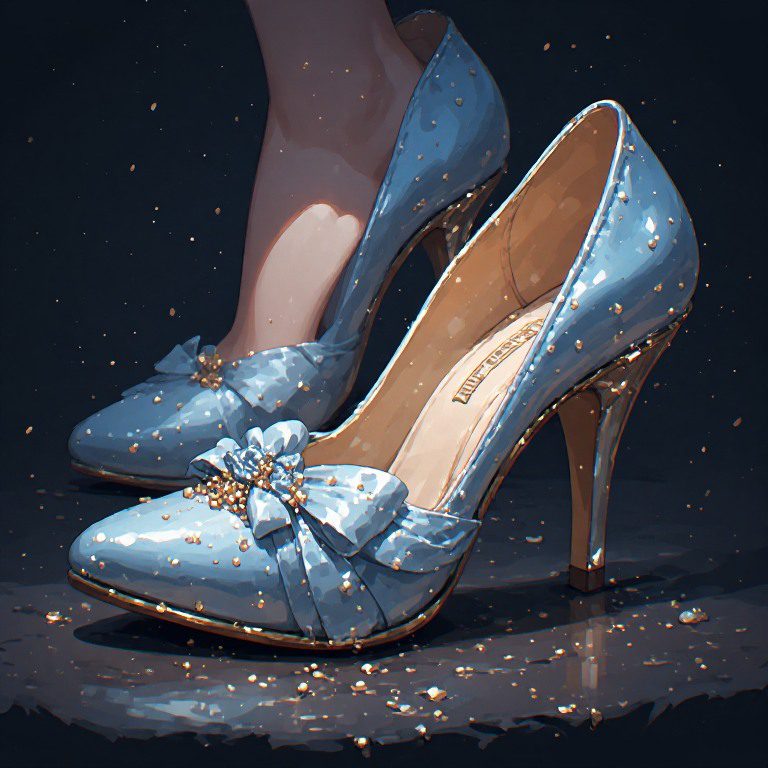
A true gem, this Cinderella by Niccolo Isouard, premiered in 1810 at the Opéra-Comique. After savouring last night’s performance at the Bourgie Hall, by an Arion orchestra in great form, conducted briskly by Mathieu Lussier, and supporting often masterful performances by the soloists present, one understands why this lively work captivated the French public for a good part of the 19th century before being unfortunately relegated to the shadows of history by Massenet’s version (1899) and Rossini’s (La Cenerentola), which are more popular nowadays on opera stages. It must be said that this Cinderella has a form that has itself largely disappeared, that of an alternation between singing and spoken dialogue. Nevertheless, when one has heard an ensemble as effective as the one assembled by the producers of this largely Quebecois iteration, one can’t help but imagine a much more frequent return of this kind of show. At least on our side of the Atlantic, because in Europe, it is obviously less rare. Well…
If you want to learn much more about Isouard’s Cinderella, and about the composer himself, read the interview I conducted with Alexandre Dratwicki, Artistic Director of the Palazzetto Bru Zane – Centre de musique française, who closely collaborated on this production.
Cinderella was presented in a staging by Julien Patenaude, who also played the role of Baron Montefiascone, Cinderella’s wicked stepfather, and the father of the two despicable stepsisters. Simple yet effective movements, and small scenic details to set the scenes: a hearth for the Baron’s castle (where Cinderella lives) and flowers on the ground for the episode at the King’s Palace. But above all, some projections on the back wall that are frankly hilarious and adapted to the local context. For example, at the end of the first act, when the King’s carriage transports the stepsisters to the Palace, leading to the intermission, an image of downtown Montreal with a castle worthy of Walt Disney further back, bordered by a traffic jam, indicates that the convoy will be about twenty minutes late because it is stuck on Décarie. I had a good laugh.
From the Overture, the tone was set: Arion is in great shape, particularly Simon Poirier, the solo horn, who launches an effective melody that we will hear again later, accompanied by the lace-like harp of Antoine Malette-Chénier. A formidable score for a brass instrument that is already difficult to control, especially here in its “natural” format, that is, without valves. Everything is done with the mouth and the hand in the bell. Poirier pulled it off with panache, even though a few notes were too “muffled” by the aforementioned hand in the pavilion. Nevertheless, respect. We knew, from that moment on, that the musical quality (instrumental) would be there. We also understood that the general attitude would be good-natured, with amusing projections accompanying these initial minutes occupied solely by the orchestra. Another good idea from Julien Patenaude: the characters are presented ironically. For example: Clorinde, occupation: detestable sister. Alias: Florie Valiquette. And so on. Really funny.
We are finally convinced for good with the arrival of the soloists. They are all good, vocally, in addition to playing with great precision. The characters are certainly caricatured, but not over-written. Emma Fekete is an appropriately authentic and kind Cinderella. Her clear, light soprano, but with enough substance, gives her the perfect timbre for the role, that of a normal, simple, and selfless young girl. The two wicked sisters are deliciously despicable. They have the most stratospheric passages, in which they must flit about like agitated hummingbirds. Florie Valiquette (Clorinde) and Magali Simard-Galdès (Tisbé) seem to fully enjoy their roles, imbuing them with a reprehensible condescension (towards Cinderella and “inferiors” in general) as well as a sycophantic obsequiousness dripping with bad faith in front of the one they think is the King (but is actually just a simple servant). Simard-Galdès excelled in the Act II Bolero where she attempts to seduce the (false) King, with music and a flair that, 65 years ahead of its time, evokes a certain Carmen.
Cyrille Dubois is the big name in this production, and he does not disappoint. His light but powerful tenor allows him to embody a Prince Ramir who is candid yet sincere and amiable. Laurent Deleuil is an efficient Alidor, Minister, and a bit of the King’s Magician, but, in my opinion, it is Dominique Côté who steals the show on the male side, even though he sings little (and when he does, we appreciate his warm baritone). It is especially in his flamboyant portrayal of Dandini, the servant who passes himself off as the King, that he excels and impresses. He is also the only one to (almost) play his role without a script. From his first appearance, we were hooked. He struts, he boasts, he winks at the two sisters (who take him for the King) with genuine delight, and with his unbuttoned shirt, he absolutely resembles a cheesy uncle who has been given 24 hours to fulfil all his dreams. Fabulous.
The choral episodes, of very fine quality, are solidly performed by Chœur Éphémère.
We will note a technical detail to improve: the surtitles, which are actually “back titles” (projected on the back wall), are almost unreadable if you are in the front half of the hall, as the singers and their music stands mostly block them. They could be raised higher…
That said, this production deserves to be praised for its immense quality. The same protagonists will also make a recording for ATMA Classique, an initiative that is likely to become a reference version, as there is currently no worthy competition. A 1998 recording under the Olympia label, conducted by Richard Bonynge with moscovite forces, has become unavailable, in addition to suffering from low-quality sound, typical of productions from the Soviet era (even though the USSR had already died). Another, more recent version (2018) is available on Albany Records, and conducted by the Manhattan School of Music Opera Theatre. I listened to it, and while the soloists show great talent, the orchestra is simply not on the same level as Arion.
Another performance is given on Sunday at 2:30 PM. If you are reading this on Sunday morning, you still have a chance to savour this treasure, not only hidden but also unearthed and brilliantly resurrected here.
Bring more like this. Long live this collaboration between Arion and the Palazzetto Bru Zane.
Azrieli Prize 2026: The Four Pillars of the Temple
by Frédéric Cardin
In the Montreal musical Temple that the Maison symphonique has become, the creative expression of four high-caliber compositions was honored with a smoothly conducted ceremony by the artists on stage. Four works bearing a rather similar sonic heritage, that of modernist avant-garde, tinged here and there with spectralism and atonal expressionism. Three of them are creations, and two are specifically focused on Jewish culture.
I will briefly summarize my impressions of each of them: De l’encra escafada (The Ink That Fades) by Adrian Mocanu is the most accomplished; Letter From Across the River by Dalit Hadass Warshaw, the most touching; Height of Land by Nicholas Denton Protsack, the most impressionistic; Riddle by Hana Ajiashvili, the most visceral.
Watch the recording of the Azrieli Prize Gala Concert 2026:
The Azrieli Commission for International Music 2026, De l’encra escafada by Adrian Mocanu, proved to be a judicious introduction. His universe of molecular noise, initially teeming with tiny particles randomly orbiting in a very delicate sound space, reveals a progressive and intellectually brilliant discourse leading to a musical fabric that gains in amplitude and depth, but with some dynamic back-and-forths. The whole concludes very satisfactorily in a radiant final fullness. The subject, the lost voice of the trobairitz (medieval female troubadours), manifests throughout the work, through the shimmering of ghostly motivic fragments, evoking, one can guess, the specters of these artists whose voices we have forgotten. The choir, more often than not, uses extended vocal techniques (whispers, glissandos), while the orchestra is constantly atomized into thousands of colors, timbres, and textures. In front, a consort of viols (Les Voix Humaines: Susie Napper, Elinor Frey, Felix Deak, and Thomas Baeté) sometimes struggled in vain to be heard. To note for a future performance: the balance between this quartet and the rest of the orchestra/choir will need to be reworked. This is all the more important because these viola da gambas represent the spirit of Beatriz de Dia, whose only song that has come down to us constituted one of the materials of the composition. Despite everything, this work appeared to my colleague Alain Brunet and me as the most skillfully accomplished of the evening.
Letter From Across the River by the New Yorker Dalit Hadass Warshaw, the Azrieli Commission for Jewish Music 2026, followed with an eminently touching proposal. Warshaw tells the story of her great-grandfather, a Polish Jew who swam across a river to deliver a farewell letter to his sons, who had taken refuge in a safe territory, before returning to share the tragic fate of his wife and the rest of his family in the Death Camps. The construction of Letter is based on a linear discursive skeleton, easily understandable, largely due to the text powerfully sung by baritone Noam Heinz. Letter unfolds like a cinematic drama, or even a miniature oratorio. The action is underscored by evocative music, set against the narrated activities or suggested emotions. After an introduction slowly moving and then a torrential outpouring from the orchestra, which plunges the audience into the swirling river with the protagonist of the story, who also nearly drowns in it several times, a second and final part of the composition invites us into a moment of luminous and spiritual grace, carried by the lightened orchestra and especially the appearance of soprano Hila Plitmann. While not absolutely flawless, Baggio’s performance, on a formidable score, demanding airy and luminous high notes, offered the angelic expression and sacred illumination required by the composer. Letter From Across the River is a piece that makes you very eager to hear it again.
Third on the program (and first after the intermission), Height of Land by Nicholas Denton Protsack represented the Azrieli Commission for Canadian Music 2026. The Canadian Protsack, based in New Zealand, seeks to create a true reciprocity between Nature and today’s classical music. Protsack claims he wants to ensure that the sounds of nature become music, and vice versa. This has already been attempted several times, in the form of concrete music, ambient electro, or even instrumental imitation of animal sounds, the wind, etc. Protsack wants to offer something new, a innovative way of conceiving the relationship between musical sounds and the spirit of nature. He mainly claims not to offer a true answer, but rather to let people judge and continue their own research and inquiries. Does he succeed, then? Well, Height of Land appeared to me as a contemporary construction buzzing with textures that often evoke bird sounds, rustling leaves, etc. A few esthetically stimulating ideas: the presence of a secondary choir of eight singers and a cello among the audience, as well as an episode where the spectators are called to rub their hands. Nothing in all this, however, has not already been attempted (musicians among the audience, etc.), but Protsack’s performance is beautiful and the score shines with a thousand shades and effects. The general structure is a little difficult to grasp, and the ideas seem scattered, but at the same time, this is probably the principle behind the work that is being manifested: music that wishes to be in a symbiotic relationship with Nature cannot be constructed with too Cartesian a mind. In the end, Height of Land greatly pleased me, esthetically, but I feel that I will have to return to it to better grasp its ins and outs.
The last piece on the program, the Azrieli Prize for Jewish Music (so, an existing piece), was Riddle by Hana Ajiashvili. At the heart of the piece, a 12th-century text by Yehuda Halevi, in truth a riddle that leads to a political commentary: What is thin, empty, and smooth, but whose blood ‘flows from the mouth’? The answer is powerfully instructive: the pen that signs the execution orders. It is on this reflection, both dramatic and philosophical, that Ajiashvili composes a powerful, visceral framework, where the orchestra bursts into striking tuttis, in which the choir gradually unravels the text of the enigma in question, before ending in a fierce discharge. One comes out stunned. Positively so.
Hats off to the Orchestre symphonique de Montréal and the OSM Choir, resplendent, as well as the various soloists. At the helm, Asher Fisch seemed quite adequate, without particularly standing out. He did what he had to do correctly.
I mentioned earlier that the four pieces stem from a rather similar contemporary musical esthetic. Even if each one proves to be a significant addition to the repertoire of classical music, and they do, I would like to express the wish that, in future editions, particular care be taken to choose compositions that more broadly represent the world of new concert music. Because, indeed (and without being exhaustive, by far), what about expressionist neotonalism (in the style of Anna Thorvaldsdottir), or post-minimalism (in the style of Nico Muhly), or ecumenical post-modernism merging pop and scholarly cultures (in the style of Nicole Lizée)? In fact, schools of thought born and developed mainly in the last 25 years, that is, the 21st century.
An idea just like that, which absolutely does not detract from the achievement represented by the 2026 edition of the Azrieli Prizes.
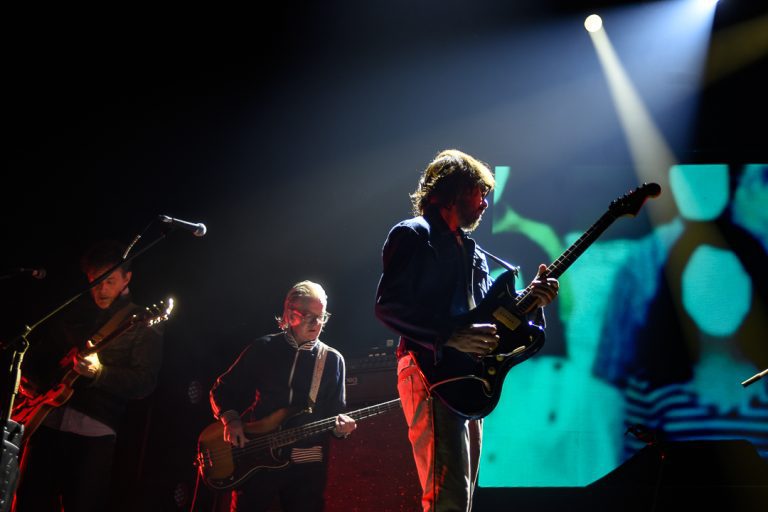
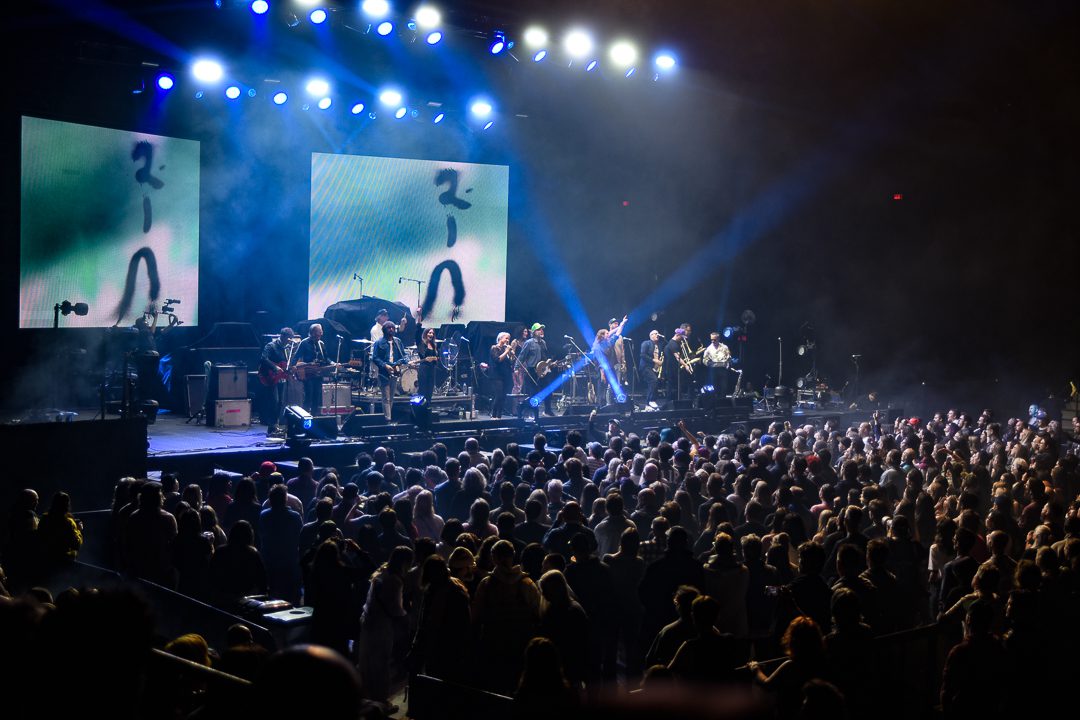
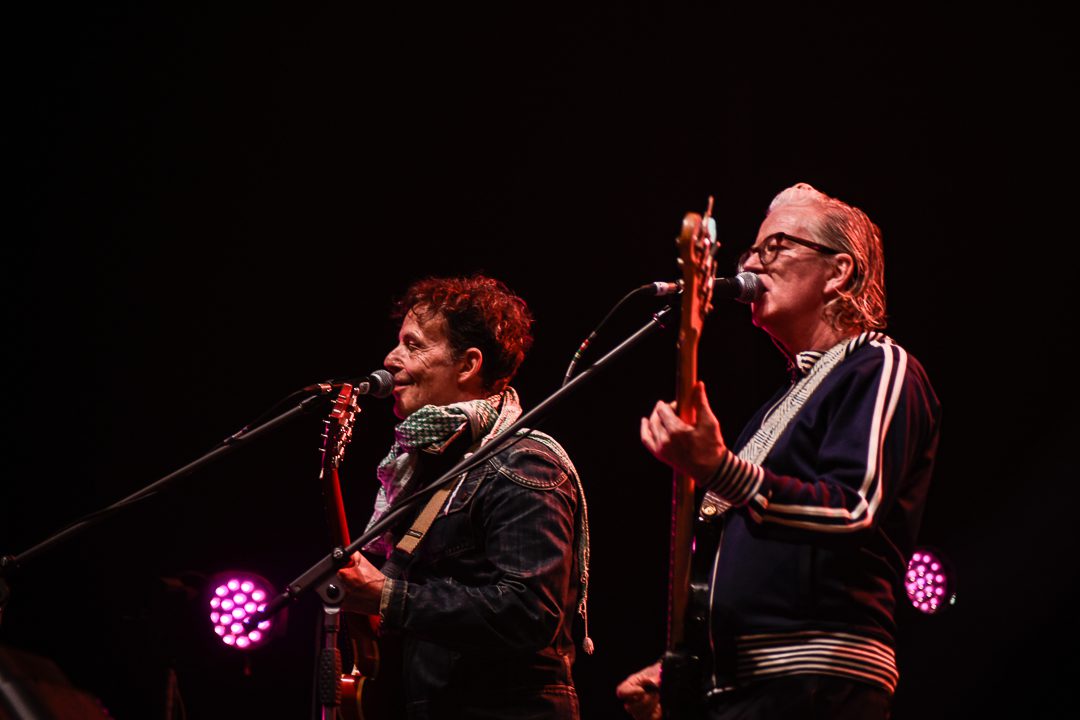
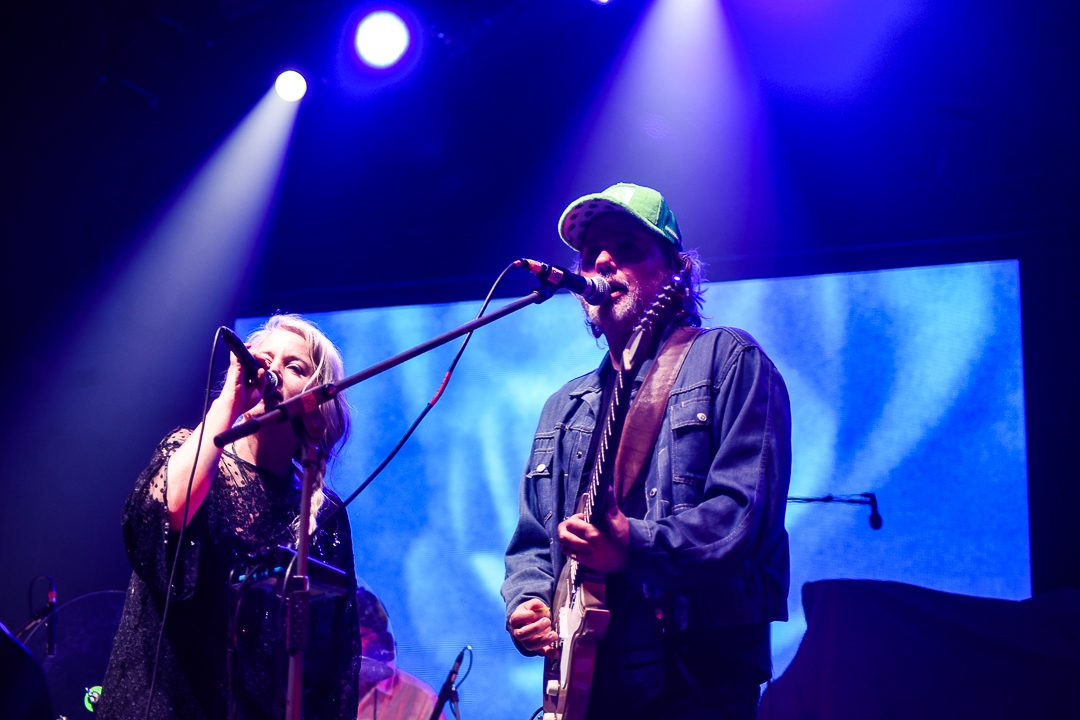
Last weekend, something funny happened at the Stars + Broken Social Scene + Metric show at Place Bell. We arrived on the rainy night and went straight to the box office to grab my guest list passes. Usually, at least at basically every show I’ve gotten guest list passes for, this is a painless process. But when we arrived to Place Bell, there was close to 40 people in front of us. We’re these people all buying last minute tickets? Did the last show of the All The Feelings tour not sell out?
About 30 minutes into the line not moving, the ticket taker went to the back of the room and said “Everyone on the guest list, move here.” And without missing a beat, everyone moved in unison; we were, in fact, all on the guest list. Now the more I think about it, ther more this makes sense. Broken Social Scene is like 13 players, but adds up to more to 25 with all of the collaborations. So it makes sense they have this many friends. Some of these people could have also been on Metric or Stars’ guest list, two bands that also make up part of BSS.
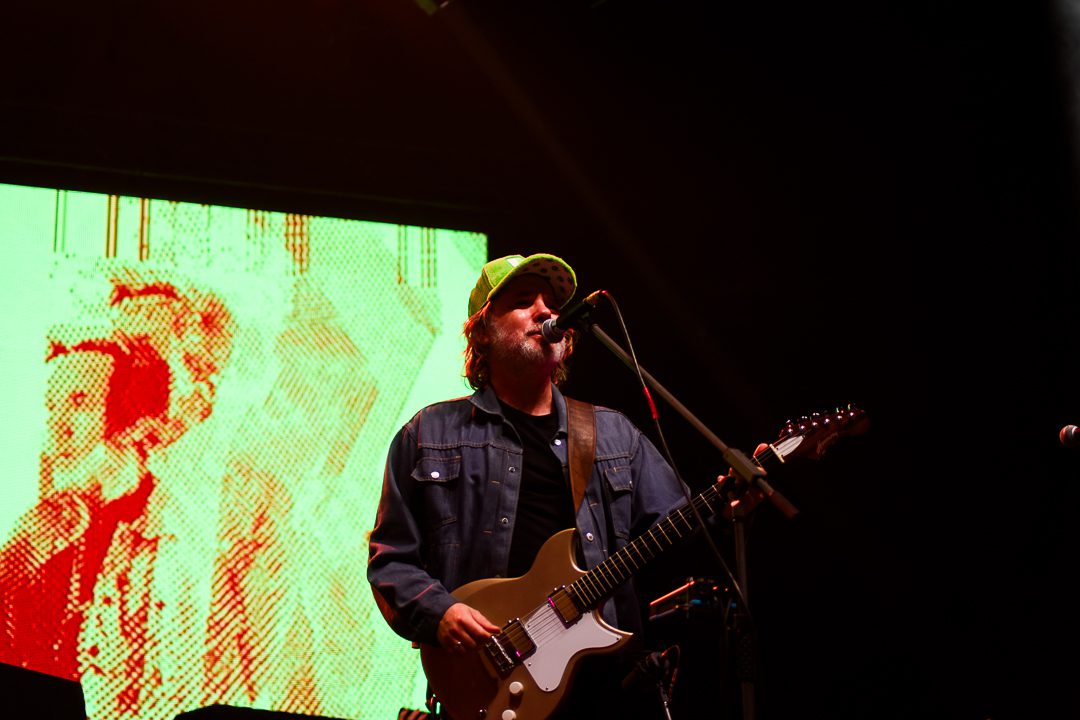
Sadly, this meant we missed Stars and Amy Milan, who basically helped plan this mega Canadian indie tour. The venue was only at about half capacity, with a floor that could have been packed more and section 200 and 300 empty. It was easily the most intimate stadium show I’ve ever been to. As Broken Social Scene took ther stage, the energy was palpable. Kevin Drew strumemd his guitar and the beand jumped into “Cause=Time” a 2002 Canadian indie rock anthem.
The gang was all here, save for Feist, though they did bring out Amy Milan for “Hug of Thunder.” Metric’s Emily Haines also appeared on stage to lead the fiery “Anthems for a Seventeen-Year-Old Girl,” before having to get ready to close out the show with Metric. It was a Canadian indie rock heritage moment. So was Torquil Campbell (Stars) losing it to the triple guitar action from Sam Jr., Andrew Whiteman, and James Shaw (who also would make a return with Metric). Broken Social Scene closed the show with the insturmental banger” KC Accidental” and the rest is history.
It’s a Wednesday night, and Theatre Beanfield is ablaze with an effervescent crowd. The excited throng hosts a fashionable cornucopia of styles, femmes dressed to the nines, twinks in homemade Slayyyter merch, but not a clean girl in sight.
The jovial crowd assembles, Pearly Drops emerges. Doused in their signature mysterious Scandinavian swag and bug-core sunglasses, they deliver an unexpectedly embodied performance. Their enigmatic aura works in tandem with their inviting stage presence, an invitation to ascend to their ethereal sound with them rather than simply bearing witness. Their layered sound goes down easy, like eating an oil pastel the sounds smudge and blur amplified by the warmth of their on-stage presence. Returning to their trademark “Pearly Drops” sound bite as a reminder to come back to earth between each song.
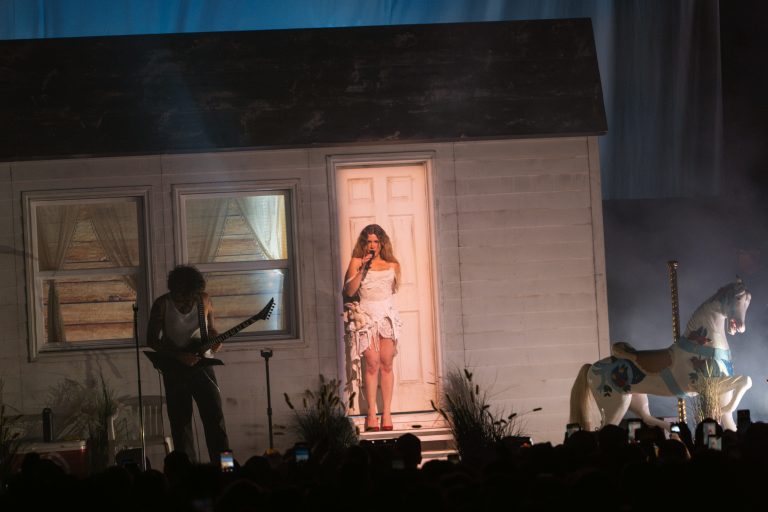
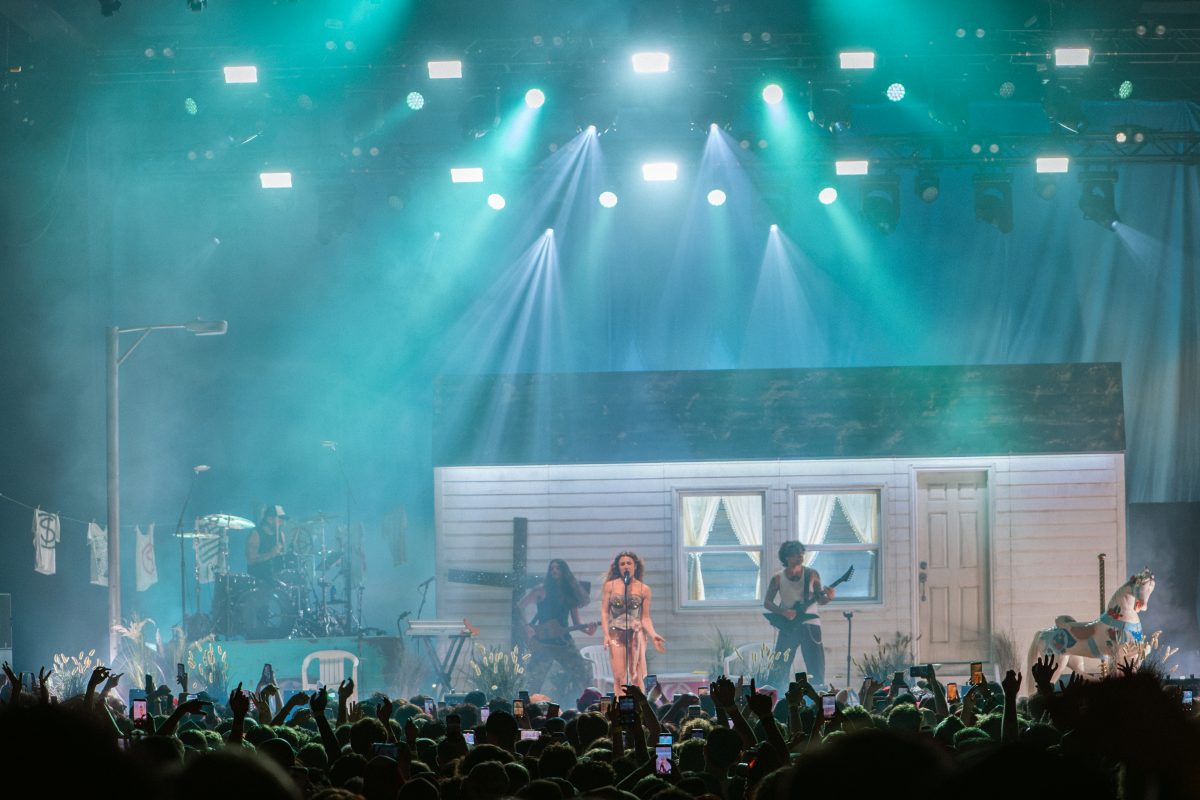
The audience is glittering and rabid in their anticipation for Slayyyter. The stage is set with a trailer park-inspired backyard complete with a laundry line and faux wild grass lining the edge of the stage. She saunters through the door of the facade, utterly radiant. She proceeds to play an epic set that encompasses the entirety of WOR$T GIRL IN AMERICA. Backed up by a live band, the energy of each song is amplified, and her vocals shine through with perfect clarity.
Marrying fuck you energy, airy vocals with the urgency of live drums, “OLD FLING$” and “WHATS IT LIKE, TO BE LIKED?” stood out in the set. Her refined live vocals on “CANNIBALISM!” and “UNKNOWN LOVERZ” brought new depth to the tracks. While I couldn’t tell you exactly how many times I cried during her performance, I can confidently report that I was a mess during “BRITTANY MURPHY” which she dedicated to the audience. One of the crown jewels of this record, it so radiantly synthesizes the aesthetics of the whole record into a devastating barn burner. The live performance was no exception. Following a loose three-act structure, the audience is also treated to three costume changes, further adding to the feeling that this is Slayyyter’s moment.
The enraptured audience knows the record with embodied conviction, the voices of the crowd reflecting Slayyyter’s lyrics at her. The WOR$T GIRL IN AMERICA tour will surely be one of many moments of punctuation in Slayyyter’s expansive career as her popularity continues to grow.
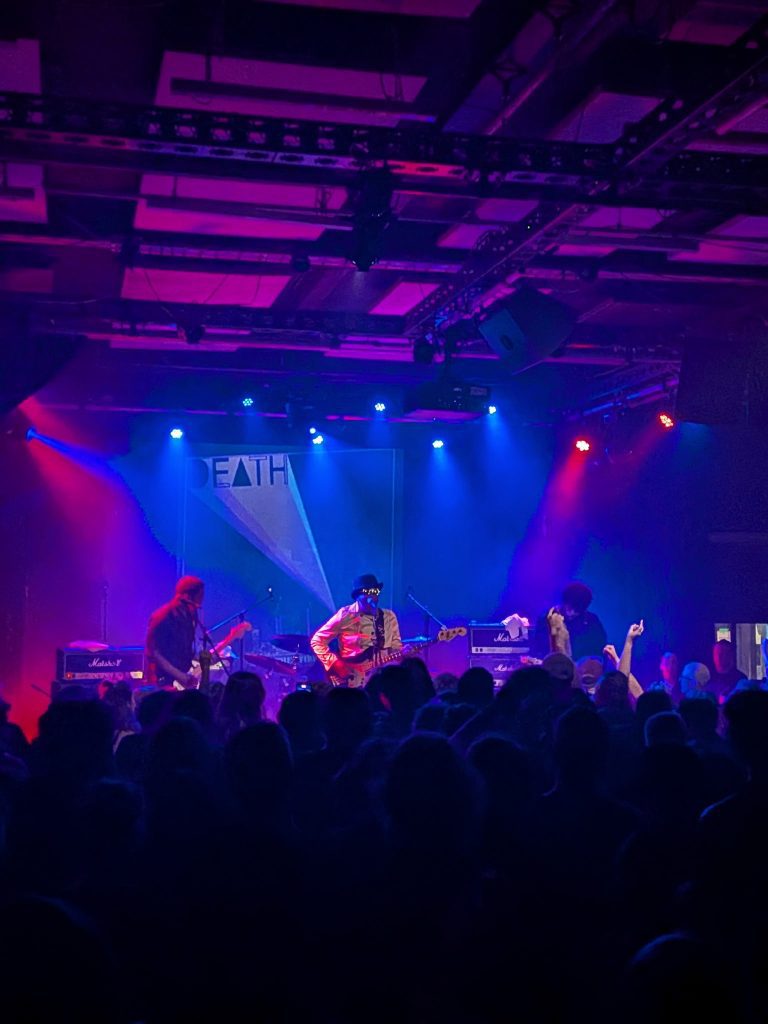
Seeing Bobby Hackney Sr. and the legendary band Death post up on the small Ausgang Plaza Stage brought to mind a tired phrase: Big fish in a small pond. Formed in 1971 and disbanded in ‘77, this three-piece proto-punk act has since enjoyed a resurgence some half a century later, and seeing them in the flesh proved that Death is in no need of resuscitation.
Now’s as good a time as any to admit that I wasn’t well-versed in the ways of Death prior to seeing them live, which made it especially confusing when they opened the set with a smooth, funked-up excerpt from the band’s initial form, “RockFire Funk Express.” They eased through a few bars, transporting me to a simpler time of clean coke, cowprint vests, and copious cigarettes smoked inside.
But it all comes to a screeching halt as Bobby jumps on the mic for a brief history lesson, explaining the band’s origins as a funk outfit, then reintroducing themselves as, and I quote, “DEEEEEEEEEEATH!” before exploding into their all-time hit, “Keep On Knocking.”
Death has always been a family affair, originally composed of brothers Bobby, Dannis, and David Hackney. Today, Bobby continues to hold it down dauntlessly on vocals and bass, his voice a little rougher around the edges, but no less energetic, compelling, or free-flying than on the recordings from ‘75. Likewise, Dannis is still blasting away upstage on the kit, and while I didn’t get a good look at him throughout the set, rest assured that the entire venue felt and heard him loud and clear. Taking up the family mantle on dual (and sometimes duelling) guitars are Bobby’s sons Julian and Urian, whose fearsome prowess and boundless energy, flanking their father, helped add new exigency to Death’s classic catalogue.
Much has been said and debated about Death’s influence, both sharing and receiving as they came up in a time of rock and revolution. While you can certainly hear the oft-made comparisons to Alice Cooper, MC5, Iggy & The Stooges, The Stones, and more, there’s also something different about this group. As someone who experienced them in retrospect, informed by the context of decades of music that they pioneered and arguably helped to shape, it’s impossible to ignore their presence and influence throughout huge swaths of the punk rock tapestry ever since.
Never mind the metamusical discussions, though. At the end of the day, Death lives, and they have more than enough entropy and riotous rage to stand squarely apart from any comparison.
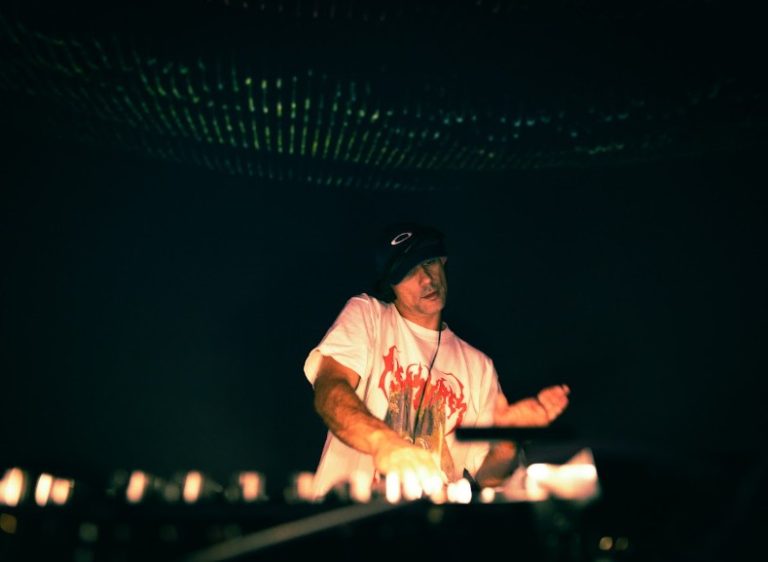
Twenty years into a career that has taken him from a small village in southern Italy to the biggest stages around the world, Massimiliano Pagliara still plays like someone with something to prove. For Making Time x SAT, the Italian-born DJ and producer was handed three hours in the Satosphere, and made good use of every instant.
A three-hour booking was the right call. It gave the experienced selector room to build slowly, to space out his tracks and take the dome on a long-form musical trip, the kind of marathon set he’s grown accustomed to with residencies at Berlin’s Panorama Bar and New York’s Basement, two of the most respected rooms in dance music. Pagliara describes his sound as an eclectic blend of house, techno, electro and disco, and the length of the set let all of those influences speak for themselves.
The kick drums hit hard and kept the dancefloor on its feet, while the softer side he’s known for came through by way of soulful strings and voices layered over the rhythm. The beats were punchy and rich in groove. He held the room captivated, rattling the walls and never letting the pace drop.
The set paired beautifully with the live A/V on the 360 display, a psychedelic VJ show that wrapped the room, bathing the crowd in hues of deep blue and magenta. In my personal experience, a lot of the crowd in the Satosphere is there for the visuals, and whoever is playing is an afterthought. Not this time. At times I felt like the only person with my nose to the sky, because everyone else was totally immersed in the music.
And they really danced. Not the habitual two-step, but real, free-flowing dancing. Some of that came down to space, but some of it felt like Pagliara’s doing, thanks to his background as a contemporary dancer. With barely any barriers between the crowd and DJ, the layout of the room did a lot for the atmosphere. It had the intimacy of an afters or house party and the energy of a buzzing second stage at a festival. It was hot in the dome, and the vibes were highest up near the DJ.
I had to cut my night short to catch other artists, but Pagliara kept pulling me back up three flights of stairs, several times over, just to squeeze out a little more of his set. Each time I went back up, the energy was exactly where I’d left it: good vibes, friendly faces and a dancefloor still going strong, all under the VJ’s shifting visuals.
Even in the pieces I caught, it was a great set, and I only wish I’d been able to stay for all three hours.
Concert at the 9th Floor : the African essence of the chaconne
by Frédéric Cardin
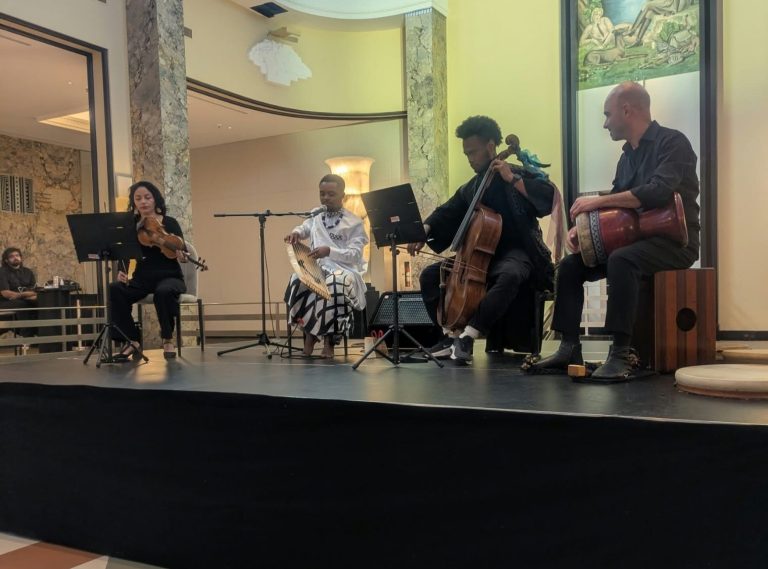
Yesterday was the first concert in the VoixMonde series, led by percussionist Ziya Tabassian. A series that will take us later this season to China, Latin America and the Jewish world of klezmer (with the Montrealer Socalled). Yesterday at 5 PM in the Art Deco panorama on the 9th floor of the Eaton Centre in Montreal, it was the African essence of Rwanda taking the stage, with singer and musician Deo Munyakazi, performer of the inanga, a traditional instrument at the heart of the traditions of this small country in the Great Lakes region of Africa.
The uniqueness of the VoixMonde series, and also its mission, is to enable a dialogue between non-European scholarly traditions and Western classical music. Thus, for the needs of this dialogue, violinist Karin Cuellar and baroque cellist Kyran Assing joined Munyakazi, as well as Ziya Tabassian himself on percussion.
In a one-hour program, we heard beautifully unfolded melodies by Munyakazi’s assured voice, which is elegantly accompanied by his plucked-string instrument, whose body somewhat resembles a concave surfboard. The sound that rises from this instrument is very soft, very velvety, but sometimes has to fight a losing battle against the greater power of his Western companions, despite the amplification. In the last piece, Ngwino urare, Munyakazi came out of his general reserve, standing up and urging the audience to sing along with him. This reserve was perhaps imposed by the venue itself, as I have seen and heard this musician elsewhere, and he knows how to get the audience up with considerable energy.
The intersection between Rwandan tradition and classical music was made through two chaconnes by relatively obscure composers of the European Baroque: Antonio Bertali (1605-1669) and Nicola Matteis (1650-1713). The reason for this historically plausible dialogue lies in the origins of this form, initially danced in the Spanish colonies. These were already a space of syncretism between Spanish, indigenous, and especially African cultures, stemming from the slave trade. Obviously, all of this was largely distilled into the final European result, but the nod served as sufficient justification to allow Deo Munyakazi (and Ziya Tabassian on percussion) to integrate into the musical play of the two baroque specialists (Cuellar and Assing). I would have liked Munyakazi’s inanga to play a bigger role, though. He was very discreet (and only present in Matteis’ chaconne). A polite crossover, then, but nevertheless some beautiful musical moments, especially with regard to the violinist Karin Cuellar, a very good interpreter of early music. In the continuo, Assing, who is equally good, did not have much space to shine. But that is the nature of much of the music from that era for the cello.
Finally, we were treated to a pleasant and respectful meeting, a chic interculturalism that was sometimes touching, and high-quality melodies (like the one in the video above). A program perfectly calibrated for the imposing aura of the 9th floor.
SAT X Making Time | Aurora Halal, dark, pulsating, sensual vibe with mystery and emotion.
by Julius Cesaratto
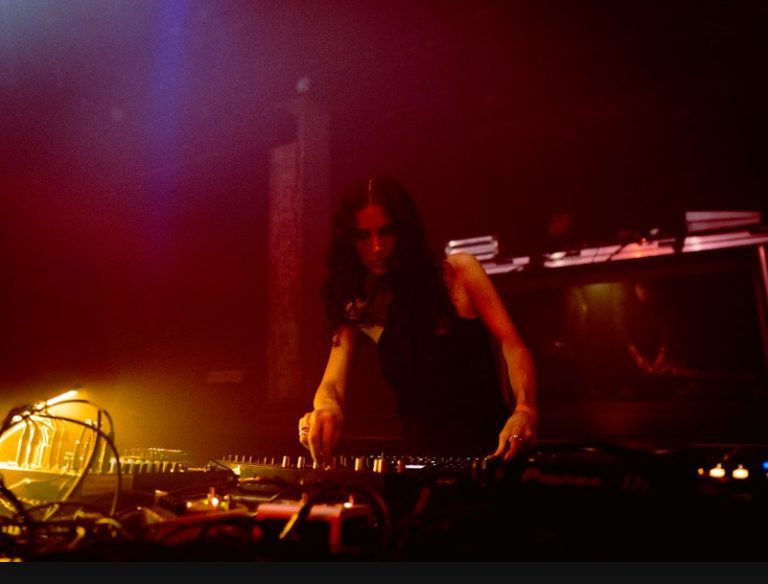
Making Time, the boundary-pushing festival born in Philadelphia, took over both floors of the SAT on Saturday night for an all-night affair. Peak time was in the hands of Brooklyn’s finest, Aurora Halal, a familiar face at Making Time. By her own count, this was her fifth appearance under the Making Time banner, and the producer commanded the main room of the SAT with a set that sticks out in my mind as one of the best I’ve heard in that building this year.
After a six-year hiatus from releasing new music, following the strong success of her 2019 solo EP Liquiddity, she is gearing up for a five-track EP on her own label, Mutual Dreaming, due out mid-October. Some of these soon-to-be-released tracks made their way into Saturday’s set. She describes her music as immersive techno that moves through different genres but keeps the same spirit: dark, pulsating, sensual vibes with a touch of mystery and emotion.
This set has a story behind it. Halal wrote it specifically to play in the forest at Sustain-Release festival, composing every day in the weeks leading up to the festival, including in her room on site, with some of the tracks being completed the same day she played them. About half of the set was brand new, and she brought that live rendition to Montreal.
It was a strong start to her peak-time set. The dark, mysterious quality of her music paired beautifully with the smoky, hazy dancefloor. The energy in the packed room was crescendoing as the music grew in intensity. Under the soft red light, as the crowd danced with abandon, it felt closer to a sweaty warehouse rave than to a club night. A really cool light display, with LED poles coming down from the ceiling and rotary alarm lights throughout, added to the atmosphere.
The set was built on a steady four-to-the-floor techno beat, with new sounds layered in along the way. There were pitched-up vocal samples, bell breakdowns, and smooth, sexy cymbals. As the performance advanced, she let things simmer with spaced-out vocal tracks, before slipping in blurbs of acid and cheeky moaning loops. Through it all, the thump never let up, and the intense kick drums had the room moving.
The vibe of the crowd was unmatched. As the set went on, the room got fuller, with attendees pulled in by the punchy, rumbling drum kicks and hypnotic sounds. By the 30-minute mark, she was absolutely rocking the house, dancing along to her compositions under the watchful eye of the dancers crowded up at the front around her setup. It was an electrifying performance, paired with a masterful light show. It was my personal favourite of the evening.
As the set ended and people poured out of the venue for some (much needed) fresh air, her name seemed to be on everyone’s lips. I am adamant she could easily have kept going for another two or three hours at least and could have commanded the party all night. Alas, this was not the case. In the future, I would love to see her booked for an extended set, to find out how far she can push the envelope, and I will be impatiently awaiting her next record.