Spending three days talking about music, propaganda, and diplomacy? For the social, political, and cultural journalist I was for forty years at Radio-Canada, it seemed intriguing.
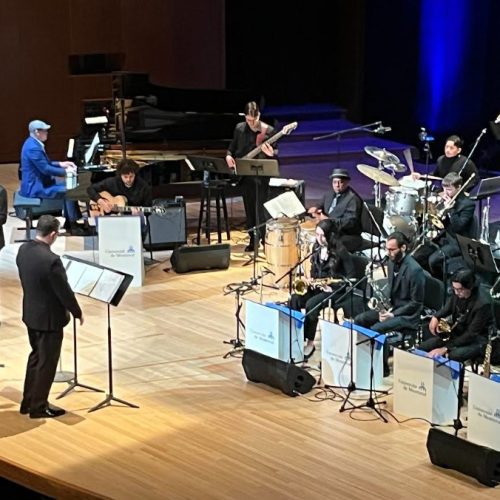
I spent the entire day of October 17th at the Faculty of Music listening to lectures and interviewing participants.
To be honest, it was sometimes a little too ethereal or niche for my taste, as academic researchers can sometimes do, but I learned a lot of things and not just about music. Did you know that at the end of the 17th century, Spain occupied between a third and a half of Italy? That France and the Austro-Hungarian Empire were fighting over the other half? I don’t. Do you remember that in 1935, Fascist Italy invaded Ethiopia, causing 275,000 Ethiopian deaths and 15,000 Italian deaths? That the United States, under Republican John Eisenhower, distributed musical instruments to less fortunate countries?
That the BBC, the British public broadcaster, made extensive use of music intended for the Allies abroad to convey its messages of solidarity during the Second World War.
In all these events, music played a role, diplomatic or propagandistic. In the 17th century, operas were created or altered to convince Italian nobility to change their allegiance. In British news bulletins broadcast in cinemas during the 1930s, music played a very important role; white “civilized” music was often contrasted with the “savage” music of colonized countries.
All these researchers, from a dozen countries, offered us targeted examples to understand the role of music in diplomacy or propaganda. And above all, it’s difficult to distinguish between these two terms. Where does diplomacy end and propaganda begin, or vice versa?
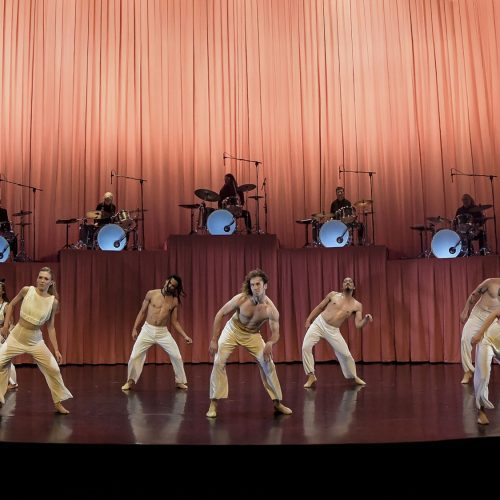
We also mentioned more recent examples, which I would have liked to have discussed in more detail: the Olympic ceremonies, among others. You will no doubt agree with me if I say that the one for the Paris Olympics in 2024, through its music, gave an impression of French audacity and innovation. Was it diplomacy or propaganda? Or just audacity?
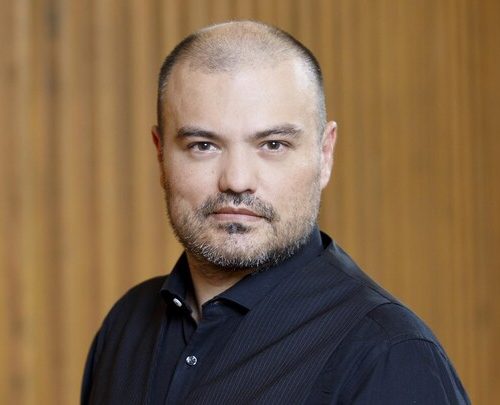
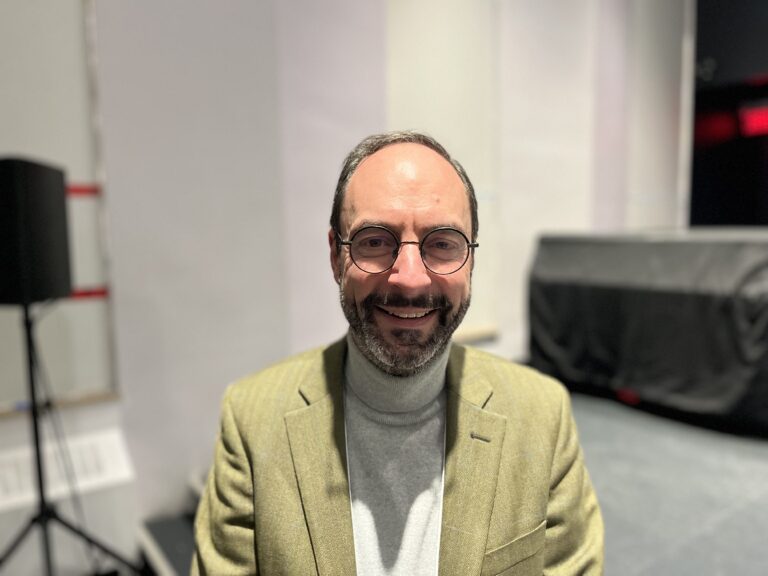
“Politics, diplomacy, and the arts are much more closely linked than we think,” Frédéric Ramel, a researcher in international politics at Sciences Po Paris, told me. This political scientist has chosen to focus on what he calls “the sensitive,” which includes emotions and the arts. “We tend to consider it less important than military or political strategy; I’m not so sure,” he adds.
An example? Qatar, the Arab emirate known for hosting the World Cup and for sheltering some leaders of the Palestinian Hamas movement, “has put forward a woman, Dana Al Fardan, a singer and composer at the crossroads of classical and pop music, as the cultural ambassador of this small country. Putting a woman forward is very important for the image of this conservative country abroad,” notes Frédéric Ramel.
For him, this is an example of musical propaganda. At the diplomatic level, many countries, including Canada, have musical artists tour abroad. “France does this constantly, especially in the United States; music has power and potency,” concludes Frédéric Ramel.
The French political scientist adds that it’s not just states or the political world that can use music for diplomatic purposes. In Italy, in some cities, migrants and citizens are brought together in the form of musical workshops. This dialogue soothes morals and facilitates coexistence.