Additional Information
From the poetic orality of the Aboriginal culture to the written music of our Western era, two worlds attempt an intercultural practice, a sharing of practices and knowledge in the world of creations of the spirit.
Aboriginal poetry and contemporary music are thus brought together. This program is presented Sunday, 7pm, at the Auditorium of the Grande Bibliothèque.
This program is presented by Land InSights, Forestare and the Nouvel Ensemble Moderne (NEM), in the context of the First Peoples’ Festival, in partnership with the Bibliothèque et Archives nationales du Québec, and with the collaboration of the OSM’s Virée classique.
The main course for this program is composed by Montrealer Tim Brady, and world premiered : “Uiesh” (2019), for voice and 14 instruments, based on poems in Innu-aimun by the poet Joséphine Bacon, taken from the collection Uiesh – somewhere (Mémoire d’encrier, 2018). With soprano Deantha Edmunds, musicians of the NEM.
PAN M 360 : Josephine Bacon’s Innu poems were the starting point. What did this reading inspire you to do?
TIM BRADY : I loved the directness of the language, but the sophistication and resonance of the images. The poems also use references to music a lot – “I sing,” “a melodic air” – so it just seemed so natural to set the poems to music.
PAN M 360 :”From orality to written music; from gesture to sonority; from movement to musical line; it’s all about discovering the other, opening up to each other’s sensibilities and sharing their riches.” What do you think of this official presentation?
TIM BRADY : Yeah – as Zappa or Monk is reputed to have said: “Talking about music is like dancing about architecture”! It is difficult to articulate precisely what music is and how it works (aside from the technical jargon we musicians use…but that only goes so far). Initially, this project was just about me working with Josephine’s poem. Artist to artist. But it obviously touches on larger social issues, I think this is what they were trying to get at in the official presentation.
PAN M 360 : What else is there to say? What is the preliminary idea here of a dialogue between Aboriginal poetic expression and your music?
TIM BRADY : I love writing for voice, and Josephine’s poems are really well suited to music, at least to me. Working in a non-European language was also an intriguing challenge, it really forced me to listen to the sound of the language, as I have no access to the direct meaning. As well, I, like many Canadians, am increasing aware of the need to build bridges to the Indigenous peoples of the country and if this collaboration can be part of that process, great.
PAN M 360 : What were the conscious or unconscious stages of the creative process?
TIM BRADY : At its very core, writing music is very instinctive. I just sit in my music studio and “listen” for music to appear in my head. I’ve been doing this for 42 years, so I have lots of experience and many strategies to push things forward, to help the unconscious process along. But essentially – you just have to hear the music somehow, somewhere. At its best, it almost feels more like transcribing music that already exists.
PAN M 360 : What was the general shape you wanted to give to this work in the beginning?
TIM BRADY : I knew I wanted to do several poems, but that the piece would be played continuously. I wanted the piece to be head as one unified gesture not 7 short songs. There is a certain intensity in performance and listening that comes with continuous forms that I like. But hey – that being said – I’ve written lots of song cycles as well. I try to let the material tell me what to do and Josephine’s poems just felt better suited to this more continuous approach.
PAN M 360 : How did it develop?
TIM BRADY : The composing of the piece went pretty much according to plan. Sometimes this happens, you can never tell.
PAN M 360 : How does the Aboriginal musical imagination play out in the piece? What is the role of Aboriginal soloist Deantha Edmunds in this?
TIM BRADY : I make no reference to Indigenous music at all in this work. I write from my personal experience and I hear what I hear. This is how I hear Josephine’s words, set to music. It’s that simple. Deantha’s role is to sing the notes, and to bring the words to life. The fact that she in Inuit artist herself adds another element to the collaboration, and also contributes to a healthy cultural dialogue.
PAN M 360 : How did the choice of the NEM and Lorraine Vaillancourt of the musicians of Forestare and Deantha Edmunds come about?
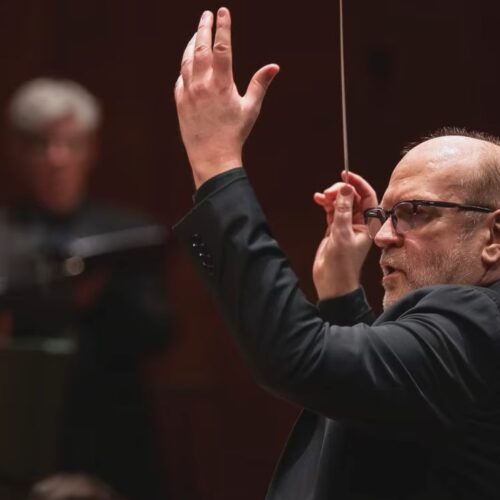
TIM BRADY : This whole project just kind of naturally fell together, and (for once!), I had almost nothing to doing with programming or production. I’ve worked with NEM before, and know Forestare (the world of multiple-guitar orchestras is very small! – ie: Instruments of Happiness), so it feels like a natural fit. My piece only uses NEM, so the collaboration with Forestare is about the larger programme. Lorraine is conducting my piece with NEM and Deantha.
PAN M 360 : Is this composition recorded ?
It would be great to get a recording of the piece out to the public, but let’s do the premiere first before we plan the world tour….!!!