Additional Information
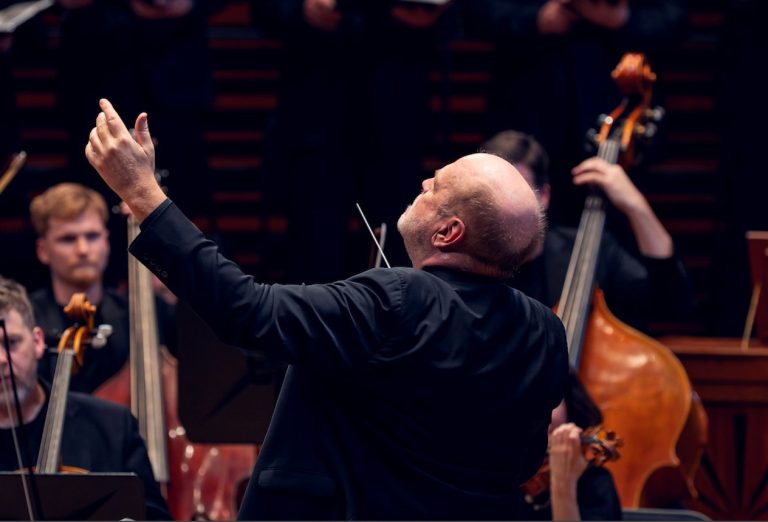
Jonathan Cohen’s departure from the podium of Les Violons du Roy has led to the return of its founder, Maestro Bernard Labadie. For an indefinite period, he is once again serving as artistic director of Quebec City’s most internationally renowned orchestra, staying true to its roots by featuring a substantial portion of Baroque music for the 2026–2027 season, alongside programs dedicated to more recent works—from the 19th century to the present day, ranging from Jean-Philippe Rameau to Philip Glass. PAN M 360 had a long conversation with this distinguished musician, who proudly discusses his brand-new program.
CLICK HERE TO VIEW THE SCHEDULE
CLICK HERE FOR YOUR 2026–2027 SUBSCRIPTION
PAN M 360: Mr. Labadie, it’s a pleasure to speak with you again on behalf of PAN M 360. We’ll start by discussing the 2026–2027 season, because there’s a lot to cover! You officially presented this program on March 26 in Quebec City, but there wasn’t much buzz about it in Montreal. It’s never too late to do things right!
Bernard Labadie : I’m really looking forward to doing this with you!
PAN M 360: How would you describe this transition since you returned to the helm of Les Violons du Roy? We touched on this very briefly a few months ago.
Bernard Labadie : To maintain a sense of continuity, the core repertoire has remained unchanged.
I would say that what you probably notice at first glance is that there may be a little more Baroque music than there has been in recent years. In other words, we’re returning to a focus on what was the ensemble’s original mission: performing 18th-century music, particularly the Baroque repertoire. This also means there’s still a program dedicated to 20th-century music, and there’s still Romantic music on the program as well. So it remains varied.
To use academic terms, I’d say we have a major in 18th-century music and a minor in other periods. So it’s a very cohesive program. I’d just say that the image is perhaps a little more focused, with a stronger emphasis on the group’s core identity.
We must also consider that we are showcasing our musicians—in the broadest sense, meaning both our choristers and our instrumentalists—more than ever before. We have many soloists from the orchestra who sometimes step out of our ranks to perform concertante works elsewhere. We have two programs with a choir, for example, where the vast majority of the solos are sung by members of the Chapelle de Québec. So we really draw on the very foundation of who we are to offer the audience a musical panorama that, I think, reflects who we are. And I believe we are the only group capable of offering such a panorama with this particular specialty, if I may say so.
PAN M 360: Over the years, this orchestra has evolved into a versatile ensemble—and it remains so to this day!
Bernard Labadie : It’s both challenging and rewarding. For our musicians, being able to do something different during the season is important. It’s worth noting that while the violins are primarily known for the 18th-century repertoire, they use modern instruments, so they have everything they need to perform later-period repertoire. Over the years, our musicians have developed this versatility, enabling them—sometimes even within the same concert—to shift from an older sound world to a more recent one, or even a thoroughly modern one.
I’d also like to point out that each of our musicians has three bows. First, they have a Baroque bow, which is used to play music from around 1750 and earlier—a convex bow. They also have what is called a traditional or classical bow, used in the time of Mozart and Haydn, for what is known as the First Viennese School, roughly the second half of the 18th century and a small part of the 19th. This bow begins to resemble the modern bow, where the stick has become concave or perfectly straight—a bow more powerful than the Baroque bow, yet retaining a lightness that the modern bow lacks. Finally, they all have a modern bow, which is thicker, allowing them to play with great consistency and with more power for modern concert halls. So all our musicians have these options in their instrument cases. So it’s an extraordinary asset we have—to be able, while consistently attracting an audience clearly interested in the 13th-century repertoire, to take them elsewhere, to keep their horizons open, and their minds open. So it’s good for everyone, that’s all.
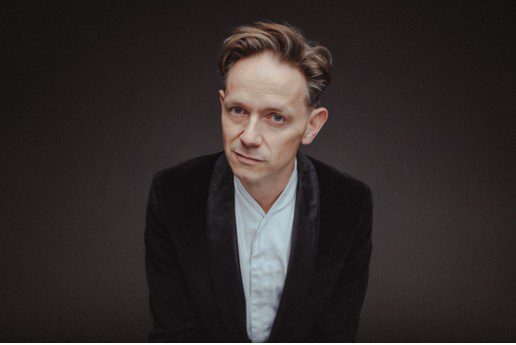
PAN M 360: Now let’s take a look at the program for the 2026–2027 season. First up is the opening concert, featuring Iestyn Davies singing Handel.
Bernard Labadie : Iestin Davis is one of today’s greatest countertenors, among those with the most distinguished careers. He has performed the major roles of Baroque opera at most of Europe’s leading opera houses, not to mention the Metropolitan Opera, which is not known for hiring countertenors. He is in a class of his own. He has sung with us before, whether in Handel’s Messiah or in Handel’s oratorio Theodora. But this is the first time we are hosting him and allowing him to showcase the full range of his artistry. The program we are presenting is entirely devoted to Handel’s heroes, whether from opera or oratorio. He put the program together entirely on his own; I didn’t have to do a thing, which is very rare. The program landed in my computer—everything was there, everything was perfectly planned out. I believe it will be a remarkable evening; we rarely have the opportunity to hear Baroque opera at this level. It will be a highlight of the season.
PAN M 360: One of your favorites is the program presented in late November: Les Indes galantes by Jean-Philippe Rameau.
Bernard Labadie : We’re going to focus on all the orchestral music from the opera *Les Indes galantes*. This is also music you never hear in concert. In Quebec, the Arion Baroque Orchestra performs this music from time to time. It’s pretty much one of the only opportunities to hear Rameau’s orchestral music. Rameau is a frustrating composer for me; he is one of my favorite 18th-century composers. He is a composer we consider as important as Bach, Handel, or Vivaldi. He is an immense genius, highly original, who wrote music that is unlike any other. My frustration stems from the fact that his true specialty is vocal music. He composed numerous operas that are masterpieces. However, to perform this vocal music, one must have instruments tuned to the correct pitch—namely the French pitch used at the time, which is significantly lower than the current standard, and even lower than the Baroque pitch used by most recording artists. Our colleague and concertmaster, Pascale Giguère, has just returned from a tour in France where he performed a Rameau opera and the orchestra was tuned to 400 hertz. The Baroque pitch is 415 and the modern pitch is 440.
So when singers are asked to perform Rameau in modern tuning, the pitch is very high. It’s very, very difficult to sustain that pitch throughout those long operas. It sounds more strained; it has a timbre and texture that aren’t what Rameau intended. For that reason, we’ve performed very little Rameau with Les Violons du Roy, but his orchestral music can certainly be played on modern instruments if one has mastered all the challenges of French Baroque music—a world unto itself. We are capable of doing so, and that is why we are dedicating an entire program to the orchestral music from a single Rameau opera—about an hour and fifteen minutes of orchestral music. It is absolutely brilliant music! So, in one evening, we’ll perform all the music from Les Indes Galantes, which is one of his best-known and most iconic operas. It’s full of exoticism and a rich exploration of instrumental colors. We think our audience is in for a real treat.
PAN M 360: For Christmas, your show is titled At Midnight Mass, another one of your favorite shows from the upcoming season.
Bernard Labadie : For Christmas, we will present a program dedicated to the music of Charpentier, the centerpiece of which will be his famous Midnight Mass, which has been performed by countless choirs around the world, far beyond the French-speaking world. It is truly a Christmas music classic, characterized by its use of several popular hymns, some of which are well-known but are still sung in our churches today. It is something very original and very enjoyable, which will be preceded by a magnificent Christmas oratorio in Latin, also by Charpentier, celebrating the birth of Jesus—truly a work of great maturity. And then we’ll spice things up with instrumental Christmas pieces by Michel Corrette, a composer of the late Baroque period like Rameau. His music is simpler than Rameau’s, but extremely effective.
So, that makes two major programs of French Baroque music in our season, and that has never happened before in the history of Les Violons du Roy.
PAN M 360: Among the highlights of the upcoming season, you’ve selected the program dedicated to Philip Glass.
Bernard Labadie : The great American minimalist composer will turn 90 next season. Salle Bourgie in Montreal is dedicating a special event to him next season and has asked us to take part in this celebration in January, under the baton of Thomas-Leduc Moreau, a highly talented young Montreal conductor with whom the orchestra collaborates regularly, as well as pianist Elisabeth Pion in the Piano Concerto No. 3. There will also be music by Arvo Pärt, whose work on the program is literally a tribute to Mozart.
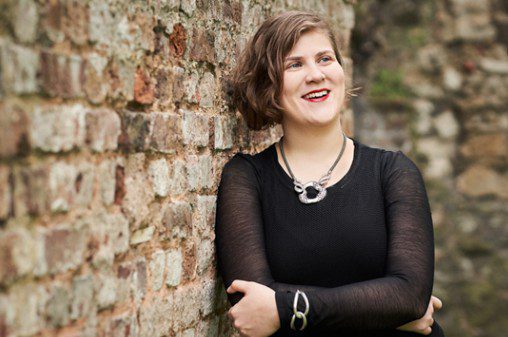
PAN M 360: Another one of your favorites, Henry Purcell’s opera Dido and Aeneas.
Bernard Labadie : This is something I’ve been looking forward to for a long time—it’s an opportunity to perform this work again, a work that’s very important to me. It’s the piece that convinced me to become a conductor; it was the first work I ever conducted, back in February 1983, with a group of students from Laval University. I was 19 at the time, and my colleagues were all about the same age. We performed the concert version of Dido and Aeneas, which has remained very dear to my heart. I performed it again during the second season of Les Violons du Roy. And I haven’t conducted it since 1987. I was supposed to conduct it in 2015, but unfortunately I was hospitalized following the cancer that struck me in 2014. It was Richard Egarr, the great Baroque conductor, who stepped in for me then. So I haven’t conducted Dido and Aeneas since 1987, even though it’s a work I know by heart—a seminal work for my career and also for Les Violons du Roy. I’ll finally return to it in late April or early May 2027.The role of Dido is one of the first major roles in Baroque opera, and we’ll be joined by Canadian mezzo-soprano Ema Nikolovska, a young singer whose career is on the rise. And it’s a role tailor-made for her. It’s going to be a truly extraordinary evening. The role of Aeneas, though less prominent, will be sung by Canadian baritone Tyler Duncan. There are several smaller roles in this opera, all performed by members of the Quebec City Chapel.
PAN M 360: In June, another of your top picks: Bach in Celebration!
Bernard Labadie : We’ll wrap up the season with this treat that’s going to make me very happy—and our audience, too. You may have noticed that in all the highlights of the upcoming season I’ve just mentioned, there’s no Johann Sebastian Bach—which is completely unusual for Les Violons du Roy. Instead, we’re concluding with a program that is actually a collection of concertos featuring a wide variety of instrumentations: the Triple Concerto in A minor, BWV 1044, which brings together flute, violin, and harpsichord; the magnificent Concerto for Oboe d’amore in A major, featuring the extraordinary English oboist Sasha Calin; the Brandenburg Concerto No. 3 in G major, the Concerto for Three Violins in D major, BWV 1064 (Pascale Giguère, Katya Poplyansky, Noëlla Bouchard), and a reconstruction of the Concerto for Three Harpsichords.
PAN M 360: Any other must-haves?
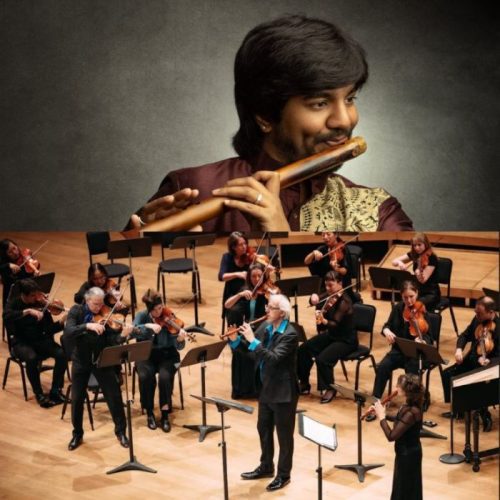
Bernard Labadie : I should mention the guest conductors. First, Maurice Steger, whom our audience knows very well as a flutist—arguably the greatest living virtuoso on the recorder. However, Maurice is increasingly devoting himself to conducting. He put together a program with Les Violons du Roy a few years ago, and I was very impressed by him in his role as conductor. So, we’re bringing him back with us in October, and he’ll be conducting exclusively, in a program devoted to late Baroque music and music from the mid-18th century.
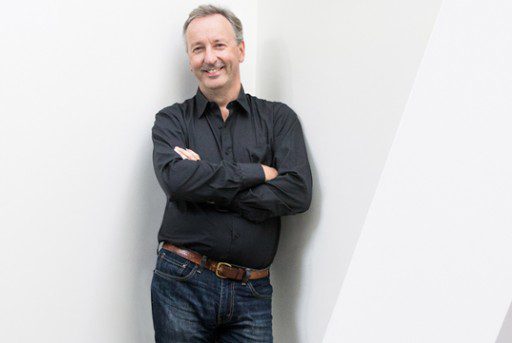
And then, in March 2027, for the first time, we will welcome the English conductor Paul Agnew, who first made a name for himself as a tenor. He has an extensive discography, having recorded a great deal of French music and Bach cantatas in particular. However, he has now become a conductor; he works closely with the ensemble Les Arts Florissants in France and will be coming to us to give a concert entirely devoted to music from the Classical period—Mozart, Haydn, Boccherini, and Salieri.
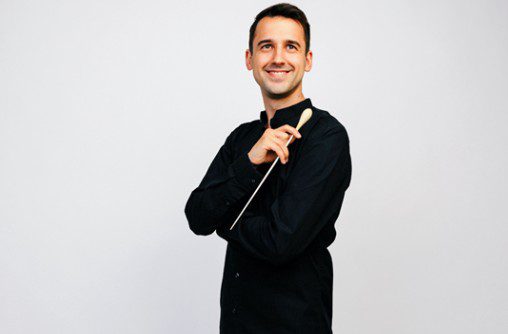
I would also like to highlight a program dedicated to French music in April 2027—one of those programs that ventures beyond the orchestra’s usual repertoire, focusing on the second half of the 19th century and even the early 20th century, with works by Tournier, Saint-Saëns, Massenet, Fauré, Debussy, and Poulenc. The guest artist will be Hélène Guillemette, a remarkable soprano well known to our audience, and the orchestra will be conducted by the Anglo-American conductor Johann Stuckenbruck.
JI can’t mention every program, but I mustn’t forget the great mandolinist Avi Avital, whom our audience had the chance to discover a few years ago and who is truly the superstar of the mandolin right now. He’ll be returning to us in February 2027 for a program entirely devoted to Baroque music, featuring, of course, plenty of music for mandolin and orchestra. He will conduct the orchestra himself, so he’ll be back for concerts in Quebec City and Montreal. So there you have it—that’s another highlight of our season. There’s one more thing to mention that’s very important to us because it’s a series to which we devote a lot of effort and resources. For audiences in Quebec City, we have the Apéro Series, where our musicians perform chamber music concerts at the Palais Montcalm—not in the main hall, but rather in the smaller D’Youville Hall. It’s a format with about 150 seats, where people can come for a drink and some appetizers at cocktail hour while listening to our musicians, who have put together a very interesting chamber music program drawn from our repertoire. The first program is dedicated to Baroque music, the second to Classical music, the third to the Romantic period and the early 20th century, and the season concludes with a concert dedicated to the world of tango. These concerts are very popular in Quebec City. The audience is close to the musicians; it’s a way to discover Les Violons du Roy in a new light. It’s an exceptional opportunity for the musicians to showcase their talents.