Electronic / Tech-House

Osheaga : James Hype au parc Jean-Drapeau

by Rédaction PAN M 360

DJ et producteur, James Hype séduit les pistes de danse du monde entier avec ses morceaux de tech-house survoltés, qu’il s’agisse de titres originaux ou de remixes intégrant des voix issues du rap, du R&B ou de collaborations directes avec des chanteur·euses. Il se fait connaître avec les hits More Than Friends (2017, avec Kelli-Leigh) et Ferrari (2022, avec Miggy Dela Rosa), tous deux classés dans le Top 10 au Royaume-Uni. Parmi ses nombreux remixes notables figure celui de Piece of Your Heart de Meduza et Goodboys. En 2025, il sort le single Don’t Wake Me Up, qui précède une longue résidence au club Hï Ibiza.

Whether sampling vocals from the worlds of rap and R&B or teaming with singers, DJ and producer James Hype appeals to dancefloors on a global scale with his highly energized tech-house tracks. He is best known for the Top Ten U.K. pop hits “More Than Friends” (2017) and “Ferrari” (2022), respective collaborations with Kelli-Leigh and Miggy Dela Rosa, and his many remixes include Meduza and Goodboys’ “Piece of Your Heart.” His 2025 single “Don’t Wake Me Up” preceded a lengthy residency at Hï Ibiza.

POUR ACHETER VOTRE BILLET, C’EST ICI!

Ce contenu provient d’AllMusic et est adapté par PAN M 360

big band / Jazz

Festival International de Jazz de Montréal : Jazz at Lincoln Center Orchestra with Wynton Marsalis à la Maison symphonique

by Rédaction PAN M 360

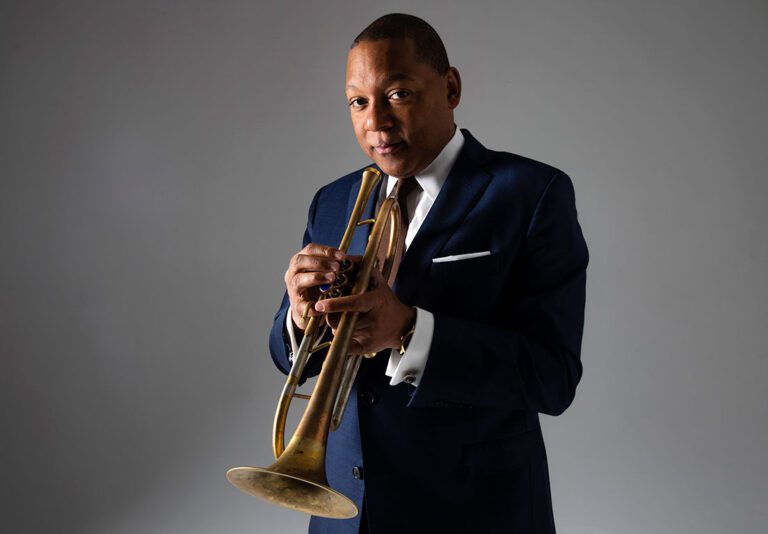
Orchestre de Jazz new-yorkais de renommée mondiale résident du Jazz at Lincoln Center depuis 1988 et composé de 15 des meilleurs solistes et ensembles de jazz actuels, le JLCO est un habitué du Festival. Il interprète un vaste répertoire allant de compositions historiques rares à des œuvres originales, sous la direction générale et artistique de Wynton Marsalis, une des plus grandes figures du jazz encore actives aujourd’hui.

The world-renowned group from New York City, based at the Lincoln Center since 1988 and featuring 15 of today’s finest jazz soloists and ensembles, the Jazz at Lincoln Center Orchestra is a Festival regular. The JLCO performs a vast repertoire, ranging from rare historical compositions to original works, under the general and artistic direction of Wynton Marsalis, one of the greatest jazz figures still active today.

LES BILLETS POUR CE SPECTACLE SONT ÉPUISÉS!

Ce contenu provient du Festival International de Jazz de Montréal et est adapté par PAN M 360

Jazz / Soul / Trip Hop

Festival International de Jazz de Montréal : Jay-Jay Johanson au Théâtre Maisonneuve

by Rédaction PAN M 360

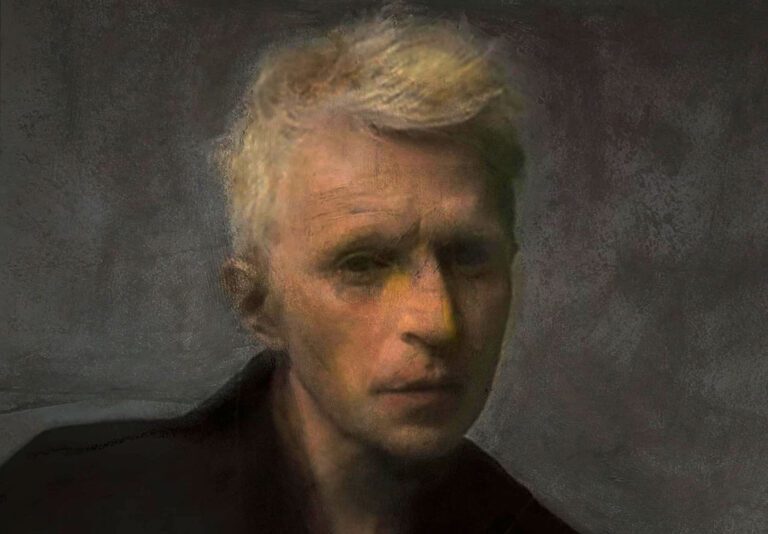
Avec Backstage, Jay-Jay sort déjà son 15e album, et son inspiration est sans cesse renouvelée. On y retrouve les éléments fondamentaux de son univers musical : jazz, triphop, pop et même une touche d’Easy Listening.
Le premier single, l’envoûtant How Long Do You Think We’re Gonna Last?, impose un délicieux son soul, quelque peu inédit dans les 14 premiers albums de Jay-Jay. Co-composé avec son complice de longue date Erik Jansson, grand fan de Marvin Gaye, ce morceau aux accords monotones a inspiré Jay-Jay à explorer des sonorités inédites. 
Sur Backstage, pour la première fois dans sa discographie, Jay-Jay chante un morceau entièrement en français, dédié à Rimbaud. Les paroles sont de l’écrivain français Renaud Santa Maria. En hommage innocent et non prémédité à David Lynch, Jay-Jay a récemment invité l’acteur Harry Goaz (Twin Peaks) à retravailler Trompe L’oeil, le titre d’ouverture de l’album, dont plusieurs versions sortiront sous forme d’EP au cours de l’été. Déjà présent sur plusieurs titres de sa discographie, Jay-Jay invite sa femme Laura Delicata sur l’entraînant Glue, un titre dont l’étrangeté progressive s’achève sur une coda house. 
Enfin, Jay-Jay livre une version personnelle de Lujon, la chanson culte du 100e anniversaire de son compositeur Henry Mancini. Enregistré à Stockholm durant l’hiver 2024, l’album a été masterisé à Paris par Alex Gopher (Air, Phoenix, Bob Sinclar…). La pochette de Backstage a été prise dans les coulisses d’un concert à Londres en 2024. Après Kings Cross en 2019, contenant l’un de ses plus grands succès à ce jour, Heard Somebody Whistle, c’est la deuxième fois que les liens qui unissent Jay-Jay et la capitale britannique s’expriment sur le visuel de l’un de ses albums.

With Backstage, Jay-Jay has already released his 15th album, and his inspiration is constantly renewed. Here we find the fundamental elements of his musical universe: jazz, triphop, pop and even a touch of Easy Listening. 
The first single, the soaring How Long Do You Think We’re Gonna Last?, imposes a delicious soul sound, somewhat unheard of in Jay-Jay’s first 14 albums. Co-composed with his long-time accomplice Erik Jansson, a great fan of Marvin Gaye, this track with its monotonous chords inspired Jay-Jay to explore sounds that had never been explored before. 
On Backstage, for the first time in his discography, Jay-Jay sings a track entirely in French, dedicated to Rimbaud. The lyrics are by French writer Renaud Santa Maria. As an innocent and unpremeditated tribute to David Lynch, Jay-Jay recently invited actor Harry Goaz (Twin Peaks) to work on a rework of Trompe L’oeil, the opening track on the album, several versions of which will be released as spin-off EP around the summer. Already present on several tracks in his discography, Jay-Jay invites his wife Laura Delicata on the lively Glue, a track whose progressive strangeness
ends on a house music coda. 
Finally, Jay-Jay delivers a personal version of Lujon, the cult song from the 100th birthday of its composer Henry Mancini. Recorded in Stockholm during the winter of 2024, the album was mastered in Paris by Alex Gopher (Air, Phoenix, Bob Sinclar…). The cover of ‘Backstage’ was appropriately shot backstage at a concert in London in 2024. After Kings Cross in 2019, containing one of his biggest hits to date, Heard Somebody Whistle, this is the second time that the links that unite Jay-Jay and the British capital have been expressed on the visual of one of his albums.

POUR ACHETER VOTRE BILLET, C’EST ICI!

Ce contenu provient de Place des Arts et est adapté par PAN M 360

Country Folk / Folk Rock / roots

Festival International de Jazz de Montréal : Blue Rodeo à la scène TD

by Rédaction PAN M 360

Groupe de roots rock le plus populaire du Canada, Blue Rodeo est devenu une véritable institution dans son pays natal. Formé au milieu des années 1980, le groupe continue d’enregistrer et de tourner encore dans les années 2020.
Son style mêle avec finesse country, folk et rock, influencé par des figures emblématiques de l’Americana comme Gram Parsons, Bob Dylan ou The Band, mais aussi par l’écriture pop brillante des Beatles — une influence déterminante pour le guitariste et cofondateur Jim Cuddy, qui transparaît clairement sur Casino, leur album phare de 1990.
À l’heure où les scènes alt-country et No Depression commençaient à émerger, Blue Rodeo a su conquérir un nouveau public, séduit par le son brut mais raffiné de disques comme Five Days in July (1994) et Tremolo (1997). Malgré l’évolution du paysage musical, leur style de base est resté remarquablement constant.
Sous la direction de Jim Cuddy et Greg Keelor, le groupe s’est bâti une solide réputation de constance, tant sur scène qu’en studio. Et si l’album Many a Mile (2021) laisse entrevoir une certaine maturité qui adoucit leurs aspérités, la force de leur écriture demeure inchangée.

Canada’s most popular roots rock band, Blue Rodeo grew into a veritable institution in their home country, debuting in the mid-’80s and still recording and touring in the 2020s.
Their sound is a flavorful blend of country, folk, and rock, informed by Americana touchstones like Gram Parsons, Bob Dylan, and the Band as well as the sterling pop songcraft of the Beatles (the latter a crucial influence for guitarist and co-founder Jim Cuddy, which shone through on their 1990 breakthrough album Casino).
As the alt-country and No Depression scenes began to take hold, they won a new audience who took to the scrappy yet artful sound of 1994’s Five Days in July and 1997’s Tremolo, though the group’s fundamental sound changed very little.
Under the guidance of Jim Cuddy and Greg Keelor, Blue Rodeo earned a reputation for consistent quality on-stage and in the studio, and if the tone of 2021’s Many a Mile showed maturity was buffing off some of their edges, their strength as songwriters remained a constant.

CE SPECTACLE EST GRATUIT!

Ce contenu provient d’AllMusic et est adapté par PAN M 360

Baroque / Classical / Modern Classical / période romantique

Les Violons du Roy and Antoine Tamestit | A Gripping and Profound Performance

by Alexandre Villemaire

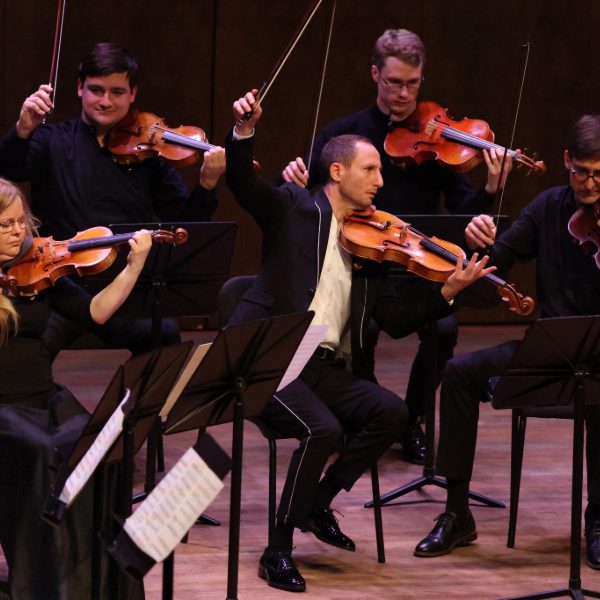
Two years after a musical encounter that was described as masterful, French violist Antoine Tamestit, considered one of the world’s finest, returned to the Quebec stage with Les Violons du Roy. Presented on Thursday evening in Quebec City, this same concert, which took place on Friday evening at Salle Bourgie, featured themes such as death, loss and departure: themes which, despite their dark side, are nonetheless necessary to address, and in which we can nonetheless find light and a form of humanity.

Without preamble, once the orchestra and Tamestit had taken the stage, the hall was plunged into darkness, with the only source of light the lamps on the musicians’ lecterns. This set the stage perfectly for the first piece of the concert, Johann Sebastian Bach’s chorale Für deinen Thron ich tret’ich hiermit [Lord, here I stand before your throne], arranged for strings. According to Antoine Tamestit, in his speech following this short piece by Bach, he wanted to create a sensory experience in which the audience and musicians were led to feel the music through their breathing, through the intrinsic energies of the movement of the musical lines. The moment was indeed soothing, with a sound that was relentlessly gentle, yet rich in harmonies and low tones. The soloist, who also acted as conductor for the first part, followed with Paul Hindemith’s Trauermusik for viola and strings, composed a few hours after the death of King George V. We then enter another universe and harmonic language, with varied textures and musical materials, ending with a quotation from the same Bach chorale.

Tamestit then invited the audience to take part in an aural treasure hunt with Benjamin Britten’s Lachrymae, in which the composer quotes, in the form of variations, the song by Elizabethan composer John Dowland, If my complaints could passions move. To provide context, he performed the original in an arrangement of his own, preceded by the beautiful Flow my tears. A particularly touching moment, in which Tamestit’s sensitive playing came to the fore as the strings accompanied him in pizzicato. In Britten’s piece, Tamestit invited listeners to try and spot the musical extracts of these Renaissance songs scattered throughout Britten’s work. There was a strong appeal to pique listeners’ attention and invite them to open their ears wide to this universe of sound. His interpretation of the musical lines, with their enveloping thickness of sound and pure, fleshy grain, showed an invested and sensitive musicality. It has to be said, however, that Britten won the game of musical hide-and-seek, with Dowland’s excerpts remaining difficult to identify, even for seasoned ears.

The pièce de résistance of the concert was Tamestit’s arrangement for string orchestra of Johannes Brahms’ String Quintet in G major. For this final piece, in which Antoine Tamestit joins the viola section, we were treated to a blaze of emotions and luminous vivacity, particularly in the first and last movements, while the central movements – Adagio and Un poco allegretto – flirted with Hungarian folk accents and melancholy affects respectively. In this new texture with its increased sound amplitude, playing with 21 instrumentalists together without a conductor is a challenge that Les Violons du Roy met with brio and aplomb, producing a particularly rousing and gripping result, especially in the last movement, which is extremely dance-like with gypsy inflections.

The warm ovation from the audience and the radiant smiles on the musicians’ faces made this second collaboration between Antoine Tamestit and Les Violons du Roy well worth repeating. Having begun in darkness and contemplation, the concert ended in great light and human energy. Bringing out the beauty of a program that traces in filigree the themes of death and loss is not in itself innovative. But in this program, imbued with a skilful organicity, where we are naturally transported from one state of mind to another, we are reminded that even in the darkest moments, we can find beauty. To quote Félix Leclerc: “C’est grand la mort, c’est plein de vie dedans.”

Photo Credit : Pierre Langlois

Baroque / Choral Music / Classical / Classical Singing / Sacred Music

Ensemble Caprice | A Beautiful Evening of Passion

by Alexis Desrosiers-Michaud

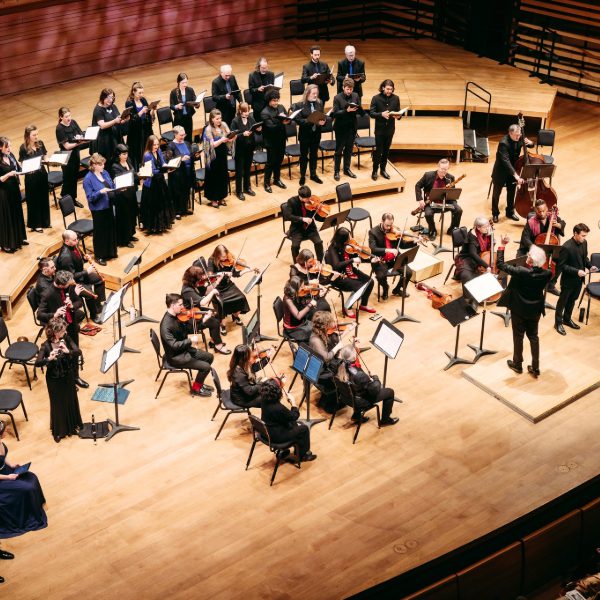
Just two weeks away, Ensemble Caprice and Matthias Maute prelude the Easter celebrations with a presentation of Johann Sebastian Bach’s St. John Passion. In his opening address, Maute recounts that this work has many links, especially in the arias, with the art of opera. As he told us earlier in the interview, “The St. John Passion alternates recitative, arias and choruses to carry the story with intensity. The recitatives tell the story, the arias express the emotions of the characters, and the choruses embody the crowd, reinforcing the drama. The orchestra supports the whole with expressive writing that underlines the key moments.” The proof was shown on Friday.

In the absence of staging, characteristic of the oratorio, a narrator – in this case, the Evangelist – is needed to describe the scenes. Supporting the entire work on his shoulders, tenor Philippe Gagné rises to the challenge of interpreting this thankless but oh-so-important role. His intention to really tell a story is clear, with impeccable German diction, and he lets the textual phrases dictate his interpretation, rather than following the score, placing absolute trust in the continuo.

The other discovery of the evening was chorister-soloist William Kraushaar – whose composition had captivated us at the last Caprice concert – in the role of Jesus. Not only is his voice clear, but God, it carries! We’re already looking forward to hearing him as a soloist next season. Countertenor Nicholas Burns and soprano Janelle Lucyk deliver their arias with great emotion. Burns is very moving in duet with the mournful viola da gamba in Es ist vollbracht (“All is finished”). As for Lucyk, her voice is somewhat restrained, but blends well with the flutes in the aria Ich folge dir gleichfalls (“I follow you”). These two soloists not only deliver their arias with musicality, but also with a spellbinding, moving stage presence.

The chorus is very well prepared, and the dry articulations given to it fit well with the role it occupies, that of the plebeian ordering and cheering the action of the biblical tale. The best example is the track “Kreuzige” (Cruxify it!), where the short, accented articulations are incisive.

At the very end of the work, there was something solemn about seeing the soloists (except for John the Evangelist) join the chorus in a dancing Rut Wohl, and the final chorale, in accompaniment, thanksgiving and celebration of Christ’s life.

Photo: Tam Lan Truong

Indie Pop / Synth-Pop

Fabiana Palladino au Ritz PDB

by Rédaction PAN M 360

Fabiana Palladino est une chanteuse, auteure-compositrice, productrice et multi-instrumentiste énigmatique basée à Londres, dont les morceaux mélancoliques et légèrement décalés rappellent des influences telles que Kate Bush et Prince, ainsi que des interprétations plus épurées de grandes ballades synth-pop des années 80. Son single Waiting de 2017 a marqué ses débuts sous le label Paul Institute de Jai Paul. Bien que ses sorties aient été peu fréquentes, ses singles des années suivantes étaient toujours marqués par un sens de l’événement. En 2023, elle a collaboré avec Jai Paul sur le morceau I Care, un duo qui a servi de prélude à son premier album éponyme, sorti l’année suivante via Paul Institute et XL Recordings.

Fabiana Palladino is an enigmatic London-based singer/songwriter, producer, and multi-instrumentalist whose yearning, slightly left-of-center tunes bring to mind influences such as Kate Bush and Prince as well as more stripped-down interpretations of grandiose ’80s synth pop ballads. 2017’s “Waiting” marked her debut for Jai Paul’s Paul Institute. Though infrequently released, her singles over the next few years were marked with a sense of occasion. In 2023, she and label head Jai Paul teamed up for “I Care,” a duet that previewed Palladino’s self-titled full-length debut, released the following year through Paul Institute and XL Recordings.

POUR ACHETER VOTRE BILLET, C’EST ICI!

Ce contenu provient d’AllMusic et est adapté par PAN M 360

Classical Singing / Contemporary

Nouvel Ensemble Moderne | New Songs for a New Era

by Judith Hamel

The Nouvel Ensemble Moderne (NEM) is writing the first pages of a new book in this 2024-2025 season, divided into three chapters and driven by the wind of renewal of Jean-Michaël Lavoie, who succeeds Lorraine Vaillancourt after 35 years at the helm of the chamber orchestra. For the second chapter of three this season, the NEM invites us to the Cinquième salle at Place des arts for a concert in collaboration with the Atelier lyrique de l’Opéra de Montréal.

Entitled Chapitre 2 – Des airs nouveaux, this afternoon concert featured a repertoire equally divided between three Quebec composers and Korean composer Unsuk Chin. Upon entering the foyer, the audience was greeted by a mediation team led by Irina Kirchberg, visiting professor at the Université de Montréal, which included a recording device for superimposing spectators’ voices, as well as an interactive panel in the form of a memory game inviting them to discover more about the works on the program.

The concert then opened with José Evangelista’s Vision, a piece for small ensemble and mezzo-soprano with a mystical aura. Brazilian singer Camila Montefusco brilliantly interpreted this work, which highlights the composer’s Spanish origins and multiple influences.

This was followed by Claude Vivier’s Bouchara, a long love song sung entirely in an invented language. Soprano Chelsea Kolić, buoyed by the expressiveness of the writing, gave us the impression of understanding her message, even as it eluded us. So we don’t need to speak the language to understand love.

In the second half, Luna Pearl Woolf’s Orpheus on Sappho’s Shore impressed with the rich voice of countertenor Ian Sabourin, who deftly navigated his multiple registers.

Finally, the NEM offered Unsuk Chin’s Cantatrix Sopranica, the only piece outside Canada on the program. Written for two sopranos, a countertenor and ensemble, it was performed here by Chelsea Kolić, Ariadne Lih and Bridget Esler, three sopranos whose timbres intertwine perfectly in this texturally fascinating work. Chin explores the very act of singing, summoning vocal warm-ups, role-playing and unexpected reversals between singers and musicians. Its fragmented writing makes it a hyper-vocal work in which the orchestral ensemble extends and magnifies the voices. Accessible and complex at the same time, blending virtuosity, humor and emotion, this piece is a perfect match for the NEM’s new direction.

The collaboration between the Atelier lyrique and the NEM has been a success. The commitment of the young singers, with their expressive, precise voices, blends very well with the spirit of the NEM.

Jean-Michaël Lavoie conducts with such fluidity. When the lights illuminate the musicians’ work, we can at the same time deconstruct every little intention of the conductor, seeing with clarity the variations of suppleness in these gestures. In this way, the NEM is in good hands.

For their next concert, we’re lucky not to have to wait too long. On May 10, they’ll be at Salle Pierre-Mercure, presenting Chapitre 3 – Dérive 2 Pierre Boulez.

Folk / Pop

Francos de Montréal : Isabelle Boulay à la scène Loto-Québec

by Rédaction PAN M 360

Née le 6 juillet 1972 à Sainte-Félicité, Québec, Isabelle Boulay est une star internationale. Détentrice de 19 Félix et de 2 Victoires de la musique, elle détient le record, avec Céline Dion, de la chanteuse québécoise ayant le plus souvent remporté le prestigieux Félix de l’Interprète féminine de l’année, soit à 7 reprises. L’aventure débute dans les années 90, alors qu’elle remporte trois prix d’interprétation dans des concours de chant réputés : au Festival de la Petite Vallée et au Festival international de la chanson de Granby. Ces honneurs lui permettront de décrocher des contrats pour la série télé Alys Robi et la comédie musicale Starmania. En 1996, elle fait paraitre* Fallait pas*, son premier album. Le deuxième, États d’amour, est celui qui lui amène la notoriété et le succès : le disque s’écoule à plus de 240 000 exemplaires au Québec. Puis, à la parution de l’album Mieux qu’ici-bas, c’est la consécration. Elle adhère à ce petit groupe d’artistes de la francophonie qui vend plus d’un million d’albums pour un même opus.

Born on July 6, 1972, in Sainte-Félicité, Quebec, Isabelle Boulay is an international star. A recipient of 19 Félix Awards and 2 Victoires de la Musique, she shares the record with Céline Dion for the most Félix wins for Female Performer of the Year — a title she has claimed seven times. Her journey began in the 1990s, when she won three interpretation prizes at prestigious singing competitions, including the Petite-Vallée Festival and the Granby International Song Festival. These honors led to roles in the TV series Alys Robi and the musical Starmania. In 1996, she released her debut album, Fallait pas. Her second album, États d’amour, brought her widespread recognition and commercial success, selling over 240,000 copies in Quebec alone. With the release of Mieux qu’ici-bas, she reached new heights, joining the elite ranks of Francophone artists who have sold over one million copies of a single album.

CE SPECTACLE EST GRATUIT!

Ce contenu provient d’IsabelleBoulay.com et est adapté par PAN M 360

Contemporary / Minimalist

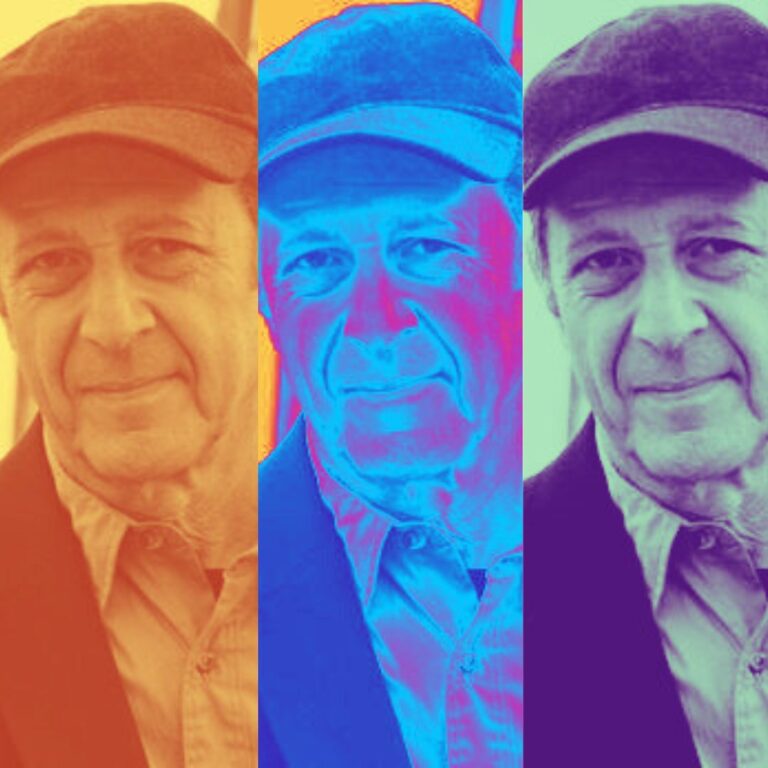
Steve Reich’s quartets at Bourgie Hall : a perfectly oiled minimalist mechanism

by Frédéric Cardin

On Tuesday 1 April, for the first time in Montreal, all three of Steve Reich’s string quartets were performed in a single concert. When I say string quartets, I really mean string quartets AND tape, because they all use the latter. Played in inverse chronological order by the Mivos Quartet, the three works are emblematic of the sonic universe of the American, a pioneer of minimalism and, for many artists of subsequent generations, the grandfather of techno music and the sampling technique. 

READ THE INTERVIEW WITH THE VIOLIST OF THE MIVOS QUARTET ABOUT STEVE REICH’S QUARTETS

Indeed, two of the three quartets use sound sampling (concrete sounds, snatches of voice, etc.) in a rhythmic and melodic perspective. The use of concrete sounds in music does not date back to Reich (Schaeffer, Henry and Stockhausen were there before him), but his instinctive and rhythmically catchy way of distributing them has inspired a creative movement of which hip hop is the latest genre to take up, often unknowingly, certain imperatives. 

The most recent, WTC 9/11, uses sounds taken from the tragedy of 11 September 2001 in New York, while the first, “Different Trains” (which remains the best of all), draws a parallel between the trains travelling between New York and Los Angeles (which Reich often used at one time), and those that transported Jews to extermination camps during the Second World War (Reich is Jewish, and the allegory came forcefully to mind). In between, the Triple Quartet requires a tape on which two other quartets each play a score while the live ensemble performs its own on stage. 

The Mivos Quartet has recorded these same three quartets for Deutsche Grammophon (they also played all the tracks of the two recorded quartets used inTriple Quartet). Its musicians are therefore well versed in the demands of this music. Nevertheless, performing this music on stage is extremely demanding. You have to concentrate at all times to react precisely to what is happening in the soundtrack and with your colleagues, and you have to keep track of all the repetitive patterns of the score, regularly punctuated by small changes that are as subtle as they are fundamental to the dynamic energy of the music. As they say, it’s easy to get lost in all that. 

Hats off to the four excellent musicians of the New York-based ensemble (on their first visit here!) Olivia de Prato and Adam Woodward on violins, Victor Lowrie Tafoya on viola and Nathan Watts on cello. Their reading was breathtaking in its precision and coordination. 

It’s almost an annual gathering of great names in minimalism that the Bourgie Hall programme offers us (in recent years we’ve had Glass and Missy Mazzoli), and we welcome it with enthusiasm. We hope it will continue and, why not, that there will be even more. 

Piano

Chilly Gonzales au Théâtre Rialto

by Rédaction PAN M 360

Chilly Gonzales est aussi bien réputé pour son approche intimiste du piano à travers sa trilogie d’albums Solo Piano que pour son remarquable talent de showman en concert et ses compositions pour des artistes de grande renommée. Vêtu d’un peignoir et chaussé de pantoufles, il remplit les salles de spectacle du monde entier : en l’espace d’une soirée, il peut donner un sublime récital de piano, disséquer la musicologie d’un tube de Billie Eilish et faire preuve de sa dextérité lyrique de rappeur. Chilly aime aussi s’interroger sur son propre enthousiasme pour les musiques souvent considérées d’un « goût » douteux et ose poser la question : la musique doit-elle être soumise à une appréciation intellectuelle ou peut-elle simplement aller droit au cœur ?

Chilly Gonzales is as much renowned for his intimate approach to the piano on his trilogy of Solo Piano albums as he is for his remarkable showmanship in concert, composing for artists of great renown. Dressed in a bathrobe and slippers, he fills concert halls the world over: in the space of an evening, he can give a sublime piano recital, dissect the musicology of a Billie Eilish hit and demonstrate his lyrical dexterity as a rapper. Chilly also likes to question his own enthusiasm for music often considered of dubious “taste”, and dares to ask the question: should music be subject to intellectual appreciation, or can it simply go straight to the heart?

LES BILLETS POUR CE SPECTACLE SONT ÉPUISÉS!

Ce contenu provient de POP Montréal et est adapté par PAN M 360.

Afro Funk / Country Folk / Reggae

Festival International Nuits d’Afrique : Reggae Uprising Band & Mello G à la scène Loto-Québec

by Rédaction PAN M 360

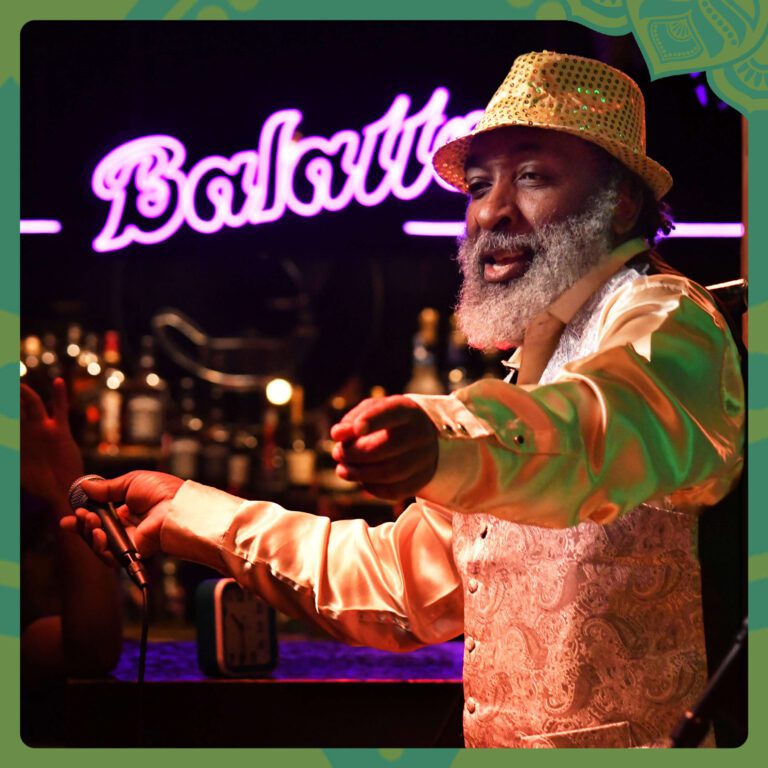
Disciple de Bob Marley, The Reggae Uprising Band produit un Reggae intemporel, imprégné de coolitude. Reprenant les grands standards made in Kingston, les membres du groupe, qui ont pas mal roulé leur bosse et collaboré notamment avec des légendes comme Marcia Griffiths, Luciano ou Tinga Stewart, s’amusent à emprunter des fragments sonores à la soul, au R&B, au jazz, à la folk, à la country et au rock pour faire plaisir au public et faire danser petits et grands. Le groupe partagera la scène avec le vétéran Mello G, un grand du reggae, à la voix chaude et au message pacifique, qui a écumé les scènes du Canada et du monde au cours de sa longue carrière et qui revient à l’avant plan avec les titres de son dernier EP Journey in roots (2024).

Following in Bob Marley’s footsteps, Reggae Uprising Band delivers funky music that never gets old. Composed of seasoned reggae artists, the band has collaborated with musical legends like Marcia Griffiths, Luciano and Tinga Stewart. Covering great Jamaican classics, they playfully incorporate the sounds of soul, R&B, jazz, folk, country or rock, that always gets young and old dancing on the spot, to the great enjoyment of everyone. The band will share the stage with the great reggae veteran Mello G, whose warm voice and peaceful message have graced stages across Canada and around the world during his long career, and who returns to the forefront with tracks from his latest EP Journey in roots (2024).

CE SPECTACLE EST GRATUIT!

Ce contenu provient du Festival International Nuits d’Afrique et est adapté par PAN M 360

Subscribe to our newsletter