

POUR ACHETER VOTRE BILLET, C’EST ICI!
Ce contenu provient de l’Igloofest et est adapté par PAN M 360

POUR ACHETER VOTRE BILLET, C’EST ICI!
Ce contenu provient de l’Igloofest et est adapté par PAN M 360

Une nuit pour plonger dans les profondeurs hypnotiques de la techno avec Wata Igarashi, figure clée de la scène japonaise, Marie Davidson, icône d’ici dont la réputation n’est plus à faire, et Asha, du collectif montréalais Ether. Producteur le jour et maître des atmosphères psychédéliques la nuit, Wata Igarashi signera un set techno autant trippy que raffiné et d’une précision méticuleuse. Marie Davidson nous offrira son électro brute et élégante à l’énergie post-punk et où le dancefloor devient son exutoire – pour le plus grand plaisir de tous.tes. La cofondatrice du collectif Ether, Asha, s’imposera elle aussi avec ses sonorités bass, percussives et polyrythmiques. Êtes-vous prêt.e.s pour cette soirée surréelle?
Get ready for raw rave energy in the dome. Featuring: Dr. Rubinstein, Berlin’s underground icon who will unleash her acid house and techno; Safia Nihil, Chez.Kito.Kat Records co-founders’ new project, and Montreal duo AGUMA. Punchy basslines. Hypnotic synths. Solid grooves. Dr. Rubinstein will deliver her rave techno, blending acid basslines, eclectic selections, and non-stop energy. She’s joined by two Montreal duos: Safia Nihil—the project of DBY and Shadya from Chez.Kito.Kat Records—who will take you on a journey through downtempo lo-fi, modal jazz, acid, and North African-inspired sounds; and AGUMA, who will offer a live performance with immersive, polyrhythmic textures spanning dub, jazz, and fourth world. A night to get lost in sound, between sonic experimentation and moments of collective trance.
Wata Igarashi
Wata Igarashi s’est rapidement imposé comme l’un des DJ et producteurs les plus en vue du Japon. Il explore le côté le plus profond de la techno à travers des EPs acclamés sur Midgar, The Bunker NY et le label Bitta de DJ Nobu, ainsi que des morceaux marquants sur des compilations de Semantica et Time to Express. Le jour, Igarashi travaille comme producteur sonore, et les compétences qu’il a développées à travers ce métier se reflètent dans ses productions, reconnues pour leur subtilité et leur finition soignée. Igarashi poursuit un son similaire dans ses sets DJ, développant une approche distinctive de la techno plus psychédélique et trippy pour laquelle le Japon est désormais réputé.
Wata Igarashi has quickly emerged as one of Japan’s leading DJs and producers. He has been exploring the deeper side of techno through well-received EPs on Midgar, The Bunker NY, and DJ Nobu’s Bitta label, as well as standout tracks on compilations on Semantica and Time to Express. By day, Igarashi works as a sound producer and the skills he has developed through his work are reflected in his productions, which are distinguished by their subtle and carefully polished feel. Igarashi pursues a similar sound in his DJ sets, developing a distinctive take on the more trippy and psychedelic brand of techno Japan has become known for.
Marie Davidson
Marie Davidson est une force audacieuse de la musique électronique, mêlant techno, spoken-word et pop expérimentale pour créer un son unique. La productrice montréalaise s’est fait remarquer avec Perte d’identité et Working Class Woman (nommé au Polaris), explorant avec humour et intensité les dualités de la vie nocturne. En 2020, elle a élargi son univers avec Renegade Breakdown, pour des chansons pop expérimentales où elle chante pour la première fois. Son sixième album, City of Clowns, marque un retour audacieux à la scène club avec un son hybride mêlant techno, spoken-word et pop mélodique, reflétant ses racines pré-pandémie tout en évoluant vers de nouveaux thèmes, dont un regard critique sur les géants du numérique.
Marie Davidson is a fearless force in electronic music, blending techno, spoken-word, and experimental pop into a signature sound. The French-Canadian producer first gained attention with Perte d’identité and the Polaris-nominated Working Class Woman, exploring the dualities of nightlife with wit and intensity. In 2020, she expanded her sound on Renegade Breakdown, collaborating with Pierre Guerineau and Asaël Robitaille to craft experimental pop songs where she sang for the first time. Her sixth album, City of Clowns, marks a bold return to the club scene with a hybrid sound merging techno, spoken-word, and melodic pop, reflecting both pre-pandemic roots and an evolution shaped by new themes, including a critical take on Big Tech.
Asha
Asha est une force montante de la scène électronique montréalaise. Originaire de Toronto et profondément enracinée dans la culture caribéenne, elle puise dans son riche héritage musical pour créer des sets où se mêlent des sonorités lourdes en basses, percussives et polyrythmiques qui franchissent les frontières et les genres. Que ce soit en solo ou au sein du duo Runa and Asha, elle a forgé une identité sonore singulière, naviguant entre techno, bass, électro, breaks et plus encore. En dehors des platines, Asha est une organisatrice engagée et cofondatrice d’Ether, un collectif dédié à la mise en lumière des expressions contemporaines et diasporiques au sein de la musique bass.
Asha is a rising force in Montreal’s electronic music scene. Originally from Toronto but with deep Caribbean roots, her sets are a reflection of her rich musical upbringing—seamlessly fusing bass-heavy, percussion-driven, polyrhythmic sounds that transcend borders and genres. Whether solo or as one half of the DJ duo Runa and Asha, she’s carved out a distinct sound that moves fluidly between techno, bass, electro, breaks, and more. Beyond the booth, Asha is a dedicated organizer and co-founder of Ether, a collective committed to spotlighting contemporary and diasporic expressions within bass music.
POUR ACHETER VOTRE BILLET, C’EST ICI!
Ce contenu provient de la SAT et est adapté par PAN M 360

POUR ACHETER VOTRE BILLET, C’EST ICI!
Ce contenu provient de l’Igloofest et est adapté par PAN M 360
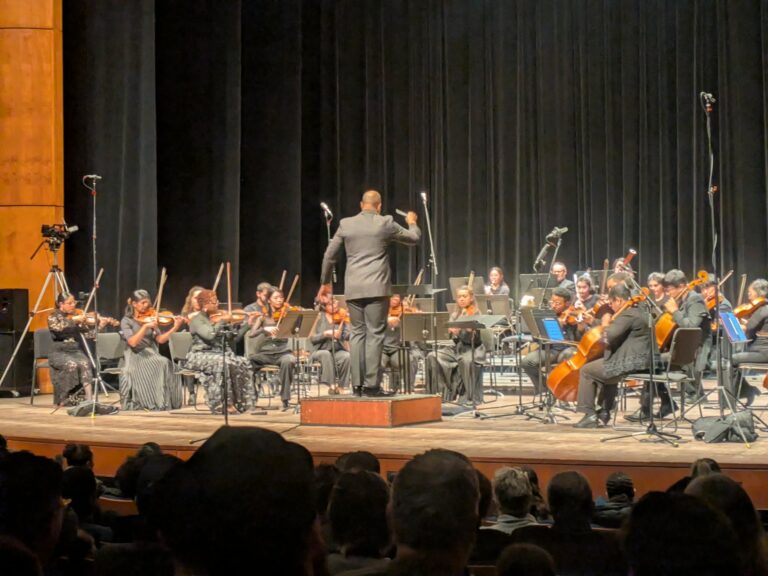
A concert by the EDI-wise Obiora Ensemble is enough to make anyone happy. One, the orchestra is good, two, the atmosphere is cheerful and family-friendly (there are young people everywhere!) and three, you often make some great musical discoveries there, alongside some good pillars of the repertoire.
Last night at the Pierre-Mercure hall in Montreal, we got all of that. In addition, it was also Daniel Bartholomew-Poyser’s first concert as Principal Guest Conductor. The man has charisma. He speaks good French and of course English, in a spontaneous exchange between the two languages, “Montreal style.” He has a sense of humour and sympathetically betrays his passion for the classics. One can say that, in terms of image and marketing, Obiora seems to have made a good choice.
On the musical side, we also discover an artist who greatly enjoys constructing his ensemble according to very strong criteria of clarity and precision. The man is a detail refiner.
A given at the start of the concert, when we were given Haydn’s rarely heard first symphony. As Bartholomew-Poyser said amusingly, no 104, or 103, or 88, or any other without a no. 1! The conductor immediately established his vision of hyper-articulated music, driven by chiselled rhythms. A nice introduction, notwithstanding the fact that it is still Haydn not yet totally at the peak of his art of concision: the second movement is too long.
In order to give the wind section the opportunity to shine, the conductor chose to follow up with the delicate and neo-classicist Three Short Pieces for wind quintet, by Jacques Ibert. A resolutely French universe, made of elegance and instrumental purity, very well interpreted by the first chairs of flute, oboe, clarinet, bassoon and horn of the ensemble.
Then the sky was amber, a concerto for viola with the character of a symphonic poem followed, in its world premiere. The new creation by Iranian-Canadian (Toronto) Saman Shahi evokes, in a language oscillating between contemporary atonality and cinematic chromaticism, the building of a storm, first in the distance, then approaching and enveloping everything, before subsiding and leaving behind a devastated landscape capped by the evanescent beauty of an amber sky (hence the title of the work). Soloist Sharon Wei navigated the gusts of Shahi’s highly expressive music with a combination of virtuosity and sonic power. By turns resisting the storm as best it could and commenting thoughtfully on a landscape left bloodless, Wei’s viola resonated with power.
I really love the music of the composer who followed in the program: Caroline Shaw. The American knows very skilfully how to blend the techniques of the modern avant-garde with accessible neo-tonal writing. Her ideas are often simple but constructed with great efficiency. The piece chosen by Bartholomew-Poyser, Entr’acte, is a tribute in the form of a deconstruction of classical language (a nod to Haydn), both harmonic and rhythmic. As in a pulse organised by inhalations and exhalations, a simple and elegant melody is regularly tortured, disarticulated, before returning to its original state. It is fine music, pleasant to discover and stimulating. We eagerly await the next “destructive” iteration to see what tactics the composer will use to illustrate her point.
Stravinsky’s Pulcinella ended the evening. A way for the conductor to use the full technical possibilities of the ensemble. A very correct version, if not for some sourness in the first violins, the oboe not demonstrating the desired narrative poise in the Serenata (2nd movement), and a slightly too high number of tears in the horns later in the work.
Beyond this nitpicking, we appreciated the exceptional precision of the construction of the portraits and the scenery by the conductor. As he showed us from the beginning of the concert, Bartholomew-Poyser weaves almost arachnid webs with his orchestra. Such diligent work will certainly yield very beautiful results in the medium term. We will appreciate, perhaps, the addition of a holistic binder from him, an overall timbral velvet that will prevent him from falling into excessive sonic granularity. But that will come in due time.
In the meantime, the new principal guest conductor has demonstrated very fine qualities of musical direction, but also of communication and artistic choices. I will be very pleased to see and hear what he will do in the next three years of his new contract.
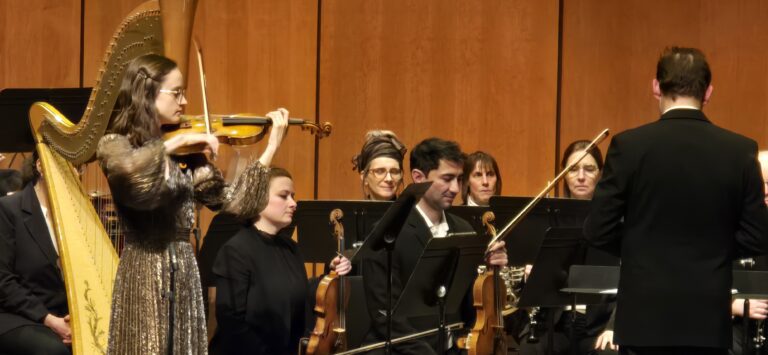
The Fougue concertante (concertante fervour) concert by the Société de musique contemporaine du Québec (SMCQ) presented three concertos of very high musical quality last night, performed by as many soloists from Gen Z. At least it seems to me, at a glance from a man of the age of Gen X. Maybe one or two are actually in the previous category, two or three years over? Well, whatever, it made a good title…
The first of the winter-spring 2026 concerts celebrating the 60th anniversary of today’s honourable institution of contemporary music, Fougue concertante thus provided an opportunity for three young soloists to shine in a recent concerto, Catherine Cherrier on percussion, Élise Poulin on oboe, and Bailey Wantuch on violin.
LISTEN TO THE INTERVIEW WITH SMCQ’S ARTISTIC DIRECTOR ABOUT THE ONGOING CONCERT SERIES (In French)
As a prelude to the main program, the SMCQ paid tribute to Margareta Jerić, a young Montreal-based composer of Croatian origin, who passed away at just 43 years old in November 2025.
The Echoes of the Adriatic, a work accompanied by video images of an old Croatian sardine production factory, deals with great vivacity with the opposition between the beautiful and the ugly, nature and industry. It is a playful, pixelated kind of music, where each note feeds the next to create a very seductive whole. The disappearance of this artist who studied with Ana Sokolovic (of Serbian origin) is all the more regrettable because she was in the process of building, with her former teacher, a kind of Balkan connection in contemporary Montreal music.
In (d)Tourner (a play on words in French meaning to divert), Philippe Leroux evokes circularity. Not necessarily that of an object located and moving, but rather, for example, sounds in the scenic space or the rotation of melodic and rhythmic movements. And, as the title indicates, this round is not conceived as a perpetual refrain, or a repetitive and tonal approach like that of the minimalists, but rather as a movement leading to expansion and transformation in an atonal but beautiful environment. For the listener, this circularity is initially difficult to detect. We are here in an applied conceptual abstraction. But as the twenty-minute piece evolves, the idea takes shape better and better and crosses the space between the stage and the audience. Through a rather dense writing, the sonic “movements” take flesh and consistency. Until the last gestures of the soloist, who must turn on herself while playing the marimba, striking her sticks against each other and ending on the snare drum. Twice. Beyond this physicality imbued with theatricality, and finally giving physical incarnation of the core idea, Catherine Cherrier delivered an impeccable and dynamic performance.
LISEZ L’ENTREVUE D’ALAIN BRUNET AVEC PHILIPPE LEROUX
Following was a superb discovery for your humble chronicler: the excellent Trame I by Martin Matalon for oboe and ensemble. Made of sound interweavings and inspired by a homonymous poem by Jorge Luis Borges, Matalon’s concerto is a bubble of pleasure of some fifteen minutes where the infinite coloristic possibilities of the oboe and the ensemble offer a real buffet for the ears, in addition to inviting head nodding because the gentleman has an excellent sense of rhythm. “Varèse who swings,” to paraphrase the artistic director of the SMCQ, Simon Bertrand, with whom I was chatting before the concert. Élise Poulin, admirable in her virtuosity and flawless precision in this formidably demanding writing, all with a radiant instrumental sound, offered an impressive reading of this music.
The last work on the program, also the most substantial, was Graal Théâtre by the Finnish Kaajia Saariaho, a muscular concerto of about thirty minutes, for violin and orchestra. This entirely acoustic concerto, a rarity for Saariaho, who likes to incorporate electronics into her music, displayed an almost romantic textural and characterful breadth. There are many traits of a grand concerto inherited from the 19th century tradition: lyrical outbursts, athletic double strings, episodes of spectacular virtuosity, etc. All in the lady’s typical shimmering, crystalline language. To say that the young Bailey Wantuch, a Chicago native but firmly established in our metropolis now, was good, would be a gross understatement. The young lady of diminutive stature nonetheless exudes an astonishing and communicative expressive force. An exceptional violinist, certainly. Wantuch is also part of the brand new Quatuor Mémoire, which I recently told you about in a very positive review of their first album Chronos, Kaïros et Aiôn (READ THE REVIEW HERE).
Mentionnons avant de terminer l’apport de très très haute tenue de l’ensemble de la SMCQ sous la direction infaillible de Cristian Gort. Un ensemble presque entièrement renouvelé depuis l’arrivée de ce directeur musical efficace, bien que discret. Impeccable prestation en support à des solistes qui pouvaient se concentrer totalement sur leur jeu sans craindre quoi que ce soit.
The SMCQ has shown us that rumours linking a certain type of “generation” with laziness or negligence are just nonsense, at least in the creative and contemporary art scene. Here, three children associated with ‘Generation Z’ took control of creativity and took us on a pretty good journey with them. Getting back on board as soon as possible, please!
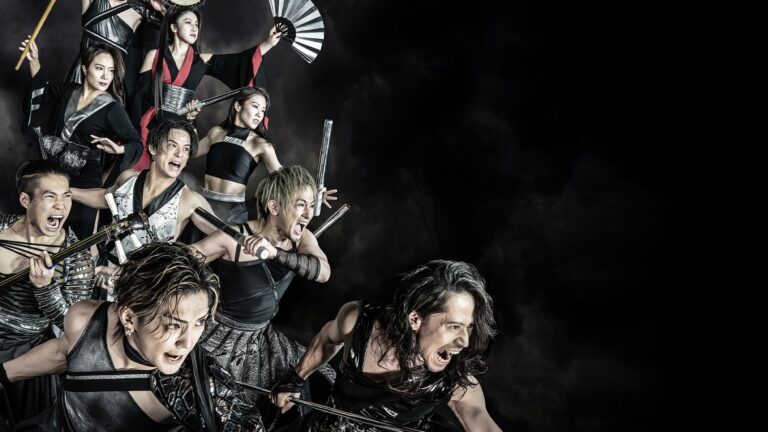
Les artistes-percussionnistes virtuoses de renommée mondiale Drum Tao sont de retour à Montréal avec une expérience musicale profondément puissante et moderne qui célèbre l’art ancien des tambours japonais – dans le récit symbolique d’un monde en pleine mutation.
L’expérience est magistrale : la synchronicité des tambours liée à l’athlétisme des interprètes, engagés dans une performance physique où mouvements d’arts martiaux, chorégraphie rigoureusement précise, sublimes costumes contemporains et déploiement audiovisuel spectaculaire subjuguent les sens et en mettent plein la vue.
Drum Tao joue sur une vaste gamme de tambours japonais, y compris des caisses claires tenues à la main, des tambours ōdaiko pouvant peser jusqu’à trois tonnes, et des wadaiko qui se distinguent par la variété très rare et unique de leurs expressions sonores. Le marimba japonais, la flûte et la harpe font également partie de l’ensemble.
Basé à Oita, au Japon, le groupe compte plus de 40 percussionnistes et se produit sur des scènes du monde entier, attirant plus de neuf millions de personnes jusqu’ici. Divisés en trois groupes, les percussionnistes peuvent performer simultanément le même soir sur autant de continents, cumulant ainsi plus de 700 spectacles par année!
The world-renowned virtuoso percussionists of Drum Tao are returning to Montreal with a profoundly powerful and modern musical experience that celebrates the ancient art of Japanese drumming—in a symbolic narrative of a changing world.
It is a commanding experience: synchronous drumming combined with athleticism, as the drummers engage in a physical performance in which martial arts movements, rigorously precise choreography, sublime contemporary costumes, and a spectacular audiovisual presentation thrillingly overpower the spectators’ senses.
Drum Tao plays a wide range of Japanese drums, including hand-held snare drums, ōdaiko drums weighing up to three tons, and wadaiko drums, distinguished by the very rare and unique variety of sounds they can express. The ensemble also includes Japanese marimba, flute, and harp.
Based in Oita, Japan, the group includes over 40 percussionists and performs on stages around the world, having been seen by over nine million spectators to date. Divided into three groups, the percussionists can perform simultaneously on the same night on as many continents, thereby giving over 700 performances per year!
POUR ACHETER VOTRE BILLET, C’EST ICI!
Ce contenu provient de la Place des Arts et est adapté par PAN M 360
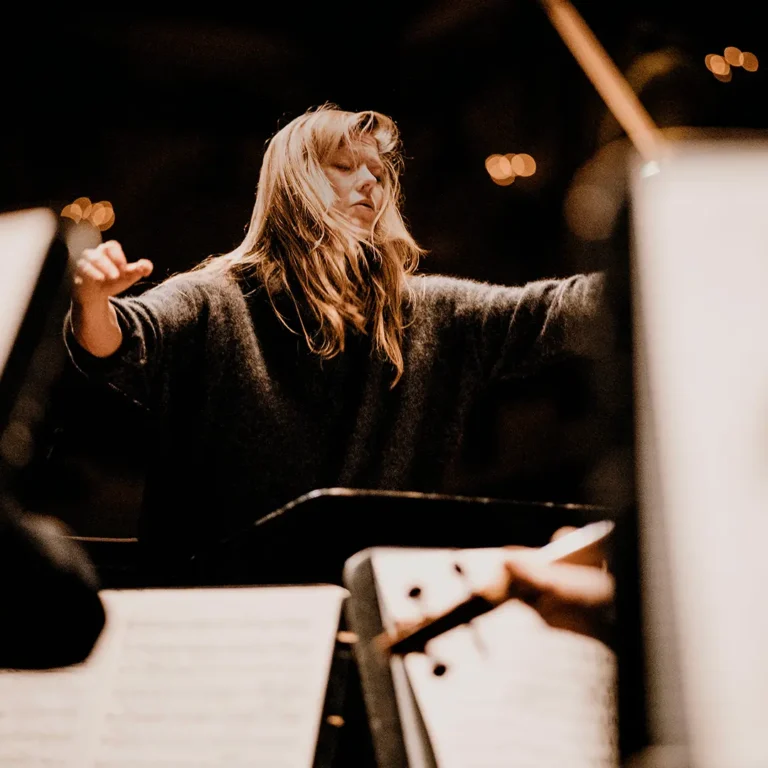
Lors de ce concert éclaté, Barbara Hannigan vous réserve quelques surprises. Musique et danses sont au rendez-vous en compagnie d’œuvres d’Offenbach, Weill, Glenn Miller, ainsi que d’autres choisies par Barbara Hannigan, pour vous faire passer une soirée haute en couleur!
Barbara Hannigan has some exciting surprises lined up for you in this edition of the Concerts éclatés series. Prepare for a vibrant and unforgettable evening where music and dance take centre stage, featuring works by Offenbach, Weill, Glenn Miller, and other carefully curated selections chosen by the conductor herself.
Programme
Jacques Offenbach, Gaîté parisienne (arr. M. Rosenthal), extraits (25 min)
Et autres œuvres de Glenn Miller, Frederick Loewe, Kurt Weill, etc.
Program
Jacques Offenbach, Gaîté parisienne (arr. M. Rosenthal), excerpts (25 min)
And other works by Glenn Miller, Frederick Loewe, Kurt Weill, etc.
POUR ACHETER VOTRE BILLET, C’EST ICI!
Ce contenu provient de l’Orchestre symphonique de Montréal et est adapté par PAN M 360

POUR ACHETER VOTRE BILLET, C’EST ICI!
Ce contenu provient de l’Igloofest et est adapté par PAN M 360

Mettant en vedette Maude Cyr-Deschênes, Olivier Dion, Matthieu Lévesque, Nathalie Simard, Océane Kitura Bohémier-Tootoo et Laurent Lucas, Evangéline est une fresque historique musicale empreinte de modernisme. Une vision cinématographique d’une épopée qui prend racine en terre autochtone, en Nouvelle-Écosse. 1755, les Acadiens sont déportés… Une cicatrice que le fil du temps peine à effacer. Une fresque épique qui porte l’histoire d’amoureux légendaires. Un amour déporté que celui des révolutionnaires Evangéline et Gabriel, alors qu’en eux brûle le cœur de L’Acadie. Encore aujourd’hui, une mémoire troublée nous habite, tandis que nous gardons à l’esprit les liens tissés entre le peuple Français et la Nation Mi’Kmaq. Evangéline et Gabriel nous mèneront sur les sentiers d’une quête empreinte d’espoir et de guérison.
Starring Maude Cyr-Deschênes, Olivier Dion, Matthieu Lévesque, Nathalie Simard, Océane Kitura Bohémier-Tootoo and Laurent Lucas, Evangéline is a sweeping historical musical with a modern twist. A visually stunning rendition of a saga born of the Indigenous land now known as Nova Scotia. In 1755, the Acadians were expelled from their homes. Time has not fully healed the wounds. In this epic tale of legendary lovers, revolutionaries Evangéline and Gabriel are deported but their Acadian hearts still burn strong. To this day, heartrending memories of those times still linger, while the ties that bind the French and Mi’Kmaq nations live on. Evangéline and Gabriel can lead us along the path of hope and healing.
POUR ACHETER VOTRE BILLET, C’EST ICI!
Ce contenu provient de la Place des Arts et est adapté par PAN M 360
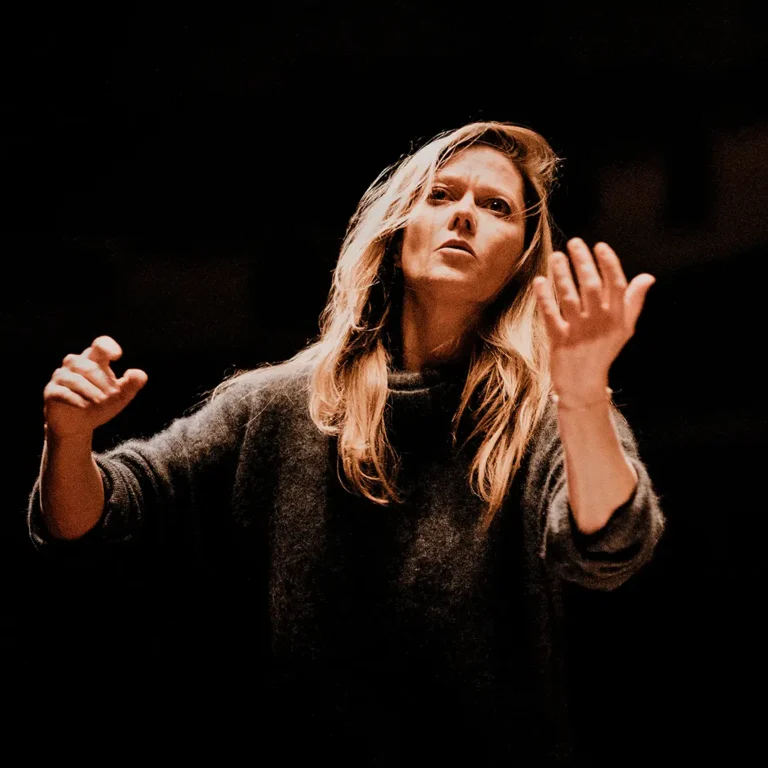
Vibrez aux rythmes enivrants d’Offenbach et de la nostalgie sensuelle du tango dans Youkali avec Barbara Hannigan! Acclamée pour ses performances exceptionnelles à la Maison symphonique en 2022 et en 2024, la cheffe d’orchestre et soprano canadienne revient pour une soirée placée sous le signe de l’intensité. Son talent et sa présence charismatique sauront vous séduire dans ce programme aussi original qu’attrayant!
Barbara Hannigan returns for an electrifying evening, bringing the intoxicating rhythms of Offenbach and the sultry nostalgia of the tango in Youkali. Renowned for her stunning performances at the Maison symphonique in 2022 and 2024, the Canadian conductor and soprano is set to mesmerize with her extraordinary talent and magnetic presence in this bold and captivating program.
Programme
Joseph Haydn, Symphonie no 90, Hob. I : 90 (24 min)
Aaron Copland, Dance Symphony (20 min)
Jacques Offenbach, Gaîté parisienne (arr. M. Rosenthal), extraits (25 min)
Kurt Weill, Lost in the Stars (4 min)
Kurt Weill, Youkali (6 min)
Program
Joseph Haydn, Symphony No. 90, Hob. I:90 (24 min)
Aaron Copland, Dance Symphony (20 min)
Jacques Offenbach, Gaîté parisienne (arr. M. Rosenthal), excerpts (25 min)
Kurt Weill, Lost in the Stars (4 min)
Kurt Weill, Youkali (6 min)
POUR ACHETER VOTRE BILLET, C’EST ICI!
Ce contenu provient de l’Orchestre symphonique de Montréal et est adapté par PAN M 360


Ce contenu provient de l’Igloofest et est adapté par PAN M 360


POUR ACHETER VOTRE BILLET, C’EST ICI!
Ce contenu provient de l’Igloofest et est adapté par PAN M 360