CE SPECTACLE EST GRATUIT!
Ce contenu provient de Présence Autochtone et est adapté par PAN M 360
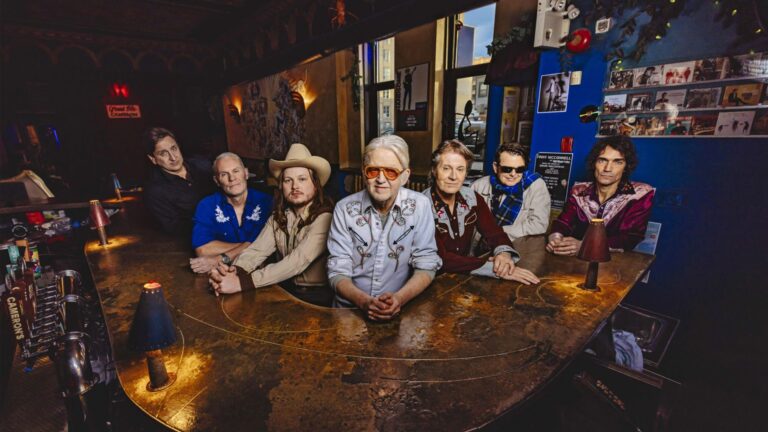
CE SPECTACLE EST GRATUIT!
Ce contenu provient de Présence Autochtone et est adapté par PAN M 360
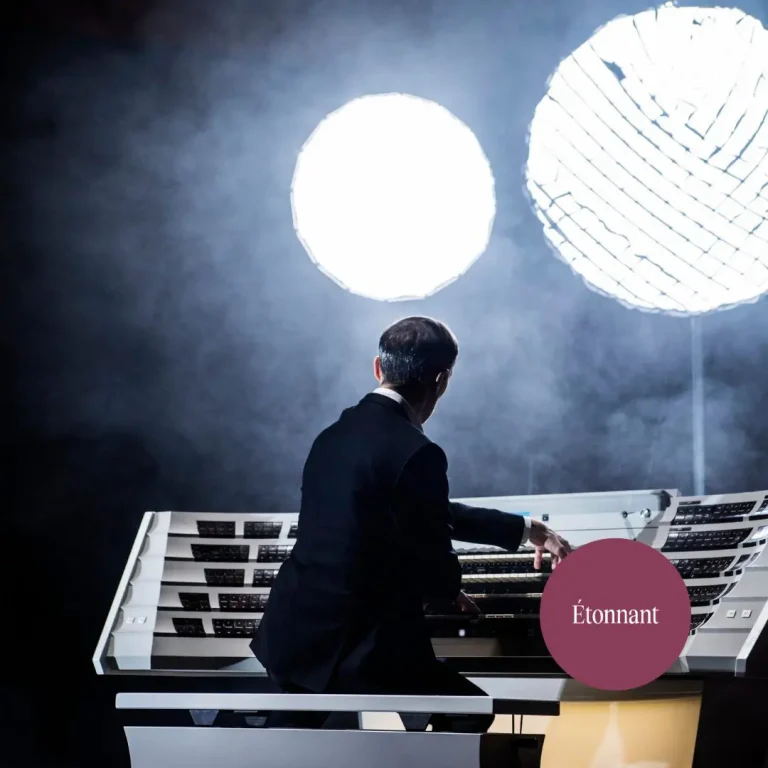
Last Saturday, Jean-Drapeau Park pulsated to the beat of British club sounds during a themed evening organized by Realm Records. If you’re not yet familiar with this record label, it was founded in 2018 by English duo Gorgon City, who headlined this OFF-Piknic event, accompanied by Linska, Riordan, and Dennis Ferrer. Although Ferrer is not affiliated with Realm, but rather with Defected Records, his presence added a touch of legend to this already exciting evening.
To kick off the event, Linska delivered a set rooted in dark and driving tech house/techno. Her thick, rumbling textures evoked the golden age of British house in the 1990s, while drawing on the electro-house of the 2010s, a formative period of her adolescence. Sample choices such as Gorillaz’s Dare transported us to a decidedly British universe—a sound imprint that would mark the entire evening. Linska’s infectious energy behind the turntables, under the bright July sun, contrasted nicely with the nocturnal tones of her music. The sustained rhythm of her set drew festival-goers to the modular wooden dance floor set up in front of the stage. In the final minutes of her set, Bad Boy, her best-known track with melodic techno sounds, clearly announced that this promising artist of the new generation is only just getting started.
The baton was passed to Riordan, a DJ from Sussex, England. The first half of his set explored a more traditional vein of house music, carried by melodic build-ups and a more airy structure. Quickly, the energy level rose a notch: a high-energy vibe took hold, characterized by a catchy groove and softer hi-hats, less compressed than those typical of techno. The opening of the set, marked by MC-style energy samples, reaffirmed the British identity of the clubs, which was omnipresent that evening. Linska’s deep, timbred basslines are transformed here into more melodic and rhythmic textures under Riordan’s hand. As new festival-goers arrived on site, they seemed to be quickly drawn in by the DJ’s infectious groove. Halfway through, Riordan brought the energy to a peak, leading the audience to a moment of intense collective tension, released in a euphoric drop that literally lifted the crowd off their feet. The second half of his set navigated between darker tracks, reminiscent of Linska’s vibe, and more energetic, uptempo passages, keeping the momentum at its peak.
After Riordan’s set, the arrival on stage of American veteran Dennis Ferrer marked a notable change in tone. With him, the groove took root in classic deep house, tinged with tech house elements that allowed for a seamless musical transition. From the very first minutes, some of the samples used by Ferrer plunged us into the world of European house music from the 2000s—a nostalgic nod that perfectly suited this beautiful summer day. The decision to include Dennis Ferrer in the lineup was particularly wise. With over 30 years of experience, this seasoned DJ brought a unique perspective to an evening focused primarily on the next generation. For the younger audience who came to cheer on Gorgon City, it was an opportunity to discover a pillar of the global house scene. And this experience was evident throughout his set, particularly through his references to disco, visible in his selection of tracks with funky bass lines, blending disco and electro-disco. Songs like ABBA’s Lay Your Love On Me and Diana Ross’s Upside Down resonated throughout the venue, appealing to both younger generations and older fans, who were fewer in number but just as present. At over fifty years old, Dennis Ferrer is bursting with energy. He was seen dancing from start to finish, sometimes tapping on the speakers near him, raising his arms in the air, and constantly interacting with the crowd. His charismatic stage presence added a human and festive dimension to his performance, proving that passion for electronic music knows no age.
To close this immersive evening, London duo Gorgon City took to the stage, adorned with their iconic visual featuring the Parthenon in Athens. Warmly welcomed by the audience, they began their performance gently, gradually establishing their pop-infused house sound, a more accessible and unifying signature sound. This feeling of communion was particularly evident in the recurring use of sung passages, which infused the crowd with a warm and emotional atmosphere. These vocal passages were often followed by drops with typical tech house sounds, carried by deep, roaring mid-low frequencies—that famous “rumble” that gives the track body and power. As the set progressed, the rhythm became more pronounced: the beats hit harder, the bass drove the whole thing, creating a feeling of irresistible movement, particularly palpable on tracks like 5AM at Bagley’s. Their formula was based on a masterful alternation between soft, sung tracks and more energetic, danceable sequences—a well-honed balance that kept the audience’s attention and momentum going throughout their two-hour performance.
The second half of the set took on a more contemplative energy, with several touching moments where the duo sang in unison with the crowd, creating a rare intimacy for an outdoor event. Some tracks echoed 90s house music in its most pop-oriented forms—diva house, garage house—bringing a retro and festive vibe to close the show in style. At 10 p.m. sharp, this musical journey came to an end to the enthusiastic applause of a captivated audience, who were treated to an ideal evening at Jean-Drapeau Park, filled with communion, groove, and electronic celebration.
For fans of Defected Records, one of the oldest independent record labels in the United Kingdom, take heart: Piknic Électronik programmers have planned a themed evening on October 10 featuring MVNGO, DJ Holographic, Melé, and Meduza.
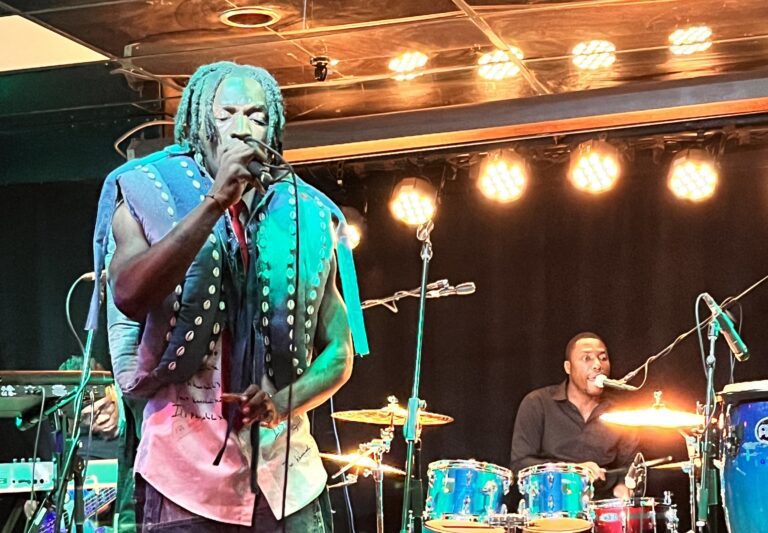
As you will learn in the interview linked below, Boubé has been living in Montreal for just over a year, but has already won the heart of the city. His desert blues, that of the Tuaregs, a nomadic people from whom he comes (more specifically from Niger) is rooted in the great tradition of Moctar and Bambino, artistic sources from which he has drawn, is authentic, dynamic, catchy and exciting. On the Balattou stage, Sunday night, in front of a large audience packed tightly into the small space, which gives the Montreal club all its personality and appeal, Boubé ran through his already rich repertoire of hits and earworms that we like to hear as often as possible.
Excerpts from his first and only album to date, the aptly named Voyager, (READ MY REVIEW HERE), the tracks followed one another in a crescendo of intensity, spread over two well-crafted sets, leading to a finale overflowing with energy and sublimated by totally invested musicians: Sylvain Plante (ecstatic drums!), Carlo Birri (quiet but irrepressible force on bass), Ibrahim Seydi (with flights of percussion), Vincent Duhaime Perreault (excellent guitarist whose fiery duets with Boubé have something of the great rock shows of lore), and of course Boubé himself on guitar and vocals. We had already perceived the talent and potential at the 2024 Syli d’Or, where he received the silver award. But since then, the progress has been quite rapid, and I feel that the opening of the doors to the international market is not far off. Vincent Duhaime Perreault, the band’s guitarist and also Boubé’s manager, promises us important projects to come, without naming them yet. We are very, very excited, because, starting from Montreal, which he says he loves very much and where he has found a family and a warm home, Boubé has everything he needs to become the next international star of Desert blues.
LISTEN TO THE INTERVIEW CONDUCTED WITH BOUBÉ BY MY COLLEAGUE KEITHY ANTOINE
I’ve rarely seen the Loto Québec stage so full. Usually, at the start of the 7pm concert, it’s crowded but rarely packed. Here, even before the Guinean diva appeared, festival-goers had arrived early, hoping to get a closer look at their idol. The woman dubbed the new star of Guinean soul was accompanied by the same musicians as her husband Soul Bang’s the day before, at Balattou.
With them, she opts to open with a reggae-style song, and immediately the assembly starts singing the lyrics in unison. Dressed in a red sequined outfit with canvas sleeves, the griot descendant of the legend Mory Kanté has nothing to prove: talent runs through her veins. With a new album released in June, Mousso Chapitre 1, which means woman in Bambara, she plays African maracas throughout the show, on which she brings her microphone closer when necessary.
On the more rhythmic tracks, she reveals her talent as a dancer, and on the calmer ones, her voice transcends us. “This song is for moms. But I don’t want to do it in a sad way, but I want to do it in the joy of living,” she warns us before the eponymous song Mousso. At times, her voice reminds me of Oumou Sangaré’s, especially when she goes high.
It’s not always good to compare, but in this case, the traditional touch is more present than in the register of her husband, who played the day before. She inserts some modern elements into her music, but she does so while retaining the traditional Guinean essence.
The song Bhouloundjouri was a particular hit with the audience, who knew every word and kept asking for more, even after the song was over. An expression I often hear at concerts in West Africa is: “Il faut bisser”, meaning you have to play the song again. I heard this expression in the crowd on Saturday night.
She played several tracks from his most recent album, such as Mon Roi, but also several of his singles, such as Ké Douma Suma. As mentioned during my interview with the couple, there was talk of Soul Bang’s making an appearance at his wife’s concert, as she had done the day before at Balattou. He did just that, appearing in traditional-modern garb, matching hat and sunglasses.
Barely on stage, he took control and Manamba faded into the background for a few songs, before taking her place again in an exchange with the audience as only griottes know how. It was as if she were preaching, with a few powerful melodies to accompany. “I am the heiress of Soumaoro Kanté, my ancestors were blacksmiths, griots. The balafon comes from Guinea, and it’s the Kouyatés who play it,” she teaches us.
A woman nearby seemed to nod in agreement with what the artist was saying, and then Soul Bang’s added its soulful touch.
There were only 4 minutes left, which could have been enough for one last Manamba song before closing, but Soul Bang’s preferred to play his song Djere Lele, which he had played the day before at Balattou. He was thus able to feel the emotions his wife had experienced for almost an hour that evening.
Nothing to do with the famous cabaret Le Chat Noir in Paris, the artist was christened “El Gato Negro” during his stay in Latin America, as he was described as “a nocturnal animal, an alley cat, slightly brigandish on the edges”. This name has never left him, even some twenty years later.
He begins with vocals, then starts dancing, before adding a huge flute with a black tip. He then returns to his console to throw us a fusion of African, Latin American and electro rhythms, all nicely arranged.
My favorite is clearly Mundo Cae, a duet with Assane Mboup, a Senegalese artist he praises. Taken from the album Tigre qui pleure, released in 2024, we notice his penchant for felines. What’s more, he masters the art of staging, embodying a character during his performances, combining theater, dance and song.
In impeccable Spanish, he addressed the audience in that language, which many seemed to understand. In between songs, he paid tribute to the Colombians in the audience.
“You look strange, Montreal, and I like that!” he asserts before playing a song that advocates difference.
A highlight of the evening was during Bombon de canela, from the 2019 album Ouvre la porte, on which he includes the famous line “Como si fuera esta noche la ultima vez” in Besame Mucho. He gives us a feint at the end of the song, remaining motionless for almost 2 minutes, before returning with the danceable rhythm.
In Marie-Claire, the woman who “shoots bad husbands”, we savor a blend of ancient Latin rhythms, but brought up to date with electro and other ambient sounds added by the artist. In a way, this is El Gato Negro’s universe: Afro-Latin rhythms, revisited by electronics, but with the addition of sounds such as the balafon, the kora or the tama.
Special mention was made of Cosmovision, the label behind the invitation. This label demonstrated the breadth of its network, helping us to discover a number of nuggets during this edition of Nuits d’Afrique.
Photo Credit: André Rival
The Montrealer Saïd Mesnaoui may not have been born in the city and may now divide his time between it, Paris and Morocco, but after living there for a dozen years and having built up a network of unfailing friends, it is always a bit like coming home each time he comes to give a concert. It is partly thanks to Montreal that the artist developed and built his post-gnawa trad style, which the name of his group Transe Gnawa Fusion effectively betrays.
Mixed with reggae, funk, rock, jazz, and who knows what else, his gnawa, a classical and sacred musical genre of great spiritual power, itself born from a fusion of Islam, possession rites (exorcism), and practices from descendants of slaves in the sub-Saharan region of Morocco. A genre with precise codes and reserved uses, therefore. But the expressive power of this music quickly convinced people, including foreigners, to pay attention to it and even to practice it outside of strictly religious circles. There are, in Montreal, artists who play pure gnawa music. But Saïd Mesnaoui, once he had put down his suitcases in Montreal in 1986, wanted to modernize the approach, and the result was what we have been hearing since with Transe Gnawa Fusion.
LISTEN TO THE INTERVIEW WITH SAÏD MESNAOUI (in French)
Last Friday, at the Fairmount Theatre, the spicy and vigorous stew concocted by Mesnaoui once again fulfilled its promises, lifting the spectators from their seats, who danced and swayed their hips to the various underlying rhythms used by the experienced artist to propel his vision of the gnawa tradition. Some great classics, which can be heard on existing albums, many of which come from the most recent opus, Al Maddloum (The Oppressed), but some songs that betray a new program to come in a possible recording.
We had fun, we really absorbed all the vibrant energy from the musicians on stage, and we left satisfied.
Aziz Badi – Percussions
Pascal Bujold – Guitar
Jean-Christophe Carette – Piano
André Désilets – Wind instruments (brass + wood)
Gabriel Lajoie – Bass
Saïd MESNAOUI – Vocals
Sylvain Plante – Drums
Rachide Salamatte – Percussions
The concert by Sousou and Maher Cissoko, a Senegalese-Swedish guitar/kora/vocal duo, had a benevolent and entirely appropriate vibe. For the third time in their career, the man and woman, a couple in real life, took the stage at the Balattou club last Thursday. We knew what to expect, as their albums give a good idea of the sound and atmosphere, which are well respected live. A few new songs were offered, those that are most likely to be found on a future album (we don’t know when yet). Sousou had actually promised us this in the interview she gave me before the concert.
READ THE INTERVIEW WITH SOUSOU CISSOKO
The two artists are life and music partners, and you can tell. The looks are sincere, imbued with love and tenderness, but not ostentatiously so, as if to hammer the point or play a part. No, it’s just something that one detects and feels. This energy is carried by and within the music, always with equal energy, like a companion to the stroll through the time and space of the African griots’ world. A few pieces stir the air of the Balattou a bit more, but it remains essentially music that caresses, that does not seek to outdo urgency and excitement. Music that feels incredibly good in a time of frankly exhausting ambient stress.
A music that, by its very nature, but also thanks to its authentic and inspiring pair of performers, border-crossers and bearers of humanism, fills us with hope and optimism.
What can I say? On this cool July evening, the stages of the Festival Nuits d’Afrique were on fire. First, for the concert by Manamba Kanté, daughter of griot Mory Kanté, one of the precursors of the modernization of African music. The multicultural, but very African-Montreal crowd was in a trance.
Would this state of mind be maintained for the next concert, with Las Karamba, a sextet of Latin American immigrants to Barcelona, who have made salsa and Afro-Cuban rhythms their own? Yes, they would!
Las Karamba are two Venezuelan sisters, two Cubans, an Argentinean and a Catalan, who met in the Catalan metropolis. Two albums later, the women are producing original, feminist, committed and festive salsa. It’s hard to resist the magnetic charisma of singer Ahyvin Bruno and her colleagues.
They make a salsa with no brass, apart from a transverse flute, where the voices take up a lot of space. At times, we find ourselves in a rap or slam salsa, with spoken texts. The two percussionists keep the rhythm tight, but complex. We don’t hear any great improvisations, but the presence of the six women and their enthusiasm make up for it.
The ultimate barometer of this kind of concert: there was a lot of dancing and a lot of smiling. Those who understand Spanish were also able to meditate on what remains of patriarchy today, while waddling along. The world is paradoxical, my friends.
In the middle of their performance, the girls sang a resistance song a capella. Salsa sometimes embodies a masculine, macho world. Las Karamba provided us with a feminist antidote. Following in the footsteps of Cuban-American Celia Cruz, who inspired them.
There was a very good crowd for this last evening of Nuits d’Afrique.
Whether in English, French, or Bambara, Soul Bang’s manages to improvise, drawing inspiration from the context of the moment. He does this several times during his concert at Balattou, sometimes responding to comments from the audience, which is mainly made up of young people but also includes some older folks.
I have rarely seen Balattou so full. Even at the start of the concert, seats were already scarce, but throughout the evening, festival-goers continued to flock in until this legendary venue was packed. Unable to bring his band with him, he surrounded himself with local musicians who had learned the songs beforehand, including a young and talented keyboardist, a drummer, a bassist, a guitarist, and a percussionist.
Dressed in traditional attire, including stylish harem pants, white sneakers, and a hat to match, he takes the stage like a star, judging by the audience’s cheers. Rather than soul, he decides to kick things off with dancehall, setting the tone for the rest of the evening. Indeed, he alternates between dancehall and soul, interspersing a few traditional Guinean rhythms, with great control over his voice.
He interacts with his audience, getting them to sing along to his biggest hits. “Today is a special day, it’s my first time in Canada, my first time at Balattou, a venue steeped in history, but also, my album Victoire, Chapitre 1 is out today,” he says, the first song of which is dedicated to his late mother.
At times, it felt like we could hear the kora through the guitar, especially during the solos, and at other times the bass sounded like a guitar. I later learned that the guitarist was Senegalese. The song Djere Lele, released in 2023, seemed to be particularly popular with my neighbor on the right. In fact, he was the one who told me the name of the song. The whole room sang along, and we enjoyed other similar moments throughout the evening. This Guinean superstar has several hits to his credit.
Even though the new album Victoire was released on Friday, July 19, some people already knew the lyrics that same evening. That says a lot about the star’s status.
His duality, sometimes soul and sometimes dancehall/ragga, allows him to navigate between these two worlds, but the place given to the traditional could be better exploited. He chose the second half of the evening to invite his wife and singer Manamba Kanté on stage for a few songs. She will perform on the main stage on July 20, but gave the audience a preview of her husband, who was equally delighted to see her. Her deep voice, worthy of the griot she is, descended from a family of griots on both sides, enchanted us and complemented her husband’s voice.
Another highlight was the kompa section of the concert. As with Blaiz Fayah, the crowd greatly appreciated this nod to a style of music that has been steadily gaining popularity since the Joé Dwet Filé effect.
Would a collaboration between Soul Bang’s and a Haitian artist be a good move in your opinion? Something to consider.
Photo Credit: André Rival
Linkin Park est un groupe de rock américain originaire d’Agoura Hills, en Californie. Depuis sa formation en 1996, le groupe a vendu plus de 100 millions d’albums et a été récompensé par la Recording Academy à deux reprises. Le groupe a connu le succès avec son premier album, Hybrid Theory, qui a été certifié Diamant par la RIAA en 2005.
Linkin Park is an American rock band from Agoura Hills, California. Since its formation in 1996, the band has sold more than 100 million albums and has been awarded by The Recording Academy in two occasions. It achieved mainstream success with its debut album, Hybrid Theory, which was certified Diamond by the RIAA in 2005.
POUR ACHETER VOTRE BILLET, C’EST ICI!
Ce contenu provient d’evenko et est adapté par PAN M 360
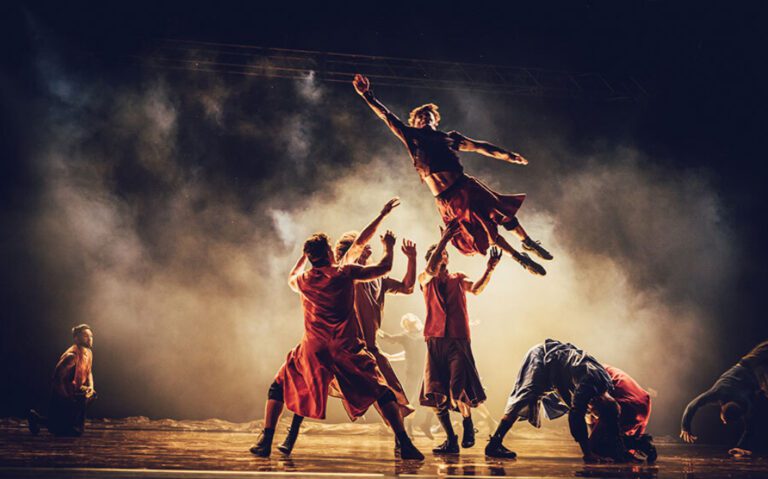
Katy Perry est une chanteuse pop qui s’est fait connaître en 2008 avec le tube « I Kissed a Girl ». Son album Teenage Dream, sorti en 2010, contient cinq chansons qui ont atteint la première place du Billboard Hot 100 aux États-Unis, ce qui lui a valu d’être la première artiste féminine à réaliser cet exploit. Elle a été élue femme de l’année par le Billboard en 2012. En 2018, elle est devenue juge dans l’émission American Idol.
Katy Perry is an American pop singer who emerged as one of the most influential artists of the 2010s. She rose to fame in 2008 with the hit I Kissed a Girl and continued her global success with chart-topping singles like Firework, Teenage Dream, and Roar. Her album Teenage Dream made history by tying Michael Jackson’s record with five number-one singles. Known for her vibrant visuals and spectacular performances, Katy Perry remains a defining figure in contemporary pop culture.
POUR ACHETER VOTRE BILLET, C’EST ICI!
Ce contenu provient d’evenko et est adapté par PAN M 360

Avec une association atypique de flows de rap techniques et de bruitages abrasifs, le trio expérimental clipping. aborde la production hip-hop sous un angle inédit. Bien que leur style évolue à chaque sortie, ils conservent une énergie expérimentale et souvent provocante. Après des sorties indépendantes en cassette et en numérique au début des années 2010, ils dévoilent leur premier album officiel, CLPPNG, en 2014, suivi de l’opéra spatial afrofuturiste Splendor & Misery en 2016. Leurs albums There Existed an Addiction to Blood (2019) et Visions of Bodies Being Burned (2020) s’inspirent fortement du horrorcore, tandis que Dead Channel Sky (2025) puise dans le cyberpunk et la techno des années 90.
With an unconventional pairing of technical rap flows and abrasive noise, experimental trio clipping. approach hip-hop production from largely uncharted territory. Though the group morph into something new with almost every release, they hold on to their core of experimental and often-confrontational energy. Debuting with independent cassette and digital releases during the early 2010s, their proper debut album, CLPPNG, appeared in 2014, followed by the Afrofuturist space opera Splendor & Misery in 2016. Two related albums, 2019’s There Existed an Addiction to Blood and 2020’s Visions of Bodies Being Burned, were heavily influenced by horrorcore, and 2025’s Dead Channel Sky drew from cyberpunk and ’90s techno.
POUR ACHETER VOTRE BILLET, C’EST ICI!
Ce contenu provient d‘AllMusic et est adapté par PAN M 360