Pop

Osheaga : Gracie Abrams au parc Jean-Drapeau

by Rédaction PAN M 360

La chanteuse et autrice-compositrice Gracie Abrams s’illustre dans une pop moderne stylisée et mélancolique, au son évolutif subtilement influencé par Lorde. Elle se fait d’abord connaître en ligne à la fin des années 2010 grâce à une série régulière de singles, avant de percer en 2020 avec les titres 21 et I Miss You, I’m Sorry, extraits de son EP Minor. Elle collabore ensuite avec Benny Blanco sur le titre très médiatisé Unlearn en 2021, avant de sortir un second EP, This Is What It Feels Like. Son premier album, Good Riddance, coécrit avec Aaron Dessner (du groupe The National), paraît début 2023 et lui vaut une nomination au Grammy Award de la Révélation de l’année. Bien que cet album ait rencontré un bon succès au Royaume-Uni et en Irlande, c’est avec son deuxième album, The Secret of Us, qu’Abrams atteint de nouveaux sommets deux ans plus tard : numéro deux aux États-Unis, numéro un au Royaume-Uni et en Australie. Également coécrit avec Dessner, l’album comprend une collaboration remarquée avec Taylor Swift sur le morceau us..

Singer/songwriter Gracie Abrams specializes in a stylized, moody modern pop with a subtly shifting sound partially indebted to Lorde. Abrams cultivated an online following through a steady series of single releases appearing at the end of the 2010s, experiencing a breakthrough in 2020 with the singles “21” and “I Miss You, I’m Sorry” from her EP Minor. She also worked with Benny Blanco on the high-profile 2021 track “Unlearn” before releasing her sophomore EP, This Is What It Feels Like. Abrams’ debut album, the Aaron Dessner co-penned Good Riddance, arrived in early 2023, and she was later nominated for a Best New Artist Grammy Award. While that album had charted well in the U.K. and Ireland, two years later she landed in the Top Two in the U.S. (number two), U.K. (number one), and Australia (number one) with her sophomore album, The Secret of Us. Again co-written with Dessner, it featured a collaboration with Taylor Swift (“us.”).

POUR ACHETER VOTRE BILLET, C’EST ICI!

Ce contenu provient d’AllMusic et est adapté par PAN M 360

DJ set / EDM / Electronic

Osheaga : Lost Frequencies au parc Jean-Drapeau

by Rédaction PAN M 360

Le producteur belge Lost Frequencies a connu un immense succès international grâce à ses morceaux de dance ensoleillés et mélancoliques, ses remixes et ses collaborations. Il s’est fait remarquer en 2014 avec Are You with Me, un titre de tropical house basé sur une chanson country d’Easton Corbin, qui s’est hissé en tête des classements à cinq reprises en Belgique et a donné lieu à plus d’une douzaine de titres certifiés or, platine ou diamant. Ce morceau figure sur son premier album Less Is More (2016), aux côtés d’autres grands succès comme Reality (avec Janieck Devy) et une reprise de What Is Love de Haddaway. Son deuxième album, Alive and Feeling Fine (2019), inclut d’autres tubes comme Crazy (avec Zonderling) et Melody (avec James Blunt). Après la sortie de l’EP Cup of Beats en 2020, Lost Frequencies poursuit sur sa lancée avec des hits tels que Rise et Where Are You Now (avec Calum Scott) en 2021, Questions (avec James Arthur) en 2022, et The Feeling en 2023, un titre aux accents country.

Belgian producer Lost Frequencies has achieved massive international success with his sunny yet wistful dance tracks, remixes, and collaborations. Beginning with his 2014 breakout hit “Are You with Me,” a tropical house track based on a country song by Easton Corbin, he topped the charts in his home country five times, and released more than a dozen tracks that have been certified gold, platinum, or diamond. The song appeared on his 2016 full-length Less Is More, along with other major hits like “Reality” (featuring Janieck Devy) and a cover of Haddaway’s “What Is Love.” 2019’s Alive and Feeling Fine included further smashes like “Crazy” (with Zonderling) and “Melody” (featuring James Blunt). After releasing the EP Cup of Beats in 2020, Lost Frequencies scored further hits with 2021’s “Rise” and “Where Are You Now” (with Calum Scott), 2022’s “Questions” (with James Arthur), and 2023’s country-infused “The Feeling.”

POUR ACHETER VOTRE BILLET, C’EST ICI!

Ce contenu provient d’AllMusic et est adapté par PAN M 360

Indie Rock / Post-Punk / Synth-Pop

Osheaga : Future Islands au parc Jean-Drapeau

by Rédaction PAN M 360

Le groupe Future Islands s’est forgé une identité sonore reconnaissable grâce à un synth-pop élégant, dépourvu de guitares, contrebalancé par les hurlements, gémissements et élans lyriques du charismatique chanteur Samuel T. Herring. Basé à Baltimore, le groupe affine son style au fil de plusieurs albums prometteurs, avant de percer en 2014 avec l’album quasi parfait Singles et une performance mémorable dans l’émission Late Night with David Letterman. Le sens du risque vocal de Herring et les mélodies amples du groupe atteignent un nouveau sommet avec The Far Field (2017), puis avec le plus mélancolique As Long as You Are (2020). Leur septième album, People Who Aren’t There Anymore (2024), mêle morceaux énergiques et ballades plus lentes.

Future Islands’ trademark sound is sleek, guitar-less synth pop balanced with the howls, yelps, and croons of dynamic vocalist Samuel T. Herring. The Baltimore-based group honed their sound on a series of promising albums before their near-perfect 2014 LP Singles and a stunning appearance on Late Night with David Letterman vaulted them to prominence. Herring’s daring as a vocalist and the band’s sweeping melodies were further honed to a point on the slick 2017 album The Far Field and 2020’s melancholy As Long as You Are. Their seventh full-length, People Who Aren’t There Anymore, a mixture of energetic numbers and slow jams, arrived in 2024.

POUR ACHETER VOTRE BILLET, C’EST ICI!

Ce contenu provient d’AllMusic et est adapté par PAN M 360
Hip Hop / rap

Osheaga : bbno$ au parc Jean-Drapeau

by Rédaction PAN M 360

Chanteur et rappeur canadien irrévérencieux, bbno$ (prononcé “baby no money”) mélange hip-hop, R&B et musique électronique dans un style accrocheur et hypnotique. Il se fait connaître à la fin des années 2010 et connaît un succès viral en 2019 avec le single Lalala, produit par Y2K, certifié platine et classé dans les charts en Europe, en Australasie et aux États-Unis. Collaborateur régulier de l’excentrique Yung Gravy, notamment dans la série d’albums Baby Gravy, bbno$ poursuit sa carrière avec des disques inventifs comme Goodluck, Have Fun (2020) et Bag or Die (2022). En 2024, il revient avec plusieurs singles, dont It Boy.

Irreverent Canadian singer/songwriter bbno$ (“baby no money”) blends hip-hop, R&B, and electronic influences into a catchy and hypnotic mix. Emerging in the late 2010s, he scored a viral hit in 2019 with the Y2K-produced single “Lalala,” which was certified platinum and charted across Europe, Australasia, and the U.S. A frequent collaborator with kindred spirit Yung Gravy, as on the Baby Gravy series, bbno$ has continued to release inventive albums like 2020’s Goodluck, Have Fun and 2022’s Bag or Die. He released several singles in 2024, including “It Boy.”

POUR ACHETER VOTRE BILLET, C’EST ICI!

Ce contenu provient d’AllMusic et est adapté par PAN M 360
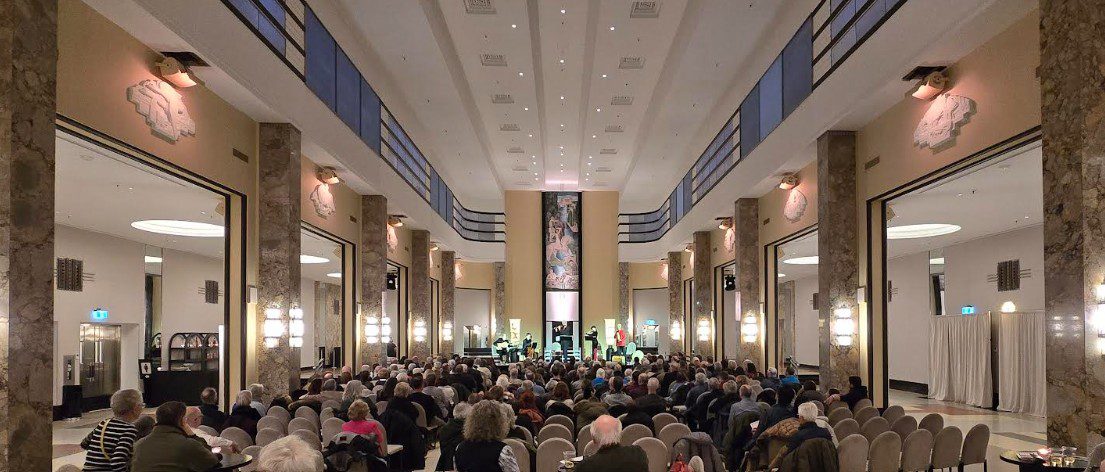
Electronic / Post-Punk / Soul/R&B

Osheaga : TV on the Radio au parc Jean-Drapeau

by Rédaction PAN M 360

Passé du statut d’expérimentateurs brooklyniens à celui de groupe acclamé par la critique, TV on the Radio mêle post-punk, électronique, soul, funk et bien d’autres influences dans une approche résolument inventive. Ce mélange sonore éclectique — sublimé par les productions immersives de David Andrew Sitek et les voix passionnées de Tunde Adebimpe et Kyp Malone — distingue immédiatement le groupe de ses contemporains de la scène new-yorkaise du début des années 2000. Leur univers, à la fois intense et accessible, apparaît déjà pleinement formé sur l’EP Young Liars (2003), puis s’épanouit avec brio sur leur premier album complet, Desperate Youth, Blood Thirsty Babes (2004). Les éloges se multiplient avec Return to Cookie Mountain (2006), qui accueille un caméo de David Bowie, l’un des premiers et plus fervents admirateurs du groupe. TV on the Radio continue d’innover avec des albums comme Dear Science (2008), plus rythmé, Nine Types of Light (2011), aux grooves plus fluides, ou encore Seeds (2014), marqué par des réflexions lucides sur le deuil. Durant la fin des années 2010 et dans les années 2020, leurs prestations scéniques intenses consolident leur statut de formation phare de la musique alternative.

Growing from Brooklyn-based experimenters into a highly acclaimed outfit, TV on the Radio mix post-punk, electronics, soul, funk, and more in vibrantly creative ways. This eclectic sonic blend — heightened by David Andrew Sitek’s enveloping production and Tunde Adepimbe and Kyp Malone’s passionate vocals and songwriting — immediately distinguished the band from their contemporaries within the early 2000s New York scene. TV on the Radio’s intense yet inviting sound arrived more or less fully formed on 2003’s Young Liars EP; on the following year’s full-length Desperate Youth, Blood Thirsty Babes, they embellished on their intense yet inviting sound brilliantly. Praise for their music only grew with 2006’s Return to Cookie Mountain, which featured a cameo by David Bowie, one of the band’s earliest and biggest fans. They continued to innovate on their later albums by adding more momentum on 2008’s Dear Science, leaning into easy grooves on 2011’s Nine Types of Light, and confronting loss with the clear-eyed meditations of 2014’s Seeds. Later in the decade and into the 2020s, fiery live performances upheld TV on the Radio’s reputation as one of alternative music’s most dynamic acts.

POUR ACHETER VOTRE BILLET, C’EST ICI!

Ce contenu provient d’AllMusic et est adapté par PAN M 360

Alternative / Indie Folk

Osheaga : KALEO au parc Jean-Drapeau

by Rédaction PAN M 360

KALEO, groupe islandais, propose des hymnes mêlant blues et folk, portés par la voix rauque et envoûtante du chanteur Jökull Júlíusson. Révélé en 2012 grâce au succès viral de la chanson Vor í Vaglaskógi, le groupe s’est rapidement attiré un public international, recevant des comparaisons élogieuses avec des artistes comme Hozier et Ray LaMontagne. Leur premier album, KALEO (2013), rencontre un franc succès et donne naissance à plusieurs titres devenus disques d’or. En 2016, leur deuxième album, A/B, leur permet de percer davantage, en atteignant le classement Billboard 200. Avec Surface Sounds (2021), KALEO adopte un son plus rock et affirmé, consolidant sa présence sur la scène internationale. Après plusieurs tournées d’envergure, le groupe poursuit dans une veine blues-rock plus brute avec Mixed Emotions, leur quatrième album paru en 2025.

Iceland’s KALEO make soulful blues- and folk-infused anthems centered on lead singer Jökull Júlíusson’s smoky vocals. Since emerging to viral fame in 2012 with their song “Vor í Vaglaskógi,” they have earned a global audience, drawing favorable comparisons to artists like Hozier and Ray LaMontagne. The band’s debut, 2013’s KALEO, was a break-out success, spawning several more hits that went gold. They gained wider attention with their 2016 sophomore album, A/B, which cracked the Billboard 200. A bigger, more rock-driven sound characterized KALEO’s chart-topping 2021 release Surface Sounds. After several major tours, the band carried their increasingly gritty blues-rock sound onto their fourth album, 2025’s Mixed Emotions.

POUR ACHETER VOTRE BILLET, C’EST ICI!

Ce contenu provient d’AllMusic et est adapté par PAN M 360

Chanson francophone / chanson keb franco / Classical

Orchestre métropolitain on Mount Royal: a big collective hug

by Frédéric Cardin

When we go to the annual OM concert at the foot of Mount Royal, we don’t go there to play the knowledgeable music lovers, who seek the sonic sublime and the magic of colors in its maximum fullness. For that, you have to go to the Maison symphonique. Or, if you want to do it outdoors, at the Lanaudière Amphitheatre, a model of its kind. Here, what we are looking for is more of a sense of collective communion. In this sense, the mandate is still well fulfilled and the objective achieved by the Montreal orchestra. A large crowd, reflective of the city, united in all colors, styles, ages, social classes, gender identities, politics, etc., gathered on the slopes of the mountain at sunset and as night fell, offering a dreamy panorama of the city’s skyscrapers behind the scene, and the splendid nature of the Mount, on the side.

In this kind of meeting, the sound quality is what it can be, that is to say, pushed by generous amplification so that we can hear the notes played by the orchestra as loudly as possible and over a vast distance, but without generating unpleasant distortion. A difficult equilibrium. Comments gleaned here and there after the evening indicate that some connoisseurs deplored the fact that what we had heard did not exactly correspond to what we heard at the Maison symphonique. That’s obvious, and as I just said, that’s not the goal.

From the start (and after a pre-concert appetizer in the form of a tribute to Pierre Péladeau, the patron who allowed this orchestra to exist at the beginning, despite the presence of the more glorious OSM), the colors were announced with a greeting about Yannick as the “most beautiful human being put on earth by God” (nothing less), about Montreal as the most beautiful city in the Universe and the OM as the best orchestra in the world. We know that the host Mariana Mazza (replacing Kim Thuy, which necessarily disappointed many people, the two personalities being at opposite ends, Kim Thuy all elegance and delicacy, Mazza a go-getter, even vulgar) was laying it on thick and fully assumed the chauvinistic swelling of the announcements. But we smiled, and we especially appreciated it in the sense that, indeed, Montreal has something special, an energy, a personality, even a soul that instills in many of its inhabitants, and many non-natives, a rather strong devotion. We gave each other a big collective hug, a bit exaggerated, but benevolent.

As for the music, the program was very relevant in its eclecticism: the Italian Symphony by Mendelssohn that offers a very appropriate summer sparkle and memorable melodies, easily appreciated by anyone, even those who never listen to complete symphonies in normal times. A pretty piece by Augusta Holmès, L’amour et la nuit, in a romantic, almost cinematic style, was followed by a Quebec work by Hector Gratton (1900-1970), inspired by folk melodies, Dansons le carcaillou (which no one dared to do, fortunately). The classical portion concluded with the magnificent Firebird by Stravinsky, yet another score whose melodic features and colorful, grandiose style had all the makings of a film score for unfamiliar ears. A seductive factor, then, and fully appreciated by the crowd.

The Orchestra played well, to the extent that, once again, we are outdoors and the nuances and details tend to get lost. The specialist and regular concert-goer in me wants to salute the beautiful listening offered by this very large audience (50, 60 thousand?).

The finishing touch, the “cherry on the cupcake,” was provided by the immense Pierre Lapointe, probably the most refined and easily “classicizable” of Quebec singer-songwriters of the last 20 years. He sang three songs from his album Dix chansons démodées pour ceux qui ont le cœur abîmé. Three magnificent pieces with finely woven lyrics, melancholic tunes and rich and flavorful orchestrations (provided by the excellent Antoine Gratton). We were here in the great French song, at this level of musical excellence where words and notes fuse together.

The now well-established tradition of playing Beethoven’s 5th (the theme of the 1st movement) in disco style ensured a festive departure for the audience, who thus had the opportunity to sway and especially stretch their legs before returning home and saying to themselves (that was the goal) that, a classical concert, is fun.

The nitpickers will surely grumble by criticizing the largely amplified sound recording, Yannick Nézet-Séguin’s frequent changes of attire (a bit too much), Mariana Mazza’s animation (somewhat out of sync with a typical classical concert, but still, and often, funny), or even the program itself, but none of them will probably have succeeded in democratizing the symphonic concert and classical music, even the most accessible, with such effectiveness. That is why we must recognize that the OM knows how to do it and is still succeeding in its gamble to unite an entire city and its inhabitants around its product.

The OM and Yannick Nézet-Séguin have placed classical music at the heart of Montreal’s life and spirit, eliminating multiple disparities and offering a unifying narrative, acquired and appreciated by everyone, and “anyone in between.”

Electronic / House

Osheaga : Sammy Virji au parc Jean-Drapeau

by Rédaction PAN M 360

Sammy Virji produit et mixe une variété de musiques de danse pleines d’entrain et d’exubérance, en particulier le bassline et le UK garage. Il débute en 2017 avec un son espiègle et effervescent issu de la scène bassline, avant de s’orienter vers un style garage plus mélodique et raffiné, notamment avec des sorties sur le label Kiwi Rekords de Conducta. Son album auto-produit Spice Up My Life paraît en 2020, et il collabore avec des artistes comme Flava D, Ragga Twins ou salute, se faisant également remarquer grâce à son remix du hit on & on de piri & tommy. La notoriété de Virji explose après une prestation virale pour DJ Mag en 2023, et son single If U Need It entre dans les charts britanniques. Il enchaîne depuis avec plusieurs collaborations, notamment avec Chris Lake, Joy Anonymous et Interplanetary Criminal.

Sammy Virji produces and spins several styles of giddy, exuberant dance music, particularly bassline and U.K. garage. Debuting in 2017, he soon transitioned from the cheeky, rambunctious sound of the bassline scene to a more refined, melodic garage sound, with releases on Conducta’s Kiwi Rekords. Virji’s self-released album Spice Up My Life appeared in 2020, and he collaborated with artists such as Flava D, Ragga Twins, and salute, additionally earning attention for his remix of piri & tommy’s hit “on & on.” Virji’s popularity increased considerably after a 2023 set for DJ Mag went viral, and his single “If U Need It” hit the U.K. charts. He’s since issued singles with Chris Lake, Joy Anonymous, and Interplanetary Criminal.

POUR ACHETER VOTRE BILLET, C’EST ICI!

Ce contenu provient d’AllMusic et est adapté par PAN M 360

période romantique

Lanaudière Festival | Metropolitan Orchestra/Yannick Nézet-Séguin/Marc-André Hamelin: When Nature Drives the Concert

by Frédéric Cardin

Nature, and human nature in general, had the last word this Sunday at the Lanaudière Amphitheatre for the concert by the Orchestre Métropolitain (OM) conducted by Yannick Nézet-Séguin, with the imperial Marc-André Hamelin on piano. Let’s remember that it was the young sensation Yuja Wang who was supposed to be there, but sick for a few days, she had to withdraw. In Lanaudière, miracles do exist, according to the artistic director Renaud Loranger. He may not be wrong, because replacing an artist as intense as Wang at the last minute with an absolute master of his art such as Hamelin is indeed a blessing.

With the OM and Yannick, the two Ravel piano concertos were on the menu, the one for the left hand and the one in G, of course. From the outset, we knew that we had not lost anything in the exchange, because the Quebec pianist seized the Concerto for the Left Hand in D Major, without ever letting up the pressure for a moment, so explosive in its contrasts, so nervous and urgent in its motifs and melodies, so fragmented in its references, moving from jazz to military music, modernism and lyricism. Hamelin controlled the entire discourse and pacing of the work, with unwavering confidence, to which Yannick and the OM submitted with grace, infusing their musical part with very beautiful colors, feverishly drawn by the conductor. This kind of music is second nature to the Quebec pianist, as if he never needs to think about it, just let his instinct and essential Self take over.

The Concerto in G major, more substantial in content though not much longer in duration, is an absolute marvel, which is part of our collective music-loving psyches. Here, if we could feel a slowness to “get into” the game from Hamelin, but quickly resolved. The two external movements demonstrated a beautiful mastery of the textural play in the orchestra, by Yannick, and of the pointillist discourse by Hamelin. A few rare flights seemed less clear in their execution than those of the concerto for the left hand, no more. It was in the central movement, which is one of the most beautiful musical passages in history, that the pianist showed inspiring poetry and benevolent gentleness. Not better than the best, but not worse either. In short, a high-quality reading, of the kind we expect from the best artists in the world. If the OM did well in this movement, it missed the step towards an absolute standard, particularly in the woodwind solos that precede the great and wonderful English horn soliloquy. Some aesthetic clumsiness was noticeable in a wrongly placed flute breath and a slightly vulgar clarinet attack. The English horn solo itself, although very beautifully sung by the excellent Mélanie Harel, could have been projected with more force and stately presence in front of the orchestra. In short, it is in these infinitesimal details that the difference between the OM and the OSM is noticeable. A notch, a very small notch, but one that makes the difference for those who listen carefully.

Hamelin was almost heroically greeted by the audience, to whom he offered magnificent Jeux d’eau by the same Ravel. Another Lanaudois miracle: it was exactly at the climax of the piece that thunder and rain began to fall, in a spontaneous symbiosis as wonderful as it was funny. We would have wanted to program it, but we could probably never make it happen.

As an opening piece, Yannick had chosen a very pretty impressionistic score by Lili Boulanger, D’un matin de printemps, which set the table nicely for what was to come, namely a festival of orchestral colors.

As if the musical density had not yet been maximized enough, the concert ended with the substantial Symphony No. 2 in D major, Op. 43 by Sibelius. This time, nature did not collaborate kindly with the musicians. After a few minutes of settling into the first movement, the audience and artists had to take a break from the musical communion because the downpour, not only noisy, even made its way onto the stage due to the strong winds, risking damage to the performers’ instruments, especially the strings.

We were destabilized by the resumption, which did not take place at the beginning of the work, as announced, but roughly where we had left off. With stability restored in our minds, we paid attention to the unfolding of these sublime pages from the symphonic repertoire. Yannick succeeded where, I find, he did not entirely satisfy in his Atma label recording. In the latter, he draw an almost mineral, chthonic vision, whereas I believe that this symphony requires an airy approach, without neglecting the grounding in the soil. It’s a bit of what we got as the sky finally lit up. The Finale was adequately held and sustained in its celestial and luminous ascent so emblematic, so mystically powerful. Satisfaction, despite the initial disagreements of Mother Nature.

REVIEW OF THE ALBUM SIBELIUS, SYMPHONIES 2 AND 5

Classical

Festival de Lanaudière | Sol Gabetta : Queen of the cello meets les Violons du Roy

by Frédéric Cardin

Friday evening, the Lanaudière Festival welcomed the Argentine cellist Sol Gabetta, for the first time in Canada, said the press release. In the introduction to the concert, the artistic director Renaud Loranger rather mentioned a “first time in Quebec.” I tried some research, but I can’t say if it’s “Canada” or “Quebec.” If you know, let me know.

In the end, all of this is of little importance in light of the spectacular performance that the Swiss-based artist offered to the fairly large audience. Spectacular, certainly, but not in the sense of a show-off who wants to accelerate the allegros systematically into Mad Max-esque furiosos. Rather in the sense of a technique so precise that it forces admiration and provides excitement by itself, and that is also supported by a warm singing of the phrases that lets all the notes flow with undeniable naturalness. I am thinking particularly of Haydn’s Cello Concerto No. 1 in C major, Hob. VIIb/1, of which I have rarely heard such a clear and touching reading. In this sense, Gabetta (and the Violons du Roy, of course) expressed with excellence the spirit of Empfindsamkeit, or the “sensitive style” of the late 18th century, a precursor of Romanticism in that it favored a freer expressiveness, while remaining framed by still very precise and coded forms. No urgency or disheveled propulsion of rhythms, then, nor aggressive attacks that seek to force “energy.” Only a calm narration, but one that exudes a communicative sparkle, all within a technical execution that reaches stylistic perfection. It was a very great moment of music.

The other concerto played by Ms. Gabetta (there were two, since she was with us…) was that of Carl Philipp Emmanuel Bach, the very pretty Wq 172 in A major, one of my favorites in the repertoire, although still relatively unknown to the general public. The cellist admitted in the interview granted to my colleague Alexandre Villemaire that she had not touched this piece since 2014. We noticed, as a result, that the lady did not have this score as instinctively “in her fingers” as the Haydn, even though in the end she still gave a solid lesson in musicality to anyone who would like to try it.

I don’t know if Bernard Labadie’s Violons hadn’t been in contact with this concerto for several years either, but the fabulous clarity demonstrated in the first part of the concert (in addition to the Haydn, Mozart’s Symphony 29, which I’ll tell you about below) wasn’t quite as crystalline in this CPE Bach. Oh, for any other ensemble, it would have been an accomplishment in itself, but after what we had heard previously, the bar had just dropped by an infinitesimal micron, nevertheless perceptible.

READ THE INTERVIEW WITH SOL GABETTA (in French)

From the very beginning of the concert, and as mentioned just now, Bernard Labadie gave a Symphony No. 29 in A major, K. 201 perfectly balanced with steady rhythms and finely drawn phrases. All this in a relaxed and elegant style. Already, we had an idea of the aesthetic choice proposed for this concert. In the end, it was at the end of the program that the Quebec conductor showed a little more vigor with Haydn’s Symphony No. 45 in F-sharp minor, “The Farewell,” to which he breathed a dynamic that we had not felt before. A convincing conclusion that did not deviate from the spirit of the evening’s general. A great success.

We only hope that these are not “goodbyes” that Sol Gabetta is leaving us with, but only a “see you later,” because this fabulous performer absolutely must come back to us quickly. We dream of hearing her at the Maison symphonique or at the Bourgie hall!

Brazilian / Samba

The “rodas de samba” That Never End

by Sandra Gasana

Montreal’s best-kept secrets are the “rodas de samba,” or samba circles, a gathering of improvisational song and dance. These legendary evenings have traditionally been held for several years at Sans-Taverne, a brasserie in the heart of Building 7 in Pointe-Saint-Charles, but this time it was at Brasseurs Avant-Garde in Hochelaga.

The concept is simple: several musicians and singers sit around a table, and together they create magic around samba and other Brazilian rhythms, while the audience sings along and dances around the table. This concept is an initiative of Roda de Samba Sem Fim, a Brazilian collective masterfully led by Yussef Kahwage, himself a musician and singer. He is supported by the great singer and guitarist Lissiene Neiva and Bianca Huguenin, both part of the hard core of the roda, alongside Daniela Bertolucci, Bruno Lima, Gabriel Vacc, Márcio Rocha and Luís Santo.

It was often Yussef who started with his instrument, before the other musicians joined in, with different kinds of percussion and other traditional Brazilian instruments such as cavaquinhos. Otherwise, it was Tobias and his seven-string guitar who started, to get the music going.

As soon as I arrived, I noticed the presence of the great Brazilian singer Bïa dancing around the musicians, who sang a few samba songs before being sung “Happy Birthday” by the whole room. Another person who had come to celebrate her birthday that evening was Daiana Santos, from Bouchées Brésil.

A few minutes later, Thaynara Perí arrives, a bit rushed, before going to sit around the table, one of the singers that evening. This artist is a ball of energy, she is slowly becoming a must-see in Montreal, with all her involvements as a solo artist, but also in the collective Tamboréal Samba Bloco, or even as a guest artist during the samba rodas. As soon as she gets behind the microphone, the atmosphere rises a notch in the room, singing several old and more recent classics such as Banho de Folhas by Luedji Luna, or Figa de Guiné by Alcione.

Meanwhile, beers and cachaça flow freely, keeping this roda festive and interactive, and all around the table, the circle formed by the public becomes larger and larger.

These events are often sold out and this was the case this evening, with several people being turned away when they had not purchased their tickets in advance.

Among the classics mentioned were, among others, Mal Acostumado, Não Deixa o Samba Morrer and Serà que é amor, by Arlindo Cruz, which I particularly like. As the evening progressed, the audience sang louder and louder, letting themselves go completely.

A Jamaican DJ who was discovering rodas for the first time told me that he felt a strong sense of the spiritual side of this circle. He found it interesting that everything didn’t revolve around a single artist, but that everyone created together.

After a few minutes of break during which the famous DJ Tati Garrafa set the spacious venue on fire, the roda continued with even more intensity during the second part of the evening. Thaynara returned with more songs, as did Yussef and other singers around the table. The atmosphere was so good that I challenged myself to sing at my first roda de samba. Challenge accepted!

When I left the party around midnight, the dance floor was still packed. The event lived up to its name: the samba roda that never ends, or at least ends very, very late.

DJ set / Indigenous peoples

Présence Autochtone : DJ C. Wikcemna Yamni Sam Wanzi à la Place des Festivals

by Rédaction PAN M 360

DJ C. Wikcemna Yamni Sam Wanzi est un DJ et artiste autochtone basé à Québec. Membre de la Sioux Valley Dakota First Nation et Québécois, il crée des sets immersifs qui célèbrent la musique autochtone urbaine — rap, pop, électro, dance et traditionnelle — accompagnés de visuels puissants et de messages culturels. À travers sa démarche artistique, il utilise la musique comme outil de sensibilisation, de mémoire et de transformation sociale. Depuis ses débuts au Festival Paléo en Suisse en 2019, il multiplie les performances à travers le Canada et l’international.

DJ C. Wikcemna Yamni Sam Wanzi is a DJ and Indigenous artist based in Quebec City. A member of the Sioux Valley Dakota First Nation with Québécois roots, he creates immersive DJ sets that blend Indigenous urban sounds — rap, pop, electro, dance, and traditional — with striking visuals and cultural narratives. Through music, he raises awareness and fosters change, using sound as a bridge between past, present, and future. Since his debut at Switzerland’s Paléo Festival in 2019, he has performed across Canada and internationally.

CE SPECTACLE EST GRATUIT!

Ce contenu provient de Présence Autochtone et est adapté par PAN M 360

Subscribe to our newsletter