classique / Jazz

Le concerto jazz à la salle Bourgie

by Rédaction PAN M 360

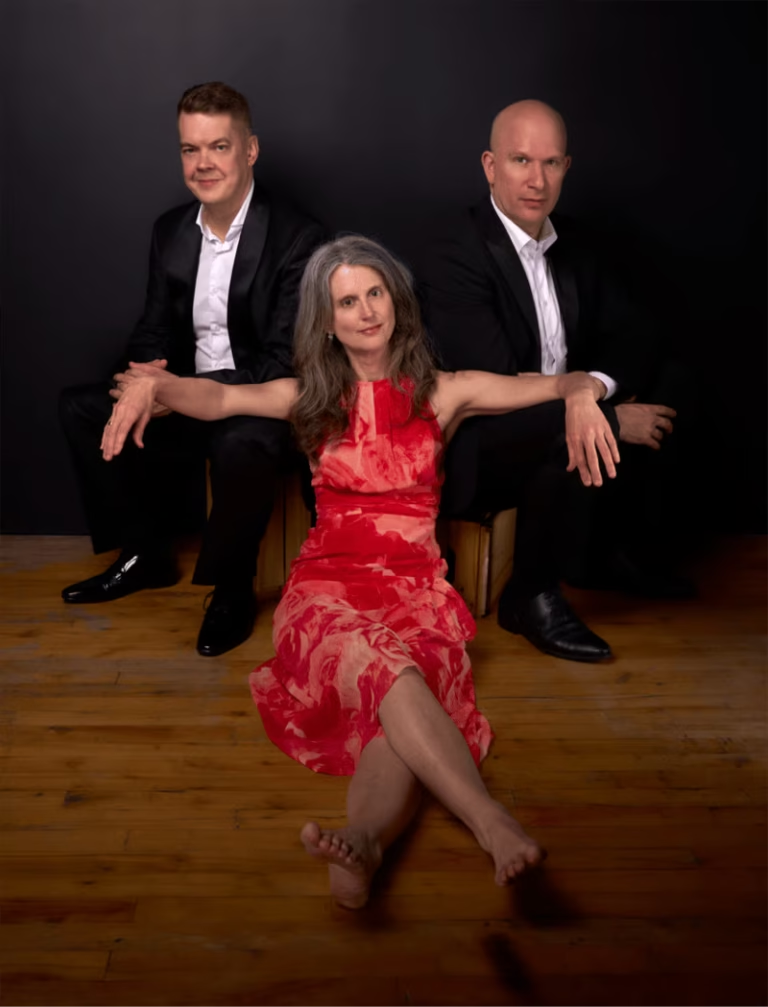
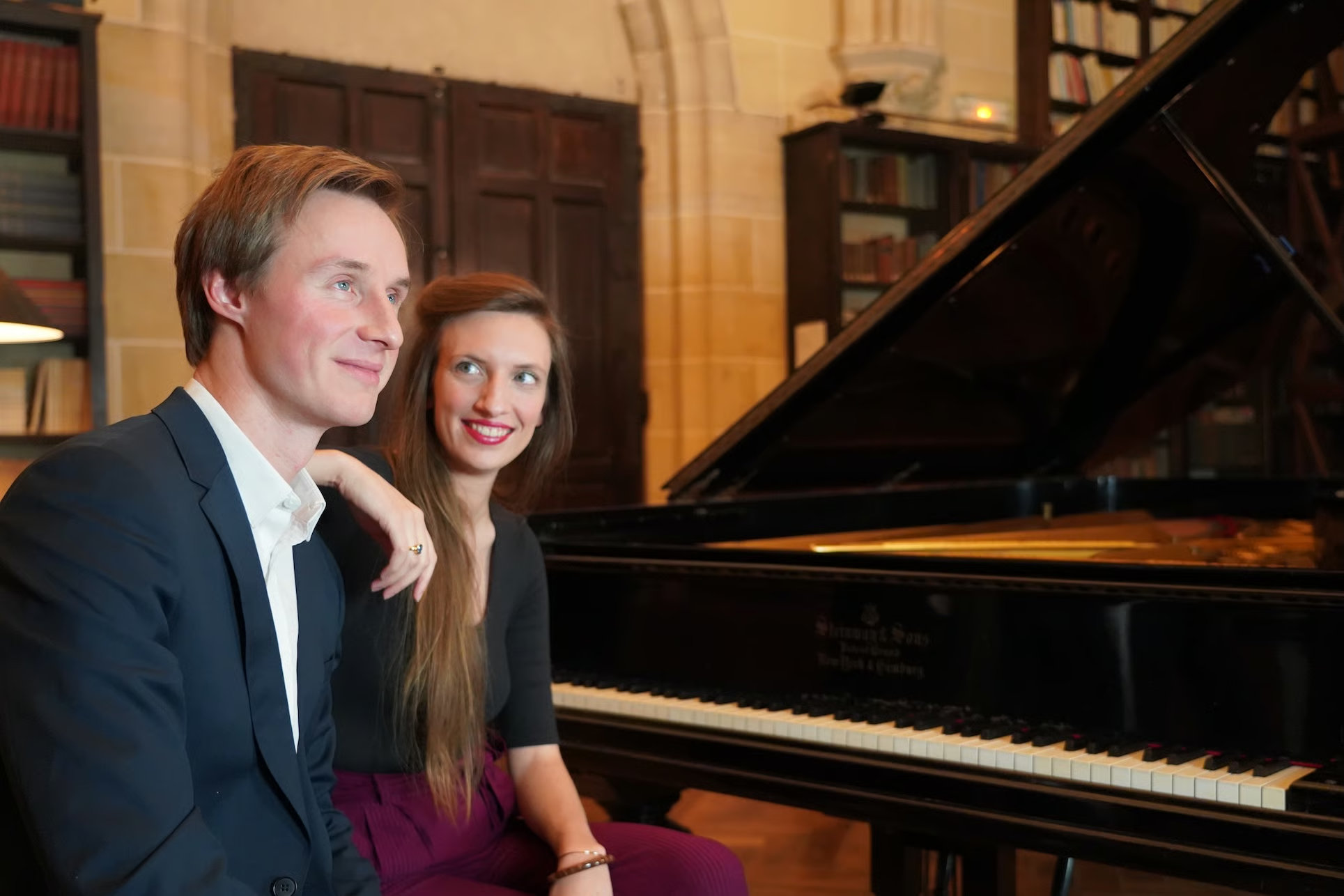
Un des duos les plus exaltants de la scène montréalaise vous propose un répertoire audacieux, constitué de concertos écrits par quatre grandes figures du jazz. Entre le marimba et le vibraphone, les crotales et les cymbales, les archets et le piano, vous serez transportés dans l’univers inusité de ces interprètes chevronnés !

One of Montréal’s most exhilarating jazz duos presents a daring programme of concertos composed by four leading lights of jazz. With marimba, vibraphone, crotales, cymbals, bows, and piano, these seasoned performers take their audience on a musical journey like no other!

Programme/program

Christine JENSEN, Marianne TRUDEL et/and Jean-Nicolas TROTTIER Concerto Intersection 
François BOURASSA Trois jazettes concertantes

POUR ACHETER VOTRE BILLET, C’EST ICI!

Ce contenu provient de la salle Bourgie et est adapté par PAN M 360

Baroque / Classical

Arion At Her Majesty’s Service

by Alexandre Villemaire

To open its 45th season, Arion Baroque Orchestra has adopted this formula of the Concerts de la Reine. Under the aegis of Marie Leszcynska, wife of Louis XV between 1725 and 1762, the Concerts de la Reine offered the court excerpts from vocal works or even movements from symphonies, more suited to the setting of the royal apartments and private salons. In the splendor of the ballrooms of the royal palaces, works were thus played for the pleasure of royalty. It is with this idea of ​​arranging disparate pieces that Mathieu Lussier built the repertoire of this concert, from instrumental music to vocal music.

With this underlying theme of femininity in mind, Arion opened its season with a work by a female composer – a first for the ensemble in 45 years. Taken from a small pastoral opera, properly named Le Concert, Mademoiselle Laurant’s arias, symphonies, and dances possessed a lightness and lyricism very much of the period, oscillating between animated, interior, and royal character. In comparison, the excerpts from the Prologue to the opera-ballet Les Génies or Les Caractères de l’Amour by a certain Madame Duval presented a wide variety of dynamics, notably the Air des Génies, which was particularly original in its multi-thematic construction.

Besides these two composers, if there was a queen at this edition, it was the Canadian soprano Emma Fekete. Winner of several prizes and grants, including that of winner of the Metropolitan Opera’s Laffont Competition in 2024, the 17th and 18th century repertoire was not yet on the slate of the young lyric artist who could be heard above all in Carmen (Frasquita), Le nozze di Figaro (Barbarina) and L’enfant et les sortilèges (Bergère, Pastourelle).

The work she did to sculpt her voice in the vocal aesthetics of the Baroque era was simply excellent. The crystalline high notes are precise, the vocal line blends into the orchestral mass with great control of timbre, and the articulation and pronunciation are of great clarity.

Particularly captivating was the performance of the aria “Vents furieux, tristes tempêtes” from the comedy-ballet La Princesse de Navarre by Jean-Philippe Rameau. The constant, breathless roll of the orchestra, which illustrated the storm’s tempestuous nature, was magnified by Emma Fekete’s committed and embodied performance. In each of the pieces she performed, the soprano demonstrated mastery of form as well as a strong stage presence, giving each excerpt the appropriate depth, whether in the imaginative “Rossignols amoureux” from Hippolyte et Aricie or the rarely performed arias from Scylla et Glaucus by Jean-Marie Leclair. Emma Fekete captivated the audience with each of her performances with her luminous timbre and the intelligence of her interpretations.

In front of a respectable audience, Mathieu Lussier’s troops kicked off a season which, in keeping with the intentions of its artistic director, aims to showcase the repertoire of little-performed composers as well as the richness and variety that 18th-century music has to offer.

Photo Credits : Tam Photography

Publicité panam
classique / guitare

Carlotta Dalia à la salle Bourgie

by Rédaction PAN M 360

L’une des grandes figures montantes de la guitare classique, Carlotta Dalia est de passage à Montréal pour partager sa fougue et sa sensibilité avec le public. Saluée pour l’excellence de son jeu et la profondeur de ses interprétations, cette jeune virtuose italienne, lauréate de plus de 40 concours internationaux, s’impose déjà comme l’une des artistes les plus prometteuses de sa génération. Une occasion unique de découvrir sur scène une musicienne au parcours impressionnant, qui incarne avec éclat la tradition italienne de la guitare classique.

A rising star in the world of classical guitar, Carlotta Dalia will be in Montréal to share her passion and sensitivity with the public. Hailed for her superb playing and the depth of her interpretations, this young Italian virtuoso—winner of over 40 international competitions—has already established herself as one of the most promising artists of her generation. A unique opportunity to hear in concert a musician with an impressive career, who brilliantly embodies the Italian classical guitar tradition.

POUR ACHETER VOTRE BILLET, C’EST ICI!

Ce contenu provient de la salle Bourgie et est adapté par PAN M 360

chanson française / classique / Piano

Alexandre Tharaud à la salle Bourgie

by Rédaction PAN M 360

L’un des plus célèbres pianistes de France réunit la musique classique et la chanson populaire dans un seul et même programme. Rameau côtoie Trenet, tandis que Satie ouvre la porte à Brel, dans un concert où Tharaud s’accorde des moments d’improvisation au service des grandes voix de la chanson.

Popular songs meet classical music in the capable hands of Alexandre Tharaud, one of France’s most famous pianists. This programme pairs Rameau with Charles Trenet and Satie with Jacques Brel, leaving room for Tharaud to improvise as he pays tribute to the great voices of song.

Programme

MOZART Sonate pour piano n° 11 en la majeur, K. 331 « Alla Turca »
RAMEAU Suite en la mineur, RCT 5
POULENC
15e improvisation en do mineur, FP 176, « Hommage à Édith Piaf »
Les chemins de l’amour, FP 106
TRENET
L’âme des poètes (arr. WIÉNER)
Mes jeunes années (arr. WIÉNER)
Vous oubliez votre cheval (arr. WEISSENBERG)
SATIE Je te veux (arr. WIÉNER)
BREL Ne me quitte pas (arr. Abdel Rahman EL BACHA)
Alexandre THARAUD Improvisations sur des chansons de Piaf, Barbara, Baker et Brel

Program

MOZART Piano Sonata No. 11 in A major, K. 331 (“Alla Turca”)
RAMEAU Suite in A minor, RCT 5
POULENC
Improvisation No. 15 in C minor, FP 176, “Hommage à Édith Piaf”
Les chemins de l’amour, FP 106
TRENET
L’âme des poètes (arr. WIÉNER)
Mes jeunes années (arr. WIÉNER)
Vous oubliez votre cheval (arr. WEISSENBERG)
SATIE Je te veux (arr. WIÉNER)
BREL Ne me quitte pas (arr. Abdel Rahman EL BACHA)
Alexandre THARAUD Improvisations on songs by Piaf, Barbara, Baker, and Brel

POUR ACHETER VOTRE BILLET, C’EST ICI!

Ce contenu provient de la salle Bourgie et est adapté par PAN M 360

Classical Period / Classical Singing

Matinée Schubert à la salle Bourgie

by Rédaction PAN M 360

Poursuivez votre exploration du plus grand compositeur de lieder de l’histoire ! Quatre jeunes artistes lyriques et une pianiste présentent certains des plus beaux opus schubertiens avant de se réunir dans une poignante prière pour quatuor vocal.

Dive deeper into the world of the greatest lieder composer of all time! Pianist Chloé Dumoulin accompanies four young singers in a selection of gems from Schubert’s song catalogue, ending with the composer’s poignant prayer for vocal quartet.

Programme

SCHUBERT
Osterlied [Chant de Pâque], D. 168a
Die Liebende schreibt [L’amoureuse écrit], D. 673
Gretchen im Zwinger [La prière de Marguerite], D. 564
Geistes-Gruss [Salut d’un fantôme], D. 142
Der Fluss [Le fleuve], D. 693
Mélodie hongroise en si mineur pour piano, D. 817
Schwestergruss [Salutation de la sœur], D. 762
Rastlose Liebe [Amour sans repos], D. 138
Der Alpenjäger [Le chasseur alpin], D. 588
Wandrers Nachtlied [Le chant de la nuit du voyageur], D. 768
Gebet [Prière], D. 815

Program

SCHUBERT
Osterlied [Easter song], D. 168a
Die Liebende schreibt [The woman in love writes], D. 673
Gretchen im Zwinger [Gretchen’s prayer], D. 564
Geistes-Gruss [Phantom-greeting], D. 142
Der Fluss [The river], D. 693
Hungarian Melody in B minor for piano, D. 817
Schwestergruss [Sister’s greeting], D. 762
Rastlose Liebe [Relentless love], D. 138
Der Alpenjäger [The Alpine hunter], D. 588
Wandrers Nachtlied [The wanderer’s night song], D. 768
Gebet [Prayer], D. 815

POUR ACHETER VOTRE BILLET, C’EST ICI!

Ce contenu provient de la salle Bourgie et est adapté par PAN M 360

classique / Création / post-romantique

Trio Fibonacci – Compositeurs voyageurs à la salle Bourgie

by Rédaction PAN M 360

Partez sur les traces de compositeurs dont l’œuvre est teintée par les cultures d’origines et les terres d’accueil. Les trios de George Onslow et de Sergueï Rachmaninov se distinguent en effet par les couleurs musicales de leurs destinées respectives. Compositeur franco-britannique, Onslow incarne une figure cosmopolite du romantisme européen, mêlant classicisme viennois et sensibilité française. Son trio, à la fois élégant et plein de vitalité, témoigne du talent d’Onslow, souvent surnommé le « Beethoven français ». Rachmaninov quant à lui exprime à la fois son admiration pour Tchaïkovski et sa propre voix musicale naissante dans son trio élégiaque. Lyrisme slave, virtuosité pianistique et profondeur dramatique y annoncent déjà la richesse expressive de ses œuvres futures. Une création de Katia Makdissi-Warren, dont le style est influencé par les musiques du Moyen-Orient, de l’Occident et Autochtones, complétera ce programme.

Follow in the footsteps of composers whose music reflects a profound dialogue between cultures, homelands and diverse influences. The trios of George Onslow and Sergei Rachmaninov are distinguished by the musical colours of their respective destinies. A Franco-British composer, Onslow was a cosmopolitan figure of European Romanticism, blending Viennese classicism with French sensibility. His trio, at once elegant and full of vitality, testifies to the talent of Onslow, often dubbed the ‘French Beethoven’. Rachmaninoff expresses both his admiration for Tchaikovsky and his own nascent musical voice in his second Trio élégiaque. Slavic lyricism, pianistic virtuosity and dramatic depth already foreshadow the expressive richness of his future works. A new work by Katia Makdissi-Warren, whose style is influenced by Middle Eastern, Western and Aboriginal music, will complete the programme.

Programme

George ONSLOW Trio en sol majeur, op. 27
Sergueï RACHMANINOV 
Trio élégiaque n°2 
Katia MAKDISSI-WARREN 
Création

Program

George ONSLOW Trio in G major, Op. 27
Sergueï RACHMANINOV 
Trio élégiaque n°2
Katia MAKDISSI-WARREN 
Premiere

POUR ACHETER VOTRE BILLET, C’EST ICI!

Ce contenu provient de la salle Bourgie et est adapté par PAN M 360

classique / Piano / post-romantique

Victoire Bunel, mezzo-soprano & Gaspard Dehaene, piano – Schubert et la mélodie française à la salle Bourgie

by Rédaction PAN M 360

Ce programme ancre Schubert sur la terre ferme tout en lui faisant miroiter les mers qu’il n’a pas connues, dépeintes par des mélodies françaises qu’il n’aura jamais entendues. Ces tourments du voyageur sont racontés dans ses lieder auxquels répond, telle une consolation, la danse des flots de Fauré, Chausson, Marguerite Canal et Lili Boulanger.

An image of the sea that Schubert never glimpsed, depicted in French mélodies that he never heard, entices him while he remains stuck on dry land. As a form of consolation, the suffering of the Schubertian traveller recounted in these lieder is answered by the play of the waves in songs by Fauré, Chausson, Marguerite Canal, and Lili Boulanger.

Programme

SCHUBERT
Geisternähe [Proximité des esprits], D. 100
Erinnerung [Souvenirs], D. 101
Seufzer [Soupirs], D. 198 
An die untergehende Sonne [Au soleil couchant], D. 457 
In der Mitternacht [À minuit], D. 464 
Lied des Orpheus, als er in die Hölle ging [Chant d’Orphée, comme il est allé aux enfers], D. 474
Abschied [Adieux], D. 475 
Rückweg [Le chemin de retour], D. 476 
Der Jüngling und der Tod [Le jeune homme et la mort], D. 545 
FAURÉ
Les berceaux, op. 23 n° 1
La chanson du pêcheur, op. 4 n° 1
Au bord de l’eau, op. 8 n° 1
Mirages, op. 113 (extraits)
L. BOULANGER Reflets
JAËLL La mer (extraits)
CHAUSSON
Sérénade italienne, op. 2 n° 5
La chanson bien douce, op. 34 n° 1
CANAL
Chanson à l’aube
Écoutez la chanson bien douce
Largue la voile
RAVEL Jeux d’eau
SCHUBERT / LISZT Aufenthalt

Program
Geisternähe [Proximité des esprits], D. 100
Erinnerung [Souvenirs], D. 101
Seufzer [Soupirs], D. 198 
An die untergehende Sonne [Au soleil couchant], D. 457 
In der Mitternacht [À minuit], D. 464 
Lied des Orpheus, als er in die Hölle ging [Chant d’Orphée, comme il est allé aux enfers], D. 474
Abschied [Adieux], D. 475 
Rückweg [Le chemin de retour], D. 476 
Der Jüngling und der Tod [Le jeune homme et la mort], D. 545 
FAURÉ
Les berceaux, op. 23 n° 1
La chanson du pêcheur, op. 4 n° 1
Au bord de l’eau, op. 8 n° 1
Mirages, op. 113 (extraits)
L. BOULANGER Reflets
JAËLL La mer (extraits)
CHAUSSON
Sérénade italienne, op. 2 n° 5
La chanson bien douce, op. 34 n° 1
CANAL
Chanson à l’aube
Écoutez la chanson bien douce
Largue la voile
RAVEL Jeux d’eau
SCHUBERT / LISZT Aufenthalt

Ce contenu provient de la salle Bourgie et est adapté par PAN M 360
classique / Piano / post-romantique

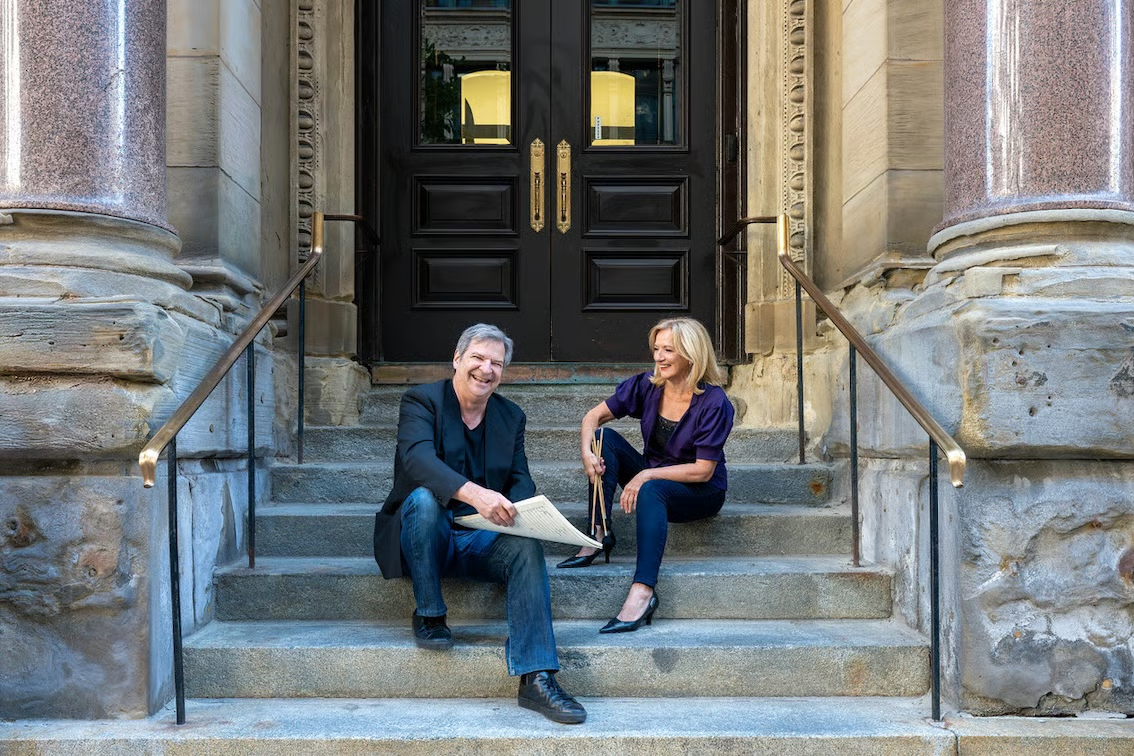
Jinjoo Cho, violon & Henry Kramer, piano à la salle Bourgie

by Rédaction PAN M 360

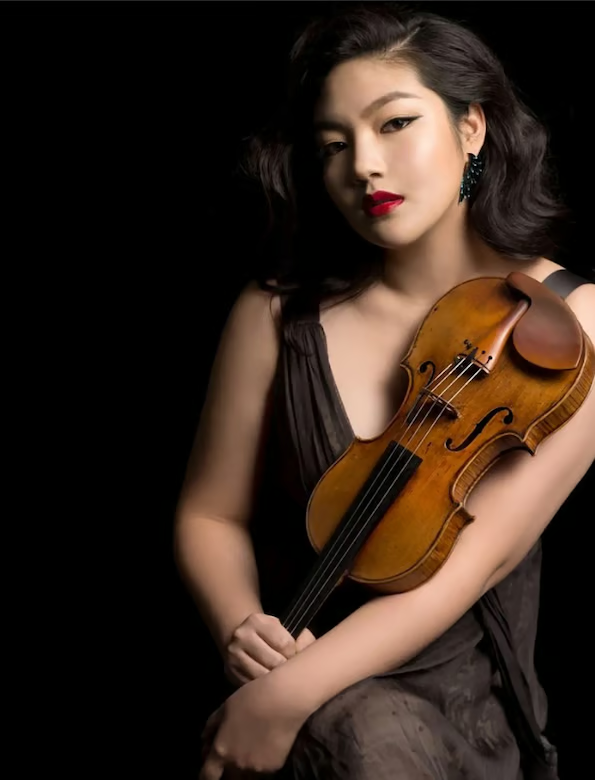
Pour leur premier récital à la Salle Bourgie, la violoniste virtuose Jinjoo Cho et le charismatique pianiste Henry Kramer ont choisi des œuvres tantôt empreintes du lyrisme typique de la fin de l’époque romantique, tantôt remplies de l’excitation fébrile du début du 20e siècle. Un concert rempli d’émotions fortes!

For their first recital at Bourgie Hall, violin virtuoso Jinjoo Cho and charismatic pianist Henry Kramer have chosen lyrical works typical of the late Romantic period, mirrored by thrilling pieces filled with the feverish excitement of the early 20th century. A concert filled with strong emotions!

Programme

STRAVINSKY Suite italienne pour violon et piano, tirée du ballet Pulcinella
SCHULHOFF Sonate pour violon n° 2
CHAUSSON Poème, op. 25
SAINT-SAËNS Sonate pour violon n° 1 en ré mineur, op. 75

Program

STRAVINSKY Suite italienne, for violin and piano, from the ballet Pulcinella
SCHULHOFF Violin Sonata No. 2
CHAUSSON Poème, Op. 25
SAINT-SAËNS Violin Sonata No. 1 in D minor, Op. 7

POUR ACHETER VOTRE BILLET, C’EST ICI!

Ce contenu provient de la salle Bourgie et est adapté par PAN M 360

Baroque / classique / japon

Bruno Deschênes – La flûte à travers le monde à la salle Bourgie

by Rédaction PAN M 360

La flûte est l’un des plus vieux instruments de musique et sa famille est immense : on en compte des milliers de variations de par le monde. Ce concert inusité, éclaté et vibrant vous en fait découvrir plusieurs de ses plus beaux spécimens, entre la flûte baroque et le shakuhachi japonais, le dizi chinois et le ney moyen-oriental.

Flutes are among the oldest instruments on Earth, with thousands of varieties found across the globe. This vibrant, variegated, one-of-a-kind programme brings together several members of the flute family, from the European Baroque flute to the Japanese shakuhachi and the Chinese dizi to the Middle-Eastern ney.

Programme

VIVALDI Concerto pour violon en mi majeur, RV 269, « Le Printemps » (arr. pour flûte seule par J.-J. Rousseau)
BOISMORTIER Concerto pour cinq flûtes, op. 15 n° 1
Ziya TABASSIAN Lovebird
Jean LÉRIGÉ-LAPLANTE Évanescence (Création)
Ziad CHBAT Nostalgie
ANONYME Printemps à la rivière (trad. chinois, arr. Bruno Deschênes)
Bruno DESCHÊNES
Tsuru no sugomori [La nidification de la grue]
Shin Etenraku [Composition sur l’ancienne mélodie Etenraku]

Program

VIVALDI Violin Concerto in E major, RV 269, “Spring” (arr. for solo flute by J.-J. ROUSSEAU)
BOISMORTIER Concerto for Five Flutes, Op. 15, No. 1
Ziya TABASSIAN Lovebird
Jean LÉRIGÉ-LAPLANTE Évanescence (premiere)
Ziad CHBAT Nostalgie
ANONYMOUS Printemps à la rivière (trad. Chinese, arr. Bruno DESCHÊNES)
Bruno DESCHÊNES
Tsuru no sugomori [The crane nesting]
Shin Etenraku [Composition on the traditional melody Etenraku]

POUR ACHETER VOTRE BILLET, C’EST ICI!

Ce contenu provient de la salle Bourgie et est adapté par PAN M 360
classique / post-romantique

Intégrale des sonates pour piano de Prokofiev – Concert 3 : Le siège de Leningrad à la salle Bourgie

by Rédaction PAN M 360

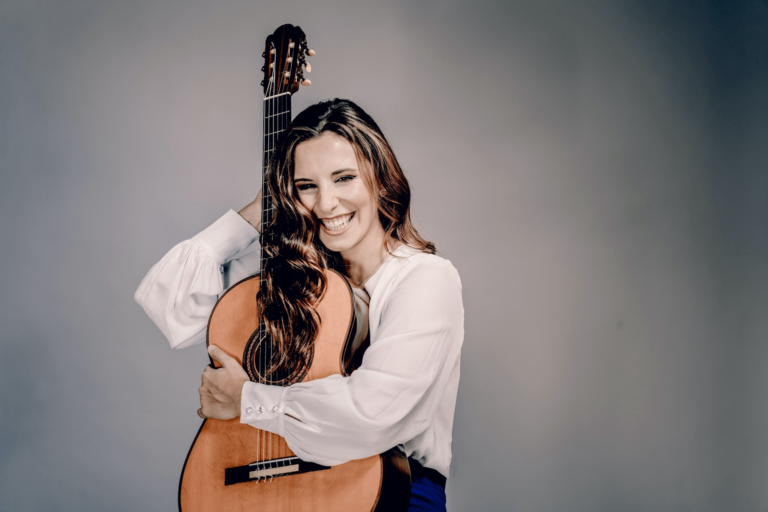
L’un des 15 meilleurs pianistes canadiens de tous les temps selon la CBC, David Jalbert nous mène sur le chemin passionnant des sonates pour piano de Prokofiev ! Dans une intégrale en trois concerts-événements, ce projet s’inscrit dans la foulée de ses enregistrements chez ATMA Classique. Entre introspection et virtuosité, romantisme et modernité, ces œuvres reflètent le parcours et la vie de ce compositeur visionnaire.

David Jalbert—one of the 15 greatest Canadian pianists of all time, according to the CBC—takes his audience on a journey through Prokofiev’s complete piano sonatas! This three-part concert series was inspired by Jalbert’s Prokofiev recordings for ATMA Classique. With works both introspective and virtuosic, both Romantic and modern, this programme offers a glimpse into the life and works of the visionary composer.

Programme

PROKOFIEV
Sonate n° 9 en do majeur, op. 103
Sonate n° 10 en mi mineur, op. 137 (inachevée)
Six pièces d’après Cendrillon, op. 102 : I. « Valse : Cendrillon et le Prince » 
Sonate n° 3 en la mineur, op. 28
Dix pièces d’après Roméo et Juliette, op. 75 (extraits)
Sonate n° 7 en si bémol majeur, op. 83

Program

PROKOFIEV
Sonata No. 9 in C major, Op. 103
Sonata No. 10 in E minor, Op. 137 (unfinished)
Six Pieces from Cinderella, Op. 102: I. Waltz: Cinderella and the Prince
Sonata No. 3 in A minor, Op. 28
Ten Pieces from Romeo and Juliet, Op. 75 (excerpts)
Sonata No. 7 in B-flat major, Op. 83

POUR ACHETER VOTRE BILLET, C’EST ICI!

Ce contenu provient de la salle Bourgie et est adapté par PAN M 360
Pop

Noah Cyrus au MTelus

by Rédaction PAN M 360

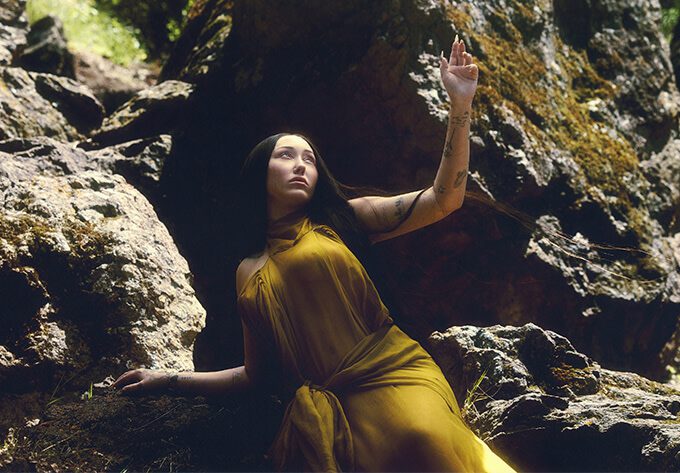
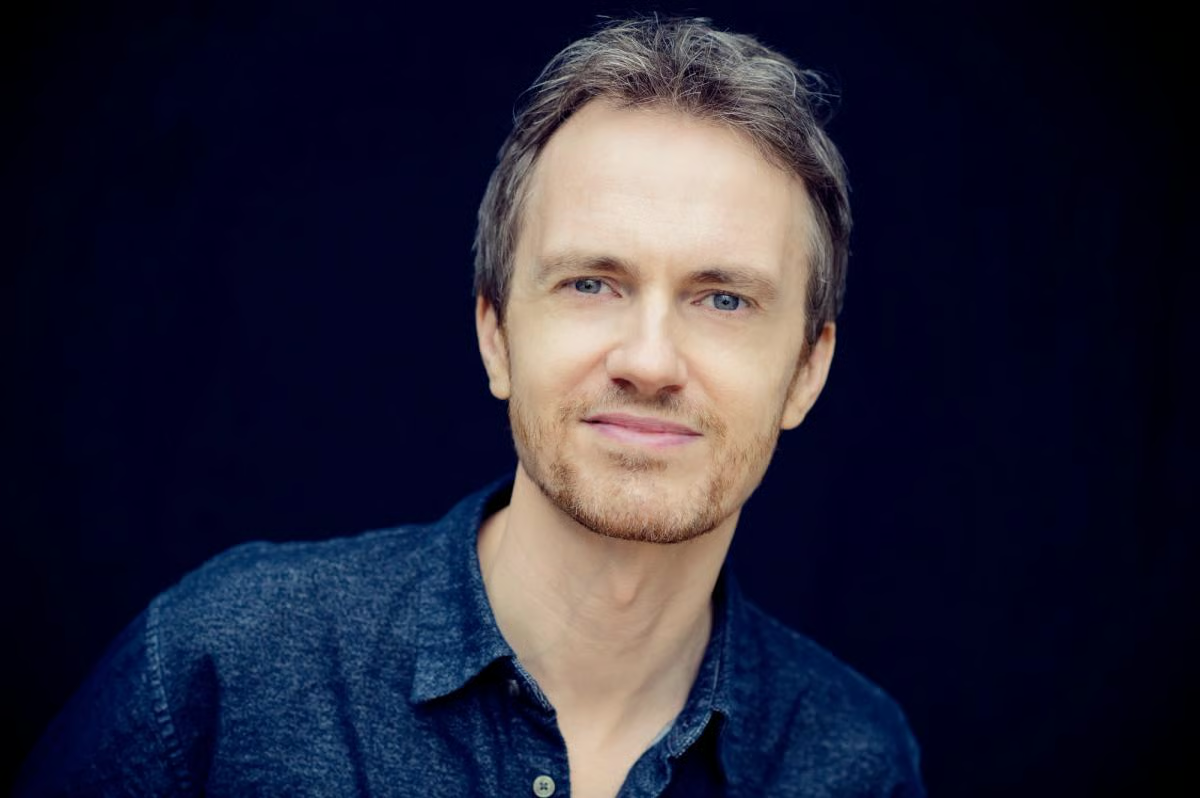
S’appuyant sur l’héritage musical de sa famille, la chanteuse Noah Cyrus développe un style empreint d’émotion, à mi-chemin entre la pop contemporaine et le country. Si elle s’est d’abord fait remarquer comme actrice — apparaissant dans Hannah Montana aux côtés de sa sœur Miley et de son père Billy Ray — c’est son EP The End of Everything, sorti en 2020, qui l’a distinguée, la propulsant dans les classements Billboard et lui valant une nomination aux Grammy Awards dans la catégorie Révélation de l’année. Après des collaborations avec PJ Harding, elle a publié son premier album complet, The Hardest Part, à la fin de 2022. Cyrus a poursuivi ses collaborations avec d’autres artistes, apparaissant sur des singles avec Orville Peck, Vance Joy et Fleet Foxes — ces derniers l’ayant rejointe pour le titre Don’t Put It All on Me, paru en 2025.

Building upon her family’s musical heritage, singer Noah Cyrus has an emotive sound that straddles contemporary pop and country. While she initially garnered attention as an actress (appearing on Hannah Montana with sister Miley and dad Billy Ray), it was her 2020 EP The End of Everything that set her apart, launching her onto the Billboard charts and earning her a Grammy nomination for Best New Artist. Following collaborations with PJ Harding, she issued her full-length debut, The Hardest Part, in late 2022. Cyrus has continued to collaborate with other artists, performing on singles with Orville Peck, Vance Joy, and Fleet Foxes, the latter of whom joined her for 2025’s “Don’t Put It All on Me.”

POUR ACHETER VOTRE BILLET, C’EST ICI!

Ce contenu provient d’AllMusic et est adapté par PAN M 360
Subscribe to our newsletter