Le groupe afro-pop primé Sauti Sol, originaire de Nairobi, au Kenya, est en tête des hit-parades depuis plus d’une décennie. Les amis de longue date Polycarp Otieno, Savara Mudigi, Willis Chimano et Bien-Aime Baraza ont consolidé leur place parmi les groupes les plus importants du continent et leur trajectoire ascendante, alimentée par leur philosophie de “l’église des bonnes vibrations”, leur a valu des fans dans le monde entier.
The award winning afro-pop band Sauti Sol, hail from Nairobi, Kenya and have been topping the charts for more than a decade. Long-time friends Polycarp Otieno, Savara Mudigi, Willis Chimano and Bien-Aime Baraza, cemented their place as one of the leading bands from the continent and the upward trajectory fuelled by their ‘church of good vibes’ ethos wins them fans all over the world.
Les Psychotic Monks s’expriment dans un chaos incontrôlé mais délibéré. Une vie partagée entre les expérimentations dans leur propre studio et les concerts sur la route. Bruit et fureur, leur musique est animée par le pouls de la vie. Contre l’idée d’un leader charismatique, les quatre musiciens recherchent un équilibre entre folie névrotique et mélancolie contemplative.
The Psychotic Monks express themselves in a uncontrolled but deliberate chaos. A life split between experimentations in their own studio and concerts when they hit the road. Noise and fury, their music is driven by the pulse of life. Against the idea of a charismatic leader, the four musicians are looking for a balance between neurotic madness contemplative melancoly.
Les mardis Big Band avec Benjamin Deschamps au Dièse Onze
by Rédaction PAN M 360
Benjamin Deschamps est un saxophoniste et compositeur reconnu par ses pairs de la scène canadienne de jazz, mais également par l’industrie culturelle. Il a entre autres été nommé « Révélation Radio-Canada Jazz » en 2017-2018, puis a remporté le Grand Prix TD du Festival international de Jazz de Montréal en 2019. Son esprit grégaire l’amène à collaborer avec plusieurs ensembles tels le Rachel Therrien Quintet, Odd Lot (Jacques Kuba Séguin), le Joe Sullivan Big Band, L’Orchestre National de Jazz de Montréal et le JazzLab Orchestra (Effendi) avant de plonger tête première dans ses projets de composition. Du trio au sextet, il joue avec des géométries variables pour donner la couleur plus adéquate à chaque œuvre. Deschamps s’est établi comme un incontournable de la scène jazz canadienne avec ses 3 premiers albums. Il a présenté sa musique avec succès aux quatre coins du Canada, faisant la tournée de plusieurs festivals de jazz au pays et en France.
It was through his classical music background that Benjamin Deschamps discovered jazz to finally make it his own. Although he cumulates artistic mediums (he is a flutist, clarinetist and arranger), it is his talents as a saxophonist and composer that have put him in the spotlight. His gregarious spirit led him to collaborate with several ensembles such as the Rachel Therrien Quintet, Odd Lot (Jacques Kuba Séguin), the Joe Sullivan Big Band, the Orchestre national de jazz de Montréal and JazzLab Orchestra (Effendi) before diving headfirst into his own projects. From trio to sextet, he plays with variable ensemble sizes to give the most fitting touch to each work.Benjamin is recognized by his peers in the Canadian jazz scene, but also by the cultural industry. He was named “Révélation jazz Radio-Canada” in 2017-2018, and won the TD Grand Prize at the Festival international de Jazz de Montréal in 2019.
RÉSERVATIONS PAR TÉLÉPHONE AU 514-223-354
Ce contenu provient du Dièse Onze et est adapté par PAN M 360.
Les jam sessions avec Alex Bellegarde et son trio sont devenus un pignon hebdo du jazz montréalais. Vous y croisez les grands noms du jazz d’ici et d’ailleurs, ainsi que la relève. La première partie, Bellegarde son trio et invités présentent les pièces qui les inspirent et dans lesquelles l’improvisation a toute sa place. Le jam prend tout son envol dans la deuxième partie et se poursuit des fois tard dans la nuit. Les intrépides viennent se frotter aux démons de la scène ou créativité, spontanéité et générosité sont au menu!
Alex Bellegarde’s dynamic Tuesday jam session has become one of Montreal’s hippest weekly jazz events. The first set fires up with Bellegarde and his trio, playing host to a range of well known talents from the Montreal scene as well as musicians from out of town. The jam opens in the second set, to any jazz musician with the confidence to step up and play… there’s an unspoken rule though: “If you can’t keep up, you shouldn’t be on stage”. A great place to play and chill… the jam continues on into the early hours !
RÉSERVATIONS PAR TÉLÉPHONE AU 514-223-3543
Ce contenu provient du Dièse Onze et est adapté par PAN M 360.
Flavien Berger surprend et interpelle pour finalement nous charmer. En jouant avec les mots pour créer des histoires d’amour, en testant des sons tourbillonnants, le compositeur autodidacte s’est fait rapidement un nom en apportant un vent de fraicheur à la scène française. Flavien Berger, a toujours été intéressé par le bidouillage de machines pour en sortir des sons. Sur ce point, c’est assez difficile de définir son style : il va au-delà, mélangeant habilement les passages effrénés et les longues plages de synthétiseurs. En s’affranchissant de toute classification, il propose une musique aux influences aquatiques sur son premier album « Leviathan ». Chaque fois, il débarque avec des dynamiques différentes et celui qui l’écoute passe de montées fulgurantes à de sombres descentes. Écouter toutes ses sorties ou le voir jouer sur scène confirme son génie à emmener le public dans une expérience émotionnelle profonde, pleine d’imagination.
On pourra discuter à l’infini, mais on ne sait pas forcément très clairement où la voix de Gabi Hartmann nous transporte : un bar jazz en sous-sol, une plage tropicale au crépuscule, une terrasse dans une pente de Lisbonne, le fond d’une brasserie parisienne par une nuit d’hiver ? On ferme les yeux et passent, enlacées, l’ombre d’une légende du jazz, d’une diva de la bossa nova, d’une grande dame en noir de la chanson française ou portugaise, quelque part au carrefour du chic exquis et de la mélancolie vertigineuse, de la douceur consolante et du spleen partagé.
We can talk endlessly, but we don’t necessarily know very clearly where Gabi Hartmann’s voice takes us: a jazz bar in the basement, a tropical beach at dusk, a terrace on a slope in Lisbon, the background of a Parisian brasserie on a winter’s night? We close our eyes and pass, entwined, the shadow of a jazz legend, a bossa nova diva, a great lady in black from French or Portuguese song, somewhere at the crossroads of exquisite chic and vertiginous melancholy, consoling sweetness and shared spleen.
“Tout ce que fait Pyrrhon émane d’un noyau de death metal obsidional, mais cette musique est bien plus expressive et son impact bien plus inquiétant que presque tout ce qui se fait dans le genre. -Decibel
Doté d’un cerveau et de muscles, Couch Slut fait de la musique qui frappe les tripes et stimule l’esprit. La version déchirante du rock de l’album Contempt est à l’image de sa ville natale – sale, dangereuse, éblouissante – et assure la place du groupe dans la lignée des grands documentaristes de NYC, de Sonic Youth à Swans, d’Unsane à Pyrrhon.
“Outré as they get, everything Pyrrhon do emanates from an obsidian death metal core – just that this music is that much more expressive, its impact that much more disquieting than almost anything else in the genre.” -Decibel
Sporting brains and brawn, Couch Slut makes music that punches the gut and stimulates the mind. Contempt’s harrowing version of rock reflects its hometown – dirty, dangerous, dazzling – and secures the band’s place in the line of great NYC documentarians, from Sonic Youth to Swans, from Unsane to Pyrrhon.
Daniel Chien, plus connu sous le nom de Wax Motif, est considéré comme l’un des principaux orchestrateurs du développement du son house aux États-Unis. Avec des influences musicales telles que le R&B, le disco et la basse britannique, ce producteur né en Australie et basé à Los Angeles apporte un style unique au studio, ce qui fait de lui un producteur très recherché.
Daniel Chien better known as Wax Motif is regarded as a major orchestrator in developing house sound across the US. With musical influences like R&B, disco and U.K. bass, the Australian-born, LA-based producer brings a unique style to the studio, making him a highly sought-after producer.
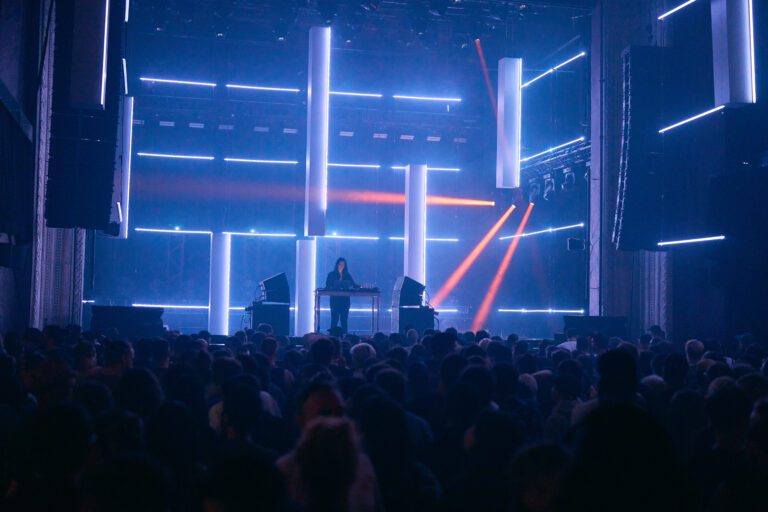
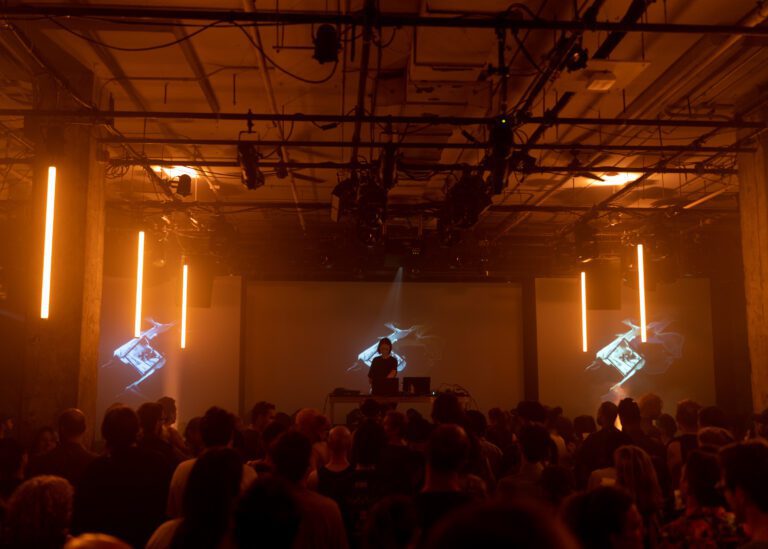
The PAN M 360 team brings you comprehensive coverage of MUTEK Montreal 2023. Here’s a selection of the best performances on Saturday night at Théâtre Maisonneuve, as part of the A/Visions series.
Crédits photos : Nina Gibelin Souchon
Hatis Noit
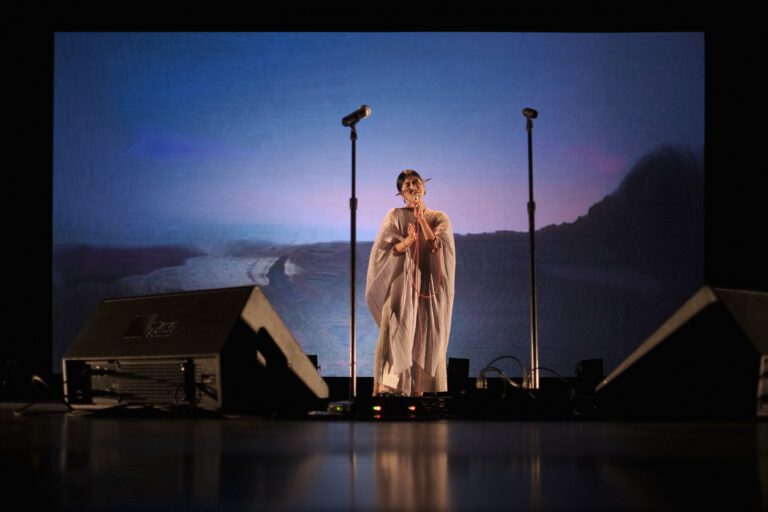
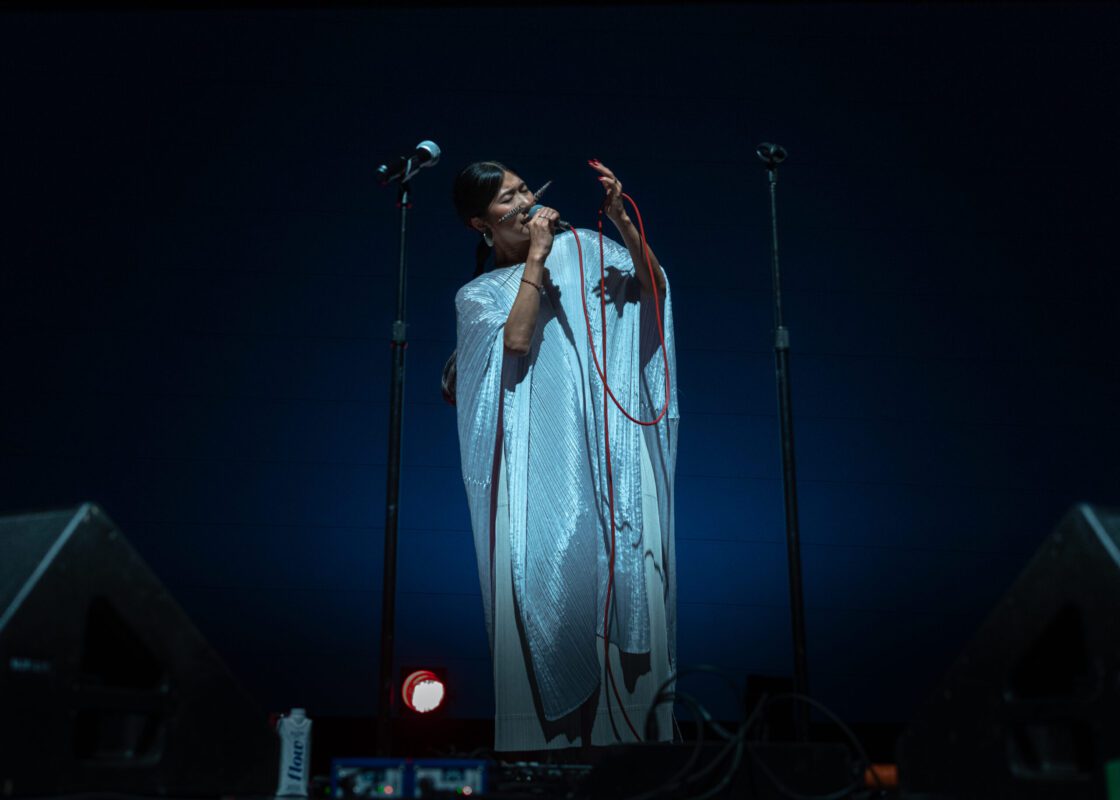
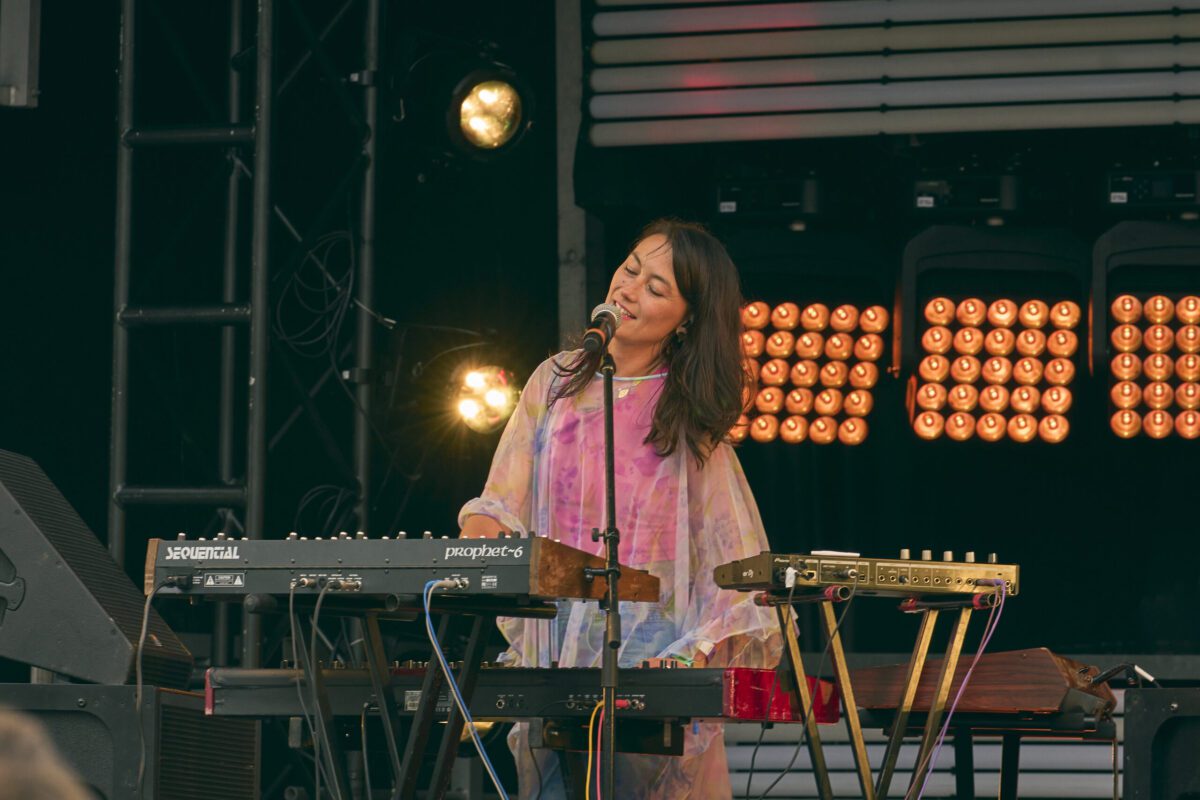
“I only use my voice, is it okay to play at Mutek?” This was the question Hatis Noit posed during her first address to the crowd. The London-based Japanese artist effectively had only a loop pedal and projections as technological hardware, operating the bulk of her art from her vocal folds. From a technical point of view, Noït was impressive, moving easily from operatic singing to yodeling very close to what Eastern European singers do in traditional music. Imitations of animal cries and other textures were also on the menu. Voices were superimposed in arrhythmic textures, always tonal. However, the composer did not take a maximalist approach, her pieces limiting their thickness to a few loops. The various melodic layers were therefore always perceptible to the ear wishing to break down the mass. With her movements and stage presence, the artist delivered a performance out of the ordinary, and one of the most unique of the festival. Verbal communication with the crowd between pieces and Yuma Kishi’s projections were a bonus. Even with sound alone, the show would have been just as captivating. Yes, Hatis Noit, it’s okay that you’re playing at Mutek!
DATUM CUT
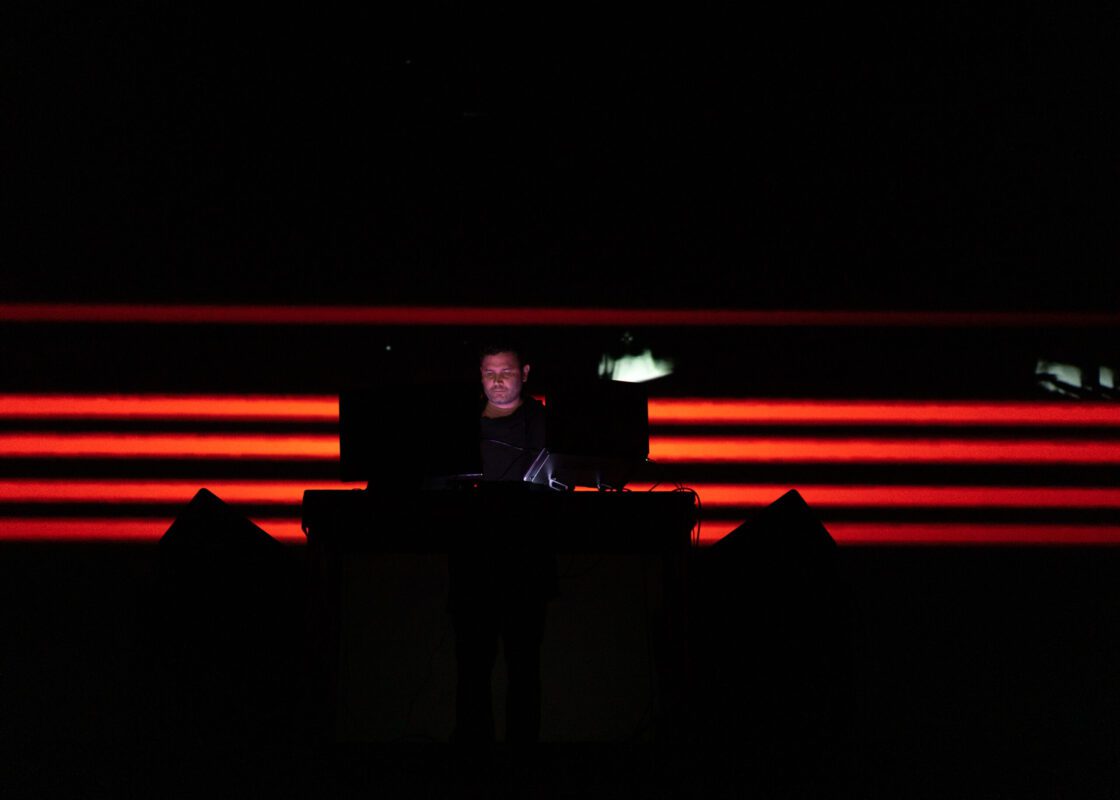
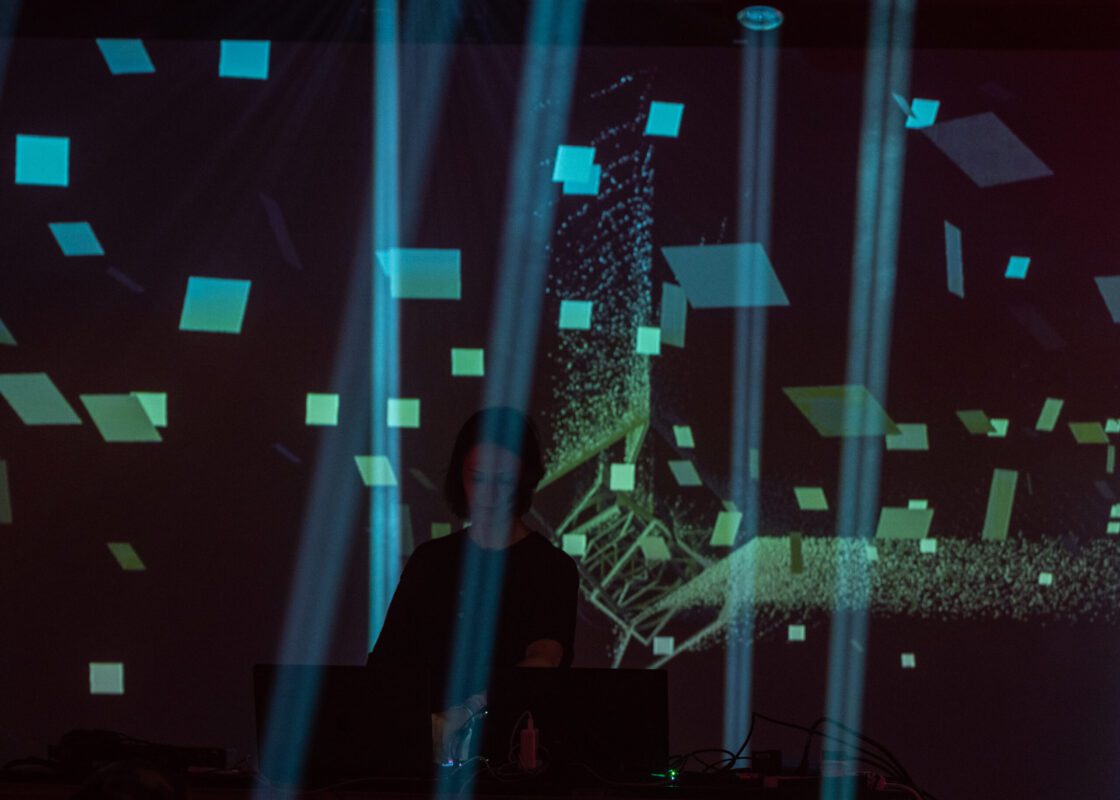
Behind his screens and synthesizers, Maxime Corbeil-Perron composed a massive yet harmonically simple drone. One had the impression of being immersed in a chord throughout the entire performance, the artist taking the time to deconstruct and vary the harmonic content in all its forms. A complex sequence of rougher sounds was added to this relatively static framework. With no discernible pulse, the composition was nevertheless highly rhythmic, with rapid, sporadic percussive attacks. The music developed in micro-montages, revealing complex sonic events hidden within the overall texture. The highs seemed to have been filtered, which clearly softened the aggressiveness of the noisier sounds. Aesthetically, it was reminiscent of a band like Yellow Swans, who develop a form of “harmonic noise”. Visually, photographs of metallic textures alternated with computer-generated images in a neon palette. Inex.materia was a good example of an accessible work informed by academic practice. This is just one of the sonic manifestations of Corbeil-Perron, who operates under several aliases.
SPIME.IM
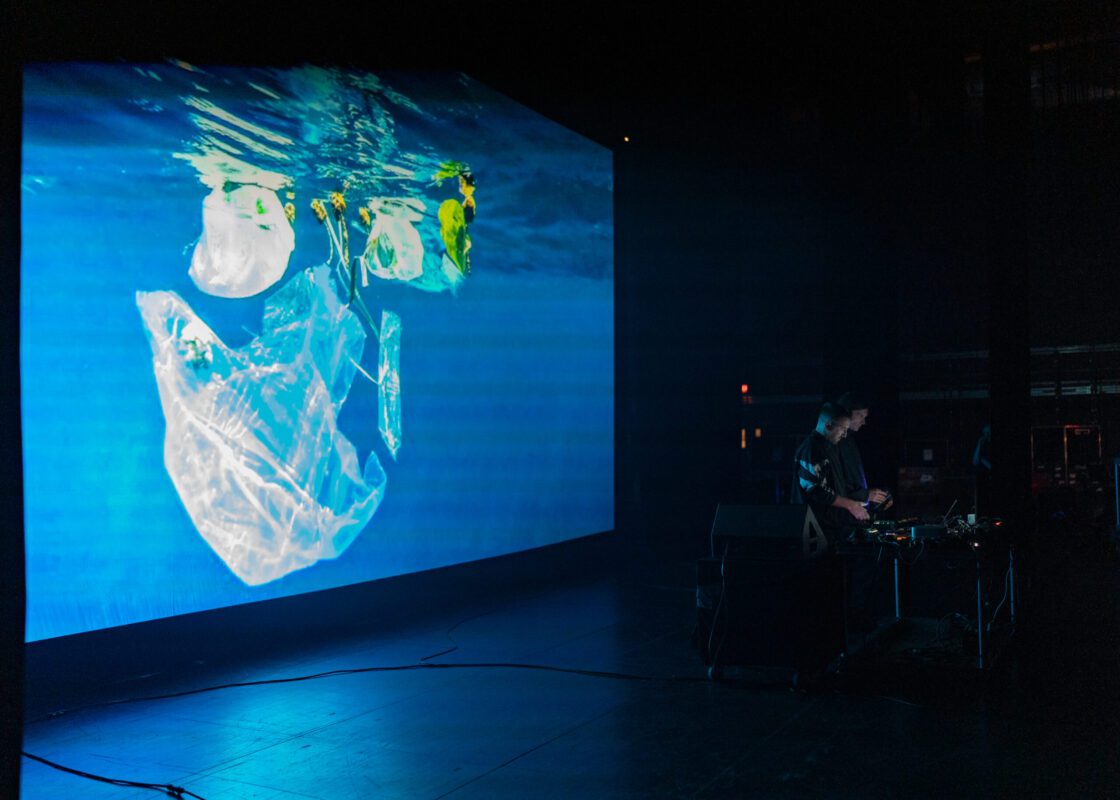
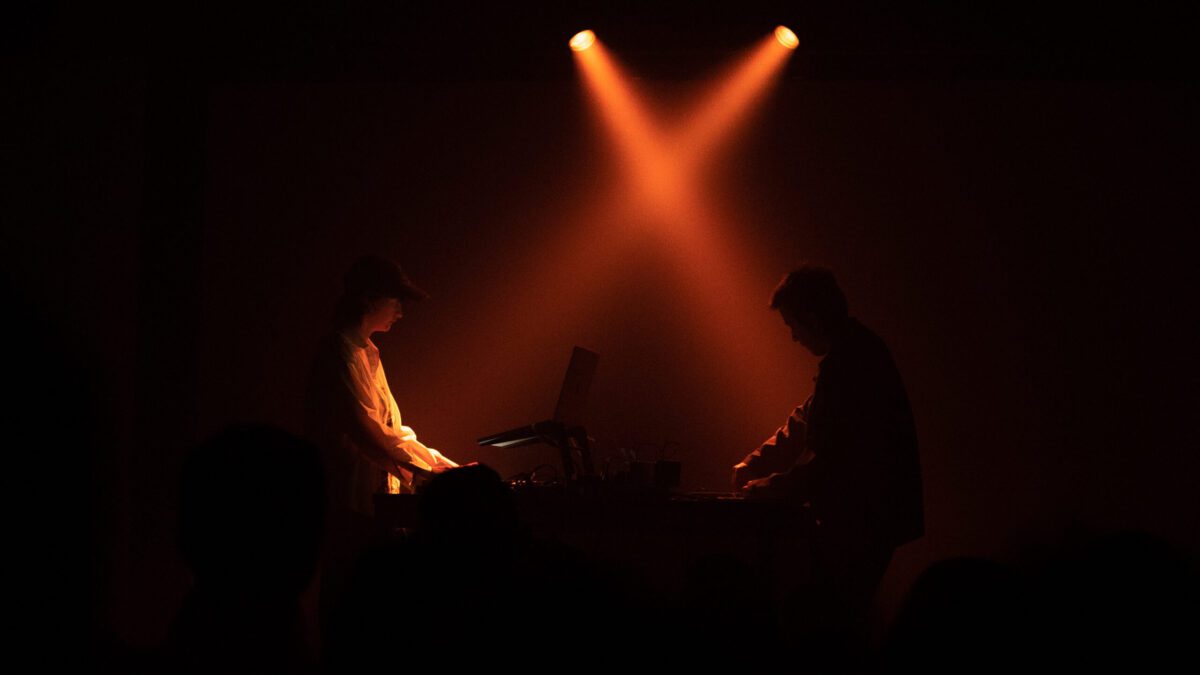
Italian collective SPIME.IM certainly don’t beat about the bush when it comes to kicking ass. In duo format, the artists began the performance in a rather minimalist fashion, with rhythmic industrial and noise music lit up by white strobes. But it soon became much more eclectic… and political. All the abjections of our contemporary world were represented: military culture, digital individualism, pollution, overconsumption, materialism, obscenity, the destruction of the natural world and so on. These images were decomposed and recomposed in sequences that were sometimes refined, sometimes visceral. Particularly striking was a long mise en abîme in which the pixels of each new image expanded to plunge into new images, which in turn expanded to reveal new images. There was something therapeutic about seeing all these representations of violence being reused in an artistic way.
The music, always highly experimental, became increasingly intense, hammering out highly saturated sounds with a few echoes of harmony when the desired dramatic effect demanded it. For example, a sudden progression of chords interspersed with silences allowed the words “Where are we going then? to appear one by one. This passage, like many others in the performance, could well have closed the number. Perhaps that was SPIME.IM’s flaw: not knowing when to stop. The dramatic climaxes were so frequent that the audience applauded them like the end of a solo in a jazz show. In short, the audience was treated to a scathing critique of the media images that pervade our daily lives. The apocalyptic soundtrack accompanying these surging clichés skilfully underscored the brutality of the issues we face. Captivating from start to finish.
MUTEK Montréal 2023 and PAN M 360, a combination that makes perfect sense! That’s why our team is focusing on it this week. Fans of cutting-edge electronic music and digital creation are in Montreal this week, so follow our team’s vibrant coverage through Sunday!
Photos credits : Bruno Aiello Destombes
Sara Berts
Sara Berts is a designer of parallel worlds. I arrived slightly after the start of her performance, and from the first sounds I heard as I left Saint-Laurent station, I felt gently transported elsewhere.
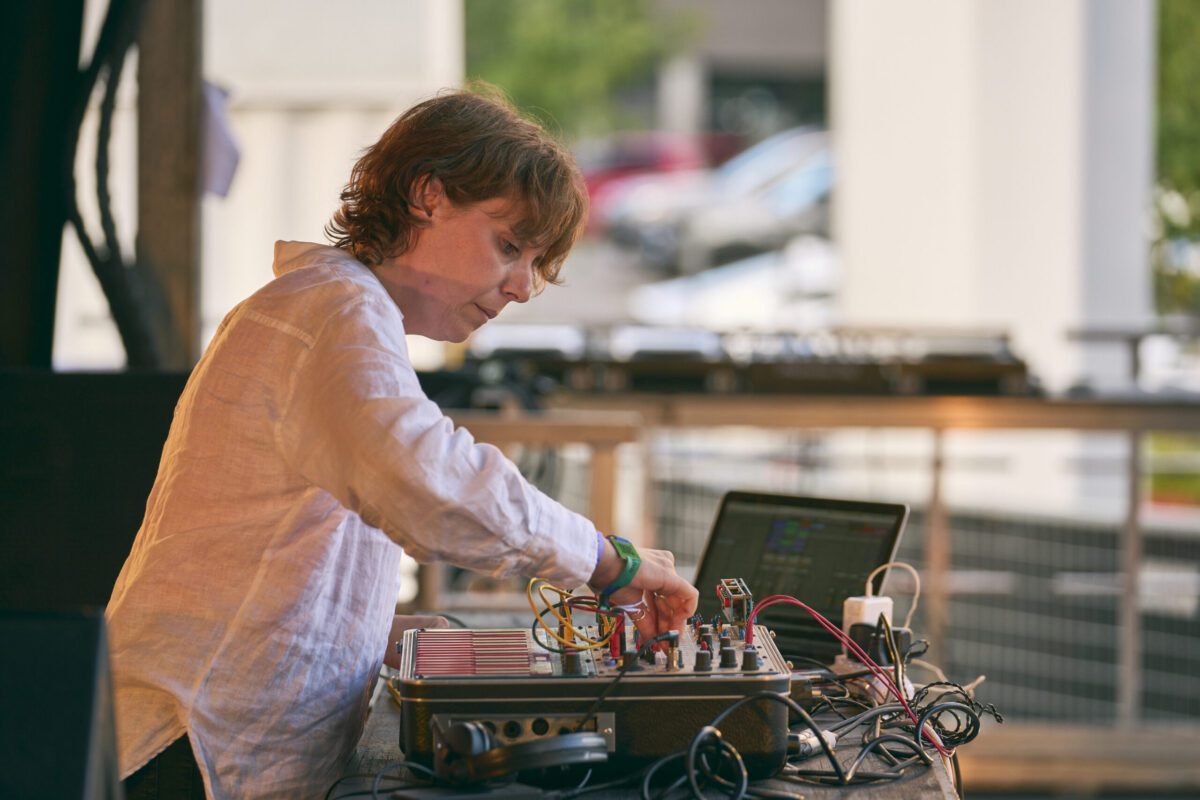
The Italian composer and sound artist uses round, smooth tones and others that clatter a little like a marimba, as well as recordings of wave sounds, crickets and other nocturnal noises, all in a very elemental way. It’s a real treat for the ears. Often, while the low melodies move slowly, other, higher-pitched sounds spin much faster: arpeggiated chords, little synthesized soap bubbles, electronic chirps… The compositions are layered, from underground to ground, from ground to clouds, from clouds to atmosphere.
In this way, Berts creates sonic spaces that strangely resemble living worlds, rich and ripe for the act of contemplation. Calm, strangely wild worlds, harmonious all the same. “A conversation between natural ecosystems and synthesizers,” explains the artist’s page on the MUTEK website.
It’s a sound very reminiscent of the crazy, tribal electro flavors The Knife advanced on their album Shaking the Habitual, only more relaxed. The same world, perhaps, but on a different continent, in a different era, under different skies, with different creatures. Just as enchanting.
Sheenah Ko
“I’m not a DJ,” says Sheenah Ko before beginning her 100% improvised performance. “The energy I’m going to get from you, I’m going to send back to you”. A spontaneous set, then.
It begins with a slow percussion loop and a buzzing bass. The artist quickly darkens the sound, using an unusual scale. It doesn’t take her long to start singing some reverb-drenched semblance of lyrics. After gradual changes in effects, polyrhythmic interplay, heavier bass stabs and intensified vocals, we’re in strangely celestial territory. One wonders where the Chinese-Irish musician might go next. She, too, probably.
The percussion is then buried, and the overall pace slows, for a new section. New, angry, metallic percussion sounds, accelerated tempo, luminous chord progressions that swell like waves, adding a touch of clarity and hope to the atmosphere. Fifteen minutes later, a whirring bass and club rhythm take over, while arpeggiated chords of varying intensity sail overhead, their timbre mostly reminiscent of the ’80s, an aesthetic that the artist often uses in her work.
The whole thing ends with a very cinematic musical brightening, a general zoom-out wide shot… on the synthesizer, followed by a panning movement towards the sky… also on the synthesizer. Back to the real world. A very fluid performance, certainly the result of rigorous preparation on Sheenah Ko’s part, as well as impressive mastery of her sonic arsenal. Above all, a satisfying glimpse into her atypical creativity.
OBUXUM
OBUXUM’s sounds are varied. We go from what might be a hip-hop sample to drums and sticks, to retro cyberpunk electro, to an abstract industrial groove, and lots more of these sounds that don’t seem congruent at all. All the same, and despite the abrupt transitions, there’s a narrative sense to the experience. We feel that a story is being built, that each little piece will eventually fit into the order of the others.
Through the confusing rhythms, the 90-degree turns, and the generally kaleidoscopic nature of its approach, OBUXUM is perhaps making an anthological work, a somewhat random raking over different eras of musical history. What she presents is a mosaic of creative samples from the four corners of the world and the mind, a great exercise in variety, in historical sonic bricolage that an hour can barely contain… or something like that. A towering work surely hides behind this music, and it’s not hard to appreciate.
ROSINA
It may be said of Rosina that they are not “people-pleasers”. Yet let’s look at their demands: a world where anyone can love the person they like, a world where people have their basic needs met, a world where people can feel joy. Wouldn’t these things make people happy?
The ROSINA trio is led by poet, singer and producer ROSINA, as well as drag performer and multidisciplinary artist Franny Galore-Wngz, with producer Murr at the DJ station. Eccentric personalities, the two pretend to be English during their performance, adopting the accent and everything. This is just a glimpse of the mischievousness that radiates from these two people.
The members of ROSINA like to play their music at dusk. A symbolic reminder of their mantra: that nothing lasts forever, that everything is ephemeral, both joy and suffering. “We’re tired. We don’t want to be mad all the f****** time.”, says ROSINA (the artist). In the face of adversity, these weeds that grow in the cracks of hope decide to turn towards love, towards others, to embrace the sensual weirdness of our outer and inner worlds. A reconquest of the world through a reconquest of the self, which, as they say, can be scary. All of this with a self-assured, liberated, almost punk attitude, the DIY spirit in full force, against a backdrop of danceable music, embellished by affirmative lyrics like “I want to feel joy”, and mantras that seem to come from a pure, unadulterated train of consciousness. Consciousness that has surely been tested, bent, twisted and scratched by the world, but honest nonetheless.
Maybe not the most coherent, or smooth, or musically impressive performance, but ROSINA’s strength definitely lies in the free-flowing energy. One of the best, rooted in the euphoria, the terror, the flourishing rollercoaster that is queerness, and ultimately provoking great pleasure, and, no doubt, great liberation to whoever needs it.
MUTEK 2023 | Métropolis 1: .VRIL, E-Saggila, SYNC. (AtomTM & Peter Van Hoesen)
by Salima Bouaraour
Legs numb from dance, eyes full of stars and shouts of joy: Métropolis 1 was a profusion of love! This first MUTEK evening devoted to Techno was astonishingly formidable right up to first light. The finely thought-out programming offered the public a more than effective formula. The result: a crowd electrified by dazzling binary rhythms.
Crédits photos : Bruno Aiello Destombes
.VRIL
VRIL wandered through break, house and female vocals, bringing a smooth, percussive and progressive set to a powerful kick. In the middle of the night, the atmosphere was enriched by cold, repetitive industrial sounds, creating the sine qua non for an experience worthy of a German underground club.
E-Saggila
Using energetic strings, Canada’s E-Saggila raised the intensity of the high-voltage evening. The composer activated the detonator with a mass of heavy, round and massive beats. The bass picked up your body and your heart. Delicately interspersed with steamy synth sounds, her performance plunged us into the hidden abysses of the festival.
SYNC. (AtomTM & Peter Van Hoesen)
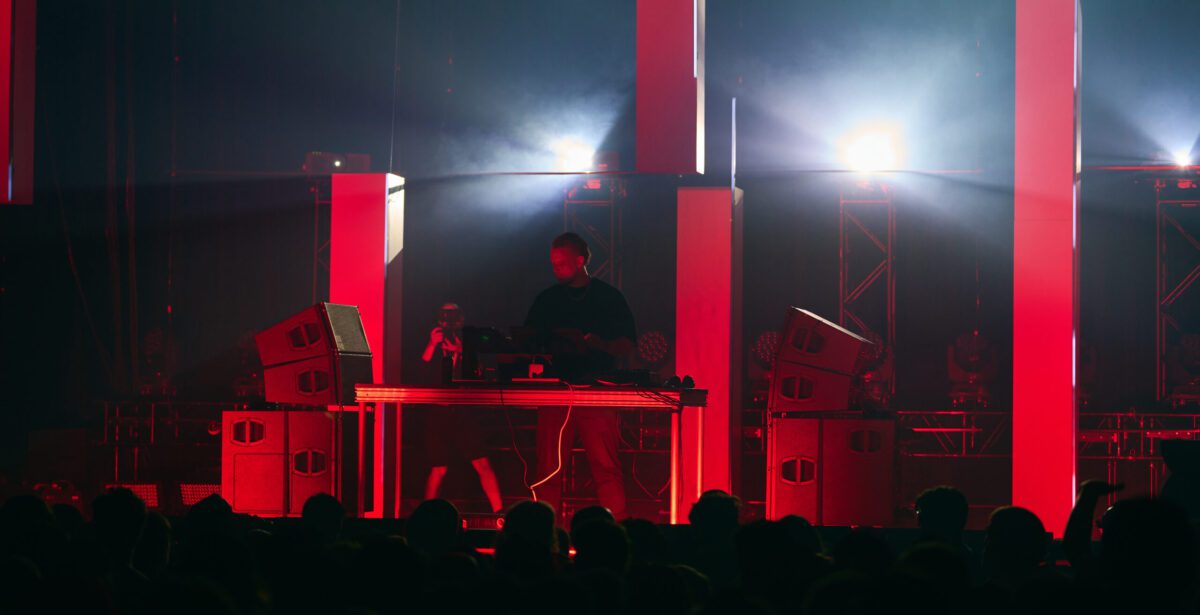
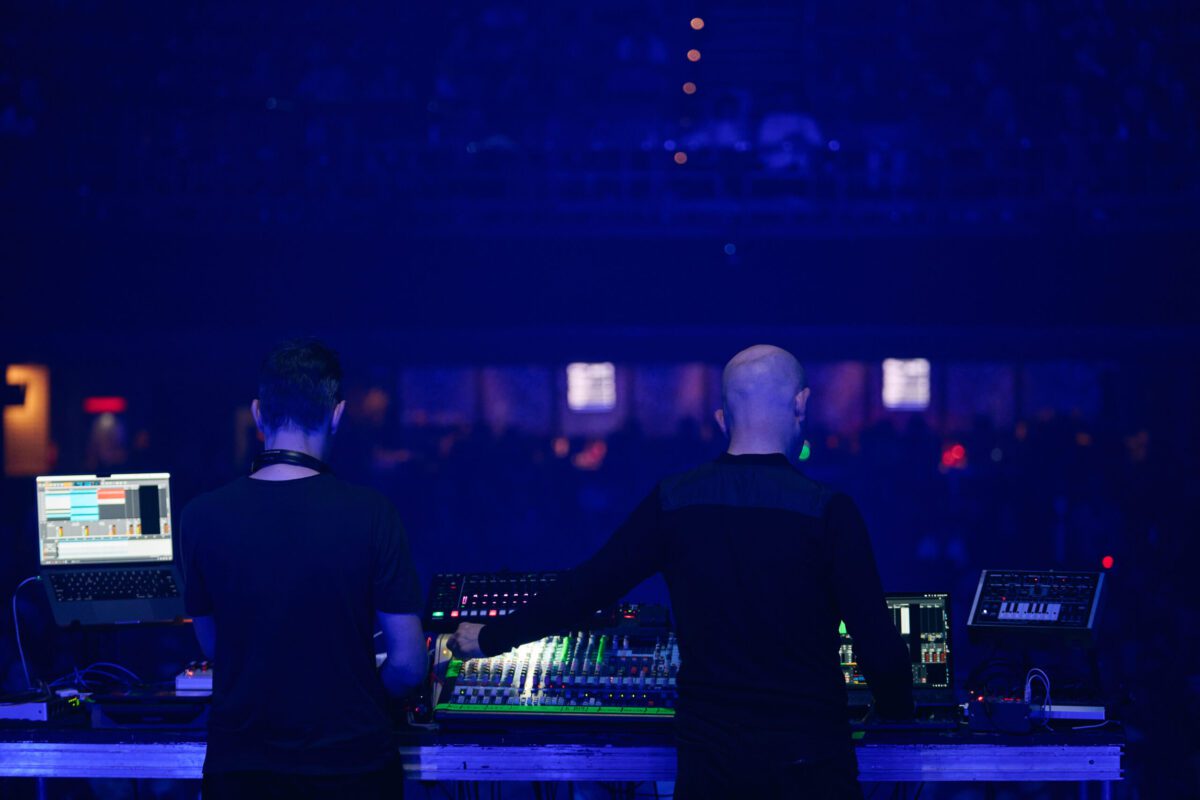
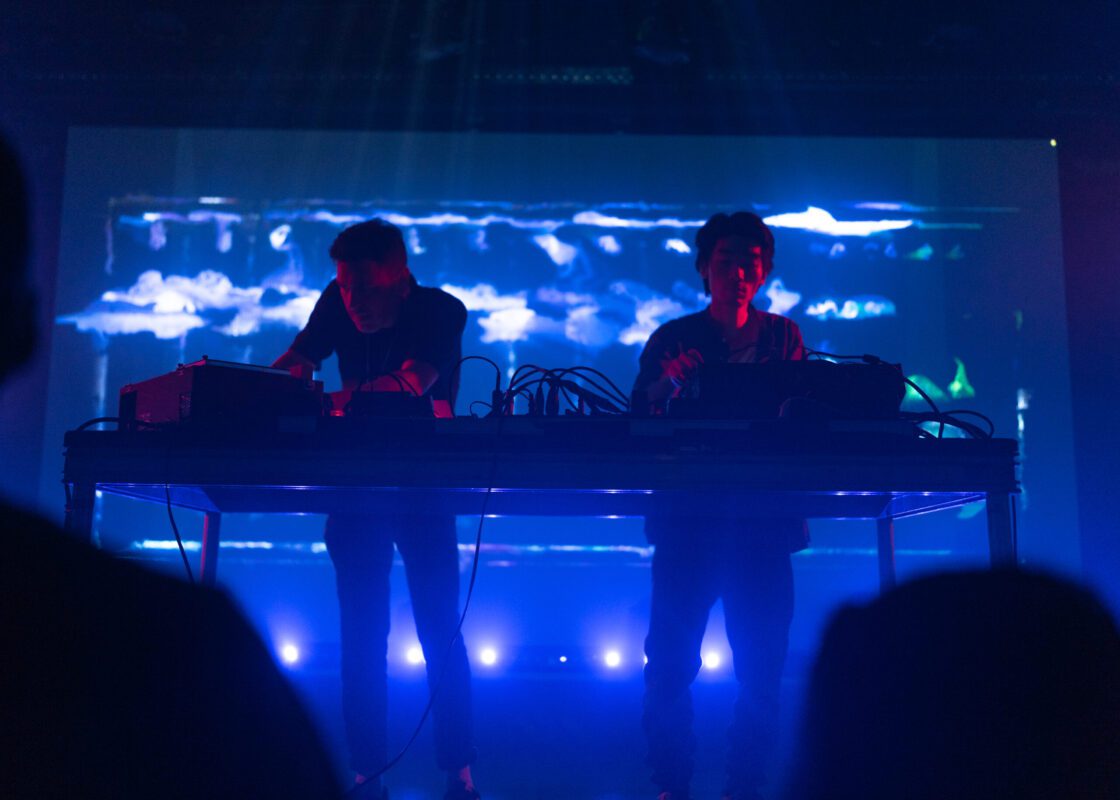
The long-awaited AtomTM & Peter Van Hoesen took to the stage with a long, 3-meter table featuring a hybrid hodgepodge of analog machines, modular, drum machines, effects pedals, controllers and a CDJ…. Although all the sets were of the highest quality, the hardware performance was outstanding. After an introduction tinged with groovy bass, the duo let loose in a wild free dialogue for three hours!
In an arborescence of pure techno, the packed Métropolis generously lost itself in the knowledge that MUTEK’s wild ride will continue unabated on Saturday and Sunday!
MUTEK 2023 | Nocturne 3 : upsammy & Jonathan Castro, Nick León, Halina Rice, Quan & DBY
by Alain Brunet
The PAN M 360 team brings you exhaustive coverage of MUTEK Montréal 2023. Here’s a selection of the best sets presented Friday night at the SAT, as part of the Nocturne series.
Crédits photos : Nina Gibelin-Souchon
upsammy & Jonathan Castro
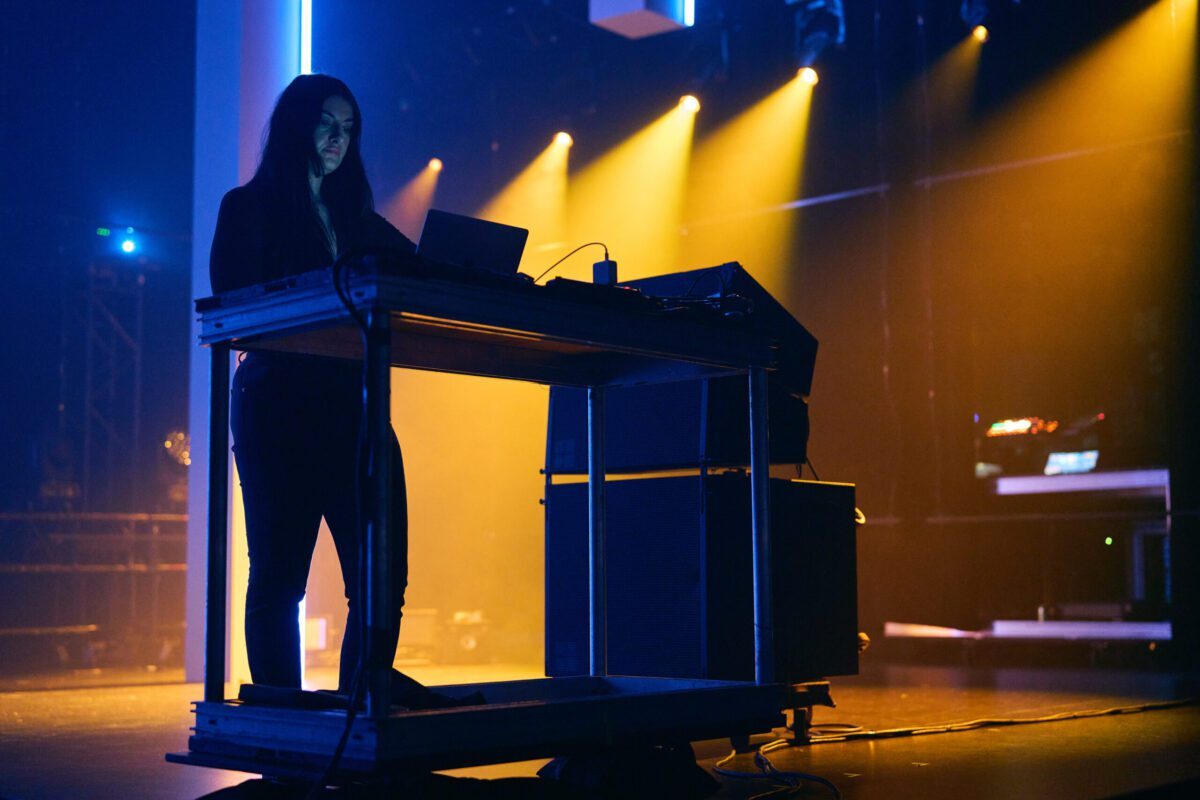
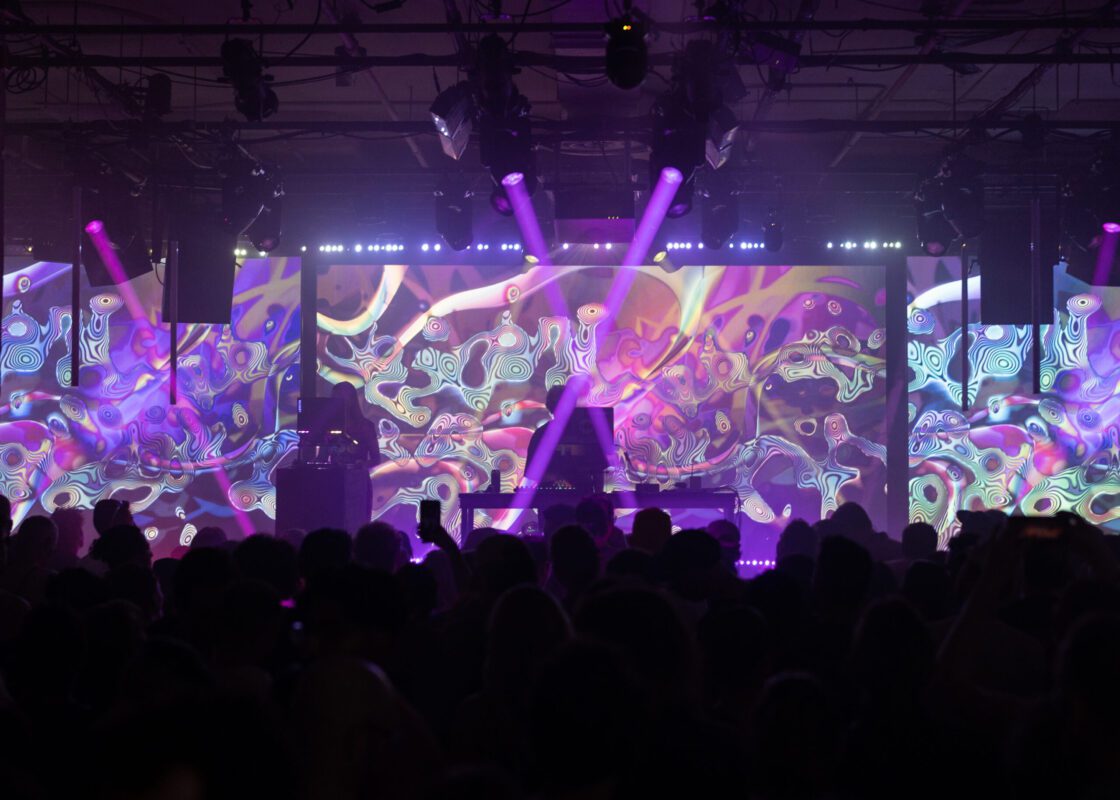
Cabalistic shapes are projected onto screens on plant surfaces. In the middle of it all, a woman, a man. Dutch DJ, producer and multidisciplinary artist upsammy (Thessa Torsing) likes to illustrate extremes: comfort, discomfort, harmonious beauty, desolation. She uses different colors to paint her sound frescoes: processed voices, varied rhythms and tempos, the sounds of water, the sounds of tactile manipulation, melodic-harmonic fragments, a few feverish bursts of beats contrasting with cold, arrhythmic sequences. This approach, illustrated in space by Peruvian artist Jonathan Castro Alejos, a graphic designer by profession and visual artist of the digital universe, is said to be experimental techno and IDM. Perhaps… For our part, this approach has no apparent genre a priori, apart from the use of rhythms drawn from minimal techno and cerebral ambient. What we have here is a composite language with electroacoustic underpinnings that can nevertheless hook the night owl with a few electroshocks that can make him restless.
Nick León
Floridian Nick León is an enthusiast of Latin advances in electronic music, particularly Puerto Rican and Colombian. A psychedelic curve envelops the rhythms, transforming their original identity. Psychedelia and electronica have been going hand in hand for half a century, and here we have a Latin version. Reggaeton, afrobeats, cumbia, krautrock and ambient come together live. Just enough groove for a Friday, just enough nourishment for a set worthy of MUTEK. From a partner at his side, top-notch projections back it all up, moving jewel patterns, shimmers, stylized kaleidoscopes and more. Listening to this utterly conclusive set, it’s interesting to note that reggaeton has already generated some of its most refined forms. Clearly, Nick León and his stage partner are doing great things.
Halina Rice
A suite of harmonies and melodic fragments on the keyboard, pre-recorded music modulated live. Cerebral techno, electroacoustic, IDM. Londoner Halina Rice doesn’t have the look for the job, no extravagance in her clothes on stage, you could easily see her leading a doctoral seminar. Appearances are deceptive, however, for Halina Rice creates excellent technoid music, with a convincing variety of consonant arrangements, a superb selection of industrial sounds, techno, big beat, female choral singing, and synthetic hooting not unlike that of Arab women. This succession of contrasting climates, misted with dry ice and visuals designed by the main artist herself, illustrates the conceptual scope, superior intelligence, and sensitivity of this woman who, we predict, will leave her mark on her profession.
Quan & DBY
At the heart of the night, a Montreal tandem from the Chez.Kito.Kat label plays minimal techno, archly binary for the obvious needs of the dance floor at this hour of the night – 2am to 3am. The overdubs are relatively discreet, and there’s absolutely nothing ostentatious about this program deployed at the SAT: various whispers, raucous lines, boiling micro basses and other synthesized borborygms produce a counterpoint without overpowering the beat. Rather than displaying all the science they’re known for, breakbeat, deep house, acid, ambient, dub, bass music, dub, all produced by impressive lutherie, notably the purpose-built modular synthesizers Quan and Dog Bless You (hence the acronym D.B.Y.), Samuel Ricciuti’s real name) will give us a conclusive hour of small modulations and big beats for dancers who haven’t migrated to MTELUS, where Sync is playing at the same time.