In spectacular venues never before used as concert halls, these intimate candlelit performances offer a new way to discover music. Discover a whole range of genres: from classical to jazz, pop, film soundtracks and ballet…
Au sein de lieux spectaculaires jamais utilisés comme salle de concert auparavant, ces représentations intimistes à la lueur des bougies permettent de redécouvrir la musique autrement. Découvre toute une palette de genres : du classique au jazz, en passant par la pop, les bandes originales de films ou encore du ballet…
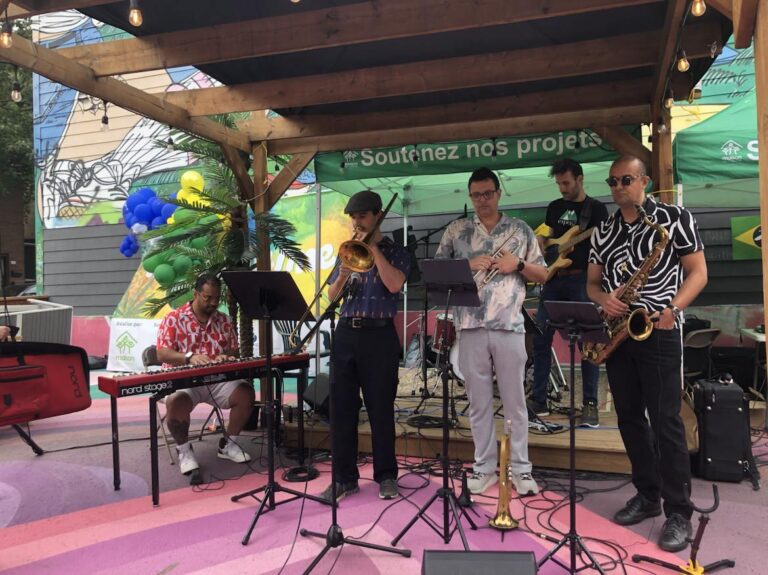
Taurey Butler is a phenomenal jazz pianist of the highest calibre.
Hailing from East Orange, New Jersey, he has played in numerous cities across the world from Hong Kong to New York and now makes his home in Montréal. Taurey’s debut self-titled recording on the Justin Time label was released in November 2011 to resounding critical acclaim. He emerges as a fully-formed master of hard-driving swing with a deep feeling for the blues and ballads.
It’s easy to get lost in the fire and funk, the sweetness and swing, of Taurey Butler. But you can also follow the light that his music emanates.
Taurey Butler est un pianiste de jazz phénoménal du plus haut calibre.
Originaire d’East Orange, au New Jersey, il a joué dans de nombreuses villes du monde, de Hong Kong à New York, et s’est maintenant établi à Montréal. Le premier enregistrement éponyme de Taurey sur l’étiquette Justin Time a été lancé en novembre 2011 et a été acclamé par la critique. Il s’impose comme un maître accompli du swing à toute épreuve, doté d’un sens profond du blues et des ballades.
Il est facile de se perdre dans le feu et le funk, la douceur et le swing de Taurey Butler. Mais on peut aussi suivre la lumière qui émane de sa musique.
RESERVATIONS BY TELEPHONE AT 514-931-6808
This content comes from Upstairs Jazz and is adapted by PAN M 360.
Evangelia a grandi en faisant la navette entre la petite ferme de sa grand-mère sur l’île grecque de Crète et la maison de ses parents dans le New Jersey, sur la côte est américaine – deux mondes musicaux complètement différents, qui ont tous deux influencé son style. Une chanson d’Evangelia mélange la musique pop moderne avec les sons de ses racines grecques, des rythmes de club contemporains et des mélodies accrocheuses. En fusionnant la culture pop américaine avec des éléments grecs traditionnels, Evangelia rend hommage à ses ancêtres tout en créant son propre héritage. Son art s’adresse aux gens par le biais d’un message de confiance en l’amour de soi, de quelqu’un d’autre et de ce qui est le plus important pour soi.
Evangelia grew up commuting between her grandmother’s small farm on the Greek island of Crete and her parents’ home in New Jersey on the American East Coast – two completely different musical worlds, both of which influenced her style. An Evangelia song blends modern pop music with sounds from her Greek roots, contemporary club beats and catchy melodies. By fusing American pop culture with traditional Greek elements, Evangelia honors her ancestors while also creating a legacy of her own. Her art connects to people through a message of being confidently in love with yourself, with someone else, and with what is most important to you. POUR ACHETER VOTRE BILLET, C’EST ICI!
Ce contenu provient du Centre Bell et est adapté par PAN M 360.
A quadrilingual artist born in Montreal to a family of Moroccan and Lebanese origins, Laraw expresses herself naturally through the universal language of music. Her catchy, danceable alternative pop thumbs her nose at polished perfectionism, embracing authenticity without compromise. With her soft, slightly rebellious voice, she sings or raps about the ups and downs of a quarter-life crisis, with the most endearing spontaneity.
Artiste quadrilingue, née à Montréal d’une famille aux origines marocaine et libanaise, Laraw s’exprime tout naturellement à travers le langage universel de la musique. Sa pop alternative accrocheuse et dansante fait un pied de nez au perfectionnisme léché pour embrasser l’authenticité sans compromis. De sa voix douce et un brin rebelle, elle chante ou déchante les aléas de la crise du quart de vie, avec une spontanéité des plus attachantes.
Soen est un groupe de prog metal expérimental d’Europe du Nord dont la musique a été qualifiée à juste titre de “bonheur mélancolique”. Leur son est orné d’une production luxuriante, d’atmosphères mélancoliques (même lorsqu’elles sont les plus agressives) et d’un mélodisme instrumental, et le chant clair de Joel Ekelöf délivre des paroles psychologiquement complexes, spirituellement probantes et sophistiquées. Sur leur premier long-métrage de 2012, Cognitive, ils ont montré une personnalité musicale complexe en éblouissant les critiques avec trois styles de jeu distincts en autant de morceaux, du post-punk presque gothique (“Fraktal”), au métal prog (“Fraccions”), en passant par des riffs percutants, chug-and-churn (“Delenda”).
Soen is an experimental prog metal band from Northern Europe whose music has been rightly characterized as “melancholic bliss.” Their sound is adorned with lush production, melancholy atmospherics (even at their most aggressive), and instrumental melodicism, and Joel Ekelöf’s clean vocals deliver psychologically complex, spiritually probing, sophisticated lyrics. On their 2012 long-playing debut, Cognitive, they displayed a complex musical persona by dazzling critics with three distinct playing styles in as many tracks, from nearly gothic post-punk (“Fraktal”), prog metal (“Fraccions”), and punchy, chug-and-churn riffage (“Delenda”).
Ce contenu provient de AllMusic et est adapté par PAN M 360.
Période de candidature – Résidence PHI Nord
by Rédaction PAN M 360
PHI Nord est une résidence qui offre aux musicien·ne·s établi·e·s au Canada l’opportunité d’approfondir et de peaufiner leurs projets musicaux.
Le programme propose une retraite créative de deux semaines dans un loft situé aux abords d’une rivière dans les Laurentides avec un accès exclusif à un studio d’enregistrement et un soutien technique en ingénierie du son. Cette résidence permet aux artistes d’échapper au quotidien et de s’engager pleinement dans l’exploration et l’expérimentation de leur art.
PHI Nord remercie SiriusXM Franco pour son soutien.
Les artistes sélectionné·e·s recevront:
Soutien au développement du projet et hébergement: Séjour de deux semaines dans une maison propice à la création avec accès exclusif à un studio d’enregistrement;
Allocation: Une allocation de 1 600 $;
Soutien en studio d’enregistrement: Soutien en ingénierie du son jusqu’à 8 heures par jour pendant la résidence;
Production d’un profil vidéo: Création d’un vidéo d’une prestation en direct destiné à être diffusé dans les réseaux de PHI (réseaux sociaux, site web, etc.);
Accès au réseau: Accès au vaste réseau de collaborateur·rice·s de PHI.
Critères d’admissibilité:
Être un·e musicien·ne vivant au Canada;
Avoir un projet musical défini et vouloir le réaliser dans le cadre de la résidence;
Maintenir une pratique musicale professionnelle au Québec ou au Canada ou démontrer un potentiel de développement de carrière en musique;
Avoir fait paraître de la musique qui est disponible sur des plateformes d’écoute.
Les groupes sont admissibles (jusqu’à 4 membres). Les conditions offertes demeurent les mêmes que pour les artistes solos.
PHI Nord is a residency program that offers Canadian-based musicians the opportunity to deepen and refine their musical projects.
The program offers a two-week creative retreat in a riverfront loft in the Laurentians, with exclusive access to a recording studio and technical support in sound engineering. This residency allows artists to escape the daily grind and engage fully in the exploration and experimentation of their art.
PHI Nord thanks SiriusXM Franco for its support.
Selected artists will receive:
Project development support and accommodations: A two-week stay in a creative home with exclusive access to a recording studio;
Stipend: A stipend of $1,600;
Recording studio support: Sound engineering support for up to 8 hours per day during residency;
Video profile production: Creation of a video of a live performance for broadcast on PHI’s networks (social networks, website, etc.);
Network access: Access to PHI’s extensive network of collaborators.
Eligibility criteria:
Be a musician living in Canada;
Have a defined musical project and wish to carry it out within the framework of the residency;
Maintain a professional musical practice in Quebec or Canada, or demonstrate a potential for career development in music;
Have released music that is available on listening platforms.
Groups are eligible (up to 4 members). Conditions remain the same as for solo artists.
Date limite pour le dépôt des candidatures/Deadline for applications: le 4 avril 2024, à 23h59/April 4, 2024, 11:59 pm
Yesterday was the third day of the Anti Jazz Police Festival at Ursa here in Montreal. We came away less satisfied than the previous evenings, not so much for reasons of musical quality, but rather of overall coherence and preparation, due to unforeseen absences. I’ll come back to that later. That said, it was not without its moments of ecstasy, thank you.
It was the artistic excellence of Montreal bassist Rémi-Jean Leblanc that launched this third opus from the new festival. Leblanc, in top form and supported by Jonathan Cayer on keyboards, Nicolas Perron on guitar and Kevin Warren on drums, took us on a journey of sound adventures with a rock bent, both prog and post in certain rhythmic-harmonic details, or McLaughlin-style fusion elsewhere. Also invited to the stylistic party were a few funk wiggles and even a brief extravagance that I felt was a nod to punk. On top of all that, Erika Angell, masterful, allowed herself a series of vocal outbursts as she knows how to propel them, at once modern, astonishing and lyrical. It was a good start, in front of a more sparse audience than on previous evenings. A pity, because RJ Leblanc is one of the great musicians of his generation.
Bellbird at Ursa
photo :Pierre Langlois
The second act of Day 3 showed us the surprising experimental tendencies of Liam O’Neil (Suuns) on drums (and other percussion). He was replacing at the last minute Parker Shper (sick?) That explains why the set was so very short, but not why it started somewhere around the same time as the soundcheck ended. As the boundary between the two proved non-existent, and above all very imprecise, the performance was perhaps already half over when we realised he was playing for real! Felt weird, but hey, good cover up anyway. Besides, O’Neil creates new colours by tapping his tools in all sorts of ways, and even dares to do so with a microphone, thanks to which he collects the resonances induced to create feedback that he transforms live into so many new colours and atmospheres. Avant-garde at the highest level.
This was followed in the same second act by the Montreal quartet Bellbird, who play modern jazz/free jazz/scholarly contemporary music/American minimalism. I couldn’t wait to hear them live. Unfortunately, it was a trio that turned up, as (spectacular) saxophonist Allison Burik was home sick. Another absence. It happens, of course, and we don’t blame them (neither do we the Festival, of course), but the result, while excellent, didn’t reach the high polyphonic levels found elsewhere, and also on their album Root in Tandem, released in 2023 (read my review HERE). But hats off to Claire (Devlin) on tenor sax, Eli (Davidovici) on double bass and Mili (Hong) on drums, for pulling out all the stops and giving us a quality set that would be the envy, albeit diminished, of any other band.
Simon Angell at Ursa – photo : Pierre Langlois
The third act was reserved for a duo we’d been hoping for for a long time: Simon Angell on guitar (and lots of electronic tampering) and Tommy Crane on drums. We’d been promised guests, and after a fine duet of atonal mischief, contemplative abstractions and bursts of rhythmic energy, Greg Bryant from Concurrence (performing tonight on Day 4) took to the stage with his purring bass. Suddenly, the whole set was spiced up. Then the other guy from Concurence, pianist Paul Horton, came in to add a layer. He’s a good pianist, yes, but he also plays the melodica at the same time! Wow. It’s a solid performance, and the room is lifted by a lightning energy and doped by an explosive adrenalin boost. But wait, that wasn’t the end of it: as if out of the blue, saxophonist David Binney and singer Sarah Rossy turn this four-piece trip into an ecstatic six-piece sound orgy. It doesn’t last long enough, but we’re well fed up all the same.
It was an uneven evening, to be sure, but one that ended with great satisfaction. If the important thing is to get off to a good start and finish well, Day 3 has proved that the Anti Jazz Police festival is very good at getting its priorities right.
The Los Angeles-based indie electronic duo, David Parris and Xander Carlson, make lush soundscapes both inspired by and evocative of views from a mountain, deep pink sunsets, wind through the trees and the stars on a clear night. The nourishing effect these things have on a human soul? That’s how they want their music to make you feel. The cool thing is that it does.
David Parris et Xander Carlson, duo électronique indépendant basé à Los Angeles, créent des paysages sonores luxuriants qui s’inspirent et évoquent les vues d’une montagne, les couchers de soleil d’un rose profond, le vent dans les arbres et les étoiles par une nuit claire. L’effet nourrissant que ces choses ont sur l’âme humaine ? C’est ce qu’ils veulent que leur musique vous fasse ressentir. Ce qui est génial, c’est qu’ils y parviennent.
L’Orchestre symphonique du Conservatoire de musique de Montréal à la Maison symphonique
by Rédaction PAN M 360
Lors de ce Grand concert 80e anniversaire du Conservatoire, l’Orchestre symphonique du Conservatoire de musique de Montréal, la soprano Karina Gauvin, Les Chœurs des Petits chanteurs de Laval, dir. Philippe Ostiguy et l’Ensemble Phoebus, se produiront à la Maison symphonique sous la direction du chef Jean-Marie Zeitouni.
The Conservatoire de musique de Montréal symphony orchestra, soprano Karina Gauvin, Les Chœurs des Petits chanteurs de Laval, dir. Philippe Ostiguy and Ensemble Phoebus will perform at the Maison symphonique under the direction of conductor Jean-Marie Zeitouni.
Igor STRAVINSKY, Chant funèbre, op. 5 Pierre MERCURE, Cantate pour une joie Florence TREMBLAY, Création Francis POULENC, Stabat Mater
McGill Concert Choir and McGill University Chorus at Pollack Hall
by Rédaction PAN M 360
Matthew Boutda, Mattias Lundberg, conductors; Graduate students in choral conducting
Tickets are available online, at the Schulich School of Music Box Office by phone (514-398-4547) or in person: Monday to Friday 15:00 to 18:00 (555 Sherbrooke Street West).
This content comes from the Schulich School of Music and is adapted by PAN M 360.