classique / Contemporary / période romantique

OSM : Emanuel Ax joue Beethoven

by Rédaction PAN M 360

Laissez-vous emporter par le talent du pianiste Emanuel Ax, gagnant de huit Grammy Awards, qui insufflera toute sa sensibilité au Concerto n° 3 de Beethoven, une œuvre fascinante à la croisée du romantisme. Plongez ensuite dans l’épique Symphonie n° 5 de Prokofiev, composée pendant la Seconde Guerre mondiale, où chaque note résonne comme un triomphe éclatant. Assistez à la naissance d’une œuvre de la compositrice Isabella Gellis, étoile montante qui se distingue par la finesse et l’éloquence de son écriture.

Let yourself be swept away by the masterful touch of eight-time Grammy winner Emanuel Ax as he brings his deep sensitivity to Beethoven’s Piano Concerto No.3, a fascinating bridge between the elegance of Classicism and the passion of Romanticism. Then, dive into the grandeur of Prokofiev’s Symphony No.5, a wartime masterpiece brimming with triumphant energy. The evening also features the world premiere of a new work by rising star Isabella Gellis, renowned for her refined and expressive compositions.

Programme

Isabella Gellis, Création – commande de l’OSM
Ludwig Van Beethoven, Concerto pour piano no 3, op. 37 (34 min)
Sergueï Prokofiev, Symphonie no 5, op. 100 (46 min)

Program

Isabella Gellis, Premiere – OSM commission
Ludwig Van Beethoven, Concerto for Piano No. 3, Op. 37 (34 min)
Sergei Prokofiev, Symphony No. 5, Op. 100 (46 min)

POUR ACHETER VOTRE BILLET, C’EST ICI!

Ce contenu provient de l’Orchestre symphonique de Montréal et est adapté par PAN M 360
classique / Jazz / période romantique

OSM : L’orchestre selon Duke Ellington et Rachmaninov

by Rédaction PAN M 360

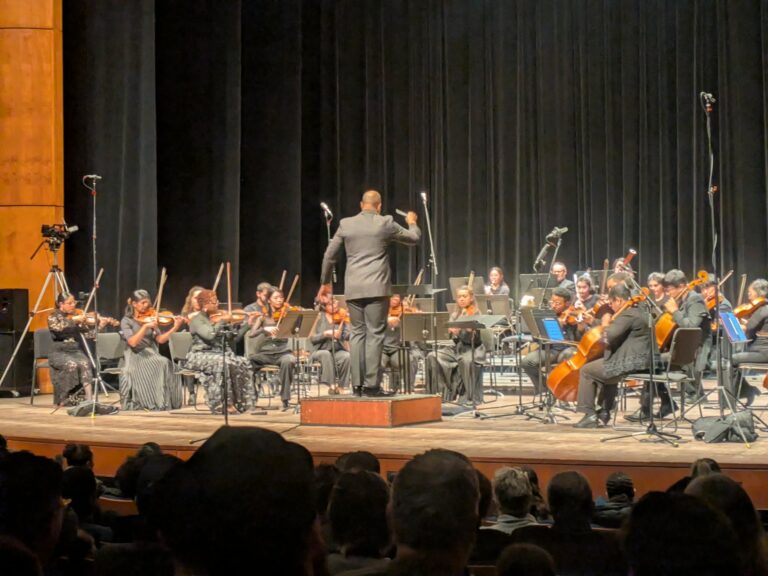
Plongez dans l’univers vibrant de Harlem de Duke Ellington et voyagez à travers la puissance émotionnelle de la Symphonie n° 3 de Rachmaninov. Stravinsky, de son côté, jette un regard vers le XVIIIe siècle pour sublimer le violon dans son Concerto, magnifié par la captivante Alina Ibragimova. Ce programme musical vous propose une expérience où la musique symphonique dévoile une large palette de couleurs orchestrales. Un véritable kaléidoscope sonore qui mêle jazz, énergie et émotions pour une soirée alliant des univers musicaux riches et variés!

Step into the exciting world of Duke Ellington’s Harlem, then journey through the deep emotions of Rachmaninoff’s Symphony No. 3. The violin takes centre stage as Stravinsky looks back to the 18th century in his Concerto, brought to life by the captivating Alina Ibragimova. This program explores the full spectrum of orchestral colour, blending jazz, energy, and heartfelt expression. A dazzling musical adventure through diverse musical landscapes!

Programme

Duke Ellington, Harlem (18 min)
Igor Stravinsky, Concerto en ré majeur pour violon (22 min)
Sergueï Rachmaninov, Symphonie no 3, op. 44 (40 min)

Program

Duke Ellington, Harlem (18 min)
Igor Stravinsky, Concerto for Violin in D Major (22 min)
Sergei Rachmaninoff, Symphony No. 3, Op. 44 (40 min)

POUR ACHETER VOTRE BILLET, C’EST ICI!

Ce contenu provient de l’Orchestre symphonique de Montréal et est adapté par PAN M 360
country-rock

Blue Rodeo | Lost Together – The 40th Anniversary Tour à la salle Wilfrid-Pelletier

by Rédaction PAN M 360

Pour célébrer 40 ans de carrière, Blue Rodeo – l’un des groupes country-rock les plus aimés du Canada – invite le public à une soirée inoubliable de succès intemporels et de performances émouvantes.  Avec 16 albums studio et un héritage marqué par une écriture poignante, leur tournée anniversaire promet un mélange puissant de nostalgie, de virtuosité musicale et de charme indémodable.

Celebrating 40 years of music, Blue Rodeo – one of Canada’s most beloved country-rock bands – invites audiences to an unforgettable evening of timeless hits and heartfelt performances.
With 16 studio albums and a legacy of stirring songwriting, their anniversary tour promises a powerful blend of nostalgia, musicianship, and enduring charm.

POUR ACHETER VOTRE BILLET, C’EST ICI!

Ce contenu provient de la Place des Arts et est adapté par PAN M 360
danse / Minimalist / musique contemporaine

Dance and music symbiosis : breathtaking ”Sol Invictus” in Montreal

by Frédéric Cardin

At PanM360, we love music (obviously). Music for its own sake, of course, but also music in its relationship with other arts. We don’t often take the time to revisit dance or theatre performances with an important music presence, simply due to scheduling and availability reasons. But if the opportunity arises, we are more than happy to do so.

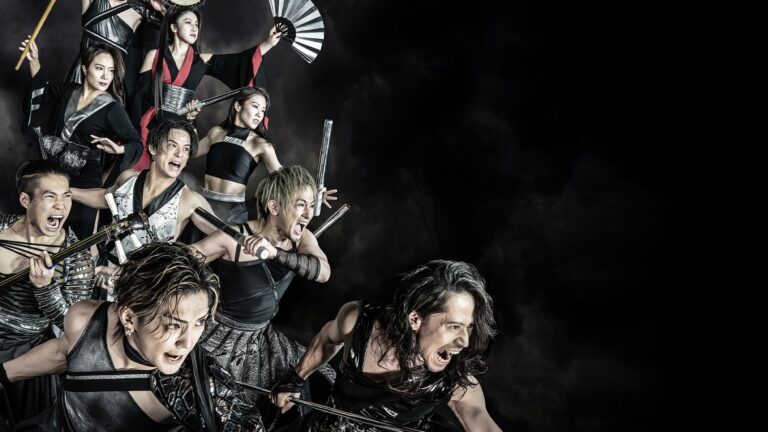
Last night, I attended Sol Invictus by the Franco-Algerian choreographer Hervé Koubi. In this masterful creation (which means ‘’Sun undefeated’’), which Koubi describes as an ode to life, gestures and movements from contemporary urban culture, such as Breakdance, Hip Hop, and Brazilian capoeira, are combined with dazzling virtuosity. Contemporary dance is also grafted onto it, in an ultra-modern, but also baroque and choral, ballet propelled a thousand miles from the dark, gloomy and dirty clichés associated with street culture.

Koubi is right when he talks about an ode to life. He also mentions the joy of children dancing. There is indeed a youthful vital force in this explosion of solar and unifying energy.

Let’s first talk about the dancers, of fabulous beauty in their prominent bodies and almost aerial malleability. Bodies that almost never stop spinning, that fall to the ground like soft fabric, without a bump or heaviness, that transform without apparent transition into gymnasts, circus artists, a spinning top and a modern performer with studied and learnt gestures. Koubi went to find the best, he says. No doubt about it.

All of this could have been a bluff to impress the well-to-do bourgeois who are superficially tuned into street culture. If it’s much more than that (and it is), it’s certainly thanks to the music that soundtracks the movements.

Over an uninterrupted nest of about 75-80 minutes, Koubi’s choreography breathes and evolves through several states of mind and as many allegories that ultimately form a complete narrative construction. A construction which sometimes leaves room for interpretation because the discourse is generally more symbolic than explicit, inviting the more thoughtful to engage in hermeneutics and the rest of us to primarily enjoy the audio-visual aesthetics of the moment.

Be that as it may, varied emotional time spaces follow one another but, above all, balance each other throughout the show. Beethoven (Seventh Symphony) brings a dramatic force for a few minutes, a kind of gravity that contrasts with other hyper-festive moments, supported by powerful music made of tribal rhythms, rumbling brass, and very effective staccato strings. Elsewhere, it is the mediaeval Hildegard of Bingen and her angelic vocal hymns that grant the group of about fifteen dancers a kind of spiritual elevation that seems to make them float above the asphalt. Some excerpts from the music of the film Midsommar by Bobby Krtic flesh out and link the visual with an intangible sensory experience. And then, in between all of that, a relatively soaring and ambient electronic backdrop, abstract (signed by Mikael Karlsson (collaborator of Lykke Li, Alicia Keys) and Maxime Dobson), like a sound bed from which the mentioned pieces and some others regularly emerge, like spontaneous manifestations of enlightened human communion.

At the beginning and end of the show, Steve Reich (propulsive Music for 18 Musicians, almost a stereotype in this kind of proposal) serves as an expressive tool to paint a picture of virtuosity that gives the impression of being orchestrated with perfect precision. And yet, when we know that Koubi does not “count,” and prefers, as in jazz or other improvised music, to identify precise (musical) cues between which the artists on stage are given a certain freedom, we can only be amazed by the overall cohesion of these exceptional bodies, capable of astonishing individuality, but which perfectly submit to a collective and holistic vision.

Sol Invictus
Danse Danse

Beyond the fluttering physical movements, which are constantly impressive, the staging occasionally uses, with a pleasant sense of imagery, a few artifices such as a large golden sheet, illuminated by appropriate lighting (the Sun, of course), which transforms into a dazzling whirlwind when placed on one of the dancers (one-legged!) in the middle of a human top spin. In another beautiful allegory, a dancer dresses himself with said golden ‘’fleece’’ to appear as a sort of luminous Apollo god. Elsewhere, sparklers (I think?) timidly illuminate a few dancers in total darkness, a rare absence of the sun god in favour of the night. It’s simple, but beautiful.

Sol Invictus is magnificent, aesthetically, and emotionally memorable. We return without hesitation, both to relive moments of great artistic strength, but also to delve even deeper into the understanding of this spectacle rich in symbols and significance.

Techno

Dômesicle / SAT | First Techno Night Under the Dome, Account of A First Immersion

by Ariel Rutherford

11:36 a.m., SAT, I enter on the guest list with my +1. I feel pretty swell.

This Saturday, January 10, marks the kickoff of the tenth edition of Dômesicle, a series of winter DJ/VJ parties in the heart of the SAT’s immersive dome. My first time. Exciting. We go down one floor, coat check, the beats of the music echoing through the building. The dance floor awaits us three floors up and lets us know it.

Just a moment to put in our earplugs—hearing is precious, and off we go!

I was promised a pure techno evening, hypnotic rhythms intertwined with organic sounds, intensity. All coupled with projections that were as minimalist and hypnotic as they were enveloping and architectural.

We enter the dome under a cathedral-like kaleidoscope, Mike Larry has just started his set. The crowd is fairly calm. Passive, according to my friend: “North Americans don’t know how to party.” He drags me to the front of the turntables. There, people are dancing, shaking, getting carried away by the music. The DJ is good, repeatedly eliciting cheers from the crowd as he changes tracks.

I lean against the barriers, the DJ within sight. I soak up the atmosphere. Sustained, repetitive yet varied rhythms, from which unexpected sound samples emerge. We let ourselves be carried away. The strobe lights blind me, but I like the images on the dome. I have a soft spot for the most minimalist elements: the pulsating grid that hangs over the crowd like a neon red net, the unexpected starry sky formed by letters of the alphabet floating in space, the box filled with gray spheres that continually evaporate behind the DJ.

The crowd remains fairly placid, happy to be there, but few are dancing. Several are chatting.

My friend dances nonstop. Electro music is his thing. Me, not so much.

The volume, the flashes of light, it’s a lot for me, a little too much. I get overstimulated easily, which is a bad combination. I take breaks, then go back to dancing. Dance, break, dance. It’s paradoxical, but I think I would enjoy a more intense, noisier, more disjointed production more. Intensity can be an antidote to overstimulation, but I feel like I’m stuck in between.

Back from the break, one o’clock in the morning, the crowd has been getting more lively for a while now. Set change, Measure Divide takes the stage. The dome seems to be moving at full speed through a tunnel of light oscillating between blue and orange. A guy is wildly showing off his best moves at the entrance to the satosphere. The selection seems less varied to me than with Mike Larry, more intense perhaps.

When it’s time to go home half an hour later, my friend is having a good time but is falling asleep. My head hurts. I’ve been here for two hours and counting. I don’t think I’m the target audience. I regret missing XIA’s set. Despite this, I would be willing to try the experience again, as the setting is certainly impressive. Worth checking out with other genres of music.

classique / période romantique / Piano

OSM : Le grand retour de Lang Lang

by Rédaction PAN M 360

Le phénomène Lang Lang revêt, l’espace d’une soirée, les atours d’un empereur. Dans le Concerto n° 5 de Beethoven, il déploie une virtuosité flamboyante, souveraine, qui semble s’affranchir de toutes les pesanteurs. Sous le geste visionnaire de Rafael Payare, cette quête de lumière se prolonge dans l’Ouverture n° 2 d’Emilie Mayer puis culmine dans la Symphonie n° 2 de Sibelius, cri d’émancipation d’un peuple écrasé. De l’Europe napoléonienne à la Finlande sous tutelle russe, la musique devient au final un espace où l’esprit refuse de se soumettre. Une soirée où l’art rappelle que la liberté est d’abord une force intérieure.

For one unforgettable evening, the phenomenon that is Lang Lang takes on the mantle of an emperor. In Beethoven’s Piano Concerto no. 5, he unleashes a dazzling, sovereign virtuosity that seems to transcend all weight and constraint. Under Rafael Payare’s visionary direction, this quest for light continues with Emilie Mayer’s Overture no. 2 and reaches its summit in Sibelius’s Symphony no. 2—a cry of emancipation from an oppressed nation. From Napoleonic Europe to Finland under Russian rule, music becomes a space where the spirit refuses to yield. An evening where art reminds us that freedom is, above all, an inner strength.

Programme

Emilie Mayer, Ouverture nᵒ 2 (10 min)
Ludwig van Beethoven, Concerto pour piano nᵒ 5, op. 73 (38 min)
Jean Sibelius, Symphonie nᵒ 2, op. 43 (43 min)

Program

Emilie Mayer, Overture no. 2 (10 min)
Ludwig van Beethoven, Piano Concerto no. 5, op. 73 (38 min)
Jean Sibelius, Symphony no. 2, op. 43 (43 min)

LES BILLETS POUR CE SPECTACLE SONT ÉPUISÉS!

Ce contenu provient de l’Orchestre symphonique de Montréal et est adapté par PAN M 360
Baroque / classique / Piano

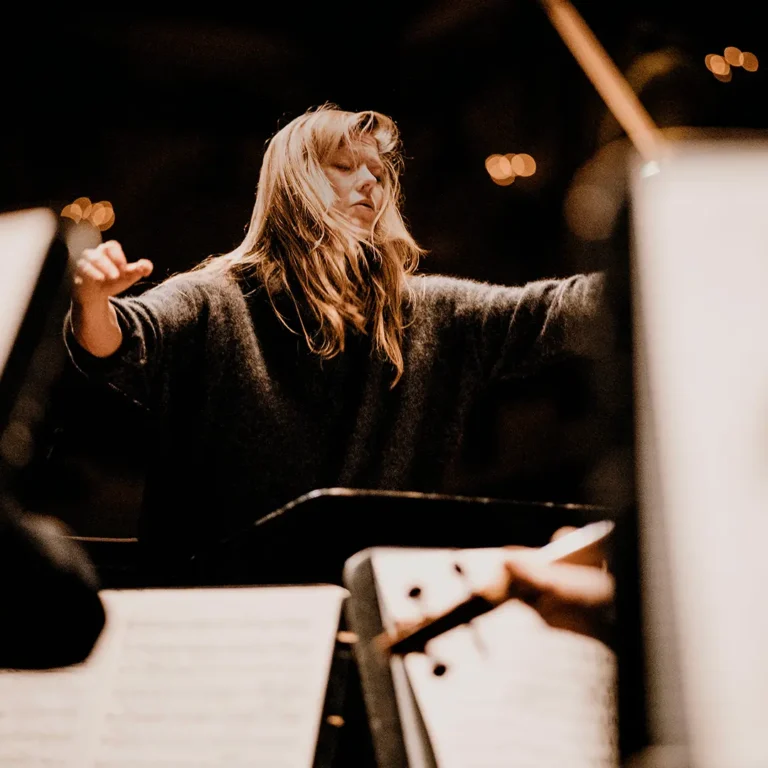
Sir András Schiff | L’absolu Bach à la Maison symphonique

by Rédaction PAN M 360

Peu de pianistes contemporains ont exploré les œuvres pour clavier de Jean-Sébastien Bach de manière aussi fascinante que Sir András Schiff. Avec humilité et maîtrise, Schiff captive son public par sa relecture de l’une des œuvres les plus mystérieuses de Bach. Une expérience hors du temps, entre mystère et révélation.

Few contemporary pianists have explored Johann Sebastian Bach’s keyboard works in such a fascinating way as Sir András Schiff. With humility and mastery, Schiff captivates his audience through his reimagining of one of Bach’s most mysterious works. A timeless experience, suspended between mystery and revelation.

POUR ACHETER VOTRE BILLET, C’EST ICI!

Ce contenu provient de Place des Arts et est adapté par PAN M 360

classique / pop-opéra

Andrea Bocelli : Romanza – 30th Anniversary World Tour au Centre Bell

by Rédaction PAN M 360

L’icône italienne légendaire et l’une des voix musicales les plus aimées et reconnues au monde, le Maestro Andrea Bocelli, a annoncé de nouvelles dates nord-américaines pour sa tournée mondiale Romanza – 30e anniversaire en 2026, célébrant son album emblématique Romanza, salué par la critique et qui a marqué sa percée en 1997. Reconnu comme l’une des voix les plus emblématiques de l’industrie du divertissement et vénéré par des fans du monde entier, le Maestro Andrea Bocelli a vendu près de 90 millions de disques à l’échelle mondiale et cumule plus de 20 milliards d’écoutes en streaming. En plus de ses concerts à guichets fermés dans des arénas et de ses diffusions en direct ayant battu des records, le Maestro Bocelli a partagé son talent lors de nombreux événements majeurs, notamment les Jeux olympiques, la Coupe du monde et Global Citizen. Il a remporté un Golden Globe, sept Classical BRIT Awards et sept World Music Awards, ainsi qu’une étoile sur le Hollywood Walk of Fame.

The iconic Italian legendand one of the most beloved and recognized musical voices in the world, Maestro Andrea Bocelli, announced new NorthAmerican dates for his 2026 Romanza 30thAnniversary World Tour,celebrating his widely-acclaimed 1997 breakthrough album Romanza. As one of the most recognizable voices in the entertainment industry and revered by fans internationally, Maestro Andrea Bocelli has sold nearly 90 million records worldwide and over 20 billion streams. In addition to his sold-out arena-sized concert events and record-breaking live-streams, Maestro Bocelli has shared his talents at many major events including the Olympic Games, the World Cup, and Global Citizen. He has earned a Golden Globe, seven Classical BRITs and seven World Music Awards, plus a star on the Hollywood Walk of Fame.

POUR ACHETER VOTRE BILLET, C’EST ICI!

Ce contenu provient d’evenko et est adapté par PAN M 360
cinéma / orgue

OSM : Nosferatu le vampire, en ciné-concert

by Rédaction PAN M 360

Décors déformés, ombres inquiétantes, créatures hors du réel : Nosferatu le vampire réunit tous les codes du chef-d’œuvre expressionniste allemand. Réalisé en 1922 par Friedrich Wilhelm Murnau, ce film muet – première grande adaptation de Dracula de Bram Stoker – n’a rien perdu de son pouvoir de fascination. Projeté avec une musique entièrement improvisée en direct au Grand Orgue Pierre-Béique, il révèle une nouvelle intensité dramatique. Jason Roberts déploie une palette sonore éclatante, capable de colorer chaque scène, de la tension sourde aux élans spectaculaires, notamment lors du célèbre et funeste voyage en bateau. Une expérience sensorielle où l’image et le son s’unissent pour faire naître un frisson toujours intact, plus d’un siècle après la sortie du film. Concert d’improvisation à l’orgue avec projection du film (sans orchestre)

Distorted sets, haunting shadows, creatures beyond the realm of reality—Nosferatu the Vampire brings together every hallmark of the German Expressionist masterpiece. Directed in 1922 by Friedrich Wilhelm Murnau, this silent film—the first major adaptation of Bram Stoker’s Dracula—has lost none of its hypnotic power. Presented with a fully improvised live score on the Grand Orgue Pierre-Béique, it reveals a heightened dramatic intensity. Jason Roberts unleashes a vivid sonic palette, capable of colouring each scene—from simmering tension to sweeping surges of sound—most notably during the film’s famous, fateful sea voyage. A sensory experience in which image and music merge to spark a shiver that endures more than a century after the film’s release. Organ improvisation concert with film screening (without orchestra)

POUR ACHETER VOTRE BILLET, C’EST ICI!

Ce contenu provient de l’Orchestre symphonique de Montréal et est adapté par PAN M 360

classique / post-romantique

OSM : Magnifique Mahler – ouverture épique

by Rédaction PAN M 360

Plongez dans l’univers foisonnant de Gustav Mahler, entre légende, poésie et émotion brute. Avec Das klagende Lied, œuvre flamboyante écrite à seulement 20 ans, Mahler signe un conte dramatique où passion et jalousie s’entrechoquent dans un tourbillon orchestral spectaculaire. En contraste, les lieder de Des Knaben Wunderhorn dévoilent un Mahler plus intime, rêveur, parfois malicieux, qui sublime en musique l’univers des contes populaires. Sous la baguette électrisante de Rafael Payare, le Chœur de l’OSM, l’Orchestre en pleine lumière et le baryton légendaire Matthias Goerne nous entraînent dans une fresque sonore à la fois grandiose et intime. Une soirée où Mahler fait battre le cœur du romantisme.

Dive into Gustav Mahler’s rich and vibrant world, where legend, poetry, and raw emotion collide. With Das klagende Lied—a dazzling work composed at just 20—Mahler crafts a dramatic tale where passion and jealousy clash in a spectacular orchestral whirlwind. In contrast, the songs of Des Knaben Wunderhorn reveal a more intimate Mahler: dreamy, playful, and deeply inspired by the charm of folk tales. Under the electrifying baton of Rafael Payare, the OSM Chorus, the Orchestra in full brilliance, and legendary baritone Matthias Goerne lead us through a sonic fresco that is both grand and deeply personal. An evening where Mahler makes the heart of Romanticism beat.

Programme

Gustav Mahler, Des Knaben Wunderhorn [Le cor enchanté de l’enfant]
Rheinlegendchen [Petite légende du Rhin] GMW 26 (3 min)
Wo die schönen Trompeten blasen [Où sonnent les belles trompettes] GMW 35 (7 min)
Urlicht [Lumière originelle] GMW 27 (4 min)
Revelge [Appel d’éveil] GMW 36 (7 min)
Der Tamboursg’sell [Le petit joueur de tambour] GMW 38 (5 min)
Das klagende Lied (version mixte en 3 parties) (65 min)

Program

Gustav Mahler, Des Knaben Wunderhorn [The Boy’s Magic Horn]
Rheinlegendchen [Little Rhine Legend] GMW 26 (3 min)
Wo die schönen Trompeten blasen [Where the Fair Trumpets Sound] GMW 35 (7 min)
Urlicht [Primeval Light] GMW 27 (4 min)
Revelge [Reveille] GMW 36 (7 min)
Der Tamboursg’sell [The Drummer Boy] GMW 38 (5 min)
Das klagende Lied (mixed version in 3 parts) (65 min)

POUR ACHETER VOTRE BILLET, C’EST ICI!

Ce contenu provient de l’Orchestre symphonique de Montréal et est adapté par PAN M 360

Subscribe to our newsletter