De nombreux interprètes rayonnant sur les scènes canadienne et internationale composent le corps enseignant de la Faculté de musique. La série Les profs de l’UdeM en concert propose des rendez-vous de haut niveau vous permettant d’apprécier gratuitement leur maestria et la finesse de leur jeu, dans des œuvres de musique de chambre. Et pour les étudiantes et étudiants qui aspirent poursuivre leurs parcours à la Faculté de musique, ces concerts inspirants sont des occasions privilégiées de voir et d’entendre leur futur prof.
Many performers who shine on Canadian and international stages make up the Faculty of Music’s teaching staff. The Les profs de l’UdeM en concert series offers high-level concerts where audiences can freely enjoy their mastery and the subtlety of their playing in chamber music works. For students aspiring to continue their studies at the Faculty, these inspiring concerts provide a unique opportunity to see and hear their future professors in action.
CES SPECTACLES SONT GRATUITS!
Ce contenu provientde la faculté de musique de l’UdeM et est adapté par PAN M 360
Faculté de musique de l’UdeM : L’Ensemble de musique contemporaine en concert à la salle Claude-Champagne
by Rédaction PAN M 360
La musique contemporaine a toujours occupé une place de premier plan à la Faculté de musique. Sous la direction du chef Jean-Michaël Lavoie, l’Ensemble de musique contemporaine de l’Université de Montréal revisite les manières de faire de la création et de la recherche artistique, que ce soit avec des œuvres marquantes des 20e et 21e siècles, ou avec des œuvres présentées en première mondiale. Proposant un répertoire éclaté, ces concerts saisissants mettent en lumière les étudiantes et étudiants de la Faculté, et sont présentés gratuitement!
Contemporary music has always held a prominent place at the Faculty of Music. Under the direction of conductor Jean-Michaël Lavoie, the Université de Montréal Contemporary Music Ensemble reexamines approaches to creation and artistic research, presenting both landmark works from the 20th and 21st centuries as well as world premieres. Featuring a bold and eclectic repertoire, these striking concerts highlight the talents of the Faculty’s students, and are offered free of charge.
CE SPECTACLE EST GRATUIT!
Ce contenu provientde la faculté de musique de l’UdeM et est adapté par PAN M 360
Le Big Band de l’UdeM reçoit le pianiste Hilario Durán à la salle Claude-Champagne
by Rédaction PAN M 360
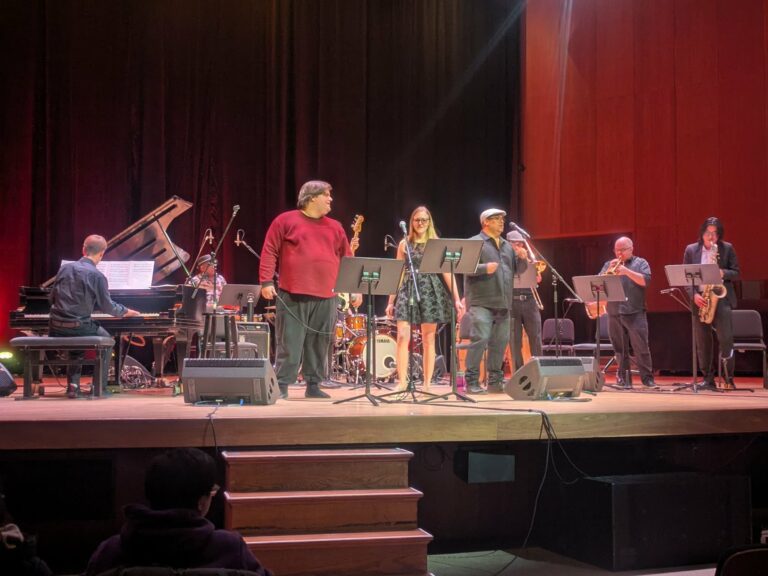
Le Big Band de l’UdeM aura la chance de se produire aux côtés du pianiste cubain de renommée internationale Hilario Durán. Ayant immigré au Canada à la fin des années 1990, Hilario Durán est un musicien célébré tant sur la scène canadienne que cubaine, récipiendaire de plusieurs prix. Durant son impressionnante carrière, il a joué aux côtés de sommités du jazz telles Chucho Valdés, Dizzy Gillespie et Michel Legrand, et a fondé sa propre maison de production nommée Es mi musica Productions. En plus de prendre part au concert sous la direction de João Lenhari, Hilario Durán animera un cours de maître présenté gratuitement le 25 mars 2026, permettant tant aux musiciennes et musiciens qu’au grand public d’en apprendre davantage sur son art.
The UdeM Big Band will have the opportunity to perform alongside internationally renowned Cuban pianist Hilario Durán. Having immigrated to Canada in the late 1990s, Hilario Durán is a highly celebrated musician on both the Canadian and Cuban music scenes and a recipient of numerous awards. Over the course of his remarkable career, he has performed with jazz legends such as Chucho Valdés, Dizzy Gillespie, and Michel Legrand, and founded his own production company, Es mi musica Productions. In addition to taking part in the concert under the direction of João Lenhari, Hilario Durán will lead a free master class on March 25, 2026, offering musicians and the general public alike a unique opportunity to learn more about his artistry.
ICAV : L’Elisir d’Amore – Soirée reconnaissance Vanda Treiser à la salle Claude-Champagne
by Rédaction PAN M 360
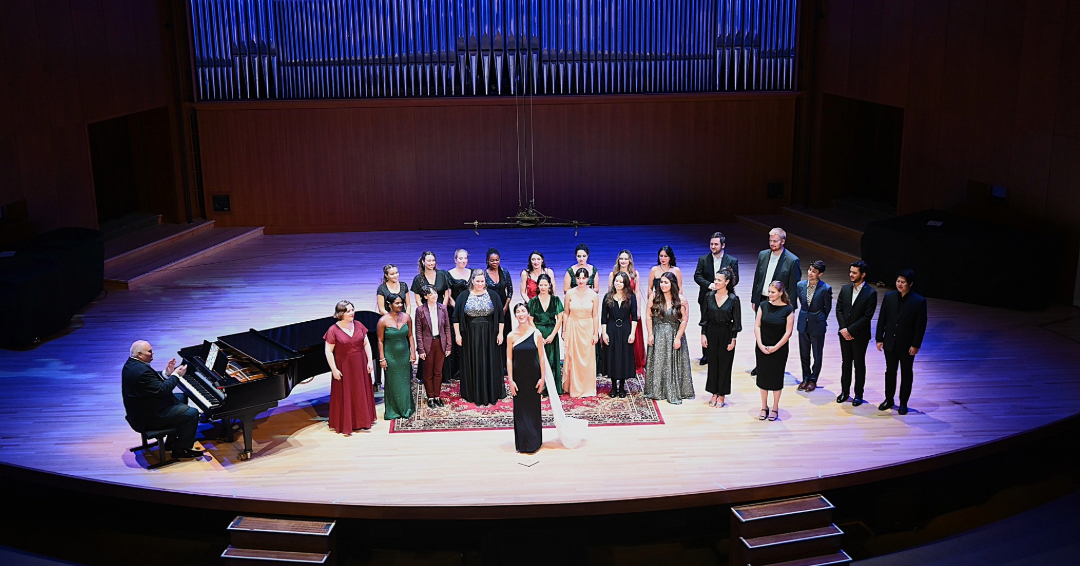
Depuis 2023, Les Initiatives Vanda Treiser se dressent comme un pilier de soutien pour l’Institut canadien d’art vocal. C’est avec une profonde gratitude que nous souhaitons lui rendre hommage lors d’une soirée de reconnaissance privée et exclusive, organisée en son honneur. À cette occasion, nous invitons toutes les personnes souhaitant y participer au montant hommage de 750$ par personne ou au montant admission générale de 300$ par personne. Un reçu de charité de 675$ ou de 225$ sera émis en accordance avec votre contribution. Des tables commanditaires au montant de 7500$ pour 8 personnes sont aussi disponibles en échange d’une visibilité accrue pendant l’événement et dans notre matériel promotionnel. Cette soirée sera aussi un moment privilégié pour remercier chaleureusement l’ensemble de nos commanditaires et donateurs et pour souligner leur soutien inestimable envers notre mission et nos artistes lors d’une soirée musicale et gastronomique. Nous présenterons pour l’occasion l’opéra de Donizetti L’elisir d’amore, en collaboration avec La boussole des arts et les Concerts Centr’art. Vous entendrez pour l’occasion d’ancien chanteurs d’ICAV dans une mise en scène et une animation de la créative diva Natalie Choquette et dirigé par le chef Simon Charette (il est directeur artistique de l’Opéra comique de Washington et a participé à 4 reprises à ICAV), Antonio Figueroa (Nemorino), Odéi Bilodeau (Adina), Alexandre Sylvestre (Dulcamara), Marc-Antoine d’Aragon (Belcore) et Cloée Morissette (Giannetta).
Since 2023, Les Initiatives Vanda Treiser has stood as a pillar of support for the Canadian Vocal Arts Institute. With deep gratitude, we wish to pay tribute during a private and exclusive recognition evening, held in her honor. For this occasion, we invite all those wishing to attend this exceptional evening at a tribute amount of $750 per person or general admission at 300$. A charitable receipt of 675$ or 225$ will accordingly be issued. Sponsored tables for 8 people, priced at $7,500, are also available in exchange for increased visibility during the event and in our promotional materials. This evening will also be a special moment to warmly thank all our sponsors and donors and to highlight their invaluable support of our mission and our artists—through a musical and gastronomic evening. For this occasion, we will present Donizetti’s opera L’elisir d’amore, in collaboration with La boussole des arts and Concerts Centr’art. You will hear former ICAV singers in a production directed and staged by the creative diva Natalie Choquette and conducted by Simon Charette (artistic director of the Washington Comic Opera and a four-time ICAV participant), featuring Antonio Figueroa (Nemorino), Odéi Bilodeau (Adina), Alexandre Sylvestre (Dulcamara), Marc-Antoine d’Aragon (Belcore), and Cloée Morissette (Giannetta).
Faculté de musique de l’UdeM : Orphée en Enfer à la salle Claude-Champagne
by Rédaction PAN M 360
Parmi l’imposante production d’opérettes du compositeur français Jacques Offenbach, l’une se distingue encore aujourd’hui par sa grande popularité : Orphée aux enfers. Parodiant allègrement le mythe d’Orphée, cette œuvre des plus comiques séduit par sa légèreté, ses drôleries, de même que par son célèbre cancan. Deux distributions formées de chanteuses et chanteurs de l’Atelier d’opéra de l’Université de Montréal se partageront les divers rôles, accompagnés de l’Orchestre de l’Université de Montréal sous la direction de Mathieu Lussier. La mise en scène signée par François Racine ramènera l’intrigue dans une boîte de nuit; promettant ainsi une production éclatée et haute en couleur. Découvrez les artistes lyriques de la nouvelle génération sur la scène de la salle Claude-Champagne, et délectez-vous de la joyeuse musique d’Offenbach !
Among the vast output of operettas by French composer Jacques Offenbach, one work remains especially popular today: Orpheus in the Underworld. Cheerfully parodying the myth of Orpheus, this delightfully comic piece charms audiences with its lightness, its humor, and, of course, its famous cancan. Two casts made up of singers from the Université de Montréal Opera Workshop will share the various roles, accompanied by the Université de Montréal Orchestra under the direction of Mathieu Lussier. The staging by François Racine transposes the story to a nightclub, promising a vibrant, colorful, and high-energy production. Discover the next generation of opera artists on the stage of Salle Claude-Champagne, and revel in Offenbach’s exuberant music!
UdM World Music Ensemble: A Good Vintage, Born in The Cold
by Frédéric Cardin
At the end of each semester, the University of Montreal’s world music ensemble, under the direction of Julian Gutierrez Vinardell, presents the work of the program’s students. If you’re looking for a good, free Latin music concert (Vinardell’s specialty), featuring respectable performances of salsa, merengue, cha-cha-cha, and other classic Latin rhythms, all heavily influenced by jazz, you should add this group’s concerts to your calendar.
Last night was the end-of-fall session concert, with Julian Gutierrez Vinardell tasked with offsetting the early darkness and the (also early!) chill with good cheer, sunshine, and warmth. He succeeded rather well, playing the role of an effective, yet thankfully restrained, entertainer. The young musicians (with the exception of two additional veterans on trumpet and percussion) readily grasped the fluid nature of Latin rhythms in a program consisting of two Vinardell compositions, a traditional Dominican tune, several songs arranged for the occasion, and a version of Michel Legrand’s “La valse des lilas.”
I noticed the fine performances of David Gareau on vocals and Raphaël Labonté-Mathieu on piano. The former for his seductive timbre, his ease with Spanish and Latin rhythmic legato, the latter for beautiful improvisational and jazzy flourishes.
An evening that pleasantly warmed the vast and rather formal space of the Claude-Champagne hall, which was, incidentally, quite sparsely attended. On that note, I wonder if it wouldn’t be more interesting to offer this kind of concert in a more suitable venue like the Balattou or the Sala Rossa? The efficiency and proximity of the musicians greatly enhance the performance.
In any case, another program will be offered in May 2026. I’m really looking forward to it because I’ve been convinced. I suggest you give it a try too, if you haven’t already.
With the cold and torrential rain pouring down on Montreal, it took a bit of courage to venture to the concert hall at the University of Montreal’s Faculty of Music. But it was well worth it: the radiant saxophone of Chilean Melissa Aldana awaited us, accompanied by a student Big Band that seemed to be firing on all cylinders. Rain? What rain?
Melissa Aldana has garnered much praise in recent years for the originality of her playing and the quality of her compositions. “She’s one of the best saxophonists on the planet,” João Lenhari, trumpeter, teacher, and musical director of the Big Band, told me during our interview. And by that, he meant regardless of gender.
Melissa usually performs in a sextet or quintet. Her only experience with a big band was a project with the Frankfurt Radio Big Band, inspired by the Mexican artist Frida Kahlo. It was a version of this project that we were treated to at the Salle Claude Champagne.
João Lenhari stated it from the outset, in his French beautifully tinged with a Portuguese accent: reproducing these compositions by Melissa Aldana arranged by Jim McNeely was a serious and complex undertaking that required many rehearsals.
Overall, the concert was excellent. The kids did a fantastic job. These pieces, which are jazz with a subtle Latin influence, are indeed difficult to perform. But overall, everything flowed smoothly. The rhythm section was particularly impeccable, in my opinion as a layperson who listens to a lot of music.
What’s particularly wonderful about this kind of concert is the humility of the “star.” Melissa Aldana gave the students plenty of space for their solos, applauding and encouraging them. I don’t know if you find that in classical music. There was a particularly moving moment when tenor saxophonist Maude Gauthier and Melissa Aldana were in dialogue, responding to each other. I wondered how fast Maude’s heart was beating. It’s an incredible opportunity!
In short, it was a warm and musically excellent evening. The only slight drawback: at times, the Big Band somewhat overpowered Melissa’s saxophone, which often conveys very subtle emotions. Fortunately, she was able to showcase her full talent in an unaccompanied solo, where the breadth of her range and nuances was evident.
I therefore recommend that you listen to her latest album Echoes Of The Inner Prophet, to appreciate her talents as a saxophonist and composer.
On December 7, the Salle Claude Champagne will host saxophonist Bob Minzer, accompanied by the university’s alumni Big Band.
Two anniversaries celebrated with Quebec’s musical genius
by Frédéric Cardin
Saturday evening at the Claude-Champagne Hall of the University of Montreal, a concert was held to celebrate the anniversaries of two venerable Quebec musical institutions: the 60th of the Quebec Society of Contemporary Music (SMCQ) and the 75th of the Faculty of Music of the University of Montreal (UdeM). Contemporary Confluences, the title of the concert, highlighted the many intersections between the two organizations. The program honoured the various musical directors of the SMCQ throughout history (Serge Garant, Gilles Tremblay, Walter Boudreau, Ana Sokolovic), who have all also been teachers at UdeM. As a bonus, a creation by a young composer, Maxime Daigneault, because we must not forget that the mission of both institutions is also to ensure the future of contemporary classical music. It was the SMCQ ensemble, led by Christian Gort, and the UdeM Contemporary Music Ensemble, led by Jean-Michaël Lavoie, who shared the stage and the pieces, sometimes in tandem.
The program showed the depth of scholarly creation in Quebec music. Boudreau’s Coffre III(a) (Le Cercle Gnostique I {}) launched the evening with the composer’s usual mark, his stunning colours and sparkling energy. The trio of young students from UdM, composed of Jérémie Arsenault on clarinet, Alona Milner on piano, and Leîla Saurel on cello, was impressive in terms of technical quality, precision, and timbral beauty.
Following was Serge Garant’s Quintet for flutes, oboe/English horn, percussion, piano, and cello, a true marvel of arch construction, whose expressive beauty relies on an exceptional sense of colour and thematic metamorphosis. Ana Sokolovic’s Five Locomotives and Some Animals bears the mark of the Montreal composer’s efficient style. Descriptive episodes including rhythmic and stylistic motifs from Balkan folklore, interspersed with short interventions driven by exciting motor energy. Ironically, it was the work that seemed the most fragmented of the evening in terms of sonic coherence, whereas the others were rather seeking to create an integrated, morphic and organic whole despite their omnipresent pointillism. Nevertheless, Sokolovic’s writing remains irresistible.
Souffle (Champs II) by Gilles Tremblay reminded us of how the formal and intellectual complexity of the composer’s works is equally matched by a fascinating mastery of expression and discourse. The abundance of colours and the stunning poetry of this seductive abstraction never fail to move. Very great art, as Lavoie and the UdeM Ensemble reminded us.
I really enjoyed the last piece of the evening, Sensations: Lueurs du néant (Sensations and glimmers of nothingness) by Maxime Daigneault. This commission, performed by the largest number of musicians in the program, testified quite explicitly to the nature of contemporary language in 2025, compared to that of its predecessors, concentrated in the years 1978 to 1996. Daigneault’s music is organic, metamorphic in the sense of a moving fluid that almost never contains sound breaks. This fluidity is very representative of current music in scholarly creation, probably informed by post-minimalism and neo-romanticism. In the 21st century, we seek to fill the expressive field, to cover it entirely. It is very different from the atomism that dominated avant-garde and institutional musical thought in the second half of the 20th century.
Daigneault told me before the concert that the idea of this piece was to translate the compositional process that characterizes his own approach. At the moment of starting to write a work, there is nothing. A blank page, or rather a dark void. Then, through persistent searching, a few luminous threads appear, ideas, intuitions. He pulls on them, sees what he can do with them, ties them together, and eventually transforms the darkness into light. Sensations: Lueurs du néant is totalitarian music, in the sense of a total monopolization of the sound space, without breaks, or almost. It is also a very strongly expressive music, and one that has an almost physical impact on the listener. As far as I’m concerned, a great success. Why did it then seem to me that the applause was a bit too polite?
The musicians of both ensembles were at the forefront of the numerous demands of the scores. With perhaps the advantage going to that of the SMCQ, which is also the most experienced.
The celebration of the two anniversaries took place in a sober manner while highlighting the very essence of their missions: to promote the excellence and endurance of local musical genius.
Faculté de musique de l’UdeM : Étoiles montantes à la salle Claude-Champagne
by Rédaction PAN M 360
Qu’ils exercent leur talent en composition, en direction d’orchestre, comme solistes ou instrumentistes au sein l’OUM, les étudiants et les étudiantes de la Faculté de musique seront sous les feux de la rampe lors de cette soirée Étoiles montantes! Eun Jung Park et Igor Alfonzo Martinez Valderrama, étudiants en direction d’orchestre Julien Régol et Ming-Jing Wong, piano
Whether showcasing their talents in composition, orchestral conducting, as soloists, or as instrumentalists within the Université de Montréal Orchestra, students from the Faculty of Music will take center stage during this Rising Stars! evening. Eun Jung Park and Igor Alfonzo Martinez Valderrama, conducting students Julien Régol and Ming-Jing Wong, piano
CE SPECTACLE EST GRATUIT!
Ce contenu provientde la faculté de musique de l’UdeM et est adapté par PAN M 360
Université de Montréal: Stars shine on music’s next gen
by Frédéric Cardin
Saturday evening, April 12, saw the Université de Montréal’s Rising Stars concert. Graduates in conducting, composition and flute performance presented the results of years of learning. It was inspiring.
Conductor Marie-France Mathieu began by presenting the first three pieces on the programme, creations by three composition students, Gabriel José Melim Schwarz, Amichai Ben Shalev and Charles-Vincent Lemelin. Schwarz offered a tonal and rather sunny neo-romantic piece, ironically entitled Folle (Crazy). Vibrant with energy and inspired by Schwarz’s native Brazil, it is a work that is pleasant to listen to and not very demanding for the listener.
This was followed by A Groyse Metzieh by Ben Shalev, a musician also known as a member of the ensemble Les Arrivants. The title means ‘a beautiful find’, which is in fact a sarcastic formula typical of Jewish humour, meaning ‘not much of anything’. I really enjoyed this post-modern piece, which mixes tonality with noisy avant-gardism, thanks to a wide range of instrumental techniques linked to experimentation. It begins in a sombre atmosphere with a warm string theme, quickly interspersed with bursts of colour that would not have displeased Messiaen. The rest moves slowly but surely towards saturation, punctuated by thunderous stridencies, before ending with a return to consonance, but with the brass choir. Superb.
Finally, Lemelin’s Passacaille had the greatest effect on me. In this piece, which treats the orchestra as a living mass, dark but nonetheless criss-crossed by many luminous streaks, and which gradually swells to its maximum sonic and harmonic density, I perceived echoes of Saariaho and Rautavaaraa, but also of a certain Straussian monumentalism and the muscular expressionism of ex-Hollywood composer Goldenthal. Passacaille is a demonstration of quiet power, perfectly calibrated and constructed. Your humble reviewer thoroughly enjoyed it.
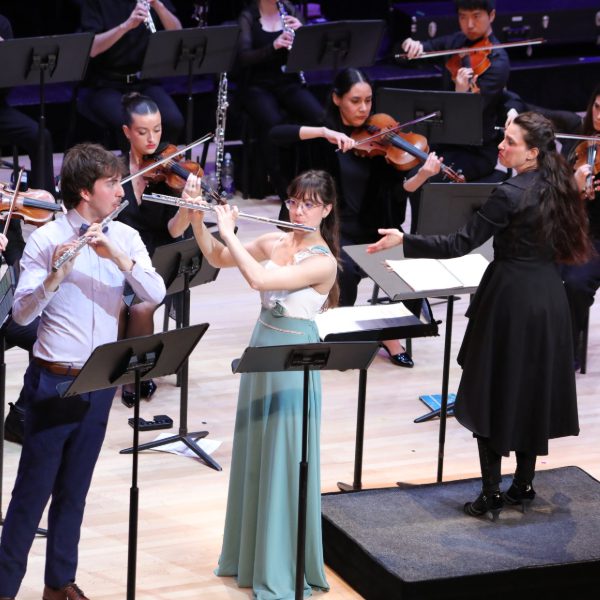
The rest of the programme featured Romantic repertoire, starting with a charming Concerto for two flutes by Franz Doppler, the king of the flute (along with his brother) in the 19th century. It was an opportunity to see and hear at work two young performers who won 3rd prize in the OUM 2024 Concerto Competition, Gabriel Lapointe Guay and Sarah Billet. The two artists injected all the right sparkle into this smiling, feel-good music.
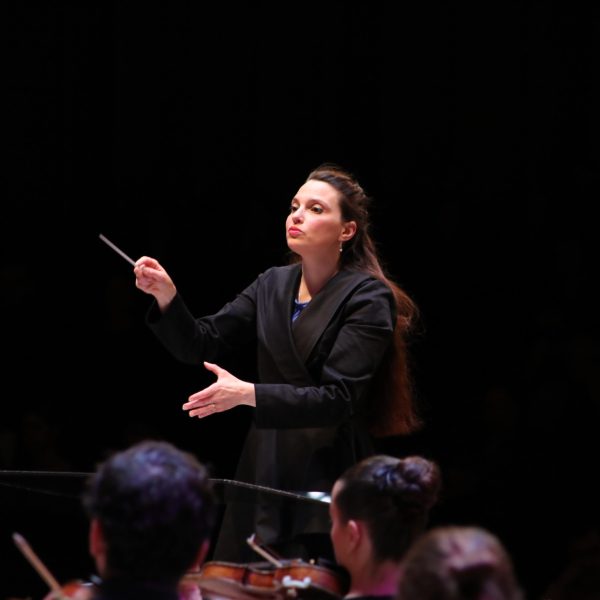
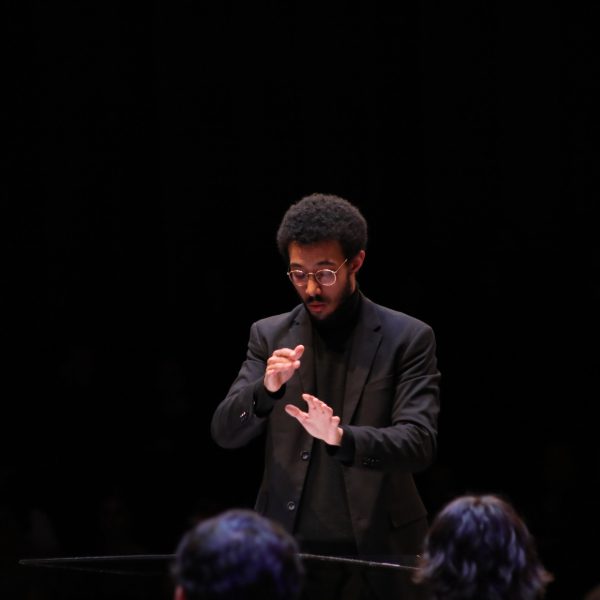
The second part was devoted to Schumann’s Manfred Overture and Stravinsky’s Firebird Suite (1919). Above all, it was an opportunity to judge the conducting work of Marie-France Mathieu and Paul Karekezi. It was the latter who gave us a Manfred full of drama, inhabited by a necessary discharge of conflicting emotions. Perhaps a little tempered, but beautifully embodied.
The Firebird was brought to life with beautiful colours and crystalline details, powerfully underlined by conductor Mathieu.
Since the two young conducting artists also led the OUM (Orchestre de l’Université de Montréal) in the creations mentioned above, I noticed two different but complementary personalities of baton and control.
Paul Karekazi, who conducted Lemelin’s Passacaille (and, as I just said, Manfred), gave a clear performance, but above all one imbued with emotional intensity and inner strength. This favoured strong nuances and a legato imbued with heartfelt lyricism.
Marie-France Mathieu, on the other hand, is more sober in her outpourings, but nevertheless skilfully brings out the detailed colours and textural contrasts in a limpid manner, thanks to a surgical baton that leaves no room for doubt. She conducted the pieces by Schwarz and Ben Shalev, the Doppler (and of course the Stravinsky) very well.
Karekazi and Mathieu are students of Paolo Bellomia, the two flautists come from Denis Bluteau’s class, and the three composers benefit from the knowledge of Jimmie Leblanc, Ana Sokolovic, François-Hugues Leclair and Olivier Alary.
It was a wonderful evening for the future of music in Montreal, Quebec and Canada.
Faculté de musique de l’UdeM | An Effective Evening at The Opera
by Alexandre Villemaire
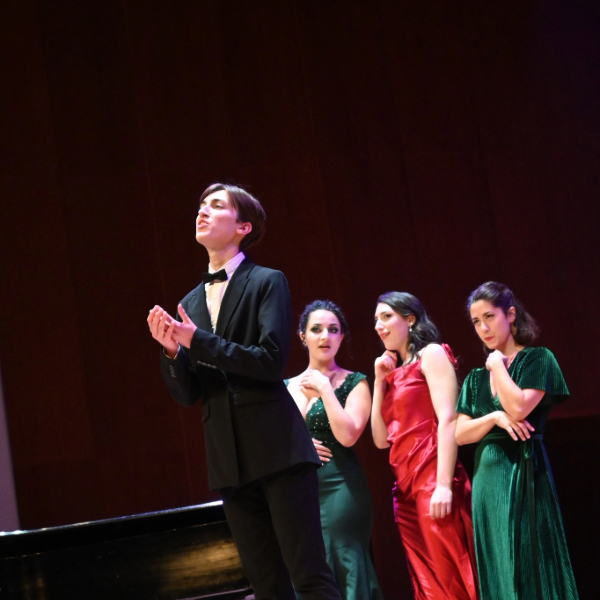
The 2024-2025 season of the Université de Montréal’s Faculty of Music is currently in full swing. Perched on the slopes of Mont-Royal at the top of the famous Vincent-d’Indy Avenue hill, around a hundred people gathered in Salle Claude-Champagne on Saturday to hear the current crop of young singers. It was a great opportunity to discover them in preparation for their production of Hansel und Gretel by Engelbert Humperdinck (1854-1921), to be presented at the end of February. The students were accompanied by pianist/conductor Robin Wheeler and Alona Milner.
A sober evening, presented in gala form without extravagant presentation or complex staging, but not lacking in quality moments. In this operatic evening, several excerpts from works covering a vast spectrum of the operatic repertoire were presented. From German Romantic opera to bel canto, operetta and Baroque opera, it was a seamless transition. This panorama allows us to see the different performers in action, in a variety of styles, lyrical expressions and character incarnations. Verdi’s Witches from Macbeth opened the evening. With piercing eyes, the sopranos and mezzos of this chorus presented a biting, menacing reading of this page of verismo. The few choral numbers that graced the program were among the evening’s most appreciated for their strength and technical precision. The overall sound was enveloping, the articulation just right and precise. A case in point was the excerpt from Mozart’s Idomeneo “Placido è il mar… Soavi Zeffrini”, where the balance of voices between the numerous women’s voices and the five men’s voices was soaring, balanced and complementary to Marie France Eba Koua’s singing.
In terms of individual voices, several performances caught our attention. Among the men’s voices, baritone Élie Lefebvre-Pellegrino stood out for his beautiful, resonant, full, round and slightly brassy low register, coupled with good stage presence. His interpretation of Nilakantha’s aria from Léo Delibes’ Lakmé was assured and committed, as was his performance as Count Almaviva in the duet “Crudel! Perche s’ignora” duet from The Marriage of Figaro with Kevisha Williams. However, his passages in the upper register still need to be stabilized. Fellow singer Théo Raffin offered some of his best stage performances in Don Giovanni’s Leporello (“Sola, sola in buio loco”) and Romeo and Juliet’s Mercutio (“Mab, la reine des mensonges”). In both cases, his interventions were both interpretative and vocal. The only bass in the cohort, Andrew Erasmus delivered the difficult aria “O du Mein Holder Abendstern” from Wagner’s Tannhäuser with finesse and sensitivity.
As for the female voices, Maëlig Querré (mezzo-soprano) made a good impression in her role as Romeo from Bellini’s I Capuletti e i Montecchi. Her agile, assured voice with a sonorous low register complemented Nicole Ross’s Giulietta, who, despite great strength and agility in her high notes, reached the end of her range by the end of the aria. Cloée Morisette and Clotilde Moretti were equally sparkling in an excerpt from Carl Maria von Weber’s Freischütz. Another name to remember is mezzo-soprano Julie Boutrais. She distinguished herself in the duet from Moneverdi’s opera L’Incoronazione di Poppea, performed with Salomé Karam. Playing respectively King Nero and his lover Poppea, the two singers perfectly captured the passionate feelings and intoxication evoked in “Signor, oggi rinasco” as Nero announces to Poppea that she is to be his wife. Julie Boutrais also brought the evening to a close with her warm, embodied voice in Dido and Æneas‘ final aria “When I am laid in Earth”, followed by the final chorus from the same opera. A moment that sent shivers down our spines.
If we have to make one slight criticism of the concert, it’s the lack of detail in the program. A gala-style singing recital featuring a succession of arias, duets, trios and choruses from different periods and styles allows the singers to express themselves in a variety of roles and characters, and at the same time introduces the audience to protagonists and operas with which they may be less familiar. It would be a good idea to provide a little context for these works, to situate them for the audience. The excerpt from the trio “Je vais d’un cœur aimant” from Hector Berlioz’s opera Béatrice et Bénédict is a good example. Maëlig Querré, Maïlys Arbaoui-Westphal and Anne-Sophie Gagnon-Metellus performed this excerpt from a little-performed opus well, and would have deserved a little program note to appreciate it even more.
Festival d’art vocal de Montréal 2024: Classe de maître avec Étienne Dupuis
by Rédaction PAN M 360
GRATUIT – Réservations obligatoires Les contributions volontaires sont fortement encouragées. Montant suggéré: 25$
Assistez à une classe de maître en chant lyrique avec le baryton de renommée internationale Étienne Dupuis, aussi codirecteur artistique d’ICAV, et découvrez son approche de l’interprétation et de la technique. Une expérience enrichissante pour les étudiants en musique, les professionnels aguerris et tous les amateurs de musique classique.
La Salle Serge-Garant et la Salle Claude-Champagne sont les deux principales salles de concert de la Faculté de musique de l’Université de Montréal : 220, avenue Vincent d’Indy, Outremont.
Attend a master class in lyrical singing with internationally renowned baritone Étienne Dupuis, also ICAV’s co-artistic director, and discover his approach to interpretation and technique. An enriching experience for music students, seasoned professionals and all classical music fans.
Salle Serge-Garant and Salle Claude-Champagne are the two main concert halls of the Université de Montréal’s Faculty of Music: 220, avenue Vincent d’Indy, Outremont.