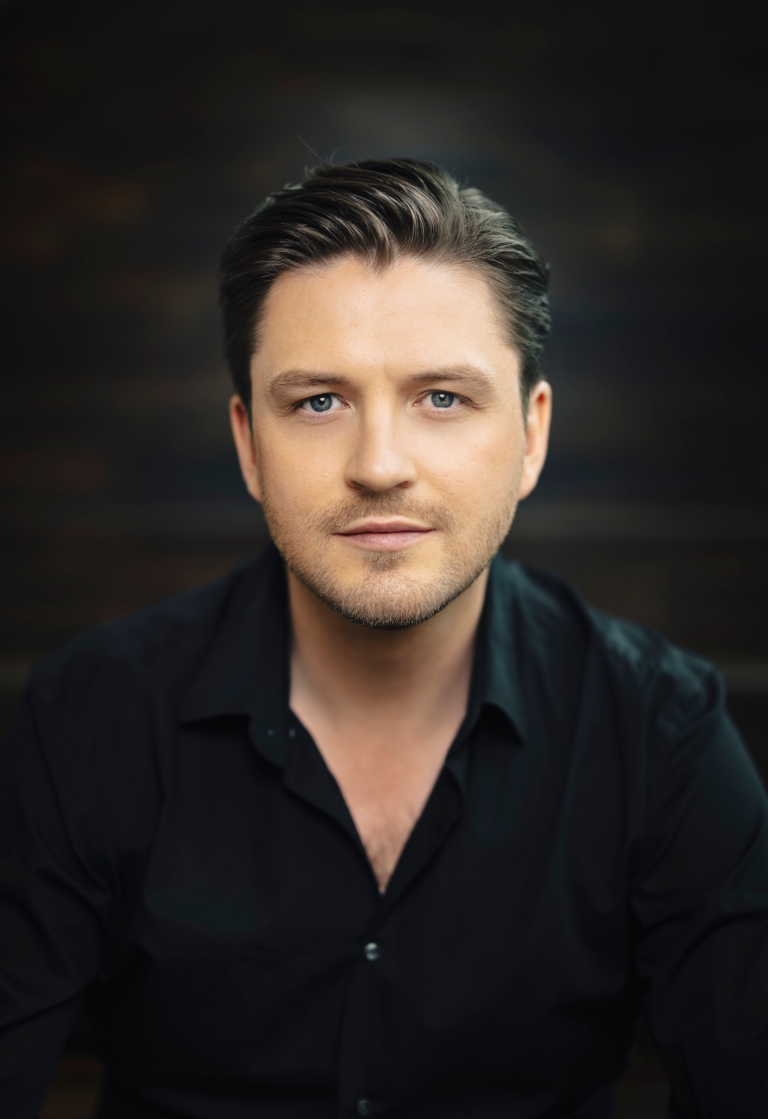
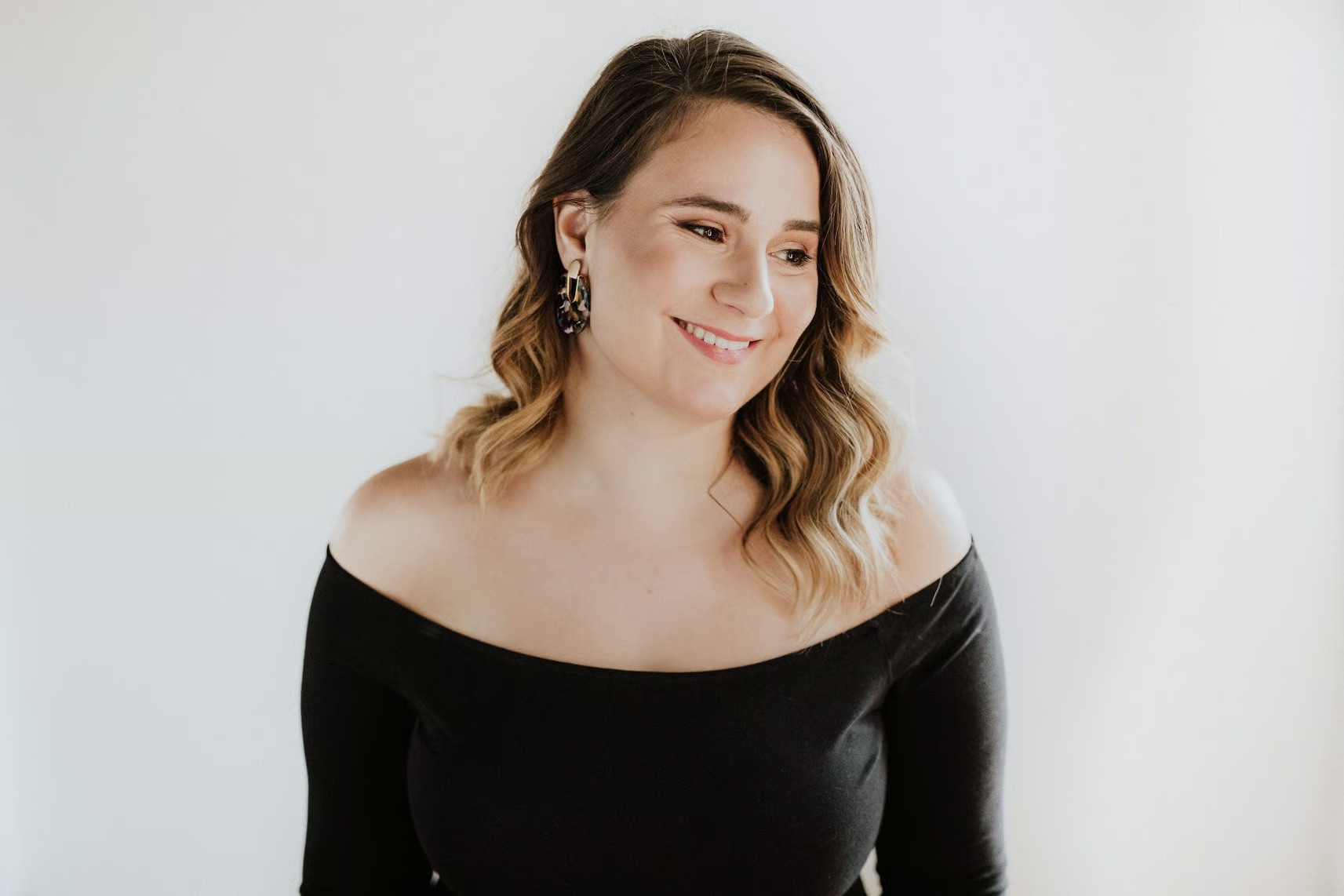
Samuel Hasselhorn & Ammiel Bushakevitz à la salle Bourgie
by Rédaction PAN M 360
La belle meunière, l’un des cycles de lieder les plus appréciés des mélomanes, porte sur l’errance, l’amour, le refus de recevoir cet amour en retour, la colère et l’appel de la mort. Hasselhorn et Bushakevitz tentent de faire la lumière sur cette inconnue, la mystérieuse « belle meunière » dont nous ne savons presque rien.
Die schöne Müllerin is one of the most beloved song cycles of all time: a story about wandering, falling in love, not being loved in return, raging, and finally longing for death. Here, Hasselhorn and Bushakevitz attempt to shed some light on the mysterious miller-maid—a figure almost completely unknown to us.
Programme/program
SCHUBERT Die schöne Müllerin [La belle meunière/The Fair Miller-Maid], D. 795
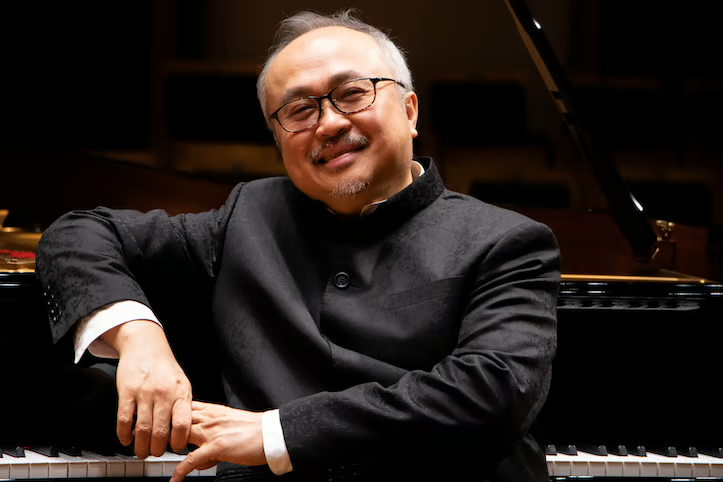
Depuis sa victoire au prestigieux Concours Chopin de Varsovie en 1980, Dang Thai Son mène une carrière fulgurante, qui l’a conduit aux quatre coins du monde avec les plus grands orchestres. Celui qui fut le professeur de Bruce Liu interprète plusieurs œuvres du compositeur polonais qui l’a fait connaître, avec un détour par l’impressionnisme français, de Fauré à Debussy.
After winning Warsaw’s prestigious Chopin Competition in 1980, Dang Thai Son embarked on a meteoric career—travelling to the four corners of the world, playing with top orchestras, and teaching students such as Canadian pianist Bruce Liu. Here, he performs gems from the Polish composer who propelled him to fame, alongside French impressionist works by Fauré and Debussy.
Programme
FAURÉ Nocturne en mi bémol mineur, op. 33 n° 1 Barcarolle n° 1 en la mineur, op. 26 DEBUSSY Images, Livre I Children’s Corner, L. 113 CHOPIN Nocturne n° 21 en do mineur, op. posth. Nocturne n° 20 en do dièse mineur, op. posth. Barcarolle en fa dièse majeur, op. 60 Valse en mi majeur, op. posth. Valse en mi bémol majeur, op. posth. Valse en sol bémol majeur, op. 70 n° 1 Valse en si mineur, op. 69 n° 2 Valse en la bémol majeur, op. 34 n° 1 Scherzo n° 2 en si bémol mineur, op. 31
Program
FAURÉ Nocturne in E-flat minor, Op. 33, No. 1 Barcarolle No. 1 in A minor, Op. 26 DEBUSSY Images, Book I Children’s Corner, L. 113 CHOPIN Nocturne No. 21 in C minor, Op. Posth. Nocturne No. 20 in C-sharp minor, Op. Posth. Barcarolle in F-sharp major, Op. 60 Waltz in E major, Op. Posth. Waltz in E-flat major, Op. Posth. Waltz in G-flat major, Op. 70, No. 1 Waltz in in B minor, Op. 69, No. 2 Waltz in A-flat major, Op. 34, No. 1 Scherzo No. 2 in B-flat minor, Op. 31
Les Violons du Roy : Les muses de Mozart à la salle Bourgie
by Rédaction PAN M 360
Mozart nous a légué tant de sublimes pages pour la voix humaine dont certaines des plus belles ont été créées par les sœurs Aloysia, Josepha et Constance Weber, l’épouse du compositeur. Ces trois muses seront incarnées ici par la soprano Sarah Dufresne qui fera ses débuts avec Les Violons du Roy auxquels se joindront, en grande première, des musiciens de l’Orchestre de l’Agora.
Mozart left us countless sublime works for the human voice, and some of his finest were originally performed by the Weber sisters—Aloysia, Josepha, and Constanze (the composer’s wife). Here, these three muses are brought to life by soprano Sarah Dufresne, making her debut with Les Violons du Roy, also joined for the first time by L’Orchestre de l’Agora.
Programme
W.A. MOZART -Ouverture de Don Giovanni, K. 527 -Trois interludes extraits de Thamos, Roi d’Égypte, K. 345 -Schon lacht der holde Frühling, K. 580 -Nehmt meinen Dank, K. 383 -« Et incarnatus est » extrait de la Messe en do mineur, K. 427 -Symphonie n° 38 en ré majeur, K. 504 « Prague »
Program
W.A. MOZART -Overture from Don Giovanni, K. 527 -Three interludes from Thamos, King of Egypt, K. 345 -Schon lacht der holde Frühling, K. 580 -Nehmt meinen Dank, K. 383 -“Et incarnatus est” from Mass in C Minor, K. 427 -Symphony No. 38 in D Major, K. 504 “Prague”
Joyeux anniversaire Janina Fialkowska ! à la salle Bourgie
by Rédaction PAN M 360
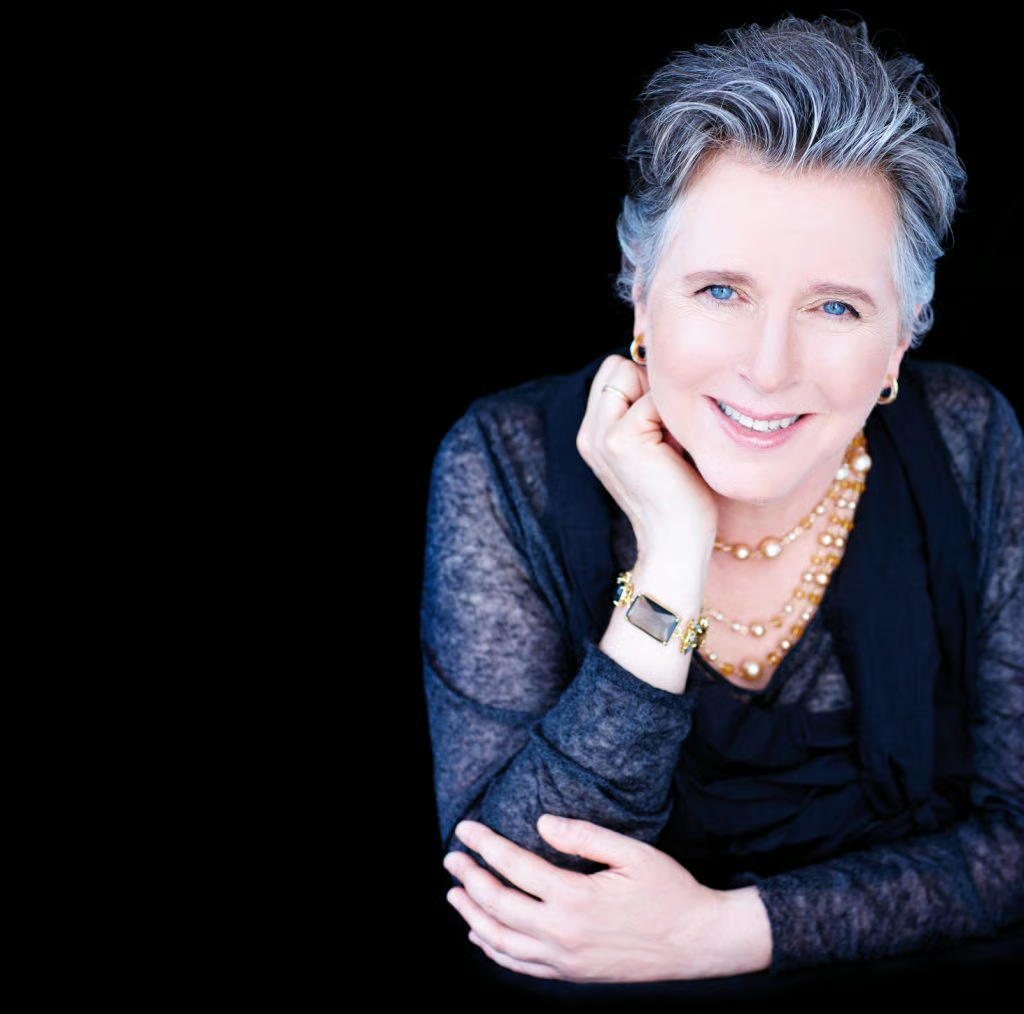
Placé sous le signe de la célébration, ce concert souligne l’anniversaire de la légendaire pianiste Janina Fialkowska et les 30 ans d’existence d’ATMA Classique : deux figures canadiennes d’exception liées depuis maintes années. Celle que le célèbre Arthur Rubinstein a désignée comme « interprète-née de Chopin » présente un grand programme romantique.
Legendary pianist Janina Fialkowska, called a “born Chopin interpreter” by Arthur Rubinstein, presents a celebratory concert in honour of both her birthday and the 30th anniversary of ATMA Classique. This programme of great Romantic masterpieces follows decades of close collaboration between these two landmarks of Canadian music.
Programme
GRIEG Pièces lyriques « Il était une fois », op. 71 no 1 « À tes pieds », op. 68 no 3 « Papillons », op. 43 no 1 « Soir dans les montagnes », op. 68 no 4 « Vers la patrie », op. 62 no 6 R. SCHUMANN Fantasiestücke, op. 12 RAVEL Valses nobles et sentimentales, M. 61 CHOPIN Mazurka en la mineur, op. 59 no 1 Mazurka en la mineur (« Notre temps ») Scherzo no 1 en si mineur, op. 20
Program
GRIEG Lyric Pieces “Once upon a time,” Op. 71, No. 1 “At your feet,” Op. 68, No. 3 “Butterflies,” Op. 43, No. 1 “Evening in the mountains,” Op. 68, No. 4 “Homeward,” Op. 62, No. 6 R. SCHUMANN Fantasiestücke, Op. 12 RAVEL Valses nobles et sentimentales, M. 61 CHOPIN Mazurka in A minor, Op. 59, No. 1 Mazurka in A minor (“Notre temps”) Scherzo No. 1 in B minor, Op. 20
Fragments d’un siècle en images à la salle Bourgie
by Rédaction PAN M 360
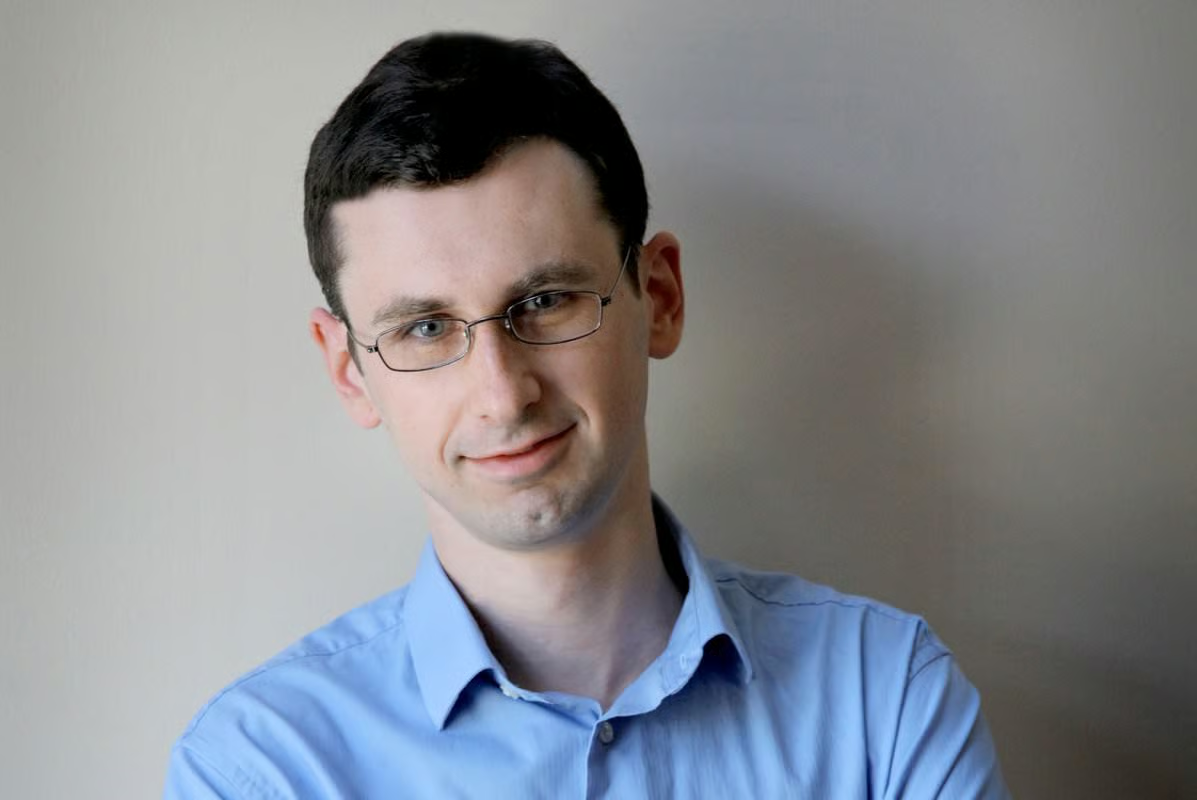
Ilya Poletaev, pianiste de renom et spécialiste sur instruments d’époque, improvise sur une sélection de vidéos signée Philippe Ulysse del Drago, directeur du FIFA. Débuts du cinéma, caméras de surveillance, films de famille, enregistrements de la NASA ou créations de l’intelligence artificielle, ce voyage réinvente le dialogue entre la musique et l’image.
Ilya Poletaev, renowned pianist and historical performance specialist, adds his keyboard improvisation to a selection of videos curated by FIFA director Philippe Ulysse del Drago. From early cinema to surveillance footage, home videos, NASA captures, AI creations, and more, this kaleidoscopic journey redefines the dialogue between music and image.
To open its 45th season, Arion Baroque Orchestra has adopted this formula of the Concerts de la Reine. Under the aegis of Marie Leszcynska, wife of Louis XV between 1725 and 1762, the Concerts de la Reine offered the court excerpts from vocal works or even movements from symphonies, more suited to the setting of the royal apartments and private salons. In the splendor of the ballrooms of the royal palaces, works were thus played for the pleasure of royalty. It is with this idea of arranging disparate pieces that Mathieu Lussier built the repertoire of this concert, from instrumental music to vocal music.
With this underlying theme of femininity in mind, Arion opened its season with a work by a female composer – a first for the ensemble in 45 years. Taken from a small pastoral opera, properly named Le Concert, Mademoiselle Laurant’s arias, symphonies, and dances possessed a lightness and lyricism very much of the period, oscillating between animated, interior, and royal character. In comparison, the excerpts from the Prologue to the opera-ballet Les Génies or Les Caractères de l’Amour by a certain Madame Duval presented a wide variety of dynamics, notably the Air des Génies, which was particularly original in its multi-thematic construction.
Besides these two composers, if there was a queen at this edition, it was the Canadian soprano Emma Fekete. Winner of several prizes and grants, including that of winner of the Metropolitan Opera’s Laffont Competition in 2024, the 17th and 18th century repertoire was not yet on the slate of the young lyric artist who could be heard above all in Carmen (Frasquita), Le nozze di Figaro (Barbarina) and L’enfant et les sortilèges (Bergère, Pastourelle).
The work she did to sculpt her voice in the vocal aesthetics of the Baroque era was simply excellent. The crystalline high notes are precise, the vocal line blends into the orchestral mass with great control of timbre, and the articulation and pronunciation are of great clarity.
Particularly captivating was the performance of the aria “Vents furieux, tristes tempêtes” from the comedy-ballet La Princesse de Navarre by Jean-Philippe Rameau. The constant, breathless roll of the orchestra, which illustrated the storm’s tempestuous nature, was magnified by Emma Fekete’s committed and embodied performance. In each of the pieces she performed, the soprano demonstrated mastery of form as well as a strong stage presence, giving each excerpt the appropriate depth, whether in the imaginative “Rossignols amoureux” from Hippolyte et Aricie or the rarely performed arias from Scylla et Glaucus by Jean-Marie Leclair. Emma Fekete captivated the audience with each of her performances with her luminous timbre and the intelligence of her interpretations.
In front of a respectable audience, Mathieu Lussier’s troops kicked off a season which, in keeping with the intentions of its artistic director, aims to showcase the repertoire of little-performed composers as well as the richness and variety that 18th-century music has to offer.
Poursuivez votre exploration du plus grand compositeur de lieder de l’histoire ! Quatre jeunes artistes lyriques et une pianiste présentent certains des plus beaux opus schubertiens avant de se réunir dans une poignante prière pour quatuor vocal.
Dive deeper into the world of the greatest lieder composer of all time! Pianist Chloé Dumoulin accompanies four young singers in a selection of gems from Schubert’s song catalogue, ending with the composer’s poignant prayer for vocal quartet.
Programme
SCHUBERT Osterlied [Chant de Pâque], D. 168a Die Liebende schreibt [L’amoureuse écrit], D. 673 Gretchen im Zwinger [La prière de Marguerite], D. 564 Geistes-Gruss [Salut d’un fantôme], D. 142 Der Fluss [Le fleuve], D. 693 Mélodie hongroise en si mineur pour piano, D. 817 Schwestergruss [Salutation de la sœur], D. 762 Rastlose Liebe [Amour sans repos], D. 138 Der Alpenjäger [Le chasseur alpin], D. 588 Wandrers Nachtlied [Le chant de la nuit du voyageur], D. 768 Gebet [Prière], D. 815
Program
SCHUBERT Osterlied [Easter song], D. 168a Die Liebende schreibt [The woman in love writes], D. 673 Gretchen im Zwinger [Gretchen’s prayer], D. 564 Geistes-Gruss [Phantom-greeting], D. 142 Der Fluss [The river], D. 693 Hungarian Melody in B minor for piano, D. 817 Schwestergruss [Sister’s greeting], D. 762 Rastlose Liebe [Relentless love], D. 138 Der Alpenjäger [The Alpine hunter], D. 588 Wandrers Nachtlied [The wanderer’s night song], D. 768 Gebet [Prayer], D. 815
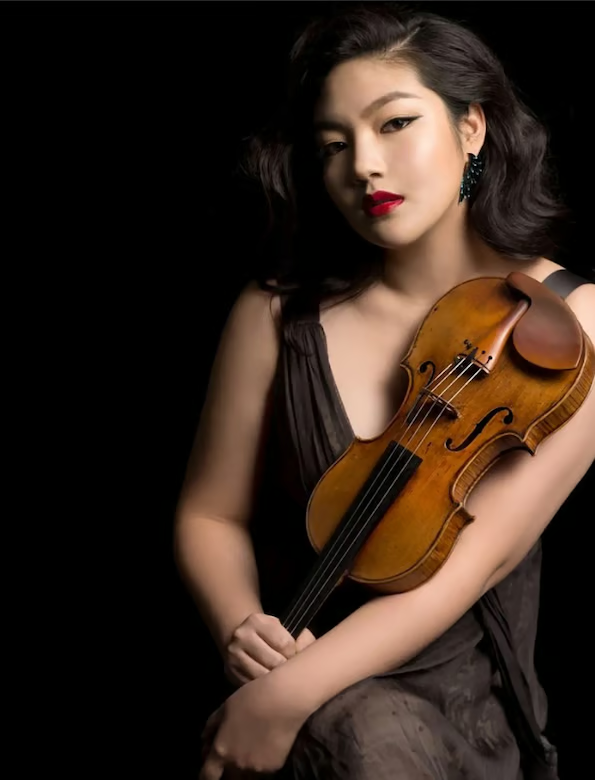
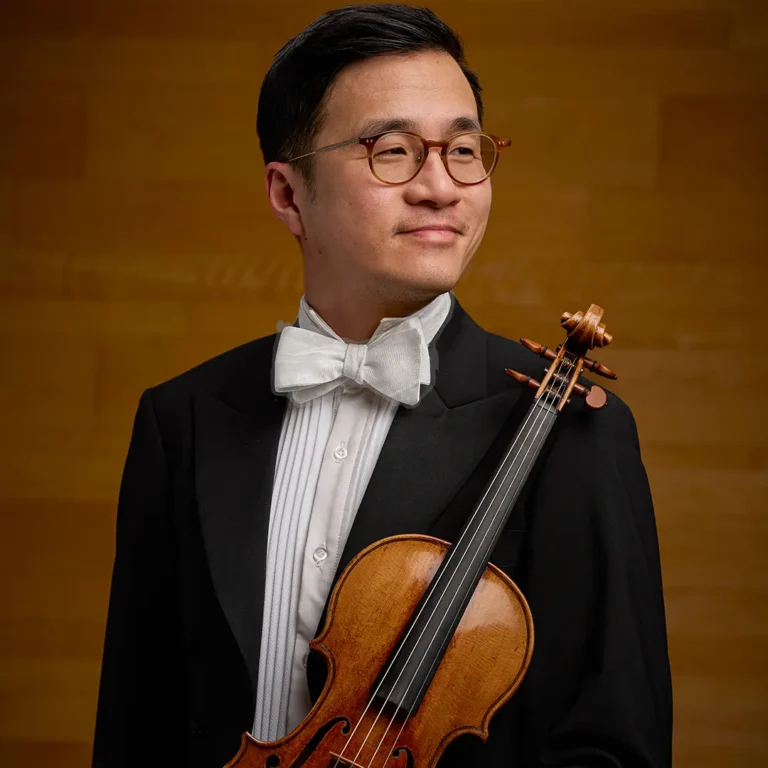
Jinjoo Cho, violon & Henry Kramer, piano à la salle Bourgie
by Rédaction PAN M 360
Pour leur premier récital à la Salle Bourgie, la violoniste virtuose Jinjoo Cho et le charismatique pianiste Henry Kramer ont choisi des œuvres tantôt empreintes du lyrisme typique de la fin de l’époque romantique, tantôt remplies de l’excitation fébrile du début du 20e siècle. Un concert rempli d’émotions fortes!
For their first recital at Bourgie Hall, violin virtuoso Jinjoo Cho and charismatic pianist Henry Kramer have chosen lyrical works typical of the late Romantic period, mirrored by thrilling pieces filled with the feverish excitement of the early 20th century. A concert filled with strong emotions!
Programme
STRAVINSKY Suite italienne pour violon et piano, tirée du ballet Pulcinella SCHULHOFF Sonate pour violon n° 2 CHAUSSON Poème, op. 25 SAINT-SAËNS Sonate pour violon n° 1 en ré mineur, op. 75
Program
STRAVINSKY Suite italienne, for violin and piano, from the ballet Pulcinella SCHULHOFF Violin Sonata No. 2 CHAUSSON Poème, Op. 25 SAINT-SAËNS Violin Sonata No. 1 in D minor, Op. 7
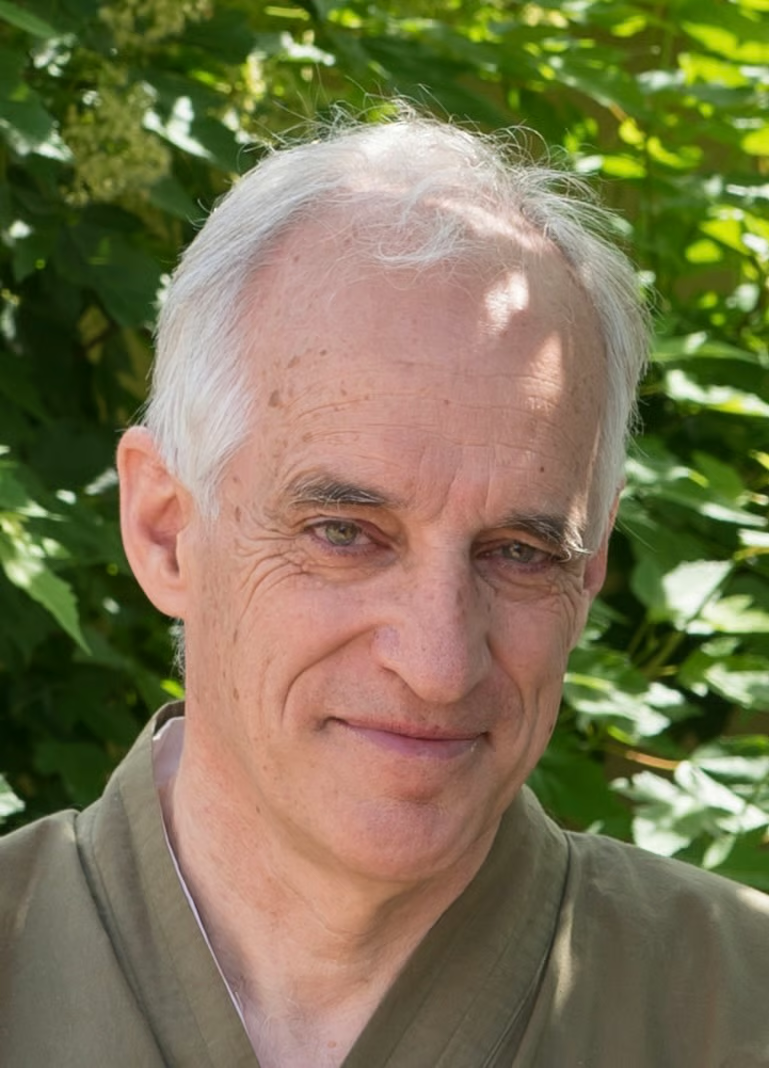
Bruno Deschênes – La flûte à travers le monde à la salle Bourgie
by Rédaction PAN M 360
La flûte est l’un des plus vieux instruments de musique et sa famille est immense : on en compte des milliers de variations de par le monde. Ce concert inusité, éclaté et vibrant vous en fait découvrir plusieurs de ses plus beaux spécimens, entre la flûte baroque et le shakuhachi japonais, le dizi chinois et le ney moyen-oriental.
Flutes are among the oldest instruments on Earth, with thousands of varieties found across the globe. This vibrant, variegated, one-of-a-kind programme brings together several members of the flute family, from the European Baroque flute to the Japanese shakuhachi and the Chinese dizi to the Middle-Eastern ney.
Programme
VIVALDI Concerto pour violon en mi majeur, RV 269, « Le Printemps » (arr. pour flûte seule par J.-J. Rousseau) BOISMORTIER Concerto pour cinq flûtes, op. 15 n° 1 Ziya TABASSIAN Lovebird Jean LÉRIGÉ-LAPLANTE Évanescence (Création) Ziad CHBAT Nostalgie ANONYME Printemps à la rivière (trad. chinois, arr. Bruno Deschênes) Bruno DESCHÊNES Tsuru no sugomori [La nidification de la grue] Shin Etenraku [Composition sur l’ancienne mélodie Etenraku]
Program
VIVALDI Violin Concerto in E major, RV 269, “Spring” (arr. for solo flute by J.-J. ROUSSEAU) BOISMORTIER Concerto for Five Flutes, Op. 15, No. 1 Ziya TABASSIAN Lovebird Jean LÉRIGÉ-LAPLANTE Évanescence (premiere) Ziad CHBAT Nostalgie ANONYMOUS Printemps à la rivière (trad. Chinese, arr. Bruno DESCHÊNES) Bruno DESCHÊNES Tsuru no sugomori [The crane nesting] Shin Etenraku [Composition on the traditional melody Etenraku]
Grâce à l’ajout d’un second violoncelle dans son Quintette, Schubert redessine les frontières de la musique de chambre et donne à son œuvre une ampleur quasi orchestrale. Sommet d’expressivité, l’Adagio revêt un caractère intemporel.
By adding a second cello instead of the traditional second viola to his String Quintet, Schubert redefined the boundaries of chamber music, giving his work an almost orchestral depth. The timeless Adagio is a pinnacle of expressiveness.
Programme
Franz Schubert, Trio pour cordes, D. 471 (12 min) Franz Schubert, Quintette à cordes, D. 956, op. posth. 163 (55 min)
Program
Franz Schubert, String Trio, D. 471 (12 min) Franz Schubert, String Quintet, D. 956, Op. posth. 163 (55 min)
Benevolent sisterhood of Les Veilleuses (the Watchers) at Bourgie Hall
by Frédéric Cardin
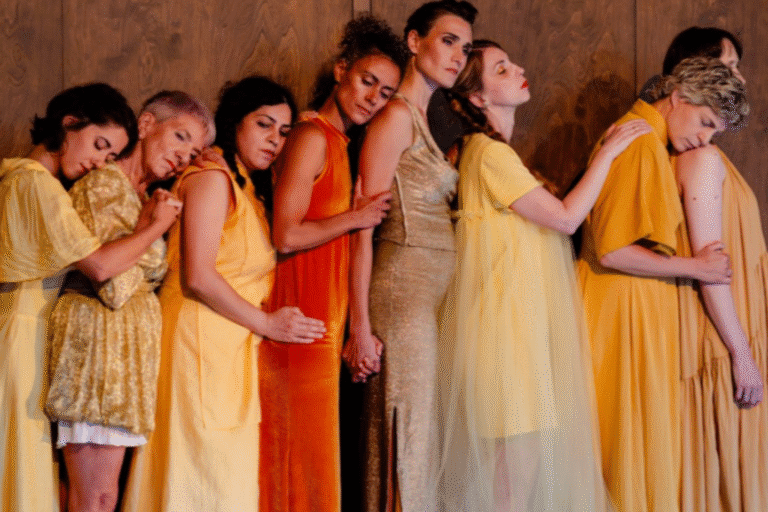
Nine women on stage, in a kind of grand theatrical gesture where all facets of a rich and complex sisterhood are evoked. From (mostly) benevolence to abandonment, from exclusion to reconciliation.
Les Veilleuses (The Watchers), by Simon Renaud (choreography and conception) and Romain Camiolo (music), thus rose on Wednesday evening at the Bourgie Hall of the Montreal Museum of Fine Arts. A rare incursion of the classical music hall into the world of dance (the first? I can’t confirm it…), but a very nice success. It must be said that the Veilleuses show is as much choreographic as it is musical. Six of the nine performers are singers in real life: Marie-Annick Béliveau, Salomé Karam, Kathy Kennedy, Elizabeth Lima, Hélène Picard and Ellen Wieser. They teamed up with professional dancers Marie-Hélène Bellavance, Nasim Lootij and Ingrid Vallus.
Of course, the dancers were not asked to sing fully, nor the singers to perform too acrobatic contortions, but the staging clearly aimed to integrate all the participants into a single community, that of these women of various sizes and builds, though not too heterogeneous. In a rather abstractly suggestive way, these women went through the hour-ish of the show to express different states of mind and above all the means to face them together, sometimes disunited, or to share them among all.
The play unfolds at a slow and measured pace. These women move in a world of mutual feeling that takes the time to express itself and be welcomed. It is the music that serves as a powerful bond for the psycho-emotional whole of the performance, supporting the visual coherence of the costumes, which are dresses of different chromatic hues related to yellow-orange-brown-ochre. The said music, all vocal (except for a pre-recorded electro drone acting as a harmonic cushion) and essentially tonal, is of course performed by the group’s singers, who act both as the emotional embodiment of each individual unit but also as a coalescence of the group relationship. Camiolo’s score is beautiful and seems to progress, at least that’s the impression I got, according to a historical chronological evolution.
At the very beginning, the voices take on a collective appearance of a Greek chorus, in a modal-type expression that subtly evokes something very ancient, perhaps archaic. Further on, one hears something like a mediaeval air. Further on, it gets closer to folk or popular song. But these are brief moments, emerging from a more ample and sustained framework of long melodic lines that would not displease several current composers working in neo-mystical choral music. On a few occasions, the harmonies tighten, until they reach saturation and a rough screech. It is in these moments, as the composer pointed out in the interview I conducted with him and the choreographer about the show (INTERVIEW TO LISTEN TO HERE), that the women of this symbolist sorority seem to drift away from each other and dissolve their bonds. The tactic is simple, but effective.
Ultimately, Les Veilleuses is a fairly accurate and poetic look at the strength, but also the perils, of a female community that has, for millennia now, had to stand together in the face of adversity and hold hands in bright episodes.
Les Veilleuses is a beautiful and complete show, complex but not hermetic, and above all perfectly suited to a wide range of engagements: in dance festivals as well as music or transdisciplinary proposals. A perfectly adequate launch for the Bourgie Hall’s Arts croisés (Crossed arts) series.
Les Veilleuses is a coproduction between Amour Amour, Salle Bourgie, Chants Libres and Corpuscule Danse
Arion Orchestre Baroque : Les larmes de Marie à la salle Bourgie
by Rédaction PAN M 360
L’on vous promet autant de larmes de bonheur que de tristesse, et parfois les deux à la fois, lors de ce programme qui a comme point focal le nom Marie. Marie comme la mère du Christ au pied de la croix dans l’émouvante cantate Il pianto di Maria de Giuseppe Battista Ferrandini. Mais aussi comme dans le prénom de trois compositrices d’exception du XVIIIe siècle qui ont laissé leur marque à l’opéra – Grimani, Walpurgis et Agnesi – cette dernière nous offrant également un concerto pour clavecin. Pour ce programme Arion accueille la contralto Anthea Pichanick qui vous ravira assurément, et la cheffe et claveciniste Marie van Rhijn, à la carrière florissante, que nous accueillons toutes les deux pour la première fois à Montréal.
You are promised as many tears of joy as of sorrow, and sometimes both at once, in this program centered around the name Marie. Marie, as in the Mother of Christ at the foot of the cross in Giuseppe Battista Ferrandini’s moving cantata Il pianto di Maria. But also Marie as in the first name of three exceptional 18th-century women composers who left their mark on opera – Grimani, Walpurgis, and Agnesi – the latter also offering us a harpsichord concerto. For this program, Arion welcomes contralto Anthea Pichanick, who is sure to delight you, and conductor and harpsichordist Marie van Rhijn, whose flourishing career brings her to Montréal for the first time, along with Pichanick.
Programme/program
Œuvres de/works by Maria Teresa Agnesi, Giovanni Battista Ferrandini, Maria Margherita Grimani, Antonio Vivaldi et Maria Antonia Walpurgis