Baroque / Classical Period

Violons du Roy at Bourgie: symphonic excitement from Old France

by Frédéric Cardin

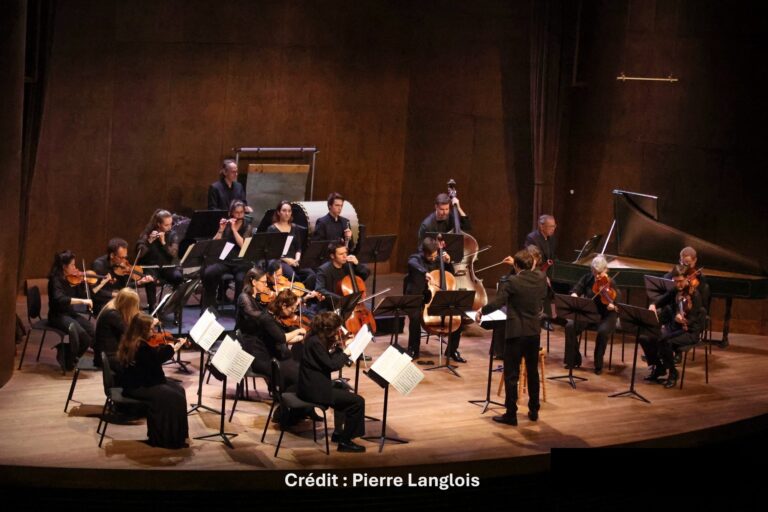
Les Violons du Roy closed the 24-25 season at Salle Bourgie last night with a program of musical bubbles worthy of Mme Cliquot. The symphony “à la française” was in the spotlight. Mind you, not Franck’s or Ravel’s, but rather the first symphony, that of the origins. We’re talking here about Gossec and Rameau, as well as a certain Duport whom most music lovers, even those in the know, have never heard.

Under the direction and thematic construction of Nicolas Ellis, the program kicked off with a sparkling symphony by François-Joseph Gossec (1734-1829), a composer still much underestimated today. And yet, this little three-movement work, one of the 49 or so he composed, has much to seduce and delight: dashing melodies, an orchestration of exciting contrasts and cheerful rhythms make it a highly recommended listening pleasure for anyone with a passion for the vivacity of a Mozart or Haydn.

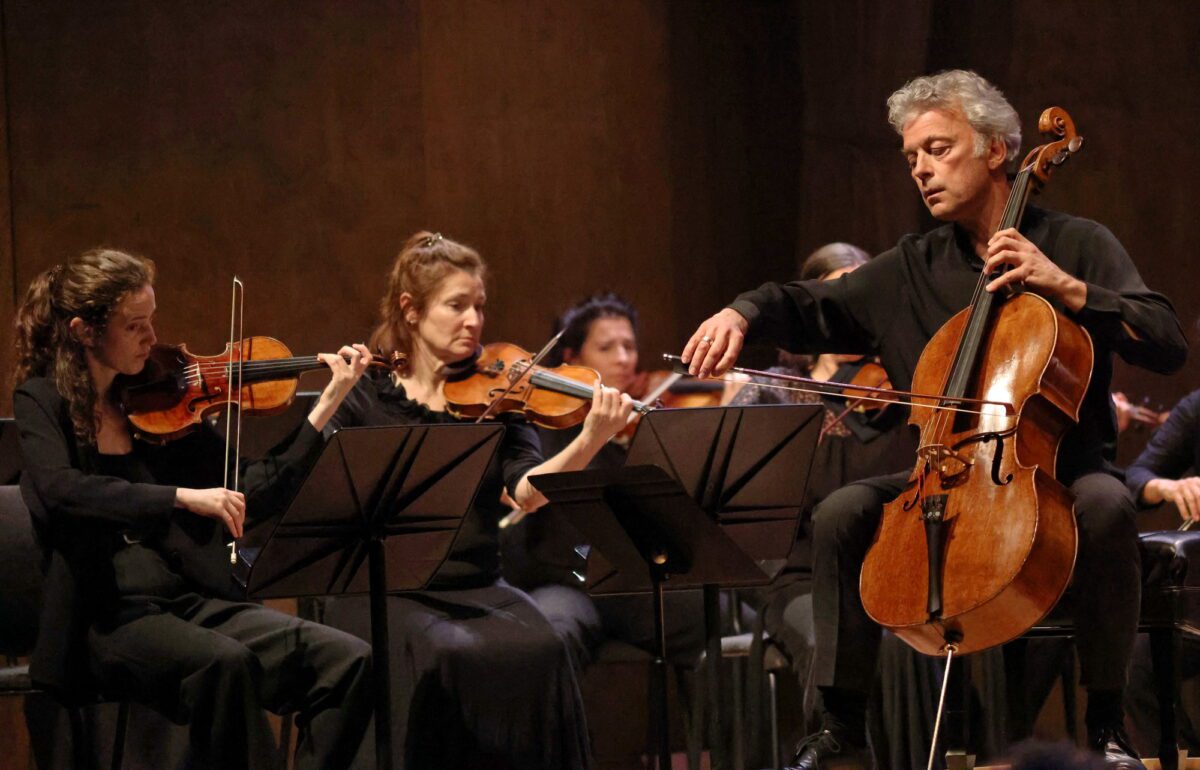
This was followed by a Cello Concerto, No. 6 in D minor, by Jean-Louis Duport (1749-1819), apparently a great virtuoso of the instrument in question. There’s no doubt about it, given the formidable nature of this score, and I weigh my words carefully. When you consider that even such a luminary as Raphaël Pidoux, a member of the Wanderer Trio (which is no mean feat), is not always able to emerge unscathed from the technical pitfalls imposed by Duport, it’s clear that this work represents a formidable challenge. That said, Pidoux has injected a dose of elegance and lyricism (very lyrical central andante cantabile) that is utterly seductive, and has been well received by the public, and rightly so. Here’s a work that deserves to attract the most seasoned of today’s soloists: there’s plenty to do!

Raphaël Pidoux et Les Violons du Roy – crédit : Pierre Langlois

The final part of the concert featured Jean-Philippe Rameau’s (1683-1764) “cosmic symphony”. The what? No, Rameau didn’t really write a “cosmic symphony”. In fact, it was a construction by conductor Nicolas Ellis, who drew on Rameau’s repertoire of operas and ballets to concoct a vast fresco in four movements evoking the creation of the world, the seasons, the earth, the wind, storms and even time. A fifth movement, a return to the interstellar, depicted the explosion of a supernova and featured a piece by Jean-Féry Rebel (1666-1741), Chaos, taken from his Élémens.

Ellis’s architecture works very well: the contrasts between the pieces create a narrative line that refuses to bore, and makes judicious use of some of the composer’s well-known tunes.

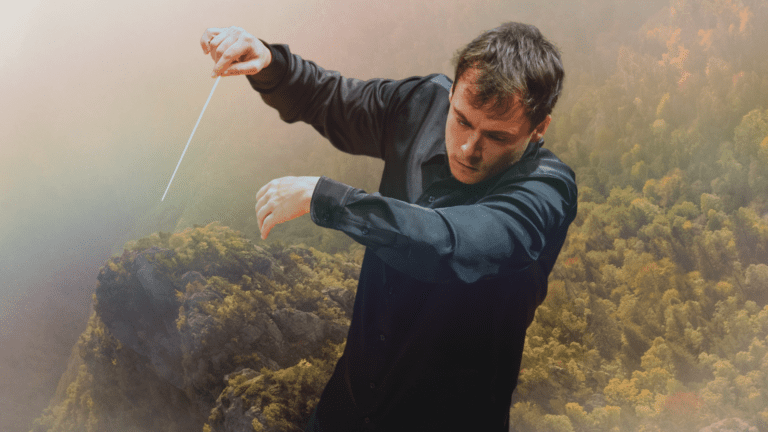
What impressed most – and this will come as no surprise – was the striking limpidity and surgical technicality of Les Violons du Roy. What a pleasure to hear this quality of playing, these abrupt contrasts perfectly achieved, these flights of tenderness chaining together piquant shears, and this perfect rapport with the discourse of the scores. Nicolas Ellis conducts with infectious freshness.

A very successful season finale.

Baroque / classique

Les Violons du Roy : Deux siècles en France avec Nicolas Ellis

by Rédaction PAN M 360

Pour conclure la saison, le premier chef invité des Violons du Roy Nicolas Ellis dirige un programme de musique française, avec des œuvres composées avant ou juste après la Révolution française, comprenant une grande suite orchestrale de Rameau, une superbe symphonie de Gossec et un concerto pour violoncelle de Duport, véritable trésor oublié dont Raphaël Pidoux, dans ses débuts avec l’orchestre, en fera découvrir toute la richesse.

To round off the season, Les Violons du Roy Principal Guest Conductor Nicolas Ellis leads a programme of French music, with works composed before or just after the French Revolution, including a magnificent orchestral suite by Rameau, a superb symphony by Gossec and a cello concerto by Duport, a forgotten treasure which Raphaël Pidoux reveals in all its richness in his first performance with the orchestra.

Programme

F.J. GOSSEC
Symphonie en ré majeur, op.3 n°6
J.-L. DUPORT
Concerto pour violoncelle n°6 en ré mineur
J.-P. RAMEAU
Suite pour orchestre extraite d’opéras

Program

F.J. GOSSEC
Symphony in D Major, Op.3 No.6
J.-L. DUPORT
Cello Concerto No.6 in D Minor
J.-P. RAMEAU
Suite for orchestra from operas

POUR ACHETER VOTRE BILLET, C’EST ICI!

Ce contenu provient des Violons du Roy et est adapté par PAN M 360

Baroque / classique

Les Violons du Roy : Chaconnes et passacailles avec Bernard Labadie

by Rédaction PAN M 360

Bernard Labadie propose un brillant programme de musique italienne, française et anglaise, mettant en lumière ses propres arrangements de deux chefs-d’œuvre baroques réalisés spécialement pour Les Violons du Roy : la monumentale Passacaille et fugue en do mineur de Bach et la poignante Chaconne en fa mineur de Pachelbel.

Bernard Labadie offers a brilliant programme of Italian, French and English music featuring his own arrangements of two Baroque masterpieces especially made for Les Violons du Roy: Bach’s monumental Passacaglia and Fugue in C minor and Pachelbel’s poignant Chaconne in E minor.

Programme

H. PURCELL
Chaconne en sol mineur, Z.730
J.-B. LULLY
Chaconne (Phaëton)
J.S. BACH
Passacaille et fugue en do mineur, BWV582 (arr. B. Labadie)
J. PACHELBEL
Chaconne en mi mineur (arr. B. Labadie)
F. GEMINIANI
Concerto grosso n°12 La Follia (d’après Corelli)

Program

H. PURCELL
Chaconne in G Minor, Z.730
J.-B. LULLY
Chaconne (Phaëton)
J.S. BACH
Passacaglia and Fugue in C Minor, BWV582 (arr. B. Labadie)
J. PACHELBEL
Chaconne in E Minor (arr. B. Labadie)
F. GEMINIANI
Concerto grosso No.12 La Follia (after Corelli)

POUR ACHETER VOTRE BILLET, C’EST ICI!

Ce contenu provient des Violons du Roy et est adapté par PAN M 360

Classical Singing / classique

Concours musical international de Montréal : Première épreuve du CMIM | Étape 2 – Mélodie

by Rédaction PAN M 360

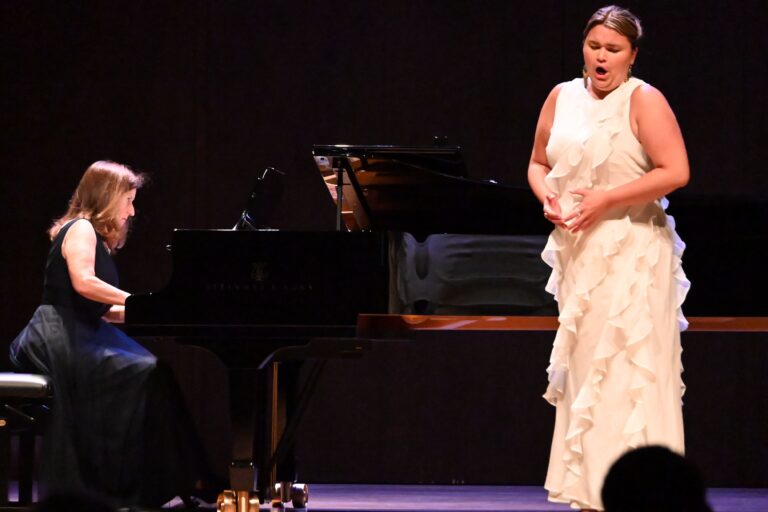
Dans cette étape libre de 15 minutes de musique, les 24 concurrents internationaux doivent chanter au moins un lied allemand et une mélodie française.
Au terme des trois séances, cinq finalistes passeront à la finale de cette étape, déterminé par le jury.
Vivez une aventure musicale inoubliable aux côtés de chanteurs et chanteuses d’exception!

In a 15-minute program, the 24 international competitors must perform at least one German lied and one French mélodie, alongside to other works from the sublime Art Song repertoire.
At the end of the three sessions, five finalists will get to the final round of this stage, as determined by the jury.
Enjoy an unforgettable musical and emotional experience in the company of exceptional singers.

POUR ACHETER VOTRE BILLET, C’EST ICI! (28 MAI, À 13H30)

POUR ACHETER VOTRE BILLET, C’EST ICI! (29 MAI, À 13H30)

POUR ACHETER VOTRE BILLET, C’EST ICI! (29 MAI, À 19H30)

Ce contenu provient de Place des Arts et est adapté par PAN M 360

classique

OSM : Le célèbre Quintette « La truite » de Schubert

by Rédaction PAN M 360

Le raffinement et l’humeur badine qui régnaient dans les salons viennois teintent le Quintette de Schubert, plus particulièrement le quatrième mouvement, une suite de variations sur son célèbre lied « La truite ». Contemporain de Schubert, George Onslow  a laissé une importante production de musique de chambre, truffée de petits bijoux à découvrir.  Ce concert sera l’occasion d’entendre le pianiste Godwin Friesen, lauréat du Concours OSM 2022.

The elegance and lighthearted humour of Vienna’s salons rise to the surface in Schubert’s Quintet, particularly its fourth movement, a suite of variations on the composer’s celebrated lied “The Trout.” His contemporary George Onslow’s bounteous chamber music output is a cornucopia of little gems to discover. This concert also provides an opportunity to hear pianist Godwin Friesen, winner of the 2022 OSM Competition.

POUR ACHETER VOTRE BILLET, C’EST ICI!

Ce contenu provient de l’Orchestre symphonique de Montréal et est adapté par PAN M 360

Classical Singing / classique

Concours musical international de Montréal : Finale du Prix Mélodie du CMIM

by Rédaction PAN M 360

Les cinq finalistes de la première épreuve MÉLODIE, sélectionnés parmi les chanteuses et les chanteurs les plus talentueux de leur génération, vous transportent au cœur de l’univers envoûtant de la mélodie. Le programme unique de cette finale de prix réunit des chefs-d’œuvre du répertoire, sublimant chaque voix et donnant vie à des récits empreints d’émotion, où poésie et musique s’unissent en parfaite harmonie. Une expérience musicale intime et profonde qui promet de captiver autant les amateurs de musique classique que les passionnés de poésie.
Les concurrents livreront des performances émouvantes en présentant des programmes où se côtoient des mélodies françaises, des lieder allemands, des art songs anglaises, des canciones artísticas espagnoles, des romances russes, des canzoni artistiche italiennes, ainsi que d’autres œuvres de récital. Ces prestations, présentées dans l’acoustique exceptionnelle de la Salle Bourgie du Musée des beaux-arts de Montréal, sauront ravir tant le public que le grand jury international.
Venez vivre un moment d’exception où l’excellence artistique est à l’honneur en assistant à cette finale du Prix Mélodie!

The five finalists in the Stage 1 ART SONG, selected from among the most exceptional singers of their generation, will transport you to the heart of the spellbinding world of Art Song. The unique program for this prize final brings together masterpieces from the repertoire, giving life to passionate works where poetry and music come together in perfect harmony. An intimate and profound musical experience that promises to captivate classical music lovers and poetry enthusiasts alike.
The competitors deliver moving performances in a program featuring French mélodies, German lieder, English art songs, Russian romances, Italian and Spanish art songs, and other recital works. These performances, presented in the exceptional acoustics of Salle Bourgie at the Montreal Museum of Fine Arts, will delight both the public and the international grand jury. Reserve your place or one of our packages now for an unforgettable musical and emotional experience in the company of exceptional singers.
Enjoy an unforgettable musical and emotional experience in the company of exceptional singers.

POUR ACHETER VOTRE BILLET, C’EST ICI!

Ce contenu provient de Place des Arts et est adapté par PAN M 360

Baroque / Classical / Modern Classical / période romantique

Les Violons du Roy and Antoine Tamestit | A Gripping and Profound Performance

by Alexandre Villemaire

Two years after a musical encounter that was described as masterful, French violist Antoine Tamestit, considered one of the world’s finest, returned to the Quebec stage with Les Violons du Roy. Presented on Thursday evening in Quebec City, this same concert, which took place on Friday evening at Salle Bourgie, featured themes such as death, loss and departure: themes which, despite their dark side, are nonetheless necessary to address, and in which we can nonetheless find light and a form of humanity.

Without preamble, once the orchestra and Tamestit had taken the stage, the hall was plunged into darkness, with the only source of light the lamps on the musicians’ lecterns. This set the stage perfectly for the first piece of the concert, Johann Sebastian Bach’s chorale Für deinen Thron ich tret’ich hiermit [Lord, here I stand before your throne], arranged for strings. According to Antoine Tamestit, in his speech following this short piece by Bach, he wanted to create a sensory experience in which the audience and musicians were led to feel the music through their breathing, through the intrinsic energies of the movement of the musical lines. The moment was indeed soothing, with a sound that was relentlessly gentle, yet rich in harmonies and low tones. The soloist, who also acted as conductor for the first part, followed with Paul Hindemith’s Trauermusik for viola and strings, composed a few hours after the death of King George V. We then enter another universe and harmonic language, with varied textures and musical materials, ending with a quotation from the same Bach chorale.

Tamestit then invited the audience to take part in an aural treasure hunt with Benjamin Britten’s Lachrymae, in which the composer quotes, in the form of variations, the song by Elizabethan composer John Dowland, If my complaints could passions move. To provide context, he performed the original in an arrangement of his own, preceded by the beautiful Flow my tears. A particularly touching moment, in which Tamestit’s sensitive playing came to the fore as the strings accompanied him in pizzicato. In Britten’s piece, Tamestit invited listeners to try and spot the musical extracts of these Renaissance songs scattered throughout Britten’s work. There was a strong appeal to pique listeners’ attention and invite them to open their ears wide to this universe of sound. His interpretation of the musical lines, with their enveloping thickness of sound and pure, fleshy grain, showed an invested and sensitive musicality. It has to be said, however, that Britten won the game of musical hide-and-seek, with Dowland’s excerpts remaining difficult to identify, even for seasoned ears.

The pièce de résistance of the concert was Tamestit’s arrangement for string orchestra of Johannes Brahms’ String Quintet in G major. For this final piece, in which Antoine Tamestit joins the viola section, we were treated to a blaze of emotions and luminous vivacity, particularly in the first and last movements, while the central movements – Adagio and Un poco allegretto – flirted with Hungarian folk accents and melancholy affects respectively. In this new texture with its increased sound amplitude, playing with 21 instrumentalists together without a conductor is a challenge that Les Violons du Roy met with brio and aplomb, producing a particularly rousing and gripping result, especially in the last movement, which is extremely dance-like with gypsy inflections.

The warm ovation from the audience and the radiant smiles on the musicians’ faces made this second collaboration between Antoine Tamestit and Les Violons du Roy well worth repeating. Having begun in darkness and contemplation, the concert ended in great light and human energy. Bringing out the beauty of a program that traces in filigree the themes of death and loss is not in itself innovative. But in this program, imbued with a skilful organicity, where we are naturally transported from one state of mind to another, we are reminded that even in the darkest moments, we can find beauty. To quote Félix Leclerc: “C’est grand la mort, c’est plein de vie dedans.”

Photo Credit : Pierre Langlois

Contemporary / Minimalist

Steve Reich’s quartets at Bourgie Hall : a perfectly oiled minimalist mechanism

by Frédéric Cardin

On Tuesday 1 April, for the first time in Montreal, all three of Steve Reich’s string quartets were performed in a single concert. When I say string quartets, I really mean string quartets AND tape, because they all use the latter. Played in inverse chronological order by the Mivos Quartet, the three works are emblematic of the sonic universe of the American, a pioneer of minimalism and, for many artists of subsequent generations, the grandfather of techno music and the sampling technique. 

READ THE INTERVIEW WITH THE VIOLIST OF THE MIVOS QUARTET ABOUT STEVE REICH’S QUARTETS

Indeed, two of the three quartets use sound sampling (concrete sounds, snatches of voice, etc.) in a rhythmic and melodic perspective. The use of concrete sounds in music does not date back to Reich (Schaeffer, Henry and Stockhausen were there before him), but his instinctive and rhythmically catchy way of distributing them has inspired a creative movement of which hip hop is the latest genre to take up, often unknowingly, certain imperatives. 

The most recent, WTC 9/11, uses sounds taken from the tragedy of 11 September 2001 in New York, while the first, “Different Trains” (which remains the best of all), draws a parallel between the trains travelling between New York and Los Angeles (which Reich often used at one time), and those that transported Jews to extermination camps during the Second World War (Reich is Jewish, and the allegory came forcefully to mind). In between, the Triple Quartet requires a tape on which two other quartets each play a score while the live ensemble performs its own on stage. 

The Mivos Quartet has recorded these same three quartets for Deutsche Grammophon (they also played all the tracks of the two recorded quartets used inTriple Quartet). Its musicians are therefore well versed in the demands of this music. Nevertheless, performing this music on stage is extremely demanding. You have to concentrate at all times to react precisely to what is happening in the soundtrack and with your colleagues, and you have to keep track of all the repetitive patterns of the score, regularly punctuated by small changes that are as subtle as they are fundamental to the dynamic energy of the music. As they say, it’s easy to get lost in all that. 

Hats off to the four excellent musicians of the New York-based ensemble (on their first visit here!) Olivia de Prato and Adam Woodward on violins, Victor Lowrie Tafoya on viola and Nathan Watts on cello. Their reading was breathtaking in its precision and coordination. 

It’s almost an annual gathering of great names in minimalism that the Bourgie Hall programme offers us (in recent years we’ve had Glass and Missy Mazzoli), and we welcome it with enthusiasm. We hope it will continue and, why not, that there will be even more. 

Classe de maître / classique / période romantique

Cours de maître – Andrè Schuen & Daniel Heide à la salle Bourgie

by Rédaction PAN M 360

Le célèbre baryton Andrè Schuen et le pianiste hors pair Daniel Heide partagent leur expertise et conseillent des étudiant.e.s avancé.e.s dans un cours de maître pour duos voix et piano sur le lied allemand. Une belle occasion d’observer comment se déroule un enseignement musical de haut niveau et d’appréhender le répertoire de musique de chambre d’une manière différente.

The renowned baritone Andrè Schuen and outstanding pianist Daniel Heide share their expertise and coaches advanced students, in a public masterclass on German lied for vocal-piano duos. A great opportunity to witness how a high-level musical education unfolds, and to approach the chamber music repertoire in a different way.

POUR ACHETER VOTRE BILLET, C’EST ICI!

LA CLASSE DE MAÎTRE EST GRATUITE POUR LES MOINS DE 34 ANS ET LES MEMBRES DU MBAM!

Ce contenu provient de la salle Bourgie et est adapté par PAN M 360

Classical Singing / classique

Concours musical international de Montréal : Première épreuve du CMIM | Étape 1 – Aria

by Rédaction PAN M 360

Dans cette étape libre de 18 minutes de musique, les 24 concurrents internationaux doivent chanter trois œuvres dans au moins deux langues différentes et intégrer un air contemporain à leur programme.
À tour de rôle lors des cinq séances, ces jeunes chanteurs et chanteuses de la nouvelle génération font résonner leur virtuosité vocale, leur musicalité et les nuances uniques de leur personnalité dans l’acoustique exceptionnelle de la Salle Bourgie du Musée des beaux-arts de Montréal pour le plus grand plaisir du public et du grand jury international.
Vivez une expérience musicale et humaine inoubliable en compagnie de chanteurs et chanteuses d’exception.

In a free program of 18 minutes of music, the 24 international competitors must sing three arias in at least two different languages, including one contemporary aria.
In turn, these brilliant young singers of the new generation will display their vocal virtuosity, musicality, and unique personalities in the exceptional acoustics of the Salle Bourgie at the Montreal Museum of Fine Arts, to the delight of audiences and before the international grand jury.
Enjoy an unforgettable musical and emotional experience in the company of exceptional singers.

POUR ACHETER VOTRE BILLET, C’EST ICI! (25 MAI, À 13H30)

POUR ACHETER VOTRE BILLET, C’EST ICI! (25 MAI, À 19H30)

POUR ACHETER VOTRE BILLET, C’EST ICI! (26 MAI, À 13H30)

POUR ACHETER VOTRE BILLET, C’EST ICI! (26 MAI, À 19H30)

POUR ACHETER VOTRE BILLET, C’EST ICI! (27 MAI, À 19H30)

Ce contenu provient de Place des Arts et est adapté par PAN M 360

Baroque / Classical / musique contemporaine / période romantique

Les Violons du Roy and Kerson Leong: A Time of Grace

by Alexandre Villemaire

Les Violons du Roy’s first concert of 2025 finally took place not in Quebec City, but in Montreal’s Salle Bourgie. The weather having forced the postponement of the February 13 performance at the Palais Montcalm to a later date, it was Montreal audiences who got to hear violinist Kerson Leong and the world premiere of Kelly-Marie Murphy’s Found in Lostness, to a full house.

The evening’s repertoire was structured around works by Johann Sebastian Bach and Felix Mendelssohn. Bringing together the figures of Bach and Mendelssohn in a program is not a new or innovative idea. As first guest conductor Nicolas Ellis, in charge for the evening, rightly reminded us in his introduction. Indeed, Mendelssohn made a major contribution to the rediscovery of the Leipzig cantor’s music, which had been somewhat forgotten in the 19th century, when he presented The St. Matthew Passion in Berlin in 1829. Mendelssohn, himself an organist, was greatly influenced by Bach, as were many other composers who saw him as a spiritual master.

The first work on the program was Mendelssohn’s Symphony for Strings No. 10 in B minor. A youthful composition – he was fourteen when he wrote it – the influences are clearly classical in the treatment of the strings, reminiscent of Haydn, but the conduct of the voices, particularly in the first movement, marked Adagio, is eminently Bachian. In fact, the choice of the key of B minor, the same as that of his famous Mass, is a nod to Bach. For the rest, the form remains classical, but is peppered with the lyricism and passionate dynamic changes characteristic of Romanticism. It is clear that this is a young Félix exploring musical language, who has not yet found his style.

This was followed by a sensitive, meditative interpretation of the organ chorale O Mensch, bewein’ dein Sünde groß [O man, weep for your great sin]. Nicolas Ellis guided the musicians into an intimate, pleading world. The arrangement for strings by German composer Max Reger (1873-1916) lends a hushed, more interior character where, right up to the last note, we are left in a state of suspension. It’s another nod to Bach’s legacy to include Reger, who is said to have said: “Bach is the beginning and the end of music”.

What an excellent idea to seamlessly link the arrangement for soloists and string orchestra of the aria “Erbarme Dich [Have mercy, my God]” from St. Matthew’s Passion, featuring the evening’s guest soloist Kerson Leong, with Canadian composer Kelly-Marie Murphy’s Found in Lostness. With a sound of purity, Leong is accompanied by violist Jean-Louis Blouin in this vocal duet that perpetuates the dynamics of the previous chorale. Seconds that rub against each other to create dissonance magnify the imitation of the Apostle Peter’s guilt-ridden weeping after denying Jesus.

The transition into Kelly-Marie Murphy’s world is a natural one, as the aesthetic of the piece explores the theme of loss. The piece opens with chilling high notes, following a double bass solo by Raphaël McNabney that exploits the unnatural treble of his instrument. The piece then takes off in an energetic burst, featuring vivid melodic lines, extended violin playing techniques imitating shrill cries, tense chords and constant dynamic changes. After this wild ride, calm returns with a harmonic string carpet over which Kerson Leong’s violin brushes a dissonant line that the rest of the orchestra lightly joins. This finale reminded us of Charles Ives’ The Unanswered Question. Coherent, accessible and engaging, it deserves to be heard and, above all, listened to!

After opening with the music of the young Mendelssohn, the concert concluded with his last work, the String Quartet in F minor, composed after the death of his sister. The language of maturity asserts an unabashed romanticism, where the development of ideas is more developed, personal and marked by emotionally charged orchestral lines and treatments.

classique / Contemporary / saxophone

OSM : Cordes et saxophone 

by Rédaction PAN M 360

Ce programme établit un pont entre le XVIIIe siècle et le XXIe pour offrir un fascinant contraste entre l’élégance classique de Mozart et Bologne et l’intensité dramatique de Banks et López où chaque œuvre présente une facette unique du quatuor à cordes. Steven Banks, ambassadeur réputé du saxophone classique, démontrera qu’en s’associant aux cordes, cet instrument leur apporte une saveur inimitable!

This program creates a bridge between the 18th and 21st centuries, offering a striking contrast between the classical elegance of Mozart and Bologne and the dramatic intensity of Banks and López. Each piece highlights a distinct facet of the string quartet. Steven Banks, the renowned ambassador of classical saxophone, will also demonstrate how his instrument adds a unique flavour when paired with strings!

Programme

Joseph Bologne, Chevalier de Saint-George, Quatuor à cordes no 1, op. 1 (19 min)
Steven Banks, Cries, Sighs and Dreams (15 min)
Jimmy López, La caresse du couteau (15 min)
Wolfgang Amadeus Mozart, Quatuor pour hautbois (saxophone) et cordes, K. 370 (14 min)

Program

Joseph Bologne, Chevalier de Saint-George, String Quartet No. 1, Op. 1 (19 min)
Steven Banks, Cries, Sighs and Dreams (15 min)
Jimmy López, La caresse du couteau (15 min)
Wolfgang Amadeus Mozart, Quartet for Oboe (Saxophone) and Strings, K. 370 (14 min)

POUR ACHETER VOTRE BILLET, C’EST ICI!

Ce contenu provient de l’Orchestre symphonique de Montréal et est adapté par PAN M 360

Subscribe to our newsletter

Inscription
Infolettre

"*" indicates required fields

Type of Suscribers