Moyen-Orient / Levant / Maghreb / Raï

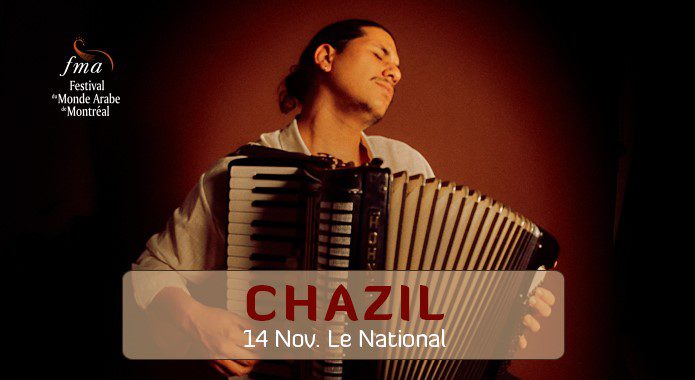
FMA 2025 | Chazil Charms Montreal

by Sandra Gasana

Right from the start, Chazil chose to open the show with the song Twahchete Shabi w Bladi, in which he talks about his mother and friends whom he misses when he is far from home. Indeed, exile plays an important role in his repertoire, as if raï music lends itself well to this kind of theme.

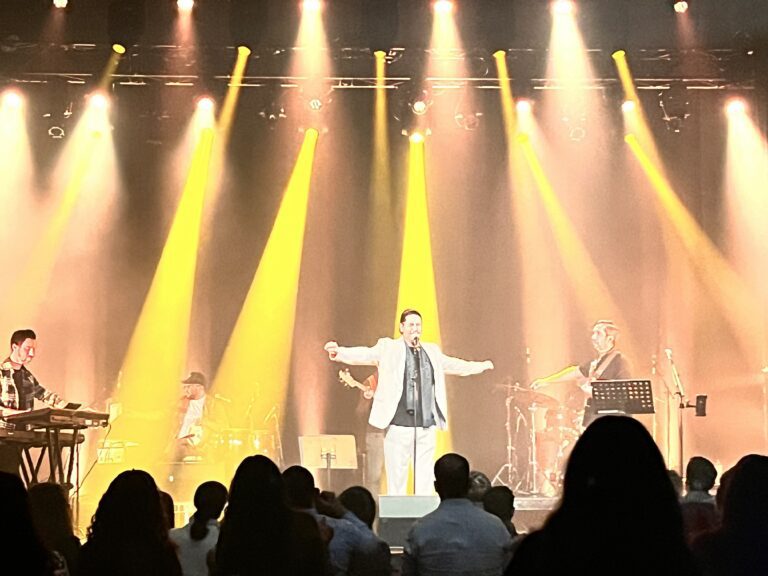
For his first show in Canada, Chazil made quite an impression. The National was filled with young people, but not only them—some had come with their parents to listen to the young prodigy of raï 2.0, as he calls it.

By the second song, the audience was up dancing, even though the venue wasn’t really suited to it. As the evening wore on, more and more people joined in, transforming the National into a veritable nightclub.

Wearing his signature scarf around his neck and a beige suit, Chazil has a Montreal fan club that was there to support him, chanting his name several times throughout the evening.

With a full band made up entirely of Montrealers, Chazil delivered a performance worthy of the name, displaying a particularly strong rapport with his guitarist. Some songs start off softly, highlighting his deep voice, before the darbouka and drums kick in with power. Despite his young age—he is only 25—he seems to have the soul of an old sage.

“Are you ready for more?” he asks the crowd before continuing with Algerian music classics that everyone seems to know by heart, alternating with his own hit songs. He got the audience involved, turning them into a choir and getting them to clap along to the rhythms of the darbouka, adding call-and-response songs. His dance moves were a hit with the young girls in the audience, who began to cheer.

After a few songs, a member of the audience gave him an Algerian flag, which he attached to his microphone, declaring himself a nationalist and very proud of his country. A song dedicated to love was particularly popular with the audience, who sang along at the top of their voices.

Sometimes, raï blended with rock on certain tracks, while on others it was more raw, with breathtaking keyboard and electric guitar solos. He took the opportunity to present his new song Katba, which many in the audience already knew by heart, as well as Khelouni, which means “Let me” in Arabic and features in his live session Raï Rayi on YouTube.

The darbouka gave way to congas on certain tracks, notably during his cover of Abdelkader Ya Boualem by Cheb Khaled, the true king of raï. Seeing the crowd go wild, he treated them to a non-stop medley of raï classics. Not very talkative between songs, he addressed the audience mainly in Arabic, slipping in little jokes here and there. He often asked for the spotlight to be turned on the audience so he could see them better, and they kept asking for more and more. Even after the selfie at the end of the concert, the audience didn’t want to leave. Chazil had no choice but to take one last photo before closing his very first show in Montreal, which is certainly not his last.

Publicité panam
Arabic / arabo-andalou / Chaâbi / Moyen-Orient / Levant / Maghreb

FMA 2025 | Nostalgic Evening With Lamia Aït Amara

by Sandra Gasana

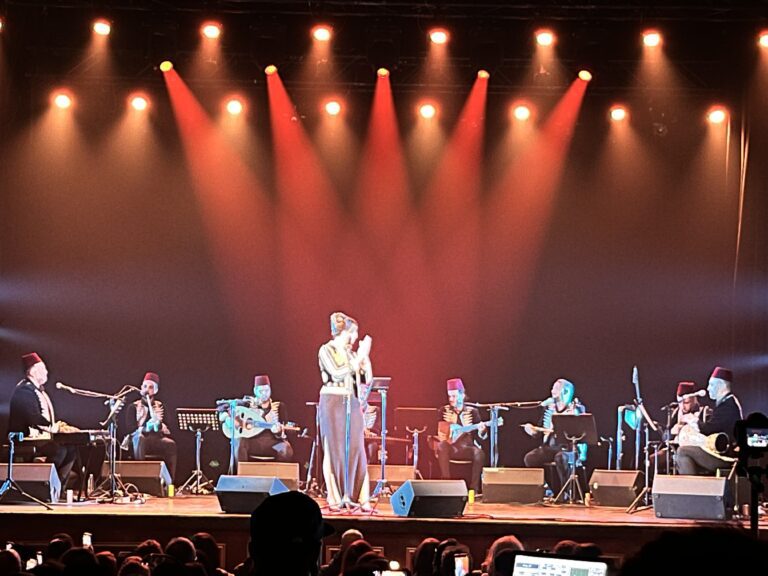
Montreal’s Algerian community turned out in large numbers to see Lamia Aït Amara, who was making her first appearance in the city. She was accompanied by her eight musicians, a condition she stipulated for her first participation in the Arab World Festival.

Dressed all in black, with a gold jacket that matched those of the musicians, she appeared on stage and the audience erupted in cheers, a cry of celebration, from the very first notes.

The musicians also sang in the choir, which added intensity to the show and contrasted with Lamia’s soft voice. She was draped with the Algerian flag from the very first song, which she then removed for the rest of the concert.

“Tonight is even more special because it is the date so dear to our hearts, the day that symbolizes courage, resistance, the thirst for freedom for our dear Algeria,” referring to the beginning of the Algerian War.

Some songs begin with just the oud, while others start with the flute or piano, before the other instruments join in one after another. We were treated to a medley of several Algerian music classics that the audience knew by heart. Although the seats at the National are usually seated, many people stood up to dance, so strong was the urge to join in.

The hall was almost full, with spectators of all ages but mainly in their forties and older. His songs speak a lot about Algeria but also about love, about what I was able to get out of it with the little Arabic I have left.

Lamia primarily addresses her audience in French, but also speaks in Arabic, throwing in a few jokes along the way. While she is rather reserved during the first few songs of the show, you can sense her becoming more and more relaxed, even breaking into dance at times.

The evening becomes increasingly festive after the short intermission. “We’re going to do a very nostalgic program,” she announces to her audience before launching into a song in French with the feel of a bolero but sung in an oriental style, beginning with a piano solo.

“I was afraid to come to Montreal, I wondered if there would be many people. But now, it makes me want to come back,” she admits.

She performs the famous song “Historia de amor,” singing it in Spanish and Arabic with great precision. Some songs begin calmly, gradually accelerating as the crowd applauds and cheers, culminating in an explosive finale. Among the well-received covers was Rachid Taha’s famous song, “Ya Rayah,” with Lamia letting the audience sing along. The number of dancers increases, leaving their seats to move to the sides of the stage to create more space for dancing.

But the dancer who stole the show was a young girl of about ten who found herself on stage at the very end of the performance and began to dance with class and great confidence. She was also given an Algerian flag draped over her shoulders, as if the torch had been passed to her.

Publicité panam
arabo-andalou / Traditional

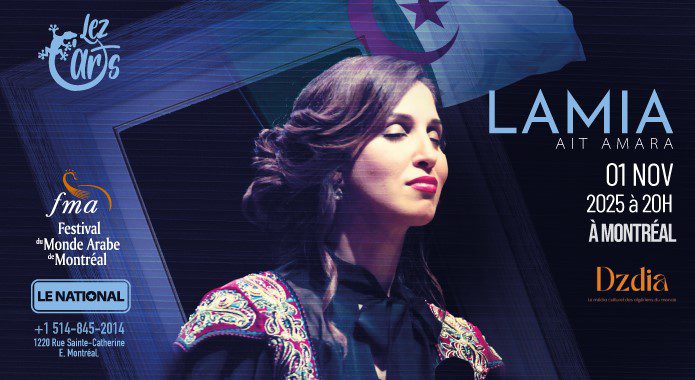
Festival du monde Arabe : Lamia Aït Amara au National

by Rédaction PAN M 360

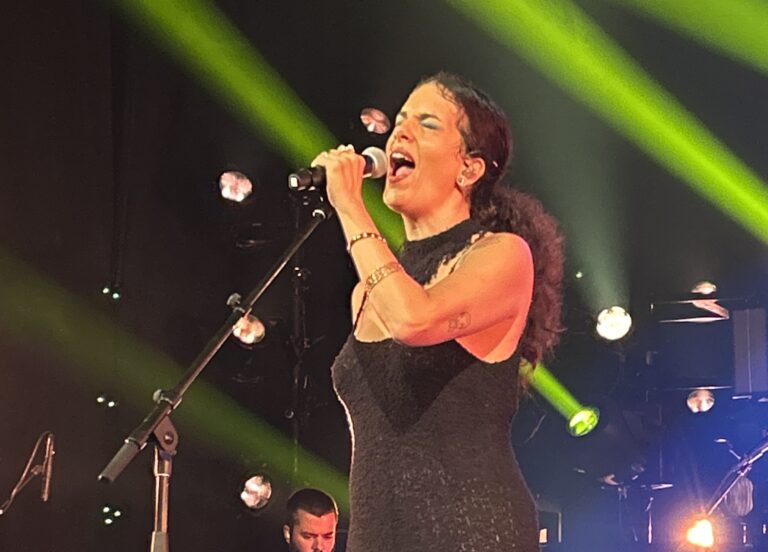
Le temps d’une soirée, la voix de l’exceptionnelle Lamia Aït Amara devient à la fois mémoire et avenir. Elle fait résonner la puissance discrète des femmes qui, depuis des générations, tissent la trame invisible de ce patrimoine et renouent l’époque aux traditions séculaires. Artiste passionnée et visionnaire, elle œuvre avec ferveur pour donner aux femmes la place qui leur revient dans la sauvegarde et la transmission du patrimoine arabo-andalou.
De son Alger natal aux plus grandes scènes, Lamia Aït Amara ne se contente pas de chanter l’Andalousie, elle en incarne l’âme et l’immortalité. Bercée depuis son plus jeune âge par les mélodies envoûtantes de cette musique ancestrale au sein de cercles prestigieux, cette artiste porte en elle la sagesse des maîtres qu’elle chérit, mais elle y ajoute sa propre magie, une voix d’or qui transforme chaque chanson en une confidence intime, en une émotion pure.
À travers ses recherches et ses créations novatrices, cette ambassadrice du patrimoine musical algérien fait rayonner les richesses de la nouba, du hawzi et du malhoun. Son art allie authenticité et innovation, faisant d’elle une figure incontournable de la scène musicale algérienne et maghrébine.

For one special evening, the exceptional voice of Lamia Aït Amara rekindles ancestral memories and sparks hope for the future. Amara unfurls the subtle power of women—figures who have woven the invisible fabric of their heritage for generations, working tirelessly to reconnect the present day with ancient traditions. A passionate and visionary artist, Amara boldly asserts the role of women as guardians and transmitters of Arab-Andalusian heritage.
From her native Algiers to the world’s biggest stages, Lamia Aït Amara continues to channel the voice of Andalusia, embodying its soul and immortal beauty. Immersed from a young age in the enchanting melodies of this ancestral music, she transmits the wisdom of her prestigious mentors while adding her own touch of magic: a golden voice that transforms each song into an intimate confession steeped in breathtaking emotion.
Through her tireless research and innovative compositions, this ambassador of Algerian music shares the richness of the nouba, hawzi, and malhoun. Amara’s authentic and innovative artistry has earned her a prominent place on the Algerian and Maghrebi music scene.

POUR ACHETER VOTRE BILLET, C’EST ICI!

Ce contenu provient du Festival du monde Arabe et est adapté par PAN M 360
Arabic / classique persan / Flamenco

Festival du monde Arabe : Olé Persia au National

by Rédaction PAN M 360

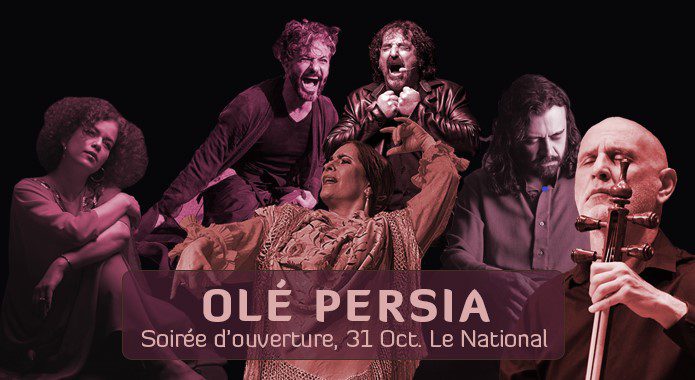
Un souffle nouveau inaugure le 26e FMA : Olé Persia, une rencontre singulière entre flamenco, musique arabe et musique persane. Trois traditions millénaires se répondent dans un dialogue envoûtant, révélant la profondeur de leurs racines communes.
Cette création propose un langage hybride où les sonorités se font tour à tour fragiles et puissantes, anciennes et toujours renouvelées. Distinctes mais profondément liées, l’étreinte des trois mondes nous replonge dans le temps des grandes migrations musicales, lorsque les subtilités arabes et persanes ont nourri le cœur du chant andalou. Passion et émotion intense circulent librement, reléguant la géopolitique au profit de la géoculture et invitant le public à plonger dans un univers sans limites.
Sur scène, sous la direction musicale de Saeed Kamjoo, la voix envoûtante de Mina Deris, en arabe et en persan, répond à l’ardeur flamenca de Fernando Gallego. La danse magnétique de Shahrokh Moshkin Ghalam se mêle à la fougue des zapateados de Rosanne Dion. Ils sont rejoints par le maître des percussions persanes Pejman Hadadi, le polyinstrumentiste Behfar Bahadoran au târ et au tanbur, ainsi que les virtuoses Caroline Planté à la guitare et Abboud Kayyali au oud.
Sur les cendres du temps, les artistes tissent la promesse d’un monde réconcilié, où les pas de la danse portent les rêves de ceux qui écoutent. Le public, suspendu à l’éclat des voix et des cordes, devient témoin d’une traversée où chaque battement célèbre la beauté de l’altérité. Alors, dans la lumière naissante de l’aube, Olé Persia se révèle comme une mosaïque vivante qui s’étend bien au-delà des scènes et des peuples.

The 26th Arab World Festival of Montréal opens with a thrilling new show: Olé Persia, a unique encounter between the art of flamenco and the worlds of Arabic and Persian music. Three millennia-old traditions come together in a mesmerizing dialogue to reveal the depth of their shared roots.
This brand-new show speaks a hybrid language whose sounds shift between fragility and power, between the ancient and the modern. The merging of these three art forms—distinct yet deeply intertwined—will transport audiences back to a time of continent-wide musical migrations, when the refined subtleties of Arab and Persian traditions nourished the heart of Andalusian song. Passion will ignite and emotion will flow freely, brushing aside geopolitics to embrace geoculture, and transporting the audience to a world without borders.
Under the musical direction of Saeed Kamjoo, Mina Deris’s spellbinding Arabic and Persian vocals will unite with the flamenco fervour of Fernando Gallego. At the same time, the magnetic dancing of Shahrokh Moshkin Ghalam merges with the fiery zapateados of Rosanne Dion. They will be joined by Persian percussion master Pejman Hadadi and multi-instrumentalist Behfar Bahadoran on târ and tanbur, as well as the virtuosic Caroline Planté on guitar and Abboud Kayyali on oud.
In the ashes of time, these artists will plant seeds of reconciliation, each gesture blooming like the dreams of those who deign to listen. A whirlwind of voices and strings will carry you away on a journey where every heartbeat pulses with the beauty of the Other. And in the light of a new dawn, Olé Persia will be revealed: a vast, living mosaic reaching beyond concert halls and across nations.

POUR ACHETER VOTRE BILLET, C’EST ICI!

Ce contenu provient du Festival du monde Arabe et est adapté par PAN M 360
arabo-andalou / Choral Music / hommage

Festival du monde Arabe : Songe d’une nuit andalouse au National

by Rédaction PAN M 360

Plongez dans l’univers fascinant de l’Andalousie musicale avec la Chorale Asala, sous la baguette passionnée de la Maestro syrienne Ghada Harb, dans une soirée exceptionnelle qui révèle la puissance et la subtilité des grandes mélodies de l’âge d’or de la civilisation arabe.
Les voix tissent une trame sonore où résonnent à la fois l’héritage des anciens et la nostalgie des modernes, dans un espace-temps à la fois imaginaire et réel, vigoureux et résistant à l’usure. Chaque qassida est enveloppée d’harmonies apaisantes, émanant d’un passé qui nous nourrit et nous protège éternellement. Orchestrés avec brio, les muwachahat se transforment en un manifeste poétique, rendant hommage à cette terre de vie et de rêve qu’est l’Andalousie.
Dans cette soirée, Ghada Harb ne manque pas de nous rappeler que l’Andalousie sommeille dans les cœurs et que la vie enfante toujours des génies qui ont l’audace de la réveiller. Elle rend hommage à feu Ziad Rahbani, un Ziryab des temps modernes qui a osé renouveler les codes musicaux et introduire de nouvelles arabesques dans notre univers sonore.
Et lorsque les dernières notes s’éteignent dans la nuit andalouse, le silence devient le berceau des souvenirs, où chaque cœur continue de fredonner l’éternité retrouvée.

Discover the fascinating world of Andalusian music with Chorale Asala, under the passionate direction of Syrian conductor Ghada Harb, in an exceptional evening that explores the stunning power and delicate sensitivity of great melodies from the golden age of Arab civilization.
Chorale Asala weaves a sonic fabric in which ancient heritage resonates with modern-day nostalgia, suspended in a space and time that is at once imaginary and real, defiantly vigorous and resistant to the erosion of centuries. Each qassida is wrapped in soothing harmonies, emanating from an eternally nourishing past, forever protecting. The brilliantly orchestrated muwashahat transform into a poetic manifesto, in an homage to the ancient dream and living legacy of Andalusia
With this performance, Ghada Harb rouses the Andalusia that slumbers within our hearts, reminding audiences how life gives birth to new artists bold enough to awaken it. The concert also pays tribute to the late Ziad Rahbani, that modern-day Ziryab who revived ancient musical codes and introduced new sounds to our collective consciousness.
When the final notes yield to the hush of the Andalusian night, silence will become the cradle of memory, as every heart beats in rhythm to an eternity reborn.

POUR ACHETER VOTRE BILLET, C’EST ICI!

Ce contenu provient du Festival du monde Arabe et est adapté par PAN M 360
Chaâbi / Gnawa / Raï

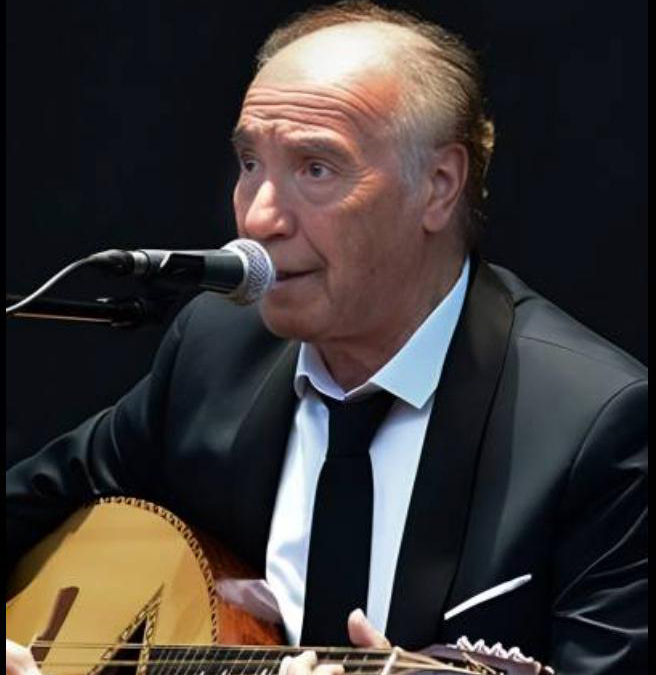
Festival du monde Arabe : Chazil au National

by Rédaction PAN M 360

Des ruelles sinueuses de la Casbah de Constantine aux scènes vibrantes du monde entier, Chazil porte le raï comme une flamme inextinguible. Sa voix grave et magnétique, chargée de mélancolie, mais traversée d’éclats d’espérance, fait résonner les blessures et les joies de tout un peuple. Elle s’ancre dans les traditions malouf, chaâbi, gnawa tout en les propulsant vers un ailleurs réinventé avec audace, souffle et modernité.
Artiste du métissage et gardien d’une mémoire toujours en mouvement, Chazil redessine les contours du raï. Il l’élève au rang d’espace de résistance et de liberté, un lieu où l’intime devient universel, où la douleur se transmue en énergie collective. Son projet artistique autour du raï n’est pas seulement une proposition musicale, c’est une traversée sensorielle et émotionnelle. Entre exil et renaissance, chaque morceau devient une prière ardente, un poème chanté qui porte les désirs d’une jeunesse en quête de lumière.
La musique de Chazil embrasse le monde, tout en restant fidèle à ses racines. Elle incarne un souffle de liberté et d’universalité. Ici, le raï ne se limite plus à une mémoire vivante, il se fait cri, lumière et fraternité.

From the winding alleyways of Constantine’s Casbah to the spotlight of global stages, Chazil carries raï like an inextinguishable flame. His deep, magnetic voice, tinged with melancholy yet warmed by glimmers of hope, channels the pain and joy of an entire people. Rooted in malouf, chaâbi, and gnawa, Chazil’s music propels these traditional genres to new heights, reinventing them with a bold, modern vision.
An artist of métissage and a guardian of memory in perpetual motion, Chazil redraws the boundaries of raï, elevating it into a realm of resistance and freedom, a place where the personal becomes universal, and where pain is transformed into collective energy. His vision of raï moves beyond music, offering a visceral, full-body experience. From the pain of exile to the hope of rebirth, each song is a prayer, a lyrical poem carrying the desires of youth in search of destiny.
Rooted in heritage yet fully alive in the present, Chazil’s music embodies freedom and our shared humanity. With Chazil, raï moves beyond memory and tradition to become a cry in the dark, a light along new pathways, and a radical call to unity.

POUR ACHETER VOTRE BILLET, C’EST ICI!

Ce contenu provient du Festival du monde Arabe et est adapté par PAN M 360

Drum & Bass / Hip Hop / Trap

Tunisian Goddess Emel Presents MRA

by Sandra Gasana

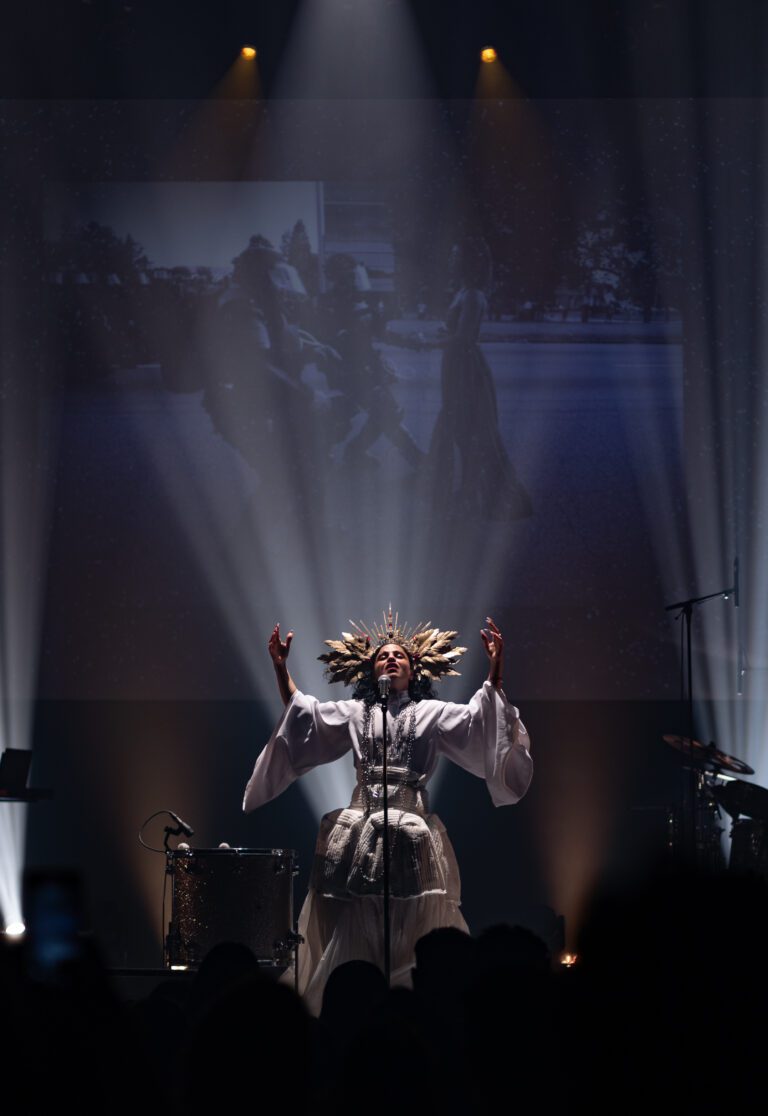
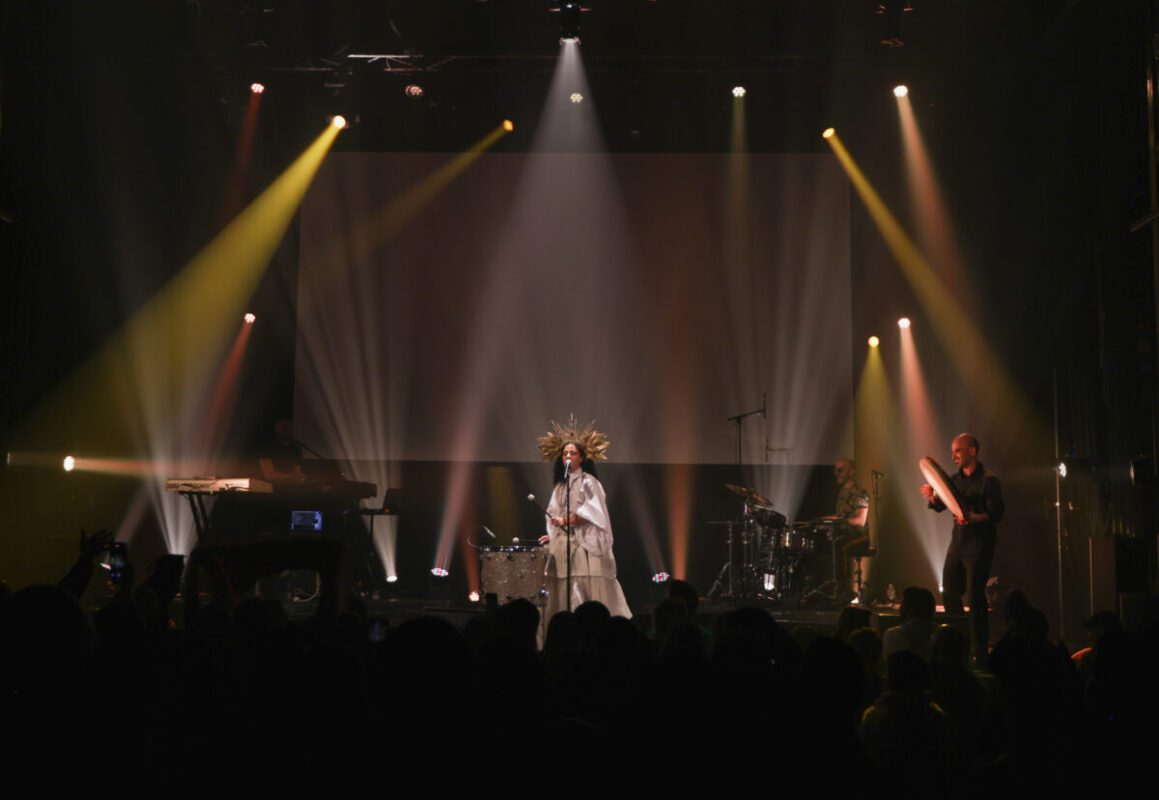
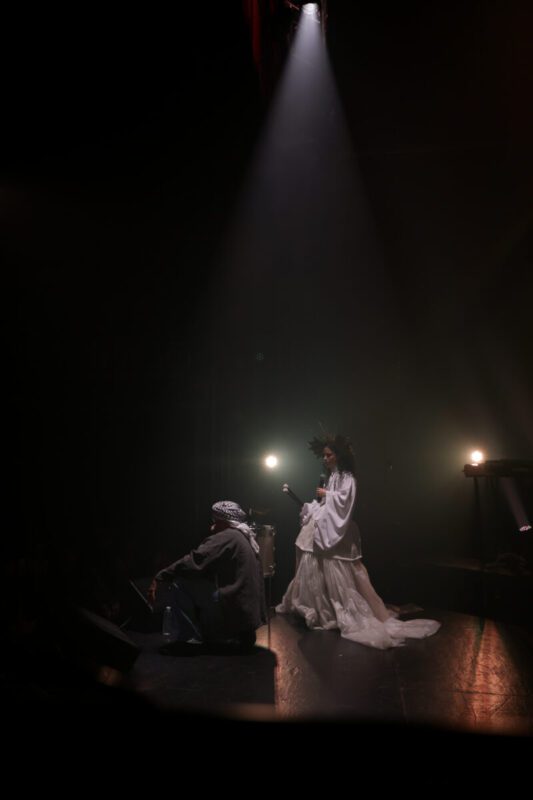
If there’s one thing Emel Mathlouthi has mastered, it’s the art of staging a performance worthy of a tragedy. Accompanied by her two musicians, on drums and keyboards, Emel Mathlouthi, known as “the voice of the revolution,” made a spectacular entrance on stage, adding lighting effects and appearing like a goddess on top of her throne. Wearing a sophisticated crown and an antique-style white dress from the 15th century, the Tunisian artist presented her most recent album, MRA, which means woman in Arabic, released in 2024 and produced entirely by a team of women.

Always with a screen behind her, her voice is rarely in its natural state. She uses a lot of reverb and plays with her microphone, adding an enigmatic effect to her universe in which trap, hip-hop, and drum ‘n’ bass cohabit harmoniously. Emel really gets into her character and lets herself go, inserting saccadic dance movements on several tracks. She taps her drum at times, complementing the work of her drummer and adding to the danceable effect.

At the end of the third song, the audience starts dancing, contrasting the solemn style of the first two tracks. Emel also adds pre-recorded sounds that merge with the looped images, a true sensory cocktail. Most of her songs are in Arabic, but she also sings in English, a language she mastered, and French. She switches from one to the other when addressing the audience.

Unfortunately, Naya Ali, who was due to perform, was unable to attend after all. That said, one of the highlights of the concert was when artist Narcy took to the stage for the track Yemenade. And that’s when the evening took a turn for the better, as his energy was felt throughout the room. He managed to get us singing, dancing, all in one song, while Emel danced behind him, banging her golden drum.

The other artist I was looking forward to seeing again was Ziya Tabassian. Also performing on four tracks, he added a traditional Middle Eastern touch to the show. He was perfectly attuned to the drummer’s rhythms, with whom he exchanged glances.

“I hope you like crazy percussion like we do! We don’t know how it sounds from your end, but we like it,” she says between songs. “I can’t seem to make soft songs, I can’t help it,” she confides.

During the song “Souty,” which means “My voice”, she scrolls through sheets on which it is written “My voice is time less like the wind” among other words, as if these were the lyrics of the song. She also takes the opportunity to mention the names of prisoners on some of the sheets.

Emel took the time to share a message from a Palestinian activist who wrote to her to give her the state of play. Indeed, Palestine was the backdrop throughout the show, including during the opening set by Checkpoint 303, a DJ duo who set the table for Emel’s performance. My favourite song is “Mazel,” which means Again, and speaks of the hope she still carries within her, and the new tomorrow she intends to build. In the background, we could see the faces of activist women from all over the world.

She finished with “Rise,” involving the audience on the chorus, before giving us an audience-pleasing encore. I was expecting to see a packed National, but that wasn’t the case. But one thing’s for sure: the people who were there went home satisfied with their evening.

Photo Credit: Ola Choukair

Hip Hop / Moyen-Orient / Levant / Maghreb / rap

Arab World Festival of Montreal | Narcy and Omar Offendum: Two Decades of Friendship in Artistry

by Sandra Gasana

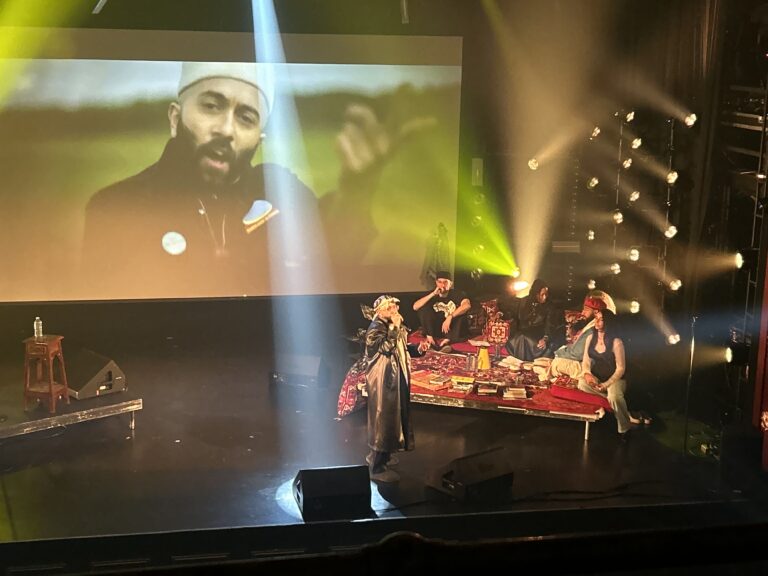
A sword in the shape of Palestine. Here’s what catches the eye right away, in addition to the Arabian-inspired living room that decorates the National’s stage. With red-patterned cushions, a few books and some coffee, it really feels like an evening with friends, featuring art in all its forms.

First, Omar Offendum takes the stage, while Narcy sits in the living room with his guests, including two members of the iconic Montreal hip-hop group Nomadic Massive, Tali and Meryem Saci.

Under a spotlight, cane in hand (his signature), dressed in traditional attire and his black Fez hat, Offendum wields the Arabic and English languages, juggling these two worlds, sometimes mixing them. Narcy serves him coffee from time to time, exchanging anecdotes and teasing each other about Syrian and Iraqi rivalries. An excellent storyteller, he alternates between poetry, storytelling and rapping, all with incredible ease. Building on a twenty-year friendship, Narcy contributes to some of Offendum’s songs, sometimes in English, sometimes in Arabic, and vice-versa. “It’s rare to have an artist friend who still challenges you, even after 20 years,” he says, addressing Narcy. Indeed, you could feel their complicity on stage.

Omar got the room involved with his track I love you, a hymn to love, with old romantic films in the background. The transitions were sometimes rough, juxtaposing classical Arab songs with modern beats. Palestine was in the spotlight during both parts of the show, but also Lebanon, which has been in the headlines in recent weeks. We also learned about important figures in Middle Eastern history such as Nizar Qabbani, a Syrian poet, and Mahmoud Darwish, a Palestinian poet and author who passed away in 2008. He ended with his biggest hit, God is Love, which my neighbors seemed to particularly enjoy, but my favorite was Close My Eyes , a tribute to his father. “I dedicate this song to all those who have lost a loved one,” he shared with us as the video was playing in the background.

After a short intermission, Narcy took Omar’s place and took over, opening with one of his greatest hits, P.H.A.T.W.A, with Al-Jazeera footage and personal archives in the background. Dressed entirely in black leather and a white shirt, he performed other highlights of his 20-year career, including Hamdulillah, featured on the 2009 album The Narcicyst , a collaboration with Shadia Mansour. He invited a number of female collaborators on stage, those he calls “sisters” such as Meryem Saci, with whom he recorded the track 7araga, the Palestian poet Farah, who shared a poem in homage to her native land, and Tali, who opted for a poignant text for the occasion.

To close, he offered us Free, a tribute to children from the World War Free Now album , in collaboration with Ian Kamau, as well as Time, written as a tribute to his grandfather. And what better way to end than with the most recent track, Sword, the proceeds from which will go to Palestinian children. As well as having a strong sense of friendship, family is equally important to Narcy. He invited his family on stage at the end of the concert to greet the audience, inviting them to visit his Maktaba bookshop/library in Montreal’s Old Port.

Brazilian / Funk / Samba

Céu, Between Retro and Melancholy

by Sandra Gasana

Céu, which means “Sky” in Portuguese, arrived on stage dressed all in black, with a necklace to match her dress, long black lace-up boots and a flower tattooed on her shoulder. Her stage presence was remarkable, as she alternated between dance steps and simplistic choreography.

Accompanied by her bassist Lucas Martins, who has been with her since the very beginning, Thomas Harres on drums, Leonardo Caribe Mendes on guitar and cavaquinho and Sthe Araujo, a talented percussionist, the singer transported us into her particular universe, in which she mixes soul, funk, jazz and Brazilian rhythms such as samba, always with a retro background, her signature. In fact, all her musicians are also backing singers, enriching the show.

She mainly shared songs from her most recent album Novela released this year but added hits from her other albums, such as Malemolencia, from the album Céu.

“I’d have loved to speak French with you, but I’m going to go with English,” she tells us from the outset, as several Brazilians in the room shout ”In Portuguese!”

My favorite song is Gerando Na Alta, which she sings as a duet with the Senegalese-born French artist anaiis, but which percussionist Sthe interpreted perfectly in her place. In this song, Céu speaks of the importance of celebrating friendship between women, while the word Novela, taken from the word telenovela, addresses the dramatic aspect of our lives. Some songs had no transition, while she interacted with the audience at other times. She takes the time to showcase her musicians in turn, as she does with Sthe, for example, before the song Lenda, from the album Céu, which opens with percussion.

Much to my delight, we were treated to a reggae sequence, with High na Cachu followed by Cangote from the Vagarosa album. Of course, we couldn’t end the concert without a few covers of Brazilian classics. And for this, she chose two legends: João Gilberto with Bim Bom, and Caetano Veloso with Pardo, both from Bahia.

The highlight of the evening was the encore with Bob Marley’s Concrete Jungle, which she performed beautifully with Haitian singer Paul Beaubrun, who opened the concert. The latter was introduced by his father, the great singer of the group Boukman Eksperyans. “When I saw Paul sing, I said to myself that he had to sing this song with me”, Céu confided. Indeed, Paul seems to be a great fan of Bob Marley, as during the first part he played three songs by the Jamaican icon, always taking care to add his own special touch. However, I would have liked to discover other original compositions such as Noyé, which opened the show.

Brazilian / Samba

Jorge Aragão Did Not Disappoint Montrealers

by Sandra Gasana

Jorge Aragão may be a few years younger than Marcos Valles, who was also in Montreal this week, but he’s just as popular with Montreal Brazilians, if not more so. Accompanied by his seven musicians, including a woman who appears to be the musical director, he charmed Montrealers despite the long delay before the start of the show. But as soon as he hummed his first notes, still backstage, that frustration turned into excitement, accompanied by shouts, to welcome this giant of samba and pagode.

A pandeiro, a guitar, a surdo, several drums, a drum kit and a cavaquinho – these were the instruments that accompanied him as he sang with his recognizably deep voice. Dressed all in black, he addresses the crowd: “I’m going to sing some very old songs tonight”. He begins with the classic Eu e você sempre, and cell phones were out and the whole crowd was singing in unison. His voice is still recognizable but you can feel it losing some of its vigor. And without transition, he continued with another classic, Lucidez, which he played live with his former group Fundo de Quintal, of which he is a founding member. This was followed by Novos tempos and De Sampa a São Luis, to name but a few.

He had a machine in front of him, on which he occasionally taped, while doing a few subtle dance steps. He also sometimes mimed his lyrics, taking the time to connect with his audience, who was in total admiration. A good Brazilian friend of mine was in tears during some of the songs, because of the saudade (nostalgia made in Brazil) that was omnipresent at the National.

“Now I’m going to sing you some samba,” he announces, before Malandro, which was a phenomenal success thanks to Elza Soares, who popularized it. As well as being a singer and multi-instrumentalist, Jorge Aragão is also a composer and lyricist.

He invites the audience to clap along to some of the songs, adding to the festive atmosphere. The magic recipe of this great artist is his talent for telling stories of everyday life, with a romantic touch, over fast or slow rhythms, depending on the song.

After standing on stage for an hour, he asked for a chair, feeling a little tired. And that was just in time for the song that followed, which was much quieter but perfect for dancing with a partner.

He continued his series of hits, including Loucuras de uma paixão, Feitio de paixão, Doce amizade and Conselho, one of my favorites.

There was no encore, but the talented samba dancer Daniela Castro returned to the stage towards the end of the concert. She had done a few dance steps during Roda de Samba Sem Fim’s opening performance. Which put us in the right frame of mind to welcome this giant of Brazilian music.

Photo credit: Monica Kobayashi

Arabic / Chaâbi

Festival du monde arabe : Abdelkader Chaou

by Rédaction PAN M 360

L’ultime légende de la musique chaâbi algérienne envoûte le public en faisant vibrer le répertoire de ses chansons les plus immortelles.
Ce virtuose du mandole à la voix suave et allègre, a renouvelé le genre en lui insufflant une énergie sans pareille. Sa musique évoque avec passion le souvenir lointain d’une Andalousie mythique, source d’une éternelle inspiration.

Don’t miss this opportunity to see the living legend of chaabi in a concert of his most beloved songs. This velvet-voiced virtuoso of the Algerian mandole is credited with modernizing the chaabi genre with his unique and dynamic sound. Chaou’s music evokes distant memories of a mythical Andalusia, a timeless source of artistic inspiration.

POUR ACHETER VOTRE BILLET, C’EST ICI!

Ce contenu provient du Festival du monde arabe de Montréal et est adapté par PAN M 360

Arabic / Electro-Pop

Festival du monde arabe : Nour Kamar, Promesse de Carthage

by Rédaction PAN M 360

Le FMA présente en première en Amérique du Nord la chanteuse Nour Kamar.
Perle rare parmi les voix les plus prometteuses de la relève, l’étoile montante tunisienne subjugue par la justesse de sa tessiture vocale et l’émotion bouleversante qu’elle suscite auprès du public.
À à peine 21 ans, elle s’impose avec une grâce et une élégance rares, reprenant le flambeau perdu des vedettes d’autrefois. En cette époque aux préoccupations tumultueuses, quoi de mieux pour clôturer cette édition-anniversaire qu’une lueur de jeunesse, empreinte de beauté et de renouveau, qui augure des lendemains plus ensoleillés.

The FMA is proud to present the North American debut of Nour Kamar. A standout among the new generation of singers, this rising Tunisian star has garnered legions of fans with her impressive vocal range and emotional depth. Only 21 years old, her elegance, poise and charismatic stage presence is reminiscent of the legendary performers of yesteryear. In these troubling and tumultuous times, what better way to close this anniversary season than with a celebration of youth, beauty, and the promise of a brighter tomorrow.

POUR ACHETER VOTRE BILLET, C’EST ICI!

Ce contenu provient du Festival du monde arabe de Montréal et est adapté par PAN M 360

Subscribe to our newsletter