Suoni Per Il Popolo: Backxwash + Quinton Barnes + Magella
by Rédaction PAN M 360
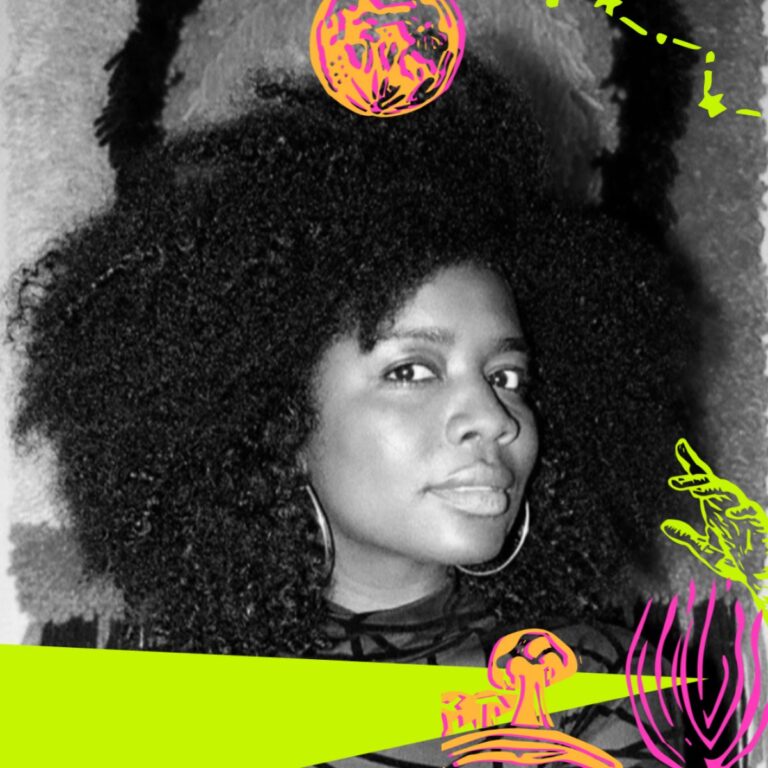
Backxwash est une rappeuse et productrice née à Lusaka, en Zambie. Sa musique est cathartique, expressive et basée sur ses expériences vécues. Quinton Barnes est un artiste, auteur-compositeur et producteur éclectique et aux multiples facettes, dont le style est souvent non conventionnel mais singulier. MAGELLA est une auteure-compositrice-interprète basée à Montréal qui s’inspire du blues diasporique. Avec son timbre puissant et chaud, elle utilise les différentes couleurs de sa voix pour créer une toile sonore
Backxwash is a rapper and producer born in Lusaka, Zambia. Her music is cathartic, expressive and based on real-life experiences. Quinton Barnes is an eclectic, multi-faceted artist, songwriter and producer whose style is often unconventional but singular. MAGELLA is a Montreal-based singer-songwriter inspired by diasporic blues. With her powerful, warm timbre, she uses the different colors of her voice to create a sonic canvas. POUR ACHETER VOTRE BILLET, C’EST ICI!
Ce contenu provient de Suoni Per Il Popolo et est adapté par PAN M 360.
Suoni Per Il Popolo: Erika Angell + Sarah Rossy + Kahero:ton
by Rédaction PAN M 360
La soirée débutera par la performance envoûtante de l’artiste kanienʼkehá꞉ka Kahero:ton. Sarah Rossy présentera ensuite “interphase”, une performance qui crée un espace vivant et respirant, dans lequel l’improvisation rencontre le traitement électronique, invitant le public à une expérience immersive, multisensorielle et réflexive. Erika Angell clôturera la soirée avec son exploration vocale débridée et ses compositions expressionnistes avant-électroniques, accompagnée par la batteuse Mili Hong et l’œuvre de l’artiste Maxime Corbeil-Perron.
The evening will kick off with the mesmerizing performance of Kanienʼkehá꞉ka Kahero:ton. Sarah Rossy will then present “interphase”, a performance that creates a living, breathing space in which improvisation meets electronic processing, inviting the audience to an immersive, multisensory and reflective experience. Erika Angell will close the evening with her unbridled vocal exploration and expressionistic avant-electronic compositions, accompanied by drummer Mili Hong and the work of artist Maxime Corbeil-Perron. POUR ACHETER VOTRE BILLET, C’EST ICI!
Ce contenu provient de Suoni Per Il Popolo et est adapté par PAN M 360.
Suoni Per Il Popolo: No Hay Banda X Sarah Davachi + Nadah El-Shazly & Sarah Pagé
by Rédaction PAN M 360
NO HAY BANDA est ravi de s’associer à la compositrice et interprète Sarah Davachi pour présenter la première mondiale de Three Unisons for Four Voices, une œuvre de 65 minutes commandée à Davachi pour violon, violoncelle, clarinette basse, trombone, ondes Martenot et percussions. Three Unisons for Four voices est interprétée par Geneviève Liboiron, Audréanne Filion, Lori Freedman, Kalun Leung, Daniel Áñez & Noam Bierstone, et sera présentée parallèlement à un set de la productrice, vocaliste et artiste sonore égyptienne Nadah El Shazly, rejoint par la harpiste montréalaise Sarah Pagé.
NO HAY BANDA is delighted to partner with composer and performer Sarah Davachi to present the world premiere of Three Unisons for Four Voices, a 65-minute work commissioned from Davachi for violin, cello, bass clarinet, trombone, ondes Martenot and percussion. Three Unisons for Four Voices is performed by Geneviève Liboiron, Audréanne Filion, Lori Freedman, Kalun Leung, Daniel Áñez & Noam Bierstone, and will be presented alongside a set by Egyptian producer, vocalist and sound artist Nadah El Shazly, joined by Montreal harpist Sarah Pagé. POUR ACHETER VOTRE BILLET, C’EST ICI!
Ce contenu provient de Suoni Per Il Popolo et est adapté par PAN M 360.
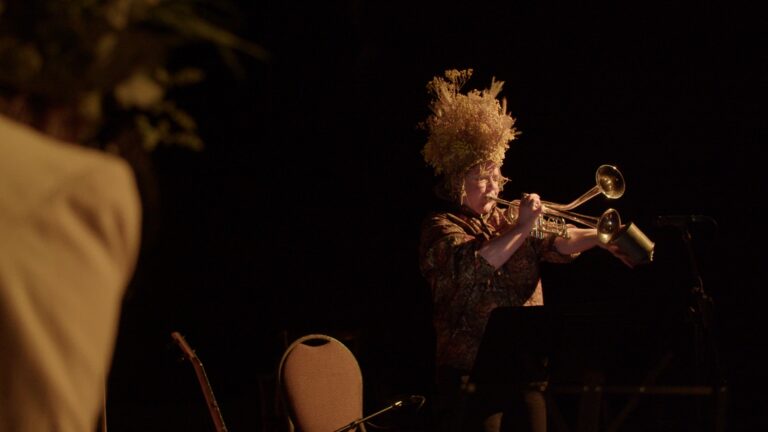
The Sala Rossa was pretty well packed last night for the presentation of Innovations en concert’s final concert of the season. A concert with a Dadaist buffet and conceptual art allure. Four female composers, three from Montreal and one from Toronto, presented an equal number of new works conceived for acoustic instruments, digital processing and video projection. The only exception was Keiko Devaux’s introductory piece, performed in (almost) complete darkness. The piece, written for double-bell trumpet (yes, a trumpet with two outlets, one normal and straight, the other at an upward angle), was a very fine introduction. Devaux makes good use of the very rapid timbral contrasts that can be executed by this instrument. For example, one bell can be muted and the other unmuted, so that the performer can switch from a veiled to a brilliant sound in the space of a single note. No need to change instruments or take time to install the mute. The piece, entitled SADA (echo), evokes wide-open spaces struck by amply reverberated resonances, evoked as much by the instrumental writing as by the live digital manipulations. A beautiful introduction, imbued with a strange nobility but also a sense of panoramic grandeur, supported by the mostly consonant harmonies used by the composer, and beautifully rendered by soloist Amy Horvey.
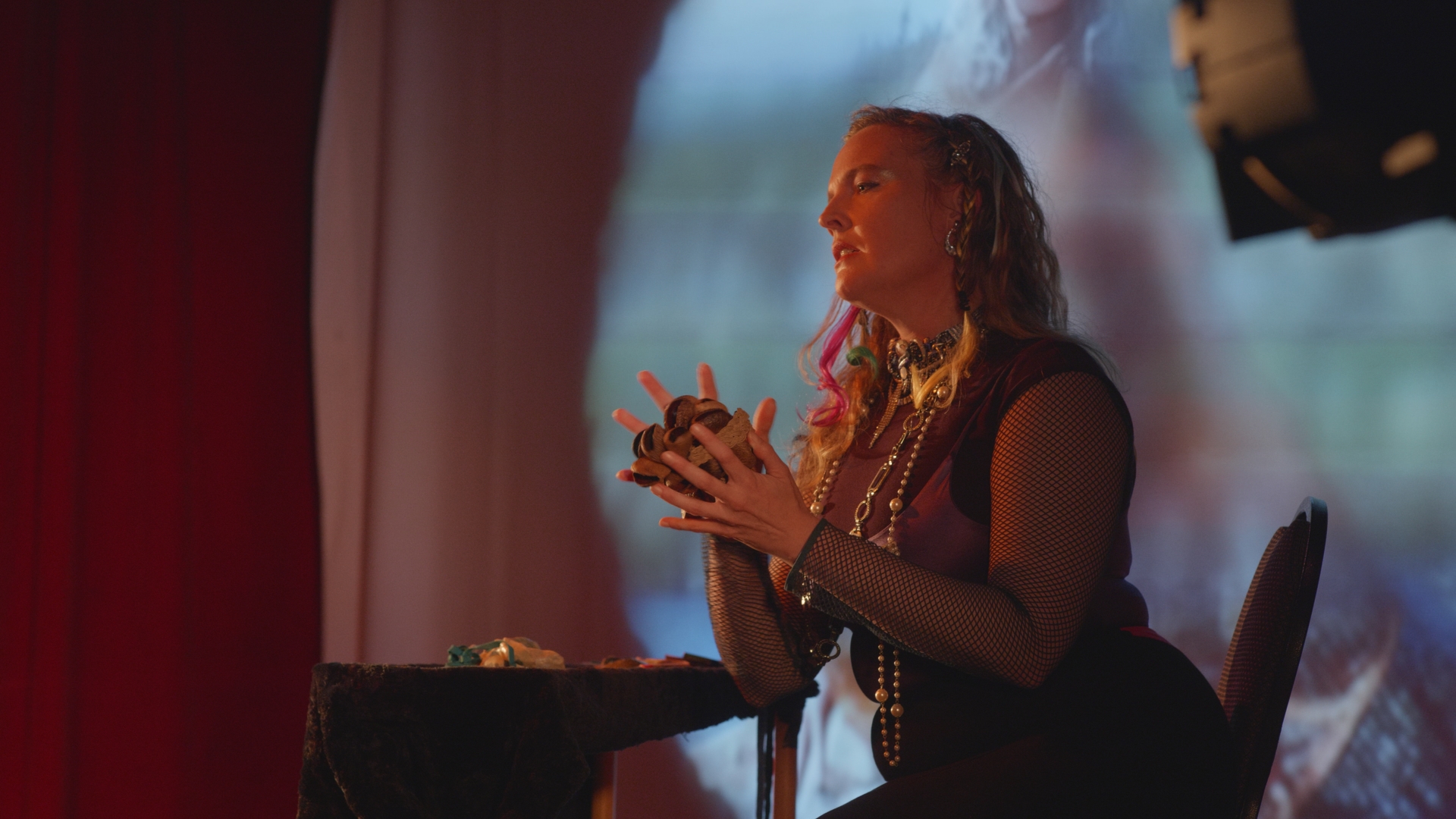
The evening continued with a radically different proposal from Terri Hron, entitled Out Loud, a feminist opera for solo performer, live electronics and video, lasting around twenty minutes – ish and divided into two parts. Each part presents a character from the familiar imagination: Titania from Shakespeare’s A Midsummer Night’s Dream, then the Siren from Andersen’s fairy tale. In simple but evocative costumes, each soloist (Helen Pridmore and Jennifer Beattie, excellent in their respective roles) is placed as if in an abyss with her pre-filmed, screen-projected double. An open dialogue ensues, sung in an invented language made up of clicks, rolls, murmurs and a few lyrical flights of fancy. On screen, the “translation” of the text reinforces the sense of strangeness of these ironically more “real” characters, despite their imaginary nature. Terri Hron’s treatment is resolutely feminist. It’s easy to see how Shakespeare’s ill-treated Titania becomes a woman who reclaims her right to inhabit her nocturnal living space. This Queen of the Night (parallel universe version) is supported by the performer’s beautiful, piercing high notes and a text (the translation, of course) that invites us to embrace the poetry of darkness. Some of the performer’s lascivious waddling in the video is perplexing and poorly choreographed, but the basic message is well expressed.
Jennifer Beattie, mezzo-soprano dans/in Out Loud de Terri Hron (La sirène/The Siren) – cr.: Nick Jewell
The Siren, in the second part, also assumes her femininity, not wishing to become human for the eyes of an insignificant prince, but rather because she “feels out of place” in the aquatic world. Hron’s music, neither frankly atonal nor consonant, is truculent in its use of onomatopoeia, partly improvised by the performer. I think that a clearer sonic distinction between the two tales (timbres, colors, rhythms, textures, whatever) would have been in order, to better differentiate and embody the plunge into two narrative universes well set in their decorative contrasts. The fact remains that this is a very stimulating proposal, and I’d love to hear more from this young composer.
The third offering was another 180-degree turnaround. Toronto’s Olivia Shortt, equipped with her baritone sax and effects pedals, threw her Makwa to the audience, a kind of hammered rage against a video backdrop of films of a capering cat, made-up characters, a queer couple in incongruous situations and psychedelic animations. Dali and Bunuel would have loved it. The saxophonic vociferations, reinforced by loops and ample reverb, were not as violent as the artist had implied in her “warning” to the audience. An intense performance, to be sure, but highly dynamic and narratively coherent thanks to the video’s surreal follies (which is ironic, isn’t it?). Indeed, without the video’s often playful side, the whole thing could have been boring.
Nicole Lizée dans/in Saskbient/Manitobient – cr.: Nick Jewell
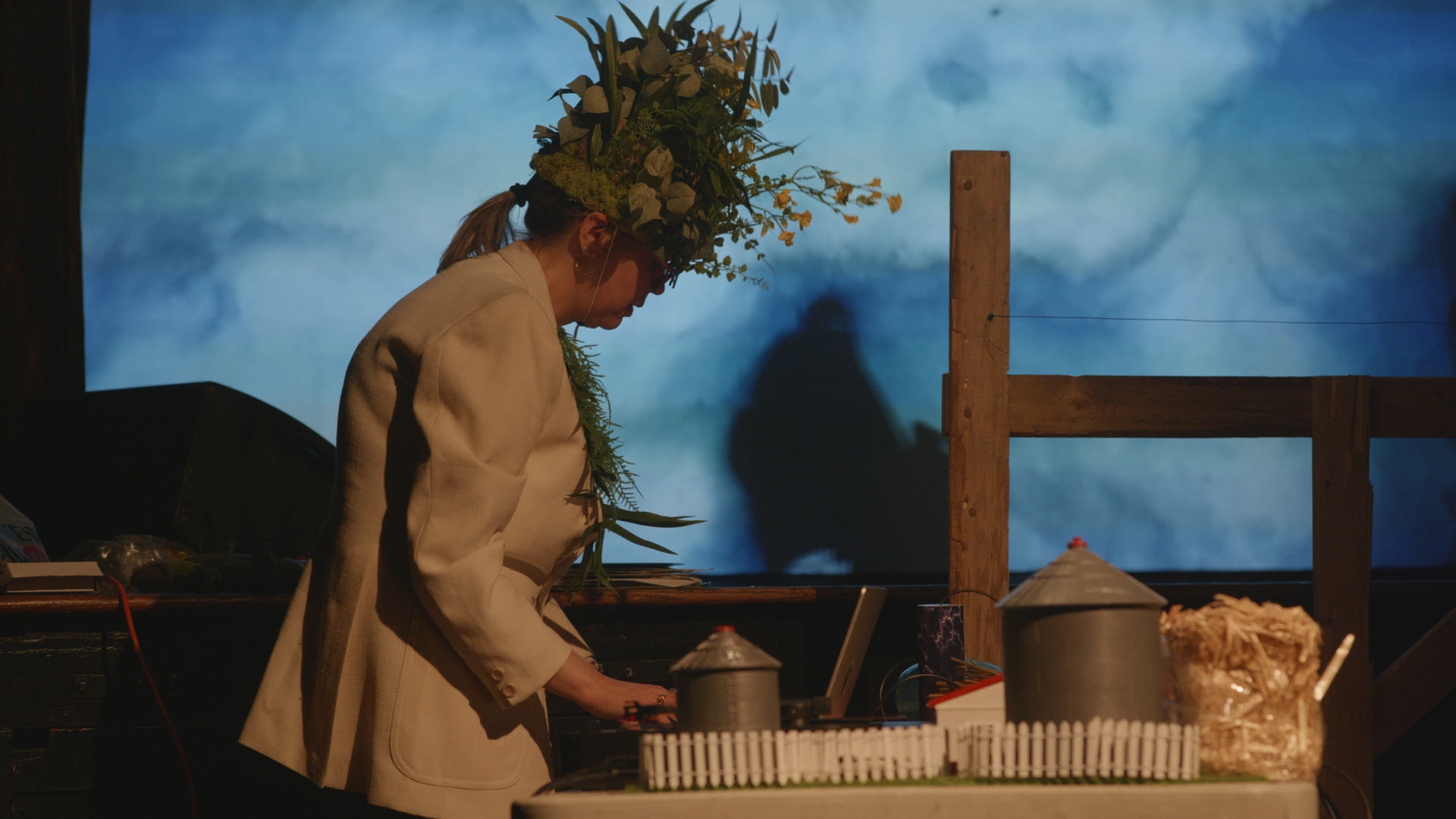
The final moment of the evening belonged to Nicole Lizée, who presented for the first time Saskbient/Manitobient (an obvious play on the words Saskatechewan, Manitoba and ambient), an expressionist painting for Amy Horvey on banjo and double-bell trumpet (a huge repertoire boost for this instrument in a single evening!), with Lizée’s acoustic-digital tweaking, set against a video evoking the two Prairie provinces through all manner of objects and staging. Amy Horvey pinching a barbed-wire fence in the video responded to the same live artist playing her banjo. Lizée sliding a toy skate across a vinyl, DJ-style, echoed her live double manipulating her sequencer. Wearing hats resembling sheaves of wheat, the two performers played in front of a jumble reminiscent of certain symbolic icons of the central provinces: a wooden fence, a stuffed cow, a small farm, corncobs whose peeling also served as rhythmic accompaniment, like percussion, and even little balloons in the shape of aliens, the kind with big heads and big black eyes you might see on T-shirts bearing the words “I Live in Area 51, But Don’t Tell Anyone”. I didn’t quite understand that one. Are there more ETs in Saskatchewan and Manitoba? It has to be said that Lizée has a passion for science fiction. But it doesn’t matter, because the musical proposition, without being the Montreal creator’s best, is quite amusing.
That said, while Saskbient/Manitobient was the evening’s headliner, I came away very impressed by Hron’s Out Loud, shaken and stirred by Shortt’s Makwa, and absolutely seduced by Devaux’s SADA.
Pop Montréal présente ML Buch + Bénédicte à la Sala Rossa
by Rédaction PAN M 360
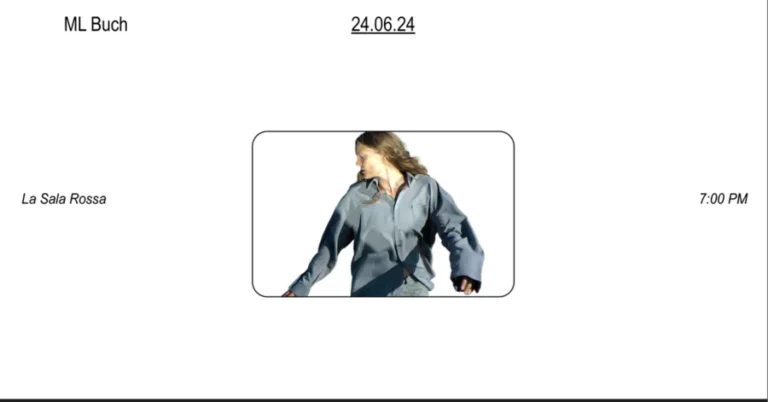
ML Buch est Marie Louise Buch, compositrice, productrice, guitariste et chanteur. Après l’EP « Fleshy » en 2017, elle a sorti son premier album acclamé par la critique. « Skinned » sur le label danois Anyines en 2020. « Suntub » est son deuxième album complet, un double album composé de 15 titres, qui sortira en octobre 2023 sur 15 love.
Dans sa pratique compositionnelle, ML Buch esquisse sa musique d’une manière presque architecturale. La matière première est générée par immersion dans le jeu et l’assemblage comme moyen de déclenchant de la magie aléatoire. Ses performances live, tant en solo qu’en groupe, sont reflète son amour pour la combinaison de guitares électriques à 7 cordes en accordages ouverts avec des guitares synthétiques. instruments et expériences électroniques. ML Buch s’est produit notamment à Pitchfork Paris Avant-Garde, Roskilde Festival, Fuchsbau Arts Festival, le son et l’image programme à CPH:DOX, ainsi que dans le cadre du Talking Choir de Laurie Anderson projet. ML Buch a réalisé des travaux commandés au poète Ingvild Lothe et a contribué à des sorties d’artistes comme CTM, Jura et Astrid Sonne, avec qui elle s’est également produite en live.
ML Buch is Marie Louise Buch, composer, producer, guitarist and singer. After the EP “Fleshy” in 2017, she released her critically acclaimed debut album. “Skinned” on Danish label Anyines in 2020. “Suntub” is her second full-length album, a double album featuring 15 tracks, to be released in October 2023 on 15 love.
In his compositional practice, ML Buch sketches out his music in an almost architectural manner. The raw material is generated by immersion in play and assembly as a means of triggering random magic. His live performances, both solo and in groups, reflect his love of combining 7-string electric guitars in open tunings with synthetic guitars. instruments and electronic experiments. ML Buch has performed at Pitchfork Paris Avant-Garde, Roskilde Festival, Fuchsbau Arts Festival, the sound and image program at CPH:DOX, as well as Laurie Anderson’s Talking Choir project. ML Buch has produced commissioned works by poet Ingvild Lothe and contributed to releases by artists such as CTM, Jura and Astrid Sonne, with whom she has also performed live.
Bénédicte est le projet musical du producteur et artiste sonore montréalais Maxime Gordon. Dans sa musique, elle crée et combine soigneusement des synthés planants, des enregistrements de terrain déformés et des échantillons vocaux scintillants pour explorer des moments d’introspection et d’émotion. Elle s’est produite dans des salles et des festivals en Amérique du Nord et en Europe tels que Mutek (Montréal), Eastern Bloc (Montréal), Glory Affairs (Prague) et OIIOIOOI (Stadt Wehlen).
En 2021, elle sort l’EP When It Binds sur Blueberry Records. When It Binds est une collection de chansons qui constitue l’exploration personnelle de Bénédicte sur ce qui se passe après l’établissement d’un lien émotionnel avec quelqu’un.
Bénédicte is the musical project of Montreal producer and sound artist Maxime Gordon. In her music, she carefully creates and combines soaring synths, distorted field recordings and shimmering vocal samples to explore moments of introspection and emotion. She has performed at venues and festivals in North America and Europe such as Mutek (Montreal), Eastern Bloc (Montreal), Glory Affairs (Prague) and OIIOIOOI (Stadt Wehlen).
In 2021, she released the When It Binds EP on Blueberry Records. When It Binds is a collection of songs that constitute Bénédicte’s personal exploration of what happens after an emotional bond has been established with someone.
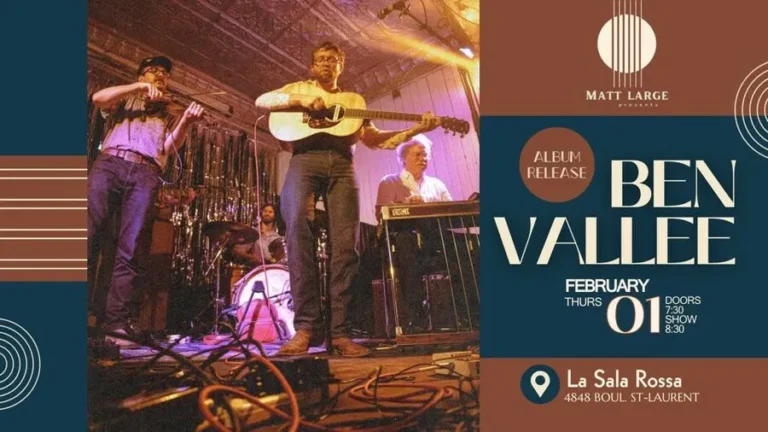
Ben Vallée est un auteur-compositeur-interprète country basé juste à l’extérieur de Montréal. Fortement motivé par ses années de travail à classer de vieux disques dans un vieux centre commercial, son écriture associe la tradition de la musique country plus ancienne à l’écriture de chansons contemporaines.
Ben Vallée is a country singer-songwriter based just outside Montreal. Strongly motivated by his years of work filing old records in an old mall, his songwriting combines the tradition of older country music with contemporary songwriting.
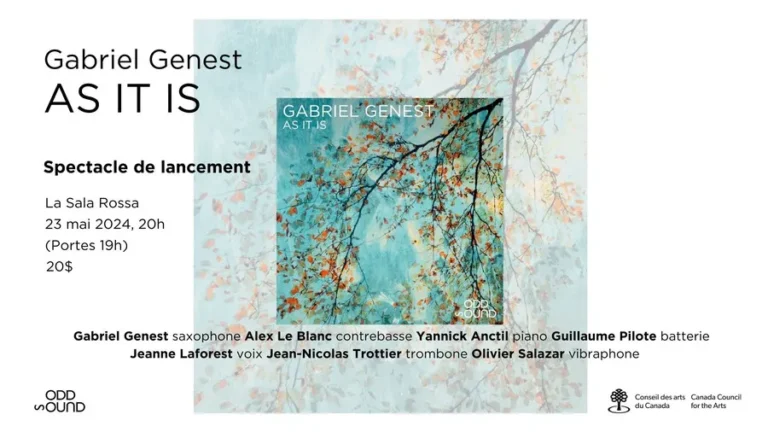
Gabriel Genest – Lancement d’album à la Sala Rossa
by Rédaction PAN M 360
Originaire du Saguenay-Lac-Saint-Jean, Gabriel Genest est un saxophoniste, clarinettiste, flûtiste, compositeur et arrangeur établi à Montréal depuis 2013.
Bachelier en interprétation jazz (saxophone) à l’Université de Montréal , Il complète en 2020 une maitrise en Jazz Performance à l’Université McGill auprès de Frank Lozano, Rémi Bolduc et Jean-Michel Pilc. Durant son parcours, il a aussi eu l’occasion d’étudier la composition et l’arrangement avec Jean-Nicolas Trottier, Joe Sullivan, John Hollenbeck ainsi que John Roney.
Récipiendaire du prix François Marcaurelle de l’OFF Festival de Jazz de Montréal et finaliste au FestiJazz de Rimousiki en 2019, Il présente son premier album Triptyque le 3 octobre 2021 avec le Gabriel Genest Quintet.Comme son nom l’indique, Triptyque tire son inspiration d’une réflexion sur les liens qui unissent la musique et les arts visuels. Les pièces de l’album explorent les thèmes des fractales, du triptyque, de l’abstraction, de l’espace, de la fluidité et de la perspective, cherchant donc à transposer en musique ces idées venues des arts visuels.
L’ensemble présente un jazz contemporain influencé par le jazz moderne et la musique classique. Le répertoire de l’album est le résultat d’une exploration de formes musicales longues et d’arrangements élaborés pour quintet visant à mettre en valeur les qualités des improvisateurs qui composent le groupe. De plus, sur l’album, trois pièces avec quatuor à cordes (Quatuor Saguenay) ont permis d’étendre la palette de couleurs et d’arrangements disponibles pour l’ensemble.
En plus d’écrire pour ses propres projets, ses compositions et arrangements sont joués et enregistrés par Le Big Band et l’ensemble de chambre jazz de l’Université de Montréal sous la direction de Ron di Lauro ainsi que le Chamber Jazz Ensemble de l’Université McGill sous la direction de Jean-Nicolas Trottier. De plus, en 2015, il collabore à la tournée Forever Gentlemen de Garou, Roch Voisine et Corneille comme l’un des principaux arrangeurs pour ce projet.
—
Originally from Saguenay-Lac-Saint-Jean, Gabriel Genest is a saxophonist, clarinetist, flutist, composer and arranger based in Montreal since 2013.
He holds a bachelor’s degree in jazz performance (saxophone) from Université de Montréal, and in 2020 completed a master’s degree in jazz performance at McGill University with Frank Lozano, Rémi Bolduc and Jean-Michel Pilc. He has also studied composition and arranging with Jean-Nicolas Trottier, Joe Sullivan, John Hollenbeck and John Roney.
Recipient of the Prix François Marcaurelle from the OFF Festival de Jazz de Montréal and finalist at the FestiJazz de Rimousiki in 2019, he presents his debut album Triptyque on October 3, 2021 with the Gabriel Genest Quintet.As its name suggests, Triptyque draws its inspiration from a reflection on the links between music and the visual arts. The pieces on the album explore the themes of fractals, triptychs, abstraction, space, fluidity and perspective, seeking to transpose these ideas from the visual arts into music.
The ensemble presents contemporary jazz influenced by modern jazz and classical music. The album’s repertoire is the result of an exploration of long musical forms and elaborate quintet arrangements designed to showcase the qualities of the improvisers who make up the group. The album also includes three pieces for string quartet (Quatuor Saguenay), expanding the palette of colors and arrangements available to the ensemble.
In addition to writing for his own projects, his compositions and arrangements have been performed and recorded by Le Big Band and l’ensemble de chambre jazz de l’Université de Montréal under the direction of Ron di Lauro, and McGill University’s Chamber Jazz Ensemble under the direction of Jean-Nicolas Trottier. What’s more, in 2015, he collaborated on the Forever Gentlemen tour with Garou, Roch Voisine and Corneille as one of the main arrangers for this project.
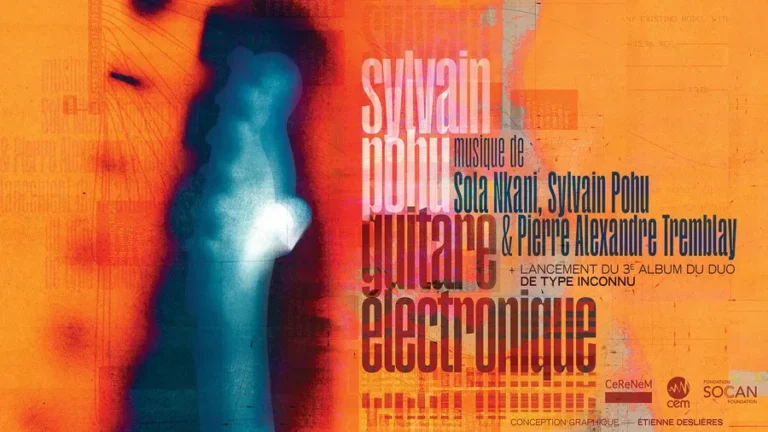
Compositeur, improvisateur et guitariste, Sylvain Pohu est membre fondateur de l’ensemble de jazz contemporain [iks] et son directeur artistique depuis septembre 2007. Il est aussi membre de la Ligue d’improvisation musicale de Montréal, du duo detypeinconnu et du groupe Wonder34. Dans un autre registre, il réalise des installations sonores, des œuvres de musique mixte et des vidéomusiques interactives. Sa musique est principalement disponible chez Ora.
En parallèle à ces activités et dans le cadre d’un doctorat à l’Université de Montréal, il mène des recherches sur le rôle de l’improvisation dans le processus compositionnel et sur le traitement en temps réel, dans le but d’explorer les possibilités expressives de la musique électroacoustique improvisée.
Composer, improviser and guitarist, Sylvain Pohu is a founding member of the contemporary jazz ensemble [iks] and its artistic director since September 2007. He is also a member of the Ligue d’improvisation musicale de Montréal, the duo detypeinconnu and the group Wonder34. He also creates sound installations, mixed-music works and interactive videomusic. His music is mainly available at Ora. In parallel with these activities, and as part of a doctorate at the Université de Montréal, he is conducting research on the role of improvisation in the compositional process and on real-time processing, with the aim of exploring the expressive possibilities of improvised electroacoustic music.
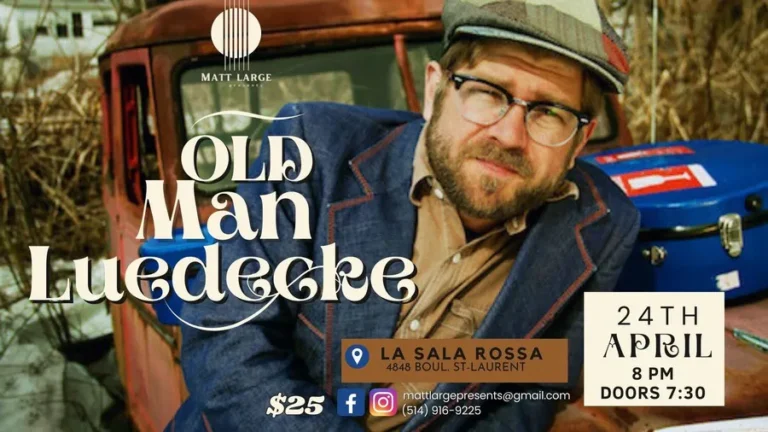
Easy Money picks up where Old Man Luedecke’s award winning, and most successful release to date, Domestic Eccentric (2015), leaves off: four years farther down the road, dreaming about his ship coming in, still a parent but now grappling with the newness of middle age, dad jokes, love for an abiding partner, the death of a parent, along with some calypso-feeling local Nova Scotia history thrown in for good measure.
Composition and recording were both begun at the Banff Centre’s songwriter-in-residence program. It was there that Luedecke met the album’s producer Howard Bilerman of Montreal’s famed Hotel2Tango studio where the album was eventually recorded. The two hit it off when Luedecke composed “Easy Money” on the tracking floor on the first day of the program. Desperate for something worthy to use in his recording time, Luedecke channeled a traditional Christmas number he knew from a Harry Belafonte record and sang largely improvised verses into a winning tune that is sure to be a modern classic: Oh yes I need it, Oh yes I want it, I dream about easy, I dream about Easy money.” Don’t we all.
The further nine new original compositions and two covers run a modern storytelling line from the fifties folk and calypso boom into the everyday of tangible middle life. Guest appearances by long-time collaborator and Grammy award-winning Tim O’Brien, Afie Jurvanen of Bahamas, and Fats Kaplin (Jack White, John Prine) add piquant accents to the impeccable playing of Luedecke and a crack Montreal studio band of Mike O’Brien, Joshua Toal and Jamie Thompson.
The album begins with three upbeat incantations of what is surely the beginnings of a mid-life crisis (Dad Jokes? Wakeup Call, come on!) then moves to 2 songs musing about death; both inspired in part and in different ways, by the passing of Luedecke’s father, the passing of Leonard Cohen and current politics and the death of truth. There are two island-themed numbers that imagine a laid-back life in the local un-tropical paradise of the Canadian Maritimes. Then comes a country song with killer fiddling and harmony singing by Tim O’Brien, a dance number of frightful worry and then a cover of Nana Mouskouri’s French language cover of Bob Dylan’s topical apocalyptic plaint, “Hard Rain’s Gonna Fall”. This is followed by a traditional sea shanty about a mermaid and a shipwreck. The album closer, “‘I Skipped a Stone”, is the most beautiful song about hoping your wife will pick up the phone. The song is made all the sweeter by the special appearance of Bahamas’ playing and singing, to close out Luedecke’s sixth full length studio album.
Easy Money reprend là où l’album primé et le plus réussi d’Old Man Luedecke à ce jour, Domestic Eccentric (2015), s’arrête : quatre ans plus loin, rêvant de son bateau qui arrive, toujours parent mais désormais aux prises avec la nouveauté de l’âge mûr, les blagues de papa, l’amour pour un partenaire fidèle, la mort d’un parent, ainsi qu’un peu d’histoire locale calypso-feeling de la Nouvelle-Écosse jetée pour faire bonne mesure. La composition et l’enregistrement ont commencé dans le cadre du programme d’auteur-compositeur en résidence du Banff Centre. C’est là que Luedecke a rencontré le producteur de l’album, Howard Bilerman, du célèbre studio Hotel2Tango de Montréal, où l’album a été enregistré. Les deux hommes s’entendent bien et Luedecke compose “Easy Money” sur la piste d’enregistrement dès le premier jour du programme. Désespéré à l’idée de trouver quelque chose de valable à utiliser pendant son temps d’enregistrement, Luedecke a canalisé un numéro de Noël traditionnel qu’il connaissait d’un disque d’Harry Belafonte et a chanté des couplets largement improvisés pour en faire une chanson gagnante qui sera certainement un classique moderne : Oh oui, j’en ai besoin, Oh oui, je le veux, Je rêve d’argent facile, Je rêve d’argent facile”. N’est-ce pas le cas de tout le monde ?
Les neuf nouvelles compositions originales et les deux reprises s’inscrivent dans la lignée d’une histoire moderne qui va du boom du folk et du calypso des années cinquante au quotidien de la vie moyenne et tangible. Les apparitions de Tim O’Brien, collaborateur de longue date et lauréat d’un Grammy, d’Afie Jurvanen (Bahamas) et de Fats Kaplin (Jack White, John Prine) ajoutent des accents piquants au jeu impeccable de Luedecke et d’un excellent groupe de studio montréalais composé de Mike O’Brien, Joshua Toal et Jamie Thompson. L’album commence par trois incantations optimistes sur ce qui est certainement le début d’une crise de la quarantaine (Dad Jokes ? Wakeup Call, come on !), puis passe à deux chansons sur la mort, toutes deux inspirées en partie et de différentes manières par le décès du père de Luedecke, le décès de Leonard Cohen, la politique actuelle et la mort de la vérité. Il y a deux chansons sur le thème des îles qui imaginent une vie décontractée dans le paradis local non tropical des Maritimes canadiennes. Vient ensuite une chanson country avec un violon et un chant harmonieux de Tim O’Brien, un numéro de danse d’une inquiétude effrayante, puis une reprise de Nana Mouskouri en français de la complainte apocalyptique de Bob Dylan, “Hard Rain’s Gonna Fall”. Vient ensuite une chanson traditionnelle sur une sirène et un naufrage. La dernière chanson de l’album, “‘I Skipped a Stone”, est la plus belle des chansons sur l’espoir que votre femme décroche le téléphone. La chanson est rendue encore plus douce par l’apparition spéciale de Bahamas, qui joue et chante, pour clore le sixième album studio de Luedecke.
UQAM Pop Singing Students’ Concert at the Sala Rossa
by Rédaction PAN M 360
Welcome to all fans of music and emerging talent! We’re delighted to invite you to a concert by first- and second-year pop singing students, accompanied by instrumental ensembles. The event will take place at La Sala Rossa on Tuesday, April 23, 2023 at 8pm. Join us for an evening where passion for music meets the boundless creativity of artistic youth. Come and celebrate the wealth of student talent in a top-notch concert that promises to be an unforgettable experience. The stage and artists are set, and we look forward to sharing this musical adventure with you all on April 23 at 8pm at La Sala Rossa!
Bienvenue à tous les amateurs de musique et de talents émergents ! Nous sommes ravis de vous inviter au concert des étudiantes et étudiants de première et deuxième année en chant pop, accompagnés par des ensembles instrumentaux. L’événement se déroulera à La Sala Rossa le mardi 23 avril 2023 à 20h.
Rejoignez-nous pour une soirée où la passion pour la musique rencontre la créativité débordante de la jeunesse artistique. Venez célébrer la richesse des talents étudiants dans un concert de haut niveau qui promet d’être une expérience inoubliable. La scène et les artistes sont prêts, nous avons hâte de partager cette aventure musicale avec vous tous le 23 avril à 20h à La Sala Rossa !
FREE ADMISSION!
This content comes from the Sala Rossa and is adapted by PAN M 360
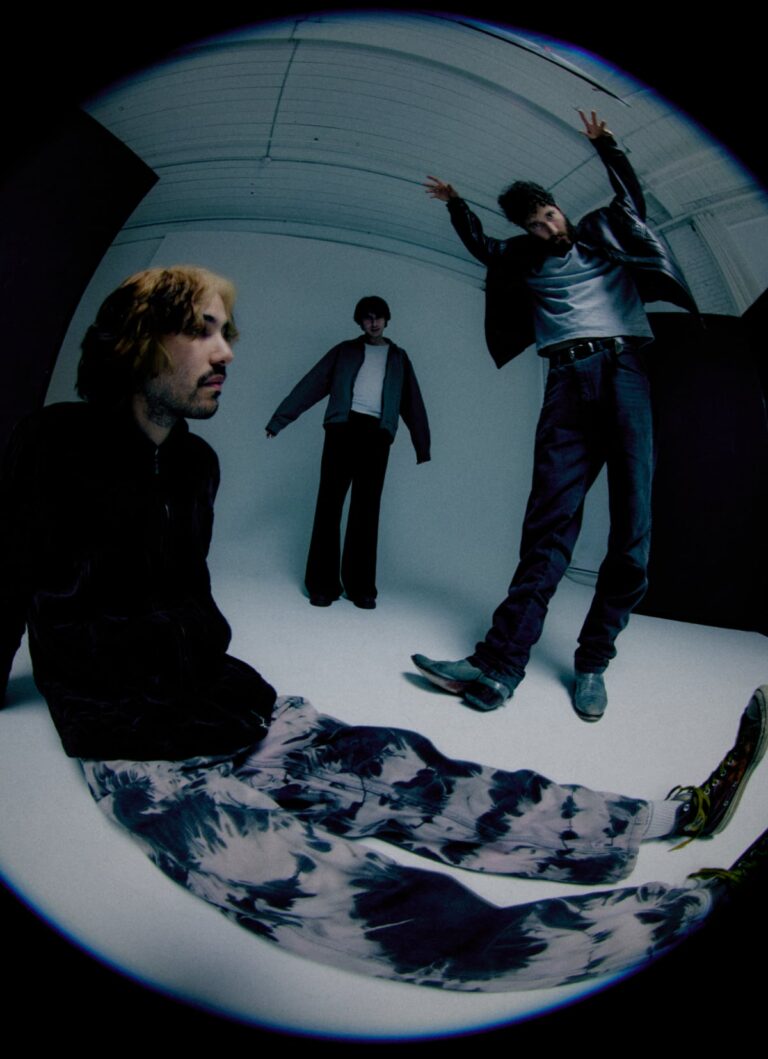
If someone closes a door, it’s because they’ve opened a frame, as the saying goes: without dwelling on the subject at length, let’s just say that blesse was born out of the end of Zen Bamboo, and that Léo Leblanc, Xavier Touikan and Charles-Antoine Olivier’s (aka CAO) chemical response to said end was a burst of creativity: as soon as they were ensconced in a Lanaudière cottage jamming, gathering ideas discarded over the years for further substantiation, opening up to the vast panoply of DIY post-prod – catalyst of acquired experience, gas pedal of developed expression, emancipated emancipation et al.
And now that that’s out of the way, like them, we’re focusing on what’s new: they started listening to music like never before – drawing inspiration from Porches, My Bloody Valentine, Indochine and the hyperpop and bedroom pop movements – with the aim of creating idiosyncratic, plural, abrasive and, above all, catchy pop; they started talking about song structures with stars in their eyes; they realized that what mattered most to them was having a signature sound on record rather than on stage.
With these precepts in mind, they set to work full time, developing a work ethic that is both rigorous and nimble, via a relationship of total trust where missteps are (almost) non-existent and evolution is forward-looking.
It took 9 months before they found the composite sound they were looking for – but once they had, the rest flowed almost autonomously, nourished by incessant cyclical collaboration. So the band becomes the band it wants to be with each piece, lead vocals alternate, everything renews itself. The result is “Paroles et musique par blesse”-type credits. They often start with guitar + vocal compositions that are written at the same time as they are recorded, augmented by synthetic arrangements that have been reworked 1,000 times, which in turn enhance the meaning of the lyrics. They start out, rarely returning to the point of departure – always discovering, with no end in sight. The only constraint is not to be constantly maximalist – that’s the hard part.
It’s a start, then – a start that wants to keep the energy of the start for a long time. It hurts, and it starts now.
Si quelqu’un ferme une porte c’est qu’il a ouvert un châssis, dit l’adage : sans nous étendre longuement sur le sujet, asseyons tout de suite que blesse est issu de la fin de Zen Bamboo, et que la réponse chimique de Léo Leblanc, Xavier Touikan et Charles-Antoine Olivier (alias CAO) à ladite fin a été un élan créatif : sitôt encabanés dans un chalet lanaudois à jammer, réunissant des idées écartées au fil des ans pour les étayer davantage, s’ouvrant au vaste pan de la post-prod DIY – catalyseur d’expérience acquise, accélérateur d’expression développée, affranchissement émancipé et al.
Et là, maintenant que ça s’est dit, à leur instar on se concentre sur le neuf : ils se sont mis à écouter de la musique comme jamais – s’inspirant notamment de Porches, My Bloody Valentine et Indochine et des mouvances hyperpop et bedroom pop – en ayant en mire de créer une pop idiosyncrasique, plurielle, abrasive et surtout catchy; se sont mis à jaser de structures de pièces avec des étoiles dans les yeux; ont réalisé que ce qui leur importait d’abord, c’était d’avoir une signature sonore sur enregistrement plutôt que sur scène.
C’est gréés de ces préceptes qu’ils se sont mis à plancher pas mal à temps plein, développant une éthique de travail à la fois rigoureuse et leste via une relation de confiance totale où les faux-pas n’existent (presque) pas et où l’évolution se fait par en avant.
Ça aura pris 9 mois avant qu’ils trouvent le son composite recherché – mais, une fois saisi, le reste a coulé de façon quasi autonome, nourri par une incessante collaboration cyclique. Le groupe devient donc le groupe qu’il veut être à chaque pièce, les voix principales s’alternent, tout se renouvelle. En résultent des crédits de type « Paroles et musique par blesse ». Ça part souvent de compositions guitare + voix qui sont écrites en même temps qu’enregistrées, augmentées d’arrangements synthétiques revirés de bord 1000 fois qui vont venir à leur tour bonifier le sens des paroles. Ça part, pour rarement revenir au point de départ – pour découvrir toujours, sans finalité annoncée. La seule contrainte, c’est de ne pas être constamment maximaliste – ça, c’est le bout pas facile.
C’est un départ, donc – un départ qui veut conserver l’énergie du départ longtemps. C’est blesse, et ça commence maintenant.
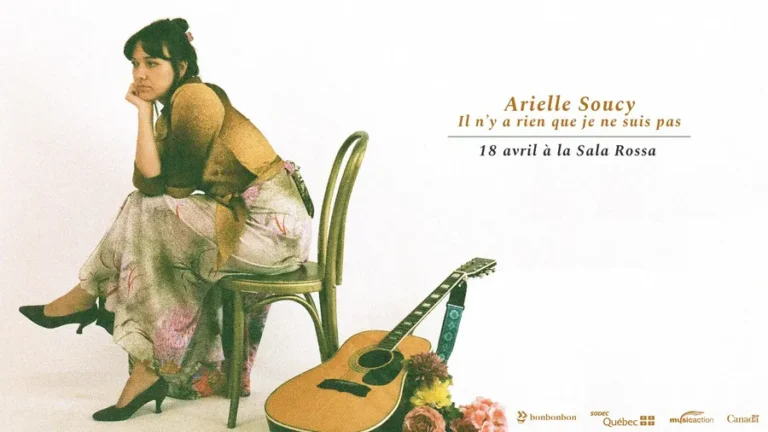
Arielle Soucy is a Montreal-based singer, multi-instrumentalist, songwriter and composer active since 2019. There’s something luminous and benevolent about the gentleness that emanates from Arielle Soucy’s music. This bittersweet fusion of soul and psychedelic folk, driven by gorgeous vocal arrangements, shines on the artist’s first two self-released EPs, the enveloping Shame and Waterway and Unresolved Collection. The artist is back with a full-length debut album, this time predominantly French, recorded by Arielle herself and then finalized at Breakglass studio with the help of her co-producer Alexandre Larin (Larynx). Il n’y a rien que je ne suis pas, an 11-song opus, takes us to the heart of her organic, minimalist universe. The country interpretation of his guitar playing, combined with his expressive vocal melodies, is inspired by the codes of the folk tradition, but in a contemporary, personal and experimental way. This blend throws listeners into a timeless, magical zone where the artist humbly confides in us how she tries to detach herself from her ego.
Arielle Soucy est une chanteuse, multi-instrumentiste, auteure et compositrice montréalaise active depuis 2019. La douceur qui émane de la musique d’Arielle Soucy possède quelque chose de lumineux et de bienveillant. Cette fusion douce-amère entre soul et folk psychédélique, menée par de magnifiques arrangements vocaux, brille sur les deux premiers EPs autoproduits de l’artiste, les enveloppants Shame and Waterway et Unresolved Collection.
L’artiste est de retour avec un premier album complet, majoritairement francophone cette fois et enregistré par Arielle elle-même, puis finalisé au studio Breakglass avec l’aide de son co-réalisateur Alexandre Larin (Larynx). Il n’y a rien que je ne suis pas, opus de 11 chansons, nous transporte au cœur de son univers organique et minimaliste. L’interprétation country de son jeu de guitare, mêlée à ses mélodies vocales expressives s’inspire des codes de la tradition folk, mais de manière actuelle, personnelle et expérimentale. Ce mélange jette les auditeurs dans une zone intemporelle et magique où l’artiste nous confie humblement comment elle tente de se détacher de son ego.
This content comes from the Sala Rossa and is adapted by PAN M 360
Subscribe to our newsletter
Gérez votre confidentialité
Nous utilisons des technologies telles que les cookies pour stocker et/ou accéder aux informations des appareils. Nous le faisons pour améliorer l’expérience de navigation et pour afficher des publicités (non-) personnalisées. Consentir à ces technologies nous permettra de traiter des données telles que le comportement de navigation ou les ID uniques sur ce site. Le fait de ne pas consentir ou de retirer son consentement peut avoir un effet négatif sur certaines fonctionnalités et fonctions.
Functional
Always active
The technical storage or access is strictly necessary for the legitimate purpose of enabling the use of a specific service explicitly requested by the subscriber or user, or for the sole purpose of carrying out the transmission of a communication over an electronic communications network.
Preferences
The technical storage or access is necessary for the legitimate purpose of storing preferences that are not requested by the subscriber or user.
Statistics
The technical storage or access that is used exclusively for statistical purposes.The technical storage or access that is used exclusively for anonymous statistical purposes. Without a subpoena, voluntary compliance on the part of your Internet Service Provider, or additional records from a third party, information stored or retrieved for this purpose alone cannot usually be used to identify you.
Marketing
The technical storage or access is required to create user profiles to send advertising, or to track the user on a website or across several websites for similar marketing purposes.