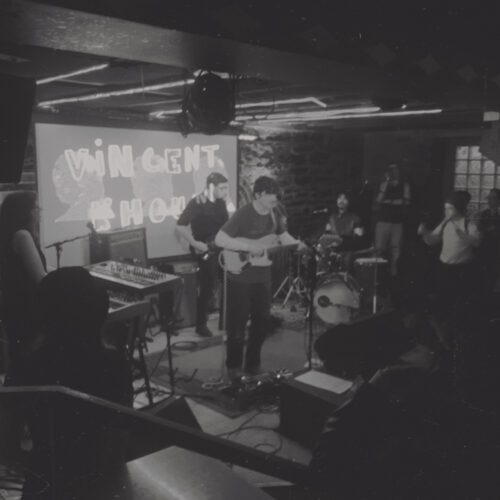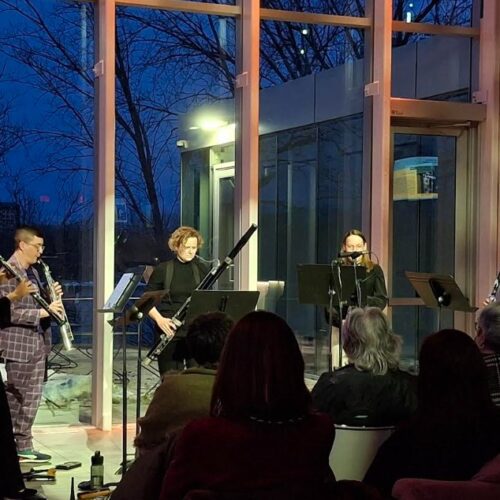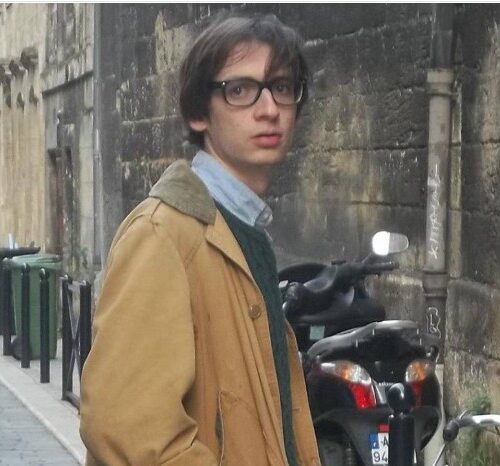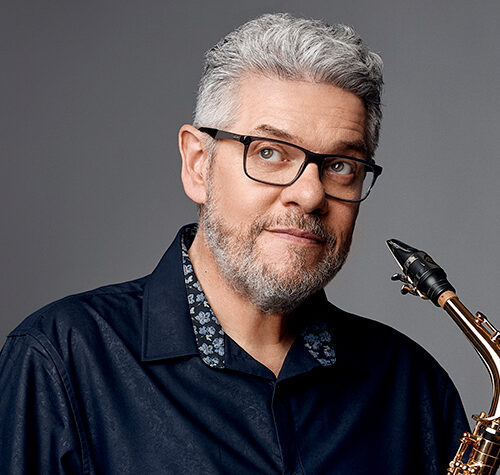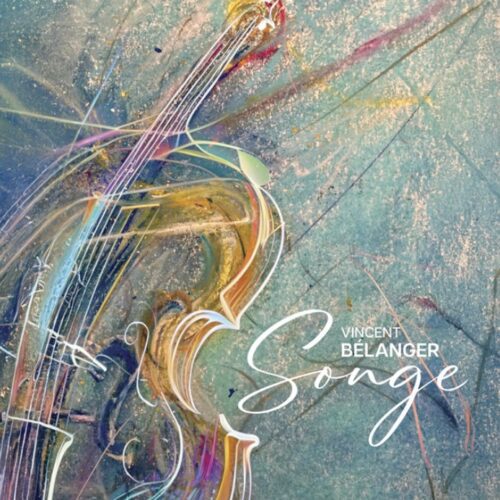
Cellist and composer Vincent Bélanger has worked tirelessly to carve out a niche for himself in the music scene, coming from a family of musicians who are highly respected not only in Quebec City but throughout the country. An intelligent musician with an entrepreneurial spirit, he has channeled his talents into creating a hybrid form of chamber music and chamber pop aimed at the general public.
His compositions here are influenced by André Gagnon, whose two works he reinterprets or alludes to, and they also align with an aesthetic conceived in the previous century by composers emerging from the Quiet Revolution—beyond Dédé Gagnon and Claude Léveillée, who were inspired self-taught musicians but also limited in their knowledge of orchestral language. François Dompierre, a musician educated at the finest institutions of his youth, is among those who took things further, and here we are a generation later with Vincent Bélanger, who can count on a solid background as a classical cellist, as evidenced by the rich sound of his instrument brought out by his playing.
The musician also has a penchant for composition and is part of the Quebec-style neoclassical movement. His works feature tonal melodies; his harmonies are also tonal and consonant, and the rhythms of his works are simple, binary, or ternary. His conception of chamber music excludes atonality, rhythmic complexity, and, ultimately, most of the rough edges typical of modern or contemporary music.
We find ourselves immersed in baroque worlds and a reference to J.S. Bach in *Dialogue*, as well as classical or romantic styles, sometimes pushed a bit further when, in the piece *Comme un tango*, we catch a whiff of Piazzolla, or when we savor the virtuosic freedom of the double bass (Étienne Lafrance) during its *Dialogue* with the cello. We also recall the feminine vocalizations of the 1960s, notably in Cantilène (Amélie Moïse), the prominent parts for harp (Annabelle Renzo) and cello (Vincent Bélanger) in Pour ma sœur en allée, or the violin (Véronique Turcotte) interwoven with the other strings in Passage Ancien.
For roughly a decade now, composers have captivated millions of listeners by reviving music from the past and creating their own interpretations of music history, which they present in a new context. By performing these pieces in public on multiple occasions, Vincent Bélanger and his colleagues will be able to better identify what sets their popular orchestral music apart from other works that have already established themselves in this vast market. The work continues.