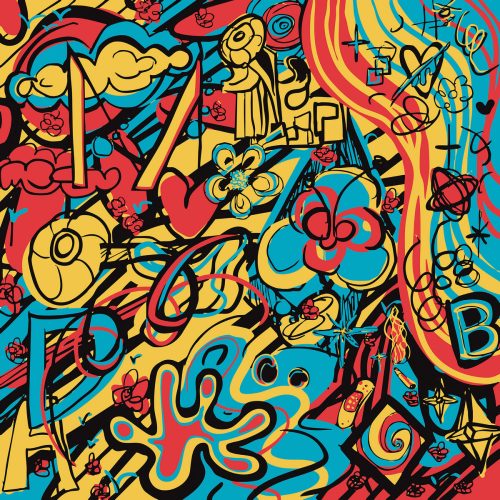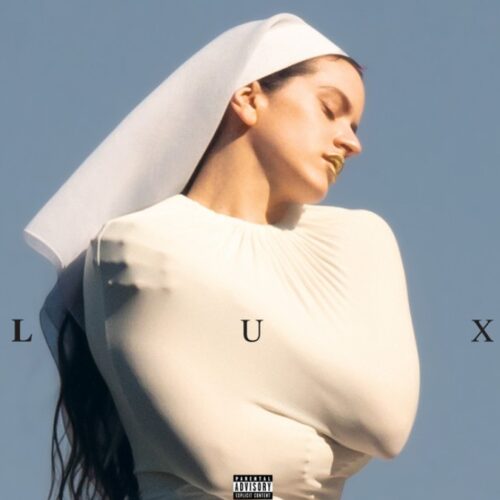
The prodigious Catalan artist returns to bless pop music with an expansive fourth album where the rules of the art are transcended and the boundaries are redefined. Entitled LUX, or light in Latin, the album, released on November 7th, brings together 18 songs, sung in 13 languages and divided into four movements: a musical odyssey that rewards the wait with more intensity, emotion, technical skill, and risk-taking than what “regular” pop usually offers.
With its neo-classical and avant-garde music influences where genres (reggaeton, rumba, opera, classical, electro, flamenco), romance and religion coexist, it is an offering where the innovation lies more in the depth of the production, the orchestral arrangements of the London Symphony Orchestra, and the attention paid to voices rather than in the definition of a new vocabulary supported by an electro-Latin universe—as on her previous critically acclaimed Motomani.
To meet this new challenge, Rosalía, who has never encountered a convention that truly reflects her and whose sole focus is being “hot for God,” surrounded herself with seasoned collaborators such as Dylan Wiggins and Noah Goldstein as co-producers, Pulitzer Prize-winning composer and arranger Caroline Shaw, and guest appearances by Charlotte Gainsbourg, Björk, and Patti Smith. Drawn to themes of feminine mysticism, spirituality, and the philosophical writings of Simone Weil, the artist found inspiration in saintly women with unique life stories to share her love for humanity and God, against all odds, all wrapped in an ambitious production that proves Rosalía is far from finished reinventing herself.
First movement
“Sexo, Violencia y Llantas” opens with a cascade of delicate notes and intense vocals evolving in a choral fashion to imagine an existence ascending to paradise and returning to earth: “How nice it’d be to live between them both/First I’ll love the world then I’ll love God.” The instant favourite “Reliquia” follows, shifting from chamber quartet to electronica, to reflect on fame as a form of sacrifice, confessing “My heart’s never been my own,” offering herself to the world like a relic (an echo of the locks of hair she cut each night to give to fans during the Motomani tour). The melodramatic “Divinize” accentuates the sacrificial angle, comparing her vertebrae to a rosary to set to music her life’s journey toward a larger-than-life purpose centred on the endless gift of self: “Bruise me up, I’ll eat all of my pride/I know I was made to divinize.” This leads to that, as the atmosphere then becomes sensual, dark, and suave for “Porcelana,” nimbly blending rap and Latin rhythms with the orchestra to create what is probably one of the first orchestral reggaeton songs. The magnificent and heart-wrenching “Mio Christo Piange Diamanti” closes this first section with a chilling aria, worthy of the greatest vocal performances.
Second movement
“Berghain,” the neo-gothic excerpt from the album, speaks of the dissolution of being in accommodation and in the withdrawal of self to please, linking the invitation to divine intervention carried by Björk to the vision of Yves Tumor, looping Mike Tyson’s tirade “I’ll fuck you ’til you love me” against a background of violins played with knives.
“La Perla,” ironically named because of a minor settling of scores with her ex-fiancé Rauw Alejandro, unleashes a torrent of insults with unfiltered lyrics like “Local fiasco, national heartbreaker / Emotional terrorist, world-class fuck up,” accompanied by a circus-like instrumentation suggesting Rosalía is having a blast, and that Fiona Apple is probably doing the same. “Mundo Nuevo,” a traditional piece credited only for the arrangements, offers a sombre commentary on the artist’s worldview. “De Madruga” closes the segment on a lighter note with its breathless rhythm and tango claps, addressing the impossibility of bringing the other back.
Third movement
The danceable and provocative “Dios Es Un Stalker” begins with drum & bass, evolving into a disco-salsa hybrid before leading into “La Yugular,” a song celebrating the divine presence on earth and within humanity: “How many fights do they remember the lines on my hands/How many stories can fit tucked tight in 21 grams?” It concludes with a 1976 recording of Patti Smith encouraging artists to break free from convention. On “Sauvignon Blanc,” a tender piano-vocal ballad honoring the French language, she promises to renounce lust and trade her Jimmy Choos for peace of mind, leaving us with a touch of self-deprecation.
Fourth movement
The final movement, shorter but more emotionally charged, features the flamenco-pop “La Rumba Del Pardon,” where Rosalía teaches forgiveness as a conscious decision that liberates from wounds, alongside modern flamenco stars Estrella Morente and Silvia Pérez Cruz. This is followed by the sun-drenched invitation to resolve the past with “Carminho, Memoria.” Finally, “Magnolias,” the sublime closing piece, sees Rosalía make peace with death and transcend loss: “I come from the stars/But today I turn to dust to go back to them,” completing the cycle suggested at the beginning. Lastly, the songs “Focu ‘Ranni,” “Jeanne,” and “Novia Robot,” exclusive to the physical version of the album, allow the experience to be taken even further.
Without altering her style or diminishing her direct approach, this album elevates Rosalía’s artistry to an incredible level of confidence, thanks to its rigor and flawless execution. This monumental and provocative flexibility is that of a virtuoso who can rap like a bad boy as easily as she can produce polished pop. She knows how to wipe the slate clean and start from scratch, but this time she reaches transcendent heights, bringing pop and spirituality together for a deeper understanding. Both bold and accessible, the work explores the tension between devotion and desire through a fusion of genres and languages, a universal and almost omniscient work, once again defying the detractors of its universalist approach.
Rosalía recently said that LUX was “the most demanding album I’ve ever tried to do,” and it’s just as demanding for the listener as it is rewarded with this vessel of cosmic and rebellious energy that sounds like nothing else in the pop world. Album of the year? Definitely in my heart.