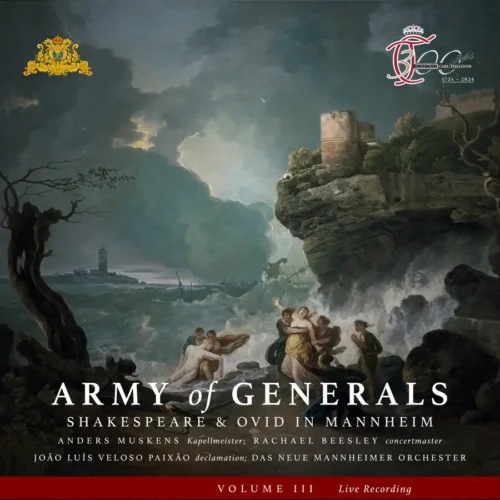
Leaf is a label based in Nova Scotia that primarily features Canadian content. Occasionally, as is the case here, it serves as a conduit for European productions for which it does distribution. The Mannheim Orchestra represented in this recording focusses its attention on the rich musical heritage associated with the Court of this small town, which was one of the most dynamic artistic centres of the 18th century.
The Mannheim School, as it is called, was an influential artistic expression that contributed to the rise of the classical style of the late 1700s. Mozart admired the cultural effervescence of Mannheim and had friends there. It was also there that he would meet his wife, Constanze Weber.
Brilliant composers worked there, creating exciting works in symphony, concerto, opera, sacred music, and chamber music. Christian Cannabich (1731-1798), whom Mozart called the best conductor he had ever met, was one of them. He wrote a lot of music, and you can hear it here and there on various labels. This Ceyx and Alcyone based on Ovid’s Metamorphoses is perhaps the first recording of this “narrative ballet.” At least I haven’t noticed any others. It tells the love story of Ceyx and Alcyone in the form of alternating between narrated texts by Ovid and instrumental episodes (which were danced or mimed). After a shipwreck that brings her husband’s body back to the shore, Alcyone throws herself into the sea to join him in death. Neptune, touched by Alcyone’s sincere love, resurrects the two lovers and organises a grand celebration in his underwater palace in their honour.
Cannabich deploys a bright and colourful orchestration, where cosmopolitan influences (for the time), Italian lyricism, French clarity, and sometimes German complexity blend together. Through sound effects (wind machines, metal sheets for thunder, and the entire orchestra used in an expressionistic manner) and effective melodies, he manages to create a drama that must have been quite spectacular in the 18th century. One can only imagine the wonder of the audience at the time, who must have felt this experience a bit like a modern Marvel Universe blockbuster on today’s viewers.
The orchestra led by Anders Muskens lets loose and doesn’t hold back any punches to bring this often gripping music back to life. Narrator João Luís Veloso Paixão gives a theatrical, over-the-top performance that is appropriate for the subject.
A rarely (never?) heard Hamlet Overture by Georg Joseph Vogler (1749-1814) completes the program. There are some surprising effects, such as glissandos, which, one suspects, represent the tortured spirit of the Shakespearean character.
An album that fuels the pleasure of exploration for curious music lovers. Good interpretations and beautiful sound recording.